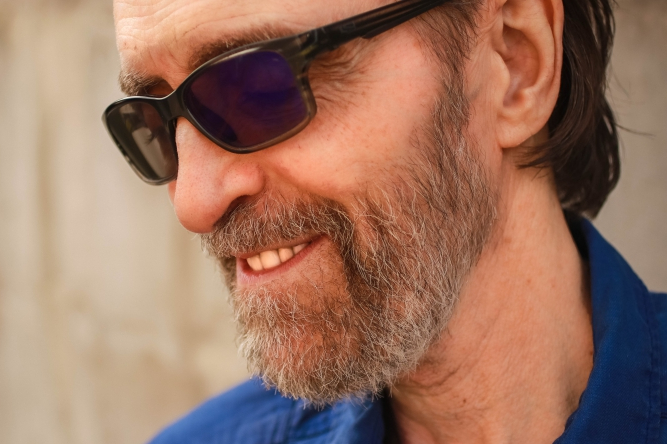
George Winston, the self-described folk pianist who sold millions of albums over a long career, passed away on June 4th after a 10-year battle with cancer. Like many, I came to Winston’s melodic, quiet, and thoughtful playing in the 1980s. During that era he had three records, Autumn, Winter Into Spring, and December, all of which were certified platinum in the United States. He won a Grammy for best New Age album for 1994’s Forest.
Thanksgiving, inspired by friends and places of Miles City, Montana, was the first piece on the December album.
Rolling Stone’s obituary spoke of how Winston wanted to be remembered as a musician.
His music seemed to incorporate elements of classical, jazz, folk, ambient, and New Age music, but as Winston put it in a Q&A for his website, he always called his “melodic style” of play “Folk Piano” or “Rural Folk Piano.”
“It is melodic and not complicated in its approach, like folk guitar picking and folk songs, and has a rural sensibility,” he said, adding: “Any other labels, including anything having to do with anything philosophical, or spiritual, or any beliefs, are also not accurate, as I have no interest in those subjects. I just play the songs the best I can, inspired by the seasons and the topographies and regions, and, occasionally, by sociological elements, and try to improve as a player over time.”
The first album of Winston’s interpretation of Vince Guaraldi’s music, Linus and Lucy, was on my playlist for years. This live medley of the title tune plus You’re in Love Charlie Brown brings back lots of memories.
George Winston was a quiet army of one — a musical impressionist whose devotion to myriad but specific influences — The Doors, Henry Butler and especially Vince Guaraldi — along with a scenic-oriented sense of artistic expression, combined to make solo piano music unlike anything heard before his arrival. Yet from the instant more mainstream artists wandered within earshot of his musicianship, Winston became one of the most imitated instrumentalists of the past five decades.
The notes with the video for Cast Your Fate to the Wind, Winston’s interpretation of another Guaraldi composition, tell us that the song “first appeared on Vince’s 1962 album Jazz Impression of Black Orpheus, a collection based on his interpretations of Antonio Carlos Jobim and Luiz Bonfa songs from the classic 1959 film.
Cast Your Fate to the Wind was originally the B side of the 45 RPM single from the album, with the A-side being Samba De Orpheus . . . but disc jockey Tony Bigg and program director Buck Herring, at radio station KROY in Sacramento, California turned it over and played Cast Your Fate to the Wind instead, and played it every hour, which led to it becoming a national hit.
Dozens of artists besides Winston have recorded it through the years. At the end of the song, Winston’s piano is muted by damping the strings with the left hand, while playing the keys with the right hand.
As Rolling Stone notes, Winston pushed the boundaries of his playing, releasing “a full album tribute to the Doors, Night Divides the Day, in 2002. His 2004 album, Montana: A Love Story, included interpretations of songs by Frank Zappa and Sam Cooke; 2019’s Restless Wind featured takes on George Gershwin and Stephen Stills tunes.”
At Midnight came from Winston’s last album, Night, released in 2022.
This lovely Paste Studio concert from this time last year shows that Winston was still performing and composing beautiful music even in the last years of life. Beverly opens both his Night album and this mini-concert. Blues for Ukraine, the second tune, is debuted in this recording. He ends with an energetic take on the James Booker tune Pixie. Winston also speaks with his host about how the album came together, about his compositional style, and why he writes on his hands.
Winston clearly was influenced by a range of musicians over his lifetime, absorbing their music but always making it his own. As he told Tunis in a 2010 interview, “You have your identity, and then you have the things you received from your mentors. It’s a different combination for everybody. We’ve all got our own unique way of how we end up showing what they gave to us.”
George Winston gifted us, over more than five decades in the public eye, his own unique musical legacy. Because it seems so appropriate, let’s end with Winston’s interpretation, from Night, of Leonard Cohen’s iconic Hallelujah.
Rest in peace.
More to come…
DJB
Photo of George Winston (Credit: Todd V. Wolfson from GeorgeWinston.com)
 MORE TO COME...
Pingback: Observations from . . . June 2023 | MORE TO COME...
Pingback: The Saturday Soundtrack 2023 top ten | MORE TO COME...