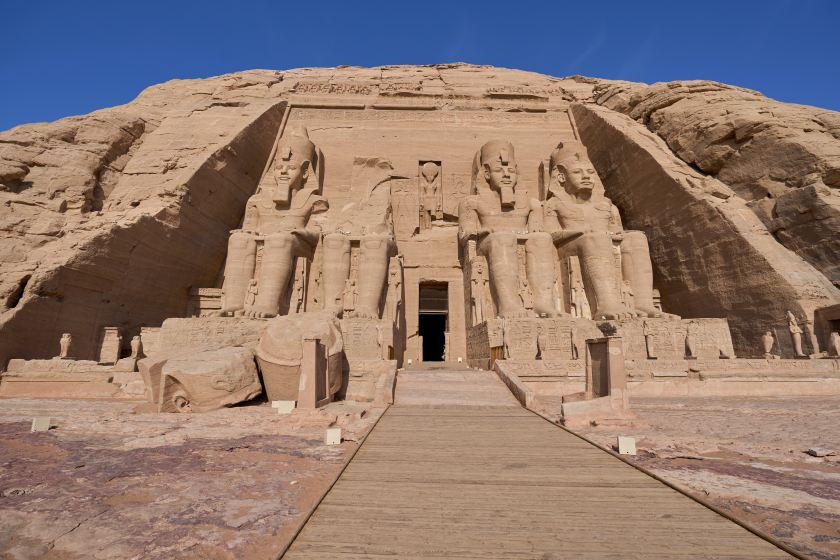
Growing up in a home where National Geographic magazines filled several bookshelves, I became fascinated with the stories and photographs of Egypt’s pharaohs, gods, hieroglyphics, and colossal monuments. Few international affairs of the 1960s were etched into my impressionable mind more completely than the suspense of the race to save the Abu Simbel temples from the rising waters of Lake Nassar.
Yet until this year I was oblivious to the work of the woman who was indispensable in this effort.
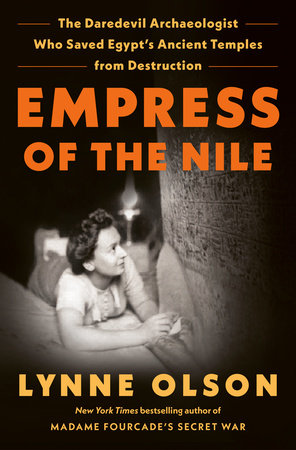
Empress of the Nile: The Daredevil Archaeologist Who Saved Egypt’s Ancient Temples from Destruction (2023) by Lynne Olson is the true-life story of Christiane Desroches-Noblecourt, the remarkable French archaeologist, WWII resistance fighter, and Louvre Egyptologist who played a key role in saving the temples at Abu Simbel. She was also the first to arrange for the treasures of Tutankhamun to be displayed outside Egypt, leading indirectly to the blockbuster US tour several years later. Throughout her long career she never let the misogynistic men’s club of Egyptian archaeology stop her from achieving her goals. Desroches-Noblecourt had a variety of nicknames, but the one she preferred was given by her Egyptian colleagues: “Umm Simbel” — Arabic for “Mother of Simbel.”
Born in 1913 Paris, Christiane Desroches was the daughter of educated and artistic parents. Christiane’s lifelong passion was set when, as a child, she was taken on her grandfather’s shoulders to see the Obelisk of Luxor in the Place de la Concorde.
Desroches was instantly smitten with ancient Egypt.

This curious and intelligent young child was first enrolled in a progressive girls’ public school then encouraged to study for a degree in Egyptology at the prestigious École du Louvre. There she made the first of many field trips to excavate sites along the Nile, working with Étienne Drioton, the teacher who became the first of many influential mentors. Desroches stayed in camps infested with cobras and scorpions, mastered Arabic, and developed a rapport with the local workers that would serve her well throughout her career. She also made her first discovery of an untouched tomb while enduring the mistreatment of a chauvinistic French archaeologist who later stole credit for her notes and photos.
Desroches was appointed a curator in the Egyptian department of the Louvre just as war clouds were overtaking Europe. Thanks to the farsighted planning of director Jacques Jaujard, the Louvre’s staff began a massive transit of its treasures to temporary sanctuary. Desroches, who married André Noblecourt during the war years and added his name to her own, was given the task of shepherding the museum’s Egyptian treasures to safety, often navigating roads clogged with refugees. On top of that she was acting as a courier for the Musée de l’Homme resistance network, smuggling messages out of Paris. Desroches-Noblecourt fell under Nazi suspicion, but she escaped unharmed even after scolding and cursing her interrogators for their bad manners.
Desroches-Noblecourt was always a fighter.
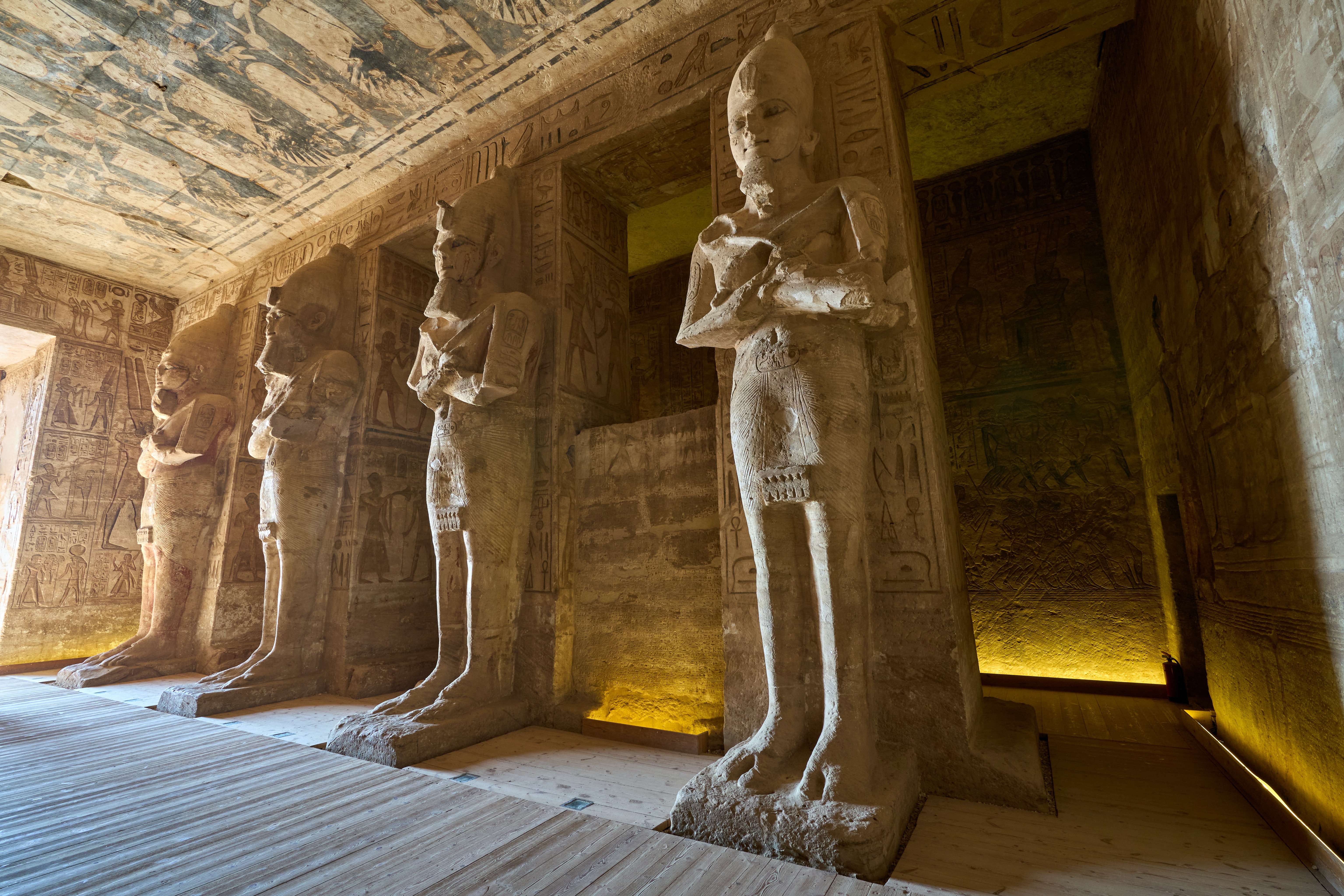
The book’s thrilling account of the rescue of the giant statues of Rameses II and the Abu Simbel temples from inundation by the Aswan High Dam is the unquestioned highlight of the book. After Egyptian President Nasser announced plans for the dam as part of a modernization drive, Desroches-Noblecourt began a years-long effort to move them out of the path of the rising waters of Lake Nasser. As the chief of a UNESCO mission to Egypt, she pulled strings, twisted arms, called in favors, and maintained that the world simply could not let these treasures of civilization disappear.

Along with Egyptian Minister of Culture Sarwat Okasha and UNESCO chief René Maheu, Desroches-Noblecourt worked tirelessly to change minds in the Egyptian, French, and American governments.
In her first meeting with Charles de Gaulle, the French president rebuked her for her unilateral pledge of French government support for the plan. “And you — did you demand the authority of Pétain’s government on June 18, 1940?” she shot back. “Then Charles de Gaulle did something exceedingly rare for him: He laughed,” Olson writes. The funding was approved.
Desroches-Noblecourt found a quiet, behind-the-scenes supporter in the U.S. in First Lady Jacqueline Kennedy. In several chapters Olson leaves her primary subject behind to focus on the First Lady’s role not only in saving Egypt’s treasures but in the growth of the historic preservation movement in the U.S., as she links Abu Simbel, the designation by UNESCO of World Heritage Sites, Mrs. Kennedy’s work to preserve Lafayette Square and Grand Central Station, and her lobbying for the successful passage of the National Historic Preservation Act in 1966.

The U.S. has just rejoined UNESCO after an on-again-off-again relationship that first came apart in the Reagan years. This book is a powerful reminder of how international cooperation can help save the world’s cultural treasures for all of humanity.
Olson brilliantly describes this cooperation at Abu Simbel where archaeologists, engineers, construction workers, historians, curators, and government officials worked in concert to figure out how to safely deconstruct the monuments and then piece them back together at a higher elevation. The Italian quarry workers are especially important. “We know rocks like hearts,” one of them said. “We know when they break.” Olson’s description of their backbreaking work, often operating by instinct, does credit to the words of the Italian engineer in charge of the cutting: “These men could feel the soul of the stone. They shed tears over a single chip. They worked like demons, but with the touch of angels.”
Olson can be over-the-top in her praise of Desroches-Noblecourt, while accounts of her difficult personality are limited to three pages. Occasionally her writing gets in the way of the story. After the thrill of the Abu Simbel rescue, the last sections drag in comparison. This book, therefore, is important but not perfect.
Jacqueline Kennedy Onassis said, “If we don’t care about our past, we can’t have very much hope for our future.” This vital first biography of Christiane Desroches-Noblecourt brings to life a visionary and resolute leader in the fight to save that heritage.
More to come …
DJB
The Weekly Reader links to the works of other writers I’ve enjoyed.
Photos of Abu Simbel by Dmitrii Zhodzishskii on Unsplash
 MORE TO COME...
Pingback: Observations from . . . August 2023 | MORE TO COME...
Pingback: The books I read in August 2023 | MORE TO COME...
Pingback: The 2023 year-end reading list | MORE TO COME...