
Each month my goal is to read a minimum of five books on a variety of topics and from different genres. Here are the books I read in August 2023. If you click on the title, you’ll go to the longer post on More to Come. Enjoy.
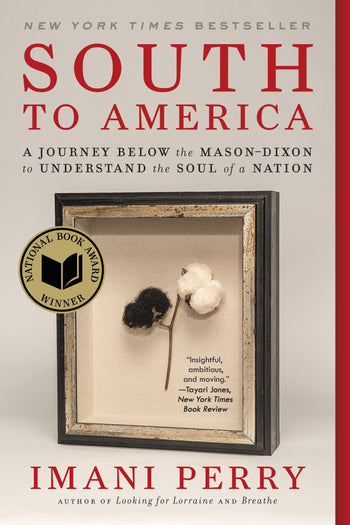
South to America: A Journey Below the Mason-Dixon to Understand the Soul of a Nation (2022) by Imani Perry is a revelatory journey by a Black daughter of the South that both recognizes and comes to grips with the complexity of the Southern experience, history, and culture. A native of Birmingham, Alabama, Perry grew up the daughter of Southern freedom movement leaders of the Civil Rights era and now teaches at Princeton. In South to America Perry is traveling home to “help the reader dig deep enough to discover the truth.” By reframing our understanding of the South, “we gain a more honest rendering of the country.”
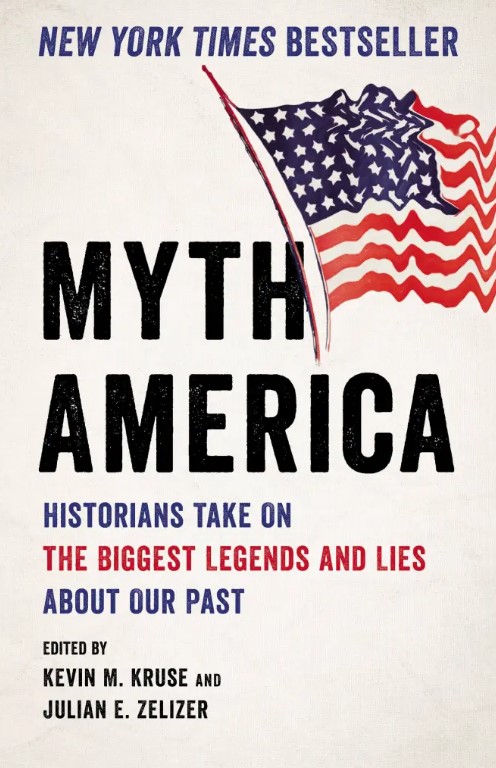
Myth America: Historians take on the biggest legends and lies about our past (2022) — edited by Kevin M. Kruse and Julian E. Zelizer — tackles many of the most dangerous myths about our nation’s past. There have always been lies in our public discourse but in the introduction the editors assert that “in the last few years the floodgates have opened wide.” Yet as many of these top historians demonstrate in a series of illuminating essays, the war against truth in America has been fought over a much longer period of time. Claims about what happened in the past can be “misleading and even malignant.” And yes, historians are influenced by their context and will sometimes disagree; however, “It is quite another thing to ignore the facts altogether.”
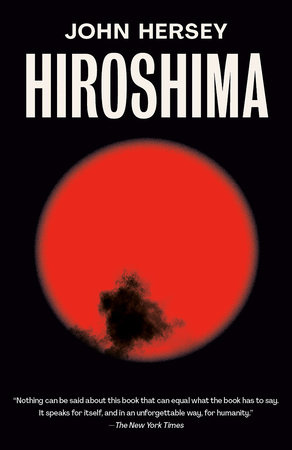
Hiroshima (1946) by John Hersey grew out of the only single-content edition of The New Yorker in the history of that publication. The initial report was serialized in some 70+ newspapers, turned into this book (never out-of-print), produced as a national radio reading, and became a touchstone for the nuclear non-proliferation movement. Hersey’s reporting was so powerful that it led the U.S. government to revise its narrative about why dropping the bomb was necessary. The author later said, “What has kept the world safe from the bomb since 1945 has not been deterrence, in the sense of fear of specific weapons, as much as it’s been memory. The memory of what happened at Hiroshima.”
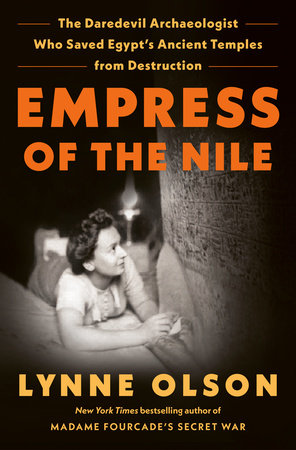
Empress of the Nile: The Daredevil Archaeologist Who Saved Egypt’s Ancient Temples from Destruction (2023) by Lynne Olson is the true-life story of Christiane Desroches-Noblecourt, the remarkable French archaeologist, WWII resistance fighter, and Louvre Egyptologist who played a key role in saving the temples at Abu Simbel. After Egyptian President Nasser announced plans for the Aswan dam, Desroches-Noblecourt — the head of a UNESCO mission in Egypt — began a years-long effort to move them out of the path of the rising waters of Lake Nasser. She pulled strings, twisted arms, called in favors, and would not let the misogynistic men’s club of Egyptian archaeology stop her from achieving her goals. This one earned her the nickname “Umm Simbel” — Arabic for “Mother of Simbel.”
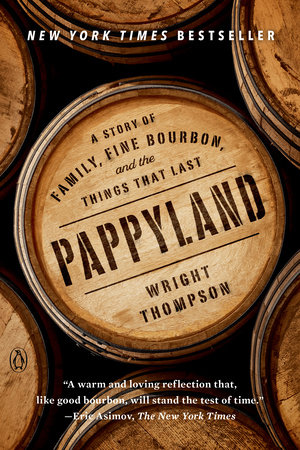
Pappyland: A Story of Family, Fine Bourbon, and the Things That Last (2020) by Wright Thompson is the story of how Julian Van Winkle III saved the bourbon business his grandfather had founded on the mission statement: “We make fine bourbon — at a profit if we can, at a loss if we must, but always fine bourbon.” That grandfather was the now famous Pappy Van Winkle. In tracing the story of a grandson’s determination to resurrect his grandfather’s dream, Thompson has written a beautiful and warm reflection that goes well beyond the basic story, blending together “biography, autobiography, philosophy, Kentucky history, the story of bourbon’s origins and an insider’s look at how the Van Winkle whiskey is made and marketed.”
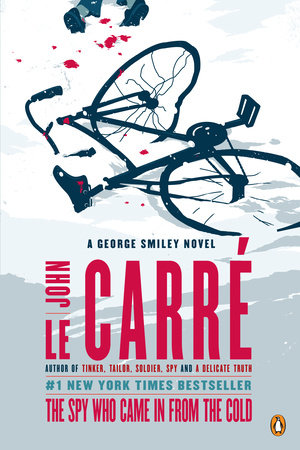
The Spy Who Came in From the Cold (1963) by John le Carré has been described as “the greatest spy novel of all time” written by “the world’s greatest fictional spymaster.” The Cold War is heating up, and the Berlin Wall has just been erected. Alec Leamas, the head of the West Berlin Station for British Intelligence, watches as his last undercover agent is shot down trying to cross that divide by East German sentries. He is recalled to London where he is given `a chance for revenge: he can assume the guise of an embittered ex-agent in order to trap the deputy director of the East German Intelligence Service. At the end of a number of twists and turns Leamas has a choice to make, one where following his heart means certain death.
What’s on the nightstand for September (subject to change at the whims of the reader):
- To Speak a Defiant Word: Sermons and Speeches on Justice and Transformation by Pauli Murray
- The Tao of the Backup Catcher: Playing Baseball for the Love of the Game by Tim Brown with Erik Kratz
- Whose Body? by Dorothy L. Sayers
- Life on the Mississippi: An Epic American Adventure by Rinker Buck
- Biological Diversity: The Oldest Human Heritage by Edward O. Wilson
- How to Resist Amazon and Why by Danny Caine
Keep reading!
More to come…
DJB
NOTE: Click to see the books I read in July of 2023 and to see the books I read in 2022. Also check out Ten tips for reading five books a month.
The Weekly Reader links to the works of other writers I’ve enjoyed. I hope you find something that makes you laugh, think, or cry.
Photo by Aaron Burden on Unsplash
 MORE TO COME...
Pingback: Observations from . . . September 2023 | MORE TO COME...
Pingback: The books I read in September 2023 | MORE TO COME...