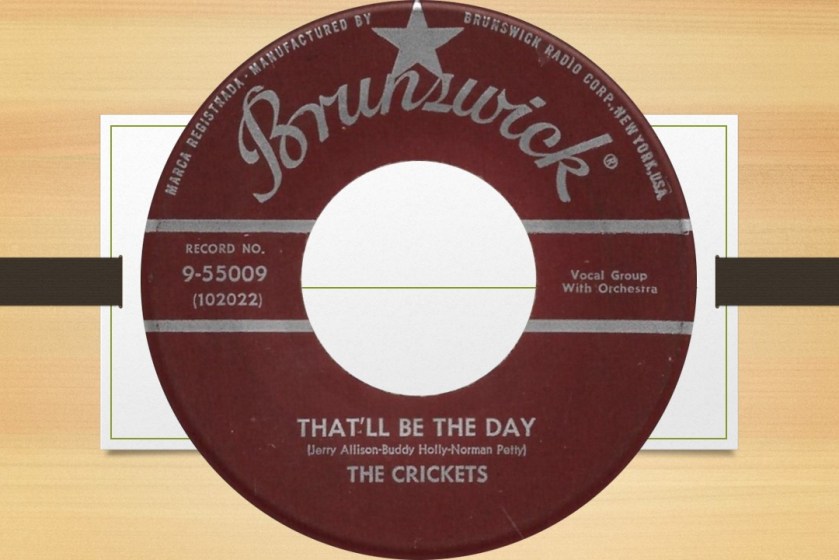
Buddy Holly has a special place in the history of Rock & Roll music. A central and pioneering figure of the mid-1950s, Holly was born in Lubbock, Texas, during the Great Depression. A member of a musical family, he learned to play guitar and sing alongside his siblings. Holly’s music was influenced by gospel, country and R&B.
Here’s how his Rock & Roll Hall of Fame essay begins:
Rock & roll as we know it wouldn’t exist without Buddy Holly.
The bespectacled ’50s teen idol roughed up familiar musical influences — rhythm & blues, rockabilly, country & western — with upbeat tempos, a jittery vocal approach, and youthful lyrics filled with edgy declarations of love, lust and heartbreak.
On September 23, 1957 — exactly 66 years ago today — That’ll Be the Day by Buddy Holly and the Crickets reached #1 on the charts in the US.
Despite Buddy Holly’s untimely death at age 22, his influence was felt around the world.

Daniel Immerwahr, in his brilliant How to Hide An Empire, describes one of the perhaps unexpected ways Holly had influence on other musicians.
Liverpool England in the 1950s was near one of the largest U.S. bases in the world, Burtonwood, which was the gateway to Europe. The American influence on the area was enormous in all sorts of ways. One we may not immediately identify is entertainment. U.S. soldiers at Burtonwood looked for music that sounded like home (among other pleasures). Four musicians from the city were more than happy to oblige. While the rest of England was stuck in the vaudeville era, Liverpudlians had a special advantage with access to American records — especially from African American artists — and a big financial incentive to master that music. The first song that the Beatles recorded was a Buddy Holly cover. “They cut it in 1958, the same year the antinuclear marchers moved on Aldermaston” (a nearby nuclear facility in England) so that the Beatles and the peace symbol debuted within months of each other and were both side effects of the U.S. system of placing military bases around the globe.
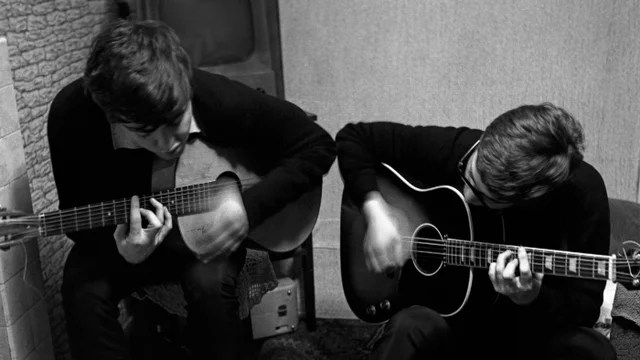
The song they recorded — when they were still known as The Quarrymen — was That’ll Be the Day.
My favorite version of That’ll Be the Day was by Linda Ronstadt. Here’s the Wikipedia entry with just the facts:
Linda Ronstadt recorded “That’ll Be the Day” for her 1976 Grammy Award-winning platinum album Hasten Down the Wind, produced by Peter Asher and issued by Asylum Records. Her version reached number 11 on both the U.S. Billboard Hot 100 and the Cash Box Top 100 and number 27 on the Billboard Country Singles chart . . . This recording is included on the album Linda Ronstadt’s Greatest Hits (1976) and on the 2011 tribute album Listen to Me: Buddy Holly.
But That’ll Be the Day is important for so much more than the facts. It is a look into the heartbeat of 1950s music and the seismic changes that were underway, and Ronstadt nails that vibe in her interpretation. I heard Linda and her knockout band live twice in the 1970s, and this song was always a highlight. Guitarists Waddy Wachtel and Andrew Gold are smoking in this version from a live German concert, and Rondstadt’s powerful voice is unparalleled among rock singers.
Enjoy this special ride down the Rock & Roll memory lane!
More to come …
DJB
Also on MORE TO COME:
- Celebrating Paul McCartney – 2022
- Create at the intersection of experience and innovation (Linda Ronstadt) – 2019
 MORE TO COME...
Pingback: Observations from . . . September 2023 | MORE TO COME...
Pingback: These cats are good! | MORE TO COME...