
Each month my goal is to read a minimum of five books on a variety of topics from different genres. Here are the books I read in January 2024. If you click on the title, you’ll go to the longer post on More to Come. Enjoy.
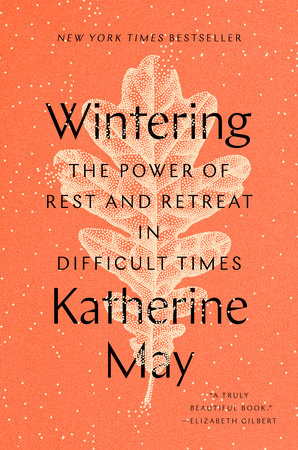
Wintering: The Power of Rest and Retreat in Difficult Times (2020) by Katherine May makes the case that the cycles of life seen in nature are the touchstones to how we should live as humans on this earth. Wintering, in this thoughtful memoir of a mindful year, is “a fallow period in life when you are cut off from the world, feeling rejected.” It’s also inevitable. Katherine May shows us how “an occasional sharp wintering” can help us heal and grow. We “must learn to invite the winter in” and while “we may never choose” to winter, “we can choose how.” Winter, you see, “is not the death of the life cycle, but its crucible.”

A Portrait of the Scientist as a Young Woman (2022) by Lindy Elkins-Tanton is much more than a memoir, as one of the nation’s leading planetary scientists updates the way science is presented and framed while challenging us to consider ways to ask the right questions to drive deeper analysis and change. Elkins-Tanton describes the debilitating impact of bullying and microaggressions especially on women and then pivots to describe the innovative ways she has built collaborative working groups. This book forces the reader to consider all the ways we contribute, for better or worse, to the culture in our organizations. We can address complex problems if we learn to ask the right questions . . . and then actually listen to the responses.
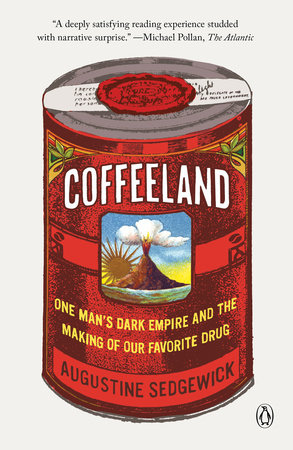
Coffeeland: One Man’s Dark Empire and the Making of Our Favorite Drug (2020) by Augustine Sedgewick is a compelling look at the volcanic highlands of El Salvador and the story of James Hill. In 1889, the 18-year-old Hill disembarked in El Salvador to sell textiles from Manchester, England. He wound up “bringing the industrial mentality of his native city to coffee cultivation in his adopted country,” in the process turning El Salvador into perhaps the most “intensive monoculture in modern history — a place of extraordinary productivity, inequality, and violence.” In this very satisfying brew, Sedgewick focuses on stories to weave a vibrant fabric, pushing the reader to consider “the actual choices made by the producers and importers and advertisers who merchandised the goods, the economic and political alliances they forged in the process, and the often harsh local consequences of their actions.”

Moving On: A Practical Guide to Downsizing the Family Home (2013) by Janet Hulstrand and Linda Hetzer is “a downsizing bible” which includes some of the lessons they have learned in helping others with this task we all seem to face. In that process they have found “throwers” relish clearing out and will empty a house quickly and “keepers” who want to preserve special things as well as memories and will linger over the process. Their advice: “keepers” and “throwers” can work effectively together to downsize and declutter.

The Dirty Duck (1984) by Martha Grimes is the fourth in the 25-book series of Richard Jury mysteries written by the best-selling author. Superintendent Jury is just passing through Stratford when he is brought into a murder investigation and a missing person report that puzzle his old friend Detective Sergeant Sam Lasko. The Dirty Duck is the name of a Stratford pub that generally teems with tourists, including on this fateful night Miss Gwendolyn Bracegirdle, who is drinking too much gin with an unnamed companion. Gwendolyn becomes the first of a number of rich American tourists murdered by an individual who leaves lines of Elizabethan verse for clues. Grimes is a good writer whose book has the reader considering almost all the main characters as prime suspects at one point or another, while moving swiftly towards a satisfying conclusion.
What’s on the nightstand for February (subject to change at the whims of the reader):
- The Rediscovery of America: Native Peoples and the Unmaking of U.S. History by Ned Blackhawk
- American Oligarchy by the editors of Mother Jones
- Why Louisiana Ain’t Mississippi . . . or Any Place Else! by Carol Highsmith and Jay Dardenne
- Never Forget Our People Were Always Free: A Parable of American Healing by Ben Jealous
- The True Secret of Writing: Connecting Life and Language by Natalie Goldberg
- American Eden: David Hosack, Botany, and Medicine in the Garden of the Early Republic by Victoria Johnson
Keep reading!
More to come…
DJB
NOTE: Click to see the books I read in December of 2023 and to see the books I read in 2023. Also check out Ten tips for reading five books a month.
This special Saturday edition of the Weekly Reader links to the works of other writers I’ve enjoyed. I hope you find something that makes you laugh, think, or cry.
Photo by Sincerely Media on Unsplash
 MORE TO COME...
Thank you, David. Excellent recommendations here and in your previous post. Not exactly coals to Newcastle, but I’m struggling here as it is to pass on the what’s-reads to make room for your must-reads!
Don’t want to make life harder for anyone! What are you reading these days that you’d recommend?
Oscar Charleston’s bio by Jeremy Beer; River of the Gods by Candace Millard (visited Egypt last year and just heard the author speak on this,her latest book); Your Brain on Art, by Magsamen & Ross; The Cello Suites, by Eric Siblin…. I just started the latter after picking up my cello again. A recent lecture by Alexander Pantelyat, a Hopkins neurologist, (Music Therapy and Music-based Interventions in Neurology), supports what I read in, Your Brain on Art, about the value of physical engagement with art and music. Great news since I’m too old for baseball!
These are great! I loved the Oscar Charleston bio, and I’m a fan of Candace Millard. I’ll have to check out “Your Brain on Art” – sounds like my kind of book!
Same here for, Why Louisiana Ain’t Mississippi.. I loved my six years there. Shreveport, then Baton Rouge. It looks like it’s a documentary and book?
That’s true about the Louisiana book. My friend Carol Highsmith is the photographer and it is beautiful. I picked up a copy of “Your Brain on Art” today – it looks great (but will have to get in line with some others before I get to it).
Pingback: From the bookshelf: February 2024 | MORE TO COME...
Pingback: Observations from . . . March 2024 | MORE TO COME...