
In his acceptance speech at the 1948 Democratic National Convention in Philadelphia, President Harry S. Truman—who was running for re-election and badly trailing in the polls—used the opportunity to call Congress back into an emergency session. Historian Kevin Kruse notes that at their own convention “the Republicans had just passed a platform promising that they would act on rising prices and a serious housing crisis if they won. Truman basically said, why wait? If you believe in those things, do it now.”

After the special session of Congress got nowhere, Truman hit the road in an unusually energetic campaign. He trashed congressional Republicans as “Wall Street reactionaries,” “bloodsuckers,” and “gluttons of privilege.” The Republican leaders in Congress, he said, were “tools of the most reactionary elements” who would “skim the cream from our natural resources to satisfy their own greed.” Making the election about more than him or his opponent, he told audiences “If you send another Republican Congress to Washington, you’re a bigger bunch of suckers than they think you are.”
We all know how that turned out.

That was the election where Truman earned his famous “Give ’em Hell, Harry” nickname. When a supporter yelled that phrase at a campaign stop, he replied, “I don’t give ’em hell. I just tell the truth and they think its hell!”
While they lost the 1948 election, those “Wall Street reactionaries” never went away. And in the subsequent 75 years, the oligarchs and their enablers have built new ways of taking public goods from the people for their own private gain. Now that we have a billionaire (allegedly) on the ballot again for president and we’ve seen how today’s Republican Party has shifted dramatically to support oligarchs and authoritarians worldwide, the issue is once again front and center.

American Oligarchy (2024) by the editors of Mother Jones provides a single-issue focus on the rise and ramifications of the American Oligarchy, pulling back the curtains that have been hiding their rampant pilfering of our country’s wealth. More than two dozen journalists contributed 17 stories to Mother Jones’ 50-page special magazine—the second time in its 48-year history it committed an entire issue to one topic.
We think of oligarchs as Gilded Age tycoons or current-day Russians who built their fortunes on mineral extraction and transportation monopolies. As senior reporter Tim Murphy describes it, “This American oligarchy offers a twist on the pilfering of the commons that produced Russia’s. It is built on a different kind of resource, not nickel or potash, but you—your data, your attention, your money, your public square.”
This is an eye-opening read, as we learn how it’s not only about the spoils but also about “what everyone else is losing in the process.” Our tax policy—which focuses on labor but not wealth—“starves state coffers to fill personal ones.” At its most basic, a small number of people have enormous power and wealth, “and they create a system which is designed to protect their interest.”
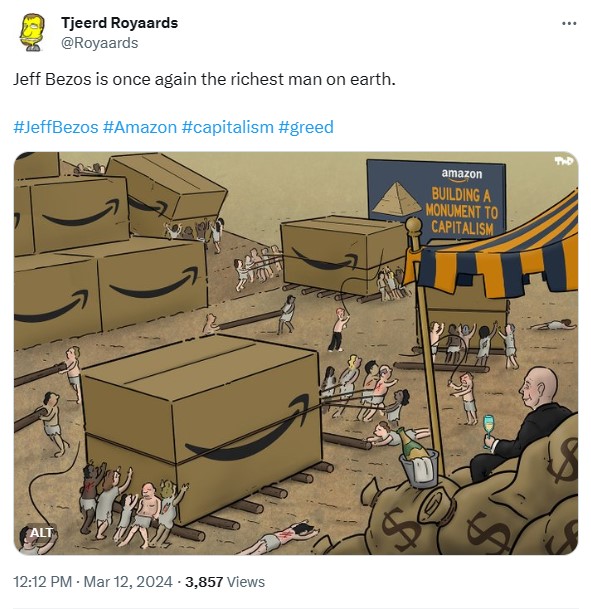
We may think of the United States as a first-world democracy that wouldn’t abide oligarchy, yet the fact is that the U.S. stashes the world’s shady cash. The writers dig up information on anonymous shell companies in the middle of nowhere South Dakota, secret trusts, and money-laundering enablers.
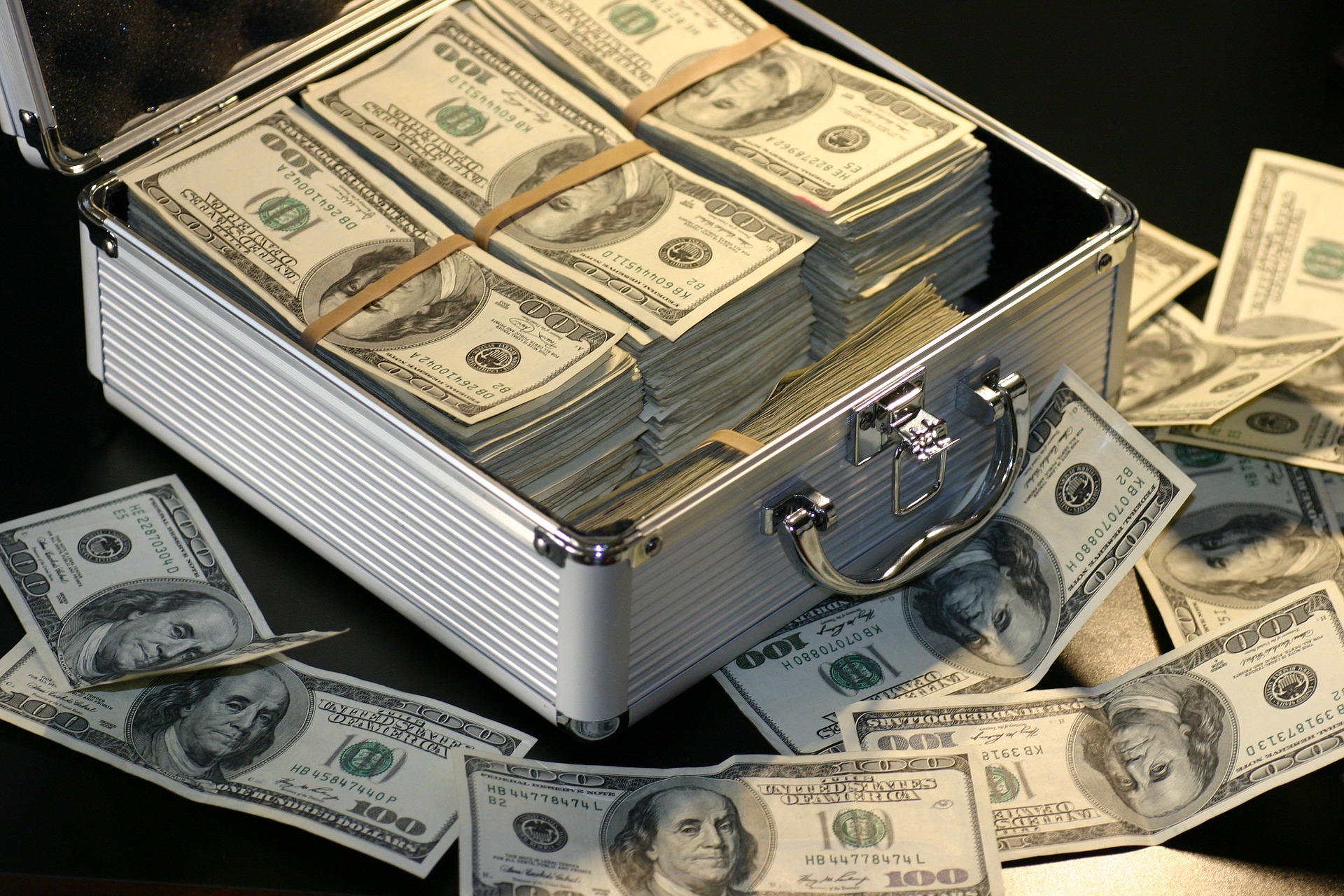
And have you wondered why bank ATMs have all of a sudden started featuring $100 bills. No normal person wants them as they are too difficult to break into smaller denominations. But these are the bills preferred by criminals. The rising criminal economy is pushing the growing demand, so the U.S. Treasury is printing more than normal Americans need as we fuel international crime and corruption.
The entire magazine is full of well-sourced information and very much worth your while.
In his recent State of the Union speech, President Biden spoke about taking on monopolies. If the Gilded Age taught us anything, extreme economic concentration yields gross inequality and material suffering. That feeds nationalism and extremist leadership. Biden’s predecessor wants to return to that period and create even more extremes of wealth in America. The President’s vision is different, as he spoke about “a powerful nation, a remarkably good and resilient people, desperate to move beyond this dangerous moment and to find a better path forward here and around the world.”
Historian Heather Cox Richardson notes the echoes of another president in Biden’s defense of the middle class as the engine of economic growth.
Biden sounds much like Democratic president Franklin Delano Roosevelt did when he ushered in the New Deal in the 1930s. In that era, Roosevelt and his Democratic allies replaced a government that worked for men of property with one that worked for ordinary Americans.
There are other echoes of the FDR administration today, she notes, “as Trump’s undermining of aid to Ukraine has become clear. Ukraine stands between an aggressive Russian dictator [and oligarch] and a democratic Europe.”
In the 1930s and 1940s, the U.S. had to decide whether to turn away from those standing against dictators like Hitler, or to stand behind them.
What became known as the Lend-Lease Act was central to the ability of the Allied Powers to fight off Hitler, Mussolini, and Hirohito, who were trying to take over the globe in the 1940s. Many in the business community originally opposed it, but as Roosevelt stated so eloquently,
“And so our country is going to be what our people have proclaimed it must be—the arsenal of democracy…. Never, in all our history, have Americans faced a job so well worth while.”
We’ve defeated American oligarchy before and we can do it again. The first important step is to understand the challenge. Mother Jones has done us all a favor in laying that out so clearly.
More to come . . .
DJB
Yachts in Monoco by Melody Temple on Unsplash.
 MORE TO COME...
BRAVO, David!
BRAVO, Mother Jones!!
Thank you, Alice. So glad this resonated with you. I thought that Heather Cox Richardson’s Letters from an American for March 21, 2024 (see https://heathercoxrichardson.substack.com/p/march-21-2024) is a good companion piece to this post, as she discusses how American elites and oligarchs in the 1850s used religion and racism to divide the country and keep their concentrated wealth. We’re seeing that same dynamic at play today in the call for Christian nationalism. DJB
I’ll be sharing this for sure!
Kathy La Plante
Thanks, Kathy, for reading, responding, and sharing. DJB
Pingback: Observations from . . . March 2024 | MORE TO COME...
Pingback: Wrapping government and religion together never ends up well | MORE TO COME...
Pingback: From the bookshelf: March 2024 | MORE TO COME...
Pingback: The 2024 year-end reading list | MORE TO COME...
Pingback: Systemic change only occurs after acknowledging a systemic problem | MORE TO COME...