
Many of us are “given the language of the soul” early in our lives. For most, it speaks of something eternal and holy. For Southerners of various races, it can speak of home. But in the hands of a poet, especially one as talented as a former poet laureate, that language—if possible—takes on an even deeper and richer meaning.
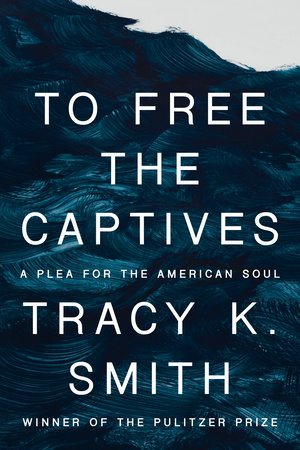
To Free the Captives: A Plea for the American Soul (2023) by Tracy K. Smith, the former Poet Laureate of the United States and Pulitzer Prize-winning author, is described as a “memoir-manifesto” which examines her life and her family history as a microcosm of the Black experience in America. It is a powerful and moving prayer for Americans to accept accountability and do the hard but necessary work of living together with others.
She describes To Free the Captives with these words:
“To write a book about Black strength, Black continuance, and the powerful forms of belief and community that have long bolstered the soul of my people, I used the generations of my own patrilineal family to lean backward toward history, to gather a fuller sense of the lives my own ancestors led, the challenges they endured, and the sources of hope and bolstering they counted on. What this process has led me to believe is that all of us, in the here and now, can choose to work alongside the generations that precede us in tending to America’s oldest wounds and meeting the urgencies of our present.”
Look what she did in that first sentence as she speaks of “leaning backward” toward history. Smith reminds us of the importance of memory by calling out “the conundrum of history.” While we think it is behind us, perhaps—because it came first—it should be “up ahead, turning back now and again to see if we are keeping up.”
“Where are we going? Whence have we come? Can we yet train ourselves to admit the past more fully and honestly? If so, what might we learn about this thing we call freedom?”
The story of her father’s family from Sunflower, Alabama, places them squarely within America’s story. This is the place where her grandfather returned after serving in France during World War I, perhaps motivated to enlist because of hope that by helping to defend democracy in Europe he and other Black men might “prove their loyalty” to this nation.
This history is never gone. It’s not even past.
In the difficult summer of 2020, Smith recognizes that she has misunderstood that past. She believed she was “free” and that her “freedom had long ago been won” for her, but she comes to realize that she and other Black Americans are simply “freed.” She understands that she is “a guest in the places—we might just as easily call them institutions—where freedom is professed.” Smith suggests that, somewhere in the space between “free” and “freed,” the soul of America resides.
Throughout the tale of her family’s history, told in exquisite language both ordinary and gripping, the reader comes to see this space. The story of her parents’ honeymoon night, when they are turned away from the hotel her father has been assured will welcome them, is one example of many.
“‘This is no place for negroes,’ they are told. As much as you know about segregation, as many times as it’s touched you, the blow of discrimination doesn’t go away. You talk yourself back up. You put things into perspective. But you’ve been hit nonetheless. It’s no accident. Second-class citizenship does its work over the duration. A large part of this work hinges on the fact that, no matter how much you have been taught by experience to anticipate, the punch still lands, every time. You do and do not ever get used to it. This is part of segregation’s insidious design. My parents go elsewhere to celebrate their first night together as husband and wife.”
This paragraph shows the vigor and energy of Smith’s prose. Short sentences follow one-after-another to make you feel the pain of separation. There is power in “the punch still lands, every time.” Smith tells the reader again and again that “America is a soul-making enterprise.” And for too long we’ve been creating those souls between those who are free and those who are simply freed.
Throughout Smith writes of the spirituality of the soul, her move toward sobriety and accountability, and her own growing spiritual practice. She makes the case that the soul is not merely “a private site of respite or transcendence,” but it is also a tool for fulfilling our duties to each other, and a sounding board for our most pressing collective questions. She often finds that her family’s history has been erased by institutional insensibility and racism. That history still happened, and it can still be used—in her skillful hands—to call us to bridge the gap between free and freed.
“What if the object each of us is undertaking is no longer an individual life,” she asks, “but a collaborative work massive in scale, which finally we must admit has long spanned lives and times?”
“What might we stand to gain if we were to but adjust our gaze to the scale and the stakes of this other larger undertaking, this colossal enterprise to which each is essential? Not in the hereafter. Not on the other side of the divide between death and life. Perhaps not even Soon. But here, today, where we ache and grieve, and where our best effort is mightly needed.”
In struggling to find the starting point for this journey . . .
“. . .something causes me to understand it is the work of paradox: we approach the large and the far by means of the near and the small.”
This luscious, compelling book reminds us, as one reviewer has noted, that we find the soul “in the warm weight of the actual.”
More to come . . .
DJB
Photo by James Chan on Pixabay.
 MORE TO COME...
Pingback: From the bookshelf: April 2024 | MORE TO COME...
Pingback: Observations from . . . May 2024 | MORE TO COME...
Pingback: The 2024 year-end reading list | MORE TO COME...