
In our time of converging crises it may seem that the end of the world is near. But that perspective misses one important element. “The end of the world as we know it is not the end of the world, full stop,” social thinker and writer Dougald Hine reminds us. “(W)e live within stories whose ending lies beyond the horizons of our lifetimes.”
Some of our most astute scientists, philosophers, storytellers, and mystics are seeking to reweave our connections between soul and earth in ways that look beyond our brief lifespans. They are encouraging conversations that are “far deeper and more profound than that of saving our lifestyle.”
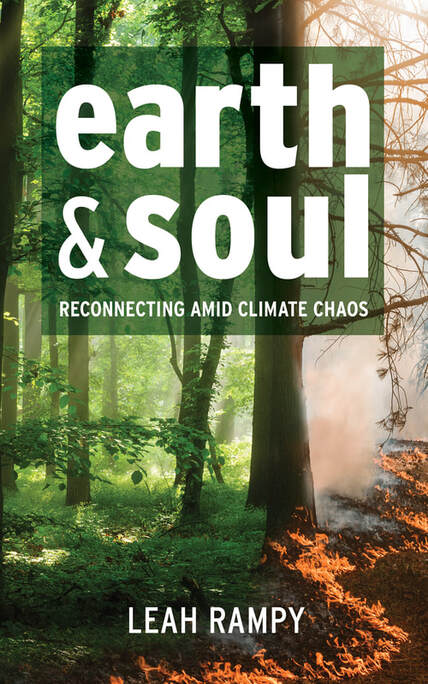
Earth & Soul: Reconnecting Amid Climate Chaos (2024) by Leah Rampy comes from an “intersection of spirituality, ecology and story.” In helping us understand why our souls ache for a deeper connection with the earth, Rampy invites us to think, contemplate, live, and act differently. She travels to edges—where sea, land, and sky meet—because these thin places are sacred. There “the division between heaven and earth, past and present, living and dead can blur, and a sense of oneness permeates time and place.” These liminal places are where we can choose our stories for the future, stories that will last long beyond our lifetimes. They can be a place of “great turning, a return to our truest selves and a transformation of our relationship with the Earth.”
In this latest edition of my author interviews on More to Come, Leah graciously agreed to answer my questions about her work.
DJB: Leah, you moved from wanting to educate people about climate change to focusing on something far deeper. What did you discover about the real conversations we must have?
LR: Facts are important. We need to understand the twin threats of biodiversity loss and climate change. But facts alone do not move us from long-established habits and comfortable lifestyles, nor do they point the way to engaging heart and soul to collaborate in creating a world of mutual wellbeing. Having frayed connections to our relatives in the natural world, we are desperately lonely, and we don’t even understand why. The void we feel often drives us toward consumption and other addictions as we try to numb the pain.
We need practices to encompass both the inward journey to the essence of our true self and the outward journey toward ever-richer connections to the living world. Of course, these are not really two separate journeys; in understanding our soul purpose, we see more clearly how we are inextricably woven into the sacred web of Earth, the cosmos, the Holy. In weaving connections to all life, we deepen our soul’s capacity to bear witness, hold grief, discover beauty, delight in awe and wonder, and act with courage and compassion.
I wrote Earth and Soul to ignite a conversation about living fully alive and deeply connected in these edge times, discerning a path toward mutual thriving in a future beyond our knowing.
The writer Suzanne Simard said, “the forest is a single organism wired for wisdom.” How does that perspective change the way that we relate to nature?
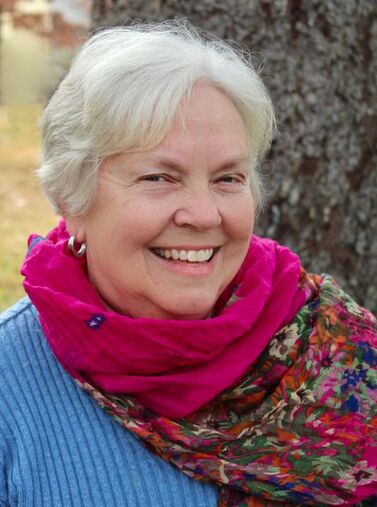
When teacher, author and long-time activist Joanna Macy spoke at a Bioneers Conference, she offered four simple and profound sentences that continue to resonate deeply within me: “It’s all alive. It’s all connected. It’s all intelligent. It’s all relatives.” If we could live into the truth of those statements, our relationship to the living world would change dramatically.
Suzanne Simard along with other scientists and writers like Merlin Sheldrake have brought to us a new understanding of the vast web of relationships and the breadth of interactions that are happening within and because of forests. I love the stories of trees because they illustrate so much wisdom. Robin Wall Kimmerer in her amazing book, Braiding Sweetgrass, called our attention to our role as the younger brothers and sisters of the wise beings who have been on Earth far longer than humans. Author Enrique Salmon speaks of Indigenous knowledge as kincentric ecology. In much of our dominant western culture, we have forgotten our relationship to the more-than-human ones, making it too easy to see anything non-human as “other.” And when we other the living world, it’s a short step to using kith and kin for our wants without regard for their life and liveliness. What an opportunity for us, to become kin-centric instead of ego-centric!
Throughout the book you reference “the dark night of the soul.” What is it about darkness and grief—individual and collective—that has the potential to provide a pathway forward?
If we are not grieving the loss of people, homeland, species, and ecosystems, we are not paying attention. Paying attention is a spiritual practice—open, present, and available to Spirit’s movement in, among, and around every being and within which all are held. When we face fully what is happening, we feel a deep and abiding grief. It’s not that we choose the path to grief, it’s that we choose not to look away or distract ourselves from its presence. We allow our hearts to break open to hold it and more—more grief, joy, sorrow, wonder. We embrace life in its entirety.
However, sometimes on our journey, we come to an impasse. We have no idea where to go, how to move from where we are. Anything we’ve done before no longer works. Solace cannot be found in friends, activities, or religion. We may feel abandoned by the Sacred. This is the dark night of the soul. In this space, our plans, efforts, and energies are of no use. There is nothing for it but to cease struggling and allow ourselves to be found. Then we may be given a direction, a bit of wisdom heretofore unknown to us, that frees us from the total darkness.
We tend to seek solutions to problems when what we really face are predicaments that have no solutions but demand responses. You suggest we not “overdrive our headlights.” How can that simple phrase help us navigate the journey we find ourselves on today?
Discerning what is ours to do in these edge times may not reveal our destination or even the purpose of the journey to which we are called. As we set forth, seeing just a bit of the road ahead, we might begin to anticipate what lies beyond. The reminder not to overdrive our headlights keeps our attention on ongoing discernment, holding an attentive and open receptivity to small nudges that invite us to cocreate with Earth and Spirit, perhaps in surprising ways.
What other books would you suggest to learn more about the connection between earth and soul?
So many good books. The Great Conversation by Belden Lane and Earth’s Wild Music by Kathleen Dean Moore speak to loss and finding beauty and comfort in the world around us. Joanna Macy is a seasoned guide to how we live in edge times. I like Active Hope but anything she writes is infused with deep elder wisdom. I think everyone needs to read Robin Wall Kimmerer’s Braiding Sweetgrass to explore more about kinship with plants and break some cultural paradigms through stories and gentle guidance.
Stephen Harrod Buhner’s Earth Grief and of course anything by Francis Weller are companions for eco-grief. For a look at how we moved so far from recognizing interwoven connections, I really appreciate The Nutmeg’s Curse by Amitav Ghosh. If you’re interested in the wisdom of Celtic spirituality, John Philip Newell’s Sacred Earth, Sacred Soul is excellent.
Thank you, Leah.
Thanks for the invitation.
More to come . . .
DJB
 MORE TO COME...
Pingback: From the bookshelf: May 2024 | MORE TO COME...
Pingback: Memory is life’s way of talking to the future | MORE TO COME...
Pingback: Observations from . . . June 2024 | MORE TO COME...
Pingback: Conversations with writers: 2024 | MORE TO COME...
Pingback: The 2024 year-end reading list | MORE TO COME...
Pingback: Pull up a chair and let’s talk | MORE TO COME...