Sometimes it helps to begin at the beginning.
After having read the second and the eleventh installments of what is now a 33-book series, I decided I should return and read the origin story (of a sorts) of Venetian detective Guido Brunetti.
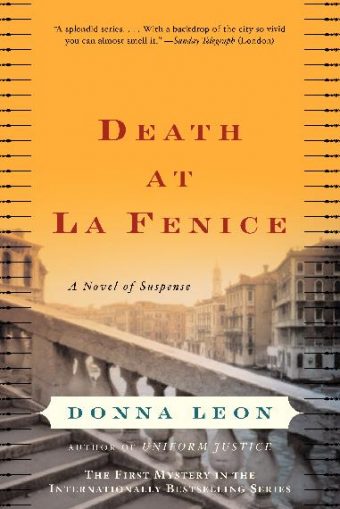
Death at La Fenice (1992) by Donna Leon, the first in the Commissario Guido Brunetti Mystery series, is set in the celebrated opera house La Fenice, where the world-famous conductor, Maestro Helmut Wellauer, is poisoned between the second and third acts of a performance of La Traviata. With a history dating back to 1792, the famed house—with its many hallways, dressing rooms, and backstage hideaways—is a perfect setting for Leon to introduce us to Commissario Brunetti, who she describes early in this tight and irresistible work with the following: “His clothing marked him as Italian. The cadence of his speech announced he was Venetian. His eyes were all policeman.”
For someone use to the legendary corruptions of Venice, Brunetti is nonetheless shocked as he uncovers the vast number of enemies the maestro has made on his way to the top. Of course Brunetti’s wife Paola Falier—a university lecturer in English Literature who is a delightful and loving foil for her husband—insists on choosing a suspect at the beginning of any investigation he is working on . . .
“. . . and she is generally wrong, for she always opted for the most obvious choice. Once, exasperated beyond bearing, he’d asked her why she insisted on doing it, and she’d explained that since she had written her dissertation on Henry James, she considered herself entitled to the release of finding the obvious in real life, since she’d never found it in his novels.”
Brunetti can only wish it were so simple.
In addition to Paola, Leon introduces us to a number of the cast of characters who make up Brunetti’s life: his vain and pompous superior, Giuseppe Patta who begins the series over the top and stays there; the quietly efficient medical examiner Ettore Rizzardi; Paola’s father and Brunetti’s father-in-law, the wealthy and connected Orazio Falier; and his children Raffaele and Chiara. There are others—such as his fellow policeman, Detective Inspector Lorenzo Vianello and the ever-resourceful secretary Elettra Zorzi, a woman of “endless and instinctive deceit”—who will join the story in later works. Leon once said that she wrote Brunetti’s character so that she would like him, and the reader quickly comes to the same conclusion in this first work.

Leon sets themes in Death at La Fenice that will return again and again. The truth can be very hard to discover in this life and justice isn’t always simple and easy. To find who poisoned Wellauer, Brunetti digs into the jealous and fickle world of opera, he explores past lives during World War II that some would prefer remain hidden, and he finds that the morality police often have the most to hide. In the end he uncovers what happens and finds himself having to balance those facts against the challenges of seeking a just outcome.
I can’t wait to dive into another Brunetti mystery so that I can return to Venice yet again. It is certainly, in Leon’s hands, a beautiful, beguiling, and troubled city that one doesn’t want to leave.
And for a special treat, here’s the beautiful prelude to La Traviata. As one online commentator put it so well, “This charming prelude, like a tuning fork, tunes the strings of the soul to the tonality of the entire opera.”
More to come . . .
DJB
This special holiday-week edition of the Weekly Reader links to the works of other writers I’ve enjoyed.
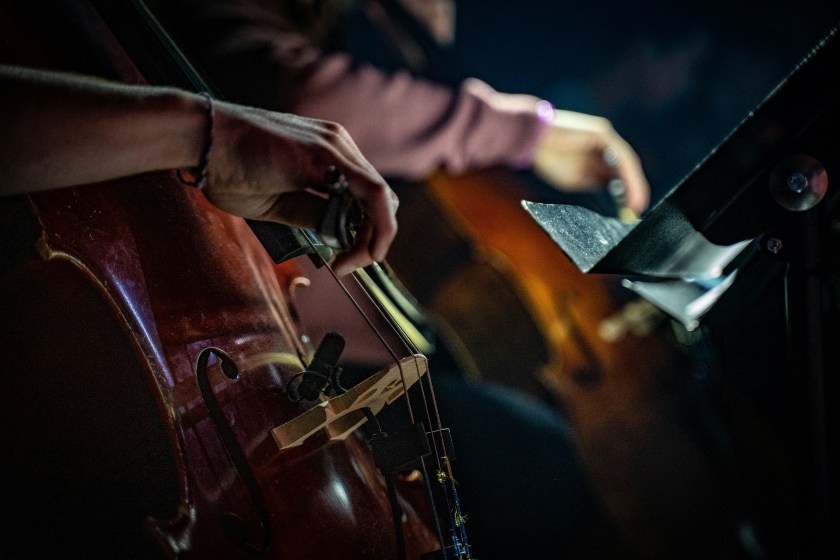
Photo by Rob Simmons on Unsplash
 MORE TO COME...
Pingback: From the bookshelf: June 2024 | MORE TO COME...
Pingback: Observations from . . . July 2024 | MORE TO COME...
Pingback: The 2024 year-end reading list | MORE TO COME...
Pingback: Bringing a measure of justice to an unjust world | MORE TO COME...
Pingback: Librarian on the run | MORE TO COME...