
Myth has been on my mind recently. I’m not a long-time student of those traditional stories that people use either to explain their origins or to understand some inexplicable phenomenon. Likewise, it is only in the last few years that I’ve focused on myths as widely held but false beliefs or ideas. I have, however, gained an appreciation for the role of myth in our lives, one that helps me understand the places where I’m traveling and lecturing.
Myths have also shaped how we see something as baffling as thefts of masterworks of art.
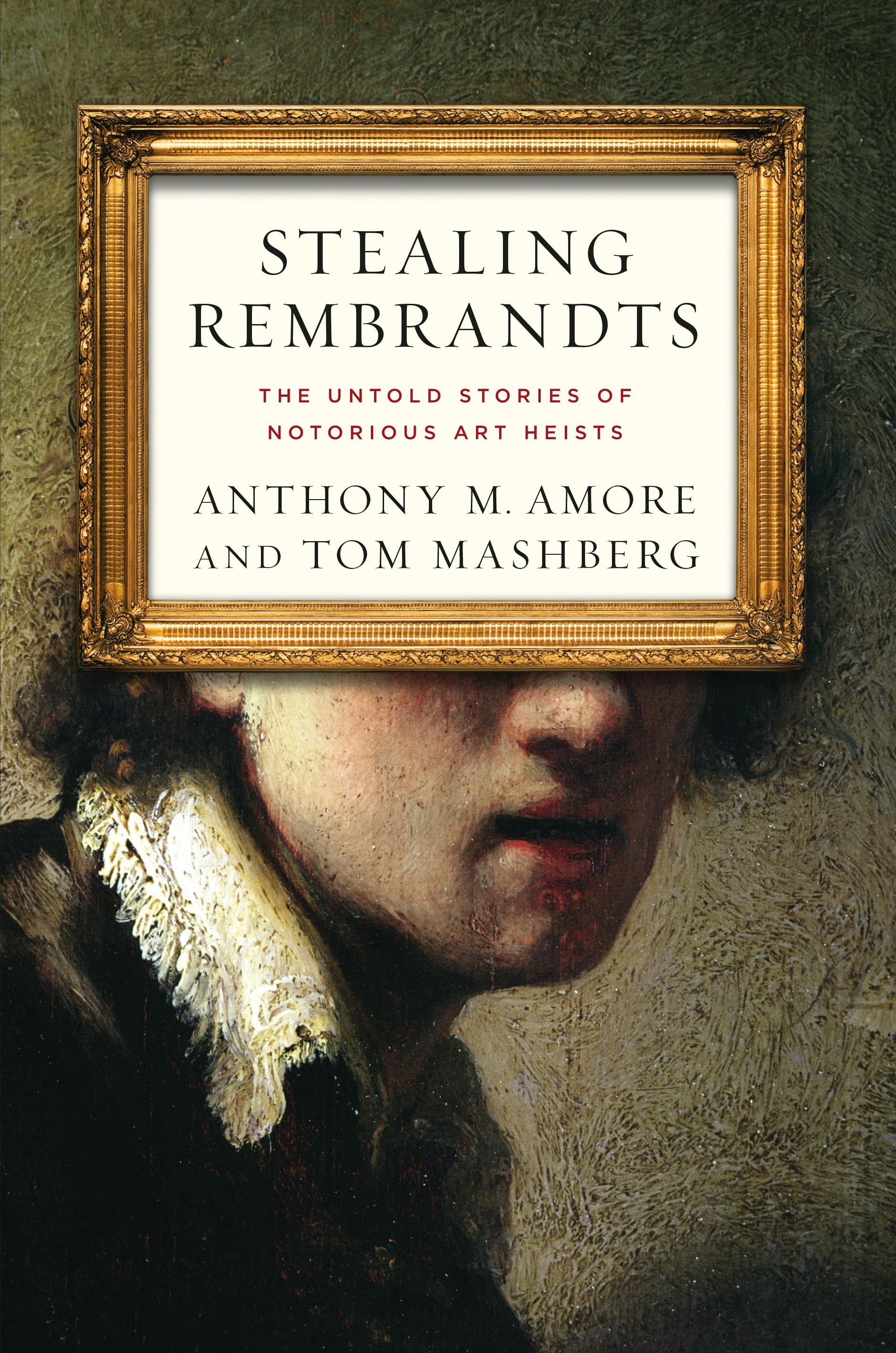
Stealing Rembrandts: The Untold Stories of Notorious Art Heists (2012) by Anthony M. Amore and Tom Mashberg is a detailed look at the high-stakes world of art theft that was exceeding $6 billion in losses to galleries and art collectors annually when this book was published twelve years ago. In a swift-moving narrative, Amore, an art security expert, and Mashberg, an investigative journalist, provide the history behind these high-profile crimes while puncturing some of our myths along the way. And because some 80 different works by Rembrandt van Rijn have been stolen worldwide during the past 100 years, much of the book’s focus is on the paintings by the Dutch master and the creative ways thieves lift them from their owners.
Amore is the Director of Security and Chief Investigator at Boston’s Isabella Stewart Gardner Museum, where he is charged with the ongoing efforts to recover thirteen works of art—including three Rembrandts—stolen from the museum on March 18, 1990. Because this theft has never been solved and the artwork is still missing, Amore and Mashberg touch on it only in the epilogue
The authors deconstruct one myth in the first chapter, aptly named There is No “Dr. No” after the 1962 James Bond film of the same name. The Dr. No character is a larger-than-life criminal living in lavish hidden lairs with a taste for purloined masterpieces. The reality, note Amore and Mashberg, is far more grimy and far less romantic. By and large major art theft is committed by common criminals associated with local crime rings, part of what law enforcement calls “disorganized crime.” And in a number of case studies the reader learns how they run the gamut from comical bunglers to cunning and dangerous thieves who will stop at nothing in the commission of their crimes.
Readers also come to understand why Rembrandts are so prized by art thieves, even though most crimes do not result in big paydays for those making the heists. Not only does Rembrandt “stand alone as the most prolific portrait painter” among the greats, but he also owns a “far more mortifying distinction.”
“He is the only great master to have had one of his portraits, Jacob de Gheyn III (1632), stolen an outlandish four times, all between 1966 and 1983, and always from the same London museum. The ill-starred work is now known as ‘the Takeaway Rembrandt.'”
The story of the takeaway masterpiece is typical of Stealing Rembrandts, which I bought on a recent visit to the Gardner Museum. And I’m glad to learn more about what’s behind these crimes that rip beauty from the public sphere. As long-time museum director Anne Hawley phrased it, the theft of a masterpiece is like the loss of a symphony by Beethoven, a play by Shakespeare, or a jazz recording by Louis Armstrong. We all lose when art thefts—rising at an alarming rate the world over despite heightened awareness and security—keep these masterworks out of the public eye.
More to come . . .
DJB
Photo by Allison Saeng on Unsplash.
 MORE TO COME...
Pingback: From the bookshelf: June 2024 | MORE TO COME...
Pingback: Observations from . . . July 2024 | MORE TO COME...
Pingback: The 2024 year-end reading list | MORE TO COME...
Pingback: The best of the MTC newsletter: 2024 | MORE TO COME...