Traveling to Europe seemed an appropriate time to read about wine. Thankfully, I found a book where the author writes in her introduction that “wine is the place where history, science, and civilization meet.” I knew then I’d found a thoughtful, engaging, and educated guide.

To Fall in Love, Drink This: A Wine Writer’s Memoir (2022) by Alice Feiring is a self-described “love letter to wine and a lifelong coming of age story.” Feiring believes that the best wine writing is about life, and in a series of eleven personal essays she explores her own life’s story while sharing her love of natural wine. She doesn’t want to be seen as a wine critic, but instead wants readers to share her fascination for wine’s spiritual underpinnings.
Feiring tells the story of Georgian soldiers who, when attacked by Turks, “went into battle with a vine clipping near their breast; should they die on the field, a grapevine would take root through their heart. Even if that story was nothing more than local mythology,” she continues, “the love behind the myth begs for attention.” She is captivated by the fact that virtually every culture has a relationship with wine. Her writings about this captivation, as well as the desire to find meaning in the metaphor that is wine, results in a book that is as delightful as good bottles with good friends around a bountiful table.
Throughout To Fall in Love, the reader travels with Feiring through childhood memories of her beloved grandfather who mixes stories in Yiddish and English and teaches her how to drink schnapps. We see teenage misadventures, such as the time she barely escapes the clutches of a serial killer who befriends her in a bookstore where she is sent while her father meets up with his mistress. Feiring shares stories of a long-term boyfriend who was Catholic and didn’t drink due to being raised by an alcoholic father, and how they finally broke up because they were “just different species.” The reader visits German concentration camps in Poland, where Sarah, the cousin of Feiring’s mother, escaped the Nazis with her family. We read about her first wine writing assignment and pandemic loneliness. In each essay Feiring provides us with a wine suggestion. These “are not here because they are the best or my preferred wines but because they move me and are integral to the story line.”
Feiring drinks as she eats: “organic, with very little processing.” Thus we learn about wines that are “at least seriously sustainable viticulture” with no added ingredients or “big machines.” She says that while some might call them natural, “these days I just call them real.”
And that’s also how she writes: simple at one level but complex in other ways, and always real. Each essay has its own particular taste, if you will, but each is satisfying. Feiring has an “uncommon palette” in food and wine, and that comes across in this delightful memoir. As one reviewer suggested, finish every drop.
More to come . . .
DJB
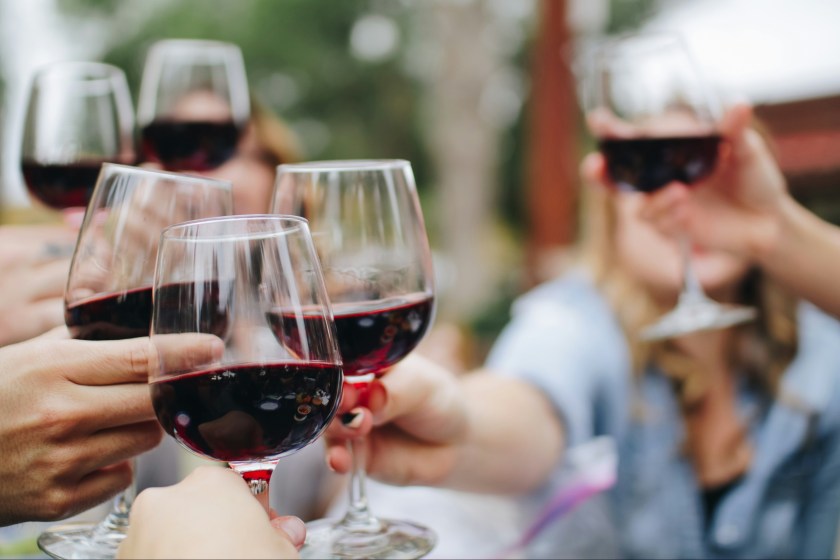
Photo by Kelsey Knight on Unsplash
 MORE TO COME...
Pingback: Observations from . . . October 2024 | MORE TO COME...
Pingback: From the bookshelf: October 2024 | MORE TO COME...
Pingback: The 2024 year-end reading list | MORE TO COME...