In a world of false facts and disinformation, the truth can be very hard to uncover. When a new work of what we in the South use to call “regional fiction” came across my desk—a mystery novel set in part on an old wooden boat among the San Juan Islands—I wasn’t expecting that the compelling story would be a pathway to considering several fundamental truths. But in the hands of a skilled storyteller that’s exactly what I discovered.
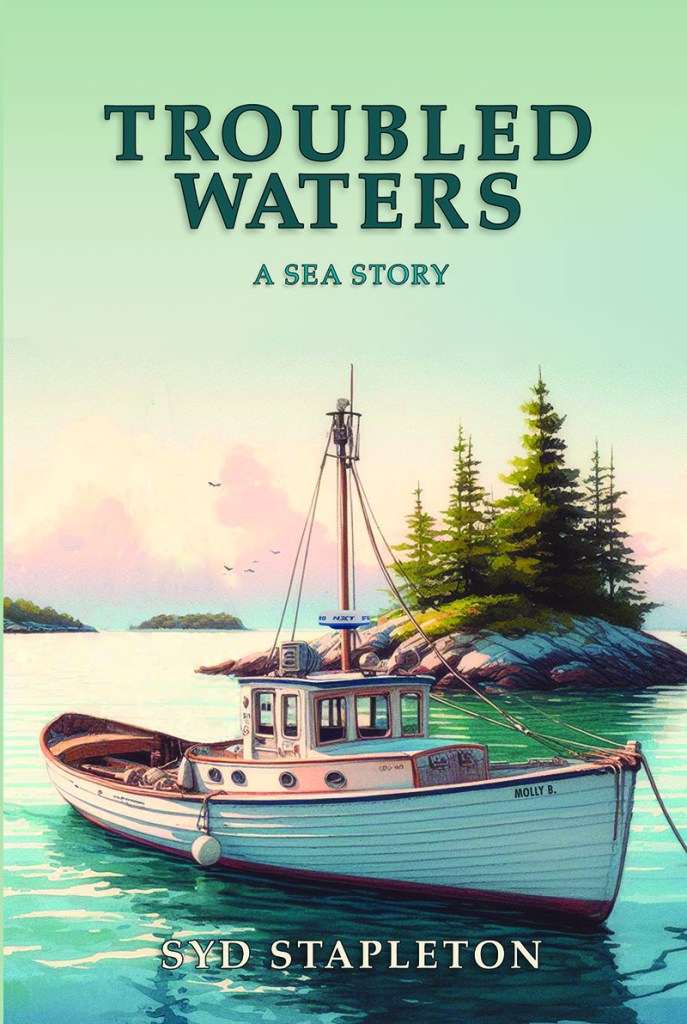
Troubled Waters: A Sea Story (2024) by Syd Stapleton is a tale about an environmental disaster and cover-up wrapped in a whodunit. Our hero, Frank Tomasini, is a 47-year-old marine surveyor who lives comfortably on the Molly B, a 1937 salmon troller, which has been lovingly refurbished by its former owner who also happens to be Frank’s best friend. Near the first of 280 pages filled with crisp and clever writing, Frank is asked to unofficially survey the damage to an abandoned and adrift boat that belongs to Arthur Middleton, a “rich and holier-than-thou environmental warrior.” Middelton’s current crusade had centered on a polluting salmon fish farm located on remote Baker Island, near to where his boat is found. It turns out very few people, including Arthur’s brother, a high-powered Seattle business shark, seem too eager for Frank to find out what happened.
Frank’s telling of the story can slip into an irascible and cantankerous tone on occasion, but his dogged determination to find answers to this mystery make it work. He brings friends old and new along on his discovery, including Arthur’s somewhat eccentric but endearing aunt Agnes and Frank’s longtime friend turned lover, Carol. Much of the story takes place on the boat, which Frank keeps stocked with food and Laphroaig.
Troubled Waters is an engrossing read. If you want a full review I recommend this one from LineTime.org and this one from Against the Current. Stapleton—who studied at Berkeley in the 1960s and became a leader of the Free Speech Movement; debated William Colby, former Director of the CIA; ran for Congress as a socialist in 1970 (and lost); and has been a former ferry captain, landing craft relief skipper, and tugboat worker, graciously agreed to answer my questions about his new book.
DJB: Syd, “Troubled Waters” is a work of fiction about something we see all too often: environmental disasters and the subsequent coverup by those most responsible. Why choose fiction―and specifically the mystery genre―to tell this story?

SS: One of the big problems with coverups is that it’s hard to get the facts. We all know that more than a few humans, including officials, can be heavily influenced by money, power and pressure, and that can weave a very tangled web. I wanted to make the point clearly, and I’m afraid that in today’s world, fiction is sometimes one of the few ways to make the truth clear.
For those of us with limited knowledge of the San Juan Islands, its gritty maritime and fishing history comes as something of a revelation. When you set the story here, were there specific aspects of the region’s past, present, and future you were hoping to weave into this tale?
I do think it’s important to remember that the impact of “modern life” has come in a very short time, when you look at things a little more broadly. Maybe it’s because I’m getting a little older, but I think the rate of change in the world is important to remember. Every generation has someone who lives to be a hundred years old. So, two lifetimes ago, the San Juan Islands were very, very far from being a vacation spot! Even just a hundred years ago, Native Americans were still a big presence, fishing and farming (well, and smuggling booze) were the main activities there, and life was not always easy.
That gap in time also lets us see a little more clearly the impact of “business” on the natural environment. Making money, as the principle moral value of our social organization, is a pretty scary thing when you look at the way it has affected many things, from Orca whales to housing prices to the pace of life, to the environment in general.
Your narrator, Frank Tomasini, has a bit of the lovable yet tenacious curmudgeon in his spirit. Your personal story has chapters that would seem to have required a similar outlook on life. Does Frank’s character come from someone specific, is he more of a composite of people you’ve met in the past, or is he a total creation from your mind?
Well, I’m not half Italian! I really put together the Frank character as someone whose voice I thought it would be easy for me to make consistent and believable. But he is a composite of people I’ve known and liked over the years. Some of the other characters are drawn straight from people I know and have worked with, with names changed to protect the innocent (or guilty). Particularly Frank’s history as a Berkeley radical in the ‘old days’ is something I know about and identify with.
I was interested in showing that even people without advanced degrees, or lots of money, can think clearly. They may not have a lot of power in the modern world, but they can still recognize a problem, and sometimes take steps to solve it.
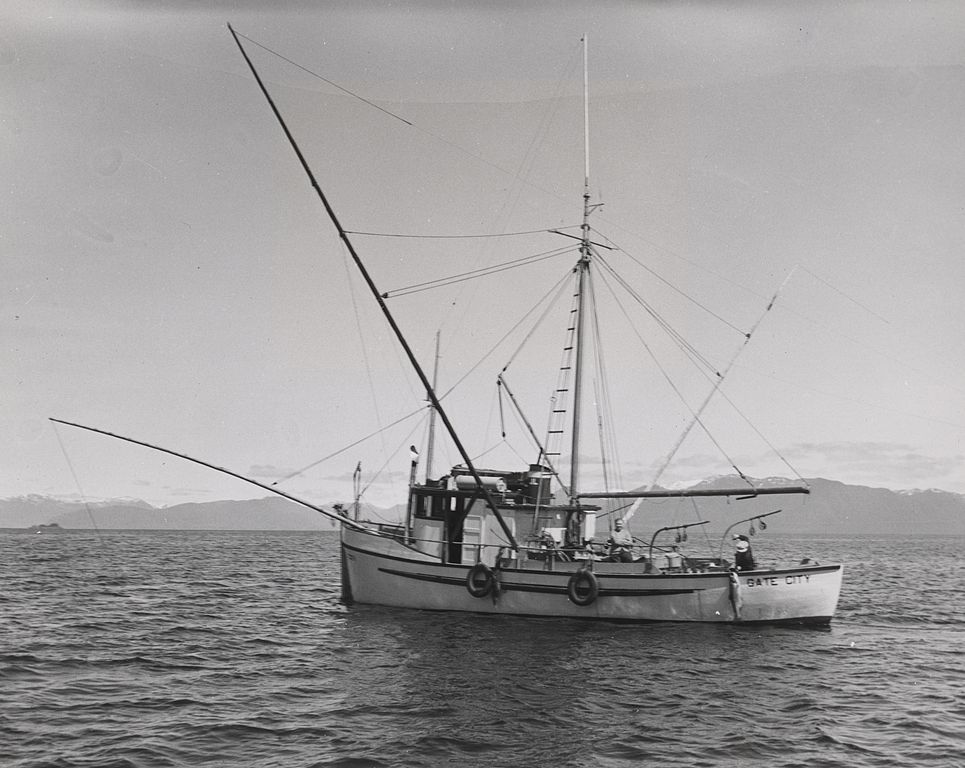
Your descriptions of Frank’s boat, the Molly B, reflect a real love for this refurbished 1937 salmon troller. Knowing that many of your readers (including this one) wouldn’t know their port from their aft, what went through your mind as you began to think about including nautical terms in this story?
As you know, there are a lot of “sea stories,” from Moby Dick through Joseph Conrad, B. Traven, Steinbeck and even some more modern writers. It can be an intense and intriguing world—a whole world of knowledge that allows for the consideration of different kinds of rules and priorities. The isolation of a small group under intense circumstances can lead to interesting interactions.
In the days before the dominance of plastic boats (excuse me, “fiberglass”), the building of wooden boats and ships, and their maintenance, was an art, an incredibly complex skill, with some positive features that are hard to find today. It’s not really an exercise in nostalgia, so much as it’s another appeal to look at the impact of “efficiency” and “low labor costs” on the world.
In finding out the “who,” but not seeing a satisfactory resolution of justice for those who perpetrated the disaster, I saw reflections of mystery writers such as Donna Leon. In her books she returns again and again to the theme that the truth can be very hard to discover in this life and justice isn’t always simple and easy. What books are you reading these days, and are there any mystery writers among that group?
I grew up an only child on a small farm, miles from the nearest town, let alone city, and my parents told me it was too far out to have television. So, unlike most of the kids my age, books were my companions and entertainment. It turns out my parents hadn’t been completely honest with me, but I forgive them! I’ve read intensely my entire life—history, politics, biographies, but mostly fiction over the last thirty years or so—good stuff, like Alice Munro, Henry Roth, Philip Roth, Henry Miller, Joseph Heller and on and on. And also a lot of “mysteries.”
I like Donna Leon! But among some favorites are (not in order of preference): K.C. Constantine, Qui Xiaolong, Caimh McDonnell, Percival Everett, Martin Walker, John Banville, Elizabeth George, Andrea Camilleri, Walter Mosely, James Lee Burke, Martha Grimes, Sara Paretsky, Laurie R. King, S. A. Cosby, Craig Johnson, Carl Hiaasen, Jonathan Lethem, Jo Dereske, T. C. Boyle, Cormac McCarthy, Dennis Lehane, Mauricio de Giovanni, Tony and Anne Hillerman, and more…
Thank you, Syd.
I really appreciate it.
More to come . . .
DJB
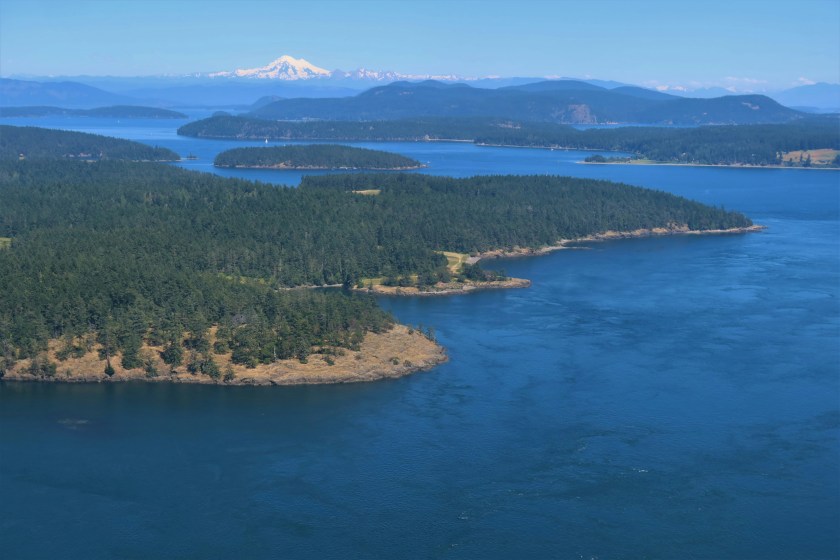
Aerial view of forested San Juan Islands in the Salish Sea with snowy Mount Baker on the horizon by Chris Linnett on Unsplash
 MORE TO COME...
Pingback: Observations from . . . January 2025 | MORE TO COME...
Pingback: From the bookshelf: January 2025 | MORE TO COME...
Pingback: Librarian on the run | MORE TO COME...
Pingback: Pull up a chair and let’s talk | MORE TO COME...
Pingback: Greed, corruption, and the ongoing degradation of the only earth we have | MORE TO COME...
Pingback: The year in books: 2025 | MORE TO COME...
Pingback: Readers choice: The best of the 2025 MTC newsletter | MORE TO COME...
Pingback: ‘The Six Mile Circle: A Sea Story’ - World-Outlook