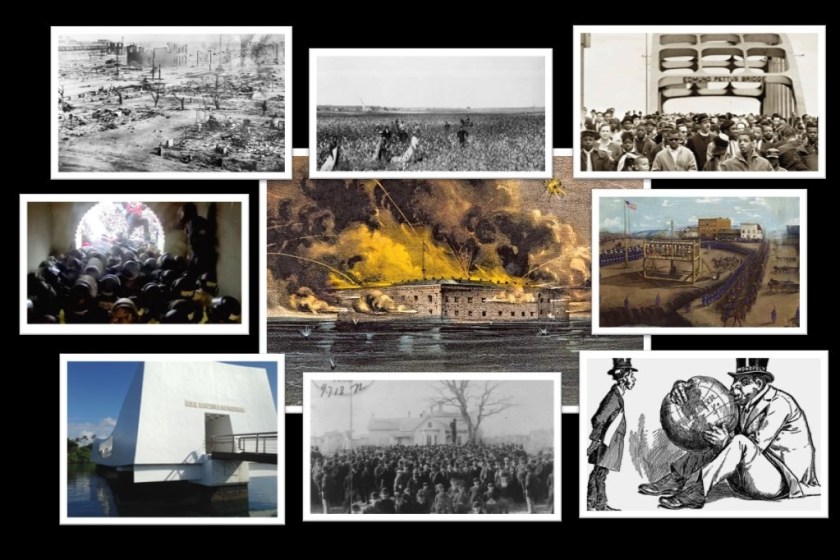
With all the recent talk about “canals, Manifest Destiny, and tariffs, you can be forgiven for wondering what century we are in,” note the writers at the online history site Bunk. There are, they suggest, historical roots to Trump’s aggressive nationalism.
Past and present often seem to come together as one in today’s world, as author Ryan Holiday wrote.
“I can’t predict the future, but I feel pretty confident in predicting that the next 4 years are going to be crazy.
For political reasons, sure, but we don’t need to agree about that. I know I am right because you can’t find a four-year period in history that wasn’t filled with chaos, upheaval, and uncertainty. Never forget, Seneca reminds us, Fortune has a habit of behaving exactly as she pleases. Why would the next four years be an exception to this rule? There is no normal in this life…except disruption, change, and surprise.”
Holiday provides examples and follows by noting the critical question facing us is “not how we can avoid these challenges, but how we can prepare for them.”
These essays led me to consider disruptive and history-changing events in the first fifteen years of my life. Would Holiday’s hypothesis of near constant upheaval ring true?
Setting the stage

The Chinese have a saying: “Most of what we see is behind our eyes.” We see what we expect to see, not necessarily what is really there. That’s as true for history as it is for politics, religion, or our taste in friends. We force the world into our preconceptions and because of that we miss a lot.
Given that caveat, I would suggest that one of the most consequential actions of the past 70 years took place less than a year before I was born. When the Supreme Court delivered the unanimous 1954 ruling in the landmark civil rights case Brown v. Board of Education of Topeka, Kansas—finding that state-sanctioned segregation of public schools was a violation of the 14th amendment and was therefore unconstitutional—it was a turning point in American history. Protests, riots, and attempts to overturn the constitution followed with repercussions that are still being felt. Some actions to change this decision continue until today.
What follows is my very superficial sampling of representative events that impacted me, my family, my community, and the nation at large when I was still a child growing into adulthood. The list barely counts as the tip of the iceberg.
1955-1969
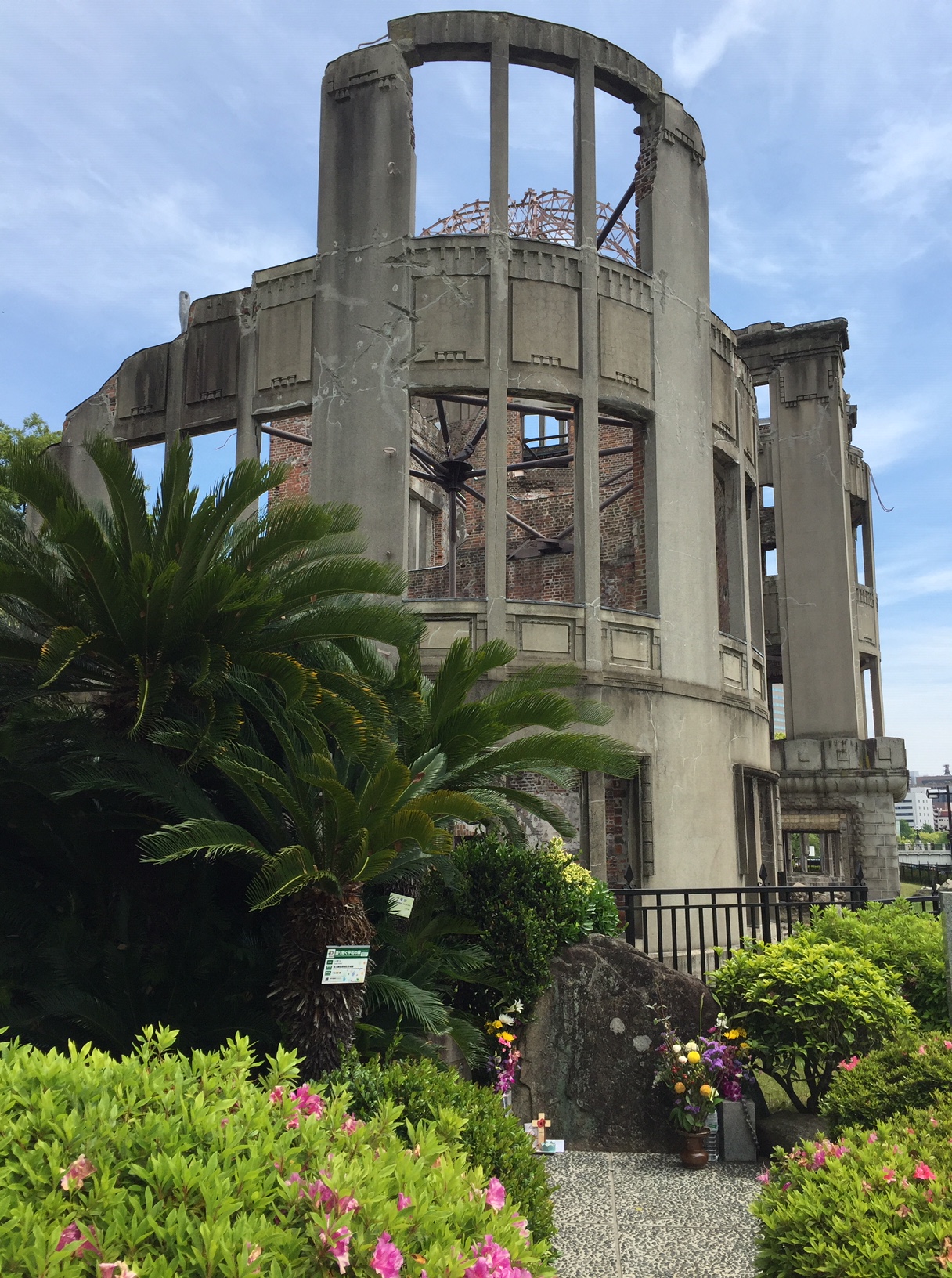
I was born in 1955.
- The Cold War was in full swing and concerns about nuclear annihilation led 52 Nobel laureates to sign the Mainau Declaration against nuclear weapons.
- Racial tensions were escalating at home, as Rosa Parks was arrested for taking a seat in the “whites only” section of the bus. Her resistance set in motion one of the largest social movements in history, the Montgomery Bus Boycott, and scared many white southerners.
- The following year tensions were high in Egypt, as the Suez Canal crisis escalated and alliances in the always volatile Middle East shifted.
- While many couldn’t comprehend the impact, my engineer father understood that IBM’s introduction in 1956 of the first commercial computer was going to change the world in ways good and bad.
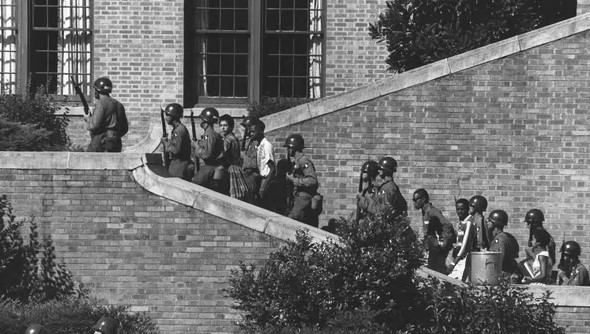
- In September of 1957, the Governor of Arkansas, Orval Faubus, called out the National Guard to prevent Black students from entering Little Rock Central High School. President Dwight D. Eisenhower responded by ordering US troops to support the integration of those nine Black students at Central High. While a large portion of the country was elated, a similarly large faction saw their world crumbling around them.
- Later that year, the Soviet Union launched Sputnik I, the first artificial Earth satellite, into an elliptical low Earth orbit, setting off panic in the U.S. that we were losing the “space race” to the communists.
- On December 31, 1958, Cuban dictator Fulgencio Batista fled the country, leading to Fidel Castro’s takeover of the island’s government, 90 miles from U.S. shores, in February of 1959. That action would have major impacts on U.S., Cuba, and Soviet relations for generations and lead to the Bay of Pigs fiasco (April 1961) and the Cuban Missile Crisis (October 1962). I’m old enough to remember hiding under my desk at school as we waited for the atomic bombs to fall.
- Birth control pills were introduced in 1960, setting off both a feminist revolution around bodily autonomy and a backlash from the patriarchy.
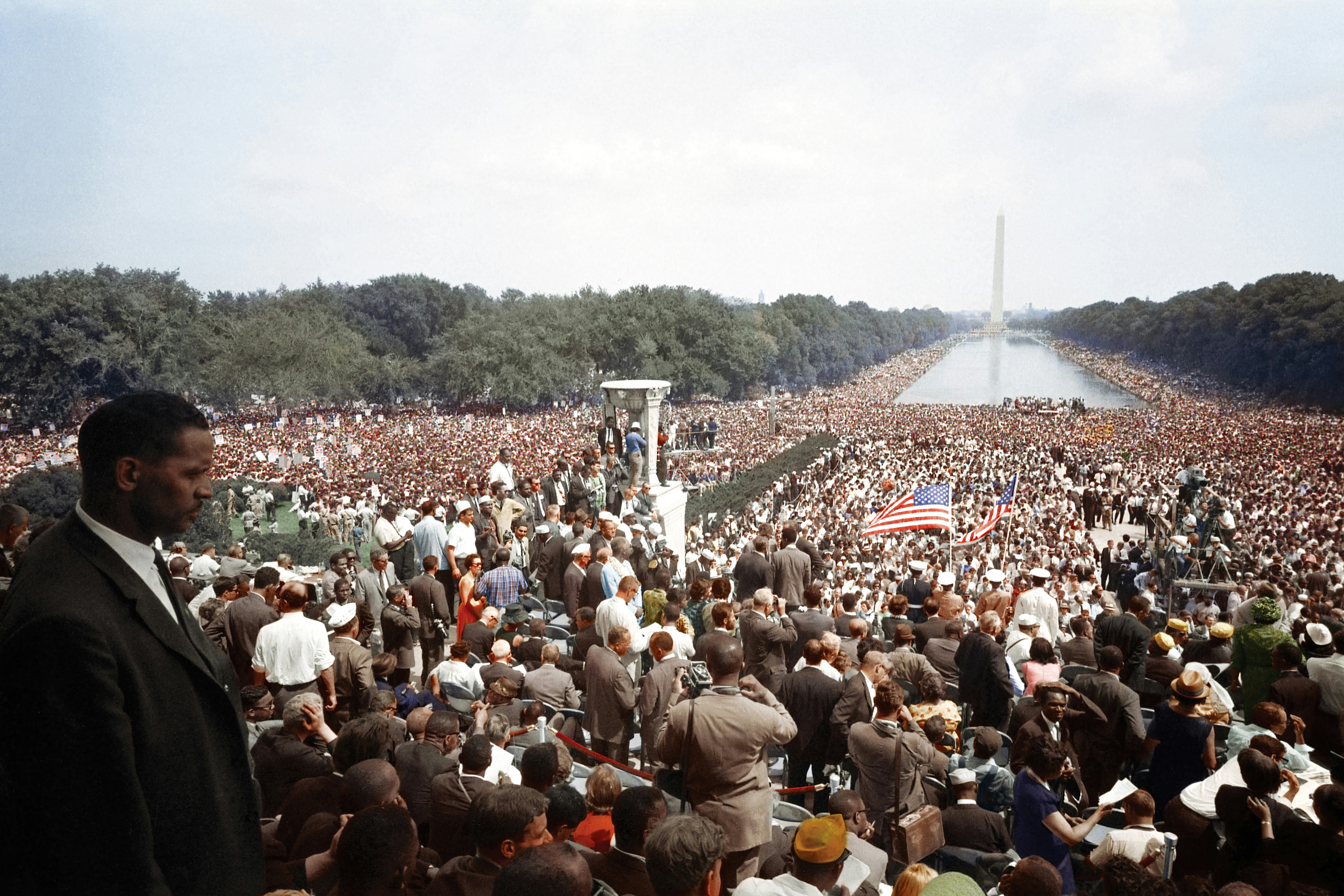
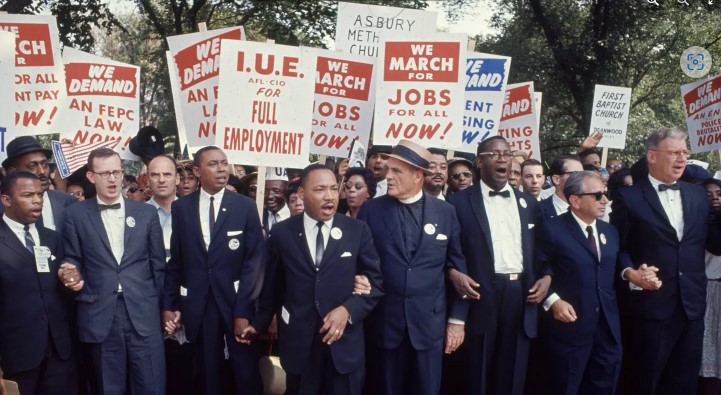
- The 1963 March on Washington for Jobs and Freedom galvanized the Civil Rights movement but also contributed to the takeover of the Republican Party by hard-right conservatives in 1964.
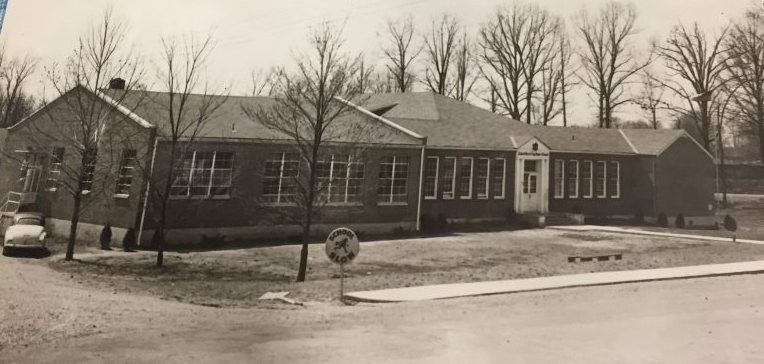
- Capshaw Elementary School in Cookeville, Tennessee, where I was a rising third grader in the fall of 1963, was integrated some nine years after Brown v. Board of Education. Mother was the head of the PTA. Years later she would reflect that it was one of the most difficult years of her life. “We never had a problem with the children,” Mom noted. It was always the parents—the alleged adults in the situation—who made her job miserable.

- The November 1963 assassination of President John F. Kennedy and the subsequent killing of assassin Lee Harvey Oswald led to fear, sadness, angst, and turmoil across the nation. For my generation, everyone remembers where they were when they heard the news, much as my parents’ generation could remember where they were when Pearl Harbor was bombed and my children’s generation would never forget the location where they first heard about the attacks of 9/11. All three were turning points in American history that brought upheaval and uncertainty.
- The Civil Rights Act (after an 83-day filibuster in the US Senate) and the Voting Rights Act were signed into law in 1964. Both events have had enormous repercussions throughout the decades. Historians have shown that Chief Justice John Roberts has made it one of his key missions to undermine the VRA, marking him as the Chief Justice Roger B. Taney of the 21st century, forever on the wrong side when it comes to protecting the country’s democracy.
- 1965 saw the first large-scale US Army ground units arrive in South Vietnam. Their number would soon swell.
- The Soviets beat the U.S. to the moon in 1966, with the first soft landing by the spacecraft Luna 9. Concerns over the impacts of a Soviet presence in space that could attack the U.S. led to an increase in spending on the military-industrial complex that has been as much as 28% of our national budget (1987) and changed our politics forever.
- Large-scale protests against the U.S. role in Vietnam broke out in 1966, as fights over the war and civil rights began to tear the country apart.
- The Six-Day War began in June of 1967 between Israel and the neighboring Arab states of Egypt, Jordan and Syria, reminding us once again of the fragility of peace in the Middle East.
- Executions and assassinations took center stage in 1968, leading many to wonder if the world was going mad. On February 1st, Saigon police chief Nguyễn Ngọc Loan executed Viet Cong officer Nguyễn Văn Lém with a pistol shot to the head. The execution was captured by photographer Eddie Adams and became an anti-war icon. April 4th saw the assassination of Dr. Martin Luther King Jr. by James Earl Ray at the Lorraine Hotel in Memphis, Tennessee. Riots followed in over 100 U.S. cities, devastating many historically black neighborhoods for decades. Close on the heels of that murder, Palestinian Sirhan Sirhan assassinated presidential candidate Robert F. Kennedy on June 5th just moments after he had won the Democratic primary in California.
- In August of that year, 250,000 Soviet and Warsaw Pact troops invaded Czechoslovakia to put down the Prague Spring.
- And in November, Richard Nixon—who used a “Southern Strategy” to bring disaffected white Southerners into the Republican Party with promises of limitations on civil rights—was elected president by a slim margin and began a rightward shift of the party that is now playing out to its logical conclusion with the return of white supremacy, Christian nationalism, and threats of mass deportations.
- In October of 1969, millions took to the streets to protest during Vietnam Moratorium Day as Nixon quietly escalated the war he promised to end during his campaign. It would not be the last time he lied to the American public.
Thus it has always been
Some will say that the 1950s and 1960s were especially turbulent times in the American story, but they don’t know their history.
- In the 1770s and 1780s, we fought against the world’s strongest imperial power to gain independence and establish a new nation based on the rule of law and not the power of kings. That democratic ideal is now being tested, but not for the first time.

- Consider the more than 500-year perspective of Native Americans, who saw settlers move westward, taking over their land by force and pushing them into smaller and smaller reservations.

- African Americans came here involuntarily in 1619 and have been seeking the American Dream ever since. It appears that each step forward is met with resistance, and they are forced to take two steps back.
- Think of the decades from 1820 until 1860, as slavery and the power of slave-holding oligarchs drove us into a deadly Civil War from 1861-1865. We’re still fighting the meaning and legacy of that war today, as seen in the battle over Confederate monuments.
- Massive financial panics, the era of the robber barons and the great inequality of wealth, immigration scares, the Spanish flu pandemic, World War I, the Great Depression, World War II, the overthrow of European colonialism in the global South, and more recently the Covid 19 pandemic, Russia’s unprovoked attack on a sovereign nation in Ukraine, and the attempted insurrection and overthrow of a legitimately elected government on January 6, 2021, are just other examples of disruptions from history.
The point is not to deny the many achievements of the past 70 years. Rather, this summary can remind us that we have been here before. Speaking soon after 9/11, the eminent historian David McCullough reminded us:
“We think we live in difficult uncertain times. We think we have worries. We think our leaders face difficult decisions. But so it has nearly always been….It is said that everything has changed. But everything has not changed….We have resources beyond imagining, and the greatest of these is our brainpower….And we have a further, all-important, inexhaustible source of strength. And that source of strength is our story, our history, who we are, how we got to be where we are, and all we have been through, what we have achieved.”
Abraham Lincoln—whose birthday we honored yesterday—delivered his annual message to Congress in December of 1862. He stated that we must rise with the occasion. “As our case is new, so we must think anew, and act anew.“
In the coming years, we are each going to need to stay rooted to our values but stay open and creative about what forward movement might actually look like. In each of these situations above, brave, creative individuals often let go of what they thought they knew in order to entertain new avenues and creative solutions to old problems.
We all need to decide how we are going to respond in this current crisis. But please don’t say this is unprecedented. History tells us otherwise. It also tells us we can do hard things.
More to come . . .
DJB
Photo collage by DJB: From top left clockwise: Tulsa Race Riots, Cotton fields, protestors at Edmund Pettus Bridge, hanging of Dakota Native Americans, Monopoly cartoon, lynching of Black American, Pearl Harbor memorial, January 6th insurrection, attack on Ft. Sumter (center)
 MORE TO COME...
Pingback: Navigating the “and” of life | MORE TO COME...
Pingback: Observations from . . . February 2025 | MORE TO COME...
Pingback: One person’s perspective . . . and why that’s important | MORE TO COME...
Pingback: Readers choice: The best of the 2025 MTC newsletter | MORE TO COME...
Pingback: Observations from . . . December 2025 | MORE TO COME...