
Books are one way to fight back against the multi-billion-dollar industries that have based their fortunes on acquiring and keeping our attention and energy. The shift into an “attention economy” has come “blindingly fast and it absolutely and deliberately pings parts of our brains that are innate and unconscious,” notes poet and songwriter Carrie Newcomer. We have to make a very conscious decision where we choose to place our attention and energy.
Each month my intention is to read a minimum of five books on a variety of topics from different genres. Here are the books I read in February 2025. If you click on the title, you’ll go to the longer post on MORE TO COME. Enjoy.

Every Valley: The Desperate Lives and Troubled Times that Made Handel’s Messiah (2024) by Charles King is a masterful work worthy of the subject. Rather than look at the birth of this masterpiece through a narrow musical lens, King takes the reader on a compelling and vividly written journey through the lives of a set of characters living in the turbulent times of the early-to-mid 18th century. This is a historian who writes with “verve and authority,” ensuring that you will never listen to George Frideric Handel’s epic Messiah the same way again. King shows how a “universe of pain” coupled with the lives of imperfect humans could come together “to make a musical monument to hope.”
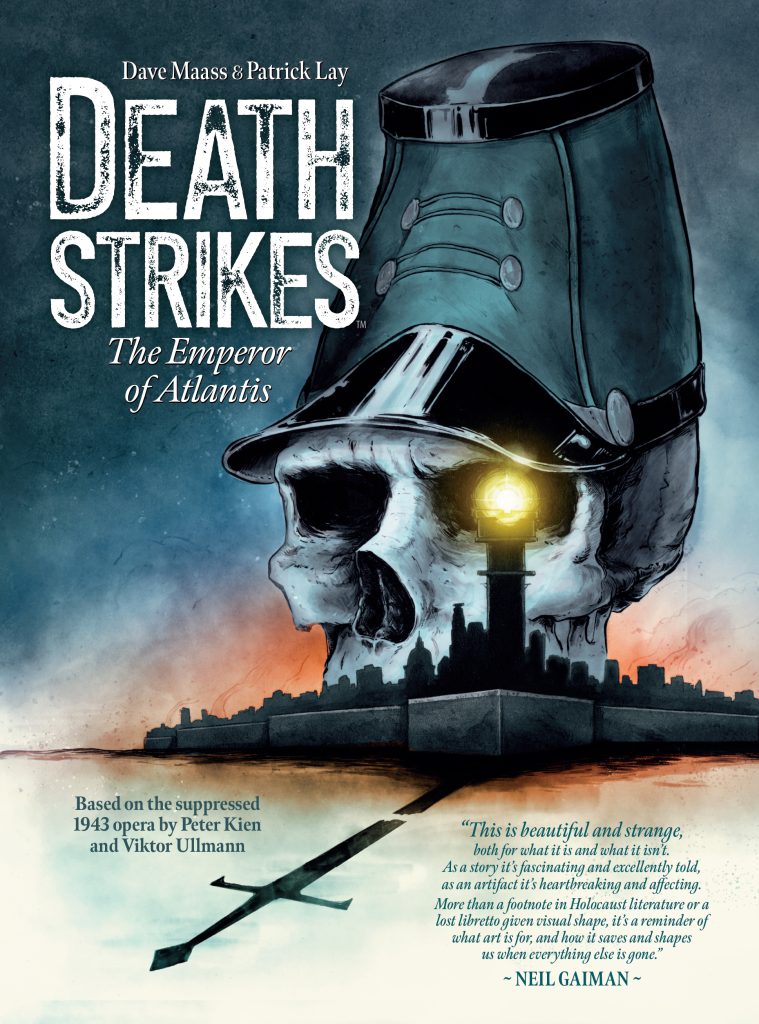
Death Strikes: The Emperor of Atlantis (2024) by Dave Maass and Patrick Lay, inspired by the Viktor Ullmann opera Der Kaiser von Atlantis, is a new graphic novel that mixes “dystopian sci-fi, mythic fantasy, and zombie horror.” Atlantis did not sink in this alternative universe but instead became a technologically advanced tyranny. The “power-mad buffoonish Emperor declares all-out war—everyone against everyone.” Death, however, has other plans and goes on a labor strike, “creating a hellscape where everyone fights, but no one dies.” The novel’s illustrations are powerful and biting and the book also includes drawings of Peter Kien’s designs from the original opera, historical essays, photographs from the prison camp, and more.
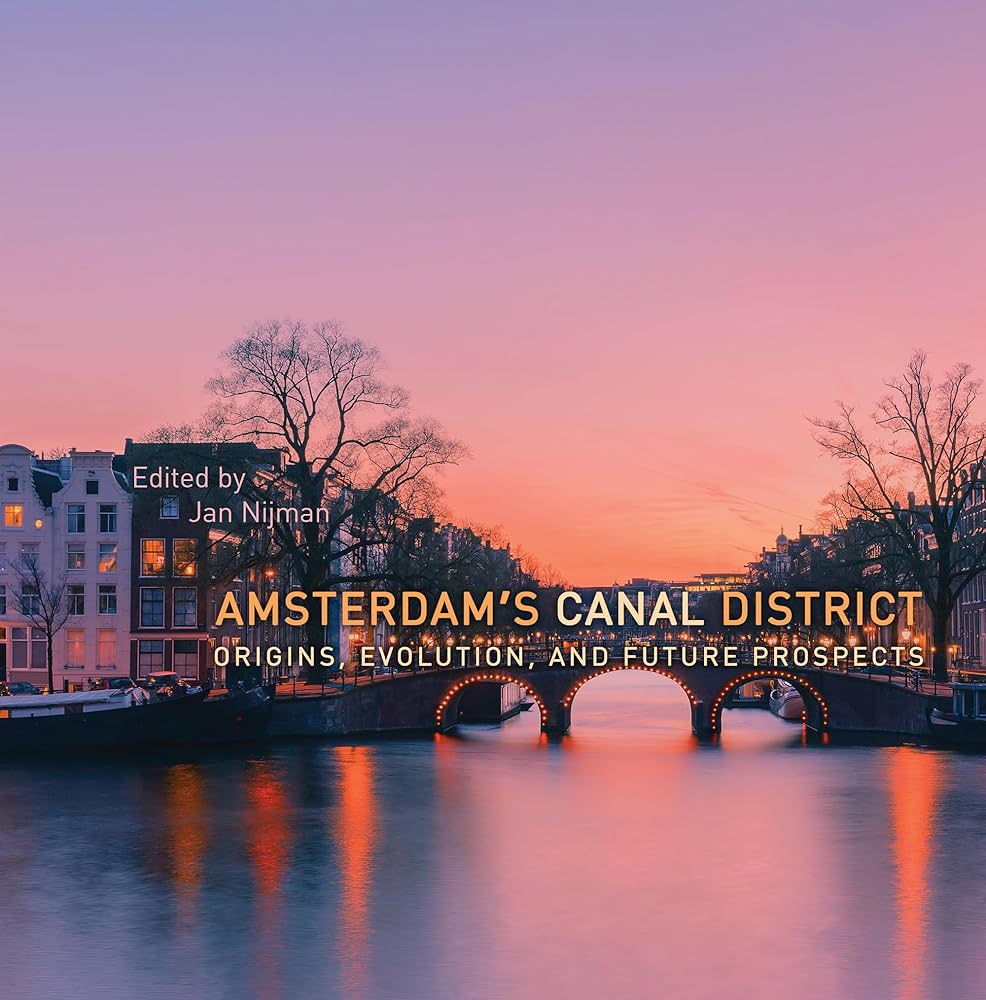
Amsterdam’s Canal District: Origins, Evolution, and Future Prospects (2020) edited by Jan Nijman moves beyond the typical focus on the iconic district’s creation in the country’s 17th century Golden Age to bring together an impressive list of scholars to highlight lessons learned from the district’s evolution. Working from a variety of disciplines, these scholars also bring varied perspectives to the study of contemporary debates facing this world class city. There is no interest among these writers in seeing the city become a memorial to a lost culture. Instead, this work is a call for “the outward appearance of its architecture to be linked with the identity of the people who created, used, and maintained it, and still inhabit it.” People are at the heart of this important work.
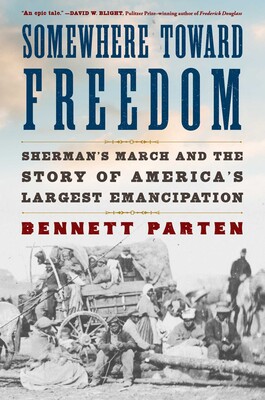
Somewhere Toward Freedom: Sherman’s March and the Story of America’s Largest Emancipation (2025) by Bennett Parten makes the compelling case that this seminal event in the Civil War—when Sherman’s army cut a path through Georgia from Atlanta to Savannah—was a turning point in the history of American freedom. When as many as 20,000 formerly enslaved men, women, and children followed the army as war refugees, it was the largest emancipation event in our history. Because of its wide impact and long-lasting aftereffects, we can now see Sherman’s March not only as one of the last campaigns of the Civil War, but also an early battle of Reconstruction. It is important because we continue, here in the 21st century, to live with the consequences of this march toward freedom. In this post, author Ben Parten graciously agreed to chat with me about his new work.
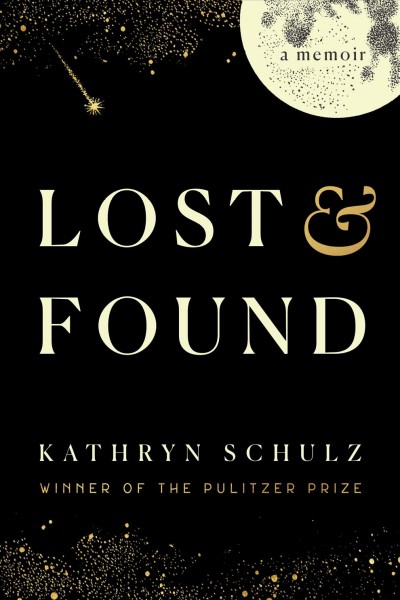
Lost & Found: A Memoir (2022) by Kathryn Schulz is a tender, searching meditation on love and loss and what it means to be human that I returned to read during these troubled times. Schulz, an exquisite writer, knows that there is both a wonder and fragility to life. While many feel small and powerless in the face of that reality, it is also easy to feel amazed and fortunate to be here. Schulz is clearheaded in her exploration of the mixed experiences and motives we encounter. As she moves through life, Schulz notes that her days are exceptional even when they are ordinary. “We live remarkable lives,” she writes, “because life itself is remarkable.”
What’s on the nightstand for March (subject to change at the whims of the reader)
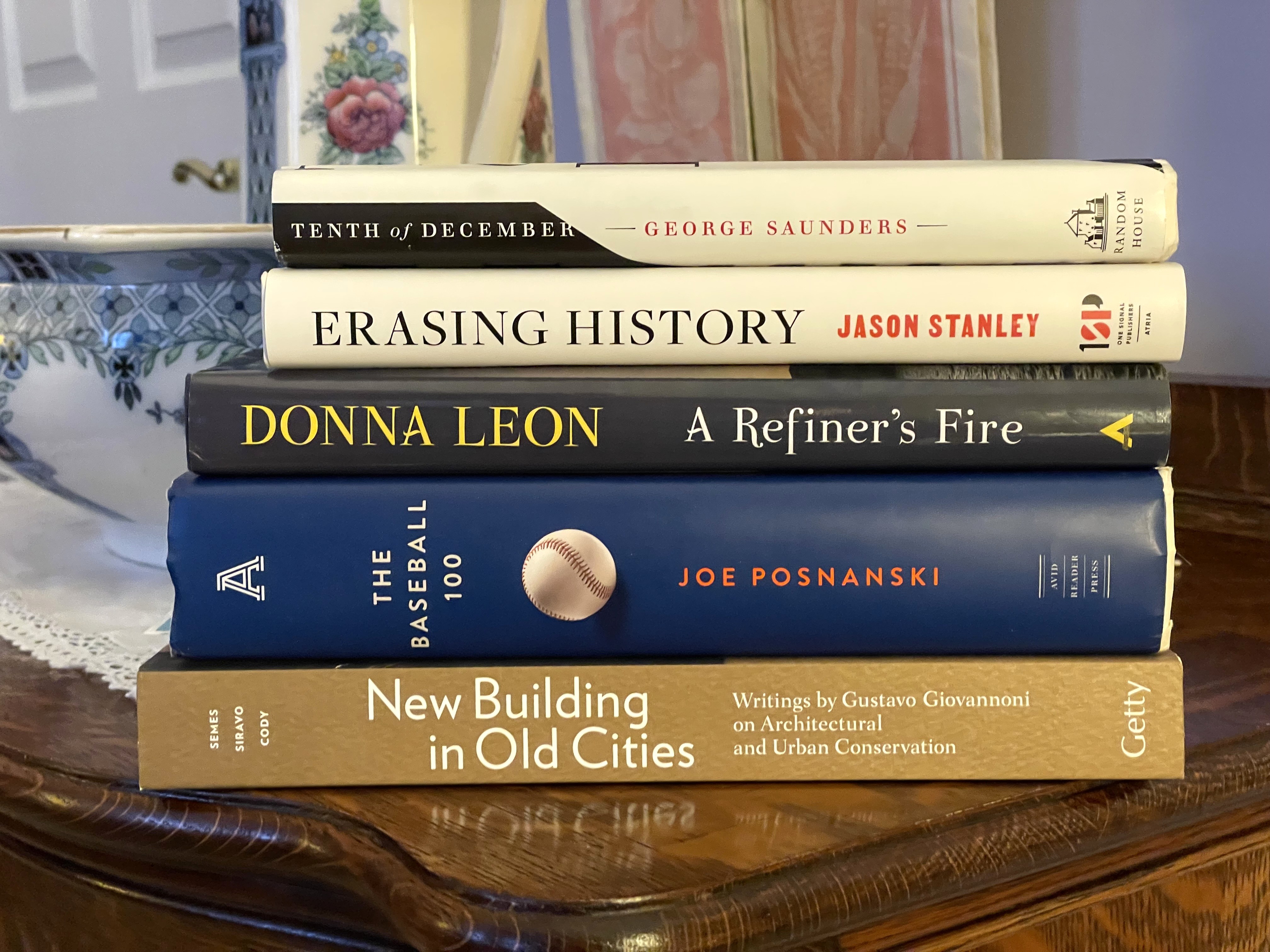
- A Refiner’s Fire by Donna Leon
- The Baseball 100 by Joe Posnanski
- Tenth of December: Stories by George Saunders
- New Building in Old Cities: Writings by Gustavo Giovannoni on Architectural and Urban Conservation edited by Steven W. Semes, Francesco Siravo, and Jeff Cody.
- Erasing History: How Fascists Rewrite the Past to Control the Future by Jason Stanley
Keep reading!
More to come…
DJB
NOTE: Click to see the books I read in January of 2025 and to see the books I read in 2024. Also check out Ten tips for reading five books a month.
Photo of Shetland Times Bookshop (credit: Kenneth Shearer)
 MORE TO COME...
Pingback: Observations from . . . March 2025 | MORE TO COME...
Pingback: From the bookshelf: March 2025 | MORE TO COME...