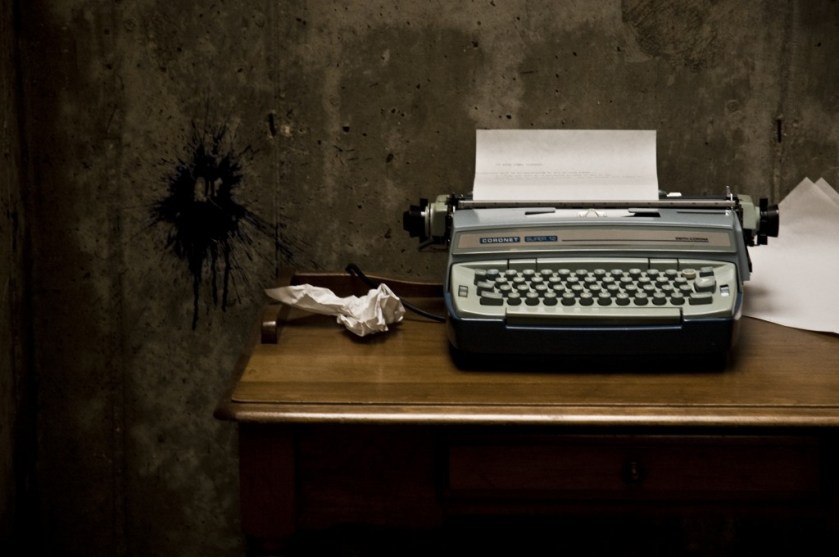
“Why do you write?” is the second most common question about this newsletter following “How do you read five books a month?” I’ve answered both the why and how questions in the past and won’t return to revisit those topics. But another consideration in producing a newsletter is putting thoughts, questions, observations, and whatever else tickles my fancy into words that someone else will want to read. I regularly turn to books on the pursuit of writing to try and sharpen what lands in your in-box.
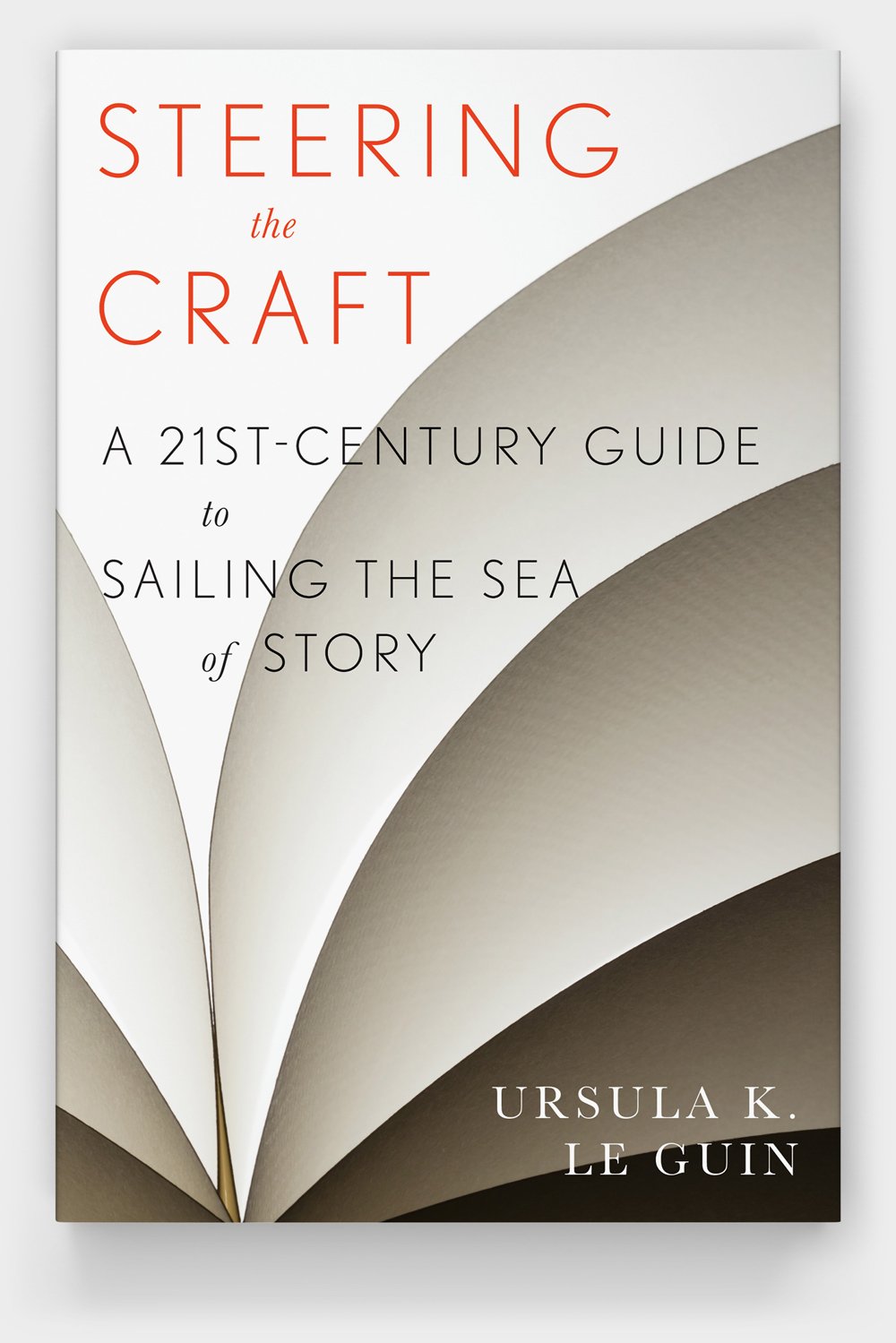
Steering the Craft: A 21st Century Guide to Sailing the Sea of Story (1998) by Ursula K. Le Guin is a handbook on writing well. This master practitioner examines the fundamental components of narrative in this useful, thoughtful, and—most importantly—readable work. Because story is about change, Le Guin wants writers to focus on movement. She examines the sound of language, the tools of punctuation, sentence construction, and more. This is a “deceptively simple” handbook that those wishing to communicate more effectively and skillfully through writing could return to again and again.
Each of the ten chapters begins with a two-line example to set the stage. For instance, when examining repetition, Le Guin includes this short sentence:
“The sudden wind brought rain, a cold rain on a cold wind.”
Then in straightforward and yet delightful language, she begins that same chapter as follows:
“Journalists and schoolteachers mean well, but they can be fatally bossy. One of their strangely arbitrary rules forbids us to use the same word twice on the same page. Thus they drive us to the thesaurus in desperate searches for far-fetched synonyms and substitutes.
The thesaurus is invaluable when your mind goes blank on the word you need or when you really must vary the word choice—but use it discreetly. The Dictionary Word, the word that really isn’t your word, may stick out of your prose like a flamingo in a flock of pigeons, and it will change the tone. ‘She’d had enough cream, enough sugar, enough tea” isn’t the same as ‘She’d had enough cream, an ample sufficiency of sugar, and a plentitude of tea.'”
Le Guin wrote this work after years of giving workshops to talented writers who were “afraid of semicolons and likely to confuse a point of view with a scenic vista.” She includes numerous examples from ancient to modern writers and has exercises to prompt the reader to try their skill on the topic at hand.
In “the sound of your writing” Le Guin strongly encourages writers to read aloud—not whisper—their drafts. Sound is where it all begins. I shared this insight with a dear friend and former professor and he heartily agreed. George taught his students to follow this suggestion and continues to use that practice in his personal work. I have also followed that advice (though not consistently) in the past. Another suggestion of Le Guin’s that made complete sense to me was to disable the punctuation and grammar programs on our computers.
“These programs are on a pitifully low level of competence; they’ll chop your sentences short and stupidify your writing. Competence is up to you. You’re on your own out there with those man-eating semicolons.”
As you can see, Le Guin has a distinct point of view about the writing craft, one that she backs up by sharing the work of other masters. And when the work of others isn’t enough, she’ll include a clearly labeled “opinion piece” as she does on the topic of “correctness and morality.” Here she wants the reader to stop cowering before the grammar bullies who tell us that people who say “Hopefully” are wrong. “Hopefully, some of us will continue to protest.”
“Morality and grammar are related. Human beings live by the word. Socrates said, ‘The misuse of language induces evil in the soul.’ I’ve had that sentence pinned up over my desk for a long time.”
It was Le Guin, in her memoir No Time to Spare, who encouraged us not to give up “on the long-range view.” Then she wrote words that, while not pinned over my desk, are nonetheless burned into my mind:
“Fortunately, there are also those who ‘live in a country that has a future.’ Who realize the incredible amount we learn ‘between our birthday and our last day.’ If we are flexible enough in mind and spirit to recognize ‘how rich we are in knowledge, and in all that lies around us yet to learn,’ we can maintain the seeking, trusting capacity for learning that we had as a two-year-old.”
Continuing to learn. Honing the skills. Loving the craft. Being ready to let a story tell itself . . . all admirable ambitions for anyone interested mostly in life, death, and commas.
More to come . . .
DJB
Other posts regarding the writing life:
- How to Write a Sentence by Stanley Fish (2019)
- Writing Down the Bones: Freeing the Writer Within by Natalie Goldberg (2021)
- Draft No. 4: On the Writing Process by John McPhee (2019)
- Between You and Me: Confessions of a Comma Queen by Mary Norris (2019)
Photo: Writer’s Block (credit: Center for Documentary Studies)
 MORE TO COME...
Oh the LeGuin book sounds wonderful. Great fun to read even for those of us who already know it’s okay to ignore all those silly rules. (Or who maybe were just stubborn enough to refuse to follow such rules on principle…)
You’d find so much to enjoy in her book, Janet! She was a woman after your own heart.
BTW, I loved your recent Substack story about Jacques. The candy exchange and the memories that went with it almost made me cry. We’re in Hoorn today in The Netherlands and it did my heart good when a middle-school group biked by while on a WWII study trip. It is still very present here. Take care, DJB
Pingback: Observations from . . . April 2025 | MORE TO COME...
Pingback: From the bookshelf: April 2025 | MORE TO COME...