
On Palm Sunday we were in Antwerp, Belgium for a tour of the magnificent and evocative Cathedral of Our Lady. It proved to be an appropriate and moving start to Holy Week.
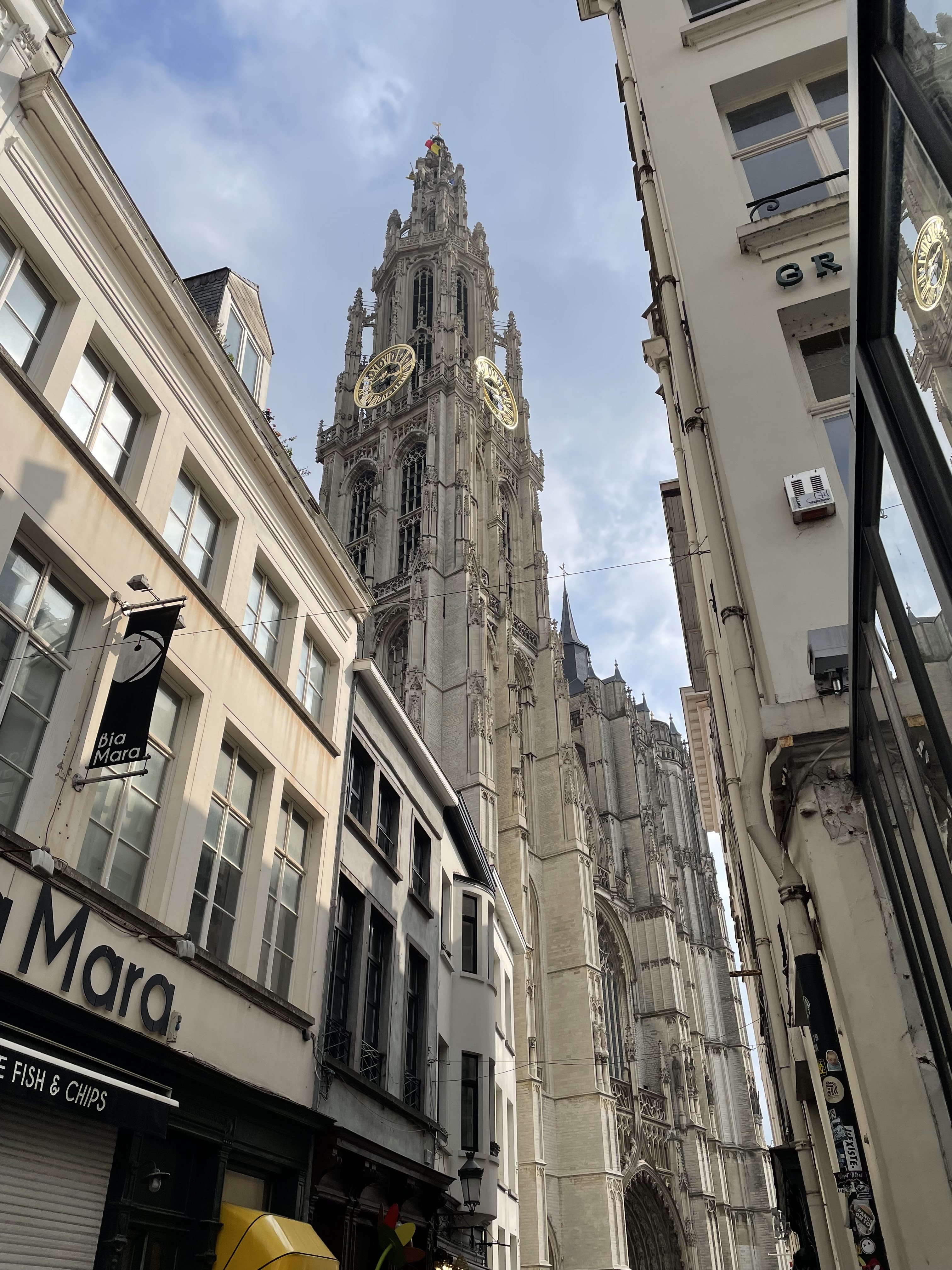
Because there are plazas in Antwerp it is possible to see a full length view of the cathedral. Our first glimpse of the tower, however, emerged above the narrow, winding streets typical of medieval cities. Unlike in Paris, with its isolated monuments and wide boulevards, Antwerp has kept much of the old city plan and scale that adds a sense of mystery to the journey and the discovery, much as is true in life.
Upon entering through the main doors, however, there is no doubt about the cathedral’s scale and grandeur that contrasts with the narrow twists and turns we took to arrive at the destination.

Among the outstanding treasures of the Cathedral are four paintings by the Flemish artist Peter Paul Rubens, including two especially appropriate for Good Friday: The Elevation of the Cross, and The Descent from the Cross. “The setting is dark and restless,” writes C.V. Westwood of the first of the two works, “as the group of spectators, soldiers, horses, and the strained bodies of the executioners surround the soon-to-be crucified Christ.”

Painted in 1610, we saw this winged altarpiece triptych in the Cathedral in Antwerp as the church for which it was originally painted has been destroyed.
The second painting, which was completed in 1612–1614, is still in its original place in the Cathedral and is considered one of Rubens’ masterpieces.
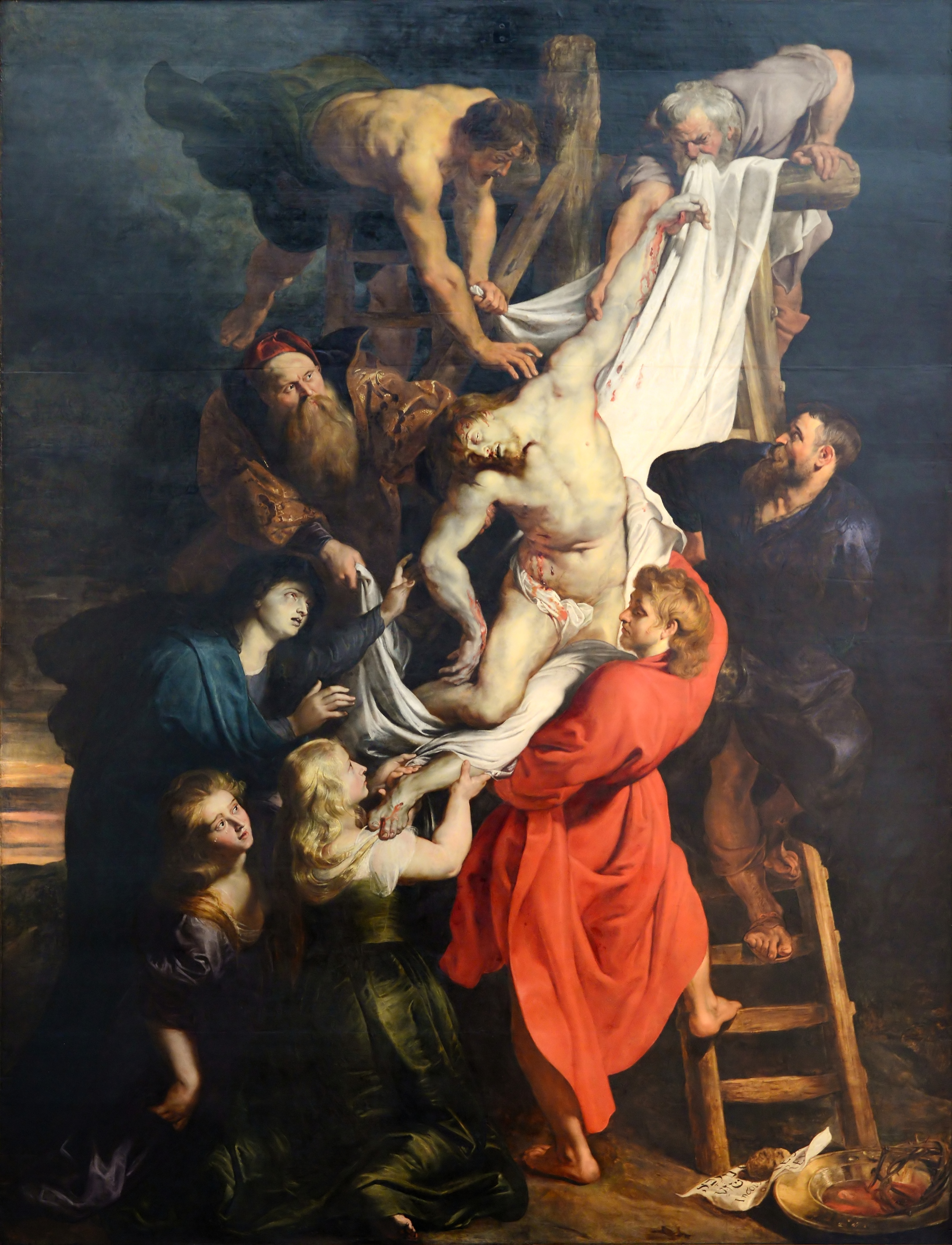
The paintings, taken as spoils of war, have moved more than once, first to Paris in 1794 where they remained until the end of the Napoleonic Wars in 1815. Stolen again in 1914 by the Imperial German Army, both works were taken to the Berlin Palace where they remained until after the Armistice of November 11, 1918, when they were returned to the Cathedral.
We were able to spend a long time savoring these works and placing them in the context of the week that was unfolding.


The Good Friday crucifixion of Jesus is one of the most transformational stories in all of human history. In her book Witness at the Cross, Amy-Jill Levine acknowledges the fragility of the memory of those witnesses to these events and suggests that readers “do well to listen to their stories and see how their stories transform us. At that point we pick up the stories ourselves.”
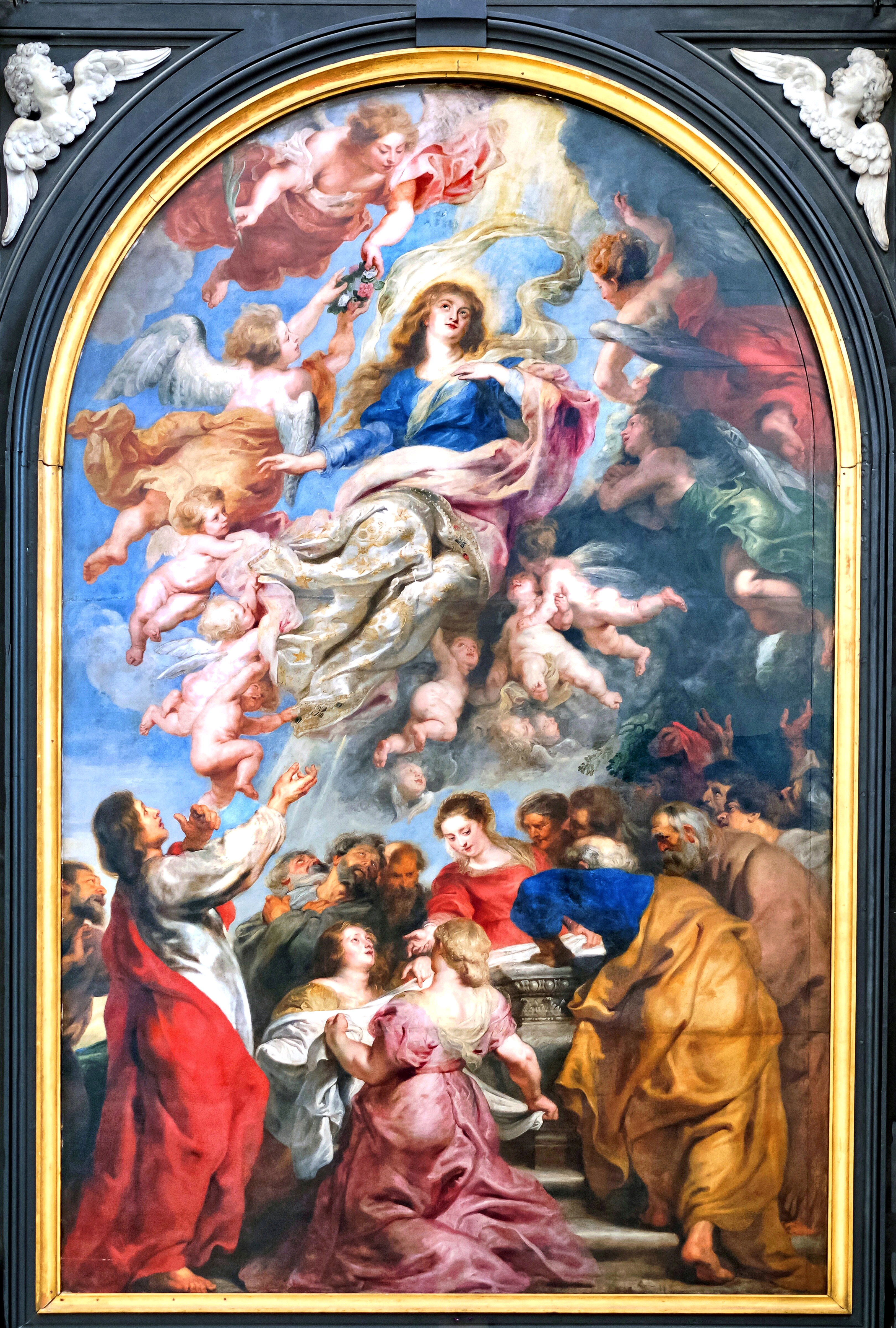
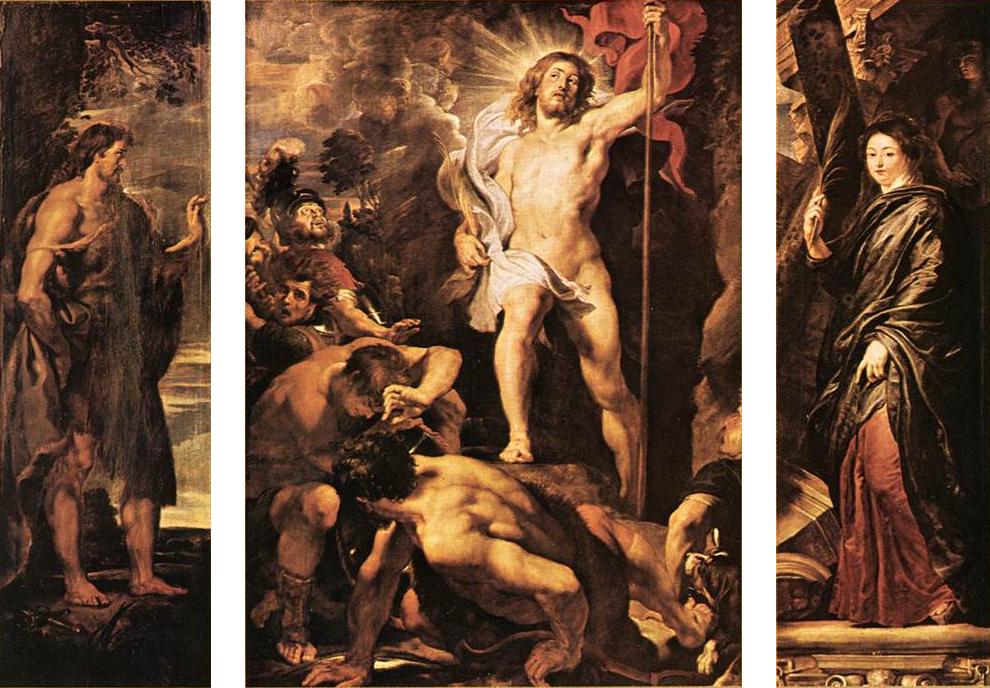
There were other beautiful works of art throughout the Cathedral of Our Lady, including two other works by Rubens—The Assumption of the Virgin and The Resurrection of Christ.
The nineteenth-century Schyven organ has 90 registers and 5,770 pipes, and I was especially taken with the two figures of angels playing stringed instruments on the organ case.


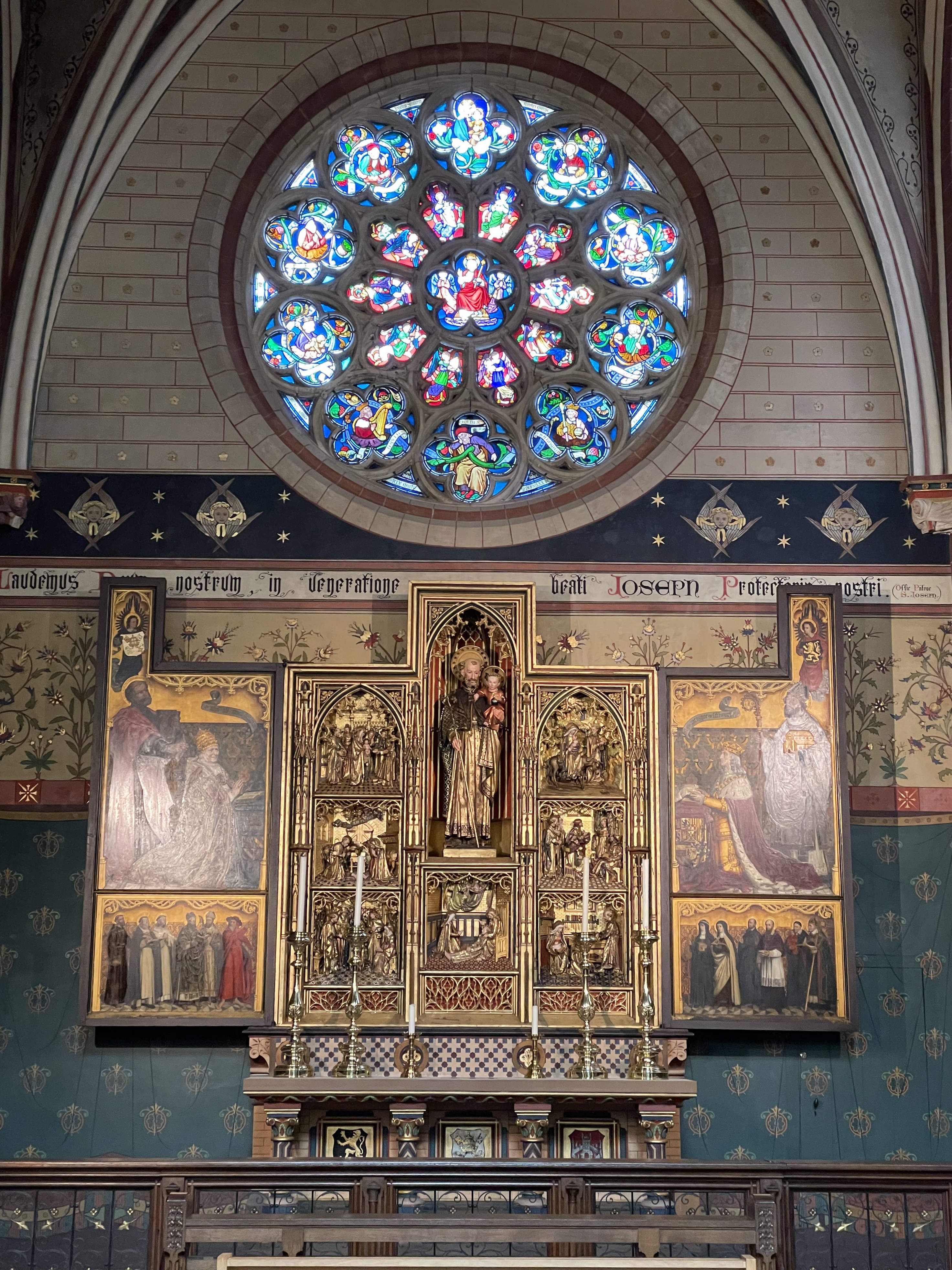
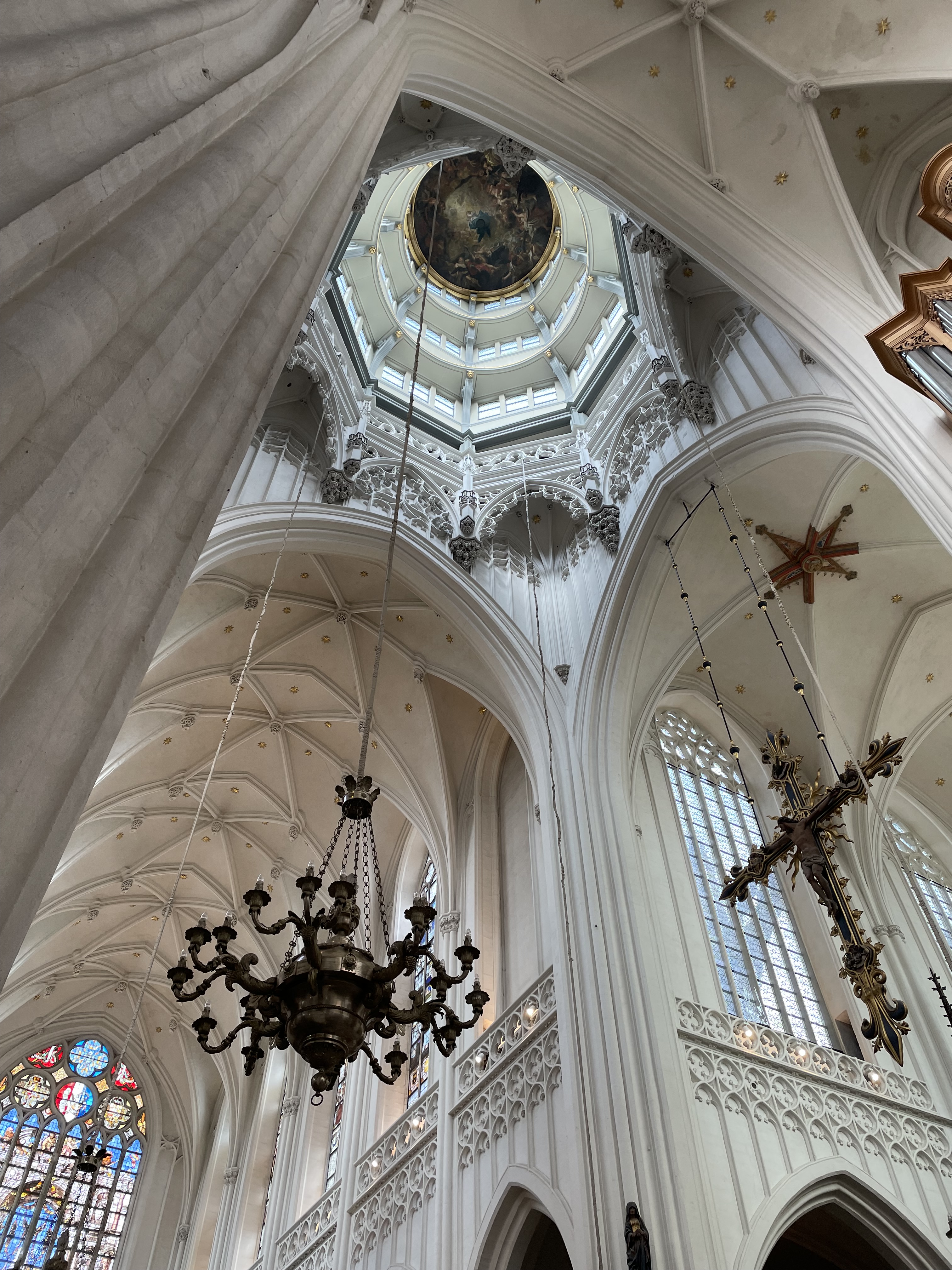
May you allow the power of place, art, and story to transform you however you observe this holy period in the yearly calendar.
More to come . . .
DJB
Photo of the Cathedral By Rolf Kranz via Wikimedia Commons
 MORE TO COME...
Pingback: The enduring beauty and utility of the windmill | MORE TO COME...
Pingback: Exploring the Dutch waterways | MORE TO COME...
Pingback: Observations from . . . April 2025 | MORE TO COME...
Pingback: Oh, the places we’ve seen! | MORE TO COME...