A summary of the April posts from the MORE TO COME newsletter.
Context is always important but especially when seeking clarity in chaotic times.
Much of what was in MORE TO COME this month focused on the importance of history in providing context. Far too often those who seek a new way forward envision a modernity that completely breaks with the past. We’re told that to reach new ways of thinking and living we must “grab the pick-axes, the hatchets, the hammers and demolish, demolish without pity” our venerable cities, governments, social systems, religions. It is an impulse as old as the ancients and as modern as today’s news.
But those who attempt to erase history are often doing so because it offers up uncomfortable facts that undermine their false narratives about a glorious future. That authoritarian regimes “often find history profoundly threatening” is a key lesson of the past century.
A robust study of history provides multiple perspectives on the past and places them in context. We lose those perspectives at our peril. So let’s jump in to visit the places and books where context mattered in this month’s MTC newsletter.
TOP READER FAVORITES

The post with the most reader views in April was the latest in my Author Q&A series, this time held with the editors of an important new work published by the Getty Conservation Institute. Challenging a narrative of rupture between past and present is my post about 2024’s New Building in Old Cities, a highly relevant and richly illustrated book of the largely forgotten work of Italian architect Gustavo Giovannoni, an important early advocate for the conservation of historic cities.
In this absorbing interview the editors Steven W. Semes, Francesco Siravo, and Jeff Cody discuss the ways historic context matters in shaping the modern city, why 19th century Paris served as a cautionary example rather than a model to follow in Giovannoni’s work, and the importance of the synergy he espoused between protecting the “democratic majority of the vernacular” and the “autocratic minority of the Monument.”
EXPLORING THE DUTCH WATERWAYS

The relationship between past and present was always near over the ten days we spent in The Netherlands and Belgium where I served as a lecturer for National Trust Tours. After returning, I posted deep-dives on four specific places before bringing the disparate pieces together in a late-month wrap-up.
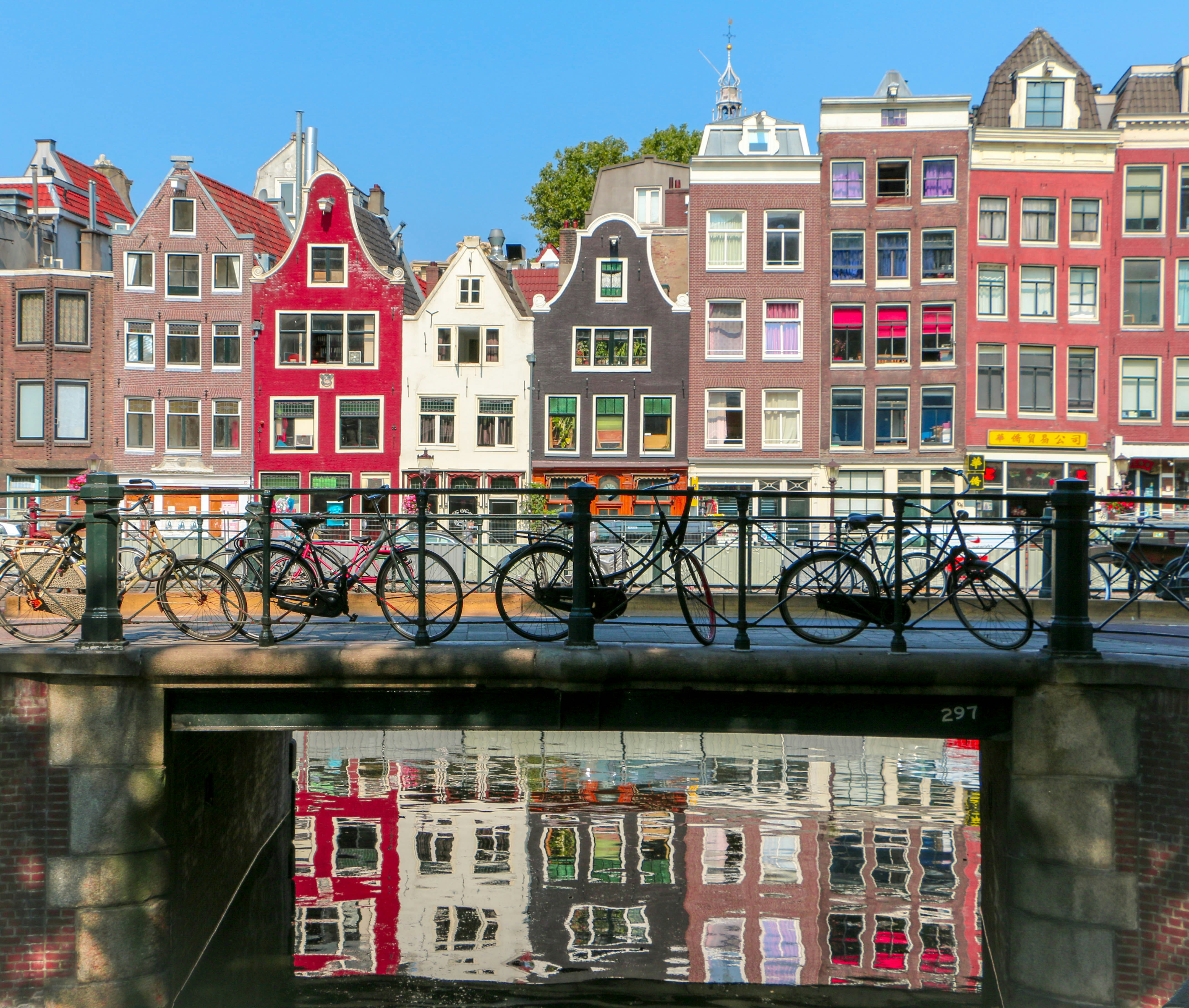
The first place we visited after landing was the Portuguese Synagogue in the Old Jewish Quarter of Amsterdam. Pausing to think is how we sanctify time is my take on a place that another visitor described with the following quote:
“Its size intimidating, its rest calming, its purpose magical, and its history poignant and impressive. No one leaves the Portuguese Synagogue unmoved.”

The serendipity of life also hit home when our son, the tenor Andrew Bearden Brown, texted to tell us that he is singing the Song of Dedication concert for the 350th anniversary of the Synagogue with the Washington Bach Consort on May 2nd and 3rd.
The other three deep dives focused on:
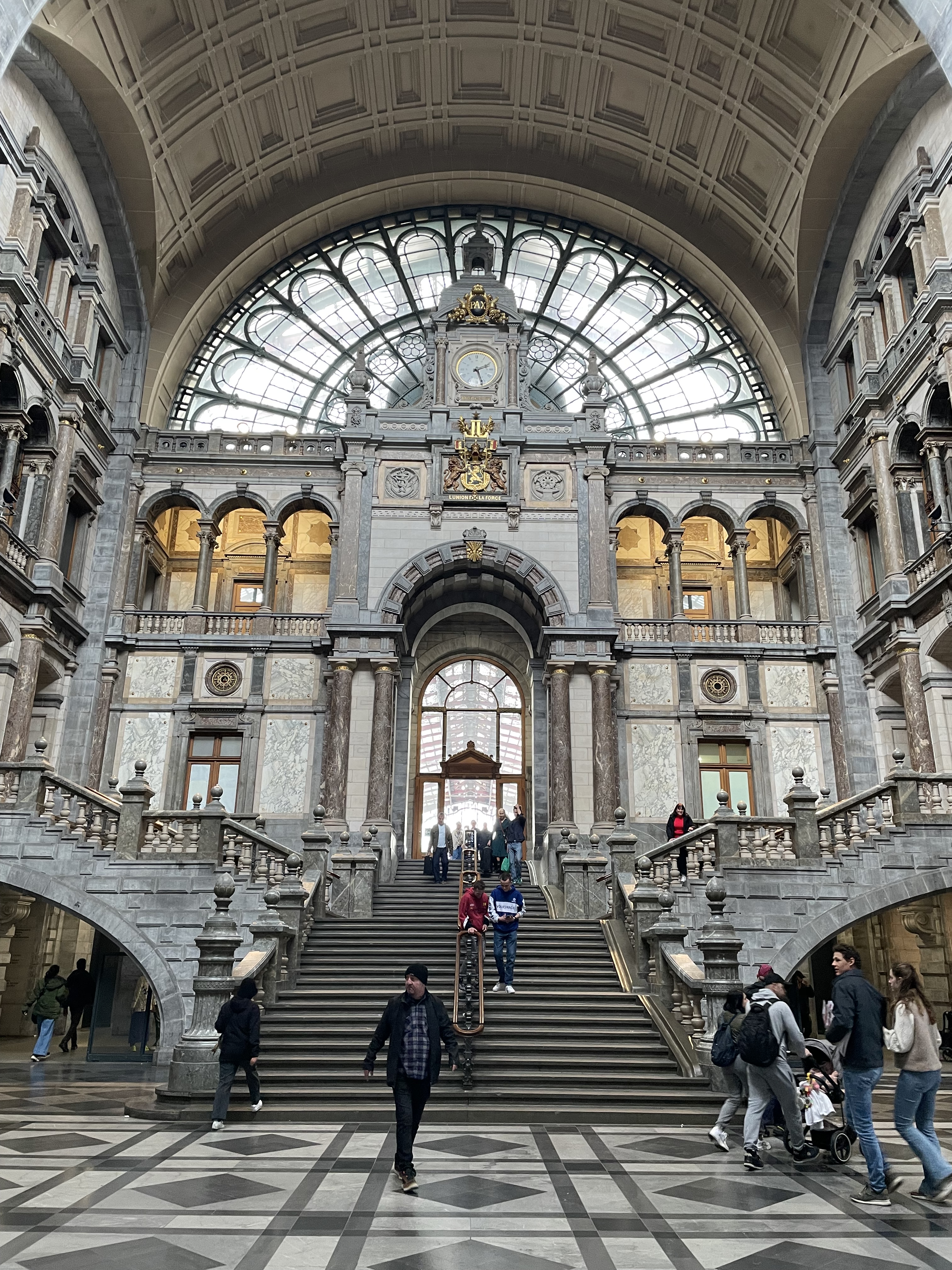
- Our Holy Week visit to the Cathedral of our Lady in Antwerp as described in The transformational power of place, art, and story;
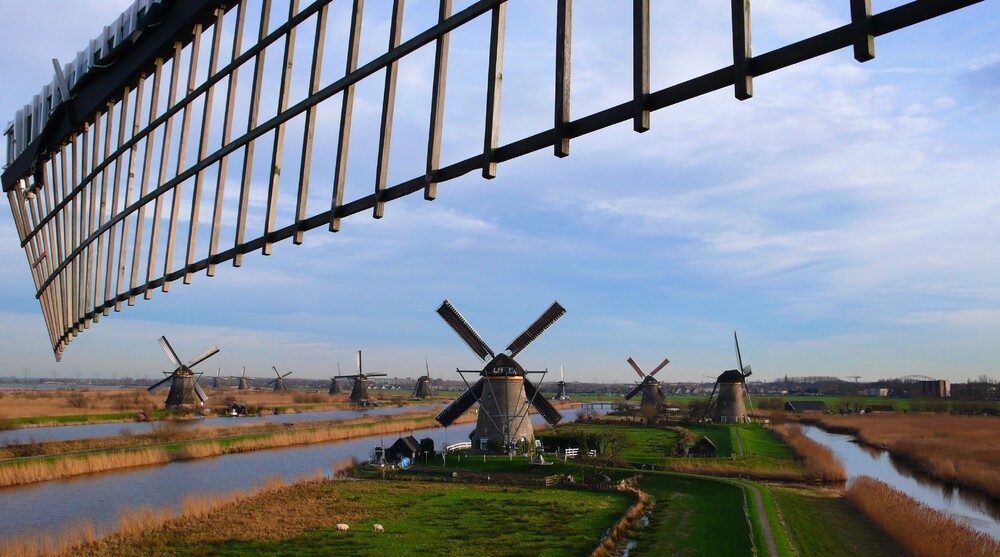
- The enduring beauty and utility of the windmill, after our trip to see the Mill Network at Kinderdijk, one of The Netherlands’ most famous UNESCO World Heritage Sites; and
- Tulipmania, because if it is April in Holland that means tulips!
Finally, I wrapped up this series on Monday in the post Exploring the Dutch waterways. Among other things I highlight one of the world’s most beautiful train stations, a world-famous work of art, medieval Brugge, belfries, and why I would prefer to see more monuments to books and less statues of controversial generals.


THE BOOKS I READ THIS MONTH

In addition to New Building in Old Cities, I also highlighted four other books in April.
- Far and away the most captivating was Richard Flanagan’s superb memoir Question 7. This man writes like God. My take on his book, When a butterfly flaps its wings, reminds us: “Experience is but a moment. Making sense of that moment is a life.”
- True short stories of the past is my post on The Memory Palace. Nate DiMeo has written short stories that connect us with our past and our present.
- Ursula K. Le Guin’s deceptively simple handbook on writing well, entitled Steering the Craft: A 21st Century Guide to Sailing the Sea of Story, is reviewed in Life and death . . . and commas.
- Reflection. Recalibration. Renewal. looks at Martin L. Smith’s Lenten reflections A Season for the Spirit.
And I wrap up last month’s readings in From the bookshelf: March 2025.
COMMENTS I LOVED
The writer Robyn Ryle wrote a comment on my windmill post to say, “I think we were in the Netherlands at the same time! We were on a Viking River Cruise April 1-11. Went to Kinderdijk on April 8 and then were in Amsterdam April 9-10.” She also wrote about her experiences on Monday, when her Substack newsletter had this amazing piece on reading Van Gogh: The Life after a visit to the Van Gogh museum in Amsterdam. Because it is Robyn, her post is funny, observant, and—she’ll admit, much like Vincent at many stages of his erratic life—a little obsessed. Well worth a read.
CONCLUSION
Thanks, as always, for reading. Your support and feedback mean more than I can ever express.
As you travel life’s highways be open to love; thirst for wonder; undertake some mindful, transformative walking every day. Recognize the incredible privilege that most of us have and think about how to put that privilege to use for good. Women, people of color, LGBTQ+ individuals, immigrants, public servants, and others can feel especially vulnerable . . . because they are. Work hard for justice and democracy as the fight never ends.
When times get rough, let your memories wander back to some wonderful place with remembrances of family and friends. But don’t be too hard on yourself if a few of the facts slip. Just get the poetry right.
Remember that “we are here to keep watch, not to keep.” Pay attention. Be astonished. Tell about it. And bash into some joy along the way.
Finally, try to be nice. Always be kind.
More to come . . .
DJB
For the March 2025 summary, click here.
You can subscribe to MORE TO COME by going to the small “Follow” box that is on the right-hand column of the site (on the desktop version) or at the bottom right on your mobile device. It is great to hear from readers, and if you like them feel free to share these posts on your own social media platforms.
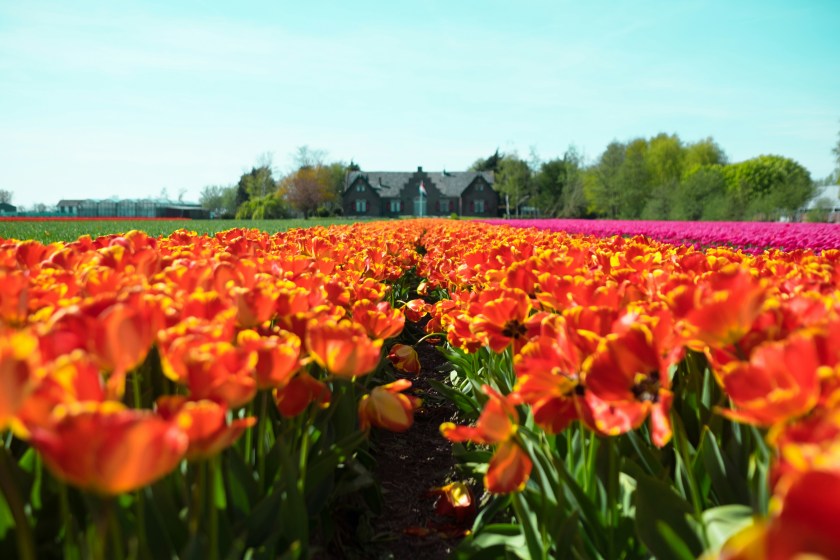
Photo of field of flowers by Owen Williams on Unsplash
 MORE TO COME...
Pingback: Observations from . . . May 2025 | MORE TO COME...