
Sometimes we find unexpected courage to act on instinct. It often takes more courage, however, to stop and consider the consequences. To look without blinking at what our actions might mean. To think before we act.
Considering the consequences of our actions—or inactions—is a constant theme of a book I just finished by one of Canada’s best-known and well-loved mystery writers.
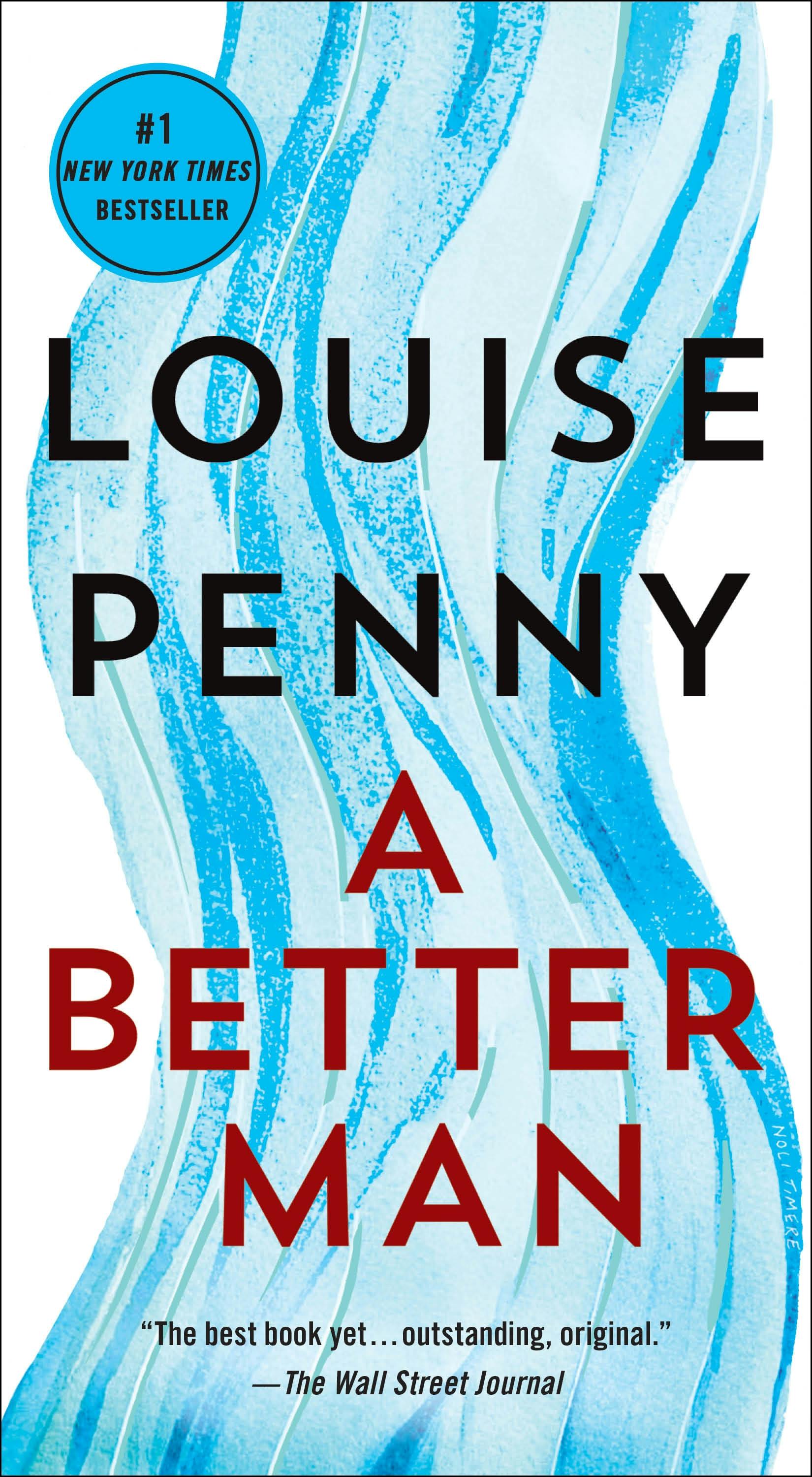
A Better Man (2019) by Louise Penny is the fifteenth work in the Canadian author’s long-running Chief Inspector Armand Gamache series. The former superintendent of the entire Sûreté du Québec, Gamache has returned after a controversial suspension and demotion and immediately faces devastating spring floods, relentless social media attacks, and a law enforcement force that appears split on the question of whether he should have even been allowed to return. Gamache is now sharing the position as head of the homicide department with his former second-in-command—and his son-in-law—Jean-Guy Beauvoir who is preparing to leave the force and move with his family to Paris. As if these challenges aren’t enough, Gamache is approached by a desperate father seeking help in finding his missing daughter. In the fast paced and multi-layered story, the Chief Inspector and many others are struggling to find their footing.
This book was loaned to me by a friend and faithful MTC reader who thought I would enjoy Penny’s story of the thoughtful and kind inspector, the interplay of the various characters both in the Sûreté as well as in the little village of Three Pines, the Canadian backdrop, and the psychological mystery at the heart of this tale. I wondered if I could pick up the story lines but Margit assured me that I could. The Library Journal review noted that by bringing “several character arcs to a close while resetting others” A Better Man serves both “as a beginning for new readers and a satisfying continuation for series fans.” Gamache, the Journal notes, “is an explorer of the human psyche, and the care he takes with the victims, their friends and family, as well as his own allows this series and his character continually to surprise, delight, and enthrall.”
Chief Inspector Gamache is clearly near and dear to Penny’s heart. This is not an easy story to tell. Characters have been emotionally and even physically damaged by physical abuse. As more than one observer notes, you can see steely determination in Gamache’s eyes as he works through the twists and turns as well as the sometimes brutal facts before him. But if you look especially carefully you will also see goodness. Penny has written that “her books are about goodness. And kindness. About choices. About friendship and belonging. And love. Enduring love.”
That goodness, along with an ability to rethink assumptions and look without blinking at the facts before him, leads Gamache to see that the “obvious” murderer of the missing woman might be telling the truth when he says he didn’t do it. The twists and turns to uncover the real story of what happened on a dark and lonely bridge above a raging, flooding river—and to handle that story carefully—makes for a satisfying read.
At one point, Gamache is telling his agents that when he was Chief Superintendent he had a framed poster in his office with the words Noli timere. They were the last words of poet Seamus Heaney and they mean “Be Not Afraid.” Penny wants us to remember that fear is a thief, just as Gamache is encouraging a young agent to speak his mind, even though he’s afraid.
In the world that Louise Penny has created, there is terror, fear, and murder. But there is also goodness, and the existence of that goodness is what we ultimately remember.
More to come . . .
DJB
Photo by Ales Krivec on Unsplash
 MORE TO COME...
Pingback: Observations from . . . May 2025 | MORE TO COME...
Pingback: From the bookshelf: May 2025 | MORE TO COME...
Pingback: Return to the beginning | MORE TO COME...
Pingback: Librarian on the run | MORE TO COME...