
In a recent post entitled The Marker Tree, priest and writer Barbara Brown Taylor talks about places where one feels the sense “of being guided by a presence that does not speak my language but knows something I need to know.” In her telling, she is in a forest asking if this is where she belongs.
There are so many ways we hear from the divine that are not from scripture, a preacher, or a piece of sacred music. Ways that we’ve forgotten in our buttoned-down, always-in-a-hurry, modern world.
Talk like that makes some religious people uncomfortable, I know, though I don’t always know why. Biblically speaking, God is a ventriloquist, able to communicate through promising rainbows, burning bushes, bright stars, fiery serpents, pillars of cloud, ravens with bread in their beaks, thunderclaps, and even a stubborn donkey with a gift for seeing angels. Where is the fine print that says the possibilities stop there? Or to put it another way, who is the person who will tell God to stop?”
Quaker author Parker J. Palmer writes of something similar in his recent post A Wilderness Pilgrimage. He begins by noting that “we must protect space for ancient questions about what it means to be human, to live and to die.”
“When madness crowds out those questions,” Palmer continues, “we lose touch with our souls and our shared humanity, sources of the power we need to overcome tyranny.”
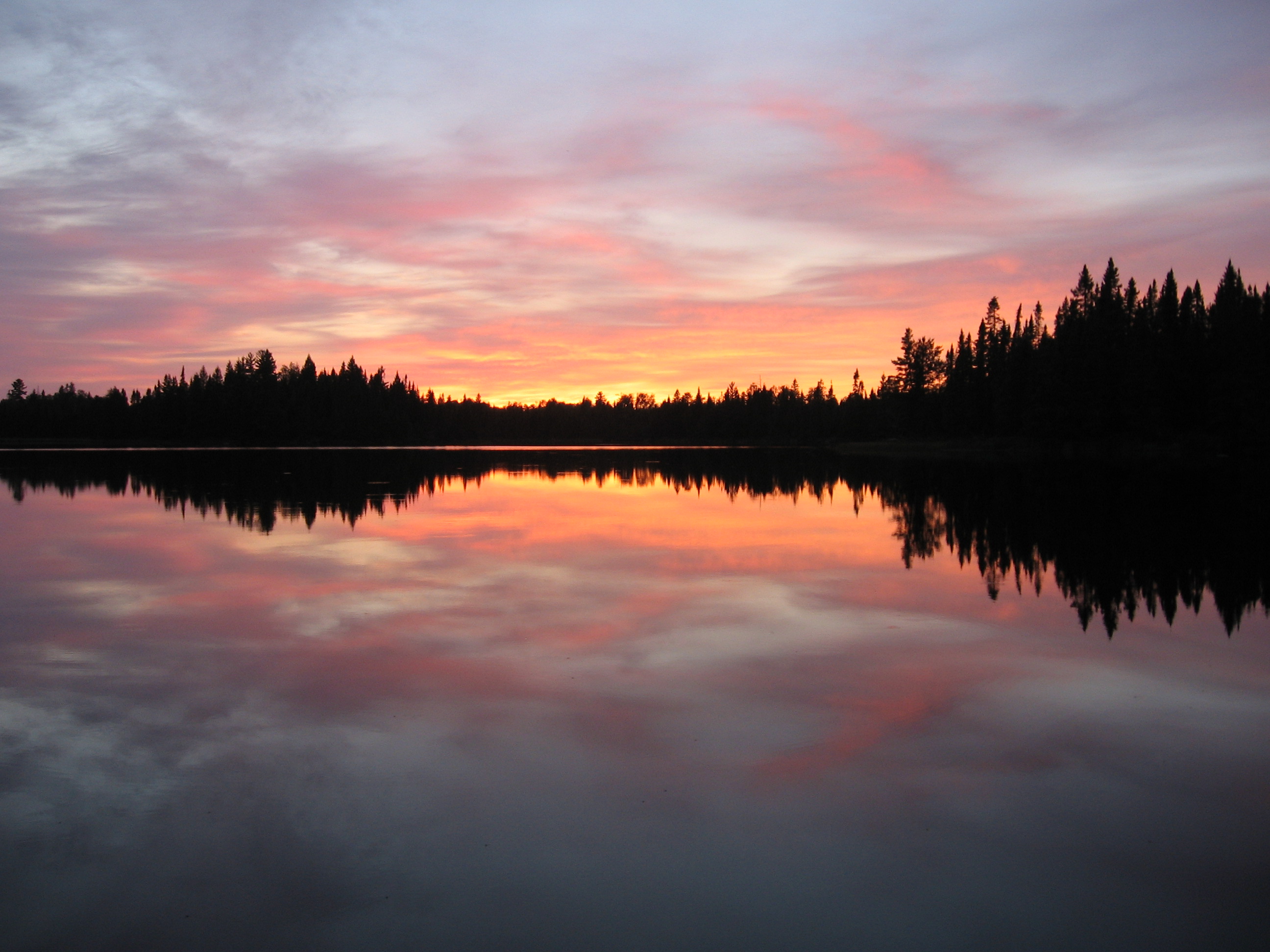
Palmer is writing from the Boundary Waters Canoe Area of northern Minnesota, a million acres of federally protected wilderness along the Canadian border that is currently under threat by the regime controlling our federal government.
“Years ago, before I had seen this place, a friend tried to describe it to me. ‘Everywhere you look,’ he said, ‘there’s a perfect Japanese garden.’ And so there is: rocks, trees, water and sky in endless permutations of elegance.”
Palmer has been coming to this place for three decades for a pilgrimage “to holy ground, to a place of healing and renewal.”
And when he isn’t able to visit there during the rest of the year, he makes the pilgrimage in his imagination whenever things get tough. In his mind he can hike or canoe, hear “the unforgettable call of the loon,” watch “the cosmic drama of the Northern Lights,” or eavesdrop on “the ancient conversation between those two old friends, the lake and the land, as the cold, clear water laps gently against the shore.”
But what gives him the most comfort in this place is seeing the resilience and persistence of nature.
“It’s not tranquility alone that makes this wilderness a place of healing for me. It’s the patient, resourceful, resilient way nature heals itself, reminding me what it takes to heal my own wounds so I can show up in the world as a healer. Watching wilderness overcome devastation has helped me see how suffering can serve as a seedbed for renewal. Even more, it has offered reassurance that in the great cycle of life and death, new life always gets the last word.”
The ancient questions often revolve around “how shall we live?” As we get older they often turn to “how shall we die?” Like Palmer, I don’t have much interest in heaven as a gated community where only people from my tribe are admitted. There is much that we do not know about how we shall die, if we are honest with ourselves.
Writing in the introduction to the C.S. Lewis meditation A Grief Observed, author Madeleine L’Engle notes that while no one can say what happens to the dead, “The important thing is that we do not know. It is not in the realm of proof. It is in the realm of love.”
As difficult as it seems at times, this period of trouble in our lives will end. Tyrants always fail. In both of these pieces, spiritual writers show us how in times of personal and political distress, “nature gives us a model of persistence and the promise of new life.” The darkness of night leads to dawn and a new day, where new possibilities await. It will be a day different from the one just completed.
And we can begin anew.
More to come . . .
DJB
The wilderness known as the BWCA is under threat. If you’d like to help protect it, please visit Friends of the Boundary Waters.
Photo of rainbow by Cindy Lever from Pixabay.
 MORE TO COME...
Pingback: Observations from . . . June 2025 | MORE TO COME...
Pingback: With gratitude for the patience and hope of gardeners | MORE TO COME...