
I have a monthly intention to read a minimum of five books on a variety of topics from different genres. Here are the books I read in May 2025. If you click on the title, you’ll go to the longer post on MORE TO COME. Enjoy.

James: A Novel (2024) by Percival Everett is a brilliant reimagining of Mark Twain’s Adventures of Huckleberry Finn told from the perspective of Huck’s enslaved sidekick Jim. The first part of the book follows Twain’s general outline, but when Huck and Jim are separated Everett takes James down different paths. A masterful writer, Everett works through tales and scenes that move between gripping terror and laugh-out-loud humor, all while putting forth observations from his protagonist that cut to the bone. James is depicted with intelligence, compassion, and agency in a way seldom seen in American literature about slavery. James was just awarded the 2025 Pulitzer Prize for fiction. Everett has said, “I hope that I have written the novel that Twain did not and also could not have written. I do not view the work as a corrective, but rather I see myself in conversation with Twain.” Do yourself a favor. Read this book.
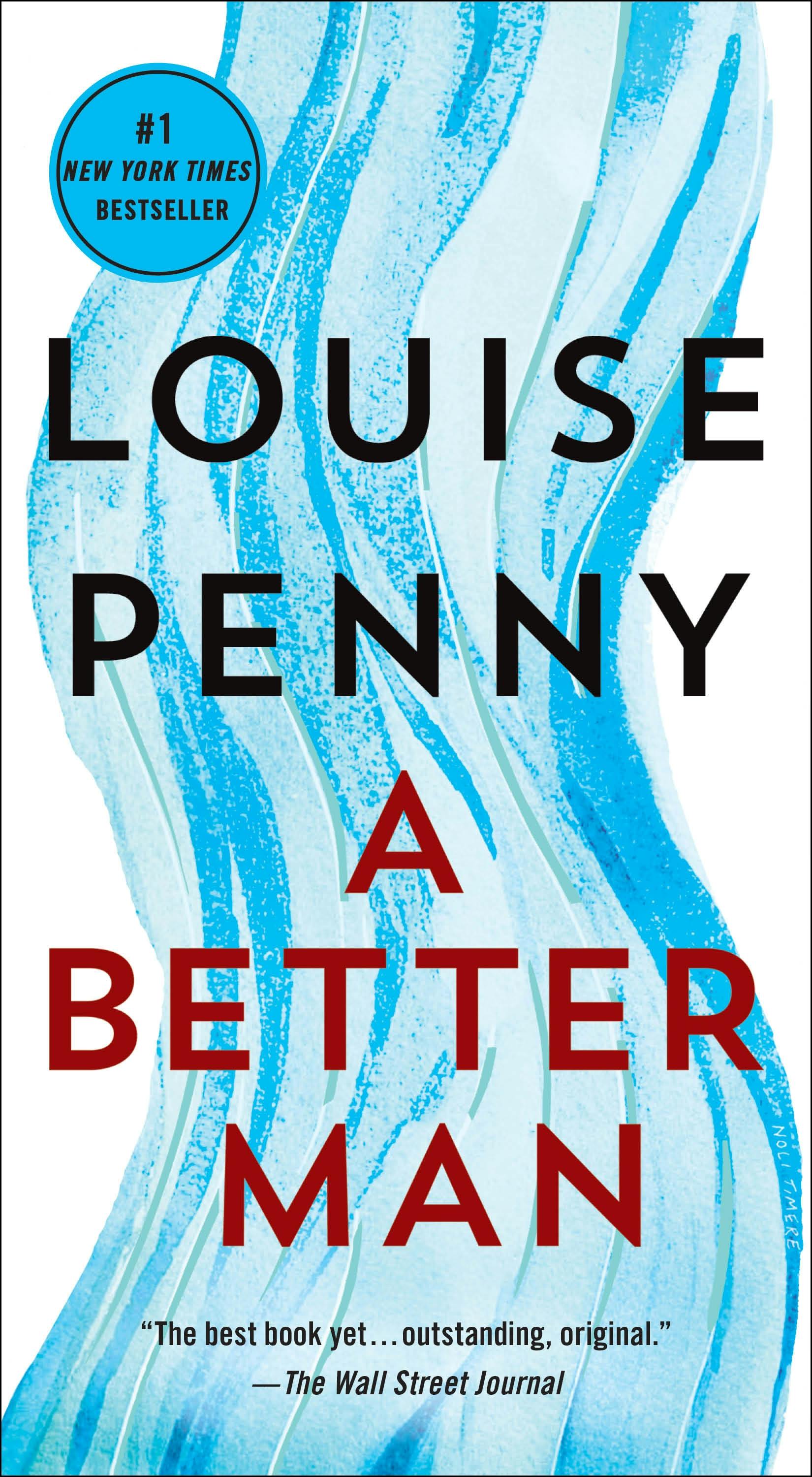
A Better Man (2019) by Louise Penny is the fifteenth work in the Canadian author’s long-running Chief Inspector Armand Gamache series. The former superintendent of the entire Sûreté du Québec, Gamache has returned after a controversial suspension and demotion and immediately faces devastating spring floods, relentless social media attacks, and a law enforcement force that appears split on the question of whether he should have even been allowed to return. Gamache is now sharing the position as head of the homicide department with his former second-in-command—and his son-in-law—Jean-Guy Beauvoir who is preparing to leave the force and move with his family to Paris. As if these challenges aren’t enough, Gamache is approached by a desperate father seeking help in finding his missing daughter. In the fast paced and multi-layered story, the Chief Inspector and many others are struggling to find their footing.

Window Shopping with Helen Keller: Architecture and Disability in Modern Culture (2025) by David Serlin is an academic work that seeks to reassess modern architecture and urban culture when it comes to addressing the needs of people with disabilities. Serlin’s work draws upon fields as diverse as architectural history, disability studies, media archaeology, sensory studies, urban anthropology, and feminist science studies and as such can too often take the reader on a dense and winding path. Nonetheless, there is plenty here to capture the reader interested in the topic, either from the perspective of well-known historical figures such as Joseph Merrick (aka the “Elephant Man”) in London and Helen Keller in New York and Paris, or for those who want to study institutions and buildings that had outsized influence in this space. Serlin has us consider “a series of influential moments when architects and designers engaged the embodied experiences of people with disabilities.”
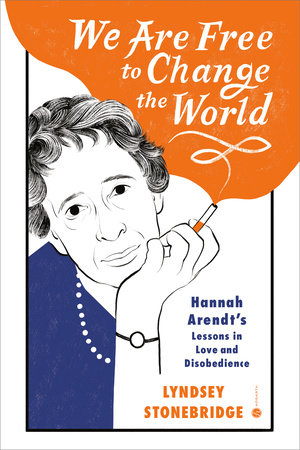
We Are Free to Change the World: Hannah Arendt’s Lessons in Love and Disobedience (2024) by Lyndsey Stonebridge is the book we need for these times. A compelling biography but also a primer for how to think if we want to be free. Arendt was not perfect and not always the easiest person to understand but she thought and cared deeply about humanity. Thanks to Stonebridge’s very accessible and thoughtful writing, readers are brought into Arendt’s world to see why she came to think the way she did. In doing so, Stonebridge takes us from fascist Germany to twenty-first century America. Arendt’s life and work is in a dialogue with today’s turbulent times in this masterful biography.

Stoner (1965 and reprinted in several editions) by John Williams has been described as a novel in which nothing happens and everything happens. William Stoner is raised on a hardscrabble farm and that life seems his destiny. Then his father suggests he go to the University of Missouri to study agriculture. Surprisingly, he finds he has to take a class on English literature and in the experience embraces a scholar’s life. A mentor points out the obvious to him: that he will be a teacher because he has “fallen in love. It’s as simple as that.” And yet as the years pass in this career he loves, Stoner encounters a succession of disappointments: from an unfulfilling marriage to academic infighting, from the loss of the affection of his daughter to new love that threatens to embroil him in scandal. His last few years are spent embracing the silence and solitude of his forebearers. There is a universality to William Stoner that can be both comforting and very sad at the same time. Stoner has been described as “the greatest American novel you’ve never read.” It is certainly worth your time.
What’s on the nightstand for June (subject to change at the whims of the reader)
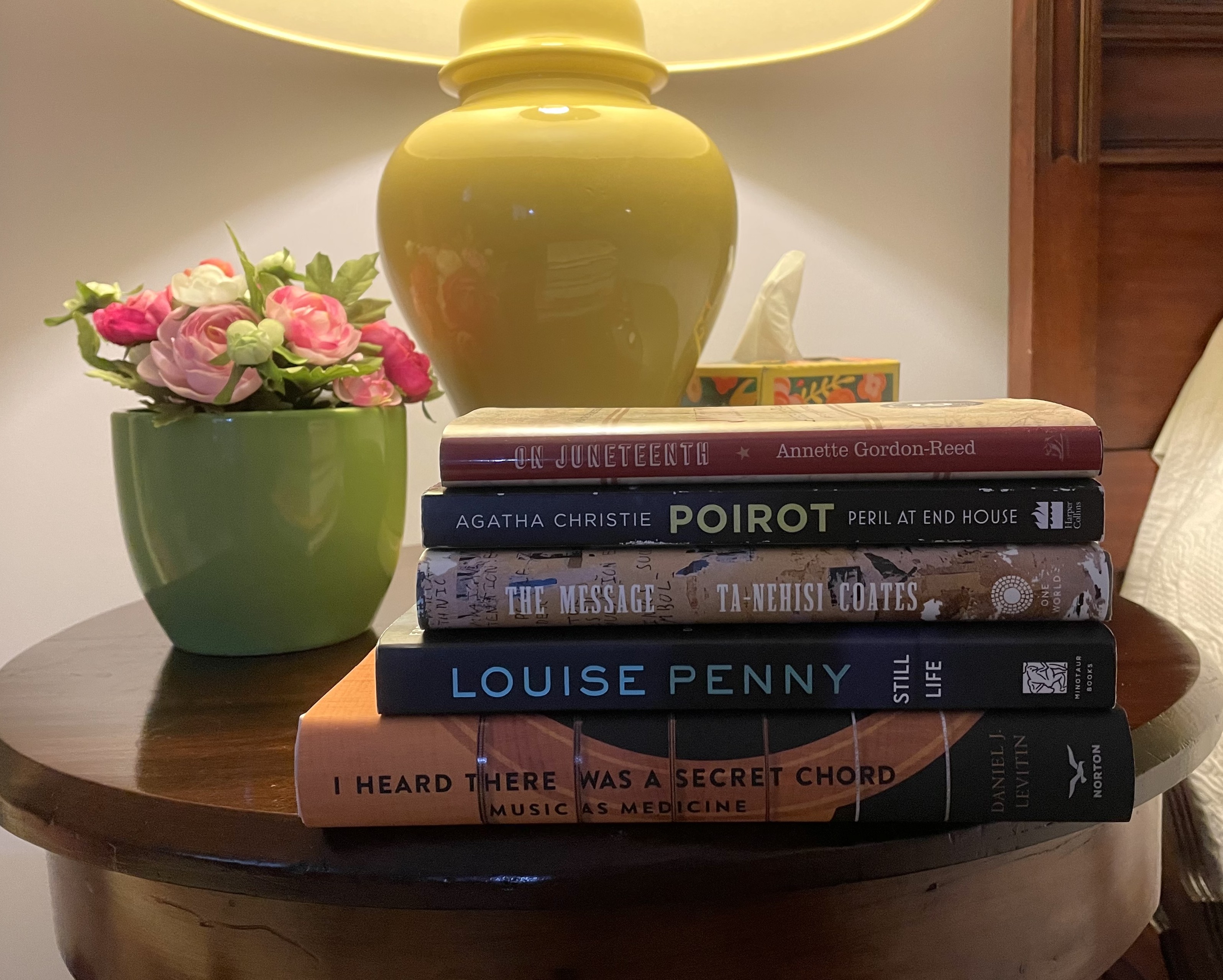
- Peril at End House by Agatha Christie
- The Message by Ta-Nehisi Coates
- I Heard There Was a Secret Chord: Music as Medicine by Daniel J. Levitin
- Still Life by Louise Penny
- On Juneteenth by Annette Gordon-Reed
Keep reading!
More to come…
DJB
NOTE: Click to see the books I read in April of 2025 and to see the books I read in 2024. Also check out Ten tips for reading five books a month.
Photo by freestocks on Unsplash
 MORE TO COME...
Pingback: Observations from . . . June 2025 | MORE TO COME...
Pingback: From the bookshelf: June 2025 | MORE TO COME...