
My monthly intention is to read a minimum of five books on a variety of topics from different genres. I hope that you’ll enjoy seeing what I read in August of 2025. As always, if you click on the title, you’ll go to the longer post on MORE TO COME.

The Postcard (2021; translation from the French in 2023) by Anne Berest is a compelling and timeless work that is so necessary for our current moment. In January of 2003 an anonymous postcard is delivered to the Berest family home, arriving alongside the usual holiday mail. On the front, a photo of the Opéra Garnier in Paris. The back contains only the first names of Anne Berest’s maternal great-grandparents, Ephraïm and Emma, and their children, Noémie and Jacques. There were five members of the Rabinovitch family. These four were all killed at Auschwitz. The fifth—an older sister to Noémie and Jacques—is Myriam, Anne Berest’s grandmother, who never spoke about the loss of her family or acknowledged her Judaism. Although she had a harrowing escape from the Nazis and then worked for the Resistance, she was traumatized; filled with guilt and grieving. After the war Myriam assimilated into France. The quest to uncover who sent the postcard and why leads Anne and her chain-smoking mother Lélia Picabia on a multi-year journey of discovery. That journey is painful at a profound level and yet somehow resilient and inspiring.

Paris: A Short History (2024) by Jeremy Black, MBE is a succinct and incisive look at how the city, founded in the first century BCE, was shaped by cultural circumstances and then grew to have impacts across the country, Europe, and the world. Black is emeritus professor of history at the University of Exeter and the author or editor of over 100 books. He brings that deep experience and understanding to this look at Paris as he explores and explains how a small Gallic capital was transformed into a flourishing medieval city full of spectacular palaces and cathedrals. Black brings the illustrious reigns of Louis XIV and XV—a time when Paris became one of the most beautiful and cosmopolitan capitals in the world—to life. And his chapters on the Revolution, the reigns of Napoleon and Napoleon III, and the shifting fortunes of France during the 18th through the 20th centuries are among the strongest in what is already a vibrant book.

I Heard There Was a Secret Chord: Music as Medicine (2024) by Daniel J. Levitin explores the curative powers of music. A neuroscientist and award-winning musician, Levitin makes a fun and accessible case for the therapeutic force of music, describing ways in which it can be a beneficial part of recovery for patients. After an opening chapter on the neuroanatomy of music where he shows that music has the ability to calm our brains, hearts, and nerves, Levitin brings together the results of numerous studies on music and the brain. In doing so he demonstrates time and time again “how music can contribute to the treatment of a host of ailments, from neurodegenerative diseases such as Parkinson’s and Alzheimer’s, to cognitive injury, depression, and pain.”

Civic Architecture Across America: Extraordinary Views (2025) by Thomas R. Schiff provides unexpected perspectives on buildings and environments that are often familiar to the point of being overlooked. Produced to accompany a national tour in celebration of the 250th anniversary of the signing of the Declaration of Independence, this work forces a reassessment of what we think we know about America’s statehouses, city halls, county courthouses, monuments and more. Schiff’s use of a Hulcherama 360° panoramic camera provides a view that is at once in front, beside and behind the viewer. This striking and often stunning collection speaks to the importance, beauty, and—some might add—fragility of the buildings that both serve and represent our American experiment in democracy.
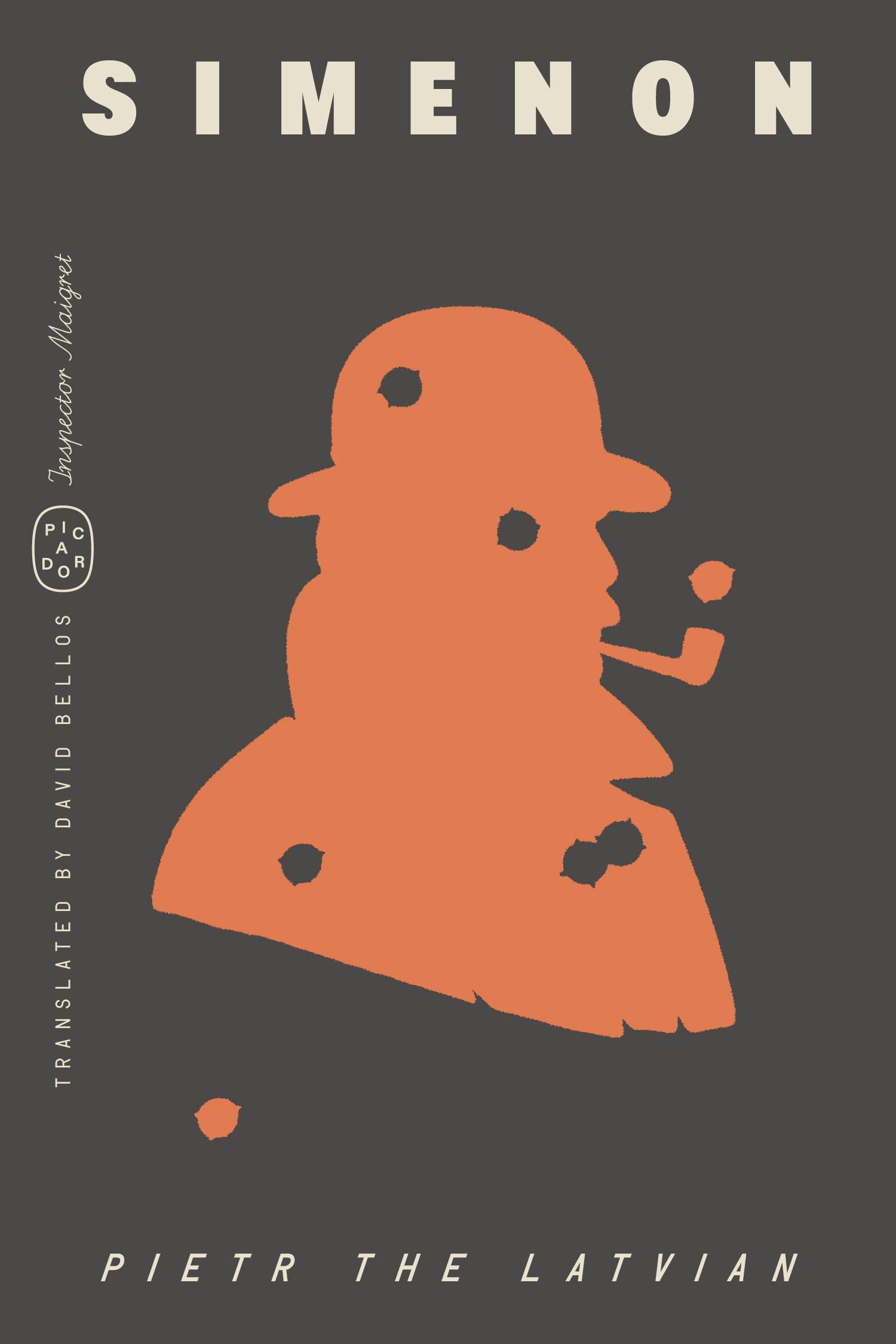
Pietr the Latvian (1930) by Georges Simenon is the first installment in the legendary Inspector Maigret series. As the book begins Detective Chief Inspector Maigret receives notice from Interpol that Pietr the Latvian, an infamous con man, is on his way to Paris. Maigret rushes to intercept him at the train station but is confounded to find two men there who fit the description of the wanted man. One is alive, the other dead. So begins a masterful book that requires the Detective Chief Inspector to work through cons, doubles, intrigue, and hidden crimes. It is a thrilling tale where Maigret not only has to solve the murder but he must also search for the true identity of the victim.
What’s on the nightstand for September (subject to change at the whims of the reader)

- The Black Swan Mystery by Tetsuya Ayukawa
- Bird by Bird: Some Instructions on Writing and Life by Anne Lamott
- Sex of the Midwest by Robyn Ryle
- A Man’s Head by Georges Simenon
- Everyone on this Train is a Suspect by Benjamin Stevenson
Keep reading!
More to come . . .
DJB
NOTE: Click to see the books I read in July of 2025 and to see the books I read in 2024. Also check out Ten tips for reading five books a month.
Boy Reading photo by Ben White on Unsplash
 MORE TO COME...
Bird by Bird is one of my favorite books ever. Let’s discuss when you’re done!!
Merrill, I really liked it. Next time we have lunch let’s find out what each one of us got out of it.
Pingback: Observations from . . . September 2025 | MORE TO COME...
Pingback: From the bookshelf: September 2025 | MORE TO COME...