
What do you do as a detective when it seems all the suspects appear to have air-tight alibis? That’s the dilemma in a recent English translation of a Japanese crime classic.
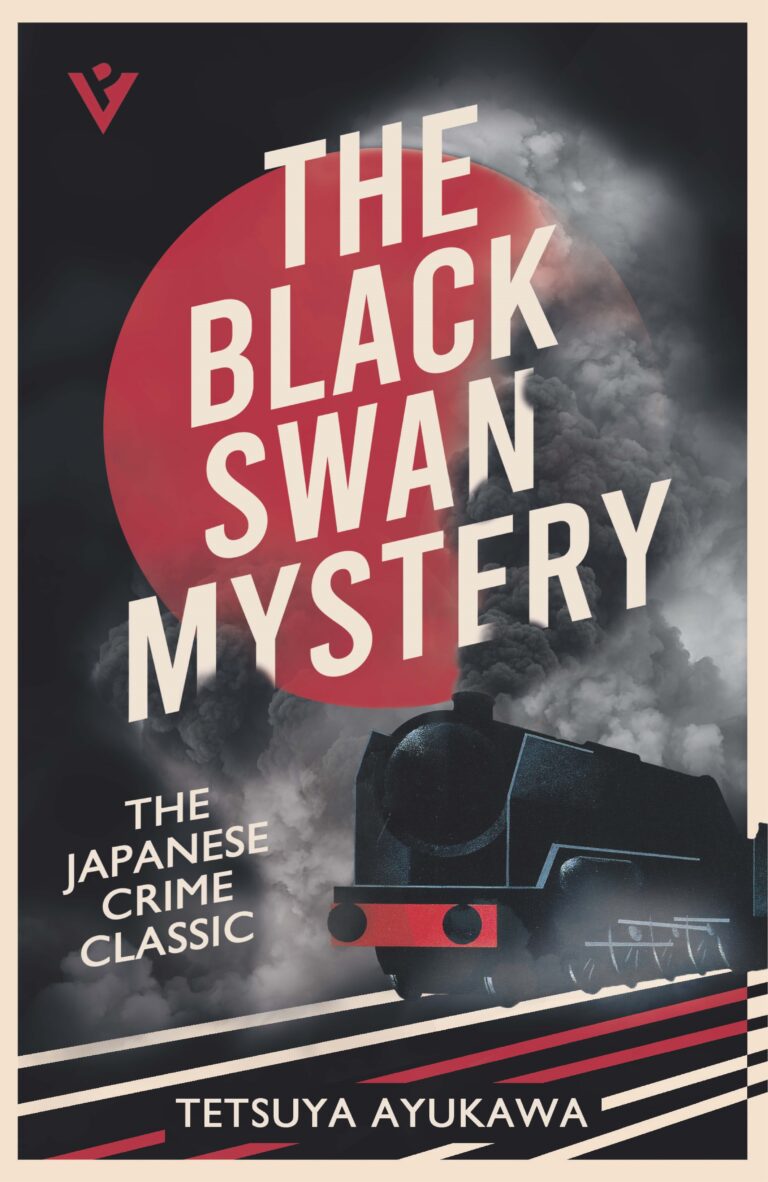
The Black Swan Mystery (1960; English translation 2024) by Tetsuya Ayukawa (the pen name of Toru Nakagawa) is an alibi-deconstruction mystery of the first order. One morning railway workers find the body of a well-dressed, middle aged man just outside of Kuki Station in Saitama Prefecture, shot dead. “Such an impressive mustache . . . what a waste,” one of them says. It turns out that the victim is the much-hated owner of a local mill who is involved in a labor dispute. Even before he is shot we are introduced to hidden secrets and blackmail schemes in the people who know him well. After the murder it seems that everyone in Gosuke Nishinohata’s orbit—including the labor union and a new religious sect—harbored ill feelings for the man, or worse. One union leader claims:
“I despised the man. But it wasn’t just me, you understand. Everybody did… He was devious, an egoist, had absolutely no morals whatsoever, was a terrible womanizer, and, to top it off, he was a paranoiac. How can you respect a man like that?”
The initial investigating team takes the simple way out but when they hit dead ends the decision is made to bring in an expert, Inspector Onitsura, who has a special skill at unraveling difficult schemes. Onitsura and his trusty assistant Tanna crisscross Japan, taking trains to track down leads and stay one step ahead of the killer, who strikes again and again.
Onitsura and Tanna work through boxes of evidence, but history and memory seem to be at play in ways that the original investigative team ignored. Set in post-war Japan, the conflict and its aftermath is present throughout Ayukawa’s story, as the inspector notices when he disembarks in Kyoto.
“Even as he stood on the central concourse, with all the stylish beauties of the old capital passing around him, he could still see the dark shadow of war beneath the crowded scene, as though he were looking at an X-ray.”
While a careful reader might surmise the identity of the killer before the final pages, few—I suspect—will have unraveled the alibi before Ayukawa and Onitsura are ready to reveal the past that cannot be hidden forever.
A first-rate addition to the railway mystery genre.
More to come . . .
DJB
Photo from Pixabay
 MORE TO COME...
Pingback: Observations from . . . September 2025 | MORE TO COME...
Pingback: From the bookshelf: September 2025 | MORE TO COME...