European military historian Jeremy Black, MBE answers my questions about his new work, “The Civil War.”
Bookshelves groan under the weight of the tens of thousands of volumes written about the American Civil War.* Most are by Americans and a large majority focus on military campaigns and their leaders. The history of the conflict and its impact on the country is constantly up for scholarly revision and, too often, hot-tempered public disagreement. William Faulkner’s famous phrase—“The past is never dead. It’s not even past.”—always seems most appropriate when applied to discussions and studies around the American Civil War.
So it is refreshing to discover a concise new volume that asks the reader to look at this watershed moment in world history with— surprise—a broader international perspective.
The Civil War (2025) by European military historian Jeremy Black, MBE reorients readers to see what was extraordinary in the civil war of “the American colonies.” As Black states early in this work, the Civil War “was the most traumatic conflict, indeed event, in American history.” That holds true even when compared with the War of Independence, as the divisions within the country at the time of the revolution were not as long-lasting. The Civil War in America was not just a military struggle; it was also a political struggle. Black steps back to take a larger, and more international view, to show that the conflict “helped define American politics and human geography for a century, and its echo remains strong today—and in some respects very strong.”
Black is not interested in American mythmaking except, in certain instances, to debunk it. In doing so he shows the inconsistencies in positions taken by both sides. As an example, he notes that the south, far from simply championing states rights, “was also the champion of federal authority over both northern states’ rights and, in the territories, of a federal code protecting slavery.” This position that favors the rights of some over others continues to haunt the country today.
This new work also provides much more context around the thinking of England, France, and Spain in the middle of the 19th century. America, Black notes, was not the principal priority for British policymakers in this period, “which helps explain Britain’s accommodating position toward America on a number of occasions, including during the Civil War.”
“The extent to which America, far from being exceptional, was part of a wider international situation, made foreign intervention in the Civil War less likely, as did the likely costs of such intervention.”
In the end, it is Black’s focus on the international context and political outcomes (such as Lincoln’s re-election being crucial to the collapse of the Confederacy) that make this such a welcomed new volume in the canon of Civil War studies. Black’s Civil War, as the publisher notes, is “a new resource that teaches, reaffirms, and reminds readers of the intensity of the American past—in both error and idealistic impulse—that might continue to guide us to the best future and avoid the lose-lose circumstances of a civil war.”
I was delighted when Jeremy agreed to answer a few questions about the book in this most recent edition of my Author Q&A series.
DJB: Jeremy, your book is very important in setting an international context for the conflict and in pointing out that America in the 1860s, far from being exceptional, was part of a wider international situation. Can you describe some of the key aspects of that context and why the elements that did not occur are highly significant although often overlooked?

JB: The literature on the international dimension of the war is good, but far less copious than that on the military dimension. The Civil War served as the closure of one age of American outcomes and the beginning of a very different one, with the outcomes a matter both of the character of America and of its place in the wider world. The wider international context was scarcely defined by the American crisis. As for key international elements that did not occur but that are significant: Mexican revanche was scarcely an element in the American Civil War. Nor was there a united Native American uprising. Both would have changed the dynamics of the war. Another key element that did not occur was that of external intervention principally by Britain and France. Such intervention would have altered the war greatly politically, and militarily, and would have increased the uncertainty of the struggle.

You have described the Civil War that was fought from 1861-1865 as the “second” American Civil War. What was the first and how did it mirror and differ from what we in the U.S. traditionally call the Civil War?
The First Civil War was 1775-83 in which Loyalists and Insurgents, each seeing themselves as Patriots, fought but, unlike in 1861-5, they were part of a struggle involving trans-Atlantic forces.
“A war over the New West” explains much about the Civil War. What issues around expansion into the new territories were central in leading to hostilities?
Concern about the West reflected and focused the inherent uncertainty of America as concept, state, society and aspiration. Until 1848, the control between states was unclear, but settling that issue did not determine the outcome for this uncertainty. Nor was there an external factor to change the context as was to occur in the 1940s with World War II.
You write astutely about how the Supreme Court’s Dred Scott decision in 1857 “affirmed that slavery was national and freedom was sectional, and not the other way around.” How did this decision affect politicians, influencers, and citizens differently in the North and the South?
The trajectory of slavery issues in the 1850s greatly increased tensions not least because it led to a sense of embattlement in both North and South. The decision contributed to the sense that the situation was unstable. This decision alone, however, did not determine the 1860 election or subsequent results.
American readers may be surprised to see the statement that Lincoln’s policy in 1861 echoed that of George III some eighty years earlier, but you make the case that there are similarities. What were those similarities, and how did their enactment impact on the development of the war?
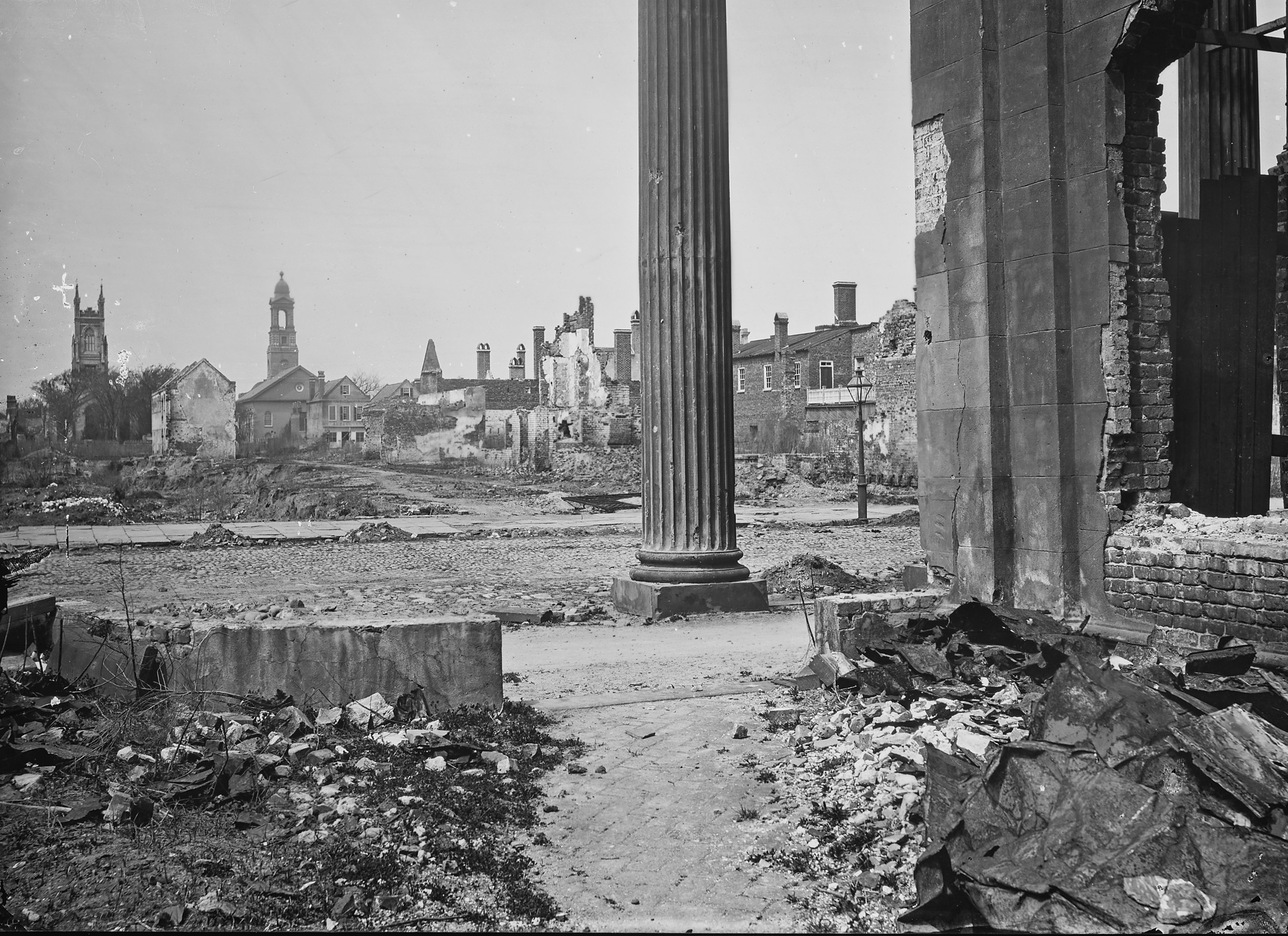
Noting similarities between the British position in 1775 and that of the Union in 1861 scarcely accords with American public history but repeats a point made at the time, one that captured the problematic character of opposing separatist sentiment on the grounds offered. More specifically, British moves in 1775, focused on Massachusetts, and Union ones in 1861, focused on Charleston, both caused rebellion to spread and become more serious.
Lincoln’s appointment of Ulysses S. Grant as Lieutenant-General and General-in-Chief of the Union army on March 2, 1864, was a major turning point in the Civil War. Can you describe Grant’s skills and attributes that were key in leading to victory?
Grant added strategic purpose and impetus to Union military policy, and helped drive the army of the Potomac, still under Meade’s command until it was disbanded on 28 June 1865, to a level of aggression it had not shown hitherto, as McClellan’s deliberative caution had been characteristic of his successors, albeit to a varying degree. In doing so, Grant matched Lee’s earlier achievement. Grant was also capable of hard and purposed work. He analyzed situations fully but rapidly and issued clear instructions accordingly. He was able to read maps and understand terrain, which was important at every level of war, and an aspect of his ability to gain and use the altitude. Grant was willing to take risks though without disparaging his opponents, but he remained calm and collected while doing so.
Finally, Jeremy, you write that “reconstruction was primarily about reunion rather than reconciliation.” Why was that the case?
Circumstances came to trump ideology in Reconstruction with demobilisation a key context and the extent of Southern opposition leading to an emphasis on the fact of reunion rather than sustaining much that was broader.
Thank you, Jeremy.
A pleasure.
More to come . . .
DJB
*There is no exact count, but estimates place the number of books on the American Civil War at over 60,000 to more than 100,000, with new books being published constantly.
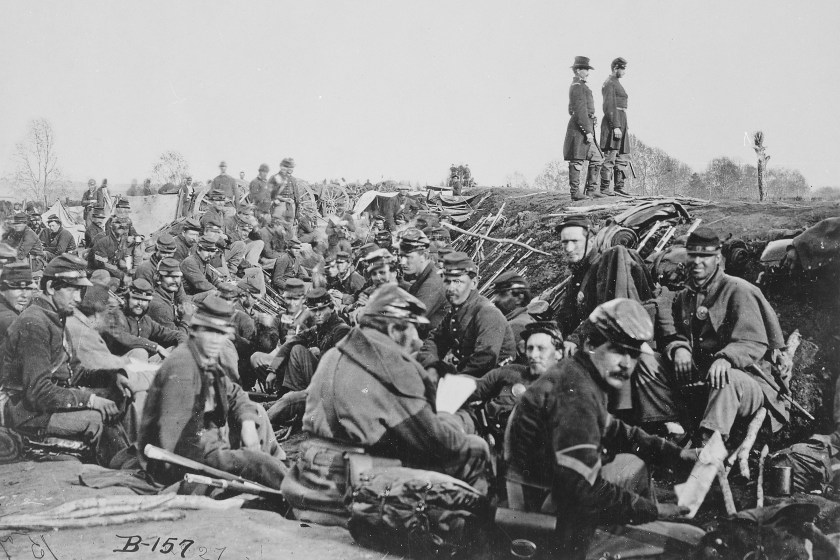
Photograph of soldiers of Brooks’ Division at Fredericksburg, May 2, 1863 taken by Andrew J. Russell from National Archives.
 MORE TO COME...
Pingback: Q&A on The Civil War | Jeremy Black
Pingback: Observations from . . . October 2025 | MORE TO COME...
Pingback: Pull up a chair and let’s talk | MORE TO COME...
Pingback: From the bookshelf: October 2025 | MORE TO COME...
Pingback: The year in books: 2025 | MORE TO COME...