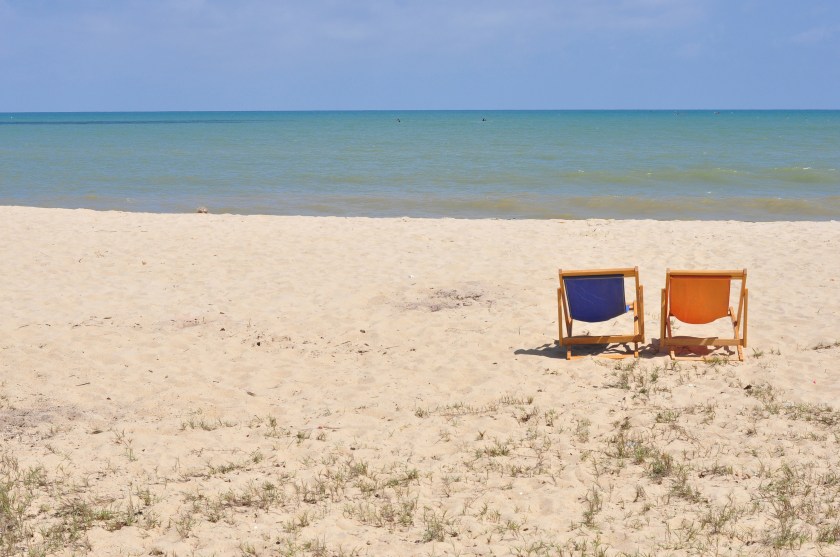
Inspector Maigret cannot escape murder and intrigue even while on holiday.
Everyone has experienced holidays that don’t turn out quite as planned. Gale-force winds in the Atlantic decided to throw a monkey wrench into our planned circumnavigation of Ireland last month. It can happen to the best of us with the best laid plans.
But when you are a famous detective, those detours can take you into unchartered territory even though you have the elements of a standard murder: a dead body, missing persons, a cryptic note, and a somewhat clueless local police force.
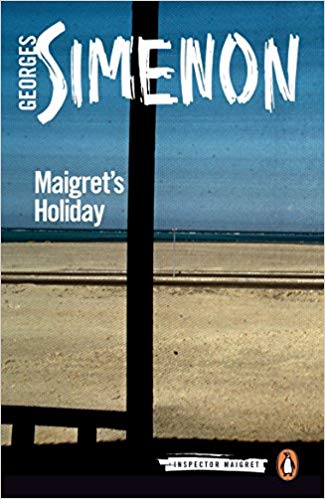
Maigret’s Holiday (1948; translated and republished in English in 2016) by Georges Simenon is the 28th book in the writer’s famous Inspector Maigret series. The tale begins in August. Maigret and his wife are on holiday in the seaside town of Les Sables d’Olonne. On their first evening they eat a huge dish of freshly caught mussels and both become ill. Maigret quickly recovers but Madame Maigret complains of vague pains the next day while they are on the beach and she later develops a fever. Admitted to a hospital she was still there nine days later after an emergency operation for acute appendicitis. During that time a young woman in room 15 in another ward dies and Maigret is unable to resist investigating the circumstances of her death. An anonymous note that had been slipped into his pocket had words that both irritated and unsettled him:
“For pity’s sake, ask to see the patient in room 15.”
Simenon sets the scene as only a writer of his talent can. Maigret is walking to the hospital, located in the old quarter of Les Sables d’Olonne where the uneven cobblestones and pavements are so narrow that “you had to step off to let another person pass.” Maigret is there to visit his wife for half an hour, an everyday routine he has established but that clearly leaves him bored. The hospital has an atmosphere that reminds Maigret of his childhood when he was a choirboy—“the purity of silence had a quality that cannot be found anywhere other than a convent.” It was a hospital where the nurses were nuns.
Feeling he cannot sit alone on the beach with all the mothers and their children, Maigret walks the streets of the resort town, visiting stalls and shops, taking time for a glass of wine or Calvados. He falls into the habit of visiting the Brasserie du Remblai, overlooking the beach, where a group of men including the local chief inspector of police, Monsieur Mansuy, met each afternoon to play bridge. It is through conversations with Mansuy—who is clearly both taken and threatened by the presence of the famous detective—that Maigret learns about the local characters and begins to solve the mystery.
The young woman in room 15 had died after being flung from a moving car . . . not your standard death. Her brother has also gone missing. Methodically, as only Maigret can do, he talks to people in the town, sees how some of them react to the local police, deals with the passive aggressiveness of the Mother Superior at the hospital, and sorts through a murder that would have gone unnoticed and unsolved except for his accidental presence in town with time on his hands and an anonymous note in his pocket.
“Three little words particularly irritated him: For pity’s sake.
Why for pity’s sake? If someone wanted to speak to him, it was perfectly straightforward to do so. He wasn’t the pope. Anyone could approach him.
For pity’s sake . . . That was in keeping with the cloying atmosphere into which he stepped every afternoon, with the nuns’ faint smiles as if effaced with an eraser, with Sister Marie des Anges’ little winks.”
In Maigret’s Holiday Simenon writes efficiently and compellingly—with rising tension and increasing complexity—to bring the reader along. Through his investigations the inspector discovers someone else’s life is in danger, but he doesn’t know whether it is a man or a woman and how the deed might be done. In the end Maigret uncovers the truth, even when some of the locals—including some very important men and women—do not want to accept it.
Another enjoyable and recommended work.
More to come . . .
DJB
Photo by I Do Nothing But Love on Unsplash
 MORE TO COME...
Pingback: Observations from . . . October 2025 | MORE TO COME...
Pingback: From the bookshelf: October 2025 | MORE TO COME...