Where cynics see brokenness in our political life and authoritarians press to claim the spoils, true leaders see great opportunities and new ways forward
This is a fragile era in our country. It is tempting to consider only the chaos, cruelty, and corruption. There is certainly enough of all three to go around.
As the old song suggests, something’s happening here. We’ve seen battle lines drawn. Those guns held by the man are doing horrible things in our name.
I rarely agree with George Will, but he was spot on when he wrote in the Washington Post that American voters are learning of “the Constitution’s limited ability to mitigate the consequences of their choices.”
“Neither the language of the law (constitutional or other), nor what are now shadows of norms, can substitute for what is indispensable: an occupant of the presidency whose constitutional conscience causes him or her to distinguish the proper from the merely possible.’’
Those who believe that violence is power want us to focus there. However, I want to focus on one recent moment that—at least for me—provides a measure of hope in difficult times.
ACTIONS SPEAK LOUDER THAN WORDS . . . BUT WORDS DO MATTER
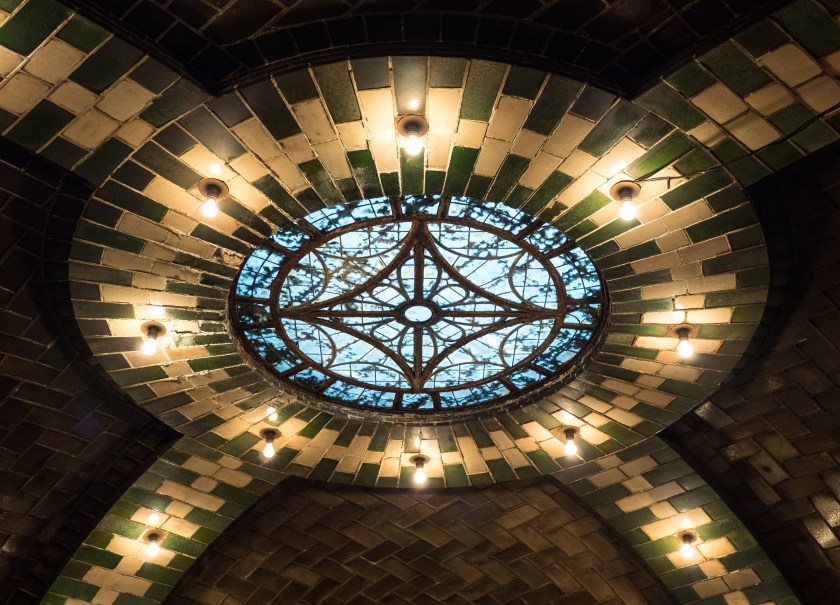
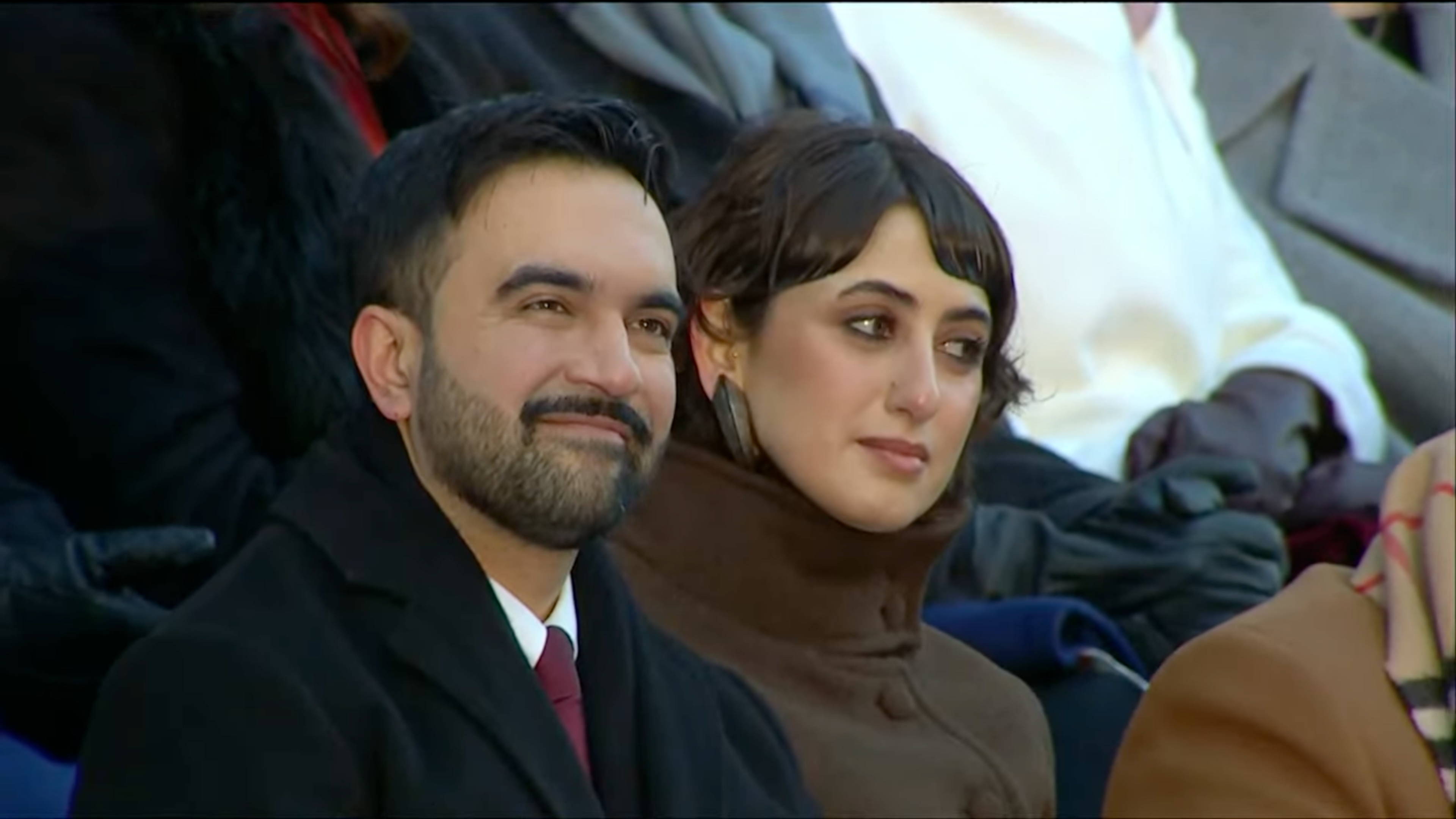
On New Year’s Day I watched the public inauguration of Zohran Mamdani as the mayor of New York City. He had officially been sworn into office just past midnight in a “long-shuttered relic from New York City’s past, an artifact from an era when leaders sought to merge beauty with utilitarian needs,” as reported in the New York Times. The old City Hall subway station—with its tiled arches, chandeliers and vaulted ceilings—opened in 1904 as a showcase destination among New York’s 28 original subway stations. It was closed in 1945 when its curved tracks resulted in a dangerous gap between newer trains and the platforms.

Mamdani, who, as a state legislator, helped bring free buses to parts of the city, is an unabashed champion of transit. The symbolism was clear.
The ornate station itself embodied a belief that New York leaders could elevate life for millions of New Yorkers by creating a grand subterranean vascular system. It is, Mr. Mamdani said after midnight, ‘a testament to the importance of public transit, to the vitality, the health, and the legacy of our city.’”
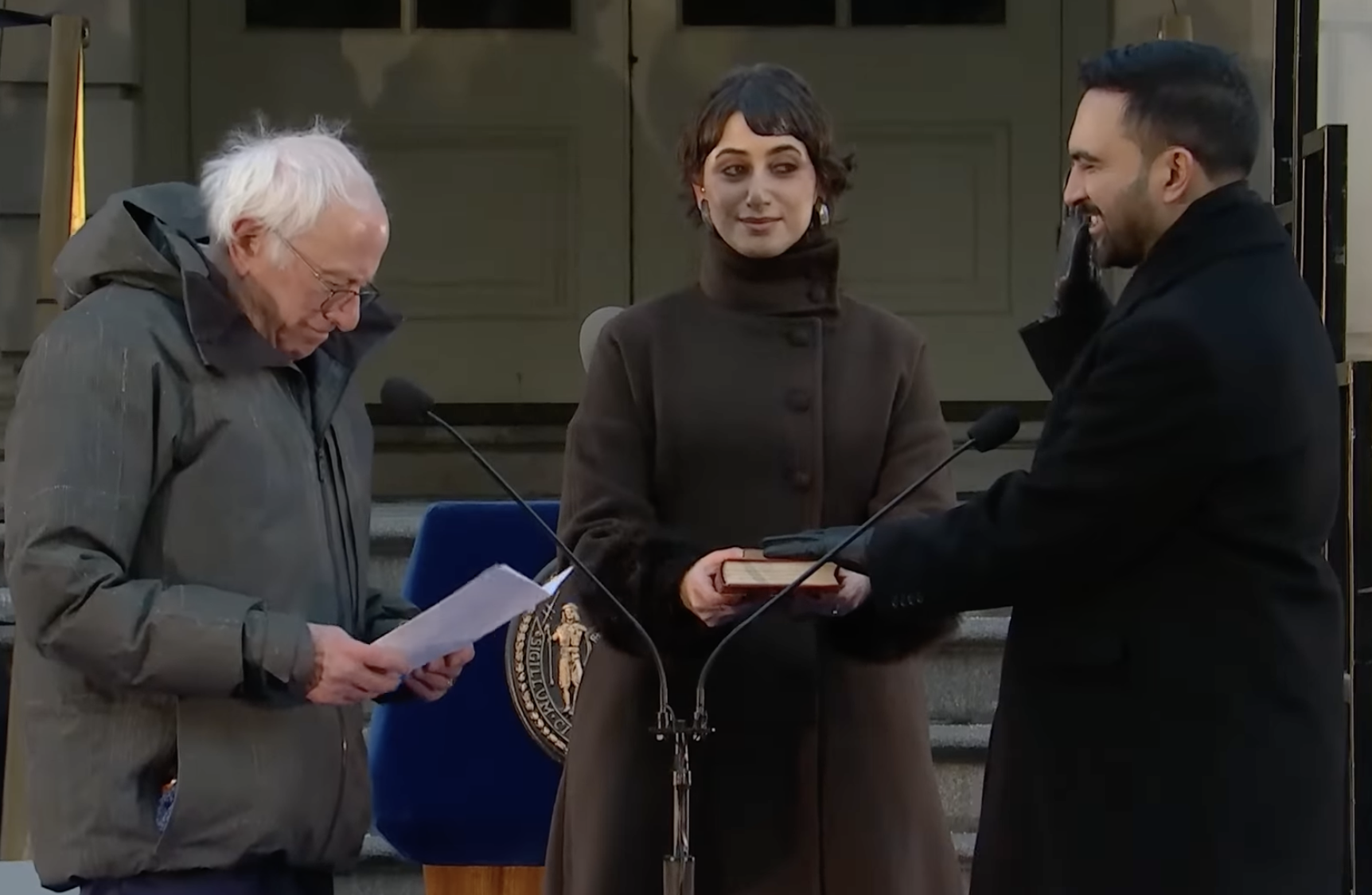
His words after the public ceremony a few hours later were just as hopeful, forward looking, and inclusive. The new mayor promised to stand alongside the “over one million New Yorkers who voted for this day nearly two months ago.” Mamdani also promised to “stand just as resolutely alongside those who did not.” Only action can change minds, but:
“[r]egardless of whether we agree, I will protect you, celebrate with you, mourn alongside you, and never, not for a second, hide from you.”
THE WEIGHT GROWS HEAVIER. THE WAIT GROWS LONGER.
Why should we care about Mamdani?
Well, for one thing he now runs a city larger in population than 39 U.S. states. Think about that for a moment in light of our democracy, system of government, and outmoded apportionment of power. As one writer phrases it, “the arteries of the constitutional order are clotted with antidemocratic plaque.”
He also ran unabashedly as a democratic socialist, bucking the long-term aversion to government that has been stoked by decades of right-wing propaganda. Yes, Mamdani comes to office at a time when we have an administration in Washington led by a man whose superpower is polarization. Who regularly sows fear and divisiveness. Who is “working so hard to break down the international order and replace it with chaos.” The moment, as it often does, has both danger and opportunity.
But note how Mamdani framed his moment. It is the rare opportunity to transform and reinvent for something good, a moment where it is “the people themselves whose hands are the ones upon the levers of change.” Rare, but not unprecedented.
It was this part of the speech that resonated most deeply with me.
“And yet we know that too often in our past, moments of great possibility have been promptly surrendered to small imagination and smaller ambition. What was promised was never pursued, what could have changed remained the same. For the New Yorkers most eager to see our city remade, the weight has only grown heavier, the wait has only grown longer.”
Taking steps away from a status quo comfortable only for a small minority eager to steal more of our wealth and power and instead move toward greater opportunity for the majority takes courage.
MOMENTS OF INFLECTION
There have been other moments in our history when the time was ripe for change, when a political base changed sides, when the country faced vital decisions that could become part of Dr. King’s long arc of the moral universe that bends toward justice.
Mamdani looked back while also looking forward. He noted that for much of its history the city belonged only “to the wealthy and well-connected, those who never strain to capture the attention of those in power.” Working people suffered the consequences. There were exceptions, however, and while not perfect and not always successful, he pointed to past mayors as examples, men like Bill de Blasio and David Dinkins.
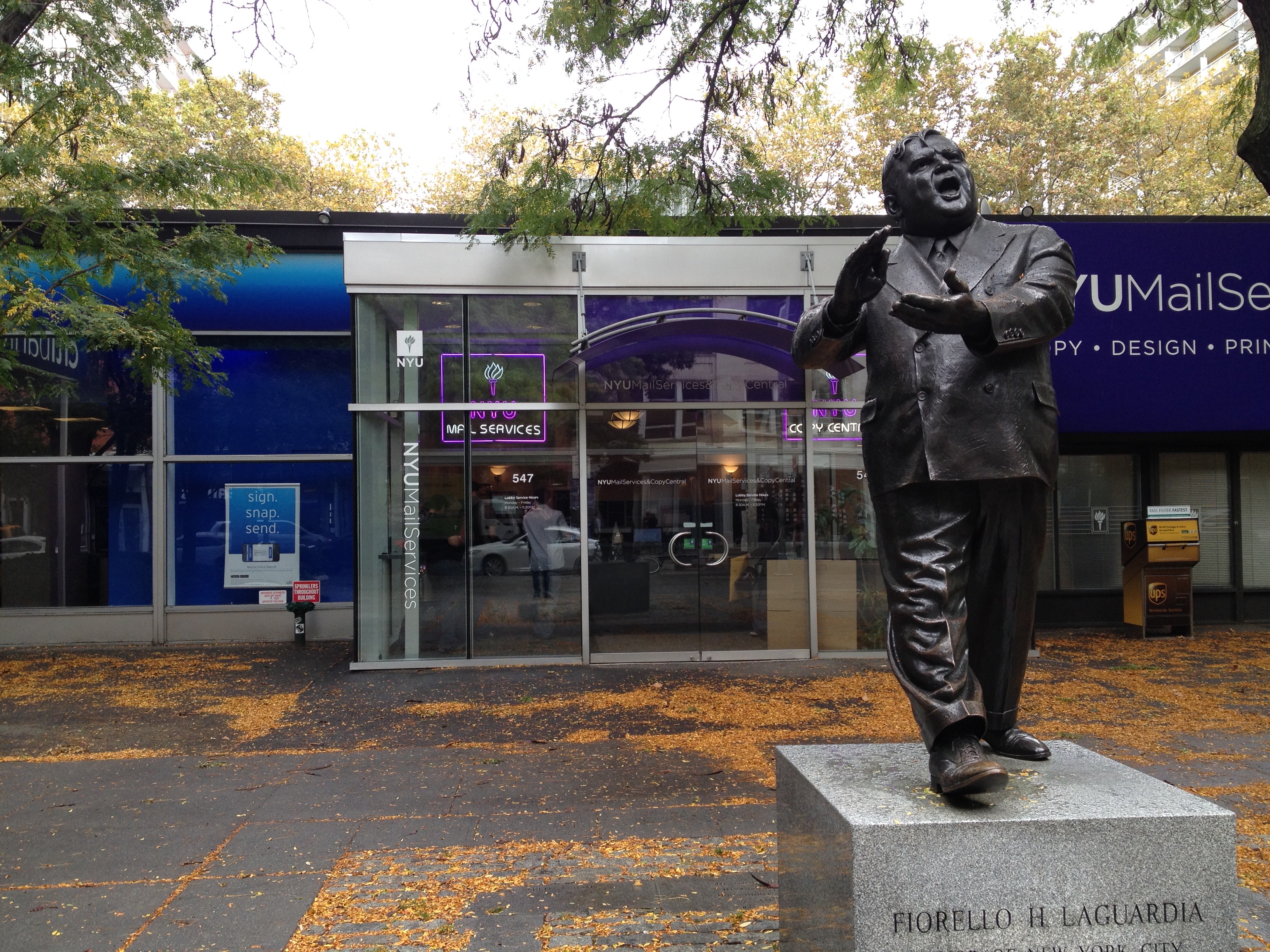
“And nearly six decades before [Dinkins], Fiorello LaGuardia took office with the goal of building a city that was ‘far greater and more beautiful’ for the hungry and the poor.”

LaGuardia was the three-term mayor of New York City during the New Deal era. Some historians suggest that he was only a product of that time, which is very different from our own. His leadership and vision, however, come across through the ages.
“LaGuardia spoke five languages, defended immigrants passionately, won vast sums of federal money for the city and put forward a vision of New York that placed it at the forefront of the politics of his day. As he once put it, describing what he wanted for the city: ‘First and foremost, I want justice on the broadest scale. By this I do not mean the justice that is handed out in police courts. I mean the justice that gives to everyone some chance for the beauty and the better things of life.’”
As a member of Congress before his time as mayor, LaGuardia demonstrated that he stood with the people, protesting the Johnson-Reed Act of 1924 which drastically restricted immigration, especially from Southern and Eastern Europe. He did so because “its supporters were driven by ‘narrowmindedness and bigotry,’ a ‘fixed obsession on Anglo-Saxon superiority,’ and warning that ‘the spirit of the Ku Klux Klan must not be permitted to become the policy of the American government.’”
That sounds pretty contemporary.
LOOKING TO RECONSTRUCTION AND THE NEW DEAL
Thoughtful Americans are looking back at two seminal moments in our past for guidance. Historian Eric Foner states that “key issues confronting American society today are in some ways Reconstruction questions.” For some time those looking at our current era have suggested there is a need for a new American Reconstruction, one which harkens back to and seeks to advance the principles of that period. Over the past 150 years, clever and powerful conservatives have diligently sought to undermine the egalitarian promise of the 13th, 14th, and 15th Amendments. As Foner reminds us, the “key elements of the second founding, including birthright citizenship, equal protection of the laws, and the right to vote, remain highly contested. . . . Rights can be gained, and rights can be taken away.” A Supreme Court that plays Calvinball with the law is only one of many places that scream out for reform.
The other era in our past that serves as both inspiration and guide in our present day is the New Deal, a time when there was a belief in the common purpose.
The federal government is no longer sending vast amounts of money to the cities, so the times are different from Fiorello LaGuardia’s era. But politics and policies change. We’re seeing that now at the local and state level across the country. The huge inequality of wealth is leading Americans of all types and in all places to begin to recognize that the wealthy need to pay their fair share of what it takes to make America the country it aspires to be. In March of 1933 the nation chose a new path out of an economic depression and in the midst of global uncertainty. The leader selected was a new, optimistic president who told the country that . . .
“. . . with the ‘money changers’ out of power, it was time to ‘apply social values more noble than mere monetary profit.’ . . . The country must pull together, and ‘realize as we have never realized before our interdependence.’”
There have been inflection points nationally at various times in our past. We may be at one again today.
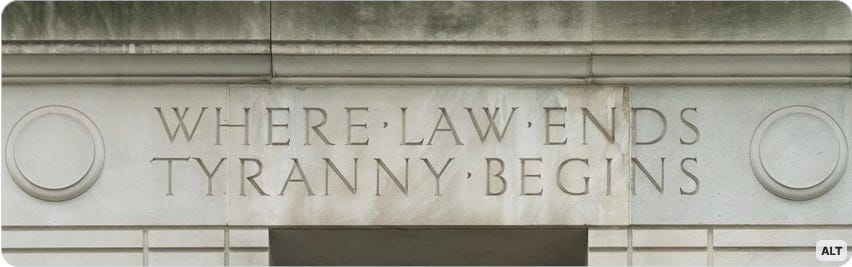
Thankfully, some Americans are already thinking ahead. How should we reframe America, reinforce the rule of law, and achieve the much bigger victory that we need to be aiming for? And how do we help younger generations believe in a robust democracy and civic life? Many of them have very little memory of a time before this political era dominated by “its open racism, authoritarianism, and obliteration—figuratively and literally—of political norms.”
DON’T EXPECT THE ELITES TO SAVE US
In his inauguration speech Mamdani spoke about the language of the people versus that of elites.
“The majority will not use the language that we often expect from those who wield influence. I welcome the change. For too long, those fluent in the good grammar of civility have deployed decorum to mask agendas of cruelty.”
That last line is both powerful and damning.
Just on cue as if to prove Mamdani’s point, the New York Times added their most recent addition to the Annals of Sanewashing. Describing the most dangerous kind of malignant narcissism as the opposite of what it is will not save our democracy.
Peter Coviello, the former chair of Africana Studies at Bowdoin College, described his own experience in dealing with the language of the elites and their understanding of this mayor in Maybe Don’t Talk to the New York Times About Zohran Mamdani. Editors and reporters were writing to him—as one of the new mayor’s former professors—asking for explanations to help explain Mamdani’s rise.
“Beneath its humdrum requests, every email said more or less the same thing: Can you explain how reading certain things can turn a person into a socialist—and, possibly, a terrorist-sympathizing antisemite? It’s a storied gambit of the right at its most grimly predictable. ‘People read Foucault,’ the redoubtable David Brooks once wrote, in an actual column that I’ve all but committed to memory, ‘and develop an alienated view of the world.’ God, did I love this. An ‘alienated view of the world’! Not by, like, trying to pay rent or having an insurance claim denied—no, no, it was probably the Foucault you read in 2003. Anyway, it was clearly time to get the elaborate machinery of manufactured bewilderment and sour indignation up and running again.” *
As FDR said when taking office, it is time to “apply social values more noble than mere monetary profit.” We are there once again. We need to recognize our uniqueness and our interdependence.
Mamdani sounded those themes in his speech.
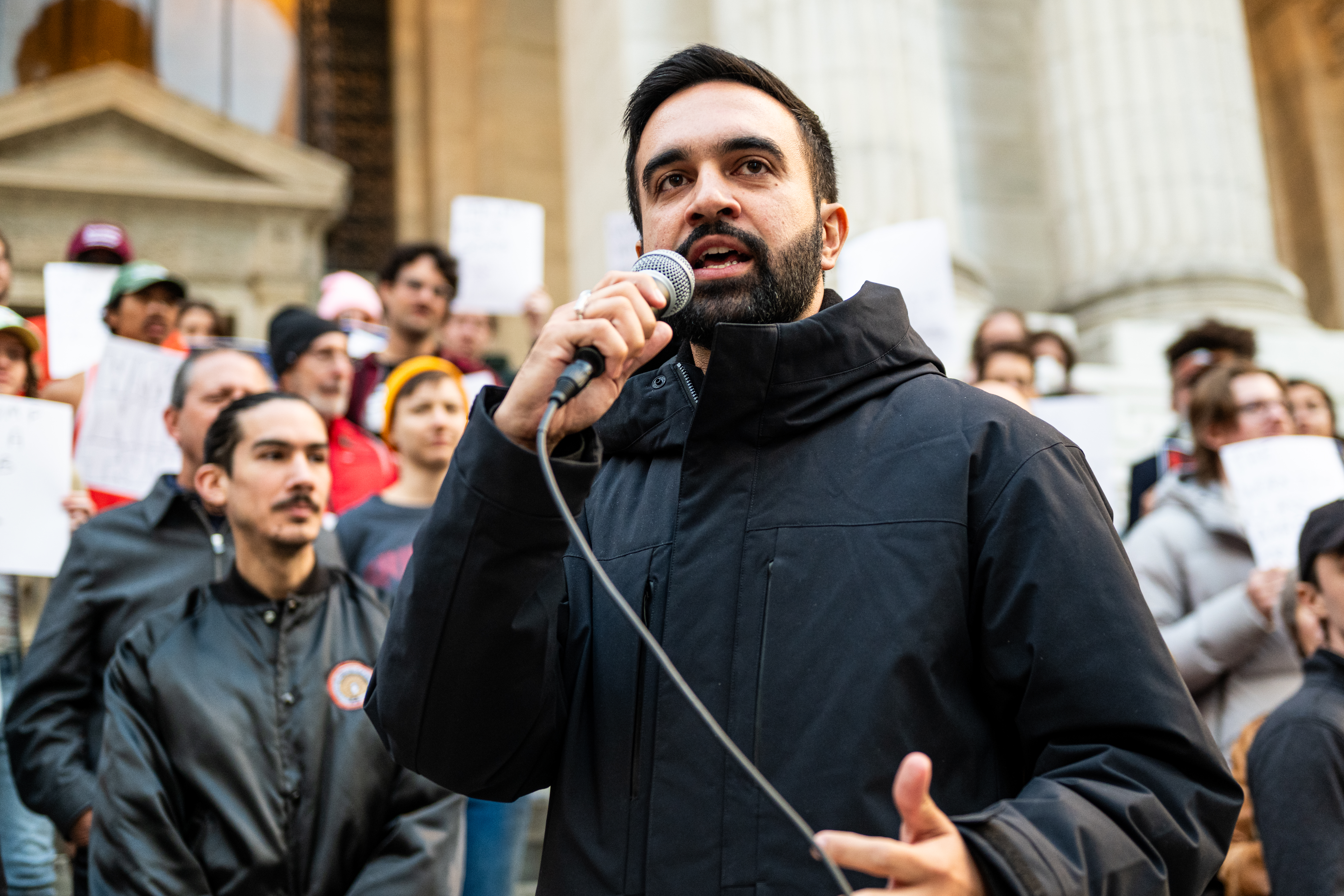
“To live in New York, to love New York, is to know that we are the stewards of something without equal in our world. Where else can you hear the sound of the steelpan, savor the smell of sancocho, and pay $9 for coffee on the same block? Where else could a Muslim kid like me grow up eating bagels and lox every Sunday?
New York is, as Mamdani says, the place where the New Deal was born.
That love will be our guide as we pursue our agenda. Here, where the language of the New Deal was born, we will return the vast resources of this city to the workers who call it home. Not only will we make it possible for every New Yorker to afford a life they love once again—we will overcome the isolation that too many feel, and connect the people of this city to one another.”
THE TIMES THEY ARE A-CHANGIN’
During the inauguration ceremonies, there was a snippet played of a song from another time of change, when we made progress—albeit imperfect—in defeating greed and racism.
We can make the change again, but it is up to us. The fight for democracy never ends.
More to come . . .
DJB
*Click on the Foucault link for a good laugh (or cry). I have friends who read and like David Brooks. I am not among them.
Photos of skylight in old City Hall Subway station, LaGuardia, and Mamdani all from Wikimedia commons
 MORE TO COME...
I can’t imagine the conversations around the dinner table at your house, not to mention breakfast and lunch.
Thank you for this uplifting piece.
I hope we don’t squander this opportunity. The consequences are dire.
Thank you, Jane. Those conversations are probably not as riveting as you imagine, but sometimes we do get in pretty deep. And I agree that this is an opportunity we cannot squander. Take care. DJB
Brilliant Reader Bob Stephenson sent me a note via email this morning with some of his reactions to this piece. He ended by quoting William Faulkner’s “Banquet Speech” for his Nobel Prize.
Words matter.
DJB
Pingback: The Times They Are A-Changin’ | MORE TO COME...
Pingback: Observations from . . . January 2026 | MORE TO COME...