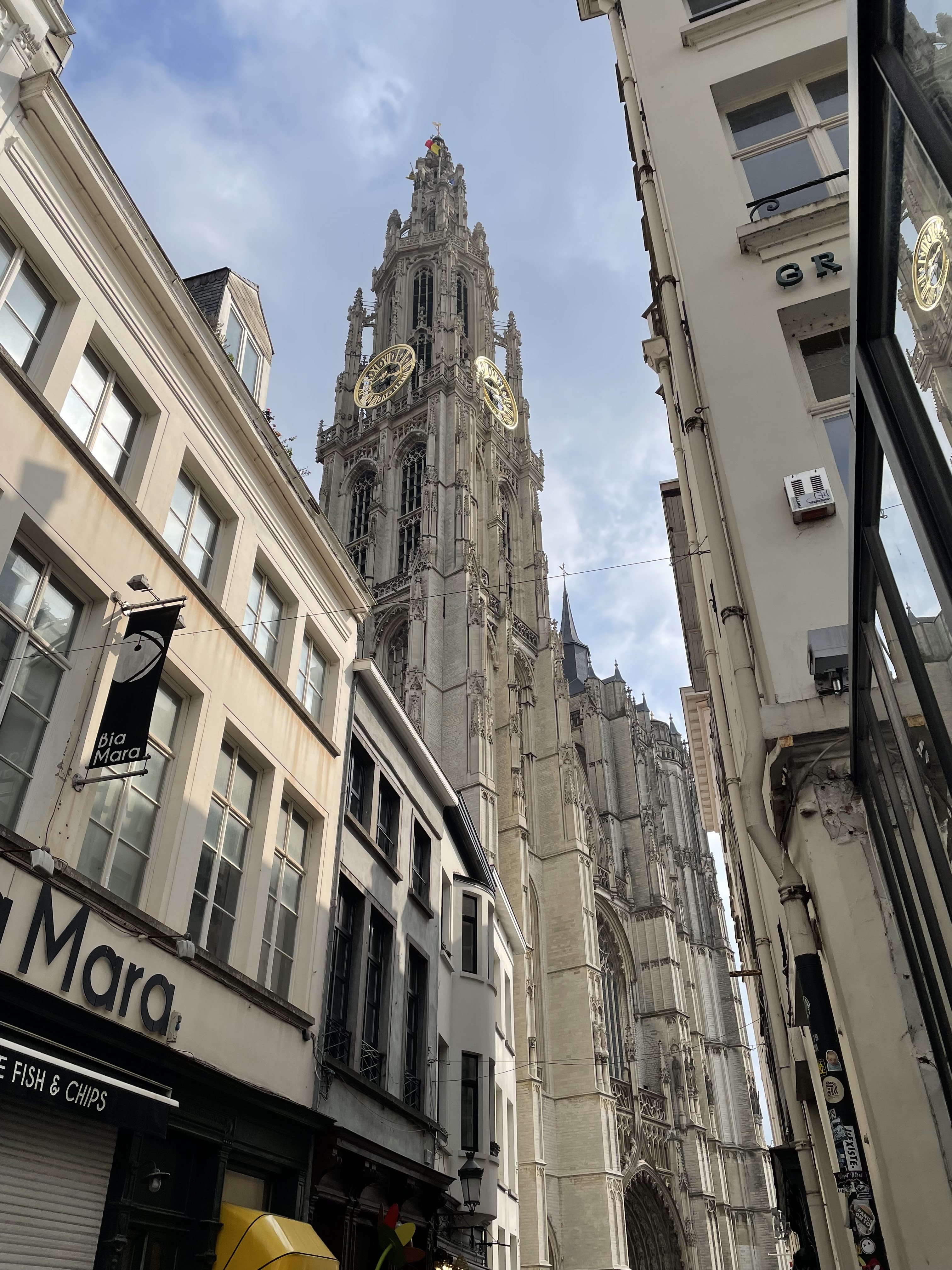
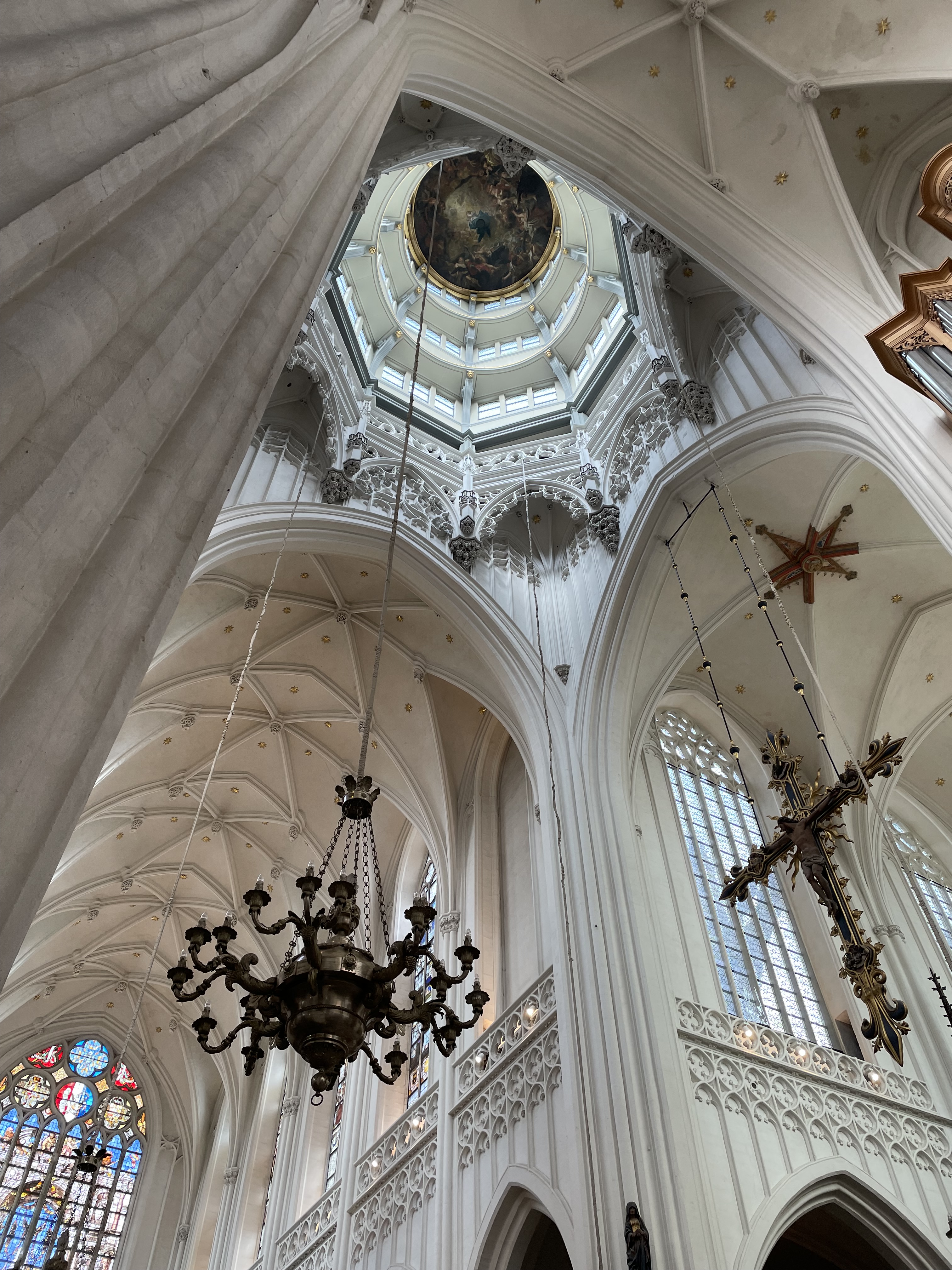
On Palm Sunday we were in Antwerp, Belgium for a tour of the magnificent and evocative Cathedral of Our Lady. It proved to be an appropriate and moving start to Holy Week.
Because there are plazas in Antwerp it is possible to see a full length view of the cathedral. Our first glimpse of the tower, however, emerged above the narrow, winding streets typical of medieval cities. Unlike in Paris, with its isolated monuments and wide boulevards, Antwerp has kept much of the old city plan and scale that adds a sense of mystery to the journey and the discovery, much as is true in life.
Upon entering through the main doors, however, there is no doubt about the cathedral’s scale and grandeur that contrasts with the narrow twists and turns we took to arrive at the destination.
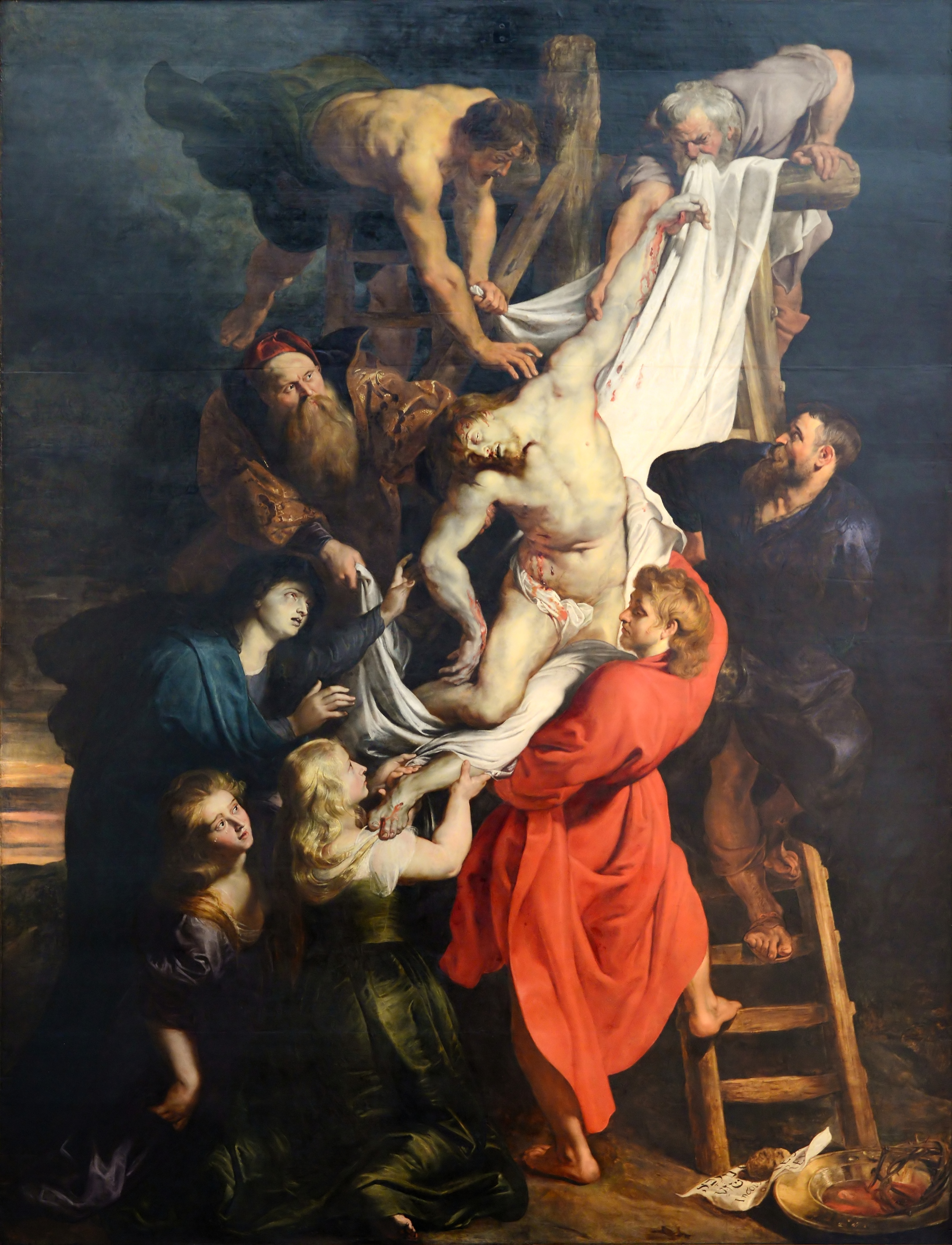
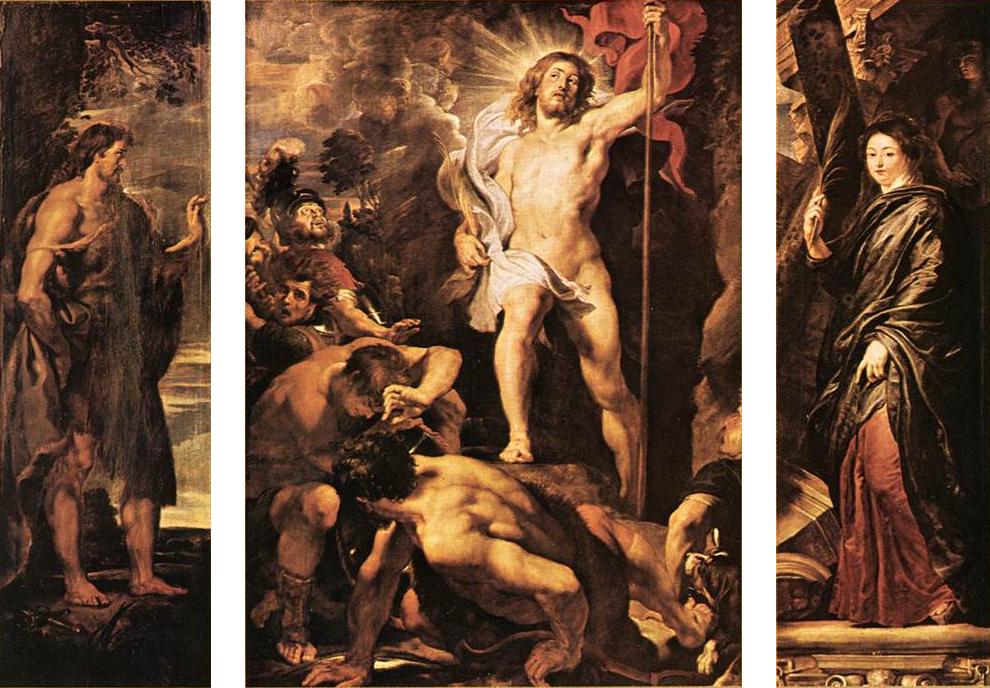
Among the outstanding treasures of the Cathedral are four paintings by the Flemish artist Peter Paul Rubens, including two especially appropriate for Good Friday: The Elevation of the Cross, and The Descent from the Cross. “The setting is dark and restless,” writes C.V. Westwood of the first of the two works, “as the group of spectators, soldiers, horses, and the strained bodies of the executioners surround the soon-to-be crucified Christ.”
Peter Paul Rubens’ The Elevation of the Cross (Credit: Wikimedia Commons)
Painted in 1610, we saw this winged altarpiece triptych in the Cathedral in Antwerp as the church for which it was originally painted has been destroyed.
The second painting, which was completed in 1612–1614, is still in its original place in the Cathedral and is considered one of Rubens’ masterpieces.
Peter Paul Rubens’ The Descent from the Cross (credit: Wikimedia Commons)
The paintings, taken as spoils of war, have moved more than once, first to Paris in 1794 where they remained until the end of the Napoleonic Wars in 1815. Stolen again in 1914 by the Imperial German Army, both works were taken to the Berlin Palace where they remained until after the Armistice of November 11, 1918, when they were returned to the Cathedral.
We were able to spend a long time savoring these works and placing them in the context of the week that was unfolding.
The Good Friday crucifixion of Jesus is one of the most transformational stories in all of human history. In her book Witness at the Cross, Amy-Jill Levine acknowledges the fragility of the memory of those witnesses to these events and suggests that readers “do well to listen to their stories and see how their stories transform us. At that point we pick up the stories ourselves.”
The nineteenth-century Schyven organ has 90 registers and 5,770 pipes, and I was especially taken with the two figures of angels playing stringed instruments on the organ case.
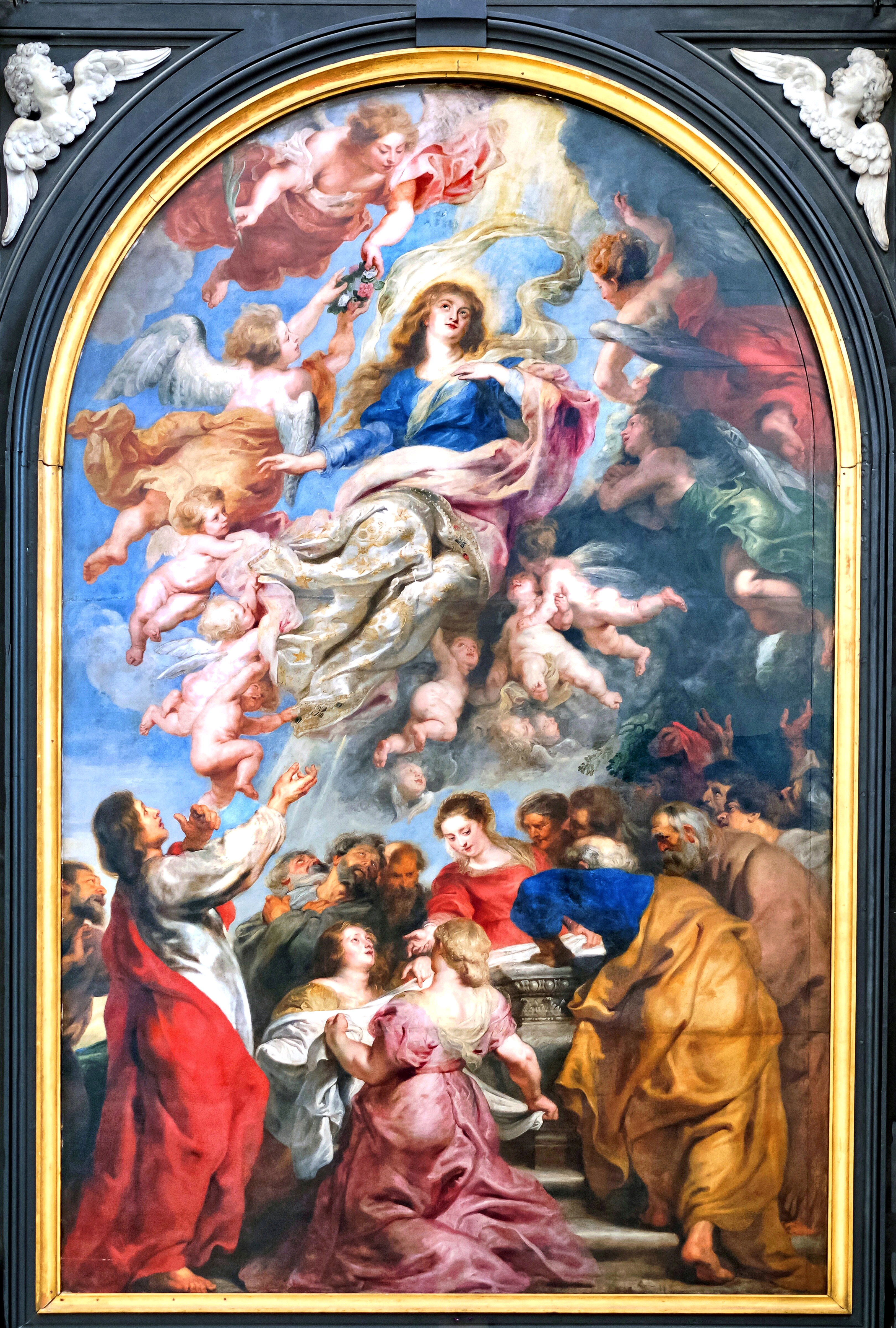
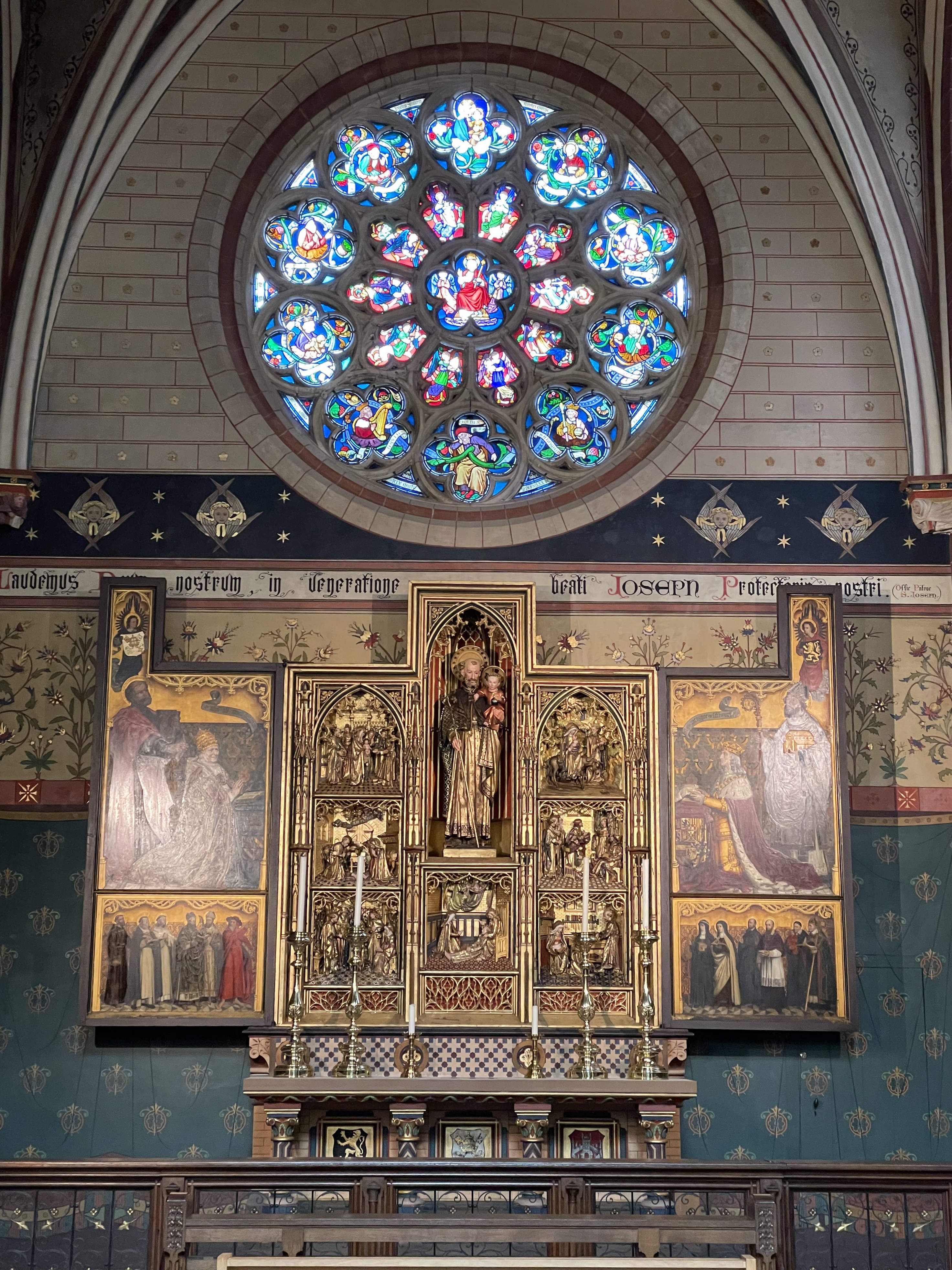
High Altar
May you allow the power of place, art, and story to transform you however you observe this holy period in the yearly calendar.
More to come . . .
DJB
Photo of the Cathedral By Rolf Kranz via Wikimedia Commons
“Why do you write?” is the second most common question about this newsletter following “How do you read five books a month?” I’ve answered both the why and how questions in the past and won’t return to revisit those topics. But another consideration in producing a newsletter is putting thoughts, questions, observations, and whatever else tickles my fancy into words that someone else will want to read. I regularly turn to books on the pursuit of writing to try and sharpen what lands in your in-box.
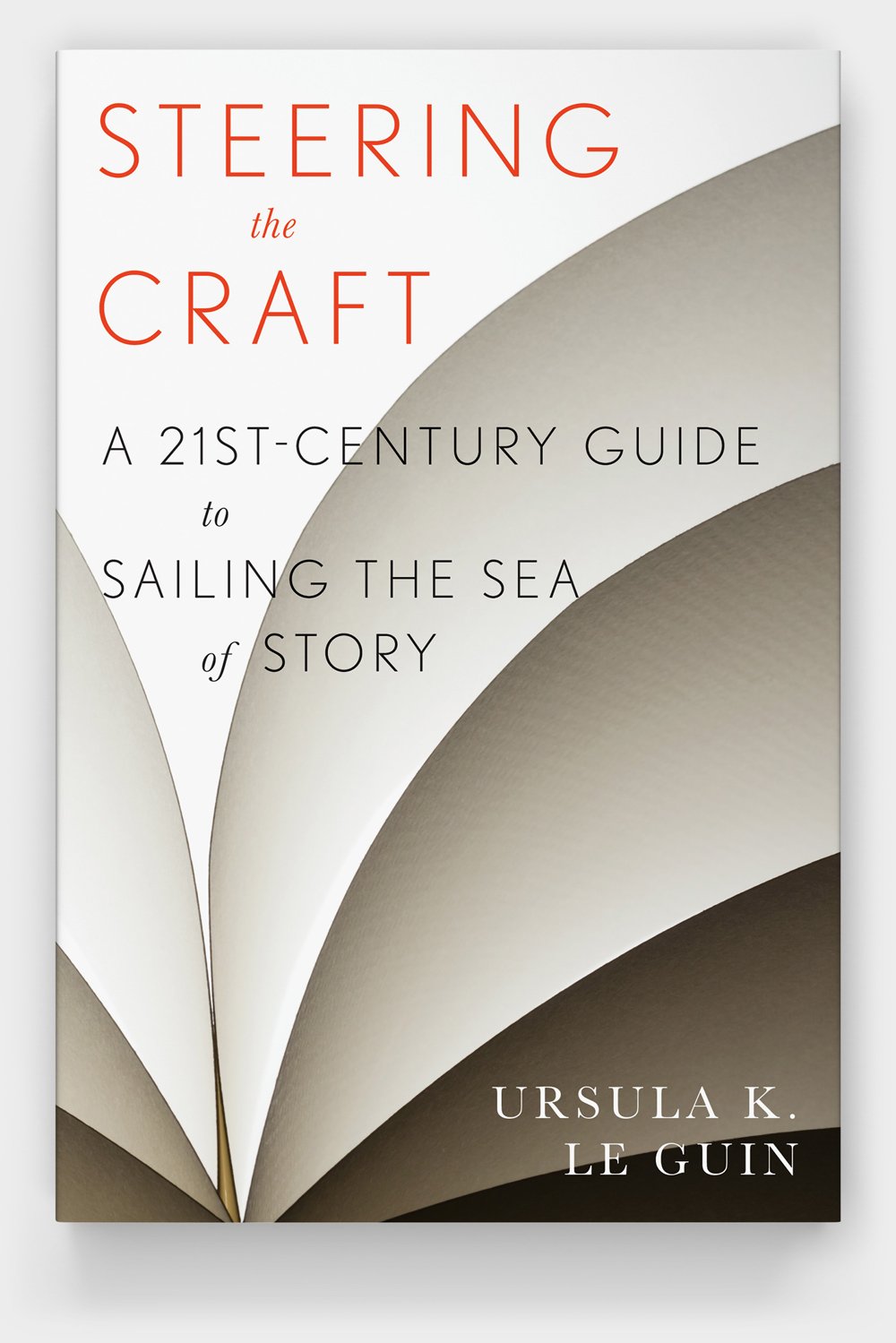
Steering the Craft: A 21st Century Guide to Sailing the Sea of Story (1998) by Ursula K. Le Guin is a handbook on writing well. This master practitioner examines the fundamental components of narrative in this useful, thoughtful, and—most importantly—readable work. Because story is about change, Le Guin wants writers to focus on movement. She examines the sound of language, the tools of punctuation, sentence construction, and more. This is a “deceptively simple” handbook that those wishing to communicate more effectively and skillfully through writing could return to again and again.
Each of the ten chapters begins with a two-line example to set the stage. For instance, when examining repetition, Le Guin includes this short sentence:
“The sudden wind brought rain, a cold rain on a cold wind.”
Then in straightforward and yet delightful language, she begins that same chapter as follows:
“Journalists and schoolteachers mean well, but they can be fatally bossy. One of their strangely arbitrary rules forbids us to use the same word twice on the same page. Thus they drive us to the thesaurus in desperate searches for far-fetched synonyms and substitutes.
The thesaurus is invaluable when your mind goes blank on the word you need or when you really must vary the word choice—but use it discreetly. The Dictionary Word, the word that really isn’t your word, may stick out of your prose like a flamingo in a flock of pigeons, and it will change the tone. ‘She’d had enough cream, enough sugar, enough tea” isn’t the same as ‘She’d had enough cream, an ample sufficiency of sugar, and a plentitude of tea.'”
Le Guin wrote this work after years of giving workshops to talented writers who were “afraid of semicolons and likely to confuse a point of view with a scenic vista.” She includes numerous examples from ancient to modern writers and has exercises to prompt the reader to try their skill on the topic at hand.
In “the sound of your writing” Le Guin strongly encourages writers to read aloud—not whisper—their drafts. Sound is where it all begins. I shared this insight with a dear friend and former professor and he heartily agreed. George taught his students to follow this suggestion and continues to use that practice in his personal work. I have also followed that advice (though not consistently) in the past. Another suggestion of Le Guin’s that made complete sense to me was to disable the punctuation and grammar programs on our computers.
“These programs are on a pitifully low level of competence; they’ll chop your sentences short and stupidify your writing. Competence is up to you. You’re on your own out there with those man-eating semicolons.”
As you can see, Le Guin has a distinct point of view about the writing craft, one that she backs up by sharing the work of other masters. And when the work of others isn’t enough, she’ll include a clearly labeled “opinion piece” as she does on the topic of “correctness and morality.” Here she wants the reader to stop cowering before the grammar bullies who tell us that people who say “Hopefully” are wrong. “Hopefully, some of us will continue to protest.”
“Morality and grammar are related. Human beings live by the word. Socrates said, ‘The misuse of language induces evil in the soul.’ I’ve had that sentence pinned up over my desk for a long time.”
It was Le Guin, in her memoir No Time to Spare, who encouraged us not to give up “on the long-range view.” Then she wrote words that, while not pinned over my desk, are nonetheless burned into my mind:
“Fortunately, there are also those who ‘live in a country that has a future.’ Who realize the incredible amount we learn ‘between our birthday and our last day.’ If we are flexible enough in mind and spirit to recognize ‘how rich we are in knowledge, and in all that lies around us yet to learn,’ we can maintain the seeking, trusting capacity for learning that we had as a two-year-old.”
Continuing to learn. Honing the skills. Loving the craft. Being ready to let a story tell itself . . . all admirable ambitions for anyone interested mostly in life, death, and commas.
Far too often those who see a new way forward envision a modernity that breaks with the past. We’re told that to reach new ways of thinking and living we must “grab the pick-axes, the hatchets, the hammers and demolish, demolish without pity” our venerable cities, governments, social systems, religions. It is an impulse as old as the ancients and as modern as today’s news.
A century ago, this narrative of rupture between past and present was active not only in rapidly growing political movements but also in the fields of city planning and architecture. Modernists such as Filippo Marinetti (he of the pick-axes and hatchets), Le Corbusier, and others drew sharp lines between historic and modern cities. Into this battle stepped Gustavo Giovannoni (1873-1947), recognized during his lifetime as the central figure in the architectural culture of Italy in the first half of the twentieth century. His insistence on placing the conservation of the historic city in its entirety at the center of a comprehensive preservation philosophy—and not just focusing on isolated monuments—led to today’s regard for Giovannoni as a founder of the modern conservation movement.
Now, a century later, his timely work and writings are reaching new audiences thanks to the Getty Conservation Institute.
New Building in Old Cities: Writings by Gustavo Giovannoni on Architectural and Urban Conservation (2024) edited by Steven W. Semes, Francesco Siravo, and Jeff Cody is a highly relevant and richly illustrated book of the largely forgotten architectural work of an important early advocate for the conservation of historic cities. Because Giovannoni’s works had not been translated into English, his approach to architectural restoration and rehabilitation based on the “simultaneous consideration of the historical, technical, environmental, social, and aesthetic dimensions of ‘monuments’ and ordinary buildings” was not widely known internationally. From his base in Rome, Giovannoni urged the education of the “complete architect” who would be “multidisciplinary, practical designers capable of advancing an integrated vision of the city in all its spatial and temporal dimensions.”
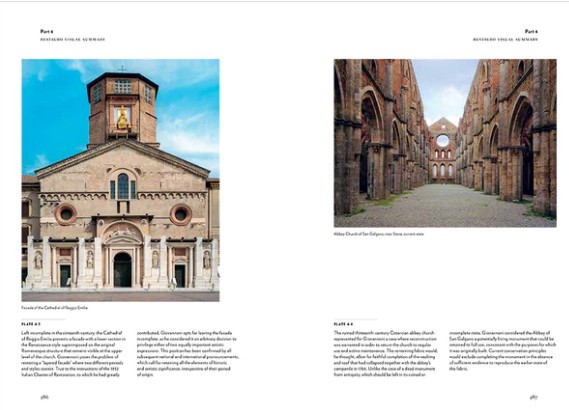
This anthology includes the seminal writings of Giovannoni. Thirty readings, including the original illustrations, are organized into sections that correspond with key concepts in his conservation theory: urban building, respect for the setting or context, incremental interventions in the urban fabric, conservation and restoration treatments, the grafting of the new upon the old, and reconstruction after World War II. The editors also include insightful introductions for each section along with an illuminating synopsis for each reading. Plate sections follow at the end of each grouping, further illustrating the readings’ main concepts and themes.
New Buildings in Old Cities is an impressive, wide-ranging, and thoughtful work as we consider the future of the historic city in modern times. I was delighted when the editors agreed to answer my questions about this new book.
DJB:Welcome Jeff, Steven, and Francesco. Let me begin by asking why you decided to focus on Gustavo Giovannoni, an architect working in Italy over 100 years ago, and why are his works and views on conservation still relevant in the 21st century?
Steven W. SemesFrancesco SiravoJeff Cody
JC, SWS, and FS: We chose to focus on Gustavo Giovannoni because he was one of the first to understand the historic city not as a collection of isolated monuments but as a coherent, living organism—a complete system whose value lies as much in its ordinary fabric as in its landmarks. His work established an integrated approach to urban conservation that remains highly relevant today.
Giovannoni introduced concepts that have since become foundational to the field: the importance of vernacular architecture (what he called edilizia), the need to respect the ambient character of historic areas (ambientismo), and the idea of incremental urban renewal (diradamento) as an alternative to both neglect and wholesale demolition. He also pioneered the concept of innesto, or grafting new architecture into old settings in a way that is respectful and compatible—a concern that continues to shape debates on adaptive reuse and context-sensitive design.
At a time when conservation practices are evolving to meet the challenges of climate change, social equity, and sustainable development, Giovannoni’s thinking offers valuable guidance. His humanist vision—integrating scientific, technical, historical, environmental, and aesthetic concerns—anticipated the multidisciplinary nature of today’s best practices in preservation and urban design.
His relevance is further underscored by how many of his insights have been vindicated in recent decades, from the typological studies of Muratori and Caniggia, to conservation plans in Bologna and beyond, and even to current approaches in cities where urban conservation must balance heritage value with contemporary needs.
At the turn of the twentieth century, Paris was widely viewed as the model of the modern city. Giovannoni, however, frequently held it up as a model not to be emulated in Rome or other large cities in Italy. What about Paris in particular, and the Modernist movement in general, did he find objectionable?
Giovannoni regarded 19th-century Paris—with its sweeping boulevards, symmetrical axes, and deliberate isolation of monuments—as a cautionary example rather than a model to follow. He considered the Haussmannian approach to urban renewal, based on massive clearances and the imposition of geometric street grids, as antithetical to the organic development of traditional cities like Rome. In his view, these interventions severed the historical continuity of urban environments, reducing their richness to staged set-pieces dominated by axial views and isolated landmarks.
He was particularly critical of the idea of sventramento—or gutting the urban core—which had become a dominant tool in modern planning. Such practices, he argued, sacrificed the social, spatial, and architectural complexity of historic quarters in favor of abstract visual order and circulation efficiency. He opposed the “liberation” of monuments when it resulted in their decontextualization—turning vibrant, lived spaces into sterilized museums of urban grandeur.
Giovannoni also viewed Modernism with scepticism, especially where it imposed a tabula rasa approach and dismissed traditional building types and materials. Although not opposed to modern architecture per se, he insisted that any new intervention in a historic setting must respect the scale, character, and atmosphere (ambientismo) of the existing city. He saw the uncritical adoption of Modernist planning models—often imported from different cultural contexts—as a form of erasure rather than progress.
In contrast to the rationalist and mechanistic visions exemplified by the Plan Voisin of Le Corbusier or the boulevard schemes of Haussmann, Giovannoni promoted a conservation-led model that prioritized continuity over rupture, adaptation over demolition, and complexity over simplification. His ideas anticipated many of today’s concerns with context-sensitive development, heritage integration, and sustainable urbanism.
Giovannoni asserted the impossibility of fixed principles in conservation, instead defining a set of values to be balanced. Why did he take that approach and how did it play out in real life situations in the urban context?
Giovannoni became an architect at a time—as the 20th century dawned—when “fixed principles in conservation” were far from clear-cut. For example, Ruskin’s ideas about conservation were at odds with those of Viollet-le-Duc. Furthermore, many cities were reeling from the complexities of industrialization and, on the horizon, the role of the automobile within historic urban contexts. As he witnessed his cherished Rome being nearly massacred by new technologies (to the point that an early master plan for the city proposed transforming the Piazza Navona into a traffic artery), Giovannoni embraced the need to find a balancing middle ground between seemingly opposing tendencies.
One way that played out in Rome was how Giovannoni helped design a new bypass directing around rather than through Piazza Navona—the Corso del Rinascimento—to accommodate the needs of the modern city for open space and ease of movement, with the needs of already established residents for streets, squares, and intimate urban spaces at the scale of pedestrians. Giovannoni’s ideas concerning diradamento were also key to the changes he advocated (and were implemented) along the Via dei Coronari in Rome’s historic core.
Duomo di Orvieto facade emerging into view as one approaches along a narrow city street (photo by DJB)
In the book, we also provide examples in four other Italian cities—Bergamo, Bari, Bologna, and Orvieto—where students or followers of Giovannoni implemented his transactional balancing of needs and values tested by differing urban realities. Sometimes, though, his mediating tendencies did not prevail, as was seen in the construction of the Via della Conciliazione, (which he opposed) linking the Tiber River with St. Peter’s Basilica.
Writing in 1946 after the defeat of Fascism, Giovannoni salutes the vernacular urban fabric as “the democracy of architecture.” What does he mean and how does it affect his approach to conservation?
Trastevere neighborhood in Rome (photo by DJB)
Giovannoni had inherent respect for what he sometimes called either the architettura minore or the ambiente cittadino of the city—as a necessary complement to the monumentality of larger-scale icons, such as major churches or ancient ruins. The synergy that he espoused between protecting what I would call the “democratic majority of the vernacular” and the “autocratic minority of the Monument” was a hallmark of his conservation approach. As he wrote near the end of his life, “the major monuments of the city not only have intrinsic value, but are linked with the urban setting that the evolution of the times has altered without transforming them radically.” The “radical” changes being promoted by Le Corbusier, CIAM, and others in the so-called Modern Movement were antithetical to Giovannoni’s concern for finding a middle way between embalming historic architecture in a timeless straightjacket while allowing that architecture to breathe, evolve, and thrive in the context of inevitable change.
Giovannoni considered a neighborhood or a city as “a complex organism that has its arteries and its nerves but also its spirit and its character.” In this, he sounds very much like the contemporary Southeast Asian conservation specialist Laurence Loh whose writing Jeff and Francesco highlight in a 2019 book for the Getty: Historic Cities: Issues in Urban Conservation. How does this book build on that earlier volume and what are a few of the key insights on urban conservation we can recognize in comparing the two?
One way in which the Giovannoni book grew out of Historic Cities was because we discovered that almost no English translations of Giovannoni’s insightful writings were available. This major absence helped us argue (with my Getty Conservation Institute colleagues) for a separate volume exclusively devoted to Giovannoni’s work, so that not only Italian speakers could understand his significance to contemporary conservation practice.
Historic Cities sought to make the case for more successful urban conservation based on observations and examples from a wide diversity of perspectives and cultural contexts. New Building in Old Cities, which derives its “visual summaries” and other aspects of format and structure from the previous volume, drills down deeply into one key individual, his prescient ideas about urban conservation practice in Italy from nearly a century ago, and how these ideas relate to conservation challenges today.
In terms of key insights from the two related books, I’m reminded of something we wrote in the preface of Historic Cities: “. . .[Our] common urban past, far from being the result of an undifferentiated historical continuum, is in reality a historically determined, finite resource, with formative characters that are distinct, unique, and unrepeatable. As such, it requires methods of interpretation, planning, and management that are markedly different from those applicable to the contemporary city.” More specifically, the two books suggest that it is imperative to train practitioners who have a comprehensive and sensitive understanding of the totality of the urban built environment (the “historic urban landscape” in today’s jargon). We need “complete architects” (what Giovannoni called “architetti integrali”) who can find architectural and planning solutions based on holistic civic engagement and the balancing of aesthetics with other societal needs. If such practitioners are in place more broadly, then we might better protect the fragile historic places that remain so challenged worldwide—for so many reasons—and we might then achieve more effective urban conservation, which embraces both the management of inevitable change and the management of cultural continuity.
We have to make a very conscious decision where we choose to place our attention and energy.
Each month my intention is to read a minimum of five books on a variety of topics from different genres. Here are the books I read in March 2025. If you click on the title, you’ll go to the longer post on MORE TO COME. Enjoy.
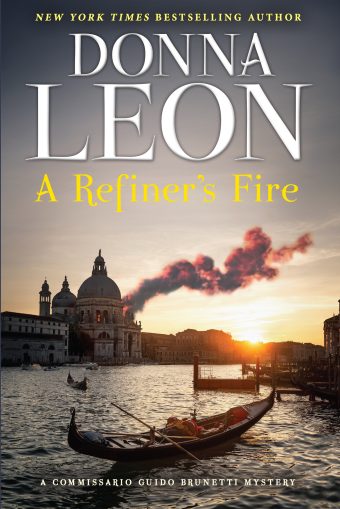
A Refiner’s Fire: A Commissario Guido Brunetti Mystery (2024) by Donna Leon, the most recent in the Commissario Brunetti series, begins early on a spring morning when two teenage gangs are arrested after a violent fight in one of Venice’s squares. As is her style, Leon brings together contemporary issues with past ghosts of deceit and acts of official wrongdoing. A final fiery and violent clash puts Brunetti in danger while offering others a chance for redemption. This book, just like the others I’ve read in the Commissario Brunetti series, rings true to life and continues to call us to strive for what is right, even in the midst of “the ambiguity between moral and legal justice.”
The Baseball 100 (2021) by Joe Posnanski—the self-described “writer of sports and other nonsense”—is characterized by the publisher as “a magnum opus…an audacious, singular, and masterly book that took a lifetime to write.” It is pure baseball bliss. The rankings are important—and instantly give the reader a chance to argue with Joe, which he encourages. But they serve the larger purpose of providing this talented writer and lifelong fan with a chance to explore baseball’s rich, deep, diverse, and at times challenging history.
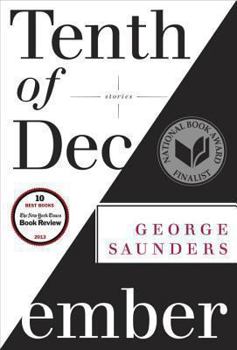
Tenth of December: Stories (2013) by George Saunders is a book of short stories by the widely honored writer and satirist. Readers of his other works will recognize many of the traits found here: “hesitant, disappointed” protagonists where the reader is in their heads; language that is “exhilarating” and full of slang; settings in “self-contained” suburbs or small towns. More than one reviewer notes that Saunders is at his best showing the way that daydreams and fantasies color our thoughts. While Saunders has the skill of a satirist, he also brings in a generosity of spirit for his characters that is appealing. While other reviewers have included this in book of the year/decade lists, I found it an uneven collection with a handful of riveting stories and more than one disappointment that had me impatient to get to the end.
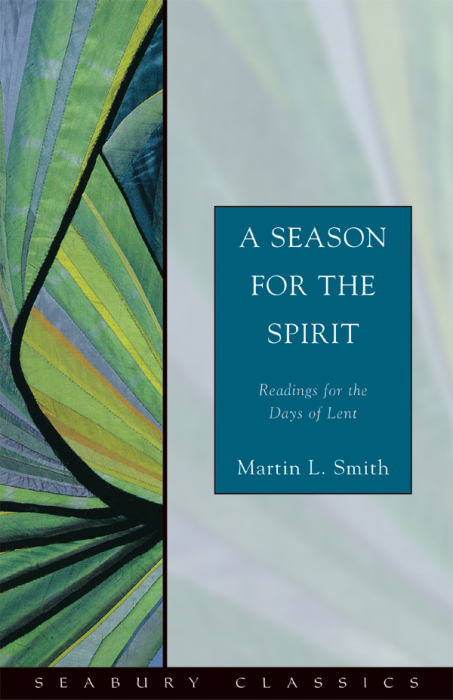
A Season for the Spirit (2004) by Martin L. Smith is a work of forty Lenten meditations which takes the reader on a journey of discovery of our humanity and humility. On Ash Wednesday as we are reminded that we came from dust and will return to dust, Smith suggests that what we are called to give up in Lent is control itself. To humble ourselves. Letting go and handing ourselves over to the divine—the Spirit—brings us much closer to the life we are called to live. Many have been trained “to invoke the word ‘discipline’ at the beginning of Lent.” Yet deliberate efforts at discipline too often fail. The paradox is that by relinquishing our efforts to control our lives we can begin to find the freedom “that is gained only through exposure to the truth.”
Erasing History: How Fascists Rewrite the Past to Control the Future(2024) by Jason Stanley is a powerful and timely work. Stanley literally wrote the book on understanding fascism, and here he uses his family’s experience in 1930s Germany as a touchstone for a deeper dive into the tools of totalitarianism. Stanley explains in urgent and crisp writing how critical examination of a nation’s history and traditions is discouraged in authoritarian countries. This has happened across the world for centuries and is now a feature of the new regime in Washington. That authoritarian regimes “often find history profoundly threatening” is a key lesson of the past century. By providing multiple perspectives on the past, a robust study of history undercuts one of autocracy’s key tools: the unquestioned voice of the leader. We lose those perspectives at our peril.
What’s on the nightstand for April (subject to change at the whims of the reader)
Disorder in life is notoriously difficult to navigate. We are living in a time where it is often hard to determine what is up and what is down. Truth is elusive while gaslighting is everywhere. Things we took for granted—like an appreciation for mercy—are no longer secure.
“A preacher gets up, quotes scripture, and reminds the gathered congregation that God loves the outcast—those in fear for their lives—the poor, prisoners, the disabled, and the oppressed.
In the midst of the daily firehose of lies and anger, we search for someplace where we can anchor our boat in turbulent waters.
Who knew that Lent—a period normally associated with contemplation and discipline—could also be seen as a time for strengthening our resolve, enabling us to remain “salt and light” under difficult circumstances?
For those from a traditional spiritual tradition the season of Lent comes along at just the right time, providing a forty-day mental and spiritual refuge; a time to center our spiritual lives and ourselves in the world.
Writing in her Everyday Ethics newsletter, Aine Donovansuggests that how we react to the events of the world is dependent upon “where we are situated in our spiritual lives.” Sarah Kendzior, an expert in authoritarian regimes, points to the importance of knowing who we are, centering into what Howard Thurman called “the sound of the genuine” inside us.
Lent is a refuge for reflection. Recalibration. Renewal. Seekers of all persuasions are welcomed to see the advantage of setting aside a season for contemplation and work—thought and action—on that which is most important yet often most neglected: our interior life.
It wasn’t until I retired that I established the yearly habit of a Lenten reading: one book, forty passages, daily time for reflection. Don’t wait that long. Lent’s refuge and rhythms are too important to let them pass because of the busyness of life. The conversations with my book group spurred by my reading this year have been especially helpful in pushing me to consider where I am spiritually during this turbulent time.
A Season for the Spirit (2004) by Martin L. Smith was originally commissioned by the Archbishop of Canterbury in 1991. These forty meditations are a journey of discovery of our humanity and humility. On Ash Wednesday as we are reminded that we came from dust and will return to dust, Smith suggests that what we are called to give up in Lent is control itself. To humble ourselves. Letting go and handing ourselves over to the divine—the Spirit—brings us much closer to the life we are called to live. Many have been trained “to invoke the word ‘discipline’ at the beginning of Lent.” Yet deliberate efforts at discipline too often fail. The paradox is that by relinquishing our efforts to control our lives we can begin to find the freedom “that is gained only through exposure to the truth.”
“Truth is not a thing, it is rather an event. Truth happens to us when the coverings of illusion are stripped away and what is real emerges into the open.”
In the Biblical story that Smith uses as a frame, we begin at the muddy river of Jordan, where Jesus is baptized with hundreds of others “swarming in the river.” This is not the picture of a singular figure seen in stained glass windows and religious iconography. Instead we see “Jesus’ solidarity with ordinary, struggling men and women.” It is a theme Smith returns to again and again: we are called to open ourselves “to intimacy and personal union with God in the Spirit, and to open ourselves to compassion and solidarity with our struggling, needy, fellow human beings.”
Each day Smith takes the reader through spiritual struggles we all face in dealing with our intimacy with the divine and our identification with God’s fallen creatures. Intimacy and community. Always both. To act in that realm brings us to experience both joy and pain.
This relationship between intimacy and community goes even deeper when we consider the words of the early philosopher and theologian Origen: “You yourself are even another little world and have within you the sun and the moon and also the stars.” This vision of the human person as a microcosm, Smith writes, “is one of the most universal of religious insights.”
Smith often returns to the wisdom of the desert mothers and fathers. The insight that each of us is a microcosm of the whole world taught them that in refuge and retreat we do not leave the world when we go into the desert. We take it with us. That truth may “throw some light on my experience of diversity within myself.” Working to love the diverse world around us might be the path towards loving the diversity within ourselves.
“You start where you are and deepen what you already have and you realize that you are already there. We already have everything but we don’t know it and we don’t experience it. All we need is to experience what we already possess.”
Thomas Merton
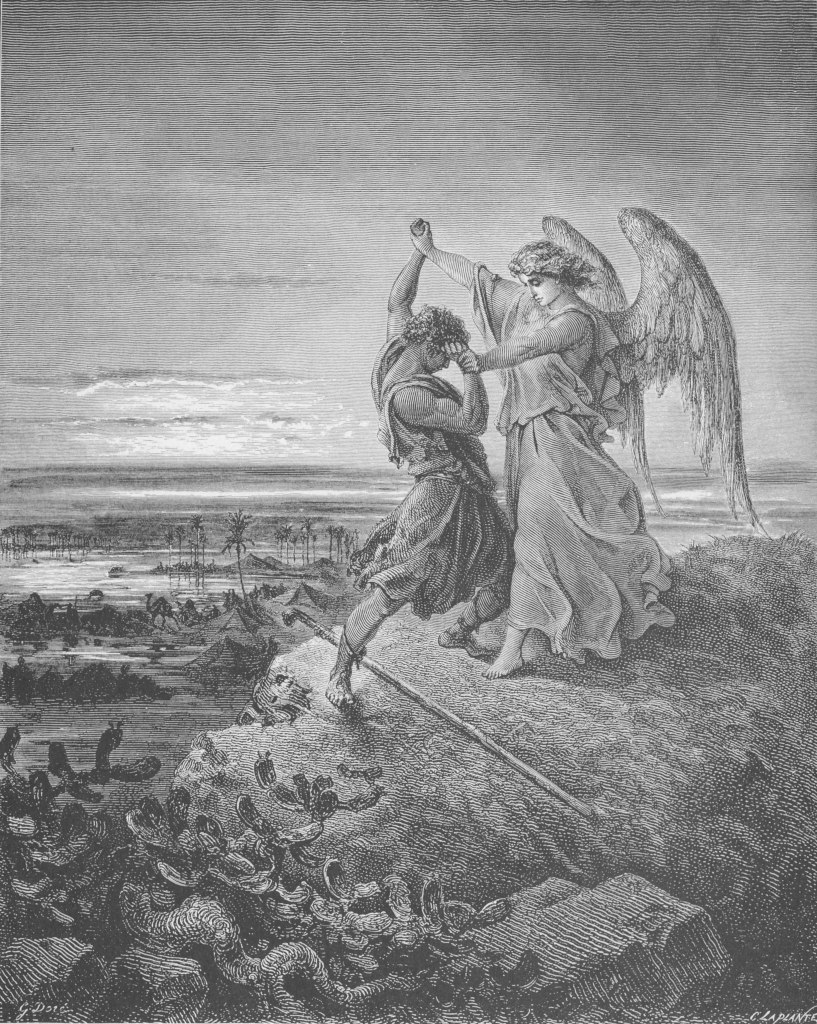
Jacob wrestling with the angel (engraving by Gustave Dore)
In recounting the story of Jacob wrestling with the angel—a story of great importance in religious traditions ranging from the early western monks to the Puritans of New England—Smith reminds his readers that the story is about us. “You will never go forward, never be blessed unless you are prepared to struggle with God and let God’s arms get round the violence that is in you.”
In today’s world of chaos and angst, we too often reject real reflection. We are more than ready to project our own bad behavior onto others. Smith suggests instead—in this season of recalibration and renewal—that we come to know that we are powerless to reform ourselves through our own strength. We call that which is greater than us by many different names, but the power of the recognition that we need the divine is a breakthrough to humility.
A summary of the March posts from the MORE TO COME newsletter.
“Aging is such a privilege,” wrote a friend I’ve known since college. “I truly celebrate birthdays and the opportunity to get older.” Pair Becky’s note with Madeleine L’Engle’s perspective that “I am still every age that I have been,” and you may see getting older in a new light.
“Because I was once a child,” L’Engle noted, “I am always a child.”
“Far too many people misunderstand what ‘putting away childish things’ means, and think that forgetting what it is like to think and feel and touch and smell and taste and see and hear like a three-year-old or a thirteen-year-old or a twenty-three-year-old means being grownup… [Instead] if I can retain a child’s awareness and joy, and ‘be’ fifty-one, then I will really learn what it means to be grownup.”
Preparing to blow out the candles on my 70th birthday tiramisu at the end of a lovely dinner with good friends
You may have already guessed that I celebrated a milestone birthday in March. The two pieces that touched on that event were among the reader favorites this month. Let’s take a look at those essays as well as the other things that caught my attention on MORE TO COME.
TOP READER FAVORITES
I’ve been reminded this month of the beauty of the Irish blessing, “May your home always be too small to hold all your friends.”
My birthday list of 70 things I’ve learned in my (now) 70 years of life was far and away the top choice in March (70 lessons from 70 years).
A large number of visitors also read my appreciation for the celebratory cards, notes, and gifts that arrived quite unexpectedly in our mailbox (Rich (in a George Bailey kind of way)). Among them was a card that read, “You are living proof that it is possible to be old and cool at the same time.” I have no idea about the veracity of that comment, but I’m going to believe that it is actually true.
In addition to these two personal and upbeat essays, one other post that reminds us of the challenges we’re facing today resulted in high reader interest.
Rewriting the past to control the future is a review of Jason Stanley’s newest book on why the erasure of history is a favored tool of fascists, and what we can do about it. Congressman Jamie Raskin wrote about Stanley’s work: “He leaves us with the sense that those who fight for the past can save the future.”
THE TIMES WE LIVE IN
There is so much to do. Where then, should we focus our attention? This was a question I returned to on MTC over the course of March.
Our endless and proper work suggests that we should not feel bad if we cannot sort through all the moral ugliness of the moment. To have all the answers might be proof that you aren’t asking the right questions. Be intentional about guarding your energies and focusing your attention.
With both despair and wonder in this world, some of us are using the Christian season of Lent to focus on finding the truth expressed in the phrase Light shines in the darkness. “What we are called to give up in Lent is control itself . . . Lent is about the freedom that is gained only through exposure to the truth.”
WHAT ELSE TICKLED MY FANCY
Here are the other posts that popped up on MTC this month:
My personal spring training—An annual post that examines the movie I watch and the book I read in order to get ready for the upcoming baseball season. Then last Thursday we celebrated Opening Day 2025 in MTC.
Pain, imperfection, and a musical monument to hope—I suspect that after reading a new work by a historian who writes with “verve and authority,” you will never listen to George Frideric Handel’s epic Messiah the same way again.
This is the segment where the readers speak up. Since we had both wisdom and wisecracks around that milestone birthday, I’ll focus on the former . . .
Brilliant reader Amanda wanted to let me know that my 70 lessons resonated with her.
“I loved every word! It was like savoring 70 delicious morsels for the soul! I’ve passed along to friends for fortification! Happy Birthday!”
God, I love my friends (and readers)!
I share a birthday (much to our mutual surprise) with brilliant reader Robyn, whose brilliance extends to being a knowledgeable Cincinnati Reds fan. She wrote in response to lesson #16 when I suggested we all entertain the possibility that we may be wrong, as I had long been about the pitch clock.
“We have the same birthday! Happy birthday, David! Also, yes, the pitch clock is awesome. I’m afraid the new system of challenging calls will slow the game right back down, though. Hope that’s something I turn out to be wrong about! Very excited for the Reds season with Terry Francona at the helm. Hopefully he’ll iron out our sometimes sloppy defense.”
Robyn is also a writer whose newsletter I follow, and one day I happened to glance at Substack Notes and saw that Robyn was liking something that another friend—brilliant reader (and writer) Elizabeth—had written. And I thought, wait a second. I know Robyn from way back when she spoke at a Main Street conference. I’ve admired her writing and we’ve stayed in touch. And then I know Elizabeth from the great article she wrote about how the Baltimore Orioles helped lift her out of depression when she was a classics student at Johns Hopkins. We later met and visited over drinks during our twins’ college search. So how do they know each other!?!
They have two of the best newsletter names on Substack: Robyn writes at You Think Too Much and Elizabeth is the author of This Won’t End Well: On Loving Greek Tragedy. I sent an email to both and received surprised and delightful responses in return. Robyn’s noted that she had toyed with classics as a major while an undergraduate. Elizabeth wrote,
“Whaaat?! How wonderful is this? Writing, baseball, Substack, friendship: a grand slam. More to come!”
I love connections!
SPRING HAS ARRIVED
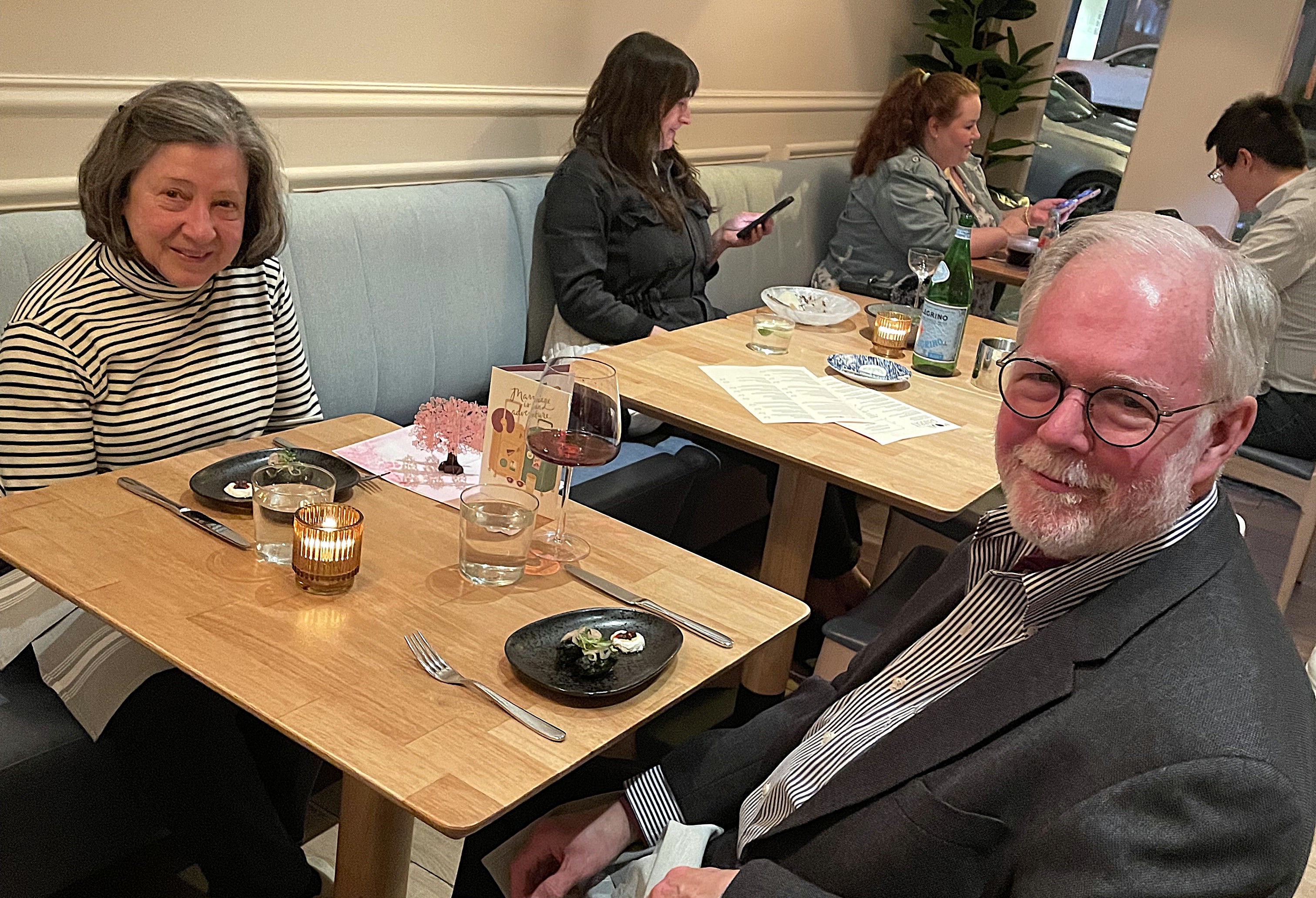
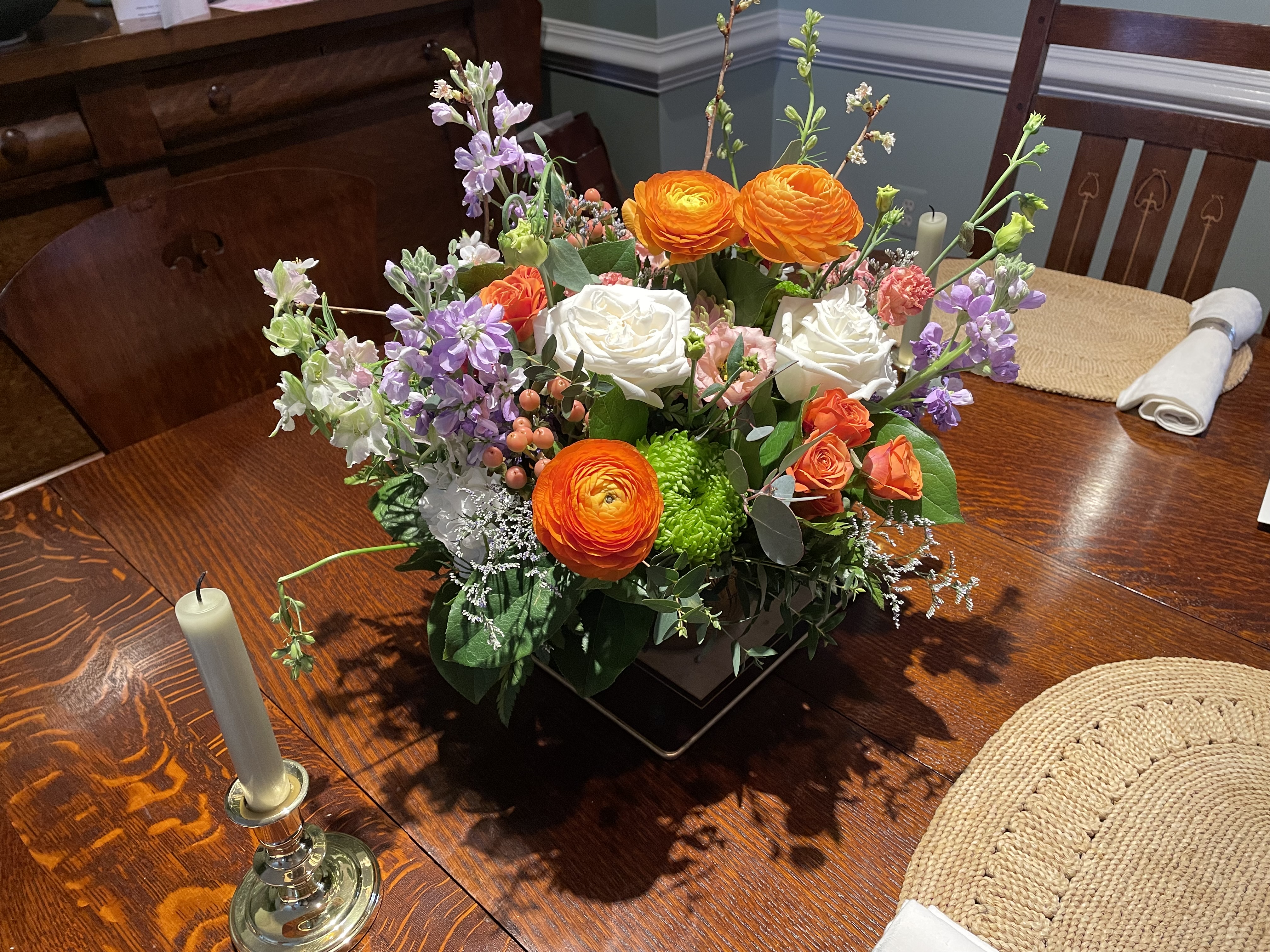
March is also our anniversary month. To celebrate this year we enjoyed a meal at the wonderful Vietnamese restaurant Moon Rabbit by Kevin Tien.
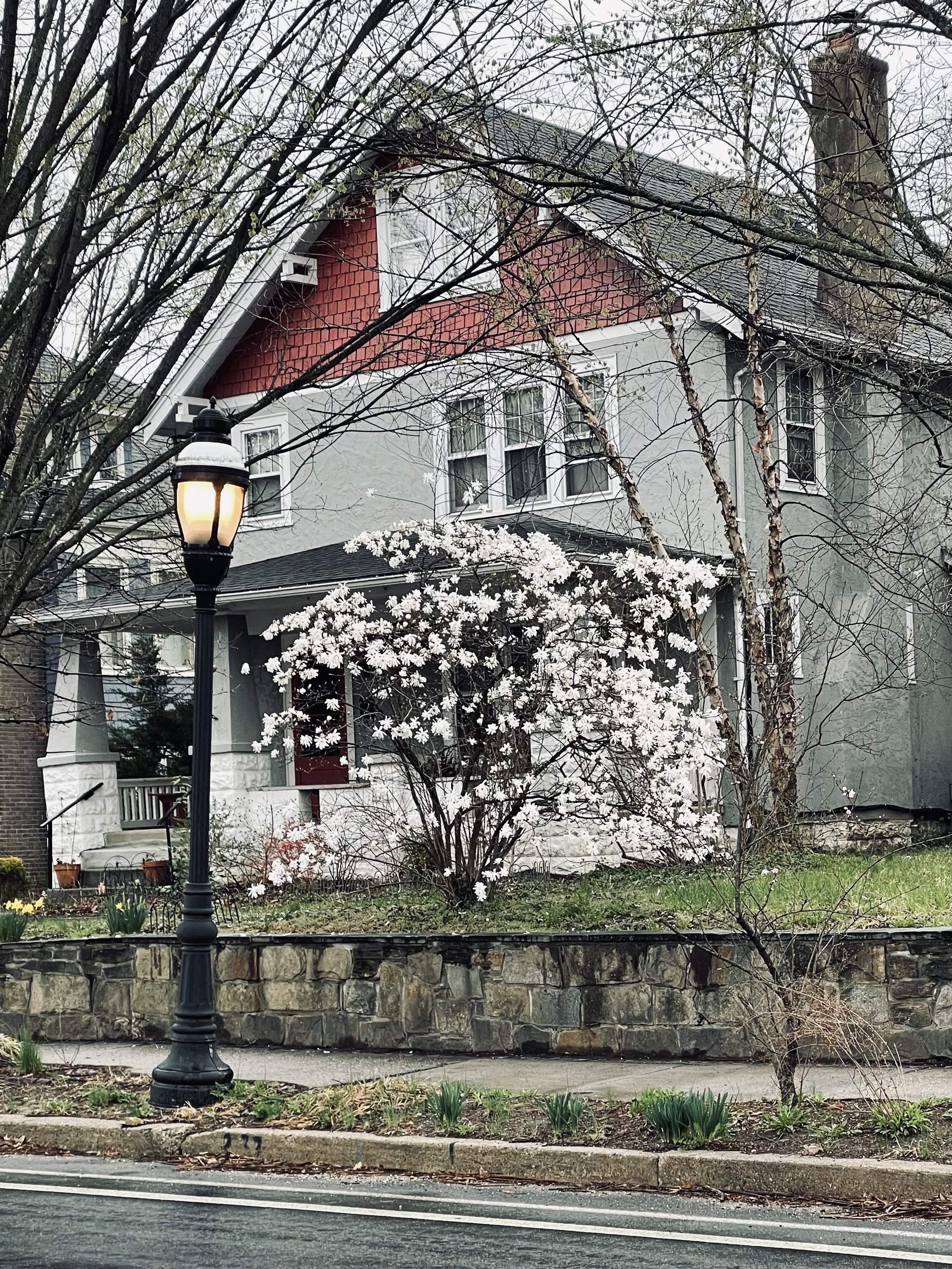
I love this time of year when the flowers are beginning to bloom, spreading beauty, joy, and hope in a season when we really need all three.
A good friend sent around a reading, and he ended his note by saying, “May you be as welcome as daffodils to all who see you coming their way.” Amen.
CONCLUSION
Thanks, as always, for reading. Your support and feedback mean more than I can ever express.
As you travel life’s highways be open to love; thirst for wonder; undertake some mindful, transformative walking every day. Recognize the incredible privilege that most of us have and think about how to put that privilege to use for good. Women, people of color, LGBTQ+ individuals, immigrants, public servants, and others can feel especially vulnerable . . . because they are. Work hard for justice and democracy as the fight never ends.
When times get rough, let your memories wander back to some wonderful place with remembrances of family and friends. But don’t be too hard on yourself if a few of the facts slip. Just get the poetry right.
Remember that “we are here to keep watch, not to keep.” Pay attention. Be astonished. Tell about it. And bash into some joy along the way.
You can subscribe to MORE TO COME by going to the small “Follow” box that is on the right-hand column of the site (on the desktop version) or at the bottom right on your mobile device. It is great to hear from readers, and if you like them feel free to share these posts on your own social media platforms.
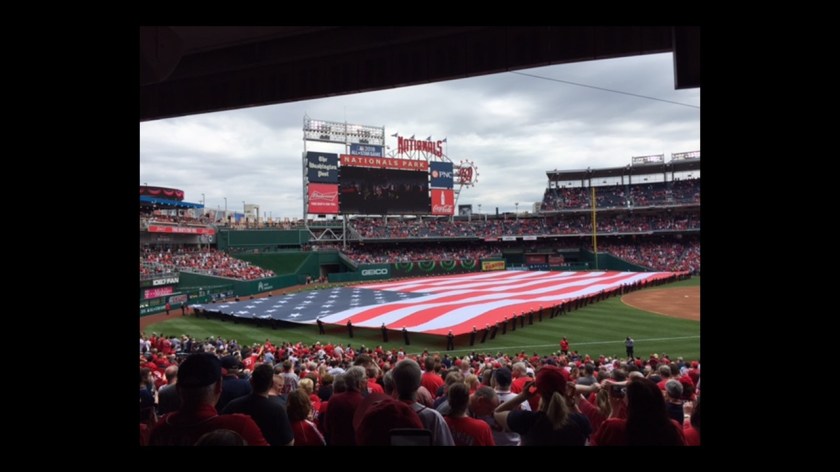
The Washington Nationals open their 20th anniversary season in the Capitol City today vs. the Philadelphia Phillies. The fact that the Phillies have more recognizable names of (former) Nats players than the hometown nine tells you something about the state of baseball in the DMV.
You’ll find Bryce Harper, Trea Turner, and Kyle Schwarber—all former Nats stars—playing for the Phils. Now try and name one current National who will play at those levels in his career. Yes Jacoby Young plays unparalleled center field defense. McKenzie Gore shows promise as a starting pitcher. And perhaps homegrown product James Wood may get to that level eventually, may being the operative word here. But really? It is telling that not a single Nat made Joe Posnanski’s list of Top 100 players in the game today.
As Joe has written time and time again, the problem with the Nationals is that there’s no cohesiveness and no buy-in from ownership or the team itself. “Sure, they got some prospects when dealing off all the superstars from their 2019 World Series team; that’s the easy part. Building a TEAM out of those prospects, that’s where the challenge comes.”
“In your relatively short lifetime, the Nationals had one of the greatest runs of talent accumulation in the long history of baseball… and there’s nothing left. They’re all gone. Harper is obviously gone. Strasburg is retired. Soto was traded and will now hammer your team as a Met. Turner was traded and will now hammer your team as a Phillie. Scherzer aged out.
They’re all gone. In an alternate universe, you could have watched Bryce Harper and Juan Soto play their whole careers in Washington, you could have watched them go into the Hall of Fame as Nationals, you could have maybe taken your own kids to see them play the way your parents took you to see them play. Can you even put a price tag on that?
Instead, all that’s left are a few prospects, lots of losses and the memories of an October back in 2019 when it all somehow came together. That doesn’t seem as good a deal.”
The Nationals finished last four straight years after winning a World Series “and would have finished last again last year if not for the horror show Marlins.” That’s the first time that has ever happened. In history! The Nats problem is ownership . . . just as it is with the majority of MLB teams. Baseball owners just want to make money. Period. Again, Joe Posnanski has a spot-on take on this issue.
“Why should we care if baseball owners make a dime on the game? Owning a baseball team is not like owning The Gap or Ameritrade or some financial services company or some telecommunications company or some billboard company. I don’t think of it as a “business” at all. Owning a baseball team is a privilege, it makes you one of the biggest people in town, it connects you in a deep way with this great game, it gets you all sorts of perks (and tax breaks) that money cannot buy, and it allows you to compete against other billionaires for something money alone cannot buy—a World Series trophy.
Making money isn’t and shouldn’t be even the slightest consideration. If a baseball owner wants to make money, sell the damn team, you’ll get billions of dollars for it because there’s a line out the door of ultra-rich people who have bought all the jets and yachts and vacation homes they can buy and are looking to get into one of the most exclusive clubs on earth. No, the whole point for a baseball owner should be to try and win games, try and win championships, whatever it takes.”
Mark Lerner and his family are cheap, while making money hand-over-fist building on public investment and fan loyalty. He’s complained about the salaries of free agents, as if we’re supposed to feel bad for a billionaire owner. Posnanski noted that “if you’re lucky enough to make $100,000 a year, it will take you 10,000 years to get to a billion.”
Don’t have any sympathy for these guys.
Writer J.J. Phillips spoke the truth when he wrote: “Mark Lerner and his family need to start investing money into Major League players like the billionaires they are. Only then will the top echelon of free agent talent start to once again view the DMV as an attractive landing spot for someone who wants to win, like they did when the team was on top of the NL East in the mid-2010s.”
So we head into the 2025 season with low expectations (which, as my friend and brilliant reader Dolores likes to say, are the key to happiness.) But we still love the game. As Annie Savoy reminds us in Bull Durham, Walt Whitman once said,
“‘I see great things in baseball. It’s our game. The American game. It will repair our losses and be a blessing to us.’ You could look it up.” *
It is, indeed, a blessing.
So let’s move our Saturday Soundtrack up to Thursday in honor of opening day, and kick off the 2025 season! And I’ll begin with a song that I know one reader in particular will appreciate.
Want to feel like you are sitting in the ballpark? Grab a cold one and then give a listen to Nancy Bea Hefley, the stadium organist for 27 years for the Los Angeles Dodgers.
In the first full season in a very long time without the great Willie Mays alive to grace the game, let’s honor his memory with Say Hey (The Willie Mays Song).
Willie, of course, played centerfield, a position memorialized in John Fogerty’s classic Centerfield.
And we’ll end with the song we all want to sing in a ballpark full of fellow fans . . . because, of course, America needs more communal singing.
Play ball!
More to come . . .
DJB
*Here are two other favorite quotes (out of many) from Bull Durham. The first just seems appropriate for our time, and perhaps the second does as well.
“Hey. Relax. Don’t try to strike everybody out. Strikeouts are boring. Besides that, they’re fascist. Throw some ground balls. It’s more democratic.”
“The world is made for people who aren’t cursed with self-awareness.”
Photo of Nationals Opening Day ceremonies during a happier (and more optimistic) time . . . 2017 . . . by DJB
One of the joys of reading and sharing books is that you’ll sometimes find authors and topics that shift your perspective in profound and even life-changing ways. The flip side is that what one person finds exhilarating or deeply insightful can leave another with more mixed emotions and reactions.
Tenth of December: Stories (2013) by George Saunders is a book of short stories by the widely honored writer and satirist. Readers of his other works will recognize many of the traits found here: “hesitant, disappointed” protagonists where the reader is in their heads; language that is “exhilarating” and full of slang; settings in “self-contained” suburbs or small towns. More than one reviewer notes that Saunders is at his best showing the way that daydreams and fantasies color our thoughts. While Saunders has the skill of a satirist, he also brings in a generosity of spirit for his characters that is appealing. For me, however, it was an uneven collection with a handful of riveting stories that kept the reader engaged and more than one disappointment that had me impatient to get to the end.
I very much enjoyed Saunders’ first novel, Lincoln in the Bardo, and I hoped to find that same overall level of excellence in this collection. However, out of the ten stories, I found only three that I would want to return to read again. The opening story, Victory Lap, “toggles between the perspective of Alison, a 14-year-old girl with delusions of grandeur . . . Kyle, a teenage dork in love with Alison . . . and an unnamed murderer/rapist who attempts to abduct Alison.” Each is living with fantasies that come to haunt them before Kyle breaks free of his invisible chains to act decisively and with honor. Home sees Mike returning from an unnamed war in the Middle East with PTSD to a place he no longer recognizes. He is alienated, and all he can hear over and over again is “thank you for your service.” As one reviewer notes, it is impossibly moving. Finally, the last story in the collection, which gives the book its name, ends on a hopeful note, giving a dying man the opportunity to recall who he really is. As Gregory Cowles wrote in the New York Times, this story . . .
“is in many respects a companion piece to ‘Victory Lap,’ which opens it. Another dreamy adolescent is lost in fantasy until physical danger intrudes, this time in the form of actual thin ice. The story ends on a hopeful note, as so many of the stories here do—this book, with its cover divided neatly into black and white like a semaphore yin-yang symbol, is at least as interested in human kindness as it is in cruelty.”
My perspective is just that. Online you can find strong positive reviews as well as reviews that find this work somewhere below Saunders’ best. Tenth of December: Stories made a number of “best books of the year/decade” lists, so perhaps I’ll leave you with the publisher’s final words about what you may find here.
“Writing brilliantly and profoundly about class, sex, love, loss, work, despair, and war, Saunders cuts to the core of the contemporary experience. These stories take on the big questions and explore the fault lines of our own morality, delving into the questions of what makes us good and what makes us human.”
Those who study history know that there is a long tradition of attempts to change the story of our past. I certainly saw it during my career in historic preservation. While no one knows where the first preservation project took place, the first one for which we have records according to my friend and colleague Grace Gary may be the restoration of the Great Sphinx of Giza. A son of the pharaoh at the time supposedly had a dream where the Sphinx itself told him that if he restored the monument, he would become the next pharaoh.
Since Thutmose IV had to kill his older brother to take the throne, the story of the dream is usually seen as an attempt to bestow legitimacy on his reign. He also put a marker on the monument as his way of influencing how he would be viewed by the future.
It is fair to say that historic preservation has, from its very beginnings, been tailored to serve present-day purposes and also to shape how the future views the past.
Rewriting the story of what happened is as old as history itself. Some attempts—-such as state-sponsored erasure—-are more malicious than others. Those who care about understanding our world have continually pushed to broaden and deepen our knowledge, even in the face of significant rewritings of the past. Today we are in another of those periods.
Erasing History: How Fascists Rewrite the Past to Control the Future (2024) by Jason Stanley is a powerful and timely work. Stanley literally wrote the book on understanding fascism, and here he uses his family’s experience in 1930s Germany as a touchstone for a deeper dive into the tools of totalitarianism. Stanley explains in urgent and crisp writing how critical examination of a nation’s history and traditions is discouraged in authoritarian countries. This has happened across the world for centuries, has been underway locally now for more than a few years in parts of the United States such as Florida, and is now a feature of the new regime in Washington. That authoritarian regimes “often find history profoundly threatening” is a key lesson of the past century. By providing multiple perspectives on the past, a robust study of history undercuts one of autocracy’s key tools: the unquestioned voice of the leader. We lose those perspectives at our peril.
It is through exposure to multiple viewpoints that “citizens learn to regard one another as equal contributors to a national narrative.” Citizens in a democracy also learn that history is always under construction, open to collective reflection, new ideas, new evidence, and new perspectives. “History in a democracy,” writes Stanley, “is not static, not mythic, but dynamic and critical.”
In seven chapters, Stanley walks the reader through the fascists’ plan to rewrite our past and destroy our educational systems to support the mythical narrative of the strongman. We saw it last century in Germany, Italy, and the Soviet Union and we see it during our own time in Hungary, Turkey, Russia, and—most disturbingly—in the United States.
We should make fun of these actions, but we should also understand that they are deadly serious. Southern enslavers tried to shape history to serve their purposes, and their descendants continued that effort with the Lost Cause narrative throughout the Jim Crow era. Nazi Germany erased history to justify invasions of neighboring countries. In this century, “Russia bans Ukranian history in order to gather the Russian population’s support behind its colonial ambitions.”
“In this powerful book, Jason Stanley deftly interweaves his family’s experience under Nazi rule with a far-reaching, lucid explanation of why authoritarians hate honest history. A must read to understand how much truth telling matters for multiracial democracy to withstand the siege.”
Stanley’s father, who like his mother was a refugee from Nazi Germany, became a professor at Syracuse University’s Maxwell School of Citizenship and Public Affairs. In his scholarship, Manfred Stanley wrote about a type of education that might serve as an alternative to the false stories favored by the right wing in America. “Civic friendship” is a requirement for a modern political community that takes democratic values seriously. This isn’t a call for “unity” in our educational system. “The challenge is the more difficult one of bringing people to the point of understanding the objective historical and existing conditions of groups with whom they have had no personal life experience.”
Erasing History is a book well worth reading. As Congressman Jamie Raskin has written about Stanley’s work, “He leaves us with the sense that those who fight for the past can save the future.”
More to come . . .
DJB
*After significant pushback by the public, many of those pages have been restored, although usually with changes to, among other things, hide any discussion of gender or ethnicity.
“Fear of immigrants. Fear of people of color. Fear of equality for women and LGBT people. Fear of religions other than Christianity. Fear of non-existent conspiracies. Fear of the media. Fear of social progress.”
But life is more than despair. We can see light and we can be the light. Waging Nonviolence is marking the many ways that Americans are pushing back against fascism and authoritarianism. Resistance is alive. Politicians are carrying the fight forward, noting that “when real constituents feel real pain and voice their anger, [Congressional] Republicans [will] need to decide how far they’re willing to go for Trump while stiffing constituents.” As Franklin D. Roosevelt said, “We have nothing to fear but fear itself.”
With both despair and wonder in this world, we should remind ourselves of the many places we can find the wonder and light. The context of the passage “Light shines in the darkness, and the darkness does not overcome it” is, of course, Biblical (John 1, verse 5). Handel captured the spirit of this verse in Messiah, when he wrote out of pain and imperfection to create his musical monument to hope . . .
. . . even when rage among peoples and nations has always been with us.
“What we are called to give up in Lent is control itself . . . Lent is about the freedom that is gained only through exposure to the truth.”
A good laugh is good medicine
During the craziness of the past six weeks, I’ve intentionally tried to spend time each day focused on finding light in the world. It is part of the cure mentioned in that old Irish saying. I look for things that will bring a smile or lead me to laugh out loud. It is necessary because, as one pundit noted, we are caught in a regime led by “the unfunniest person alive.”
“He has zero sense of humor. His funny gene was arrested at about age 9 (which is roughly four years later than his empathy gene).”
Lord knows we’re not going to get any laughs out of that bunch. Since Al Franken (a professional comedian) stepped down from the Senate, we haven’t really had any comedy stars on the Democratic side although Tim Walz shows some promise. Satirist Andy Borowitz suggests that “laughter is better than crying. And mockery trumps tyranny.”
I like to think of laughter as a form of self-improvement.
For some time I’ve been lucky to find humor in bumper stickers.
Several of these are old gems and others I’ve only seen around town in the past few weeks. One of our townhouse neighbors has a relatively new one that asks the existential questions: about driving, engines, and pain in the world.
A neighbor in Takoma, DC, is letting us know that they bought the car before they knew Elon was crazy.
Bumper stickers often tell you exactly where the car owner stands . . .
. . . and how you can respond.
Surprisingly, I saw this final one in deep-red Florida last fall. While it may not be funny, it is true, and I found it somewhat encouraging that it would show up in a place that often seems to have lost its capacity to think.
Good music also brings a smile
Here’s a musical break for the week of St. Patrick’s Day with the great Irish band Solas playing Laurel’s Reel / Dougie McDonald’s / Dick Gossip’s. That’s followed by two of my favorite Irish musicians, Mick McAuley and John Doyle, with the spirited Silver Spear Set.
The Irish have another saying that reminds us of the blessings we have:
“Do not resent growing old; many are denied the privilege.”
Spring has arrived
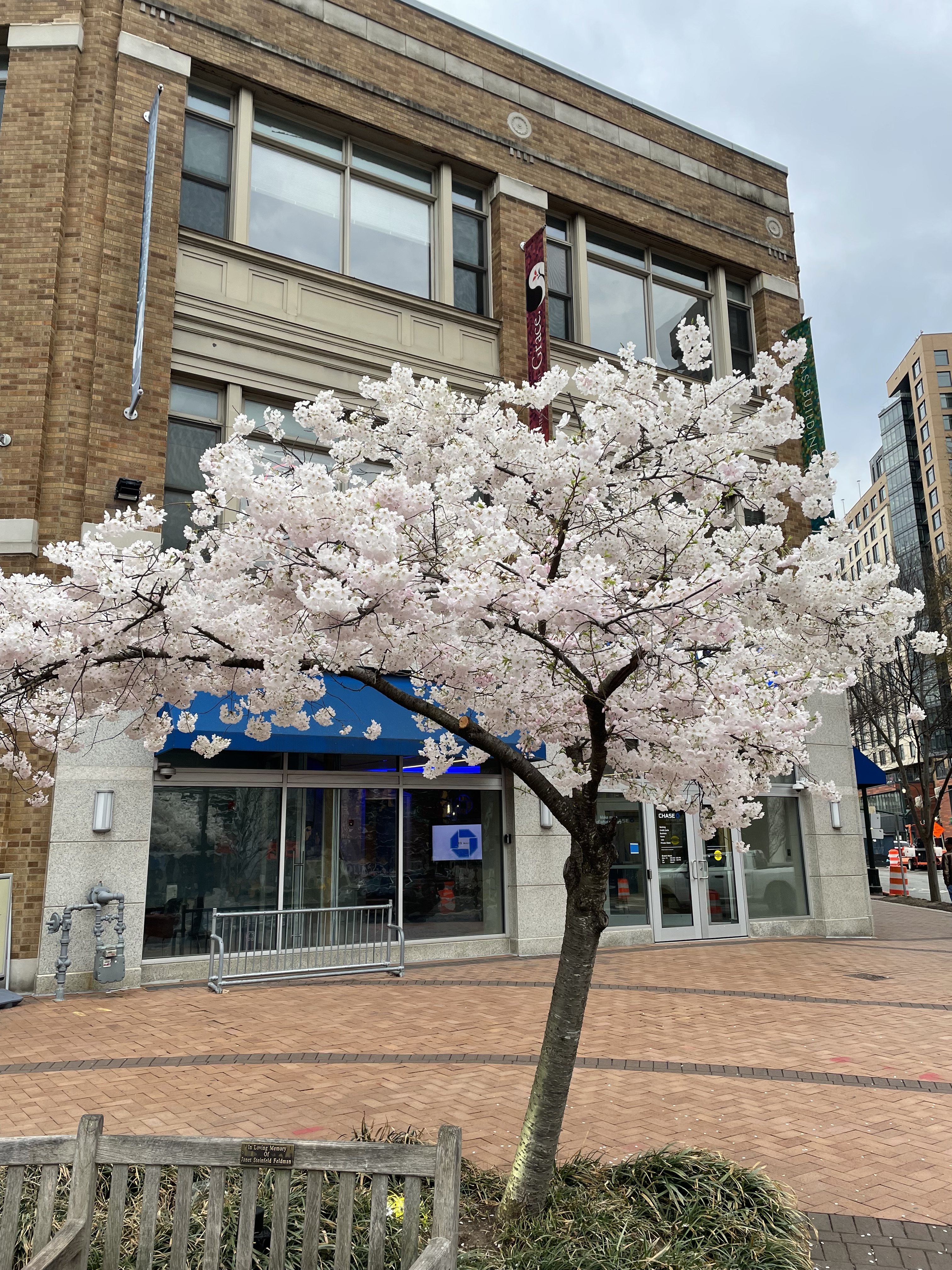
This week also brought the start of Spring and the Cherry Blossom Festival here in Washington. That will bring a smile at any time, but these beautiful trees with their flowery branches will be especially welcomed this year.
Other things that tickled my fancy
We’ll end with a couple of unrelated items designed to bring a smile. First is an old Soviet joke that seems relevant for our times.
And while it isn’t an Irish tune, Jon Batiste’s Freedom is simply wonderful. If you don’t smile at this, well . . .
So pay attention out there. Smile. Seek the truth. Push back against fear. Work for justice (despite what this bumper sticker implies). And use your turn signal!


































 MORE TO COME...