Latest Posts

Fighting a culture of corruption and impunity

One of the mysteries of the decline of a once-great political party in the United States is how Republicans—long the leader in fighting Soviet aggression—became a home for Vladamir Putin supporters and apologists. In reading a true-life account that captures the murderous evil of Putin’s regime in stark detail, that question only deepens.
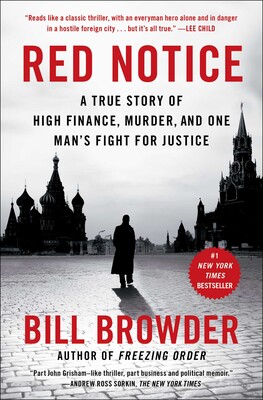
Red Notice: A True Story of High Finance, Murder, and One Man’s Fight for Justice (2015) by Bill Browder is the story of an unlikely hero who took on the oligarchs and political leaders of post-Soviet Russia. Once the largest foreign investor in Russia, Browder was expelled from the country in 2005 as a threat to national security after exposing corruption in business and government. His Russian lawyer, Sergei Magnitsky, wasn’t so lucky after he uncovered $230 million in stolen taxes. Magnitsky ended up in jail where he was tortured and killed. His death changed the direction of Browder’s life, a transformation told in this thriller-like account.

Browder’s grandfather Earl was the chairman of the communist party in the United States in the 1930s and first part of the 1940s. But as the grandson became an adult, he decided to embrace capitalism and subsequently obtained a BA in economics from the University of Chicago and an MBA from Stanford Business School. With his family history, he was drawn to invest in Eastern Europe and specifically Russia following the break-up of the Soviet Union, and it was there he made his fortune.

But in seeking to invest foreign capital in Russia, he encountered the handful of oligarchs who were stripping the country of its wealth using every means possible. At the heart of this change from a nascent democracy to an autocratic government controlled by the wealthy was Vladamir Putin, who used bribes, lies, torture, and murder to achieve his goals. When oligarchs tried to steal the money of Browder’s investors, he fought back, which led to his expulsion.

After Magnitsky’s horrible death in a Russian prison, Browder became an unlikely human rights advocate, eventually turning to countries outside Russia for assistance. After initiating a global campaign for governments around the world to impose targeted visa bans and asset freezes on human rights abusers and highly corrupt officials, Browder was able to convince the United States to lead the way in imposing these targeted sanctions, first with the passage of the Sergei Magnitsky Accountability Act in 2012 followed by the Global Magnitsky Human Rights Accountability Act in 2016. In doing so, he became one of Putin’s top enemies and has been targeted with threats of arrest and death.

Browder has written a work that reads like a classic spy thriller but is based in the world of investment and politics. As the late Senator John McCain, one of the key co-sponsors of the Magnitsky Act has noted, Red Notice helps us understand “the culture of corruption and impunity in Putin’s Russia today.” Sadly, the Republican party of John McCain no longer exists, as grifters and extremists have taken power in the party, promoting Russian talking points and working with Russian interests in their efforts to dismantle American democracy.

The book ends with a description of the show trial that Putin held for Magnitsky and Browder—one who was already dead and one who was nowhere near the country.

It was all a show, a Potemkin court. This is Russia today. A stuffy room presided over by a corrupt judge, policed by unthinking guards, with lawyers who are there just to give the appearance of a real trial, and with no defendant in the cage. A place where lies reign supreme. A place where two and two is still five, white is still black, and up is still down. A place where convictions are certain, and guilt a given. Where a foreigner can be convicted in absentia of crimes he did not commit.

A place where an innocent man who was murdered by the state, a man whose only crime was loving his country too much, can be made to suffer from beyond the grave.

This is Russia today.

Red Notice is an important reminder of the brutal realities of the Putin regime, which we are seeing daily in Ukraine. We support him at our peril.

And as another reminder of what Putin and the Russians are doing to Ukrainian culture, I thought it would be especially appropriate to hear Robin Bullock’s lovely arrangement of the Ukrainian tune Carol of the Bells. Composed by Mykola Leontovych—an internationally recognized choral conductor, teacher, and composer who was assassinated by a Soviet state security agent in 1921—this beautiful tune comes alive in Robin’s hands.

More to come . . .

DJB

Photo by Vladimir Sayapin on Unsplash
From the bookshelf: July 2024

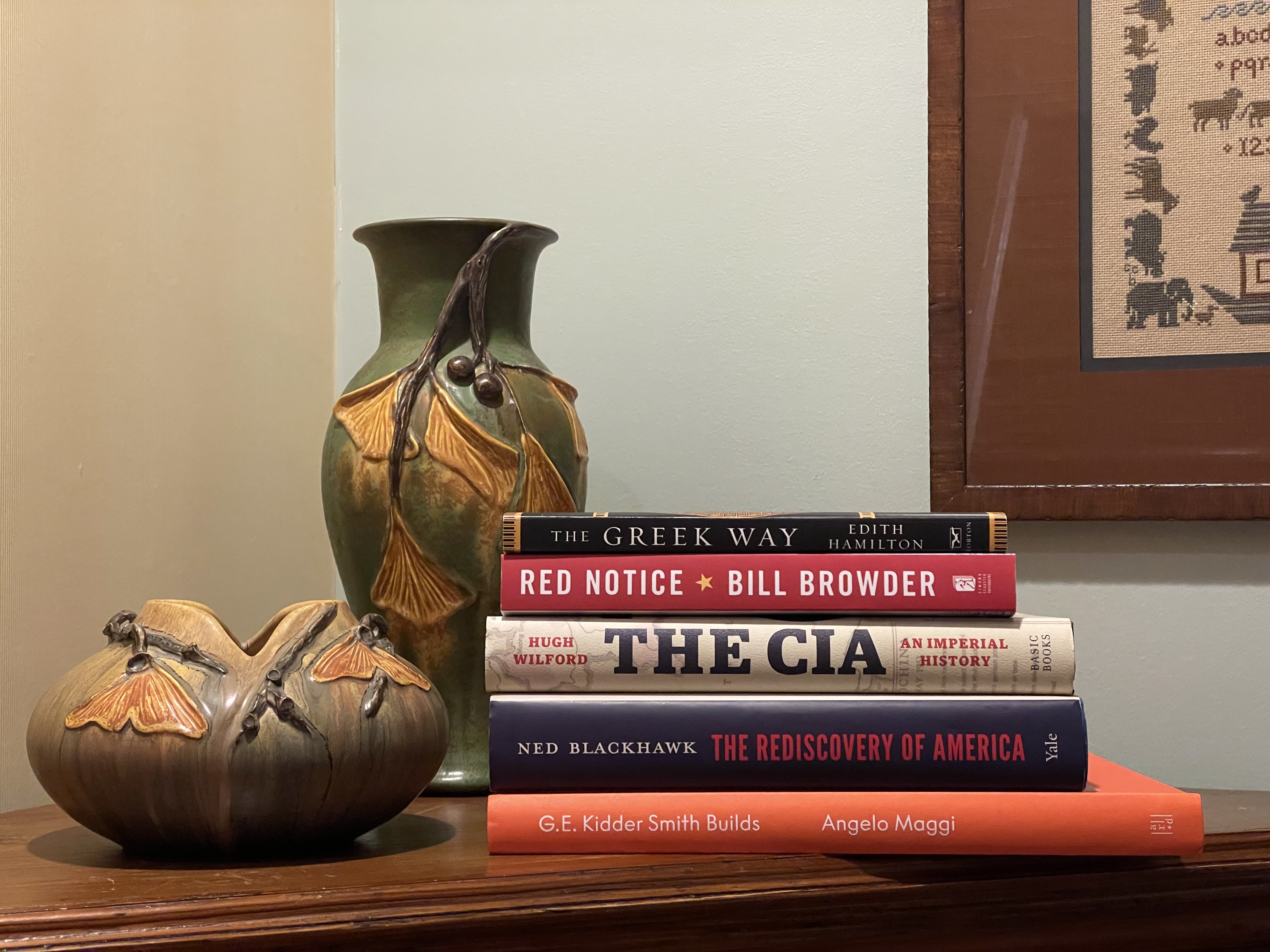
Each month my goal is to read a minimum of five books on a variety of topics from different genres. Here are the books I read in July 2024. If you click on the title, you’ll go to the longer post on MORE TO COME. Enjoy.


Revolutionary Summer: The Birth of American Independence (2013) by Joseph J. Ellis combines original accounts, insightful analysis, and first-class storytelling skills to bring the reader into the critical summer of 1776, when the future of American independence was very much in doubt. Few historians write as knowledgeably and effectively about the revolutionary period in America as Ellis, who in this short work brimming with fresh perspective addresses what he calls the “crescendo moment” in American history.


The Demon of Unrest: A Saga of Hubris, Heartbreak, and Heroism at the Dawn of the Civil War (2024) by Erik Larson examines the motives and actions of a small minority of rich white men who decided that slavery—and the lavish lifestyle owning other human beings enabled for them and their families—was worth defending to the point of tearing the country apart. In his familiar storytelling style, compelling the reader to keep turning pages, Larson focuses on the chaotic months between Abraham Lincoln’s election to the presidency on November 6, 1860, and the Confederacy’s shelling of Fort Sumter on April 12, 1861. Much like other times of conflict, it is a period marked by “tragic errors and miscommunications, enflamed egos and craven ambitions, personal tragedies and betrayals.”


Unthinkable: Trauma, Truth, and the Trials of American Democracy (2023) by Jamie Raskin is a searing memoir covering the first forty-five days of 2021 that saw Congressman Raskin lose his only son to suicide, endure a mob’s violent attack on the U.S. Capitol to try and upend the election of Joe Biden, and lead the second impeachment against the former president who planned the outlines of the assault and incited that mob. On the very first pages he reminds us that we had too long looked away from a very old threat, the one raised by Alexander Hamilton in the prescient Federalist No. 1 that literally unfolded on January 6, 2021. The work is a “vital reminder of the ongoing struggle for the soul of American democracy and the perseverance that our Constitution demands from us all.”


On Tyranny: Twenty Lessons from the Twentieth Century (2017) by Timothy Snyder, a historian of the Holocaust who teaches at Yale, is a guide to resisting authoritarianism. This small but powerful work provides present-day advice in the vein of that used by the Founding Fathers when they sought to build a governmental system of checks and balances that would be resistant to the tyranny that overcame ancient democracies. Snyder is no believer in American exceptionalism. Instead, he notes that while we “might be tempted to think that our democratic heritage automatically protects us from such threats . . . this would be a misguided reflex.”


Helsinki’s New Living Room—Oodi Library (2021) by Wif Stenger (for the Scandinavia Review) describes the public enthusiasm for the design of the city’s new flagship library. Oodi is a “wavy, radiant structure” that opened in late 2018 as Finland celebrated its 101st Independence Day. Creativity is at the heart of Oodi (“Ode”), a spirit that has been taken in kind by its visitors. “The willingness of people to use and share the building in creative and respectful ways has been delightful to experience,” said the lead architect for the project.


What’s on the nightstand for August (subject to change at the whims of the reader)

Keep reading!

More to come…

DJB


NOTE: Click to see the books I read in June of 2024 and to see the books I read in 2023. Also check out Ten tips for reading five books a month.


Photo by Jilbert Ebrahimi on Unsplash

Observations from . . . cooler climes

Readjustment is the best word to describe our lives since we returned from the National Trust Tour to Scandinavia and the Baltic Sea. Body clocks have to reset after a seven-hour time difference. While we eat very well at home, it is nonetheless a change from cruise ship fare.

And as we visited countries from Norway to Estonia, we found ourselves occasionally putting on a fleece for an extra layer of warmth. We’re now shedding those clothes in the August heat and humidity of Washington!

But cooler temperatures are not really what we remember from this memorable twelve-day cruise. I’ve already captured thoughts about some of the special places here on MORE TO COME. * Now, as is my practice, I’m pulling a range of photos and impressions together for this wrap-up post as part of the Observations from . . . series. Enjoy!


Signs and street scenes

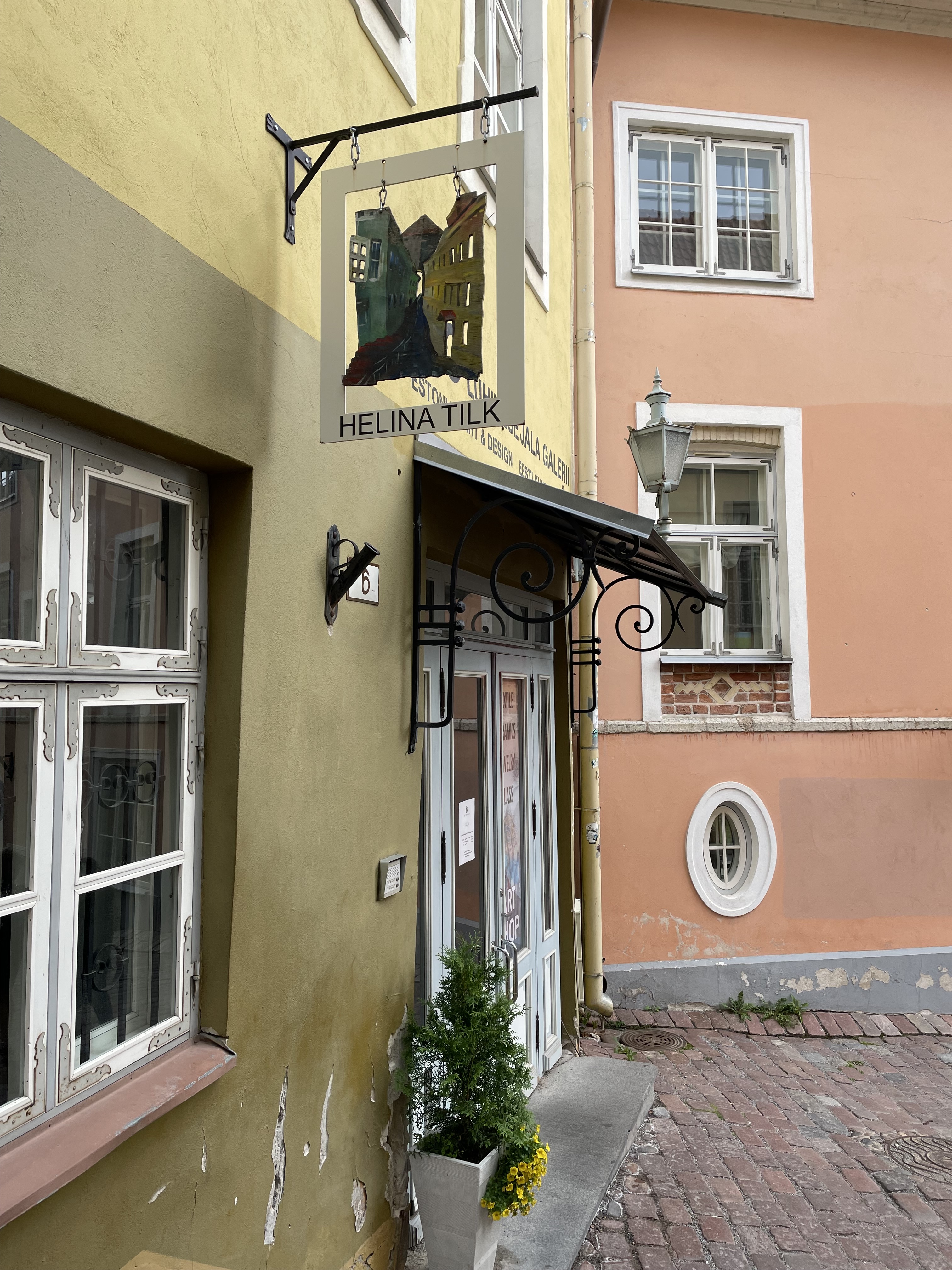
I tend to take pictures of buildings without people in front of them—a habit from my days of focusing primarily on the historic architecture. However, as I have come to appreciate that the essential feature of a landmark is not its design but the place it holds in a community’s memory, I’m now taking more photographs of people animating historic places. Here are a few examples from this trip along with a few signs that caught my eye.

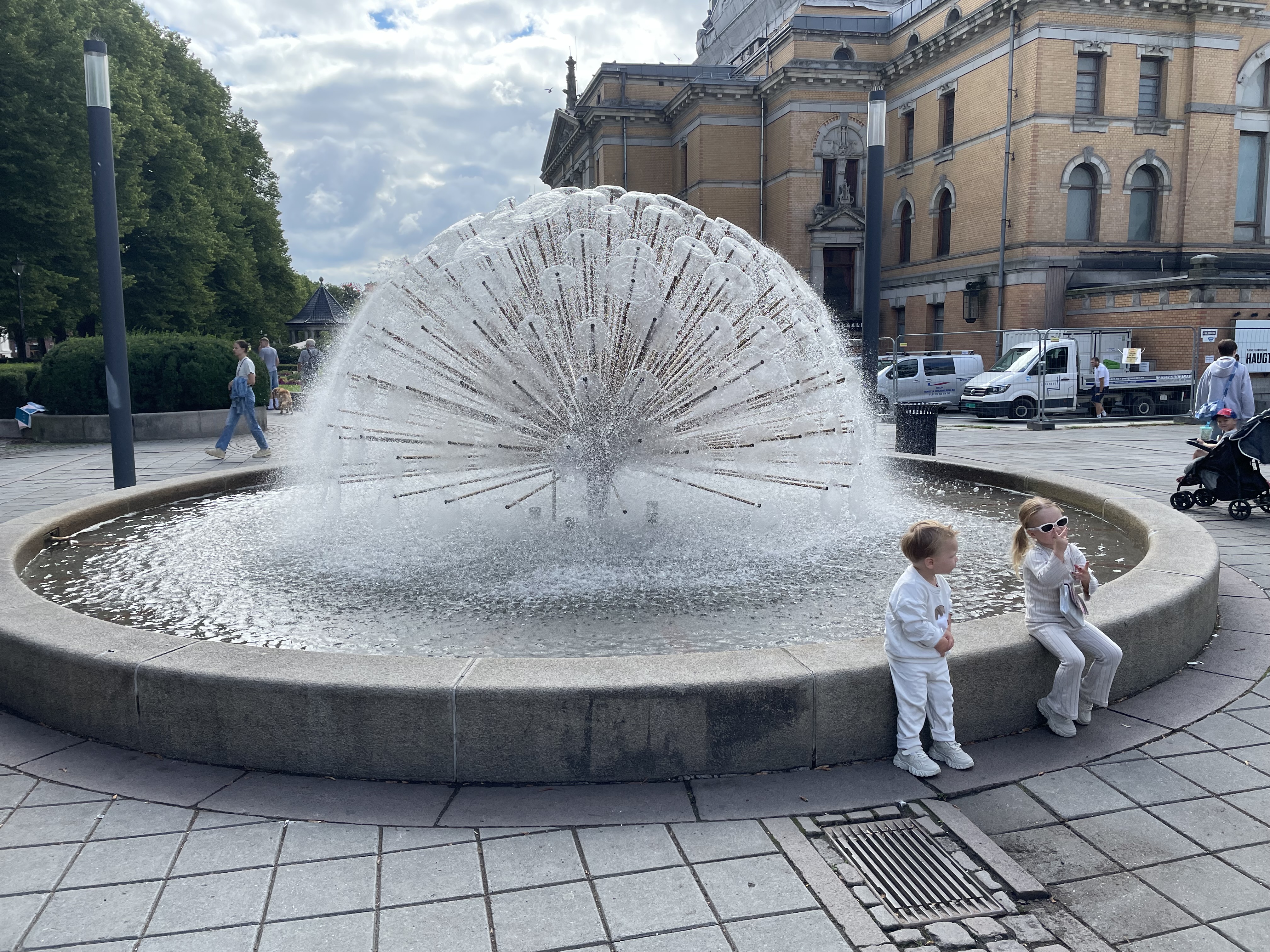
Children mug for their mom’s camera in front of a creative and beautiful fountain in Oslo
Oslo street musicians, playing some smart gypsy jazz
Residents swarm to a beloved amusement park in the center of Gothenburg
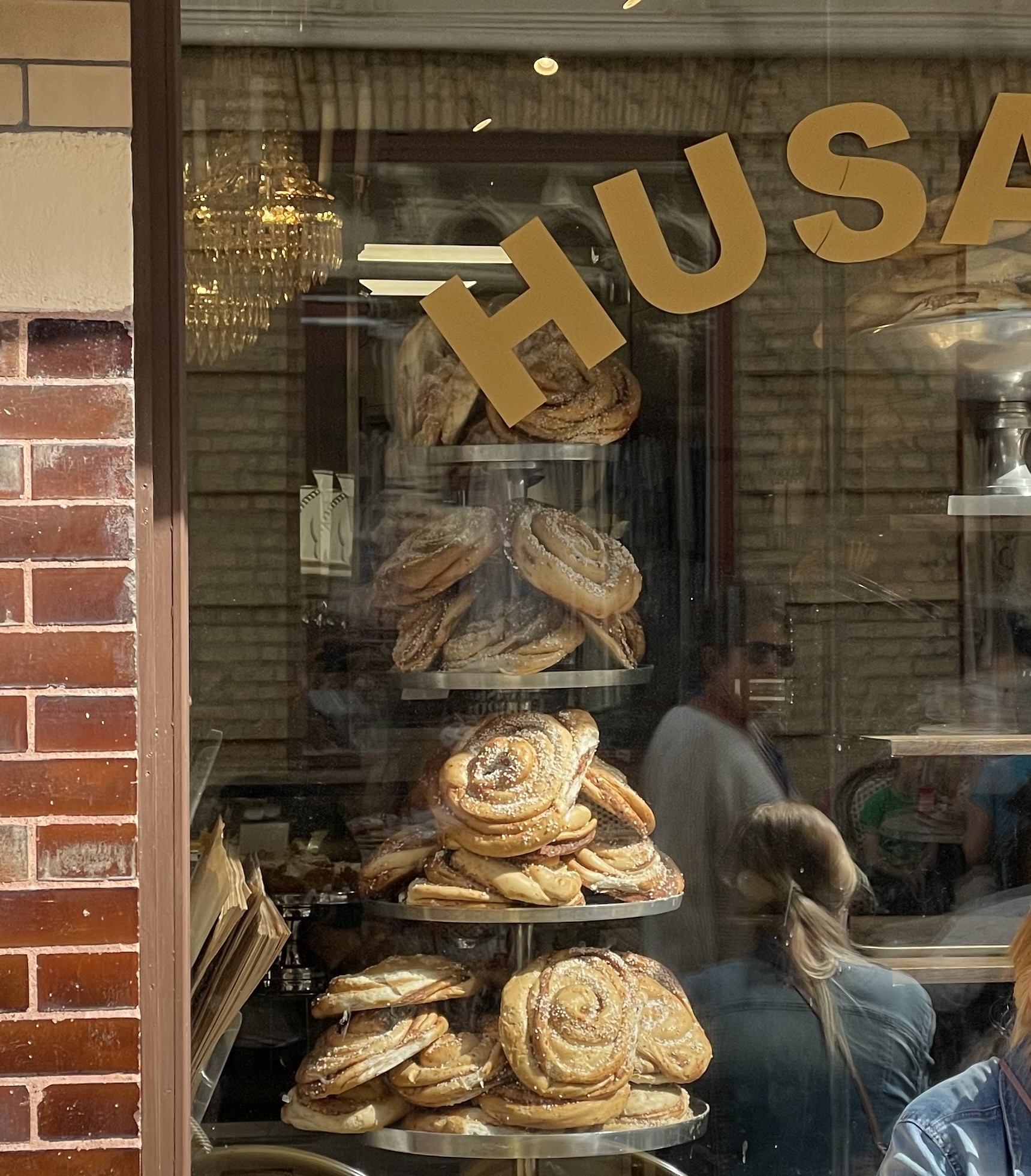
Sampling the local baked goods in Haga
Couples in Riga secure a lock to this bridge when they get married, and they will stay together as long as the lock remains.
Street signs in Porvoo, Finland
Oslo street art
A reminder of what’s important in Sweden
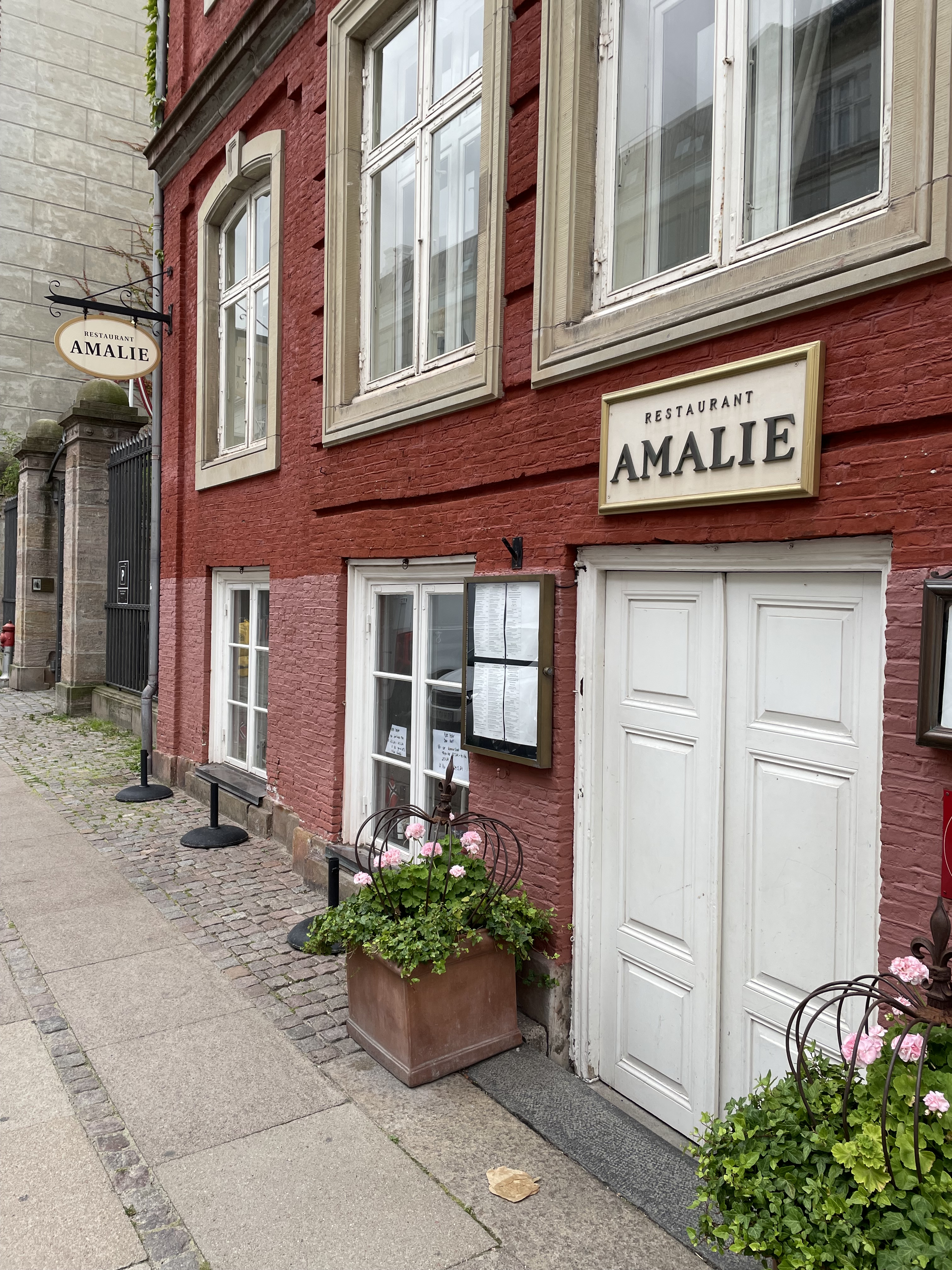
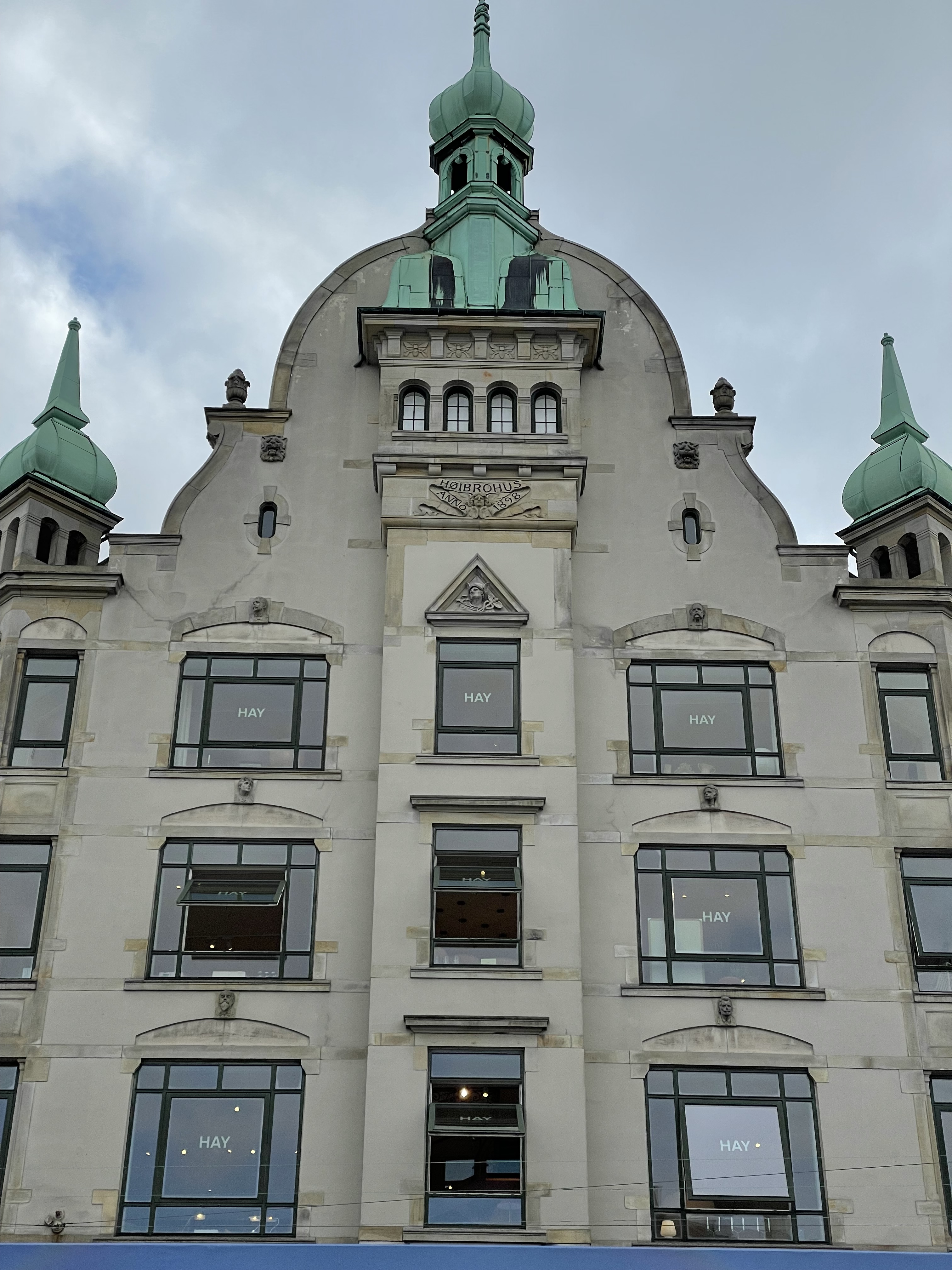
Just another Michelin-rated restaurant tucked into an 18-century townhouse on a Copenhagen side street

A region that understands independence

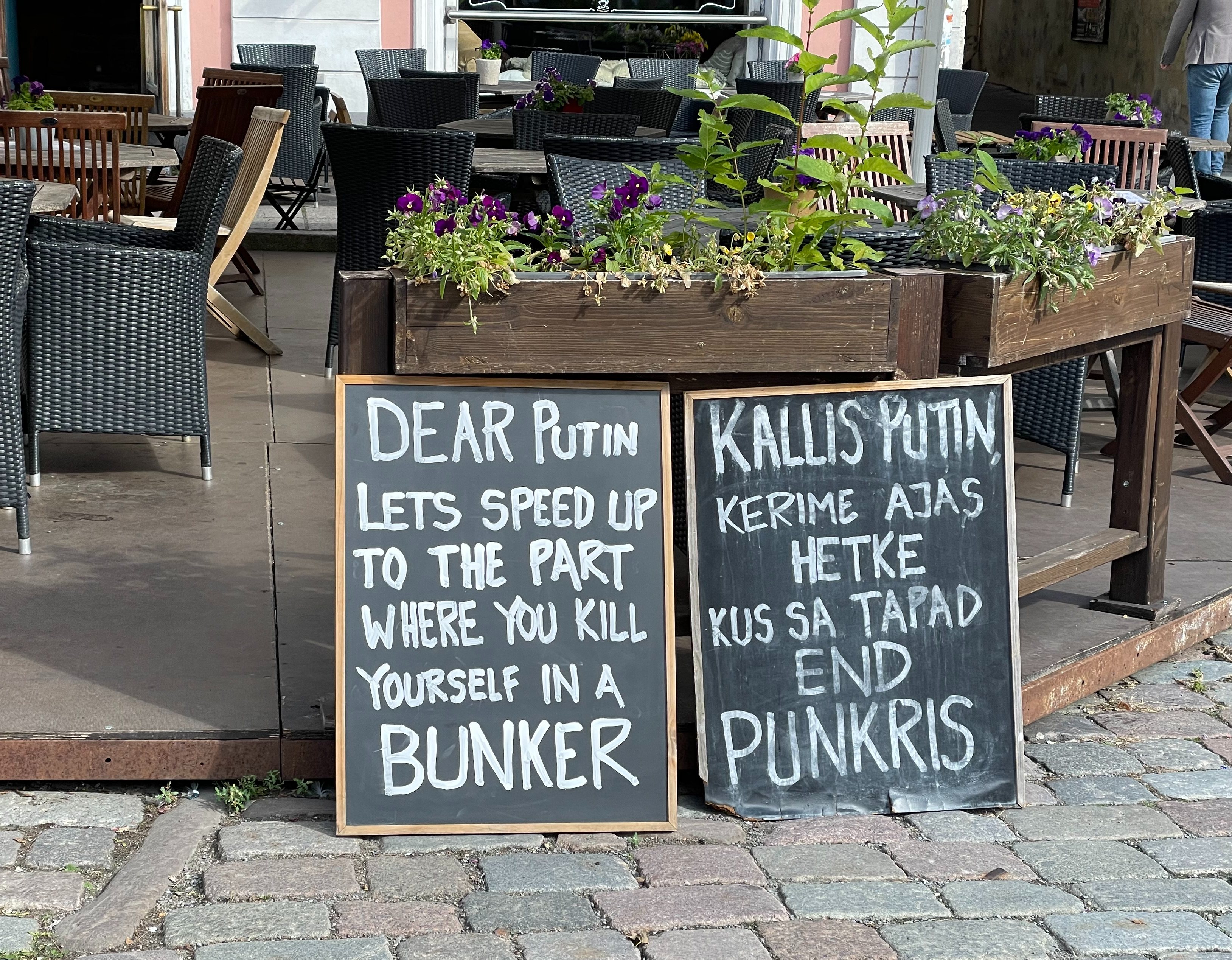
The history of the Scandinavian and Baltic countries we visited is one of fiercely independent people who have endured generations—even millennia—of conquest and occupation. Signs of support for Ukraine were everywhere, because they understand Russian designs on other countries in a visceral way that provides an urgency not seen in the U.S.

Thoughts of the Russian occupation are never very far from one’s mind in the Baltic states
The independence monument sits in the heart of Riga
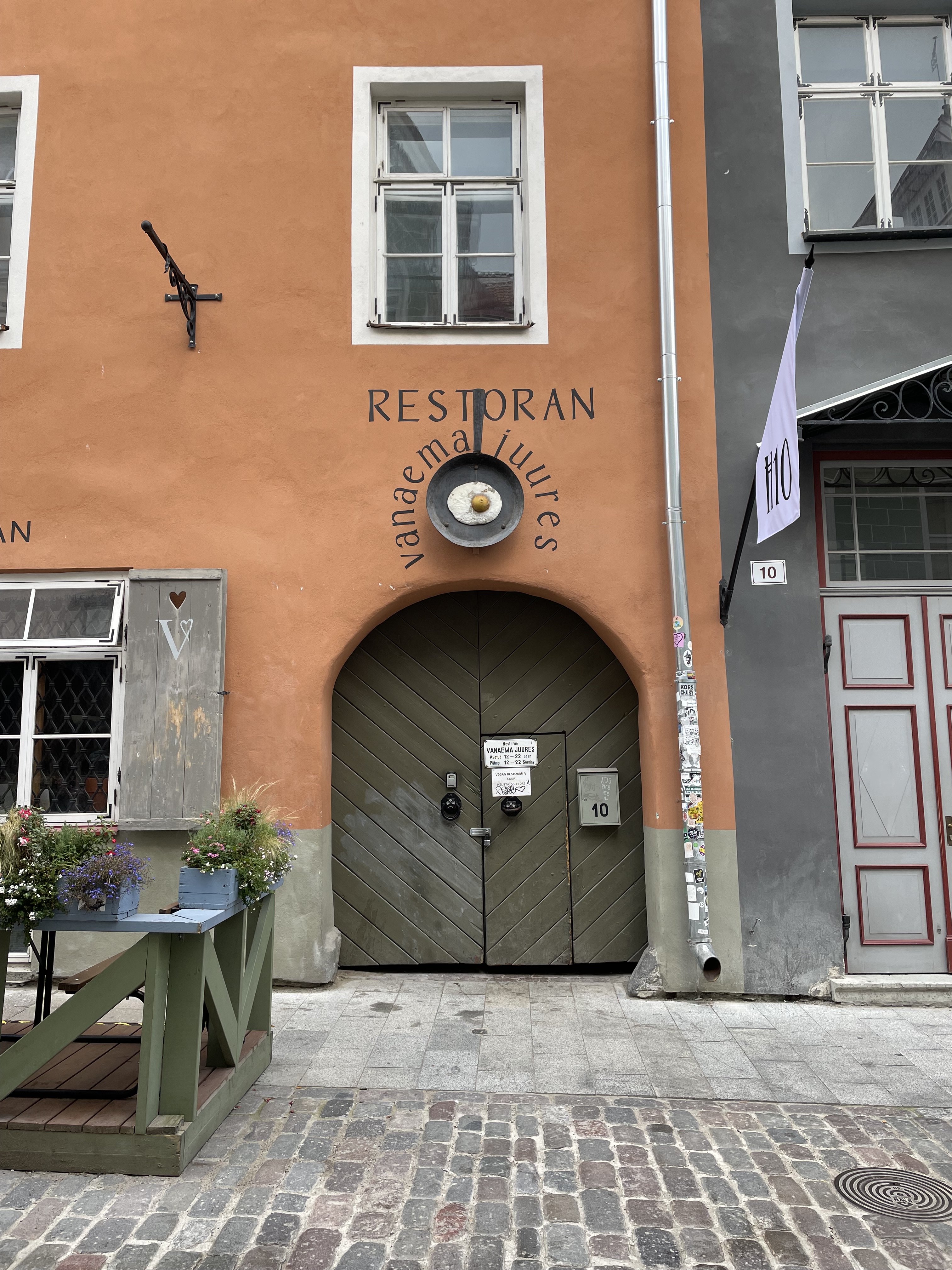
A Tallinn restaurant owner makes their disdain for Putin very clear

Sparking individual and collective memories

We visited a number of beautiful churches, large and small, while touring. Places of all types are so important in how we understand our past as they key both individual and collective memories and that is certainly true of religious sites.

Riga
Riga
Choral Synagogue Memorial, site of Nazi atrocities, in Riga
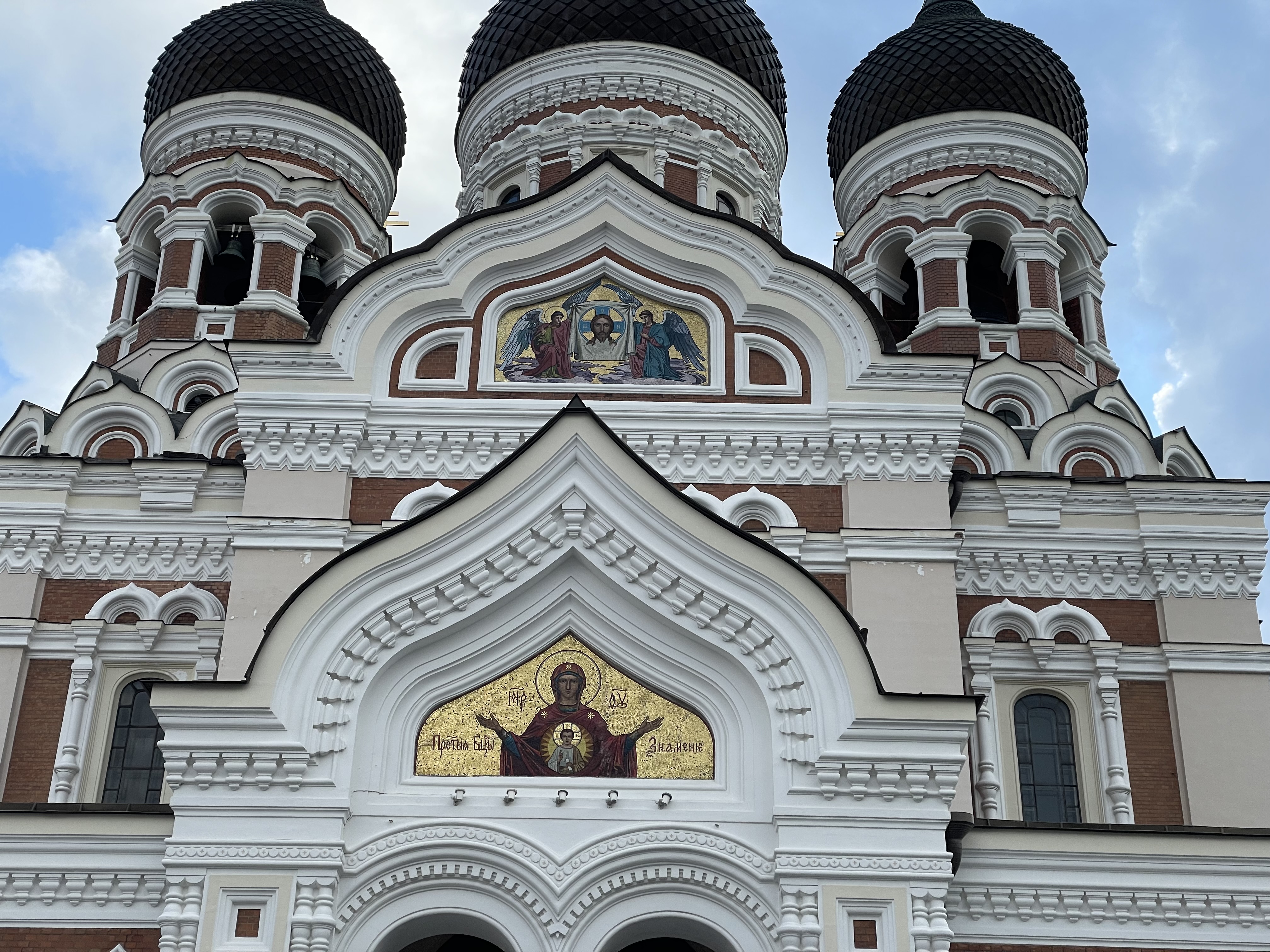
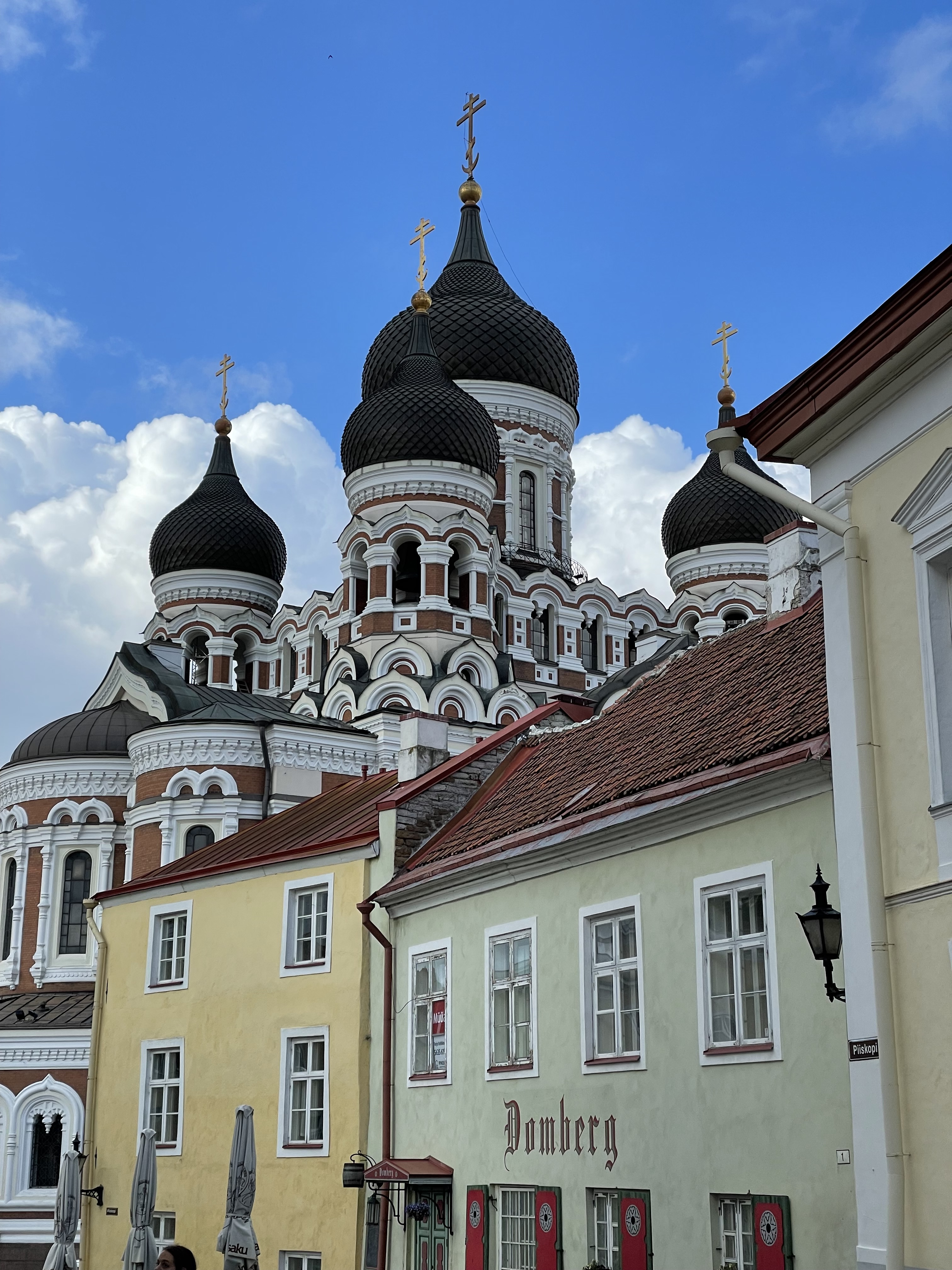
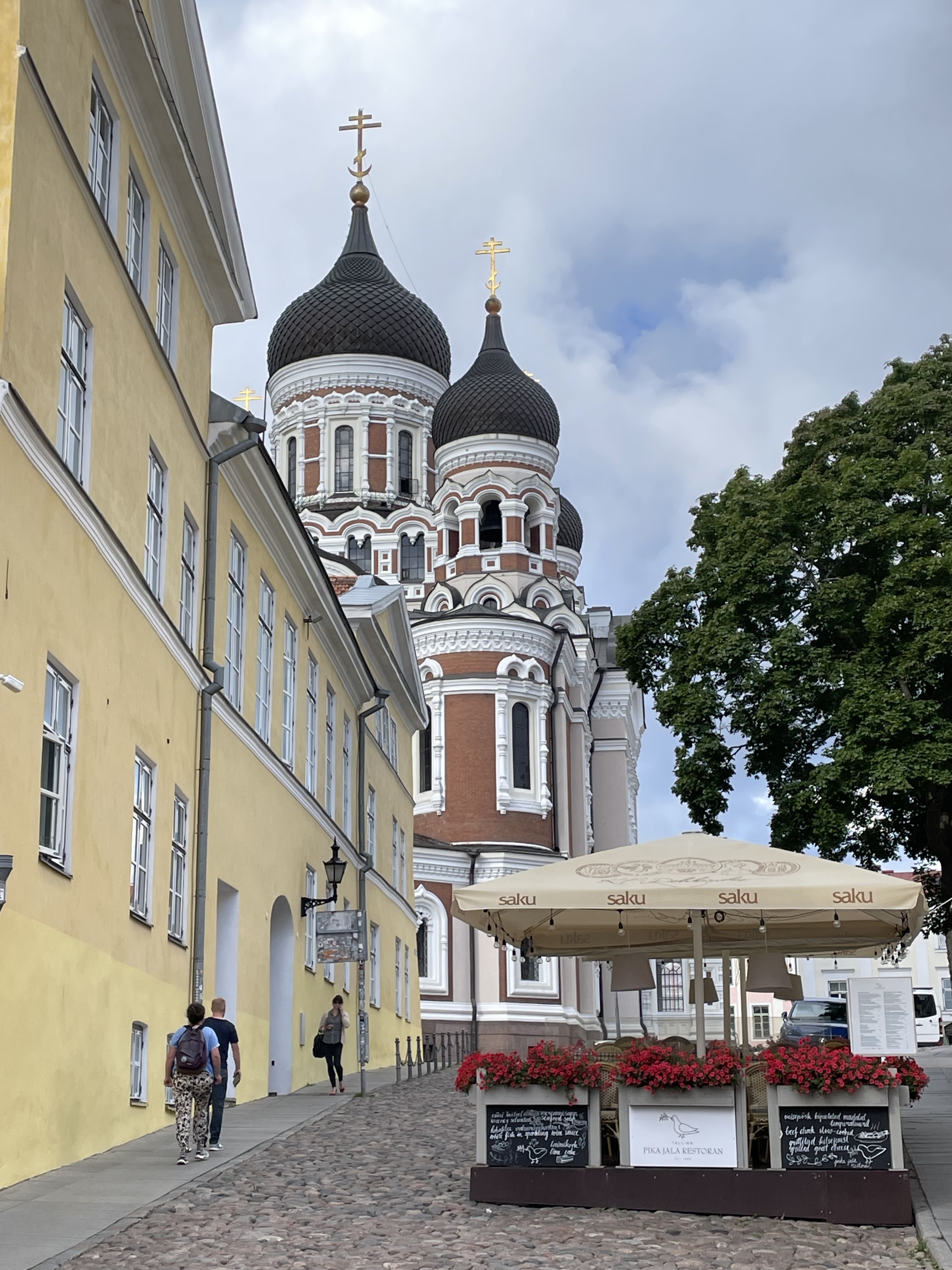
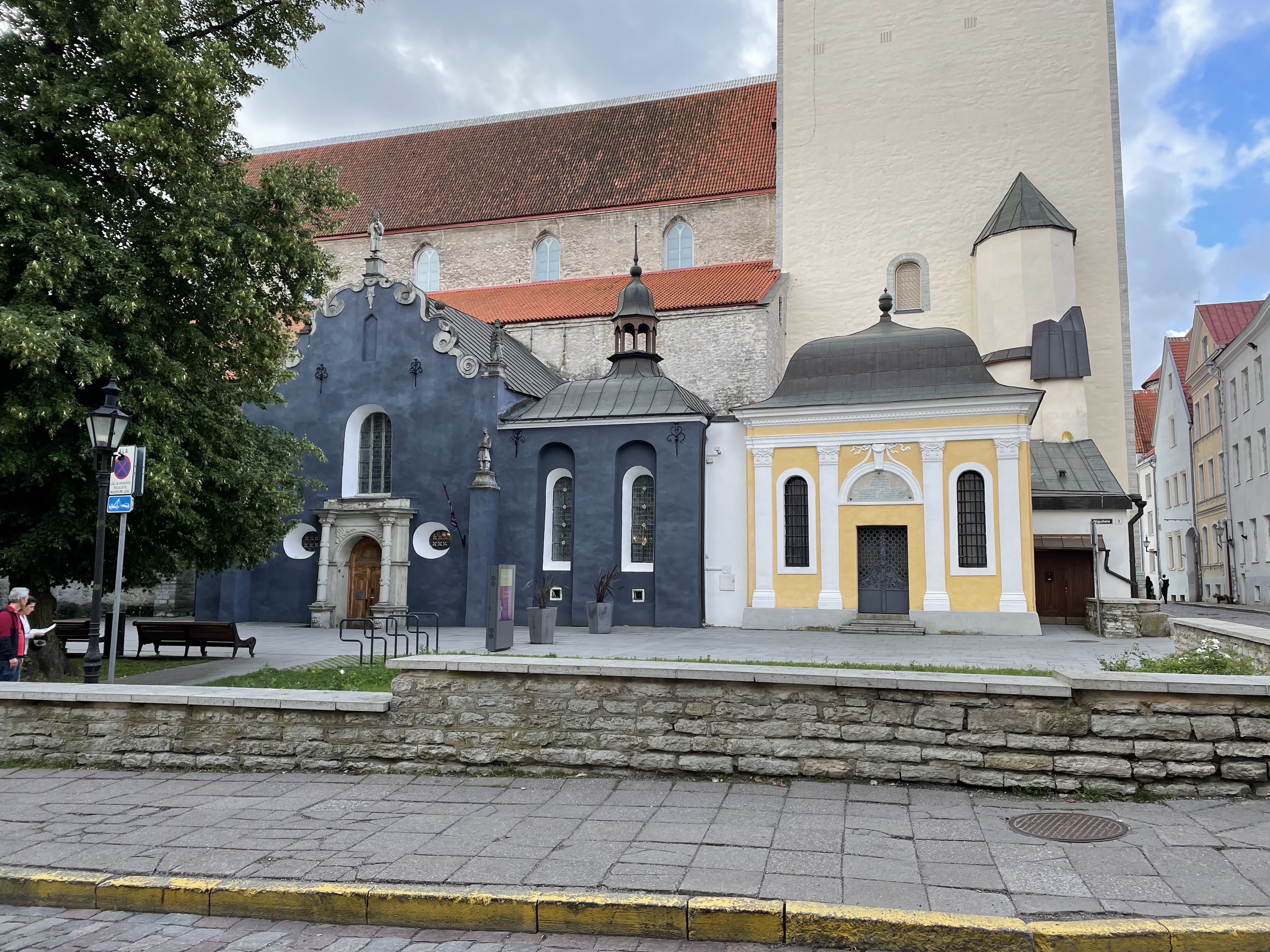
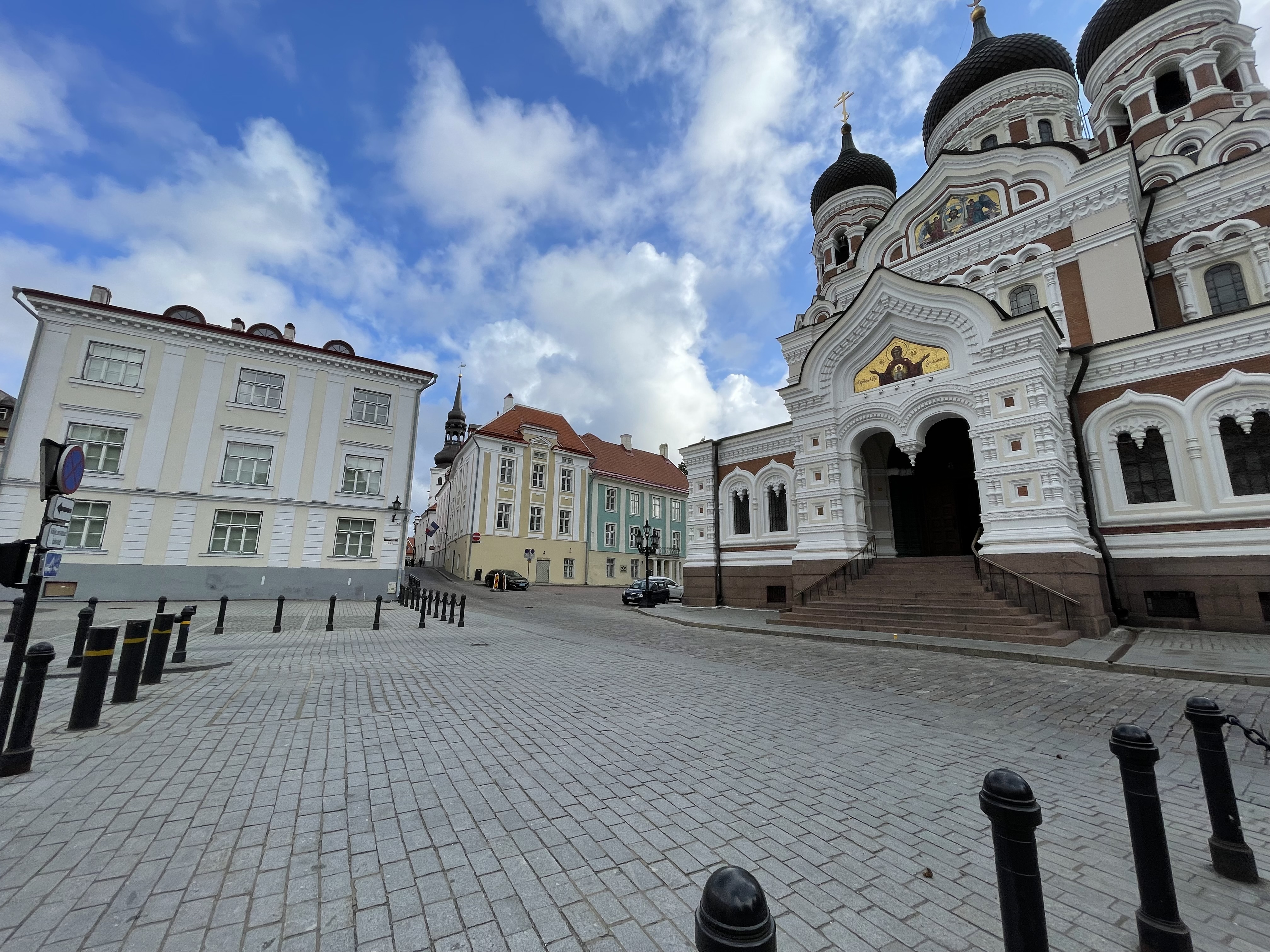
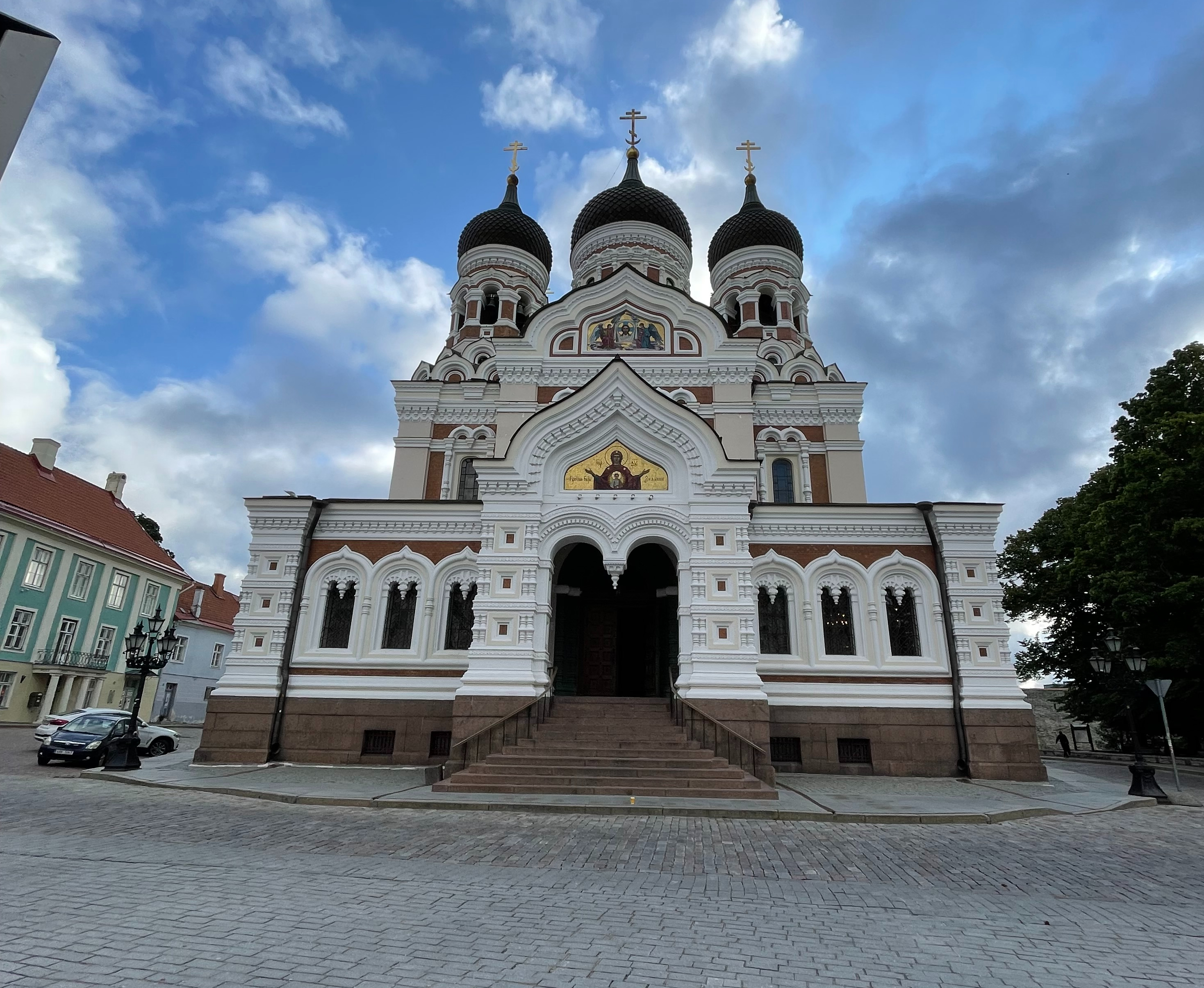
Orthodox cathedral above the Upper Town buildings in Tallinn

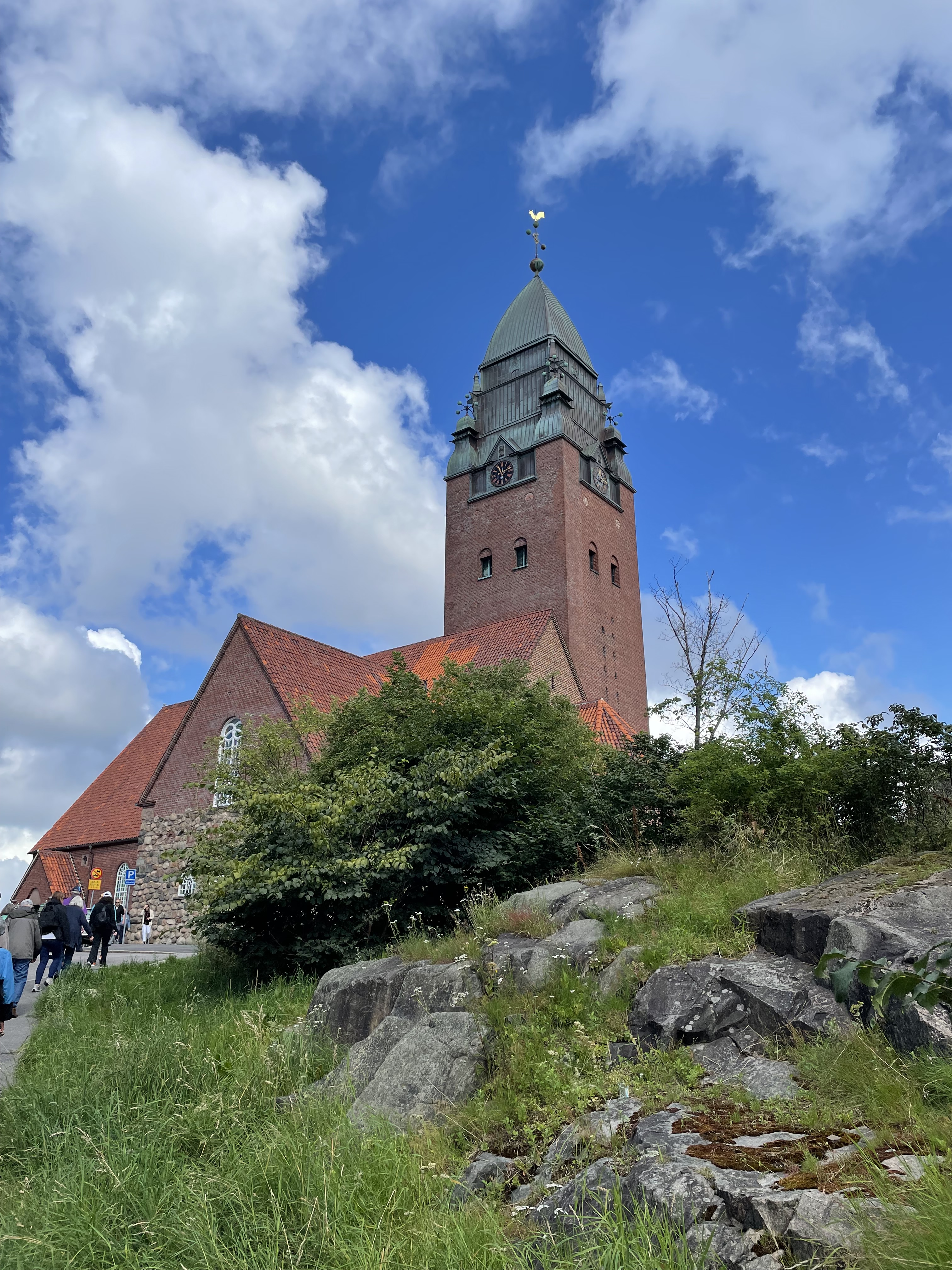
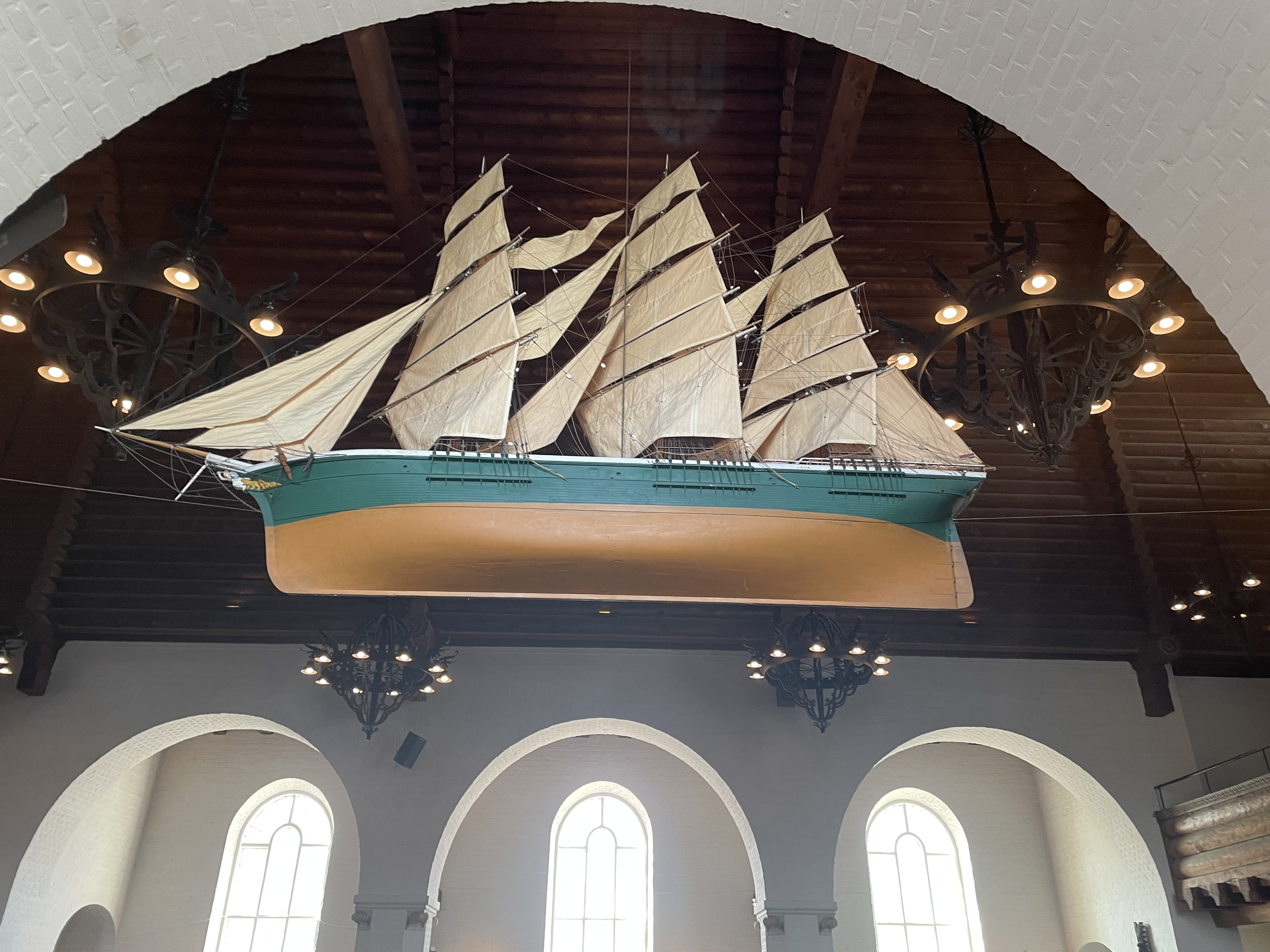
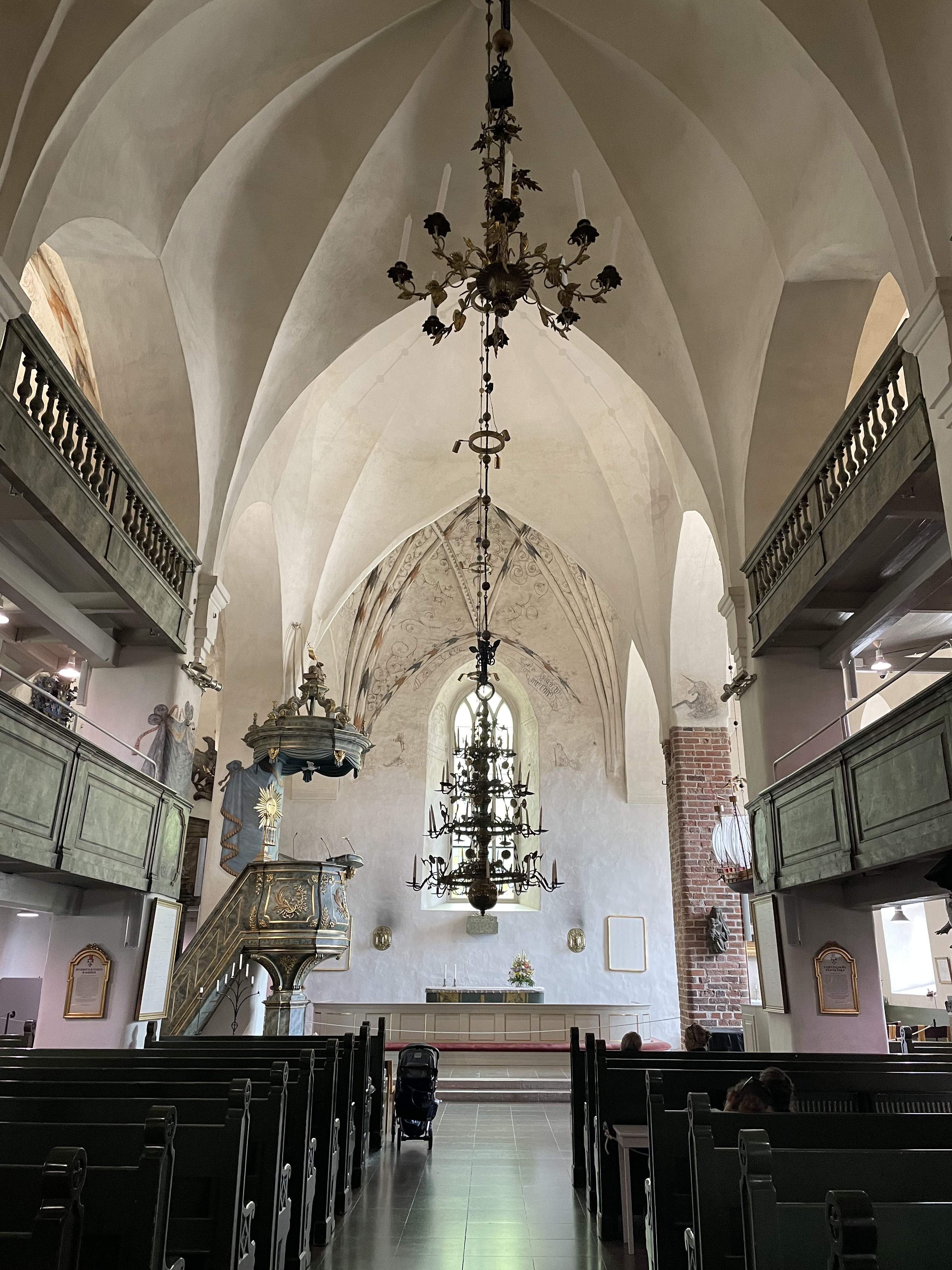
As is appropriate for this region so dependent on access to harbors and oceans, many of those houses of worship we visited recognized the beauty, bounty, and danger of the sea.

Masthugg Church, Gothenburg, Sweden
Altar at Masthugg Church
Reminder of the importance of the sea at Masthugg Church
Carving of a ship’s mast at Masthugg Church
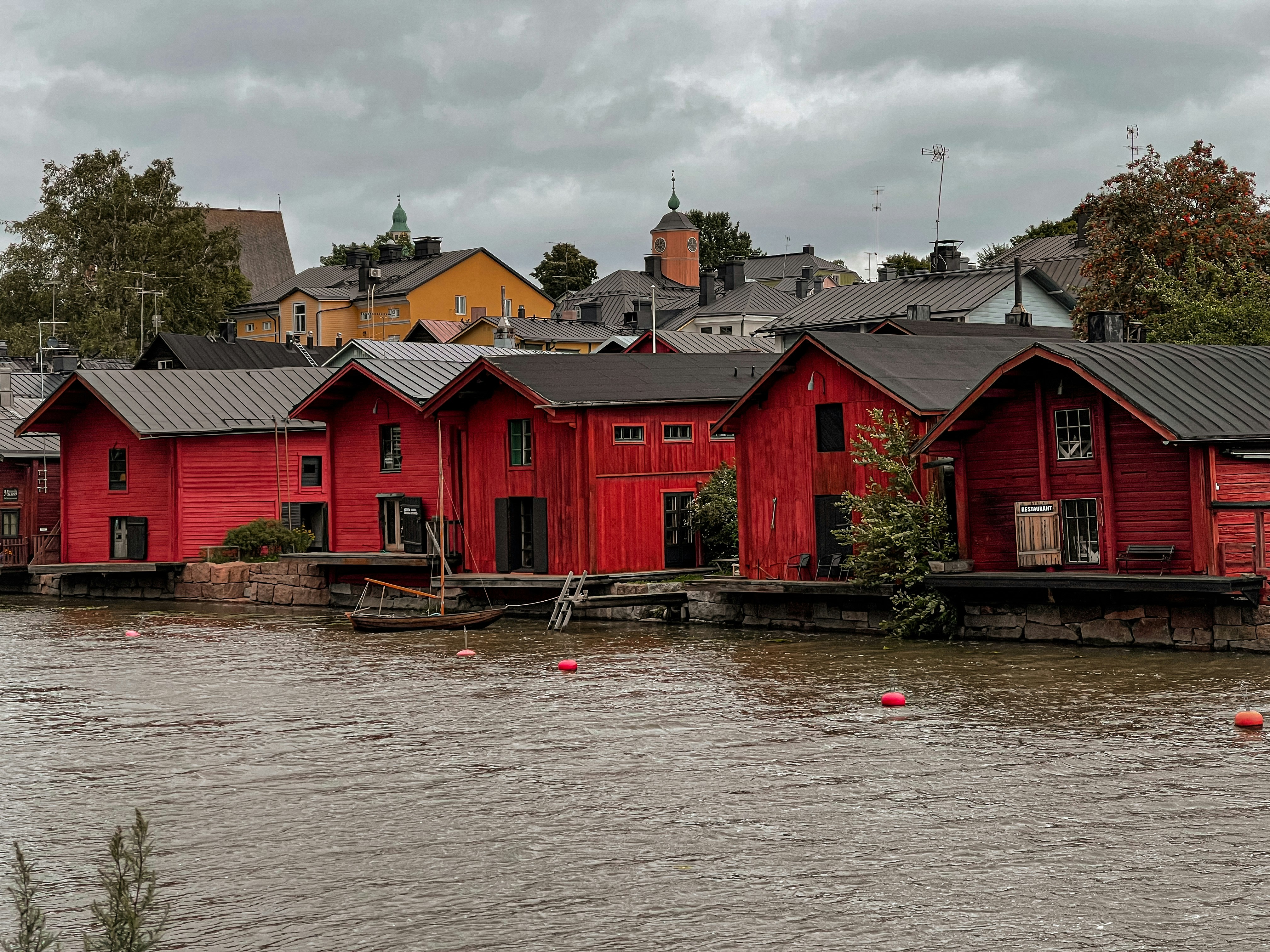
Porvoo, Finland
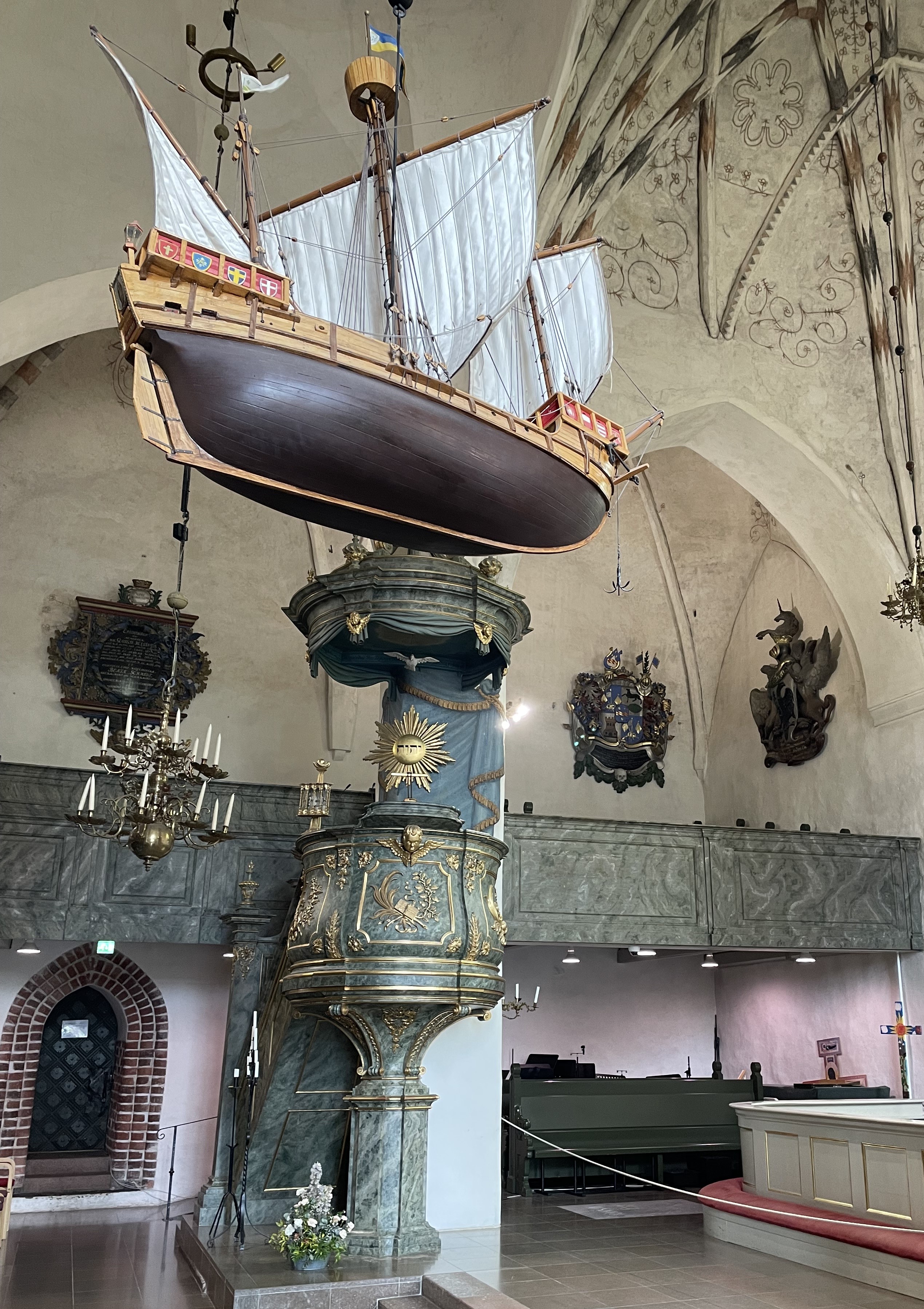
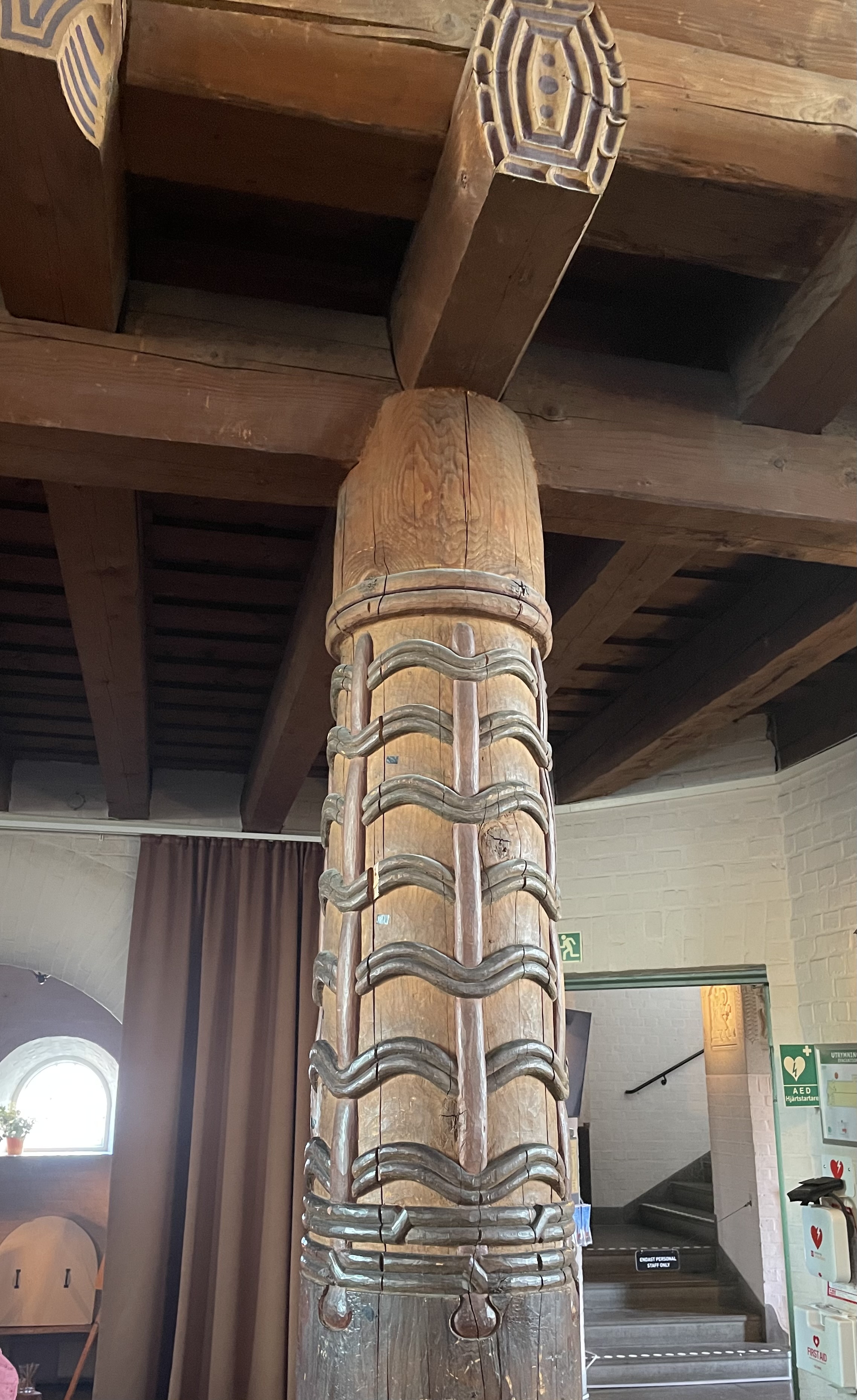
Carved ship and pulpit in Porvoo
Sailor’s wife, looking out to sea in Gothenburg, Sweden

Celebrating the sun-filled days of summer

We spent time in a number of beautiful gardens and parks, with flowers and people all soaking in the 18-20 hours of summer sunlight.

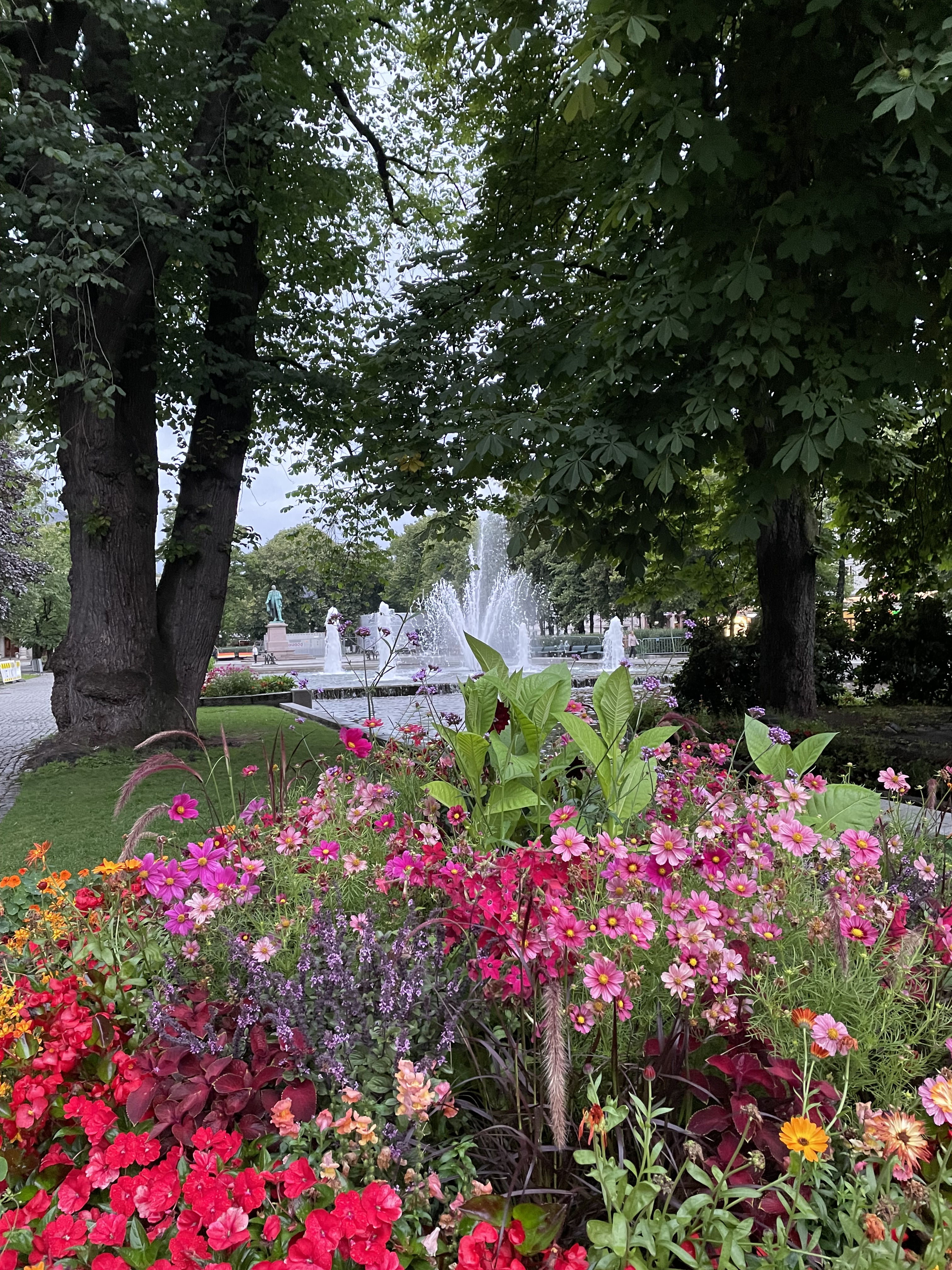
The park across from our hotel in Oslo
Scene in the palace gardens in Oslo
Riga’s National Opera House
Park in downtown Riga
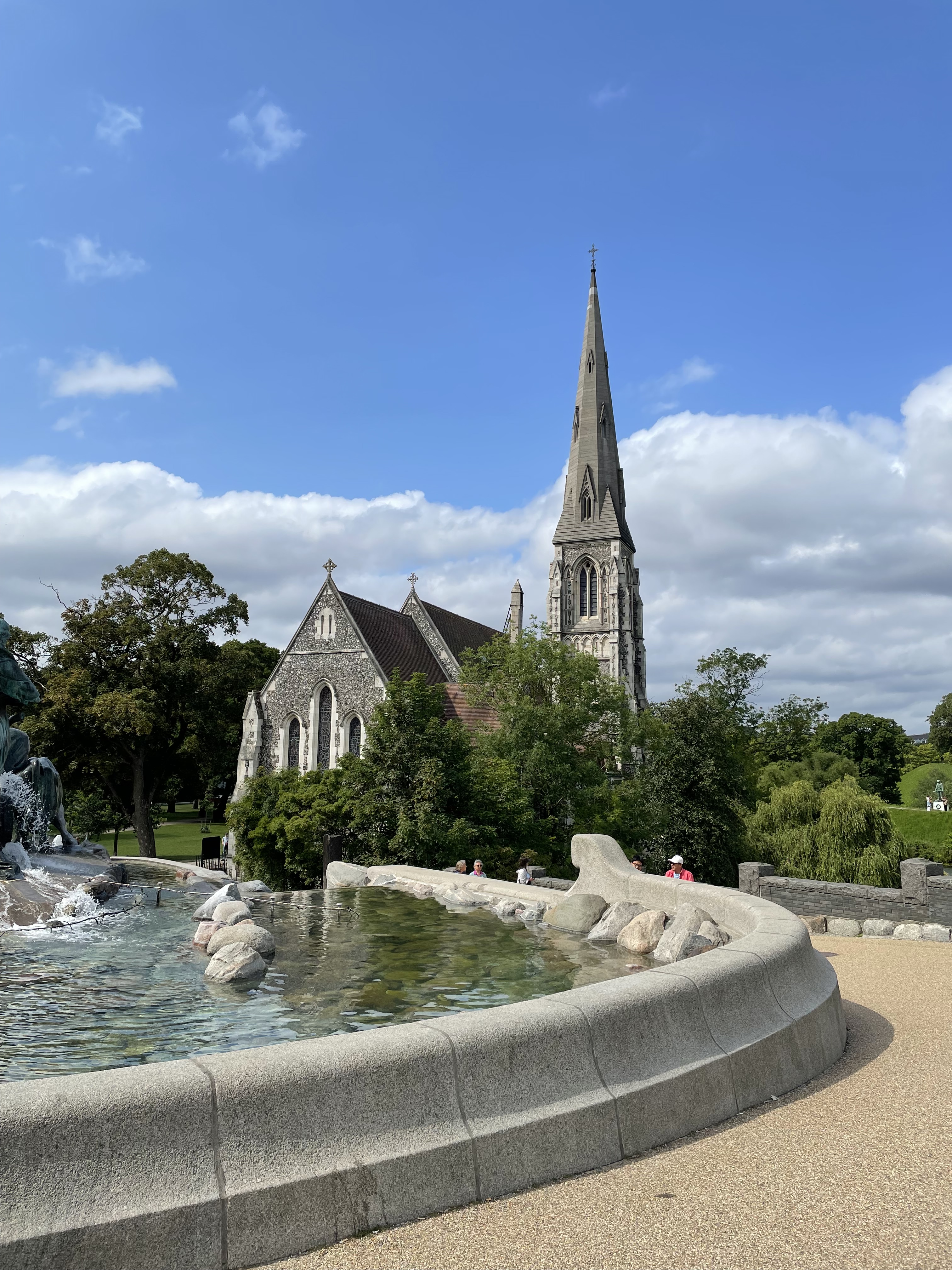
Copenhagen park and church

From Medieval to Modern

The architecture found in these seven countries runs the gamut from Medieval towns such as Tallinn, recognized as a UNESCO World Heritage Site; to some of the world’s best collections of Art Nouveau architecture; to stunning pieces of modern architecture. Here’s a sampling out of my collection of hundreds of photographs.

Coming into Porvoo, Finland
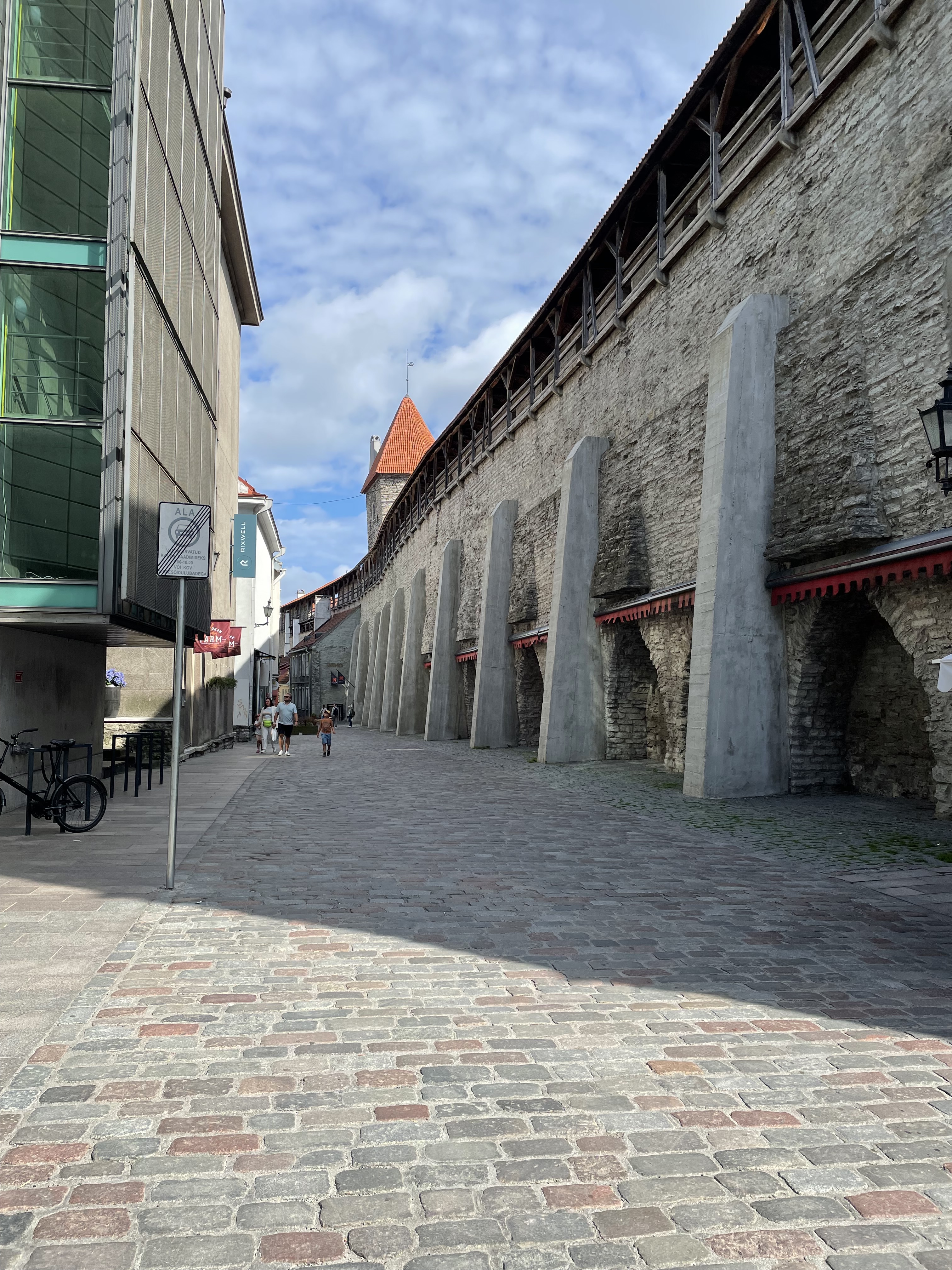
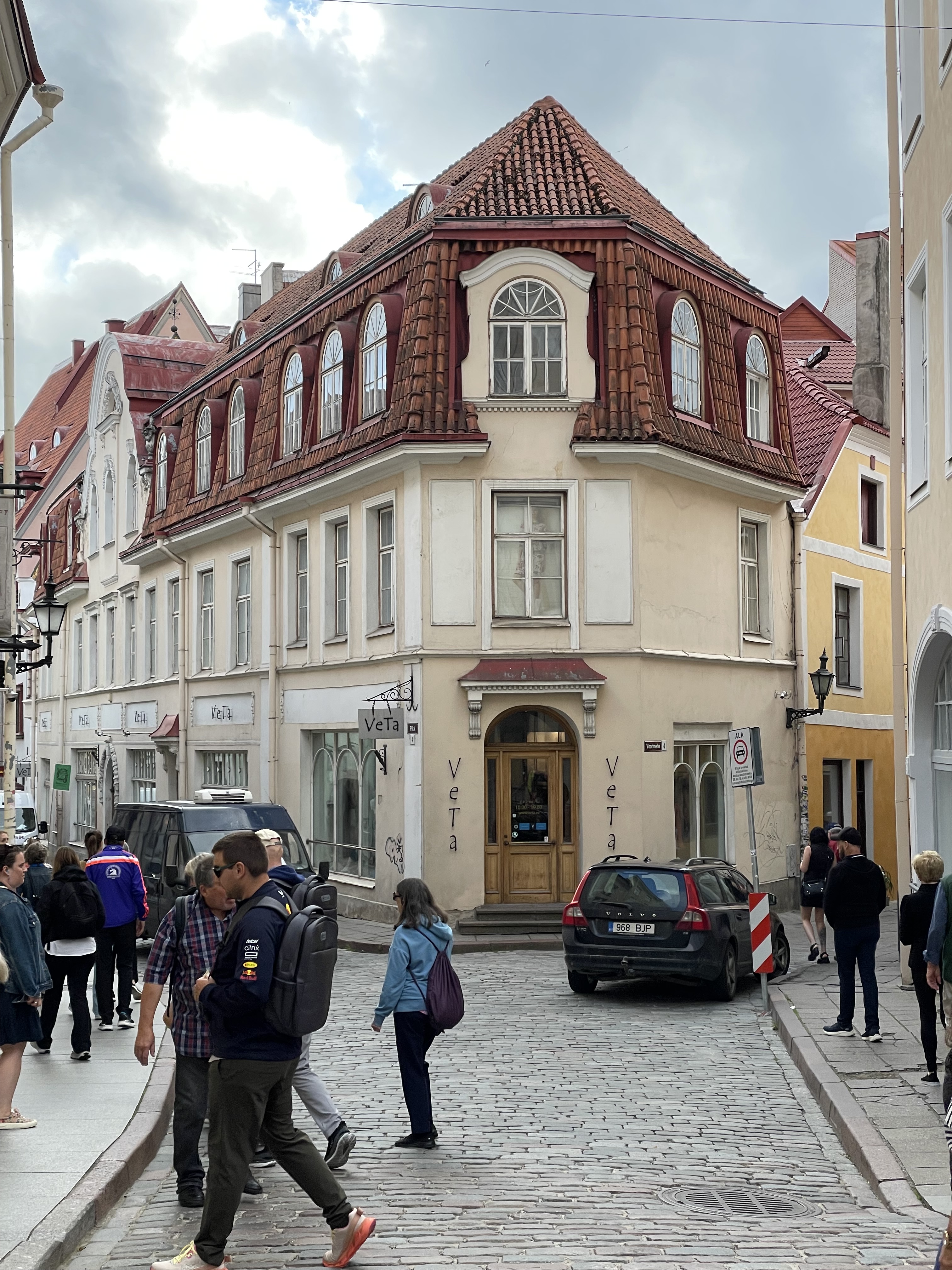
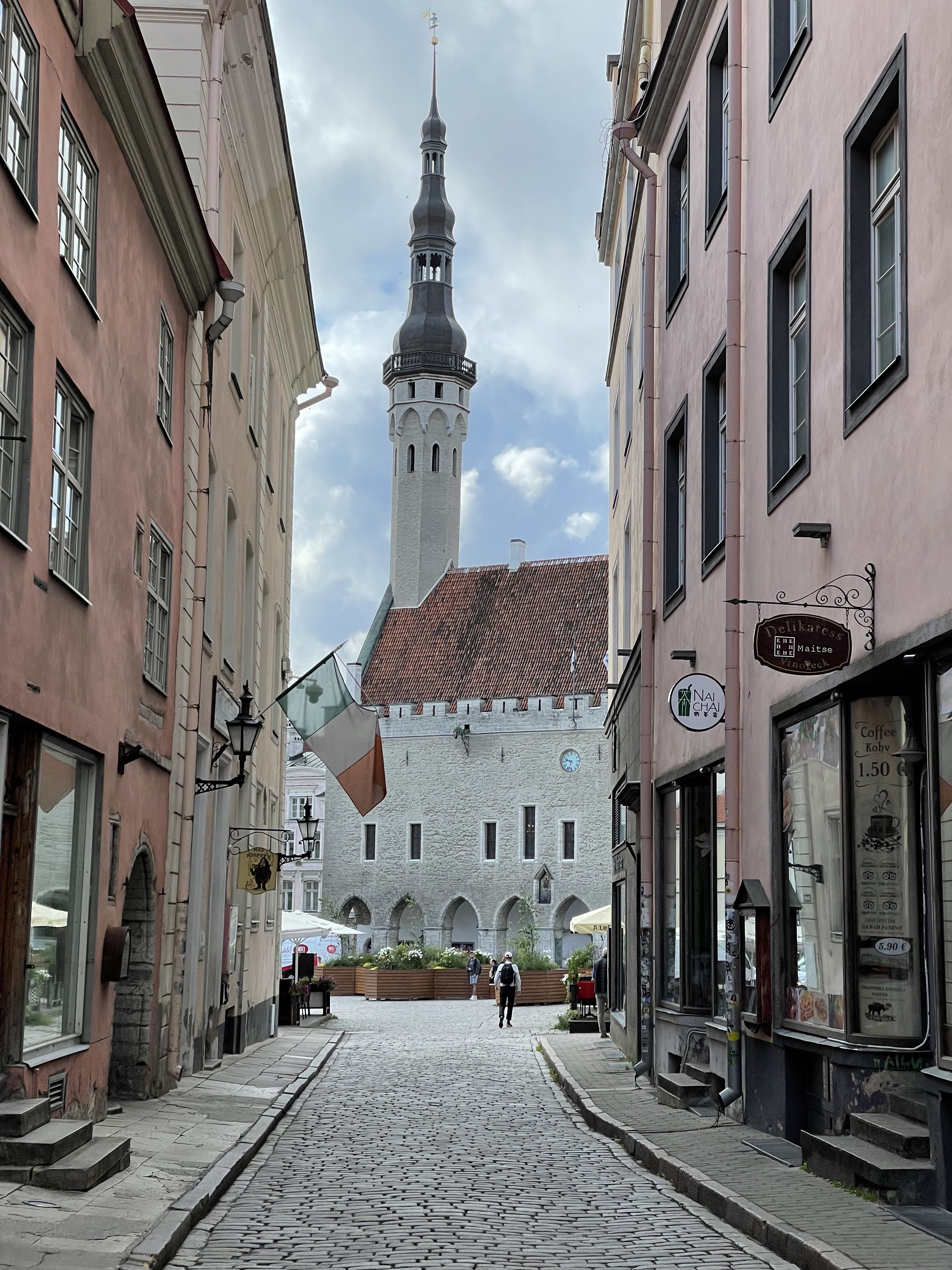
The old town streets in Tallinn
Copenhagen
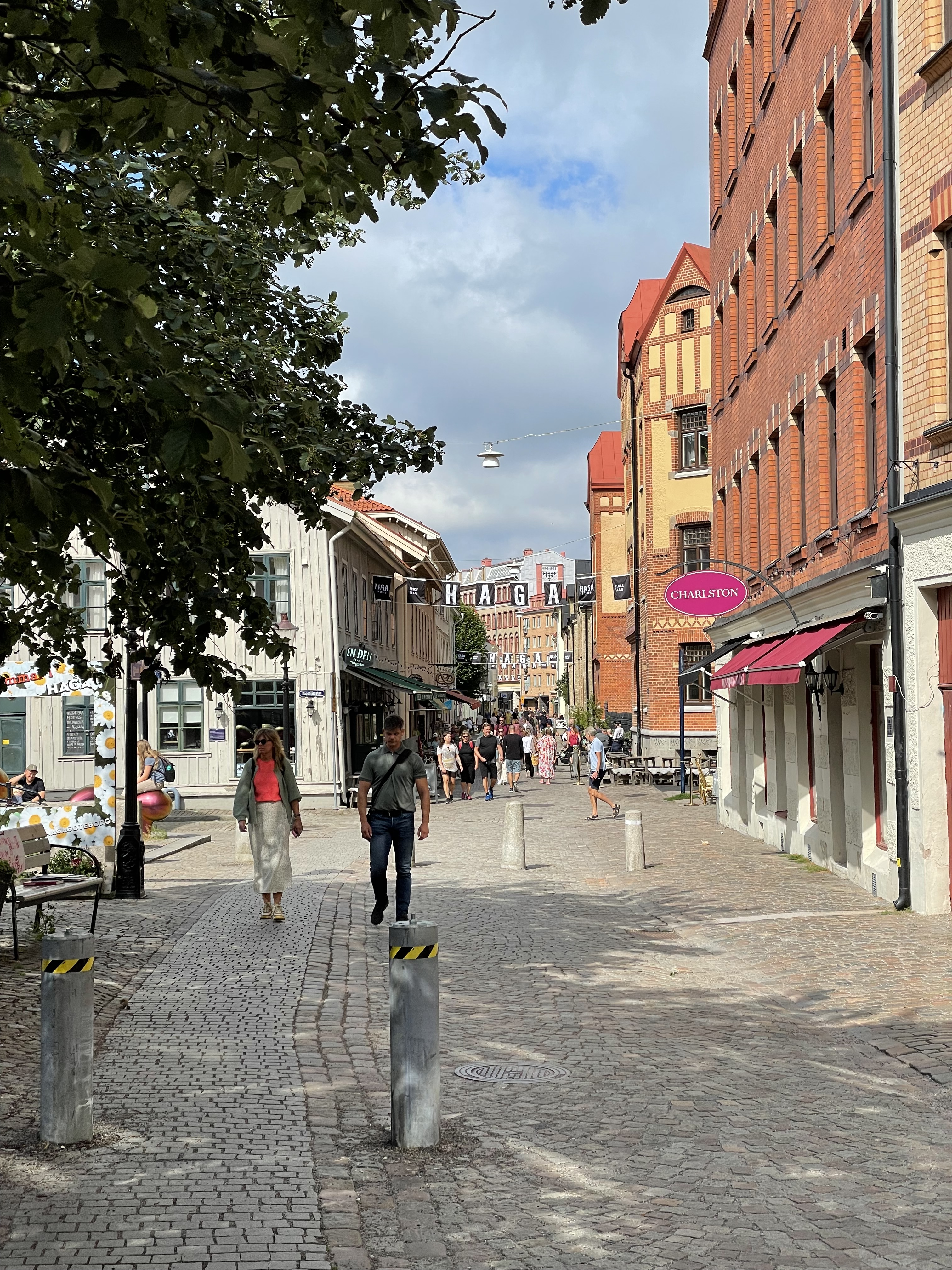
Gothenburg’s Haga neighborhood in the early morning
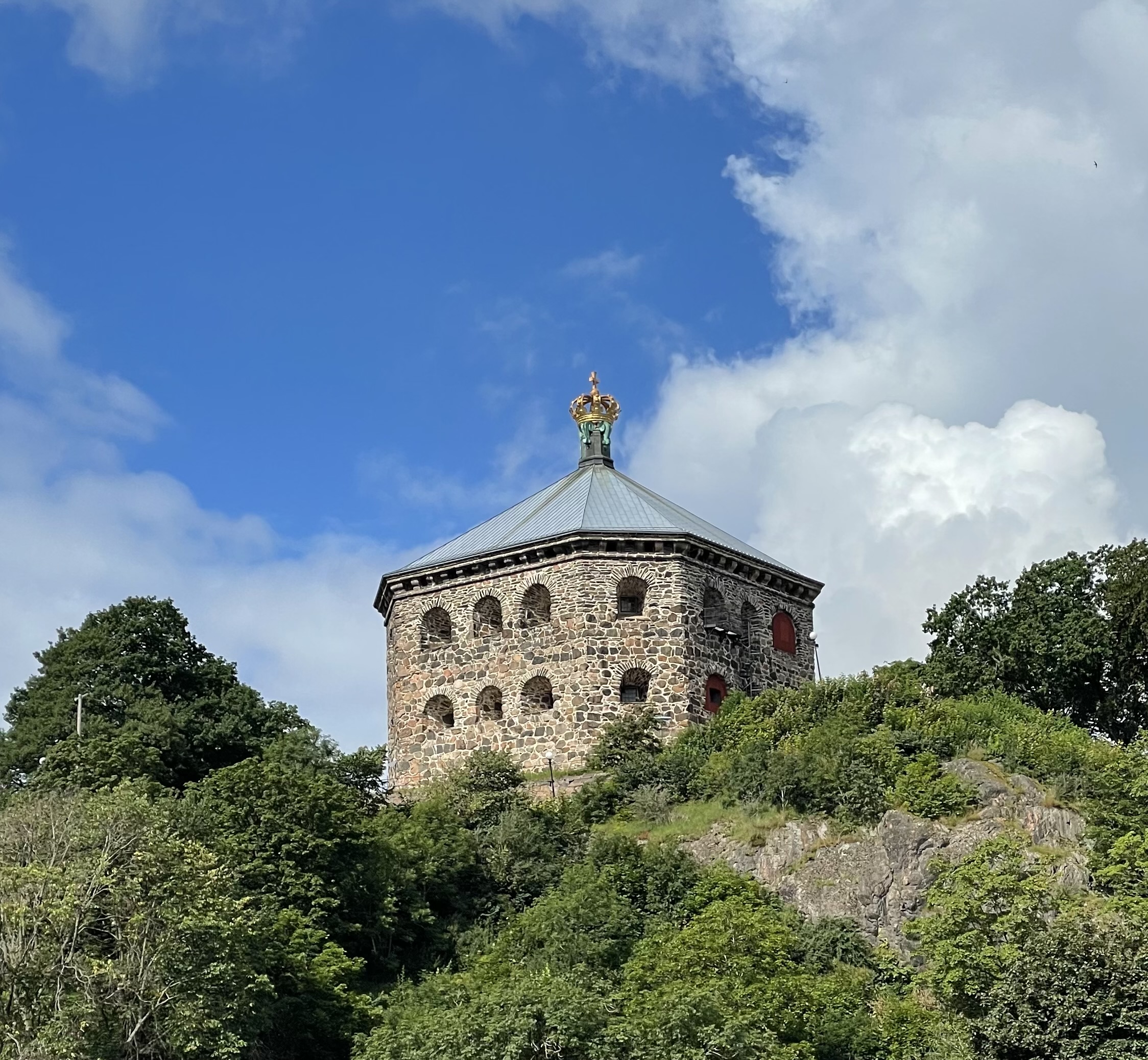
Fortress overlooking Haga neighborhood
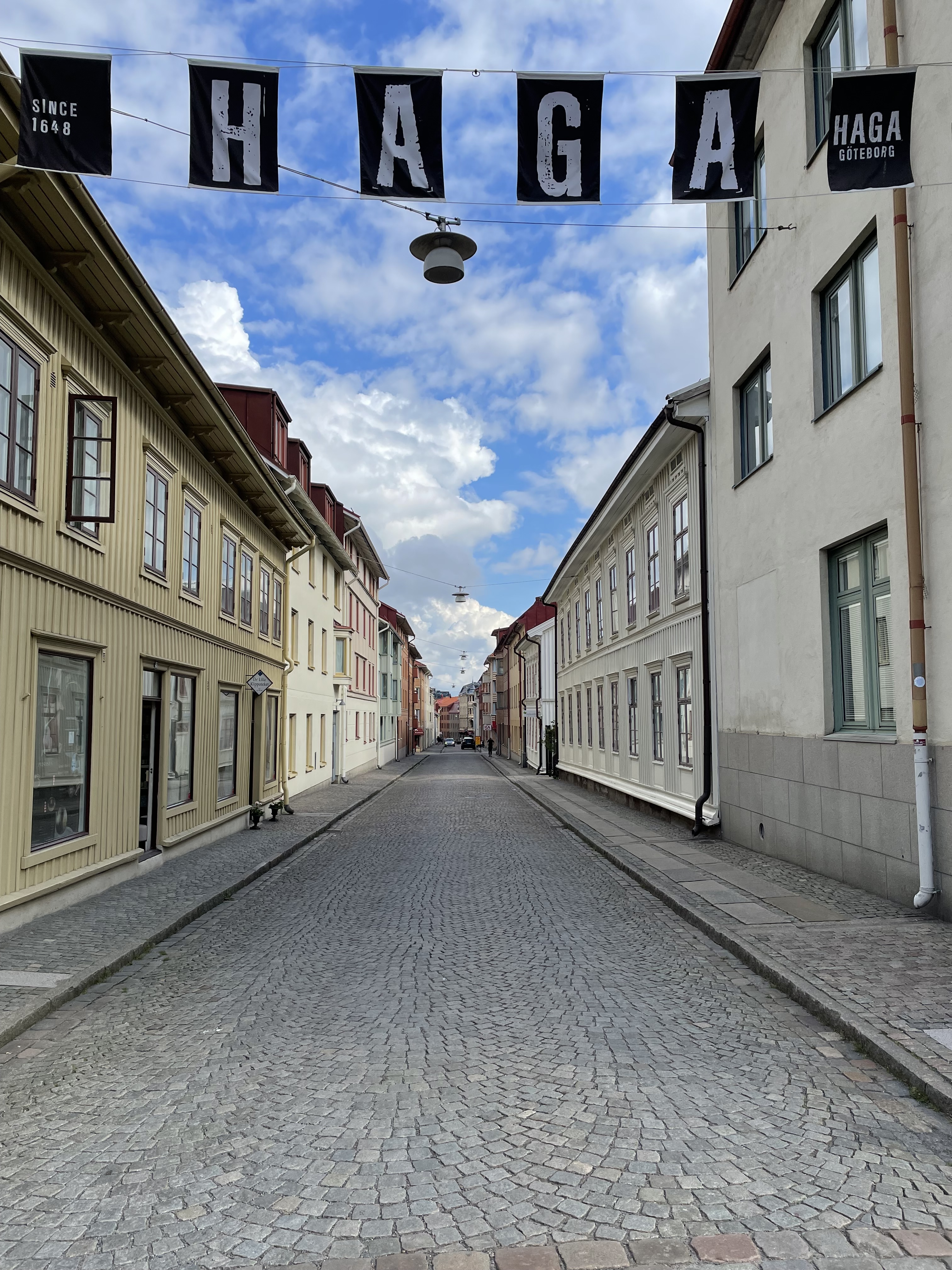
Haga commercial street
Haga
Typical Helsinki street view
One of many archways hinting at interior courtyards . . . this one in Helsinki
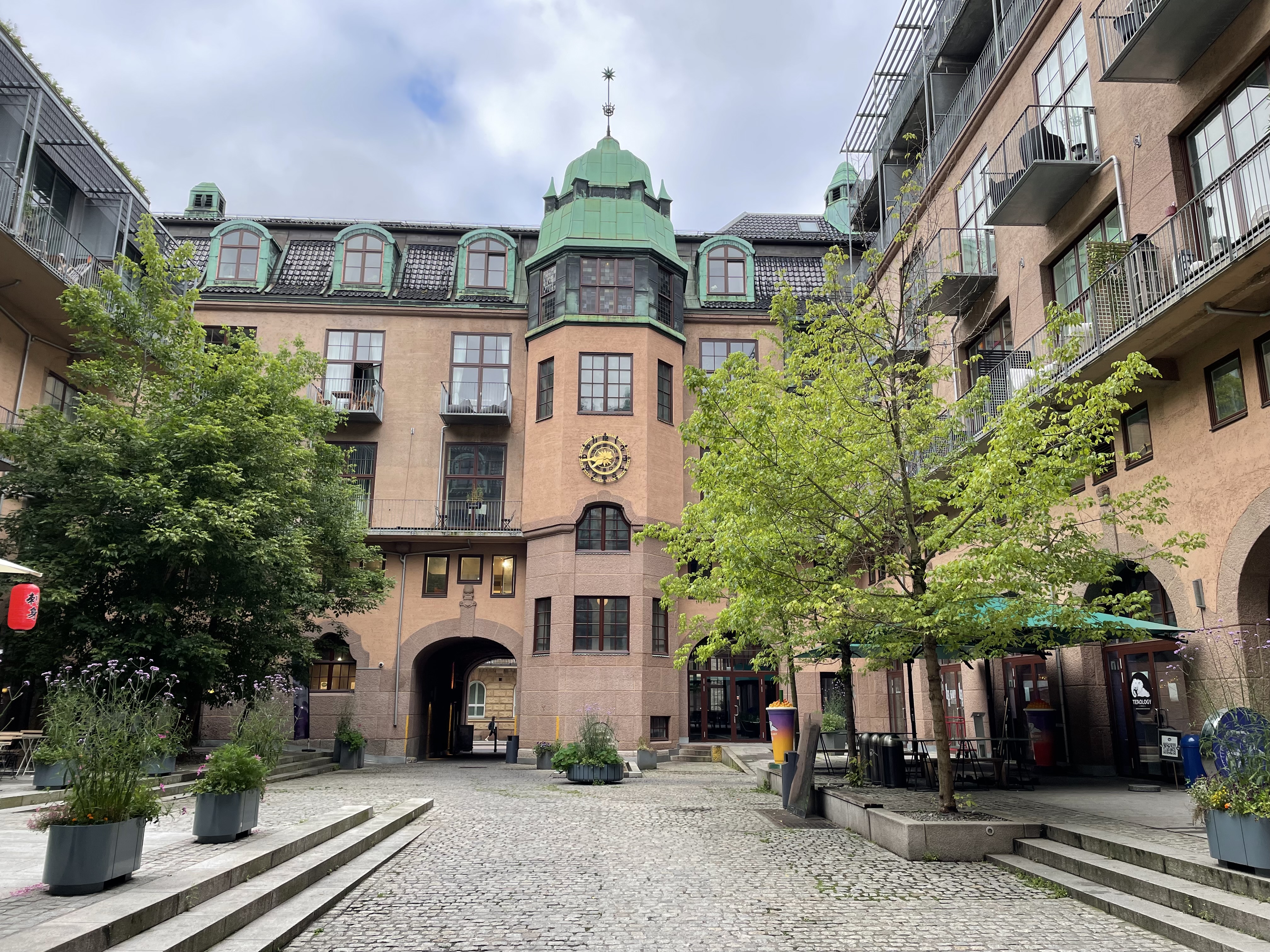
And one of those courtyards where I was able to wander around . . . this one in Oslo
Oslo
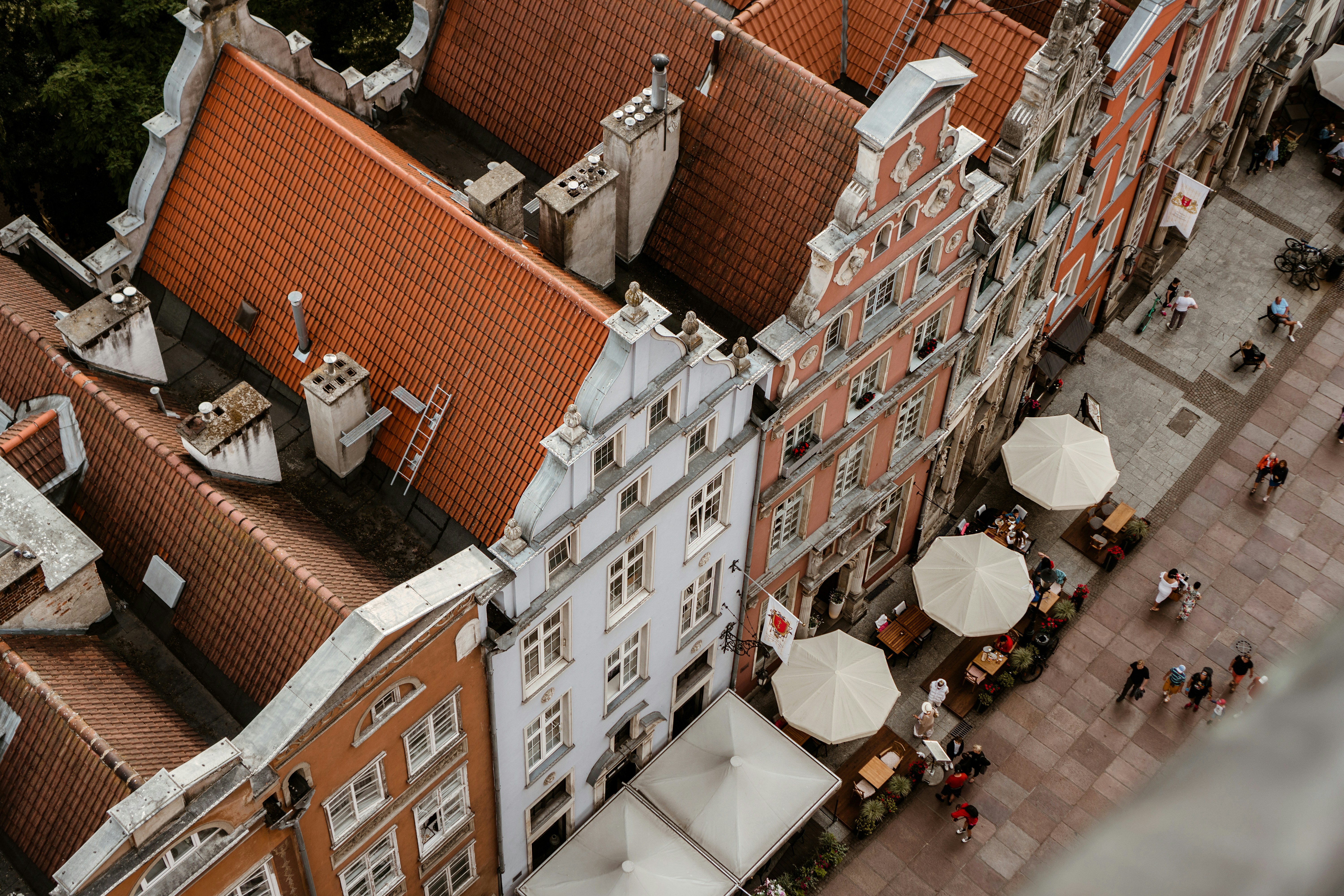
Gdansk (credit: Unsplash)

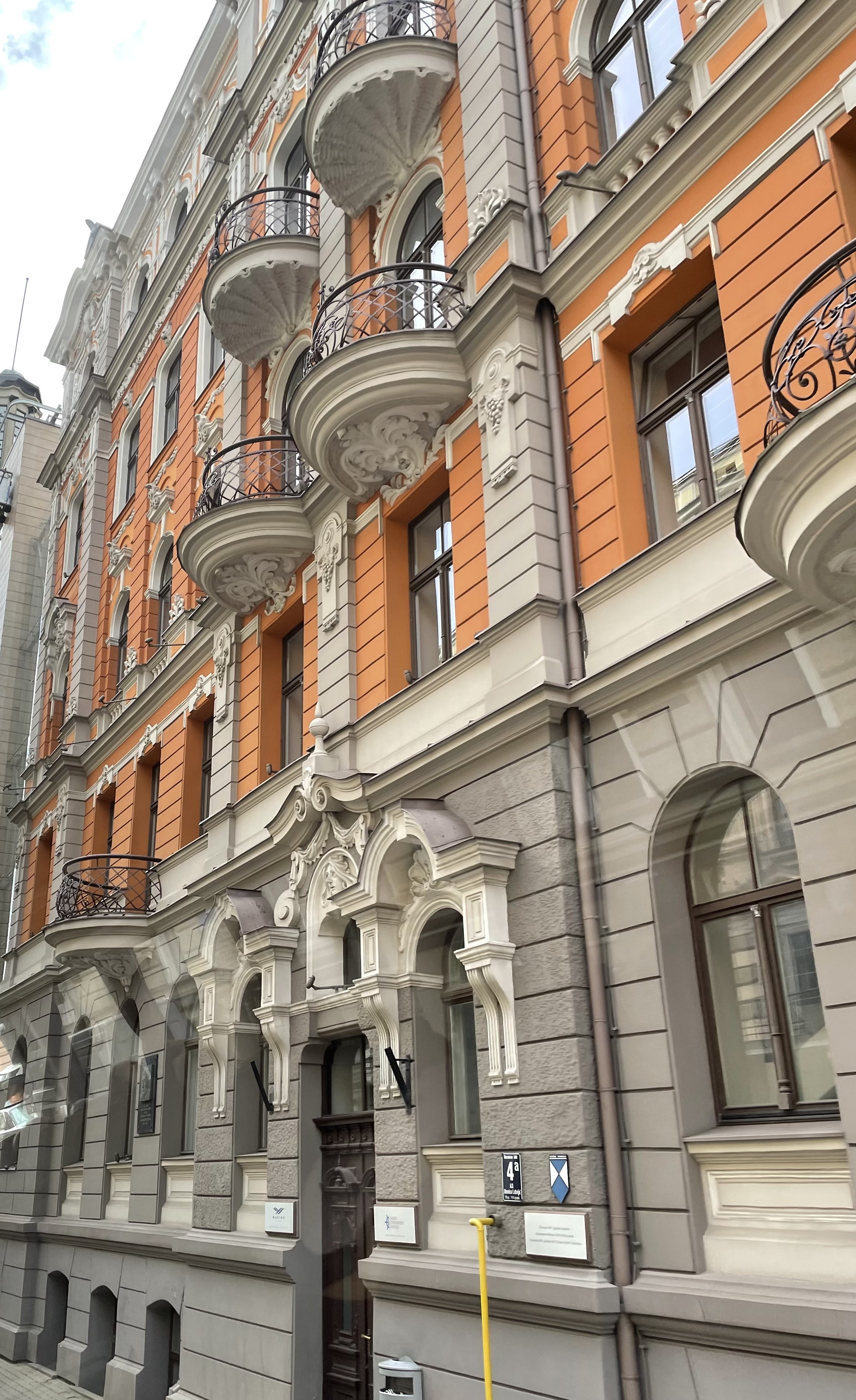
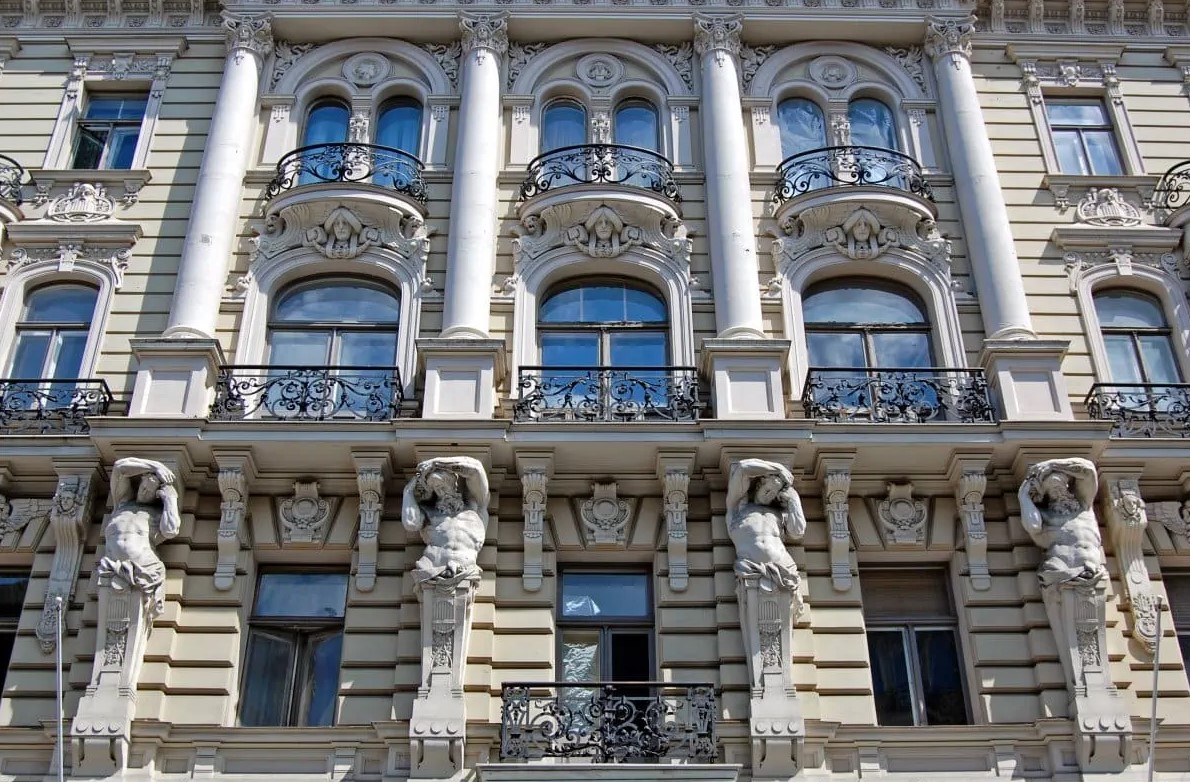
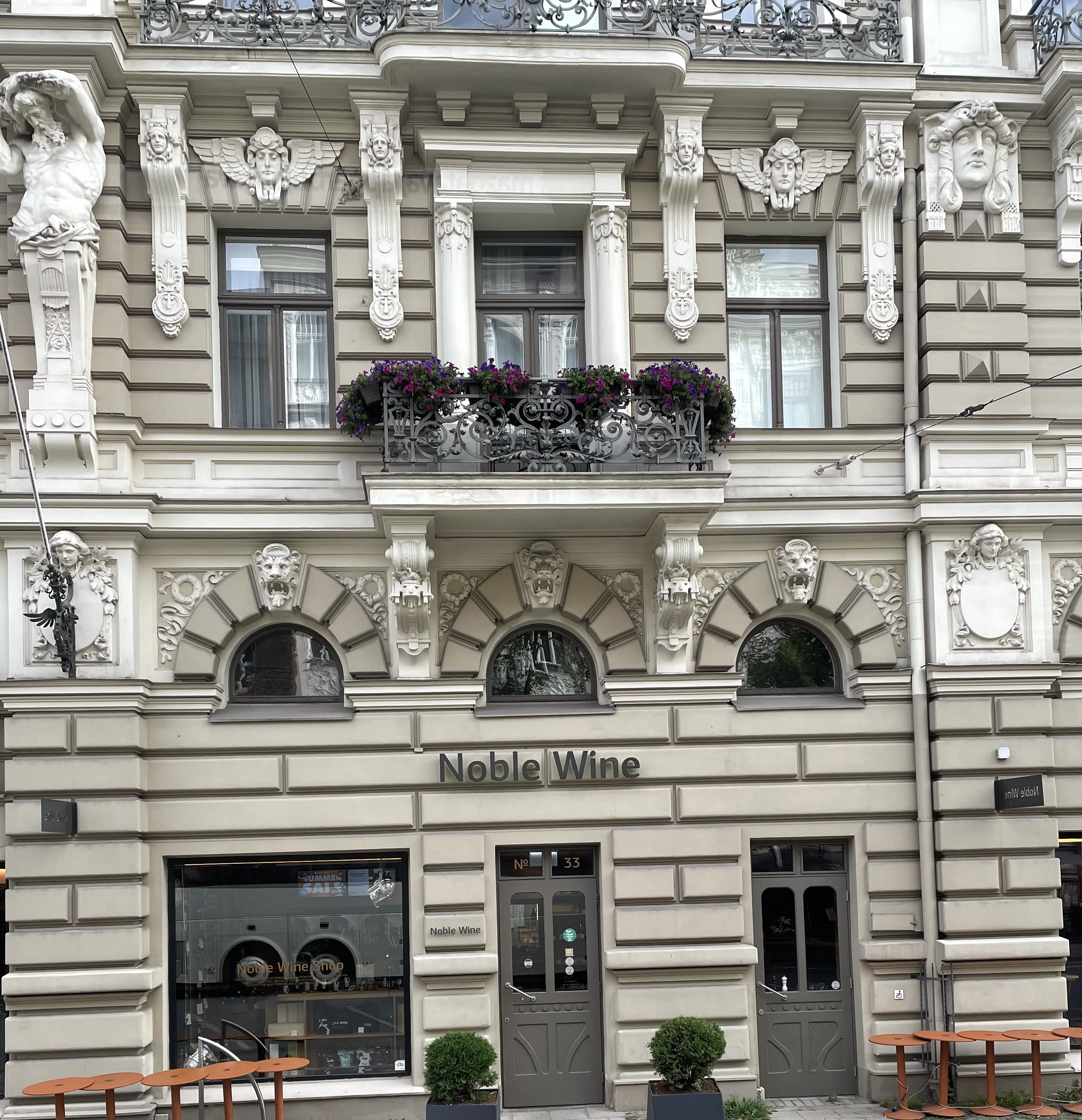
In the early 1900’s Riga became the European city with the highest concentration of Art Nouveau architecture. There are approximately 50 buildings of high architectural value in the medieval section of the city and more than 300 in the rest of the Historic Center.

Credit: Unsplash

Virtually every city we visited mixed modern and historic buildings together, with varying degrees of success.

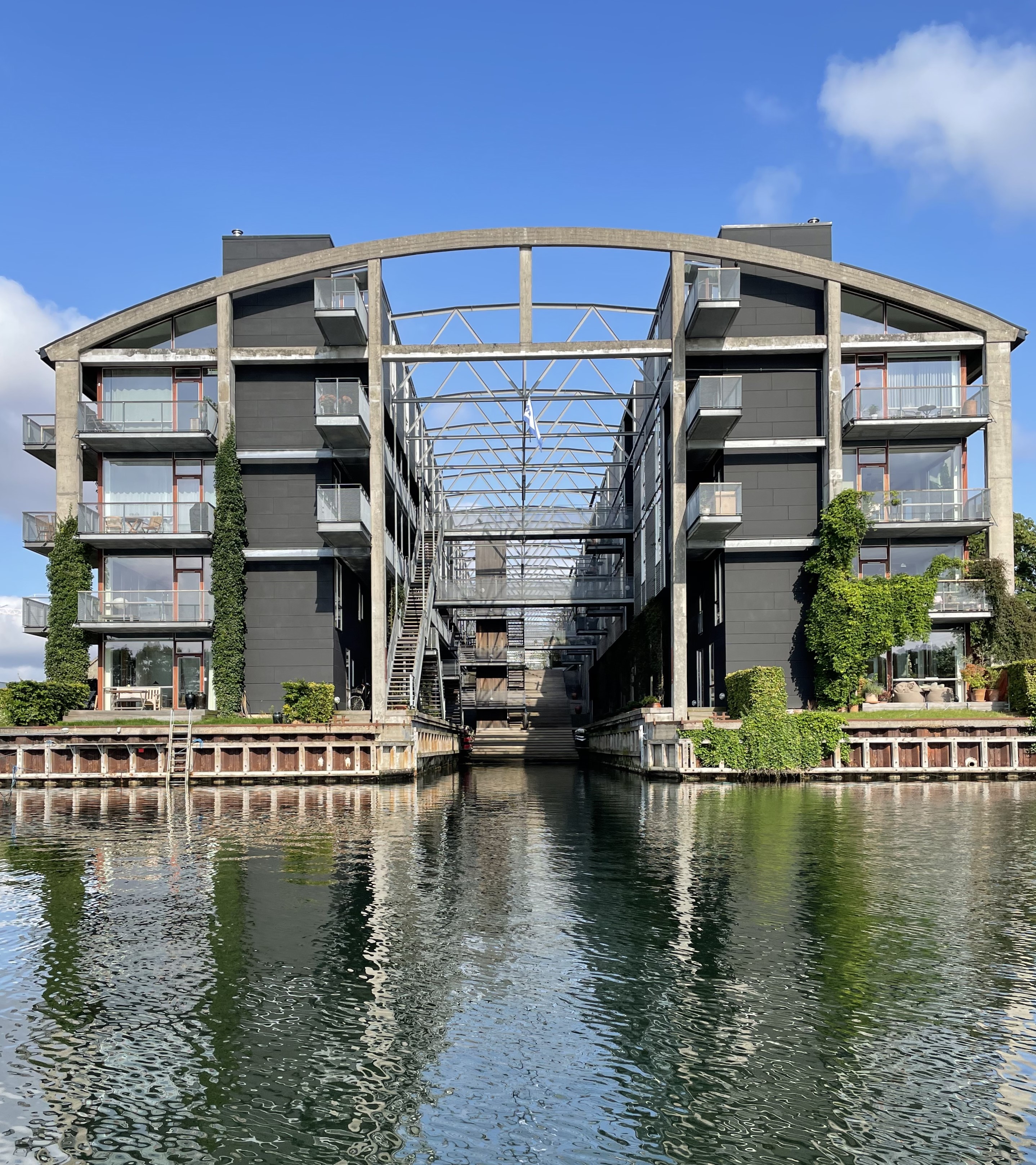
New housing along the canals in Copenhagen
Copenhagen’s Opera House
Norwegian Opera House in Oslo
Oslo
Riga’s central library
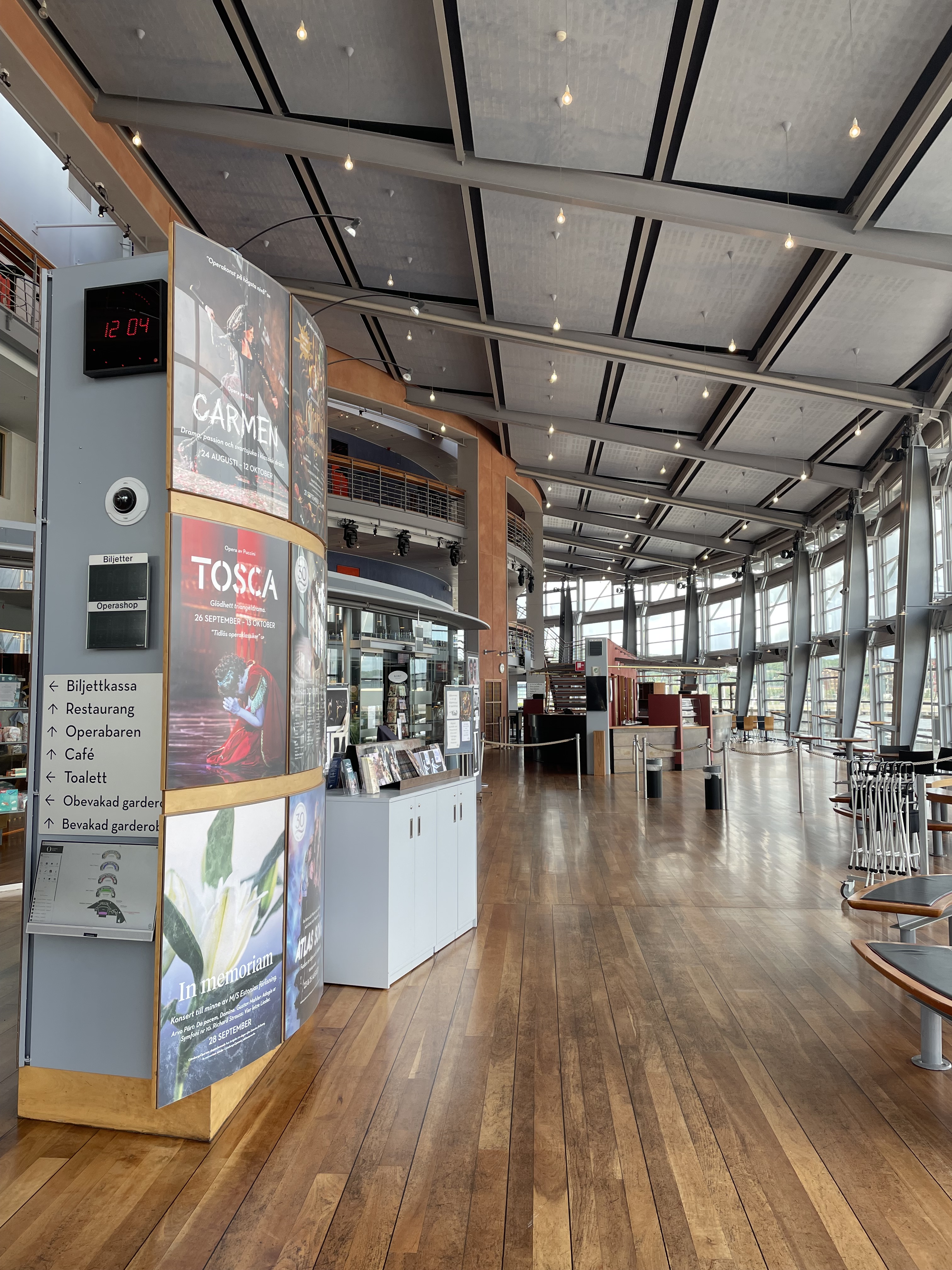
Front hall of the Gothenburg Opera House
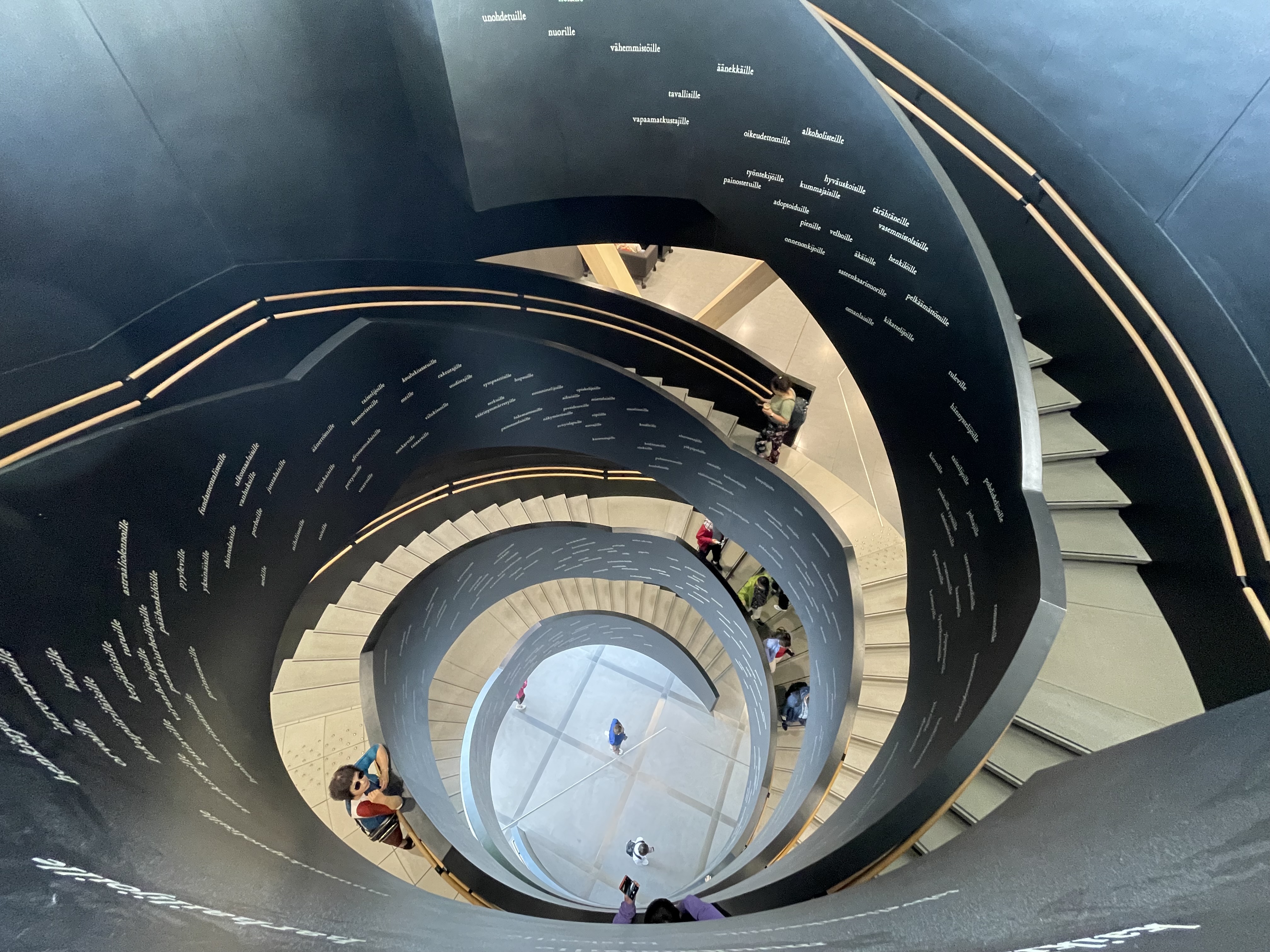
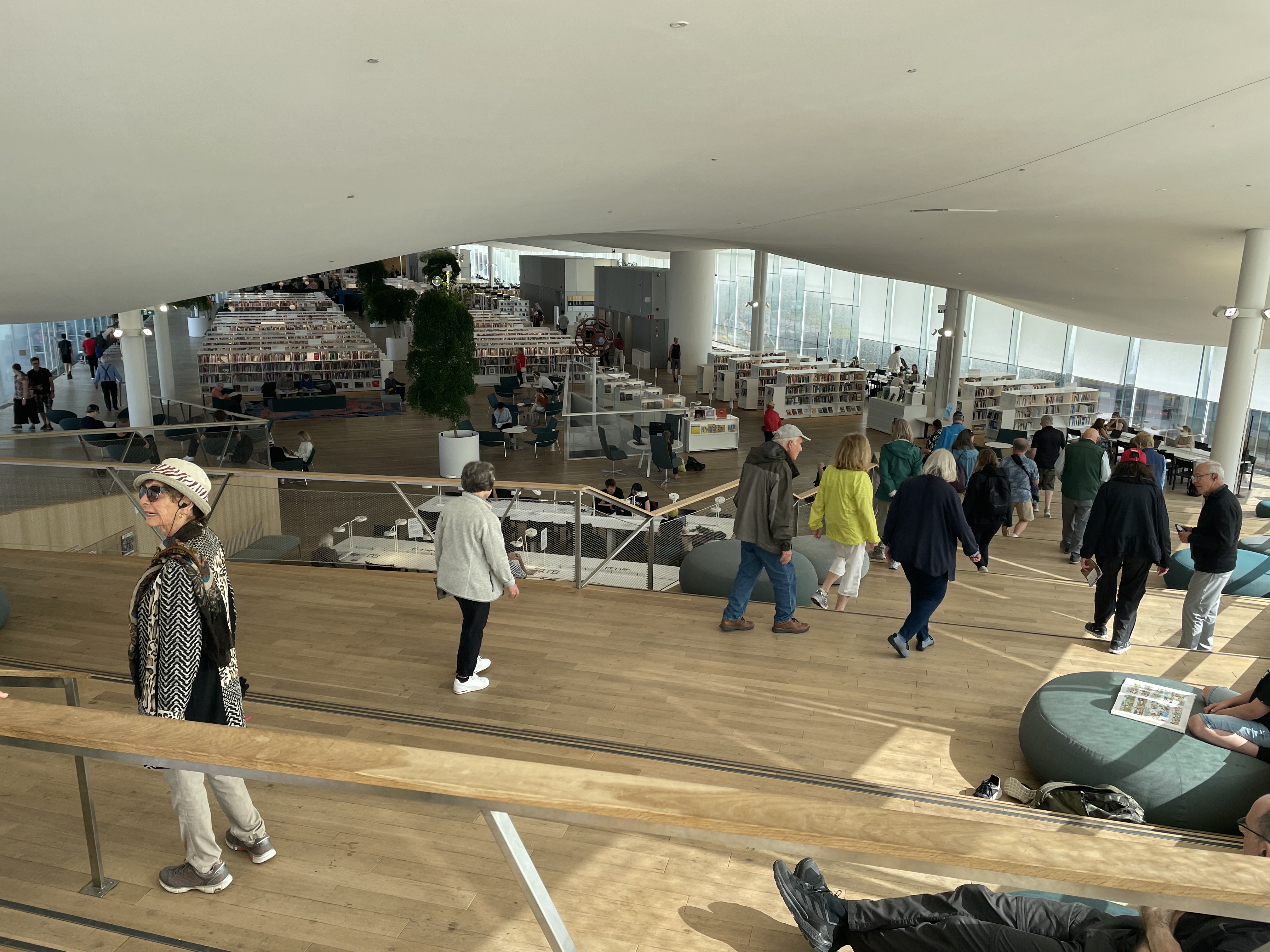
Interior staircase at the Helsinki Central Library

Expanding our understanding of history

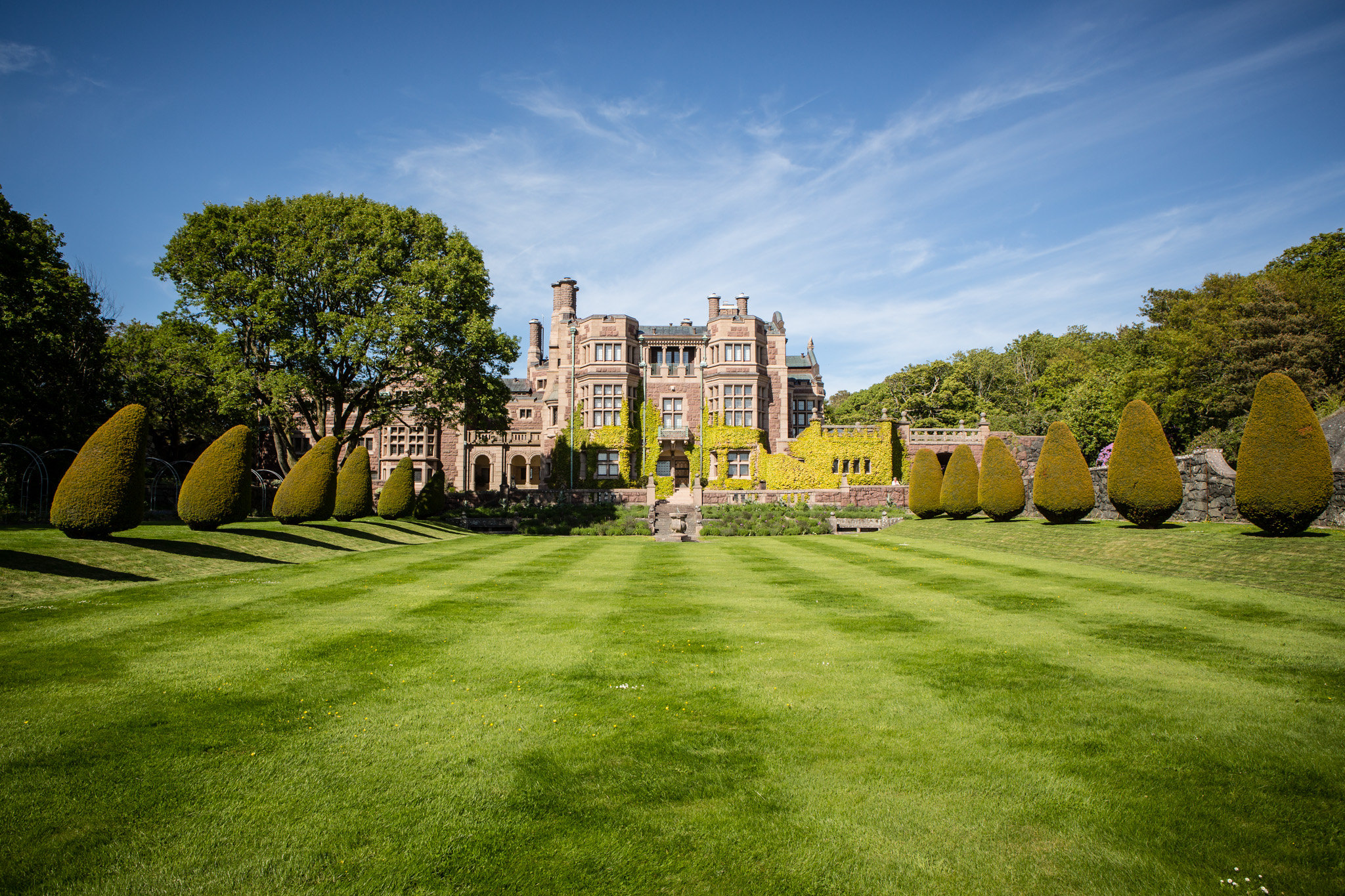
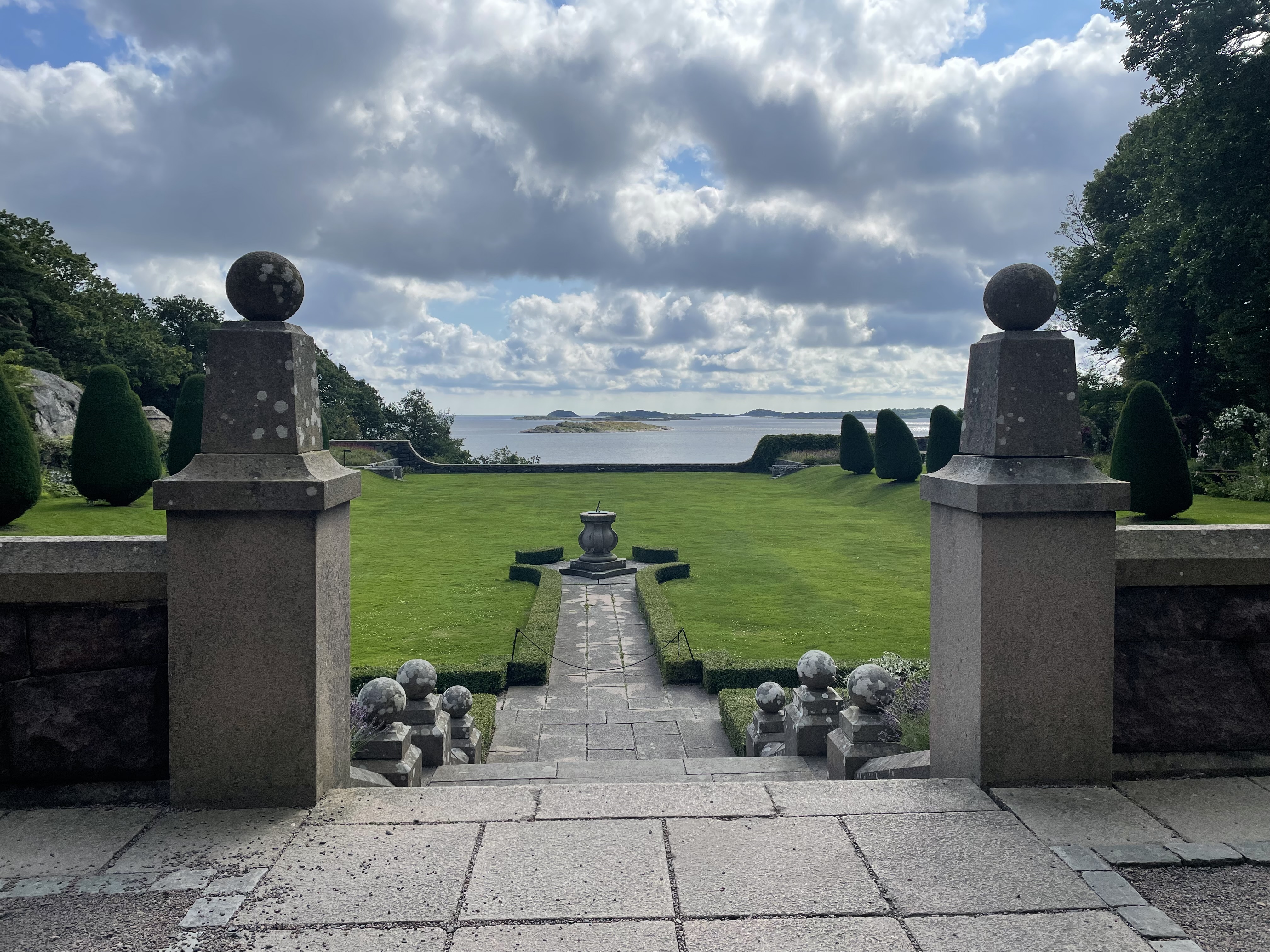
Tjolöholm Castle, built in the Swedish countryside between 1898 and 1904 by James Fredrik and Blanche Dickson, provides a somewhat different way to look at the question of how older places help shape our identity. The Tudor castle, gardens, and surrounding village were built for a wealthy merchant and may remind us of the grand homes of the Gilded Age in the US—places such as Kykuit, Lyndhurst, or Filoli, all National Trust Historic Sites.

Tjolöholm Castle (credit: Unsplash)

The Castle was largely completed under the direction of Blanche Dickson, as her husband passed away shortly after construction began. She had a vision and drive that was all her own, also commissioning a village with worker’s cottages in the National Romantic style. Her unquenchable ambitions turned the estate into a complete community. She built a castle church and a town hall where the estate’s workers could meet. The estate evolved into one of Scandinavia’s leading Arts and Crafts properties.

Credit: Unsplash
Castle church

In recognizing the role of a female in the building’s conception, construction, and evolution, I am reminded of two National Trust sites in the US where identity has evolved over time through study and interpretation: the Edith Farnsworth House and Cooper-Molera Adobe.

Come experience the world!

National Trust Tours are a great way to see the world and meet extraordinary people. Come join us on a future adventure.

With our friend Jan from Chicago at Tjolöholm Castle. We first met Jan this winter when she joined us on the Costa Rica and Panama tour
Enjoying a summer sunset on the Baltic Sea
Seeing the world with our friends Kerry and Frank from Washington
Candice enjoys a dip in the sea during a Finnish sauna experience
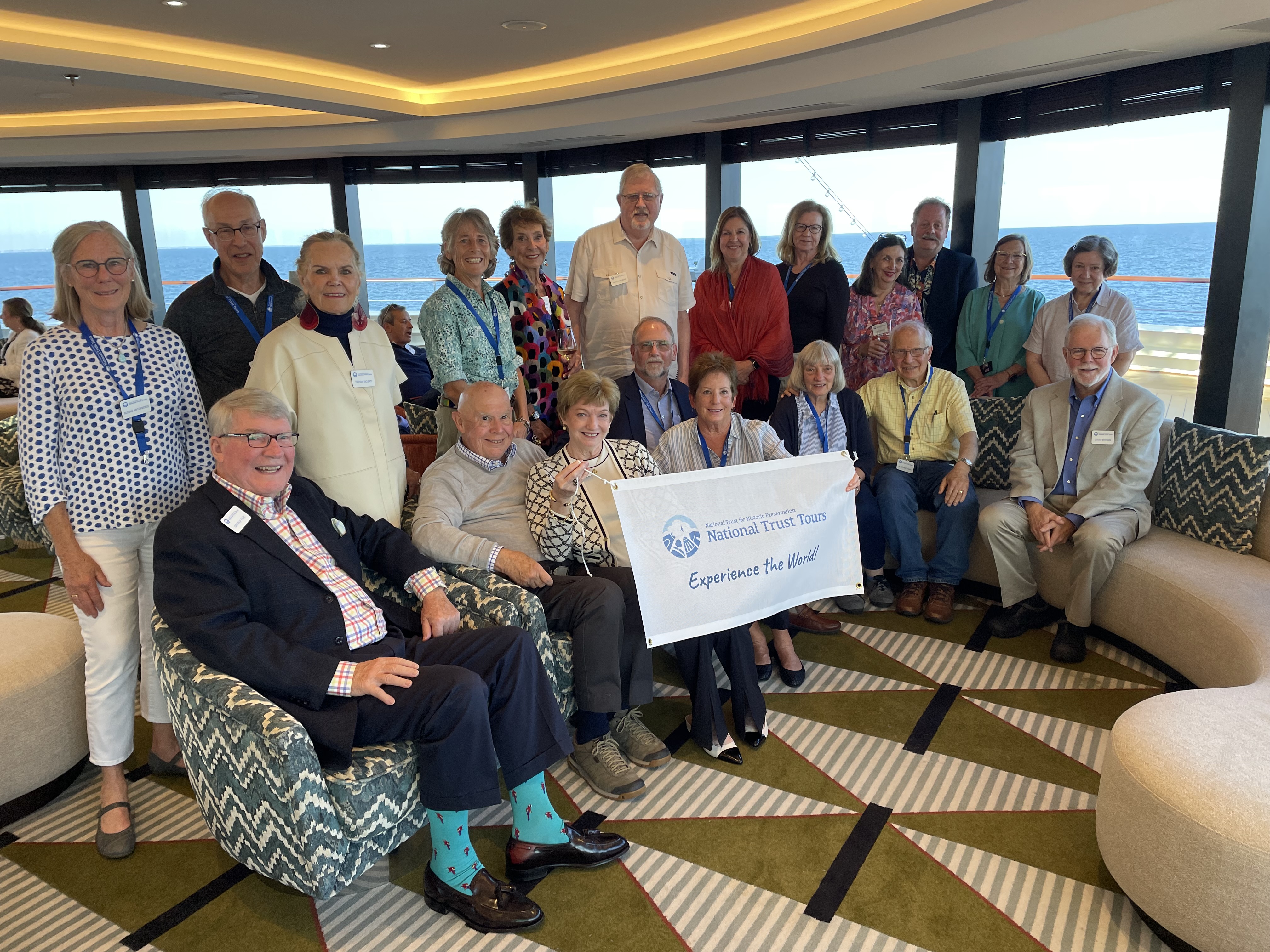
NTT travelers on the Scandinavia and Baltic Sea tour

More to come . . .

DJB


*For other posts about the Scandinavia and Baltic Sea trip see:


Photos by DJB except for a few additions from Unsplash

Roots music from Charm City

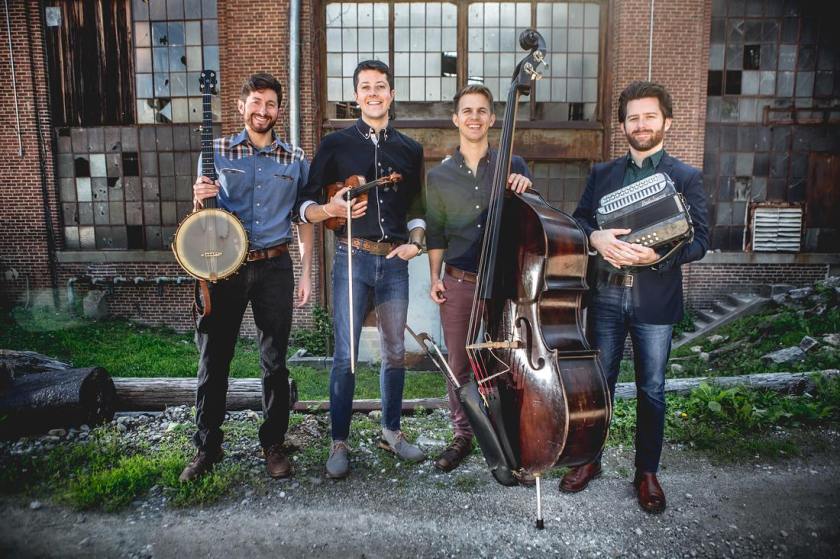
Charm City Junction is a Baltimore-based acoustic roots quartet that is steeped in the music of Ireland and Appalachia yet not afraid to try new sounds.

Formed in 2014, Charm City Junction is Patrick McAvinue, 2017 IBMA Fiddle Player of the Year; clawhammer banjo wizard Brad Kolodner; button accordion player Sean McComiskey; and bassist Alex Lacquement, who “drives the train, locking everything together with his commanding and tasteful choices.” While “drawing from separate musical backgrounds, the four members have found a common ground on which to develop their unique approach.”

I’m most familiar with the work of Kolodner, who in addition to hosting shows on Folk Alley, often plays in the region with his father—hammered dulcimer master Ken Kolodner. All four musicians, however, bring strong musical sensibilities to this engaging and energetic band.

The group’s most recent album is Salt Box, released in February of this year. Ain’t Gonna Work Tomorrow, from the new album, is a nice introduction to the group’s dynamics and music. McAvinue has some tasty mandolin licks on this tune, and the button accordion break showcases the way the band brings disparate sounds into a well-crafted whole.

Each member of the group gets a chance to shine on the instrumental Jaybird, from the group’s 2018 album Duckpin, while Boozy Suzy, from the same album, is a playful “leaving town” song.

The band performs frequently in the Baltimore-Washington region, most recently at Washington’s Glen Echo Park and Baltimore’s Patterson Park. They also venture out to larger venues, such as the National Folk Festival and the prestigious Grey Fox Bluegrass Festival.

To take this out, enjoy an earlier Grey Fox performance of the fiddle tune medley Torn Jacket and Come West Along the Road.

More to come . . .

DJB

Photo credit: charmcityjunction.com

The crescendo moment in American history

We often rely on myths to tell our stories, assuming that the historical narrative would be too dry to educate and inspire. But a skilled historian can clear away myth while leaving the reader with a sense of the color and passion of critical events in the past.

Recognizing the difference between myth and history is important in understanding both our past actions and present choices as a nation.

Revolutionary Summer: The Birth of American Independence (2013) by Joseph J. Ellis combines original accounts, insightful analysis, and first-class storytelling skills to bring the reader into the critical summer of 1776, when the future of American independence was very much in doubt. Few historians write as knowledgeably and effectively about the revolutionary period in America as Ellis, who in this short work brimming with fresh perspective addresses what he calls the “crescendo moment” in American history.

“During the five months between May and October, a consensus for American independence emerged and was officially declared, the outlines for an American republic were first proposed, the problems that would shape its future were faced and finessed, and the largest armada ever to cross the Atlantic arrived to kill the American rebellion in the cradle, which it then very nearly did.”

Throughout his work, Ellis skillfully intertwines the political and military narratives that must be seen in tandem to understand how the idea of America was born and survived its infancy. He notes that these experiences were two sides of the same coin, with the political consensus for independence that formed in June and July being driven by “a widespread loathing of the looming British invasion of New York.” He discusses how the Continental Congress made the deliberate decision to avoid the slavery question—a decision with hundreds of years of consequences—in order to bring all the colonies together to fight the British. The challenges of an occupying army in a distant land foretell our own difficulties two centuries later in Southeast Asia and the Middle East. Alliances made for convenience between colonies with very different agendas were masked for decades by the myth of a shared sense of American nationhood that simply didn’t exist in 1776.

John Adams is clearly a pivotal figure in the Ellis story. Instead of the “flaming radical” reputation he had earned in leading the New England colonies toward independence, Adams emerges during this critical summer as a rare “conservative revolutionary.” He is willing to compromise to reach his larger goal and he is willing to support others—Thomas Paine, Benjamin Franklin, Thomas Jefferson—who bring their extraordinary skills forward at crucial moments. Throughout, Ellis also places George Washington at the front of a military band that could barely be described as an army, to face the formidable Howe brothers. Through a combination of personal bravery, a willingness to gamble, timidity by the British, and sheer luck, Washington and his troops fight just enough to stymie the conflicted Howes and escape from what seemed an inescapable trap he had allowed himself to be lured into on Manhattan. The military narrative reads like a mystery where we know the ending but are constantly finding new facts and perspectives to broaden our understanding of the story.

Battle of Long Island—August 27, 1776—showing the Delaware militia, by Domenick D’Andrea via Wikimedia commons.

The military defeats in New York this summer were not enough to keep the independent colonies from making the political case that America was destined to succeed. They also helped solidify in Washington’s mind the necessity to prepare for, and fight, a long war, a slog that would eventually last eight years.

Even with a clearer understanding of the facts, Ellis ends by noting that there were fictions which were necessary if America was to turn its improbable military victories into long-term political success. Myth is important in telling national stories, and we see that in our understanding of the revolutionary era. However, our myths can grow, change, and inspire in different ways over time, an important lesson for the present era.

The other reminder that Ellis brings forward is that the idea of America is always under attack and requires diligent defense against the powers of oligarchy and minority rule. Sometimes the attacks against democracy come from without, but more often than not—as we see in our present time—those fights to limit the scope of America’s promise to one race and one gender come from within. The birth of independence is “untidy, improvised, and at times miraculous.” Our fight to maintain a democracy today can often be seen through that same lens.

More to come . . .

DJB

Top image: Lord Stirling leading an attack against the British in order to buy time for other troops to retreat at the Battle of Long Island by Alonzo Chappel via Wikimedia Commons

A tale of two harbor cities

Harbors have been important to cultural development for thousands of years. In making the case that the “bustling port cities” of ancient Greece and their emphasis on “fluidity, interchange and connectedness” gave birth to philosophy, Adam Nicholson writes about the way that place shapes how we think.

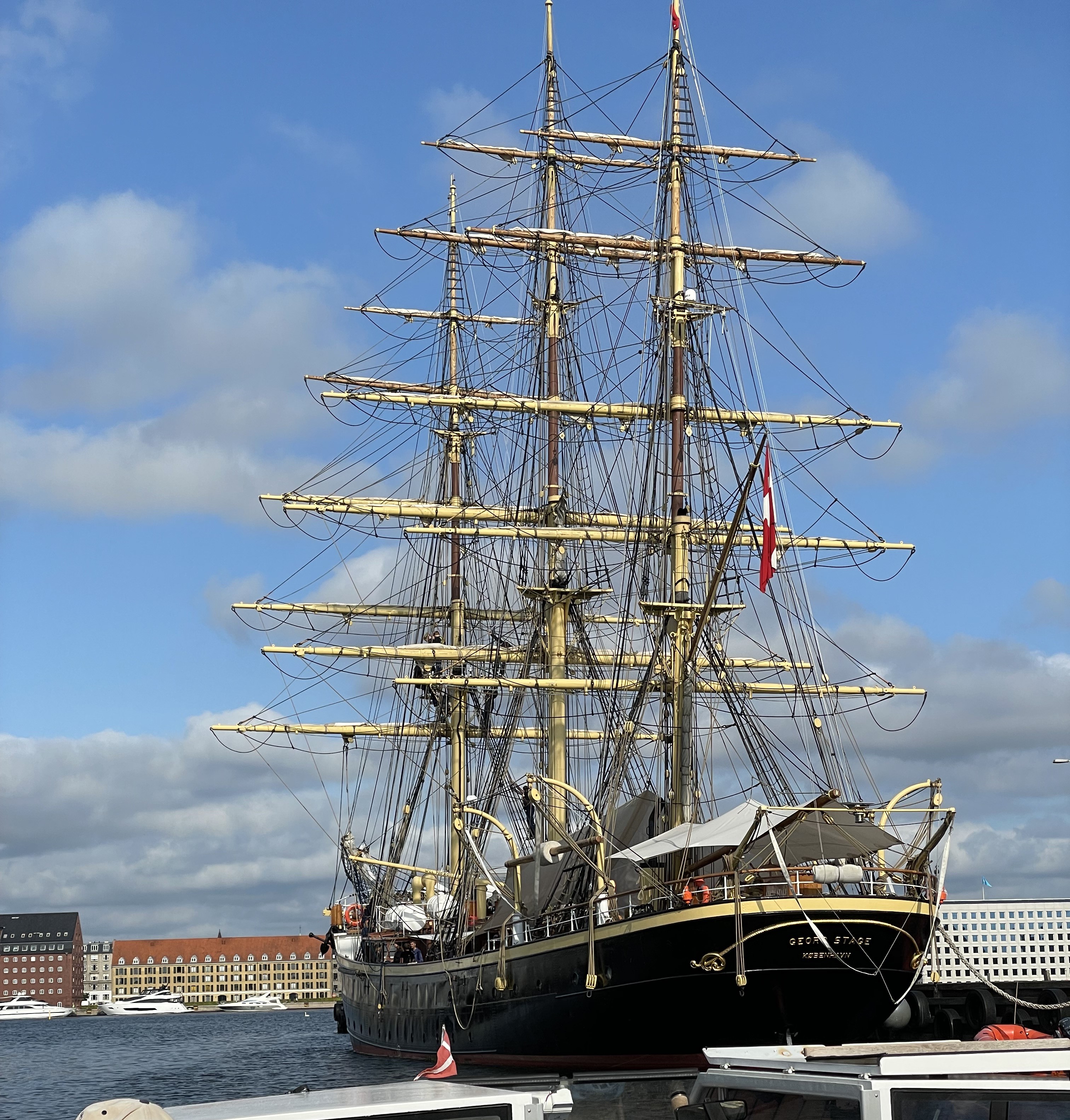
A sailing ship with the historic tall masts in Copenhagen’s harbor

Trade, along with the coming and going of peoples and ideas that trade brings, required “new ways of thinking about the world, of configuring our relationships with one another.” Nicolson calls this approach to life the “harbor mind” and it becomes a metaphor for thinking more expansively about a world that is always expanding before our eyes, in ancient times as well as today.

While on our recent visit to Scandinavia and the Baltic Sea with National Trust Tours, we visited eight harbor cities in seven countries, several of them Hanseatic League ports. The Hanseatic League was a medieval commercial and defensive network of merchant guilds and market towns in Central and Northern Europe, growing from the late 12th century through the 15th century. In its heyday, the Hanseatic League counted nearly 200 coastal and inner cities among its members.

But not all cities were part of the German-led network, and in fact some major ports fought to keep the Hanseatic League from their shores. This was part of the long history of warfare, conquest, independence, submission, and freedom that was a consistent theme in our travels across the Baltic Sea.

Rapid expansion, fluidity, and change are typical of ports even today, creating challenges for traditional approaches to preservation. On our travels we saw two distinct yet lively attitudes toward the marriage of past and present in cities at opposite geographic and cultural ends of the tour: Copenhagen, Denmark, perhaps the most western of cities (in more ways than one) we visited during our two weeks; and Tallinn, Estonia, on the eastern edge of the Baltic where trading routes from East and West have traditionally come together.

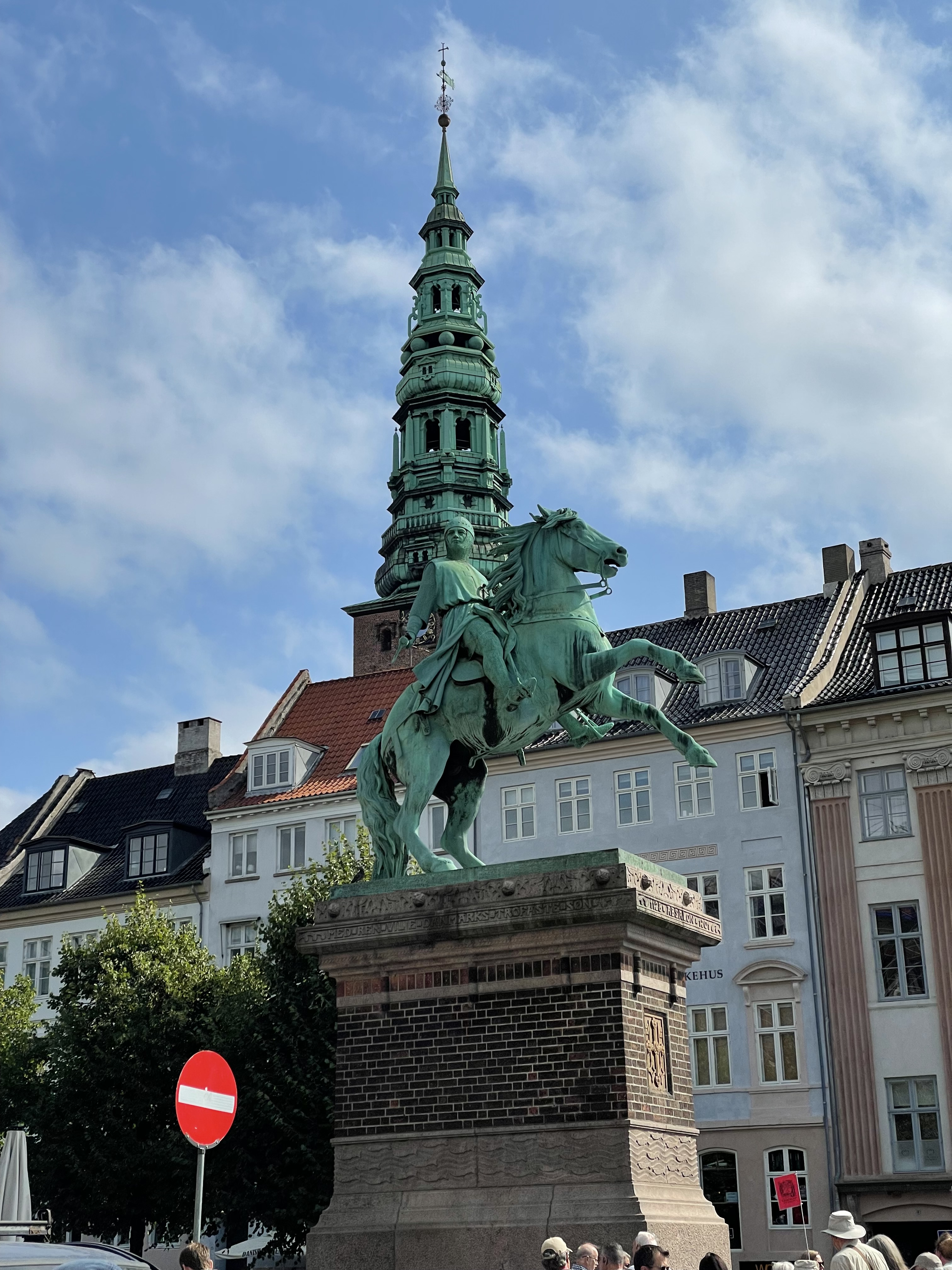
Copenhagen

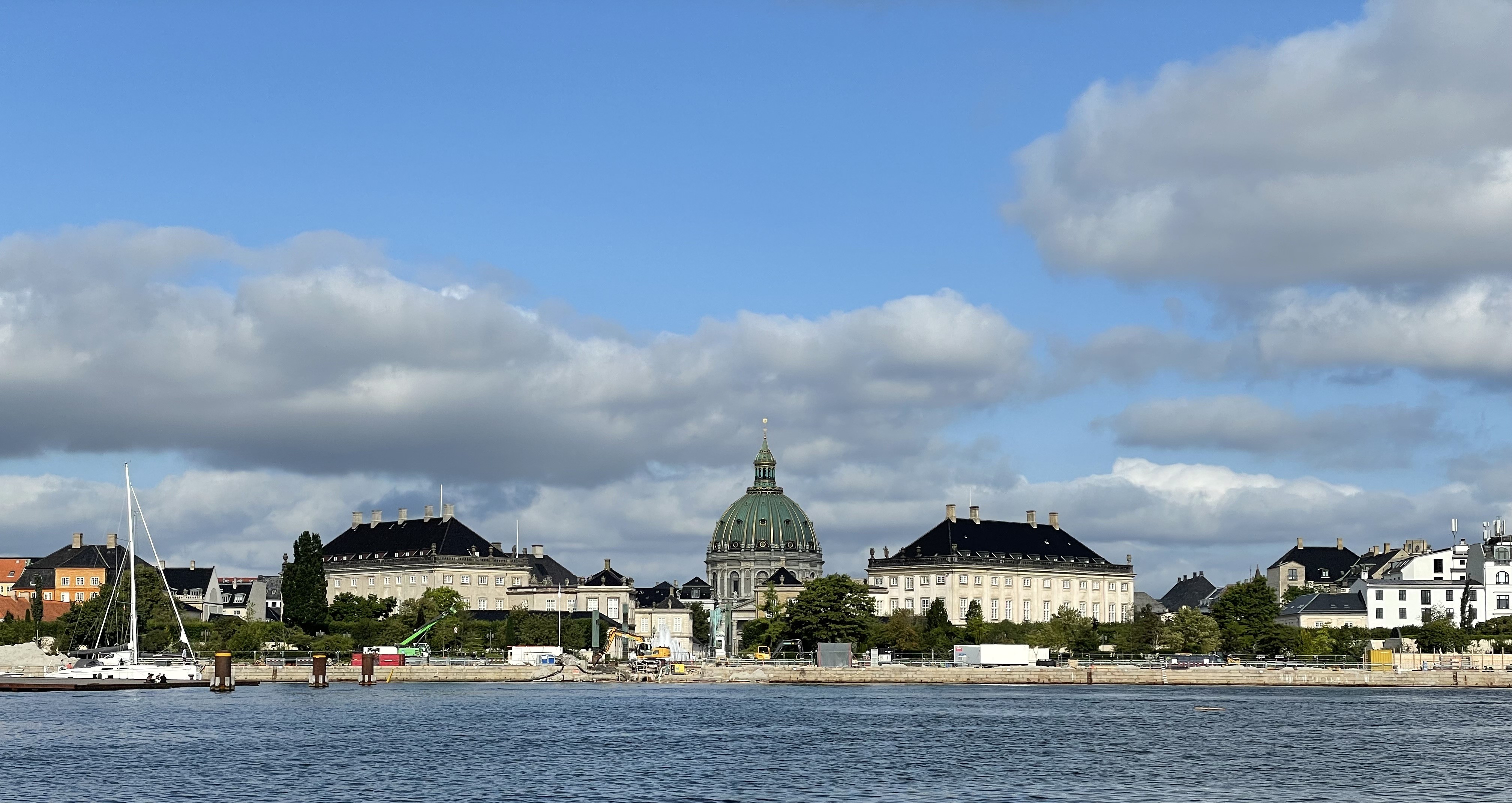
View from the harbor into Copenhagen

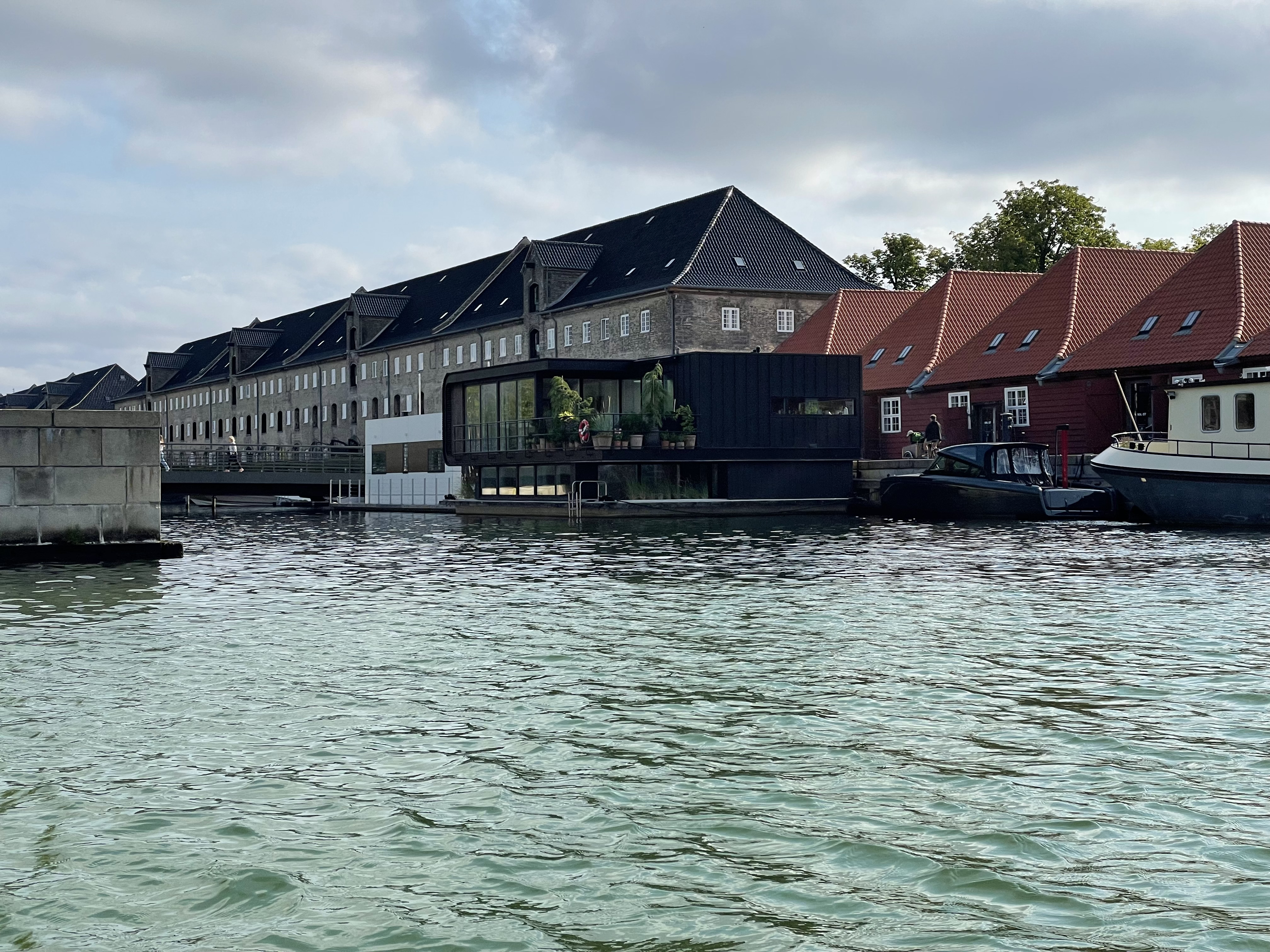
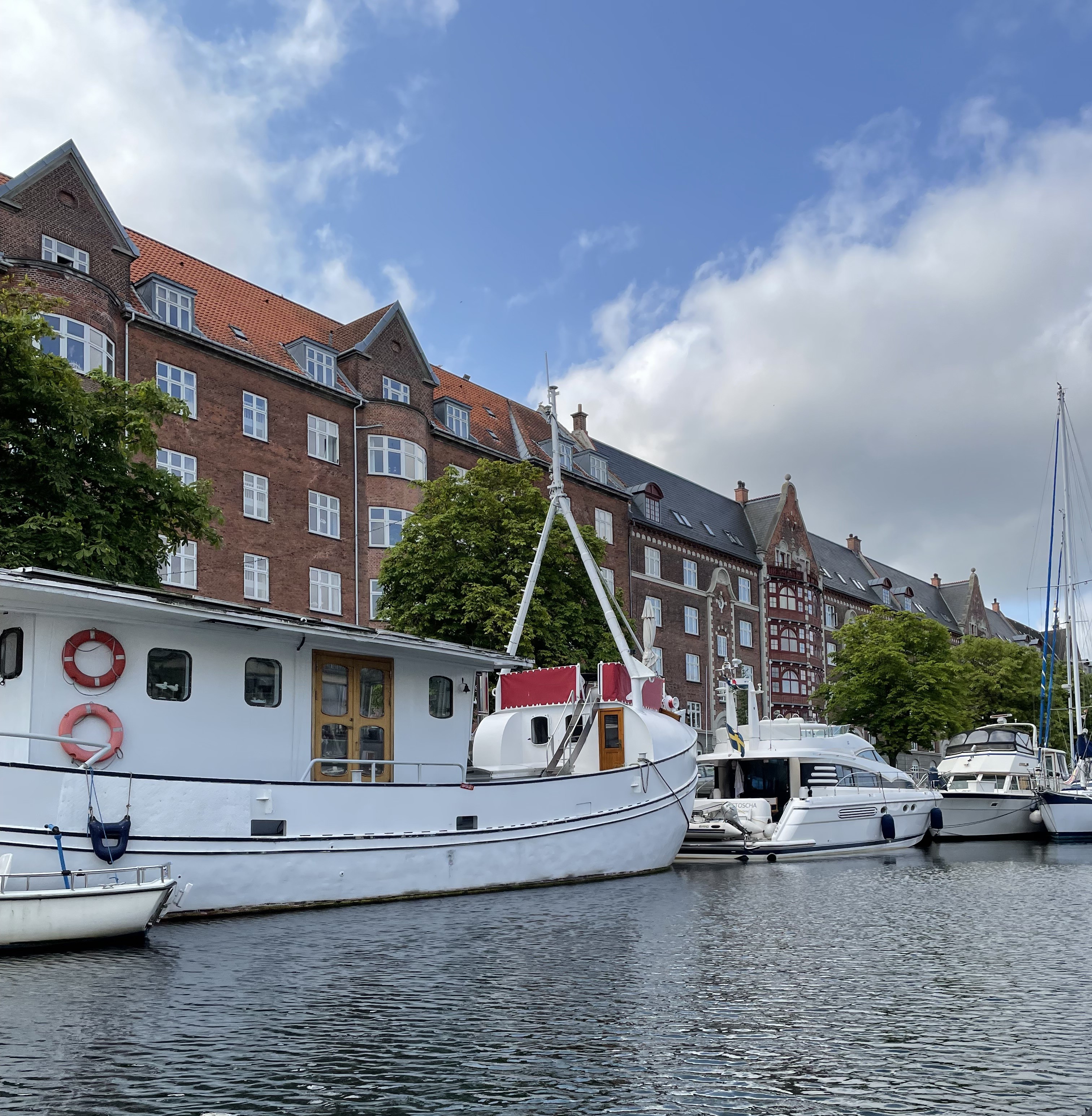
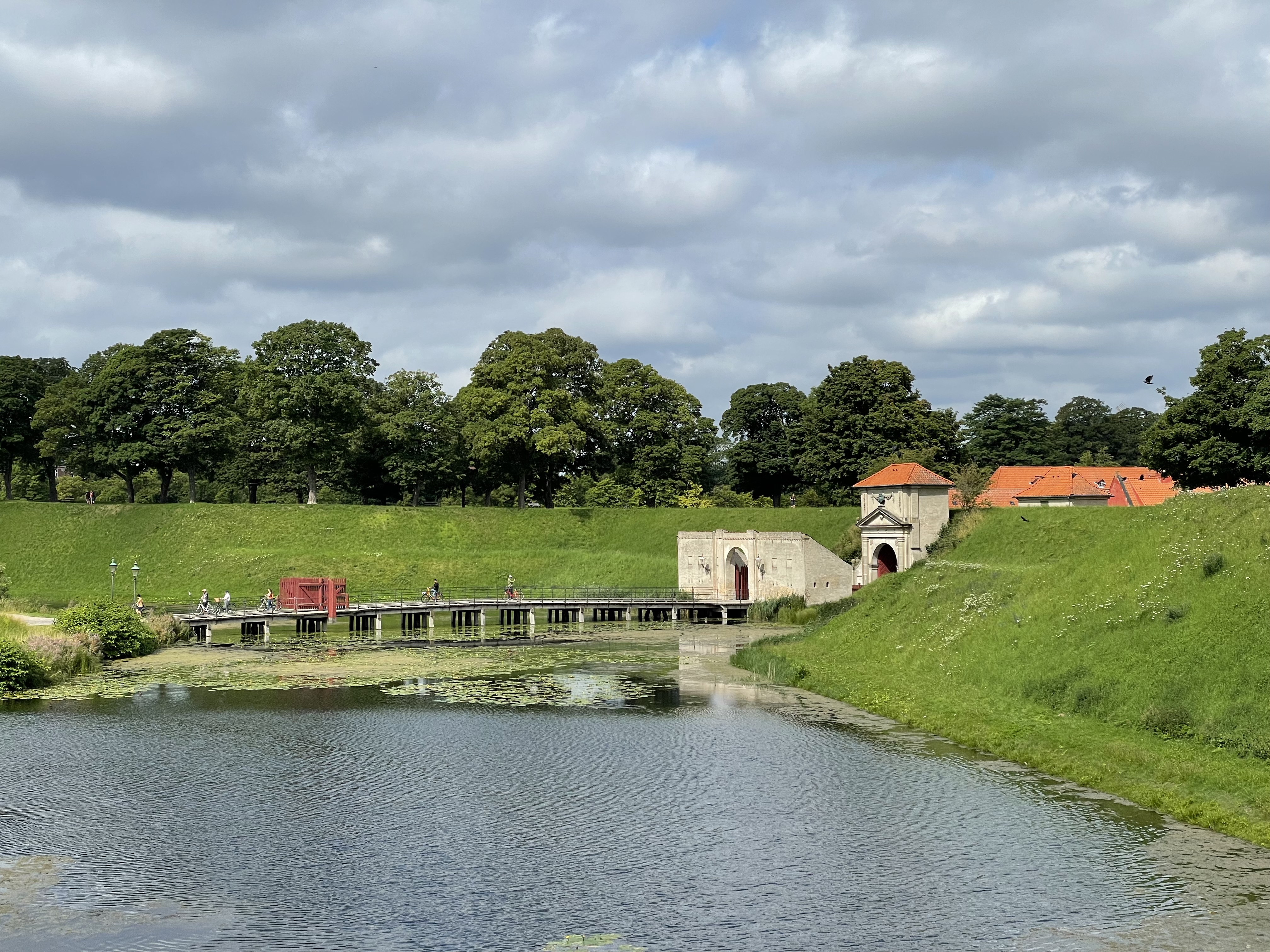
Early in our tour we boarded a small boat for a waters-edge tour of the harbor and canals of Copenhagen, a city where the harbor seems to flow throughout the old town. Initially we saw the military fortifications that protected the city’s edges, as the strategically located Copenhagen was one of those communities that fought the Hanseatic League. But this historic military and industrial area is rapidly being transformed, as older buildings are being repurposed (a favorite word in the city) and new construction is springing up on long-vacant land.

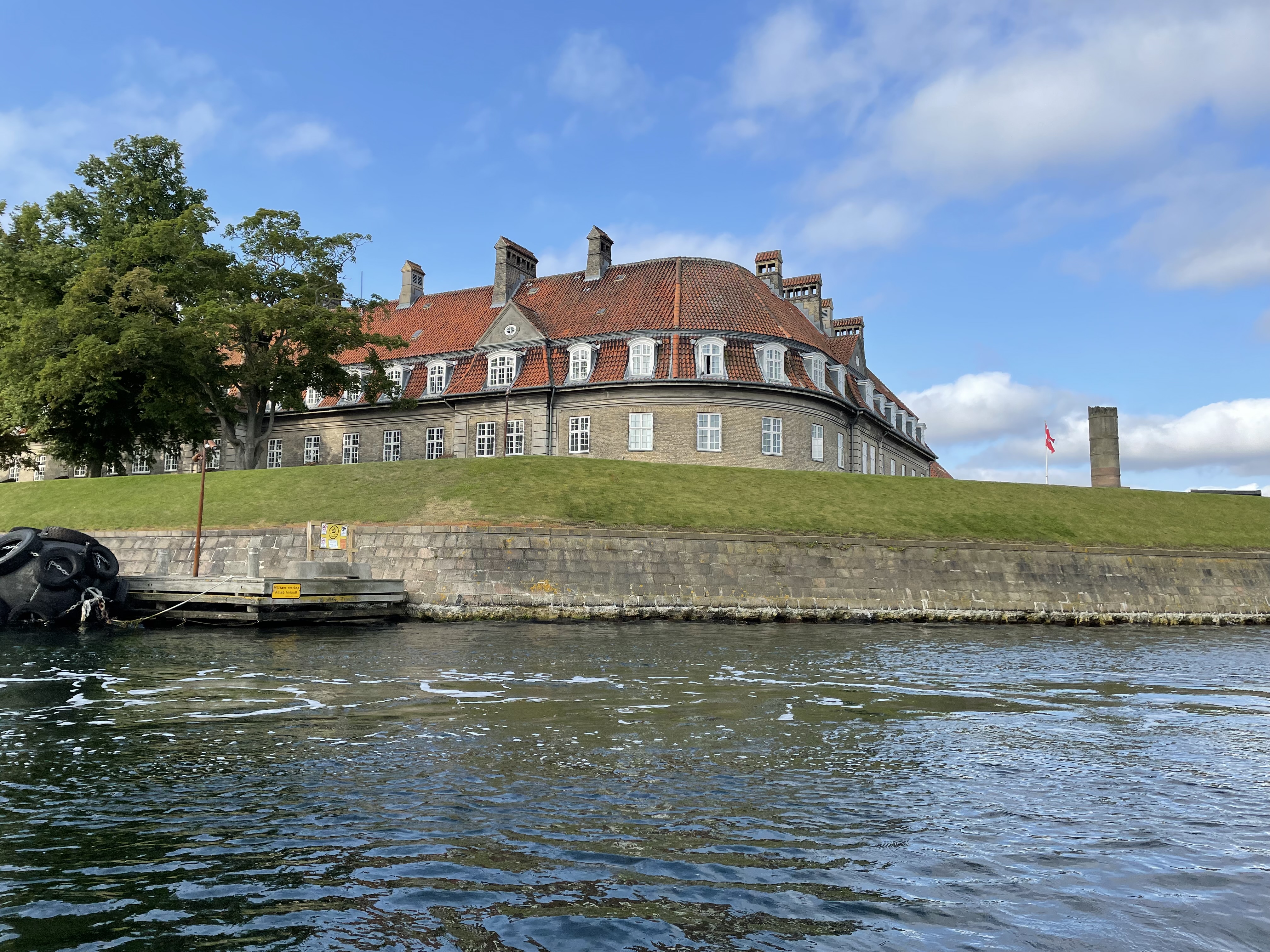
A reminder of Denmark’s military importance to Scandinavia and Europe
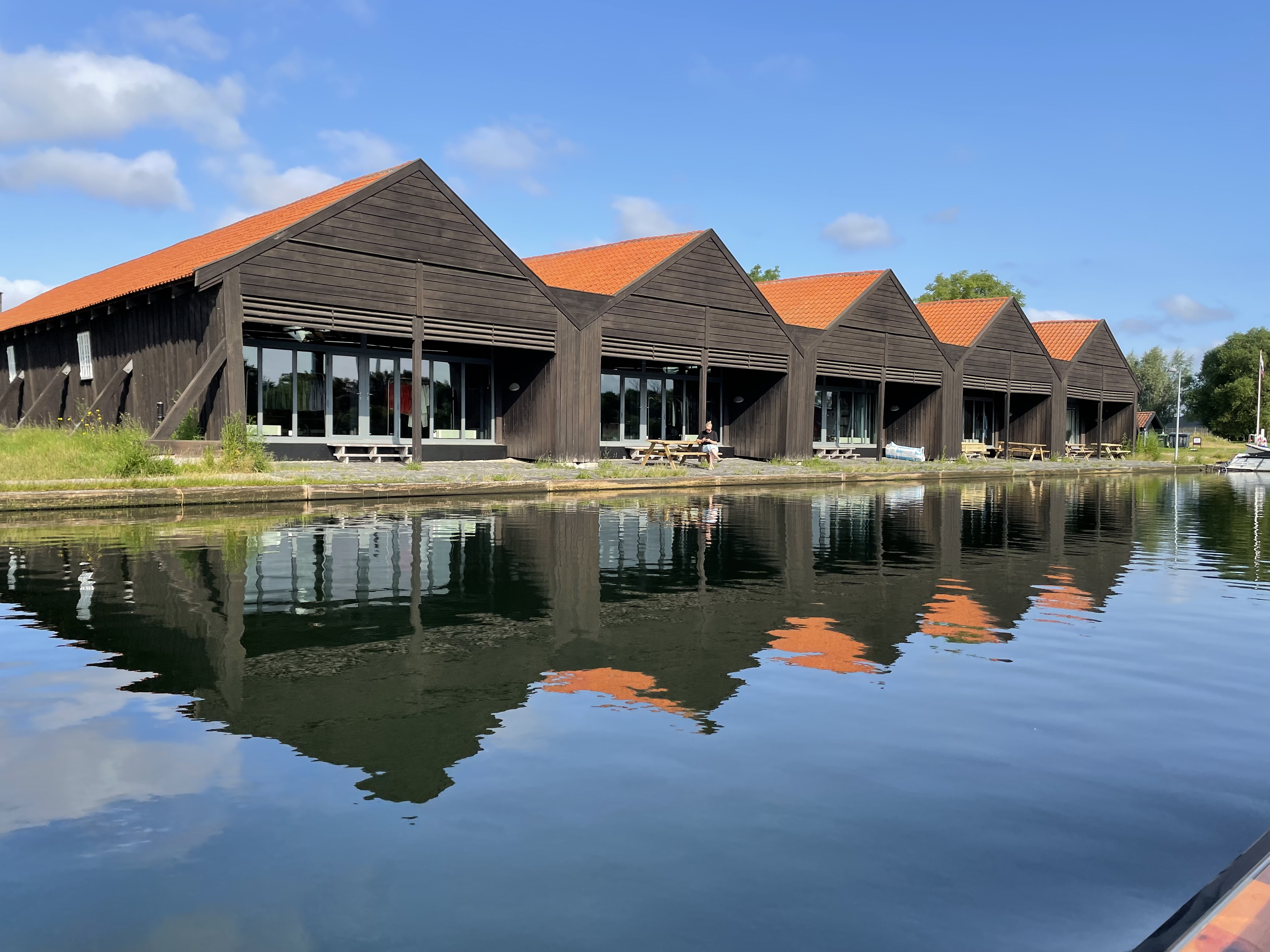
Repurposed buildings, now serving as artist live/work spaces

Most cultures agree that the spirit of place resides in its authenticity, a critical element in heritage conservation. Yet how do we find what is authentic in a rapidly changing environment?

Copenhagen’s new opera house finds a home in areas formally used for industrial purposes
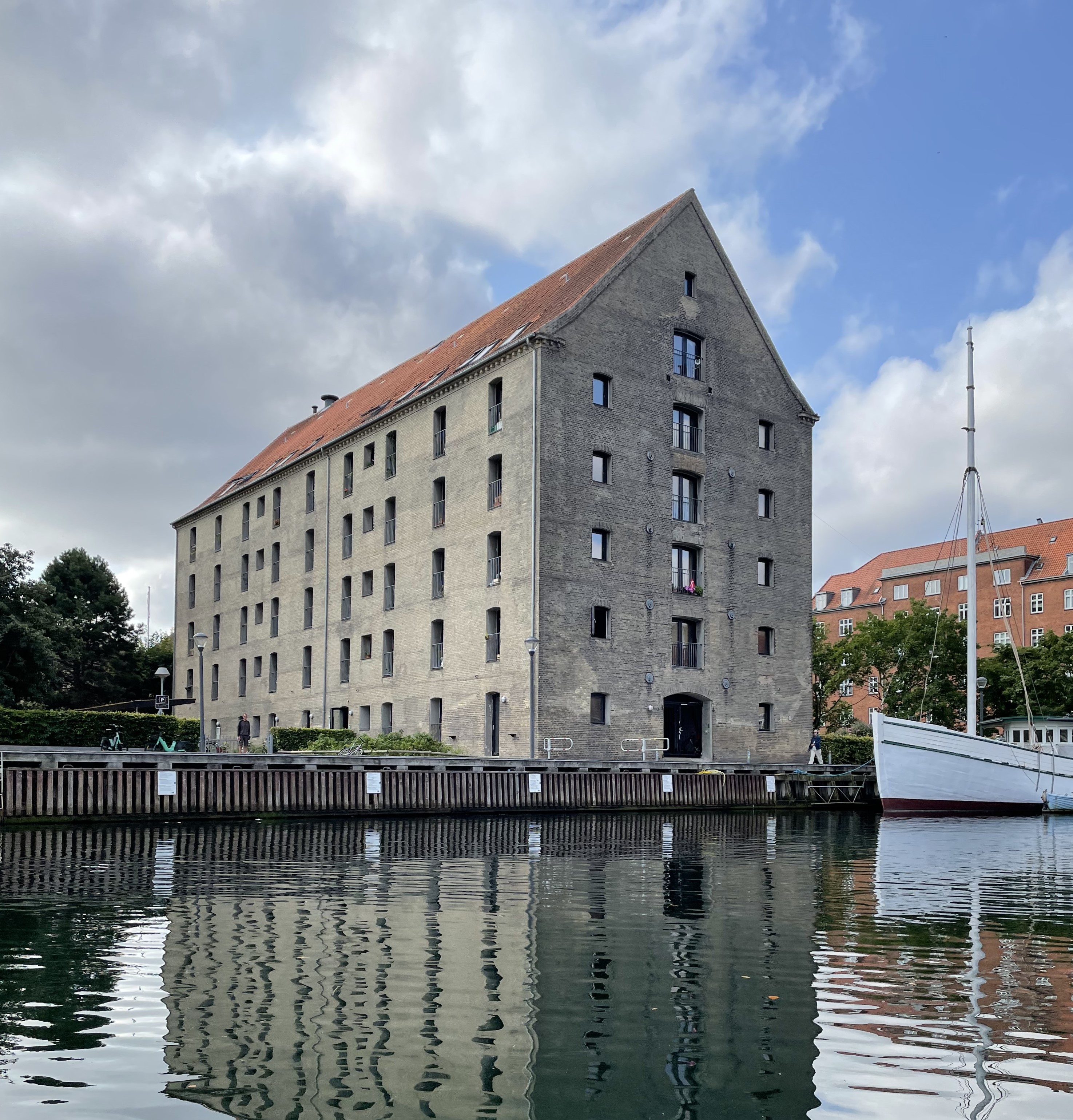
Repurposed military and industrial spaces, now housing the city’s growing population
Repurposed industrial building for new uses

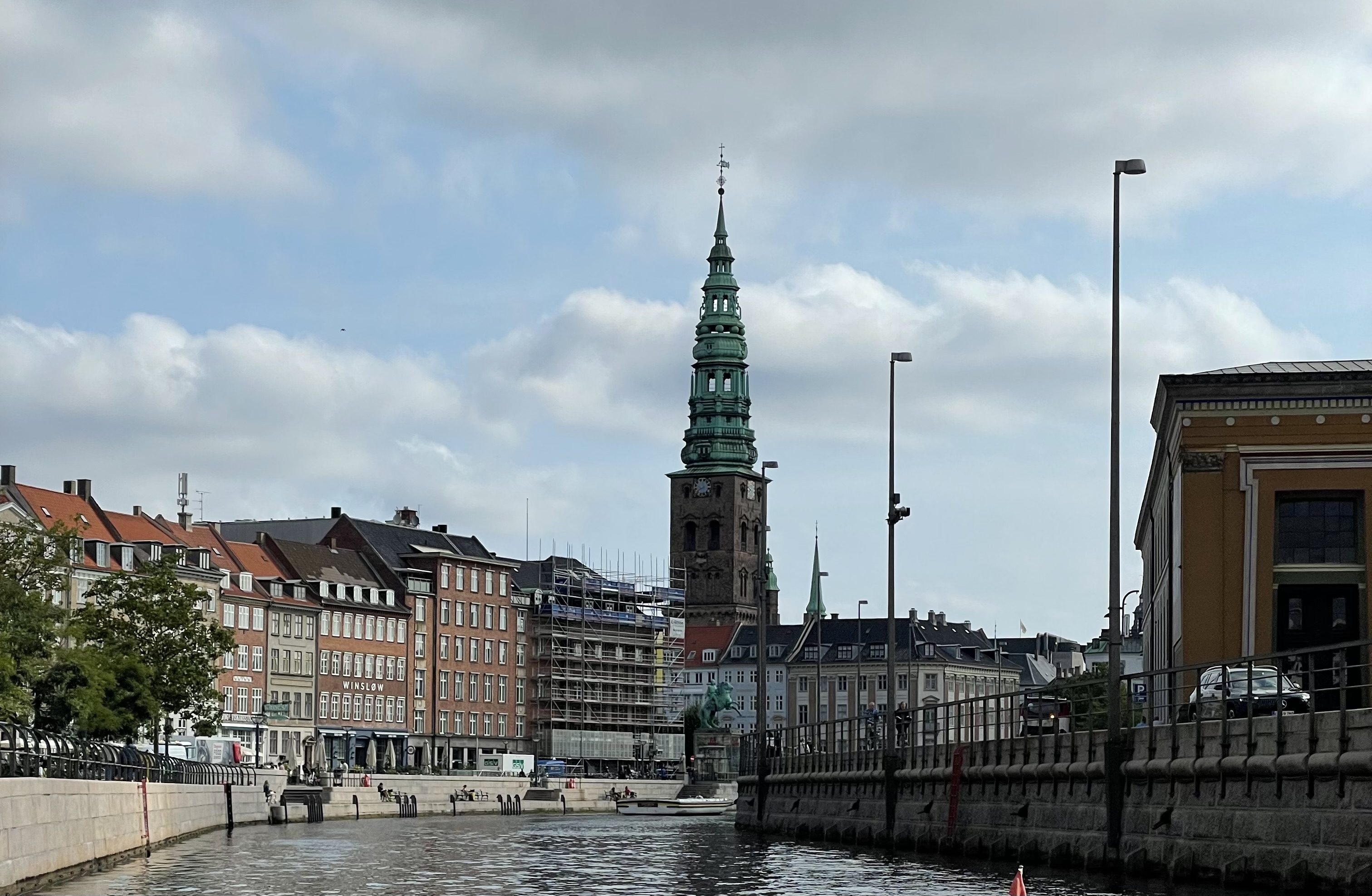
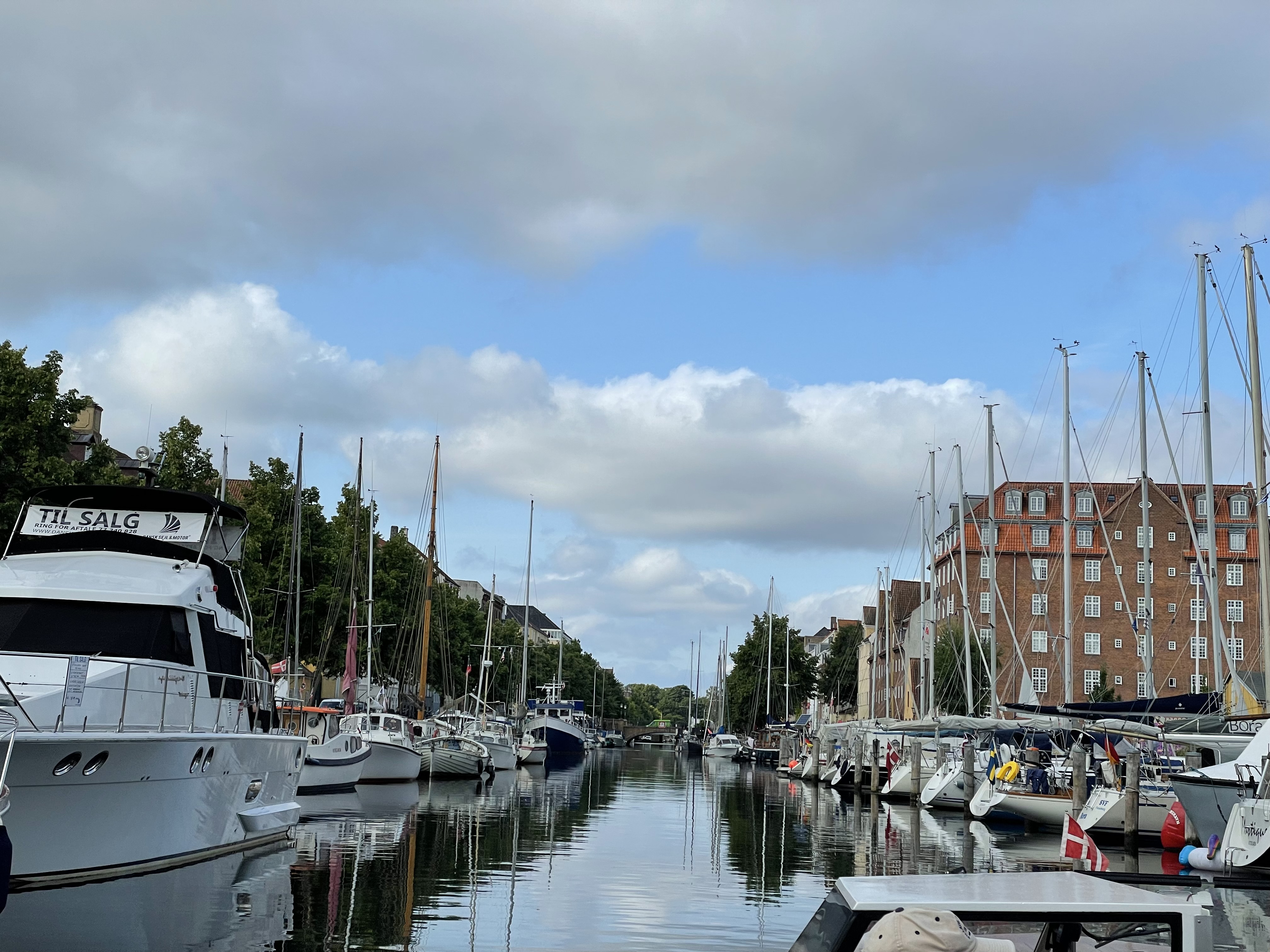
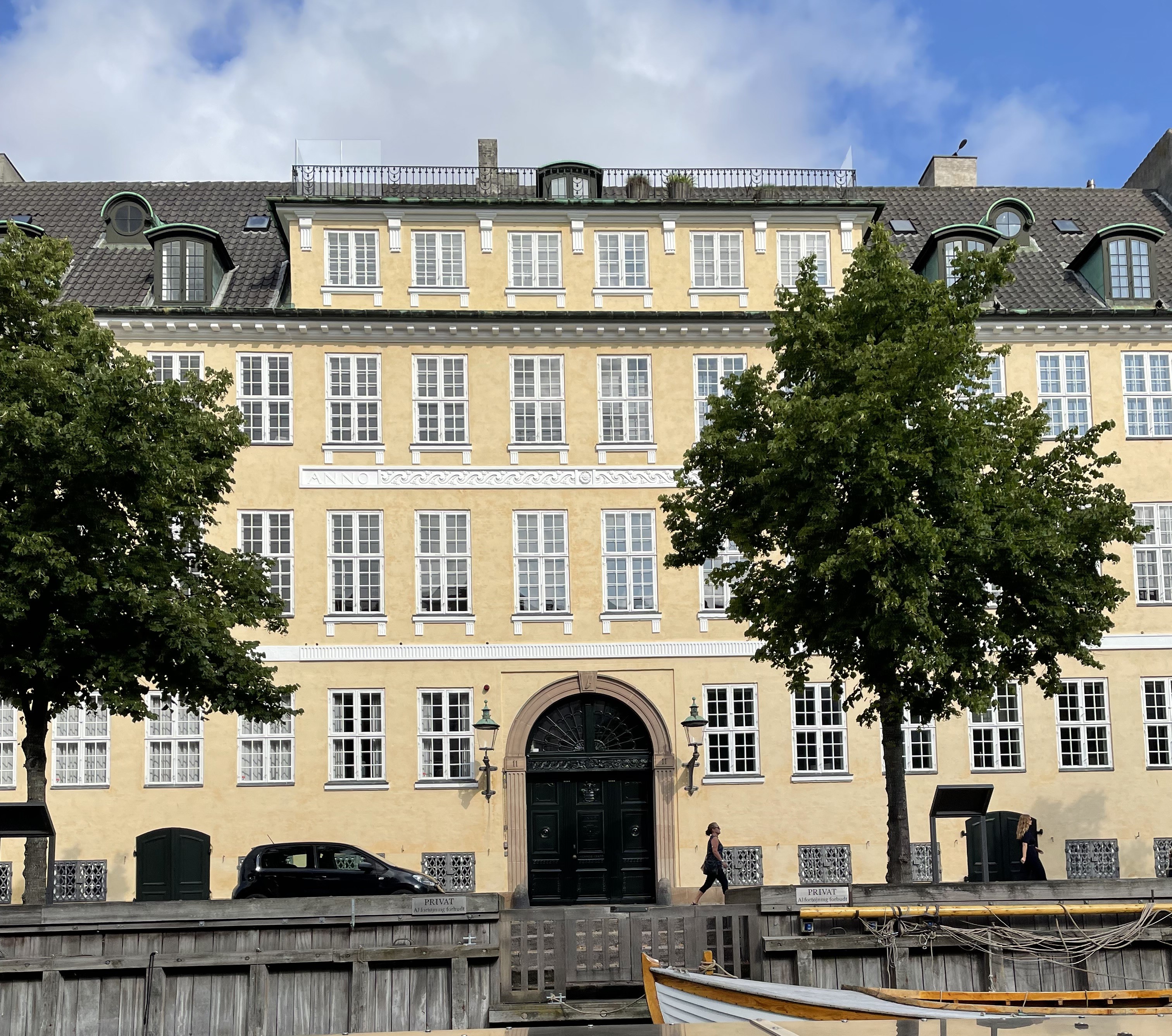
As we traveled toward the heart of the city, we saw more of the older and historic buildings that have traditionally lined the canals.

If we expand our thinking, we can see that function and meaning are two additional methods for identifying authenticity. “Spirit of place comes alive not just in the ways a site is conserved and presented, but in the way it is used and valued by people.”

Good conservation and preservation practice helps a community animate the space, whether it be an ancient city or a typical Main Street in America.

How a place or a cultural resource is animated by its community gives it meaning. Throughout our time in Copenhagen, we saw the community breathing new life into the old places, invigorating its spirit of place.

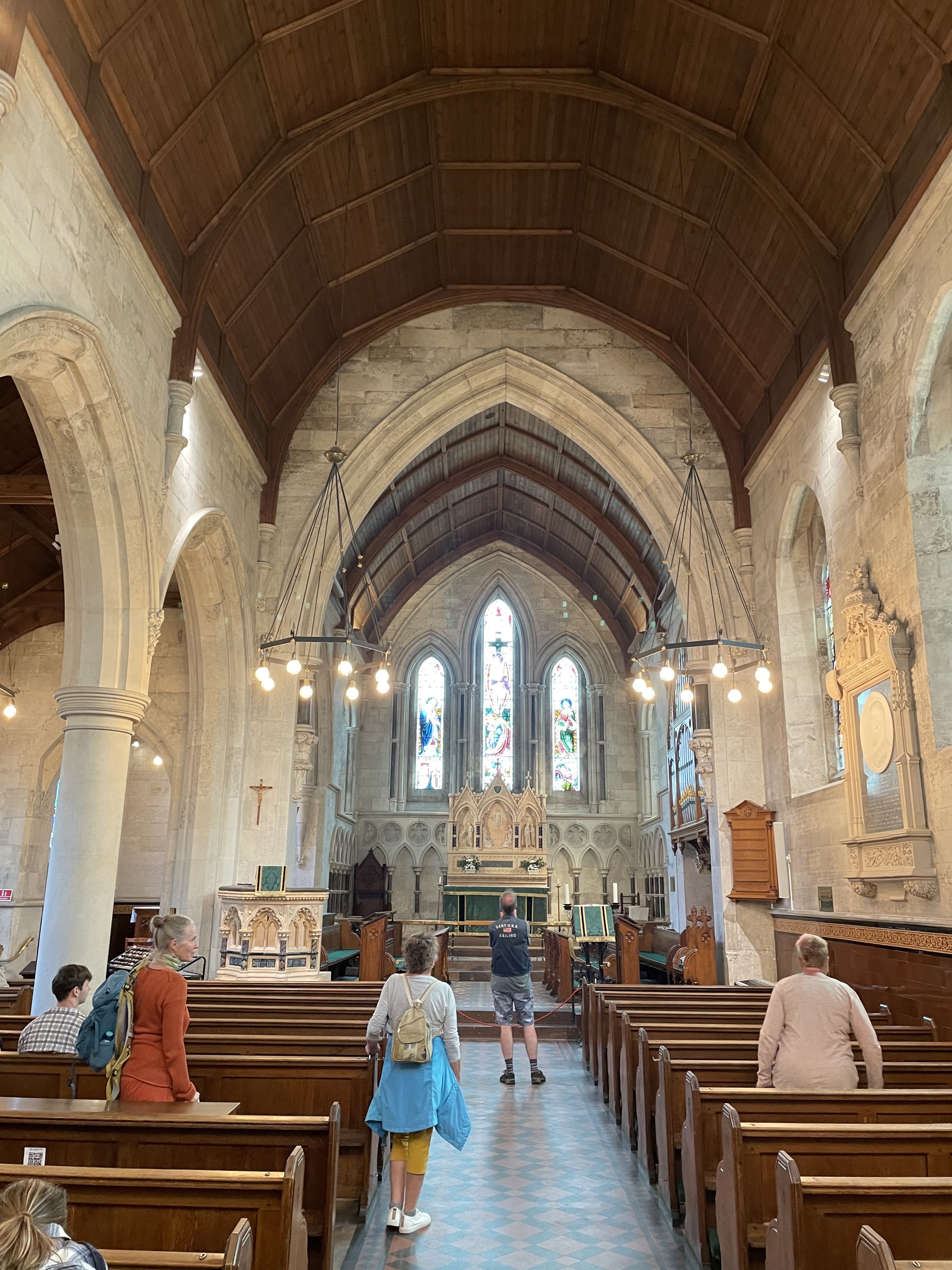
St. Alban’s Anglican Church in Copenhagen
Frank Wade, the beloved retired rector of St. Alban’s DC stands beside the Copenhagen church of the same name
The city’s historic gate and walls are now incorporated into a beautiful park

Copenhagen is a well-known city, one I visited some ten years before. While I saw much to engage my mind and senses, it was not the complete surprise that I experienced upon entering Estonia’s capital city a few days later.

Tallinn

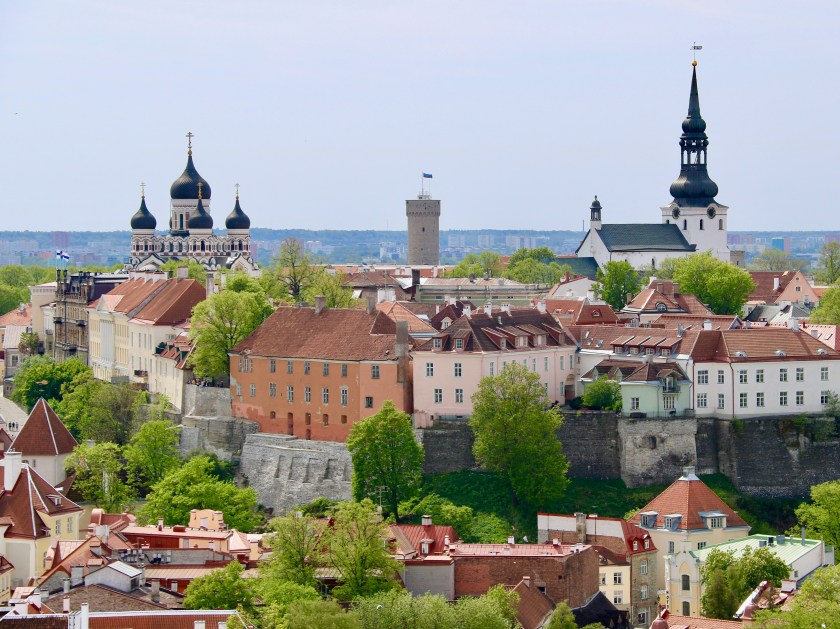
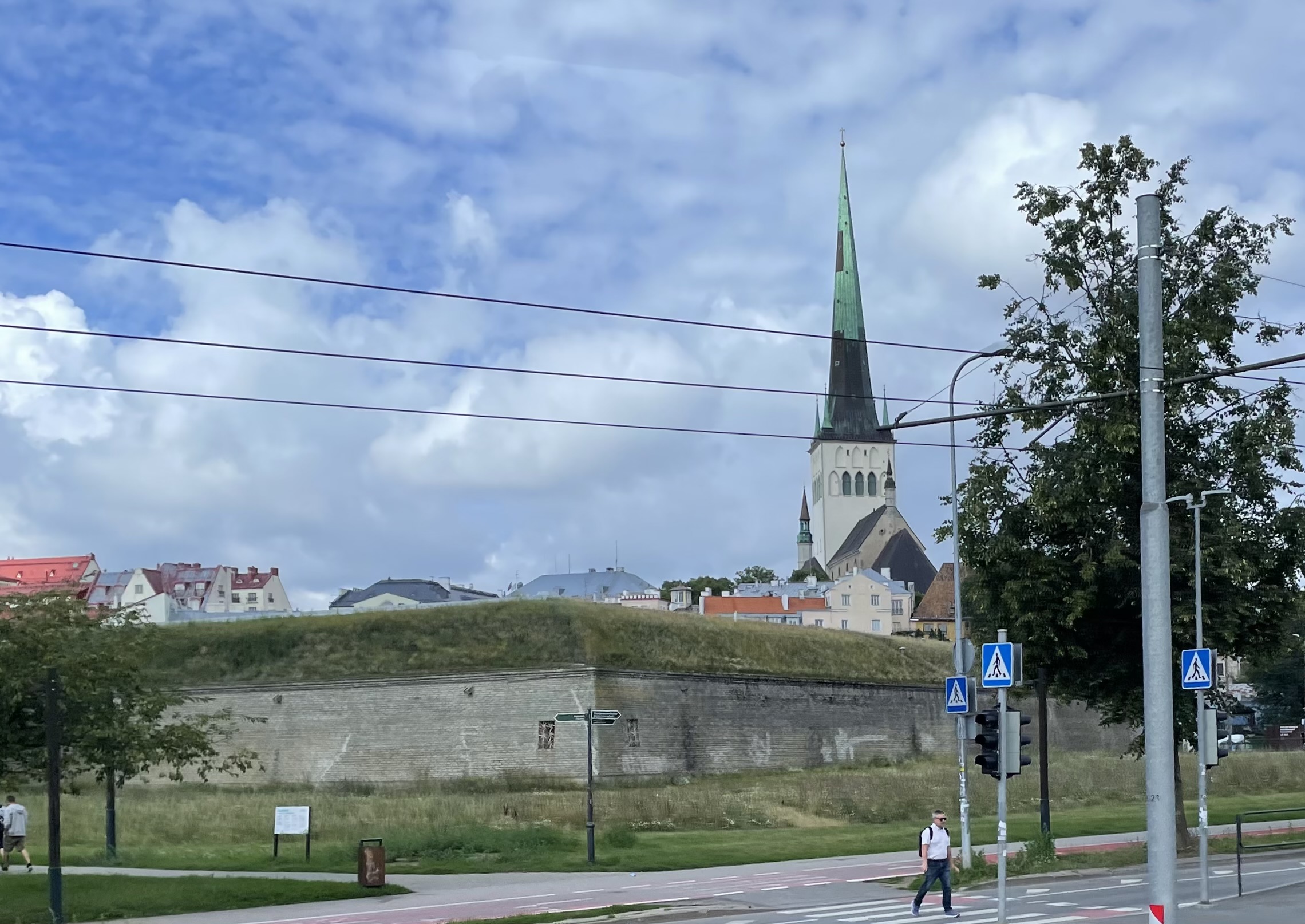
The origins of Estonia’s capital of Tallinn as we know it today date back to its founding in 1219. Unlike Copenhagen, which sits near sea level and welcomes the water in through a series of historic canals, Tallinn was founded high on a hill overlooking the Baltic Sea. A castle was built there by the crusading knights of the Teutonic Order and Tallinn developed as a major center of the Hanseatic League.

From an architectural standpoint, the historic center—a UNESCO World Heritage Site—is an exceptionally complete and well-preserved medieval northern European trading city, surrounded by massive stone walls that provided protection from invaders. Extensive segments of those walls can be seen today.

The upper town has always been the administrative center of the country, where church and state ruled.

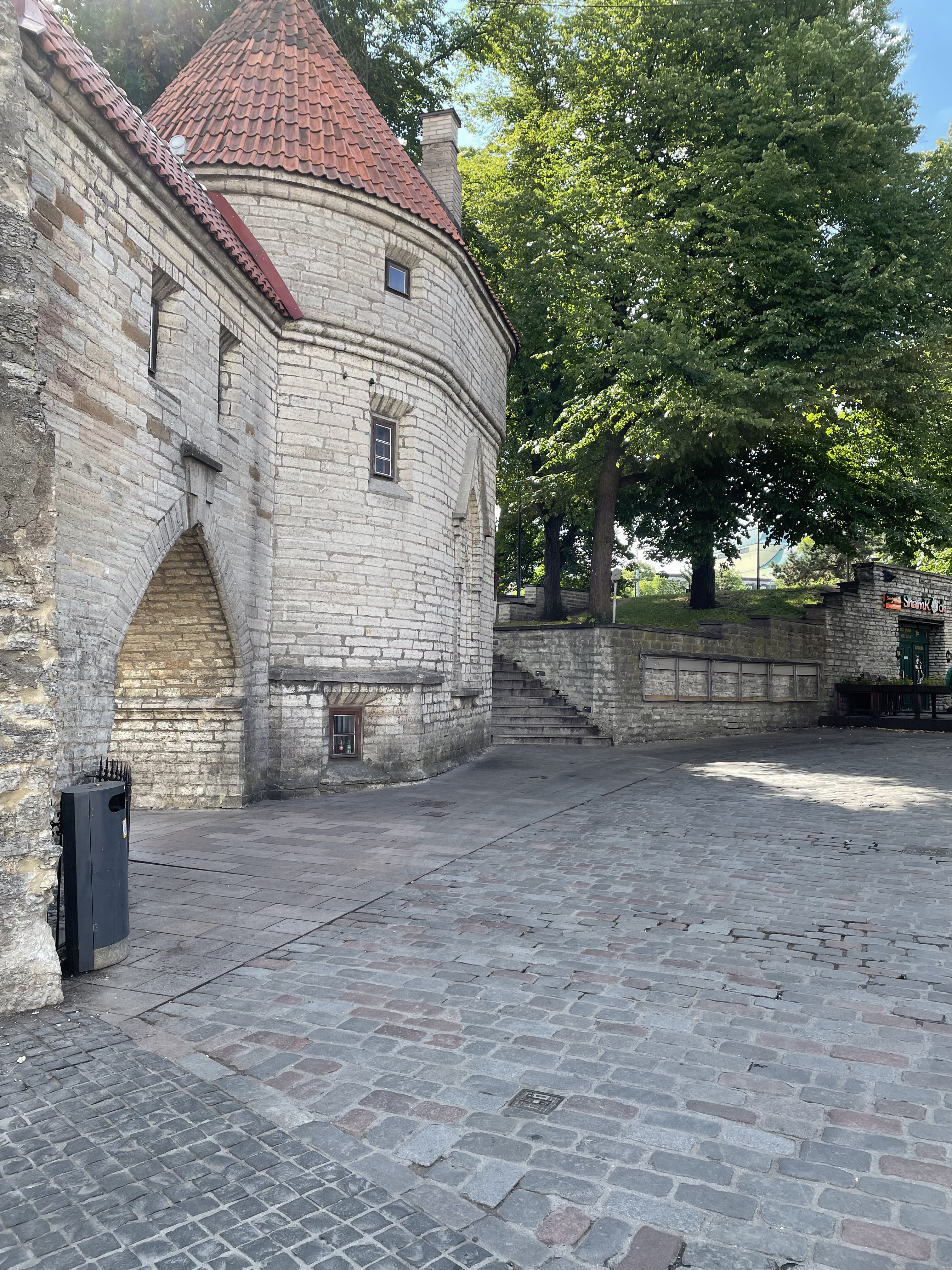
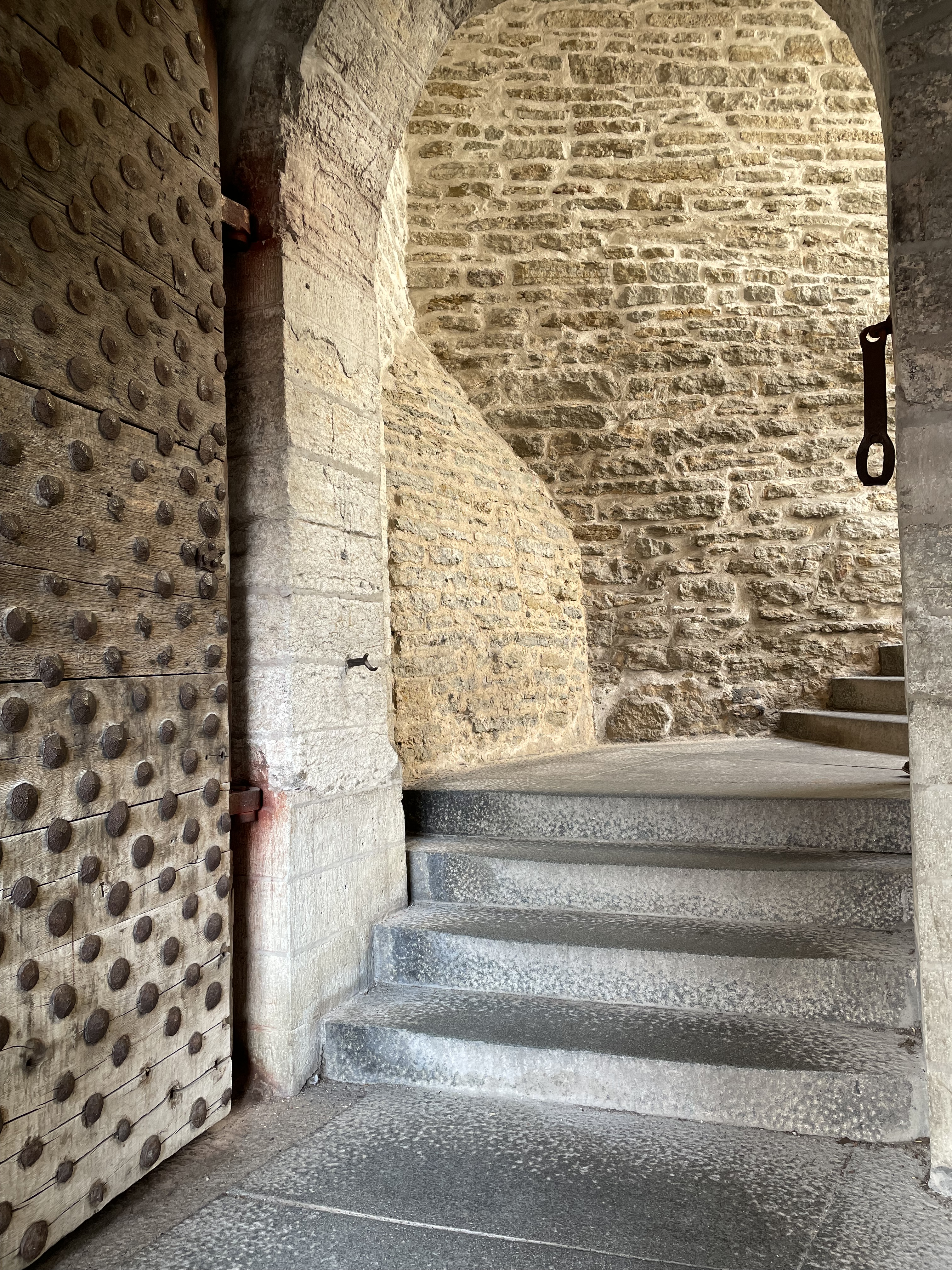
Walking down the hill toward the lower town, residents of the historic city had one gate for access, and it was tightly controlled.

View looking back to the upper town from near the gate of access
The historic gate between upper and lower town areas of Tallinn. Note the heavy door on the left, which was locked at night.

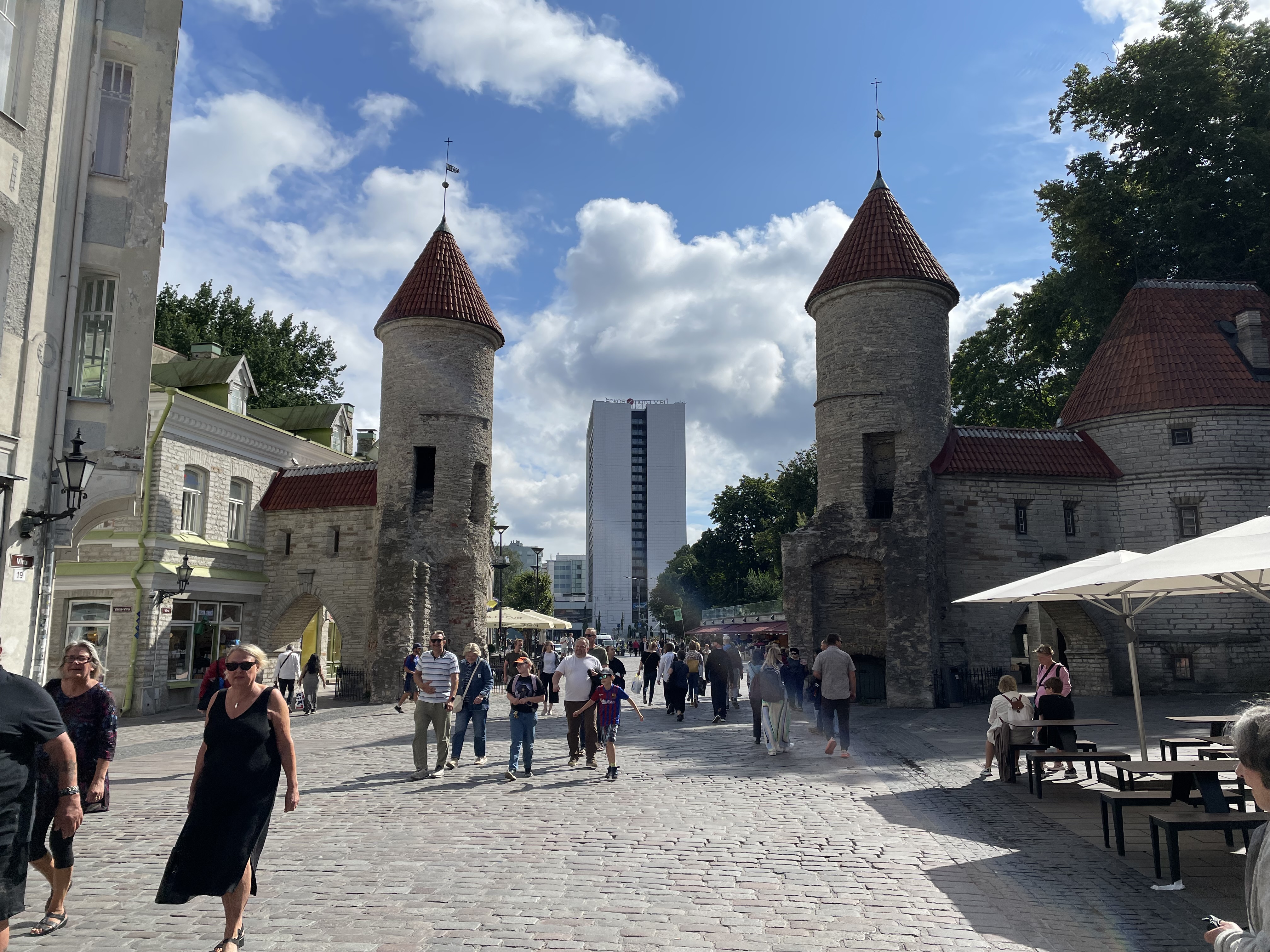
As one enters the lower town, the change is immediate. Here Tallinn has preserved the medieval urban fabric of narrow winding streets, many of which retain their medieval names.

This is the city of shops, where merchants worked, lived, played, and worshiped, all while bringing together influences of East and West.

Historic and modern signs were found throughout the lower town, including the views of one merchant that reminds us of how close Estonia sits to the Russian bear.

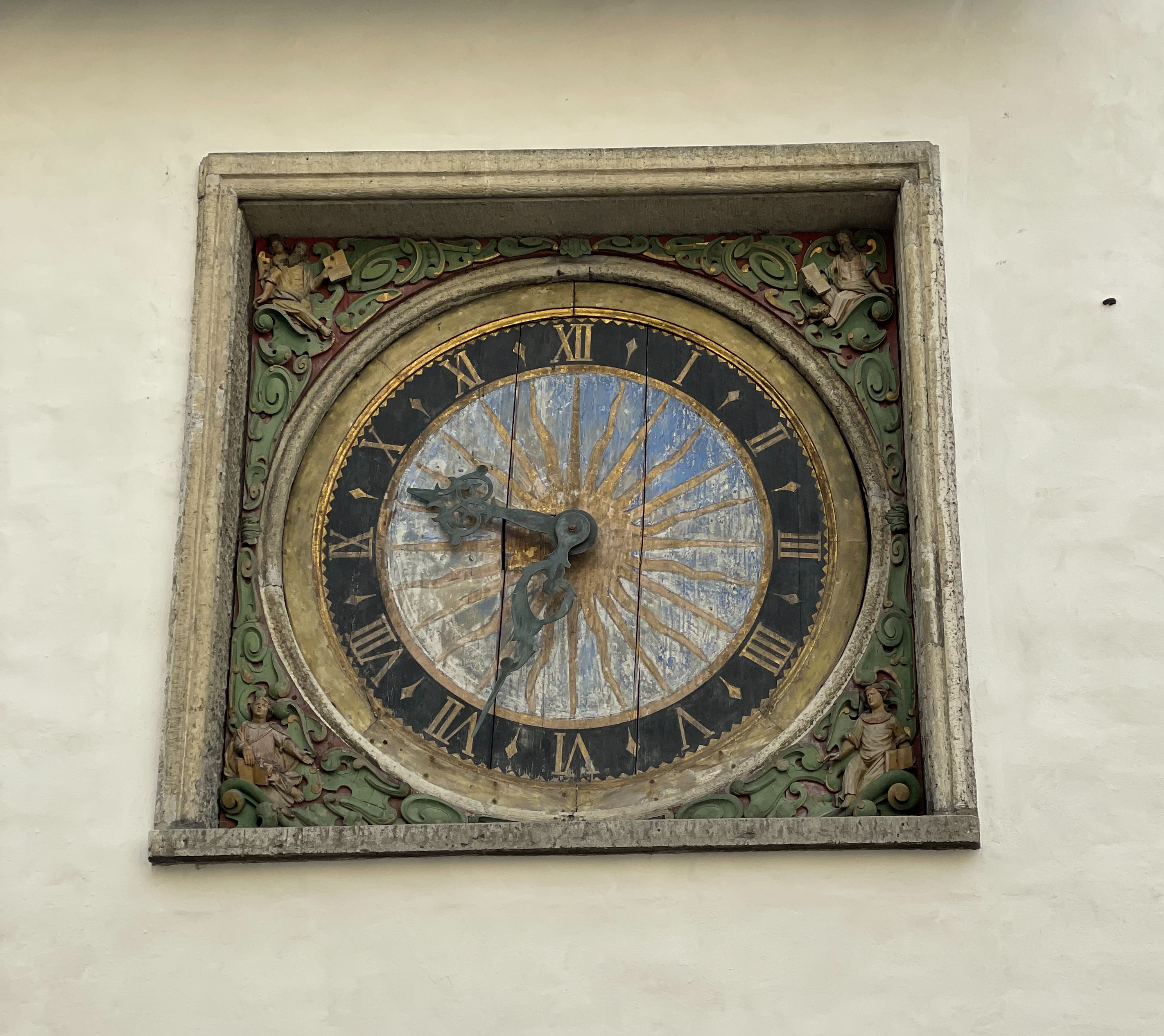
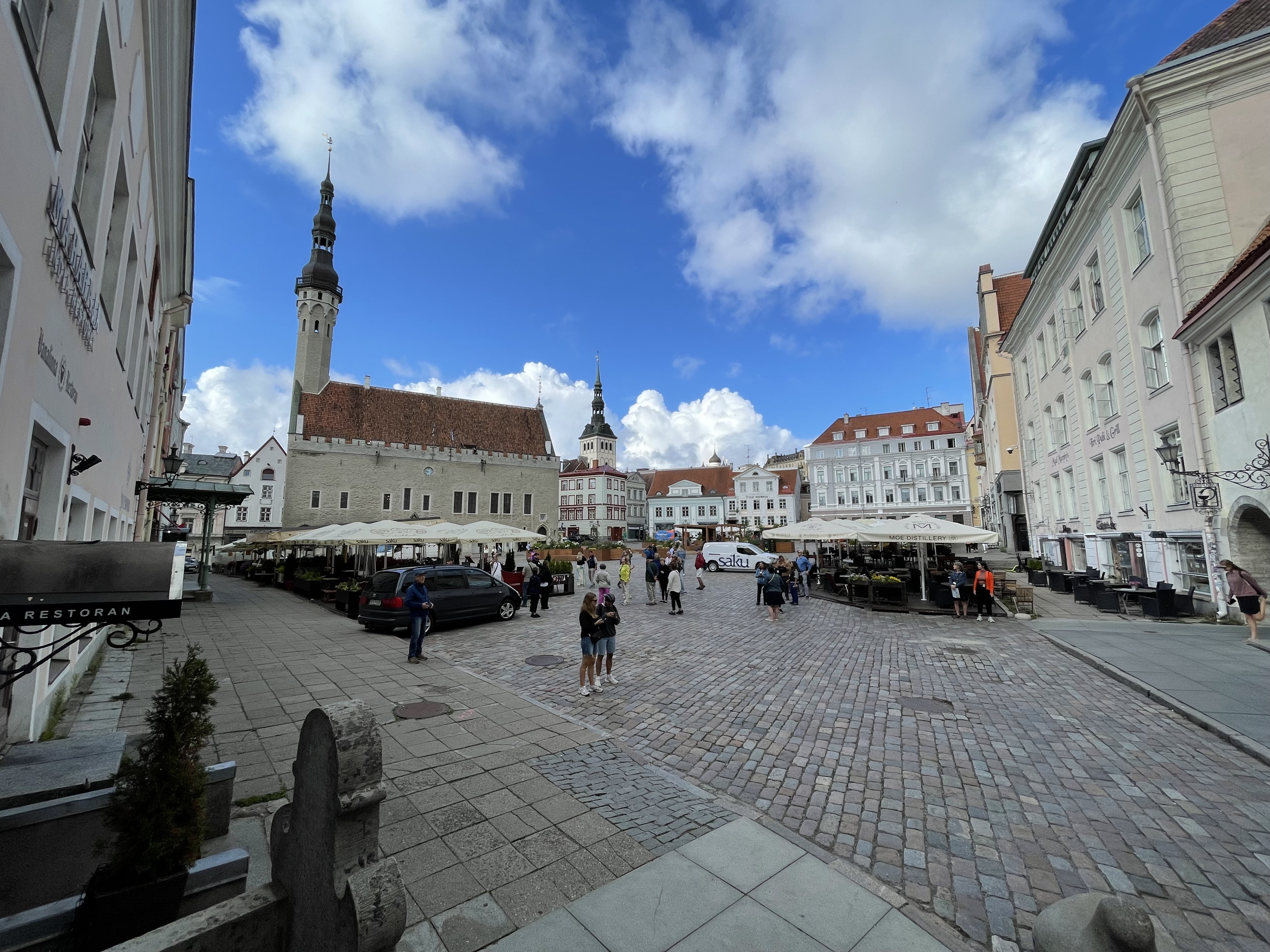
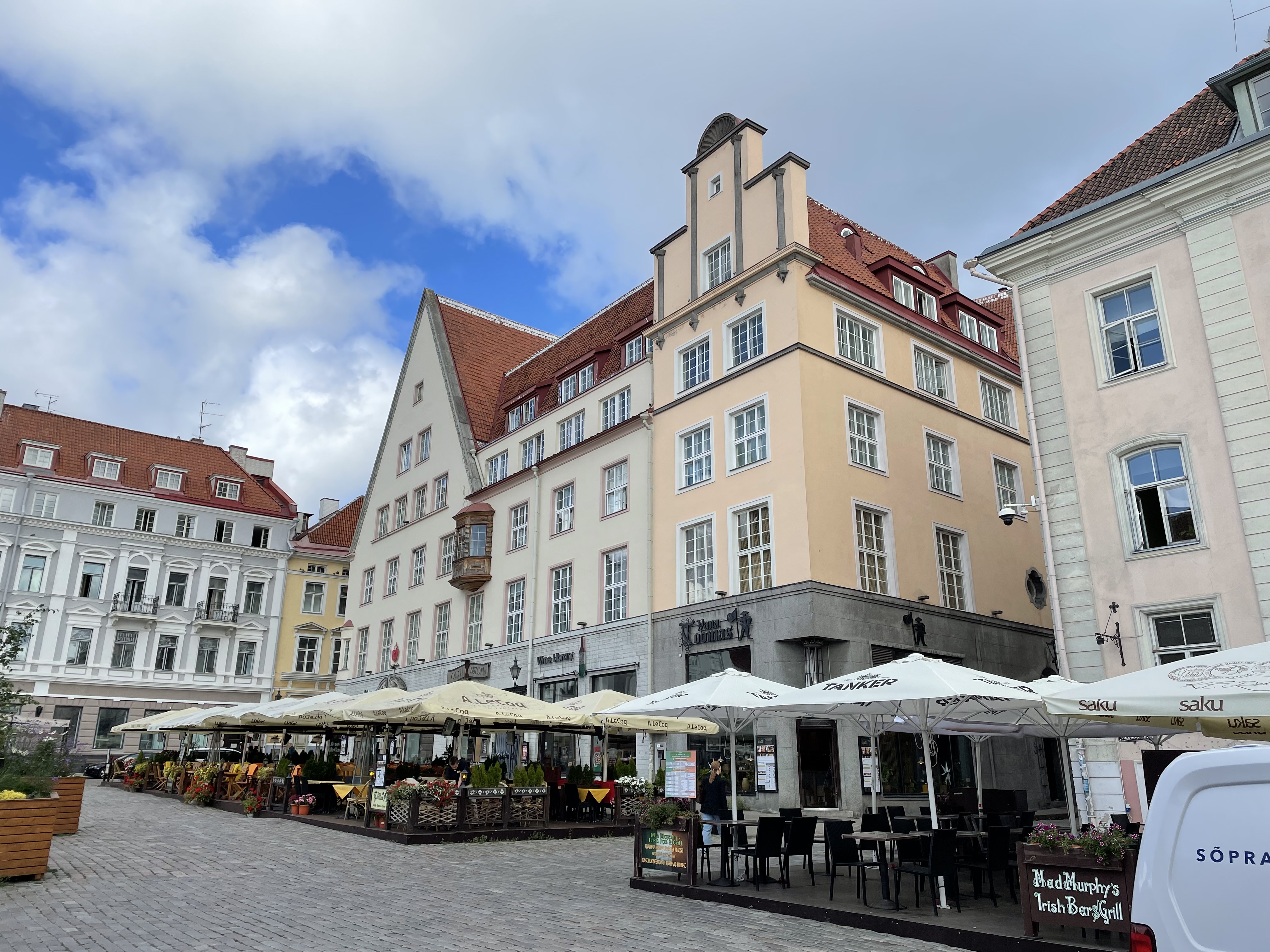
After moving through winding streets filled with shops and houses, the city suddenly leads the visitor into a vibrant and expansive town plaza, where one finds more shops, the town hall and court building, sidewalk cafes, and more.

Overview of the plaza in Tallinn
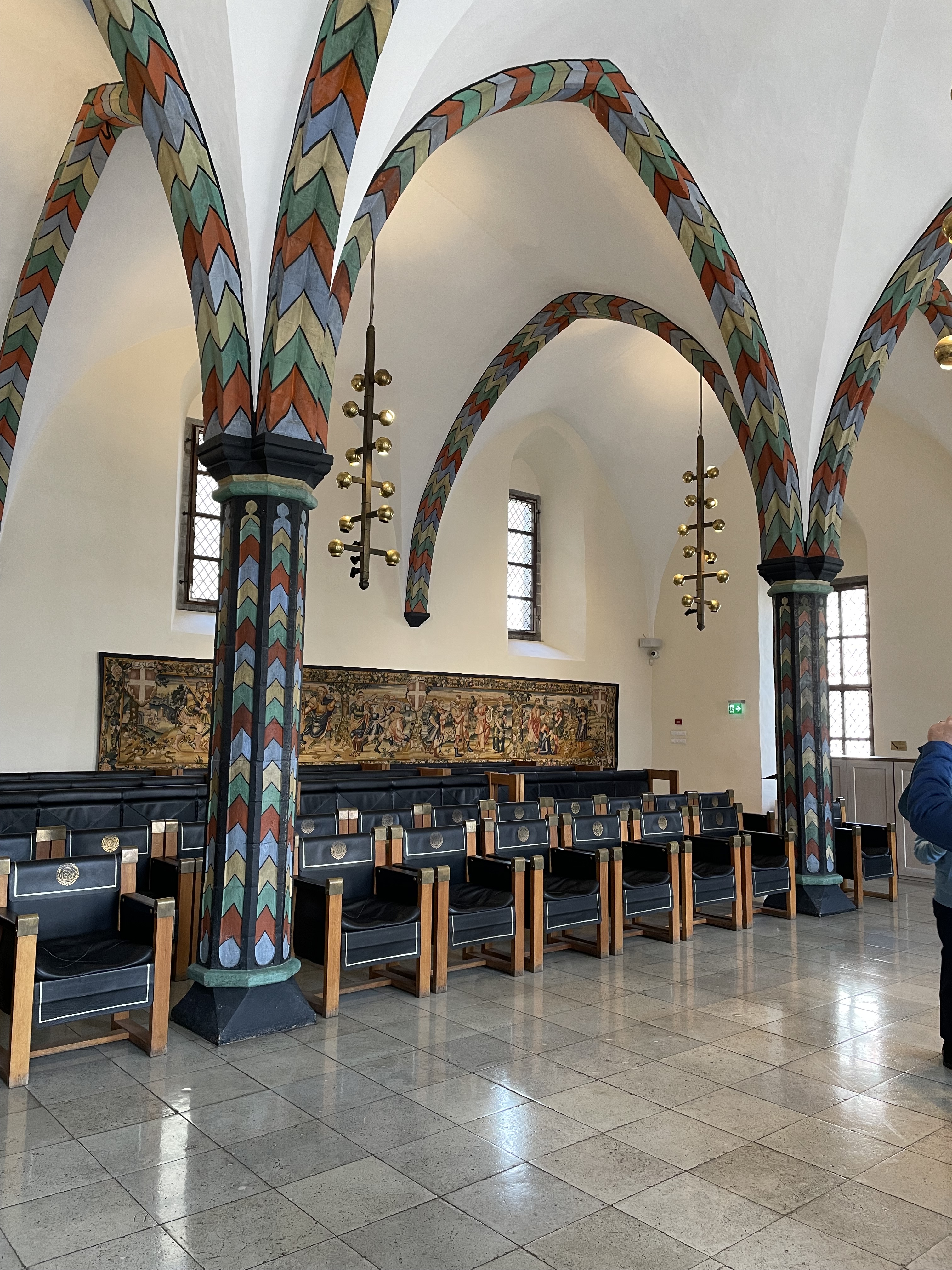
Town hall meeting room
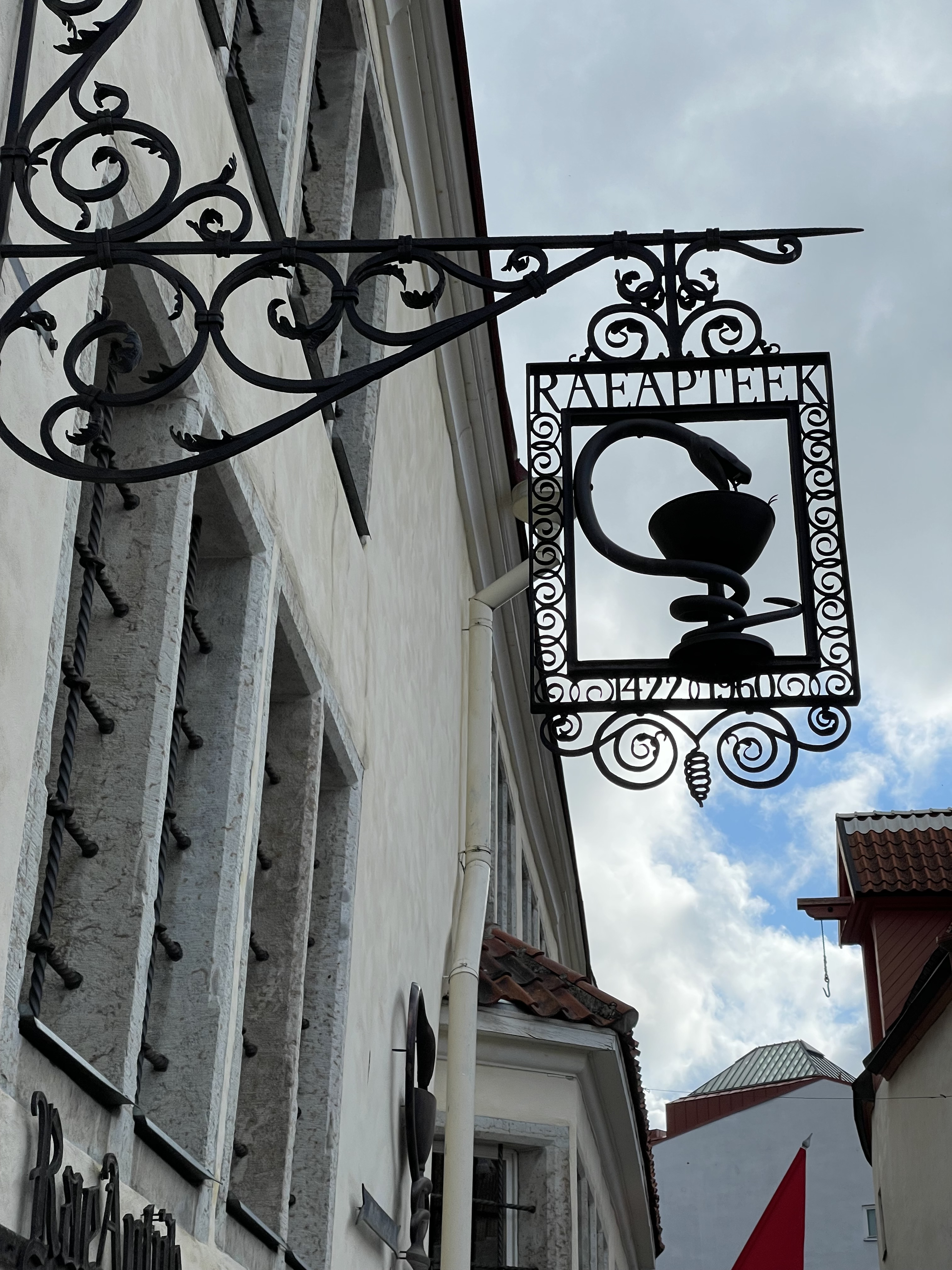
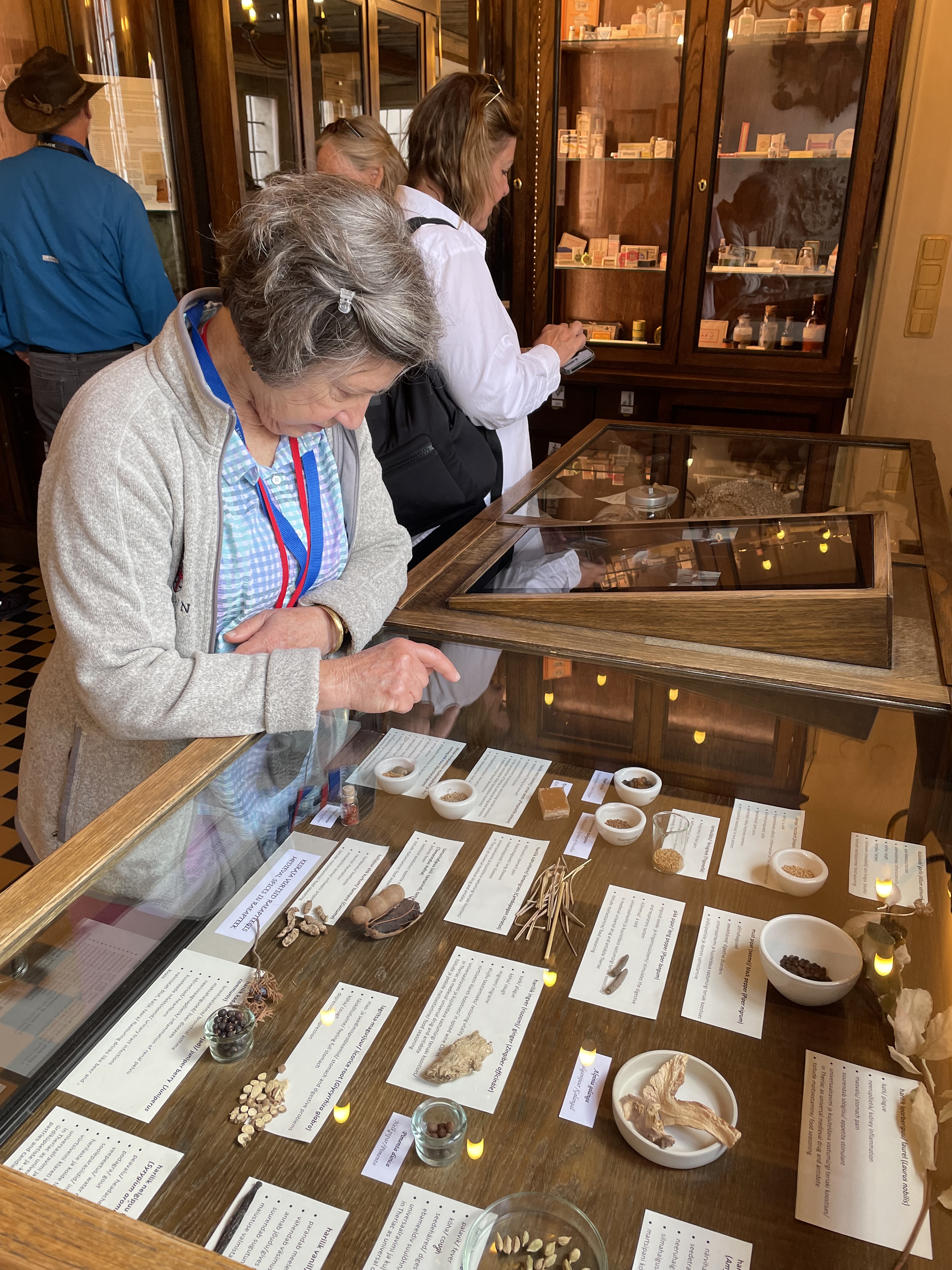
Visiting the apothecary museum

This city has survived to a remarkable degree despite the ravages of fire and war in the intervening centuries.

Tallinn is “off the beaten path” and thus primarily continues to engage with its citizens as a living city, hosting domestic, commercial and religious functions and serving as the administrative center of the country. However, as more visitors exclaim about this gem on the Baltic Sea, its treasures are becoming more widely known.

Tallinn, although off the beaten path, is very welcoming to visitors today.

Two harbors, two cities, two approaches to preservation, two vibrant places to live as well as visit.

More to come . . .

DJB

Photo of Tallinn and Baltic Sea by Hongbin on Unsplash

Finlandia!

The beauty of the morning light as we sailed into the harbor at Helsinki suggested a day of exploration filled with wonder, new perspectives, and joy. For a country that for the tenth year in a row took top honors as the world’s happiest, that seemed only appropriate.

We had arrived in Helsinki, Finland, for another day in our National Trust Tours visit to Scandinavia and the Baltic Sea. It was magical.

The morning light on the Helsinki waterfront
The traveling piano man greeted us as we entered the city

We began moving through Helsinki on bus, sampling the wide variety of architecture in this most northerly of continental European capitals. Like many of its neighbors, Helsinki featured stories of conquest, changing allegiances , and resilience throughout its history.

Neighborhood architecture in Helsinki

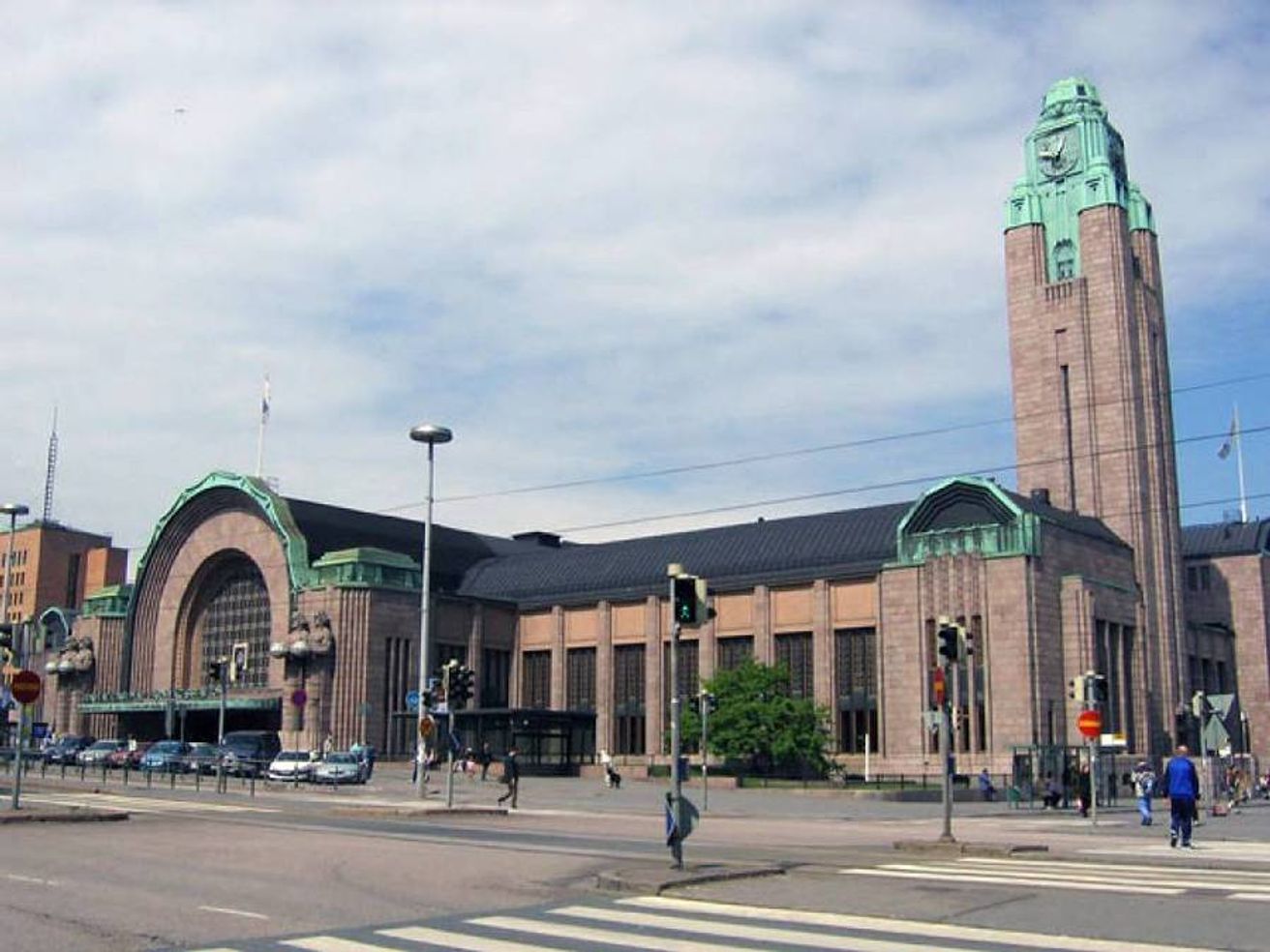
Amidst the blocks of office, residential, and commercial buildings, we suddenly turned the corner to glimpse the beauty that is the Helsinki Central Train Station.

More so than some of its neighbors, Helsinki has loved and preserved its historic train station, which comes with a prestigious pedigree. The tracks were built in the 1860s; the station building was designed by esteemed architect Eliel Saarinen and inaugurated in 1919.

Eliel Saarinen

Saarinen worked extensively in both Finland and the United States, moving to the US in 1923. Among his important American works are the buildings at the Cranbrook Educational Community—a National Historic Landmark education, research, and public museum complex in Bloomfield Hills, Michigan. He was also the father of acclaimed 20th century architect Eero Saarinen, who designed Dulles Airport and the TWA terminal at JFK airport among other important works.

The father’s railroad building in Helsinki is known for its clock tower and “The Lantern Bearers” statues. It took 15 years to build, delayed for five of those years by World War I. During World War II, the station was bombed extensively and seriously damaged, so that temporary platforms had to be used well into the 1950s.

Credit: Unsplash

The country had deep feelings for this place that was begun under the Russian tsar and inaugurated to the strains of the patriotic song Finlandia. It has been saved and preserved through the years, although with many alterations.

In 2013, Helsinki Central was chosen as one of the world’s most beautiful railway stations and it has become the symbol of the entire railway network in Finland . . . another example of a pathway of memory, identity, and continuity connecting past, present, and future.

Credit: Unsplash

Places of all types are so important in how we understand our past and the connections made to life today. They key both individual and collective memories, perhaps none more so than religious sites. We may have individual memories in a house of worship related to baptisms, bar and bat mitzvahs, weddings, and funerals, but the religious sites we saw in Helsinki also sparked collective memories, both for those who live in the city and for those of us who visit.

Helsinki Cathedral in the early morning light

The Helsinki Cathedral, originally built from 1830 to 1852, is the seat of the Archbishop of the Finnish Evangelical Lutheran church. It is a handsome structure situated on the city’s most prominent hill.

Photo from Unsplash showing the cathedral without the scaffolding

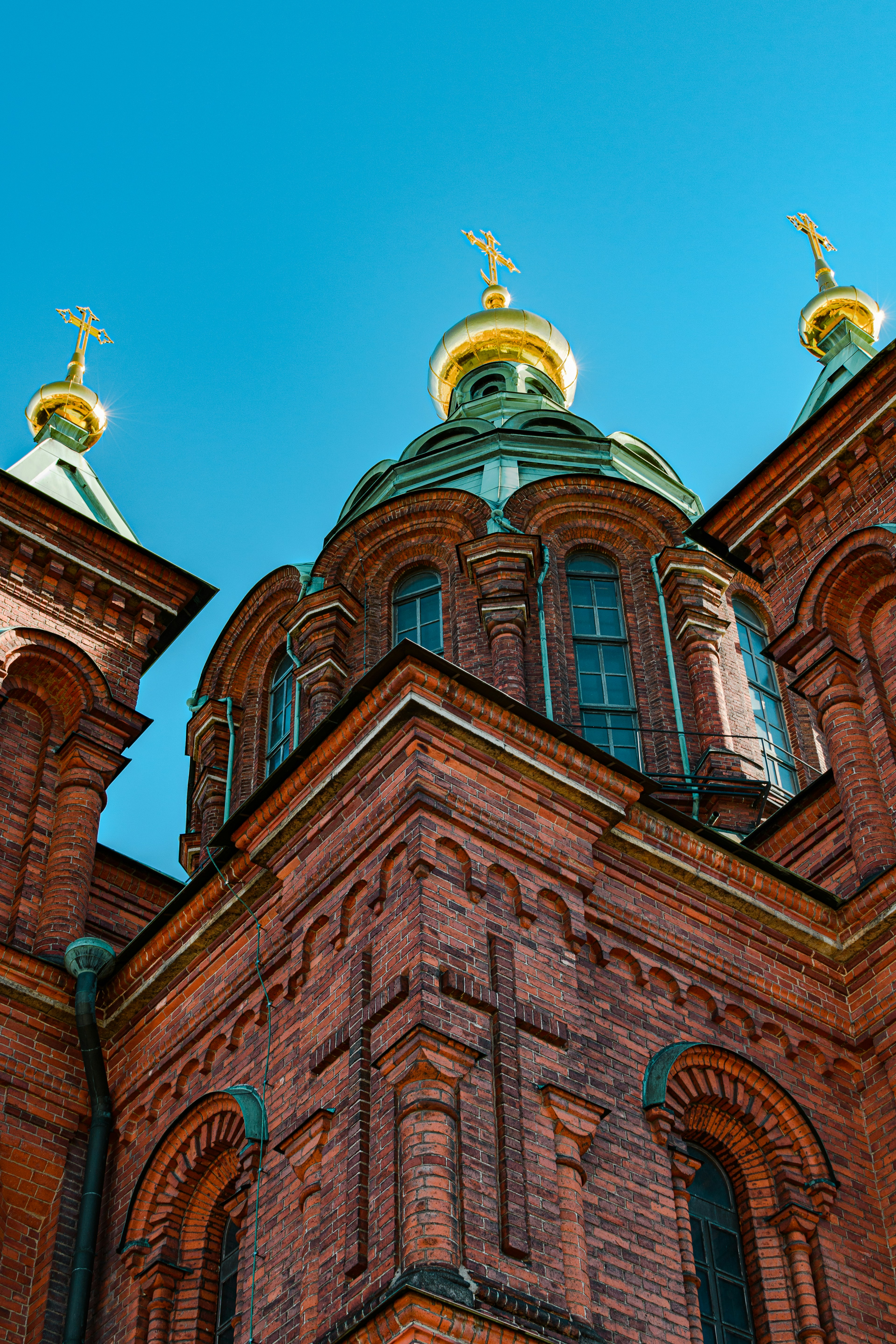
Nearby one can also find the cathedral of the Russian Orthodox Church—a vivid reminder of the role Russia has played in the life of Finland over the years.

Credit: Unsplash

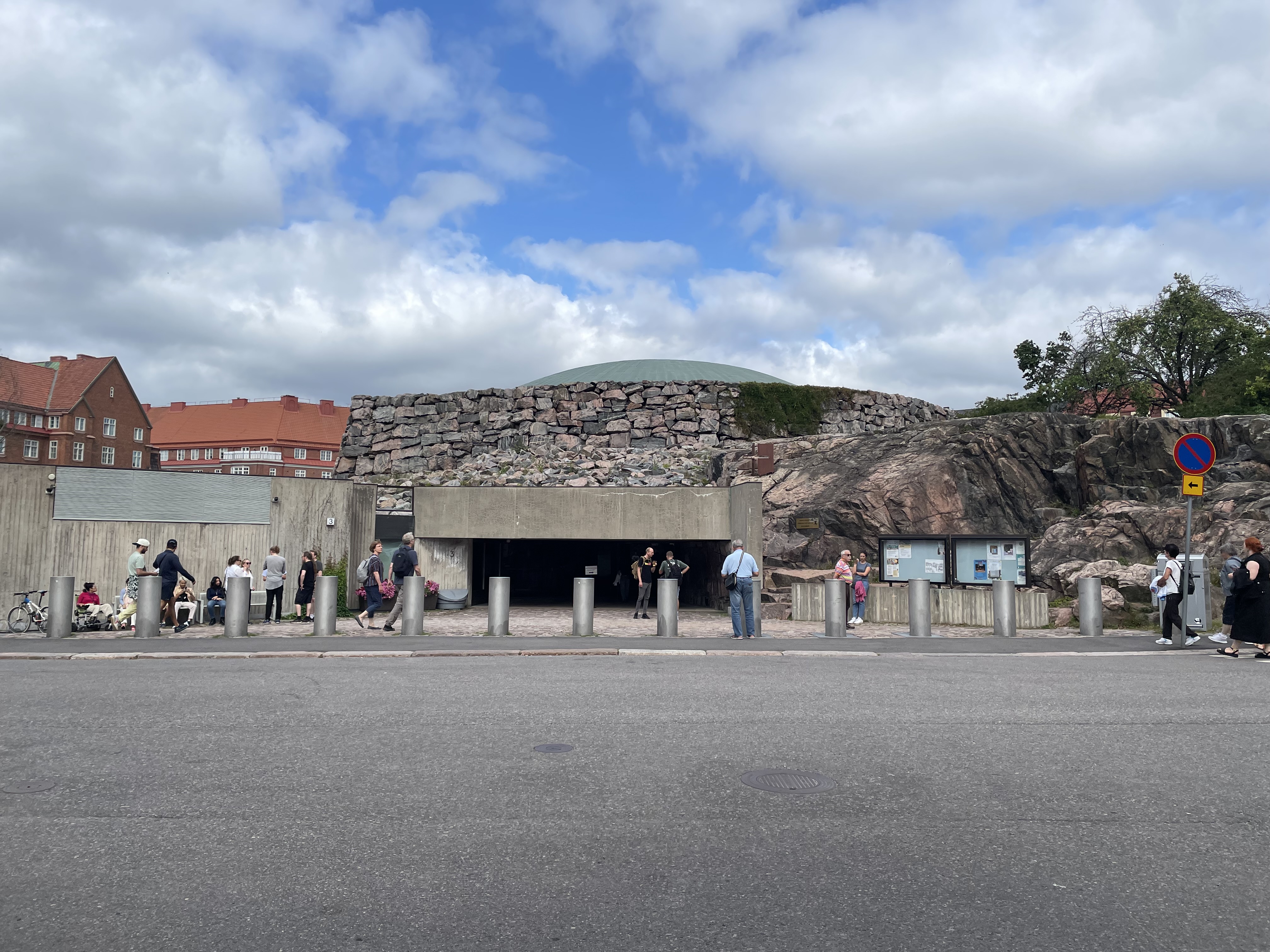
Temppeliaukio Church—also known as the “Rock Church”—is the city’s most unusual ecclesiastical design. Architects Timo and Tuomo Suomalainen designed this structure in 1961, construction finally began in February 1968, and the rock-temple was completed for consecration in September 1969.

The interior was excavated and built directly out of solid rock and is bathed in natural light which enters through the skylight surrounding the center copper dome. The church is used frequently as a concert venue due to its excellent acoustics. The acoustic quality is created by the rough, virtually unworked rock surfaces. The iconic rock walls were not included in the original competition entry, even though the Suomalainen brothers had considered the idea, because they believed that it was too radical for the competition jury. But when conductor Paavo Berglund shared his knowledge of acoustics from some of the best music halls and the acoustical engineer Mauri Parjo gave requirements for the wall surfaces, the Suomalainen brothers discovered that they could fulfill all the requirements for the acoustics by leaving the rock walls exposed in the Church Hall.

Exterior of the Rock Church
Interior overview
Organ and altar
The beautiful copper roof

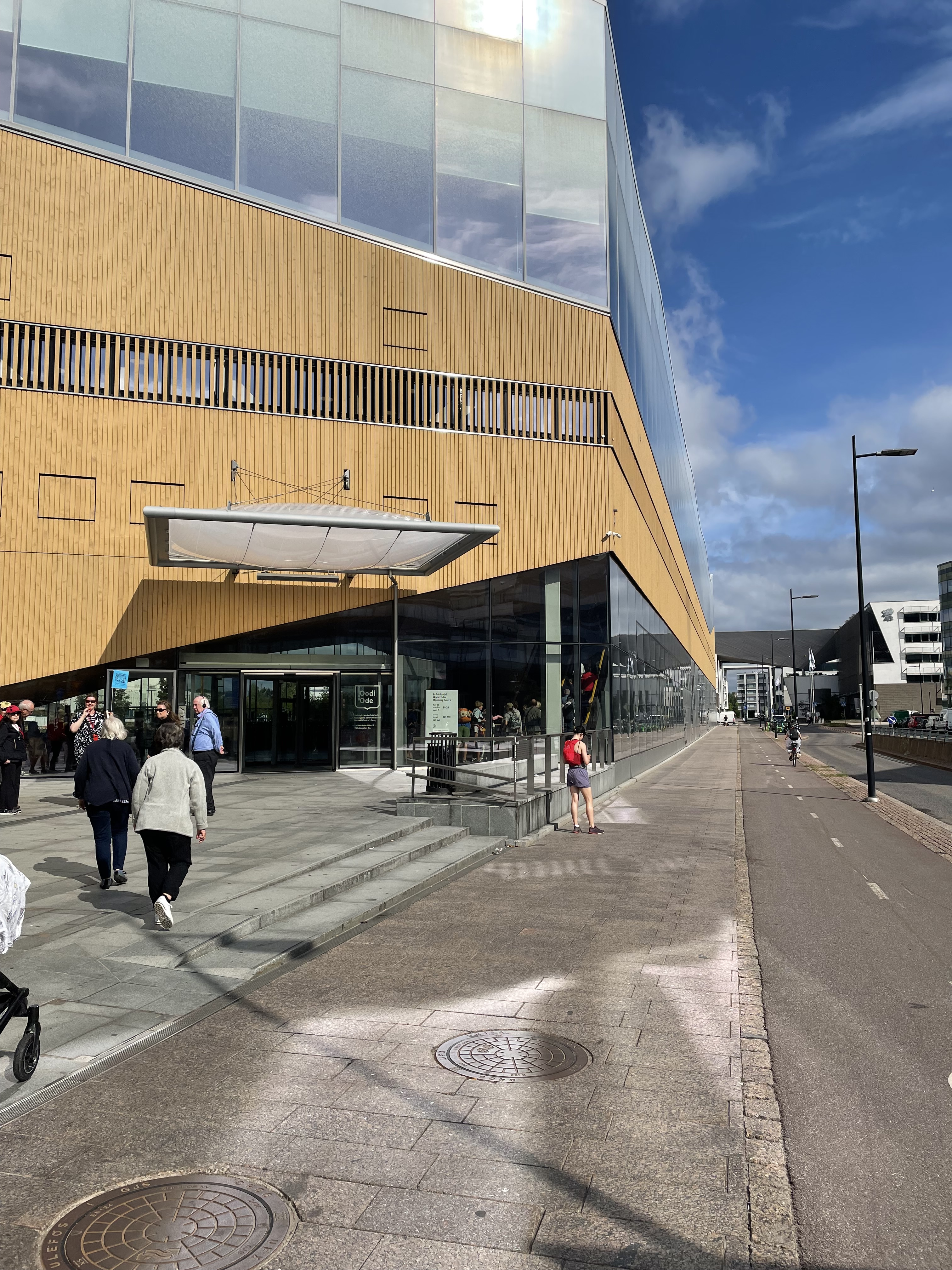
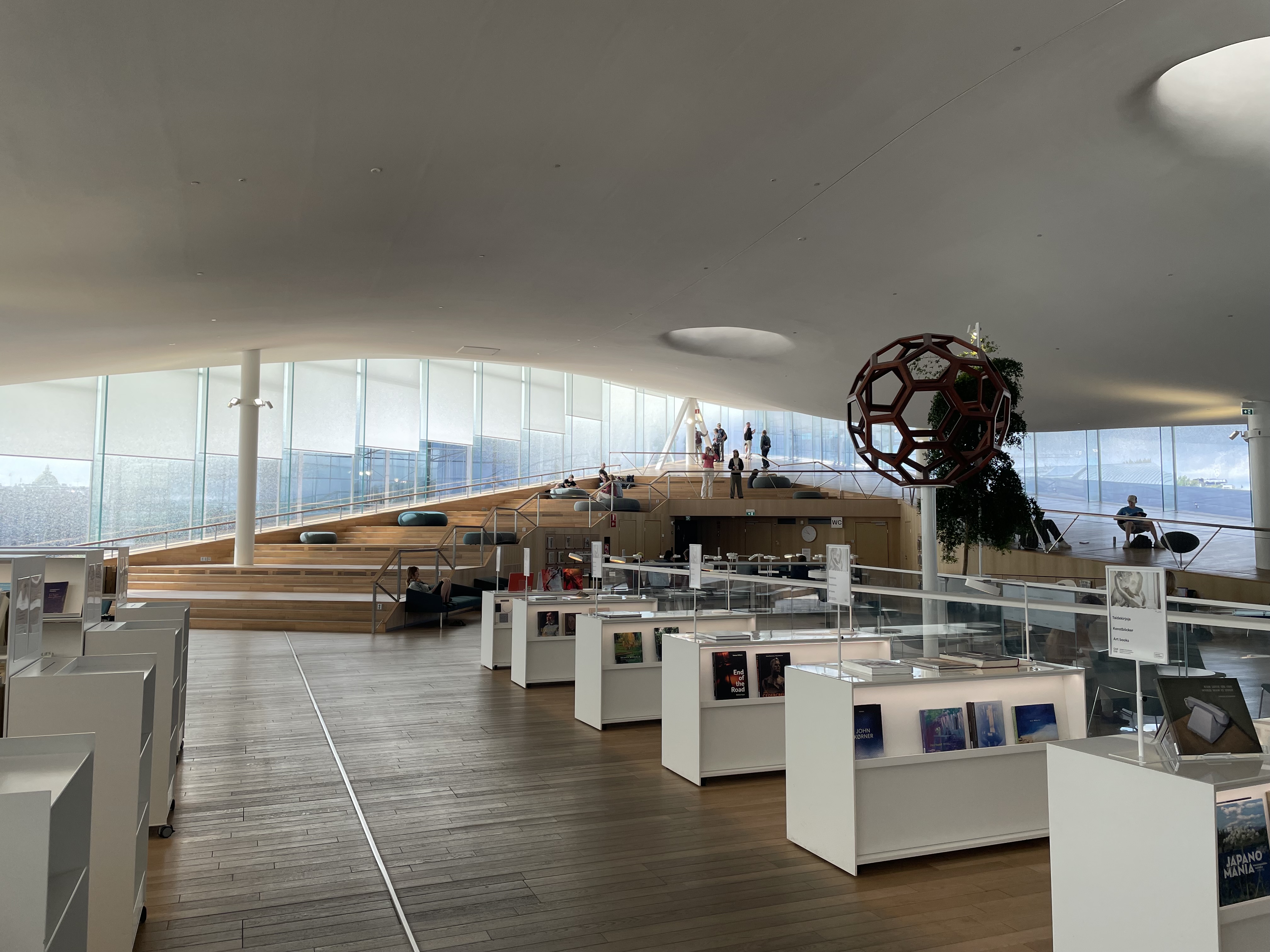
I had high hopes for the Helsinki public library after having read about this amazing new gathering place in the heart of the capital city. As the son and brother of librarians, I felt special pride in seeing how a city and a country can thrive when they emphasize the many important characteristics that go into the modern library. That excitement only built as we approached the main entrance.

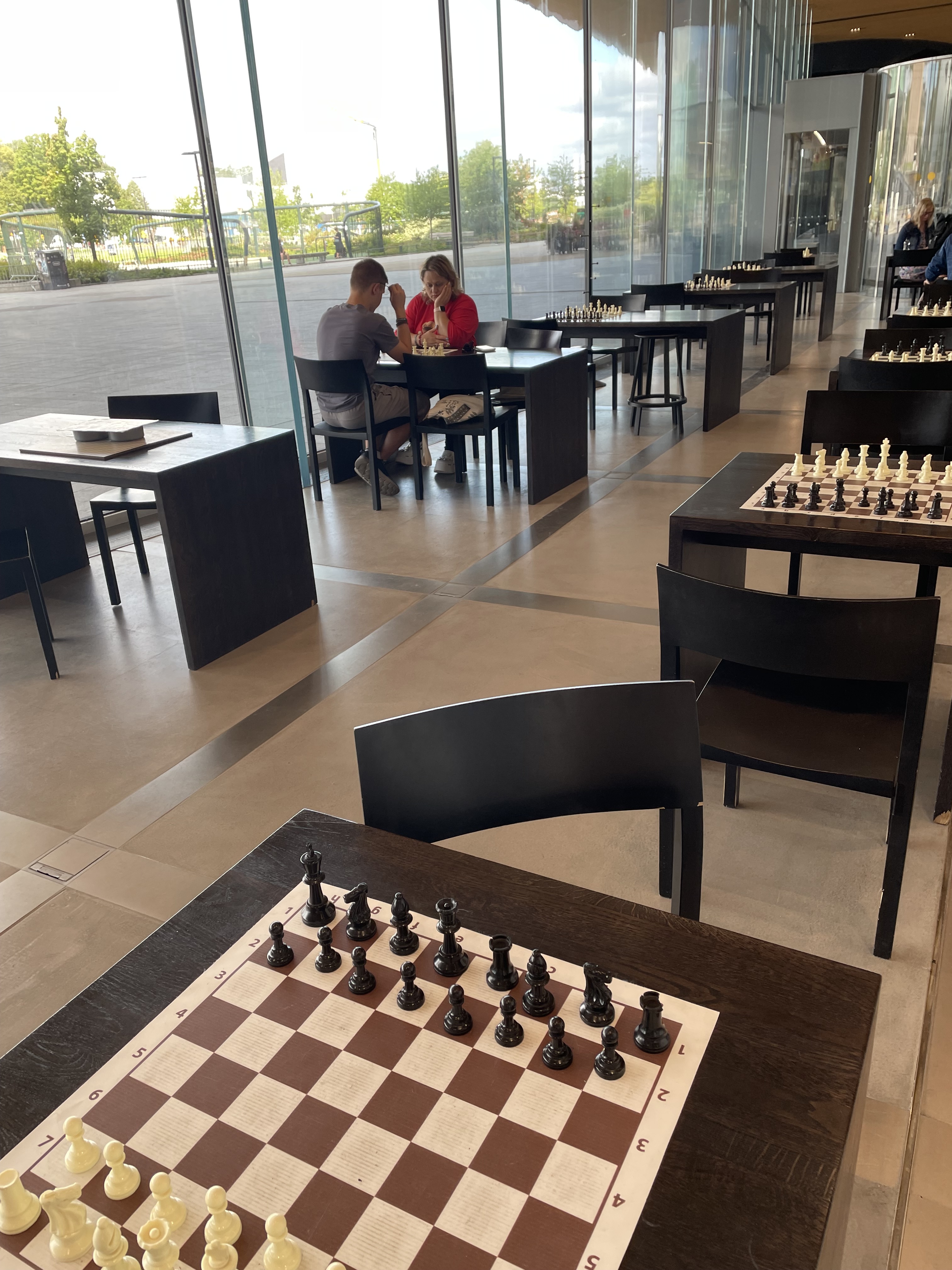
It seems oh so appropriate for the city’s “living room” to greet its clientele with tables set up for the planned or spontaneous game of chess.

It is impossible to overstate how overtaken I was with this welcoming, wacky, warm, and wisdom-filled gem in the city.

Helsinki’s New Living Room—Oodi Library (2021) by Wif Stenger (for the Scandinavia Review) describes the work of architect Antti Nousjoki and his team of ALA architects alongside other principals including Juho Grönholm and Samuli Woolston in the context of the public enthusiasm for their new flagship library. Oodi is a “wavy, radiant structure” that opened in late 2018 as Finland celebrated its 101st Independence Day.

Creativity is at the heart of Oodi (“Ode”), a spirit that has been
taken in kind by its visitors. “The willingness of people to use and share the building in creative and respectful ways has been delightful to experience,” Nousjoki says.

A spiral staircase decorated by artist Otto Karvonen practically calls one to follow its steps to the second floor, “devoted to creativity, with a “‘maker space’ offering a wide selection of equipment and facilities, from a recording studio complete with instruments to a kitchen, 3D printers, laser cutters and handicraft tools.”

Other passageways—both inside and out—are equally inventive and alluring.

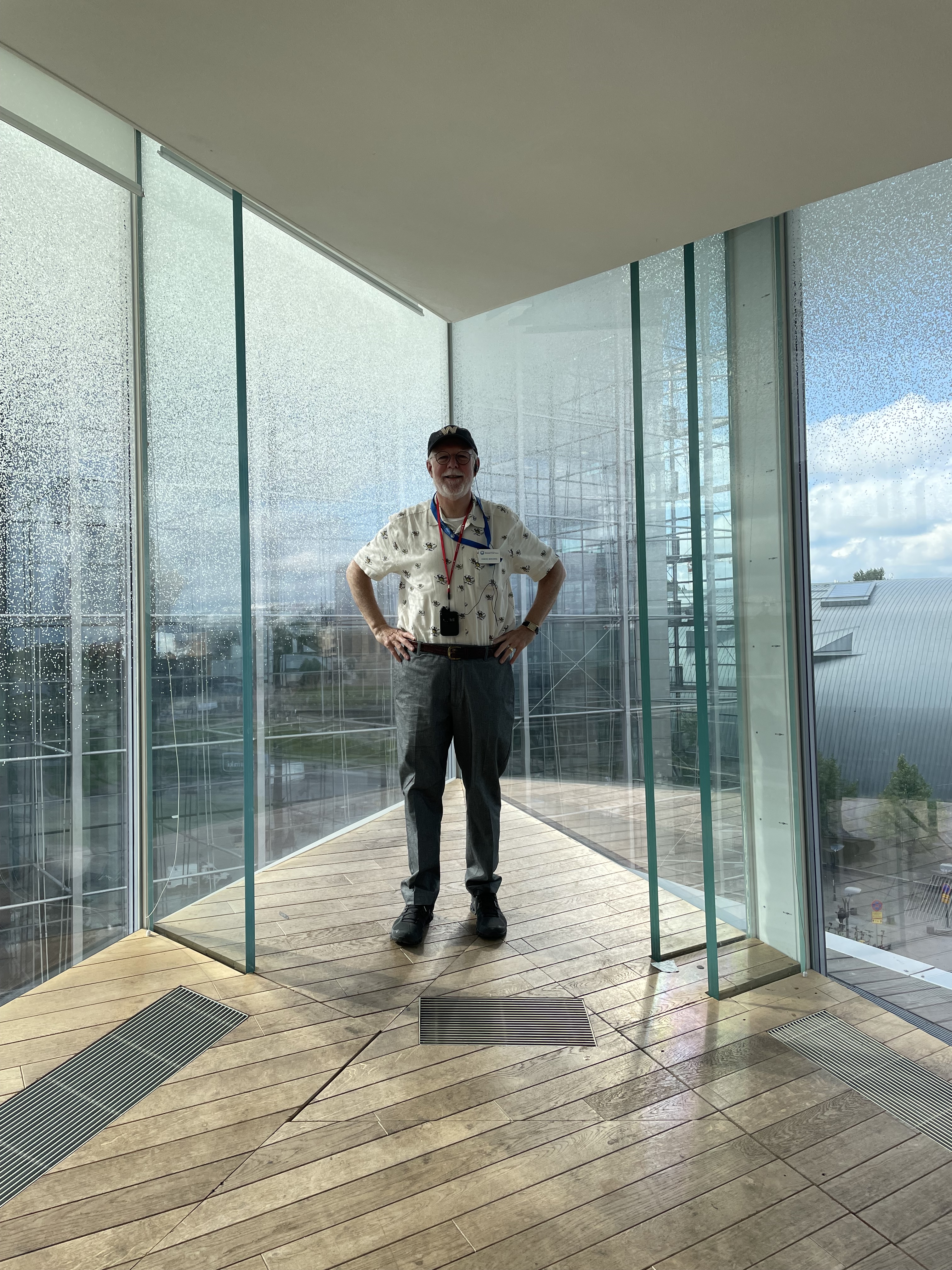
DJB at the top of the makers floor
The busy outdoor deck

Library director Anna-Maria Soininvaara told Stenger that, “From the beginning, Oodi has been a place where people can work or study alone or together, a place where there’s always something interesting going on, from lectures and study circles to knitting clubs,” she adds. “It’s also become a general meeting place—people just say ‘see you at Oodi.'”

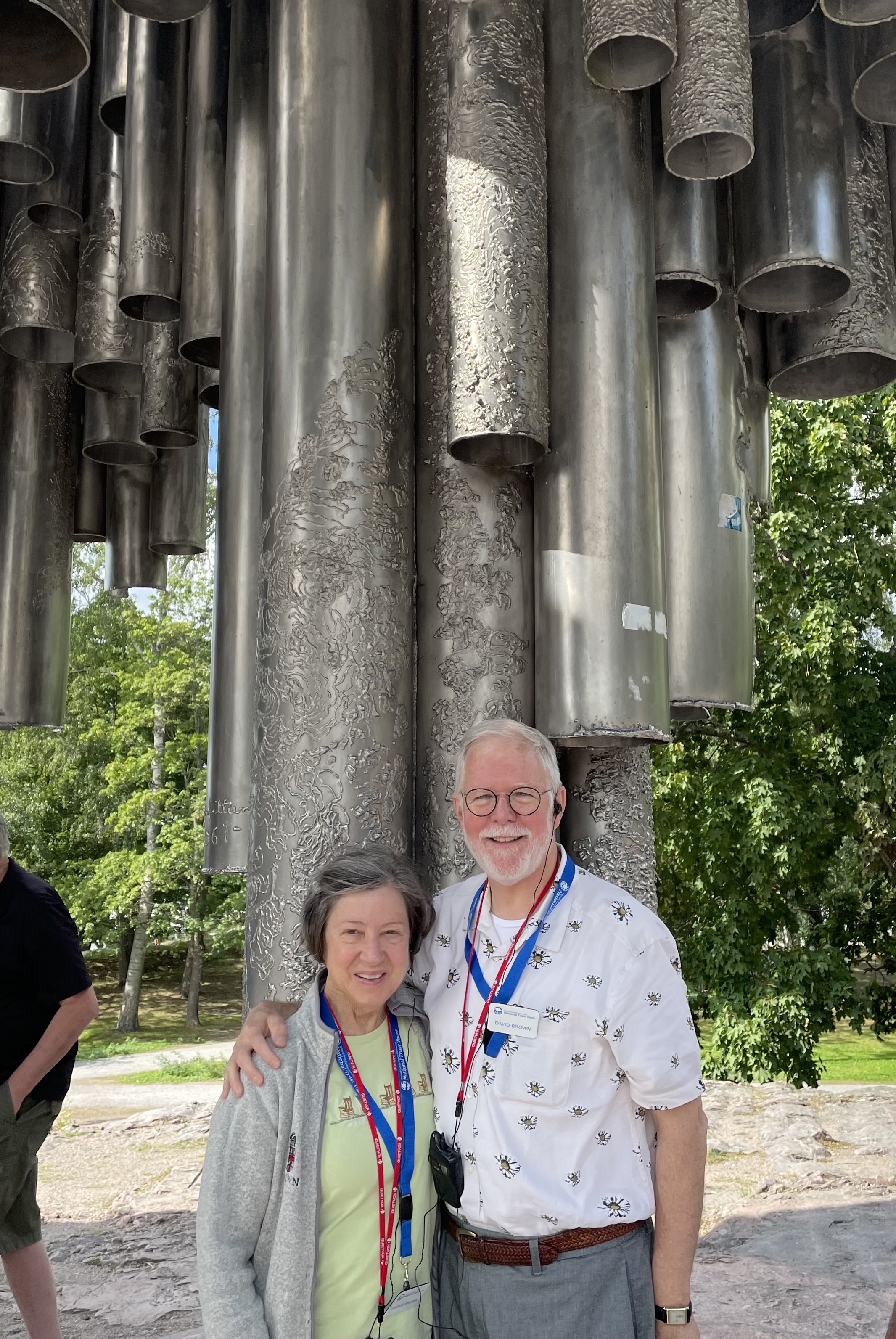
Our final stop of the morning was at the beguiling monument to Finland’s most celebrated composer, Jean Sibelius. Erected in 1967 by Finnish sculptor Eila Hiltunen, the abstract monument resembles a sound wave made from clusters of organ pipes. It consists of over 600 steel pipes unevenly grouped together at various heights, with the highest pipe reaching over 27 feet in the air. 

We experienced the sculpture when the park was filled with visitors, and then, for a few magical moments, after the crowds dispersed for lunch.

Candice and DJB enjoying the wonders of Helsinki with National Trust Tours

Sibelius is best known for the symphonic piece Finlandia, Op. 26. A tone poem . . .

The piece was composed for the Press Celebrations of 1899, a covert protest against increasing censorship from the Russian Empire, and was the last of seven pieces performed as an accompaniment to a tableau depicting episodes from Finnish history. The premiere was on 2 July 1900 in Helsinki with the Helsinki Philharmonic Society conducted by Robert Kajanus.

We’ll end with this version of Finlandia performed for the 2011 opening of the new Helsinki Music Hall. As one online commentator wrote, “you know it’s a good piece [of music] when it makes you feel patriotic for a country that’s not your own!”

Hail, Helsinki! Hail, Finlandia!

More to come . . .

DJB

Photo of Oodi Library by Hayffield L on Unsplash
Observations from . . . July 2024

A summary of the July posts from the MORE TO COME newsletter.

In July we celebrated Independence Day at a time when the hard work for justice and democracy continues. As it always does. Many of this month’s posts in MORE TO COME—from history to present events—touched on the fragile state of that democracy.

I also sent out a post before leaving on travel entitled Committed to transformation, where I shared photos from a recent walk around town. The title came from a Pico Iyer quote: A person susceptible to wanderlust is not so much addicted to movement as committed to transformation.” In the post I encourage readers to walk into a state of well-being. Walk into your best thoughts. Walk to be transformed.

I hope you will walk into something of interest in July’s offerings.


TOP READER FAVORITES

Two posts were far-and-away this month’s reader favorites: one because it struck a chord with those who visit regularly and the other because some search engine found it to be intriguing.

  • In our ongoing decluttering project, I came across two scrapbooks that brought back a flood of memories. Our memories are not infallible and I came face-to-face with that fact as you’ll find in Memory is a poet . . . the scrapbook edition. As a bonus you’ll see an award-winning baby picture!
  • Memories and myths are often close kin. There is no “Dr. No” picked up on the title of the first chapter of a book about the myths and facts surrounding high stakes art theft.

THE TIMES WE LIVE IN

I continue to call upon the work of historians, philosophers, and the occasional public servant (in the truest sense of that phrase) to help in sorting through our tumultuous times.

  • After the Supreme Court issued their presidential immunity ruling, historians with far more impressive credentials than mine made the point that the court “has just cemented its place in history as the most radical Supreme Court ever.” With fear for our democracy discusses why.
  • Congressman Jamie Raskin’s searing memoir covering the first forty-five days of 2021 reminds us, in the very first pages, that when it came to the insurrection of January 6th, we kept Looking away from a very old threat, one Alexander Hamilton warned us of in Federalist No. 1.
  • We are no wiser than Europeans of the 20th century, “yet we can learn from their experience” suggests historian of the Holocaust Timothy Snyder I revisit his vital book on tyranny in History does not repeat but it does instruct.
  • Which side are you on? is an ongoing look at the media’s inconsistent narrative selection and framing that is killing our democracy.

OTHER OBSERVATIONS

Music, art, books, and life were all co-mingled on MORE TO COME this month.

  • We joined an enthusiastic and packed house at Washington’s Arena Stage earlier this month to immerse ourselves in the “divine and daring” dancers of Step Afrika! A spirited migration is my observations on their performance of The Migration: Reflections on Jacob Lawrence.
  • Disguising our addictions looks at the proposition that we’re all addicts in one sense or another. It seems an appropriate observation after another act of political violence in America.
  • Remembering the Philadelphia Eleven is the story of the first Episcopal women priests. Remembrance of their actions, which challenged the very core of patriarchal culture, has been under the radar for decades.
  • Erik Larson’s look at the chaotic months between Lincoln’s election and Fort Sumter is reviewed in Hubris, heartbreak, heroism. By immersing ourselves in that era, perhaps we can learn how best to turn away from the discord in today’s world.
  • Truth can be elusive is my take on the first in mystery writer Donna Leon’s Commissario Guido Brunetti mystery series.

FEATURED COMMENTS

This is the segment where readers speak up.

Memory is a poet . . . the scrapbook edition brought out reader feedback. Two examples: the first from a writer/friend in France, and the second from a former colleague and long-time friend in the Midwest. Both are regular MTC readers, so I was pleased to see their reactions.

  • I love this piece for so many reasons, David. But the one bit I will keep forever (and probably use, somehow in my future life and writing) is ‘Memory is a poet, not a historian.’ Thanks to you for sharing it, and thanks to Marie Howe for thinking it.
  • “I needed to let you know your July 1 post, “Memory is a poet…..”, touched me. It touched me so much that I copied the last line and posted it in my new office. The photos show the quote as posted on my white board . . . I read the post at an interesting time. My daughter’s father-in-law died suddenly a couple of weeks ago. It brought memories (as well as many other thoughts) to the forefront of my mind.”

CONCLUSION

Thanks, as always, for reading. Your support and feedback mean more than I can ever express.

As you travel life’s highways be open to love, thirst for wonder, undertake some mindful, transformative walking every day, recognize the incredible privilege that most of us have, and think about how to put that privilege to use for good. Women, people of color, LGBTQ+ individuals, immigrants, and others can feel especially vulnerable . . . because they are. Work hard for justice and democracy as the fight never ends.

When times get rough, let your memories wander back to some wonderful place with remembrances of family and friends. But don’t be too hard on yourself if a few of the facts slip. Just get the poetry right.

Remember that “we are here to keep watch, not to keep.” Pay attention. Be astonished. Tell about it. And bash into some joy along the way.
Finally, try to be nice. Always be kind.

More to come . . .

DJB


For the June 2024 summary, click here.


You can follow MORE TO COME by going to the small “Follow” box that is on the right-hand column of the site (on the desktop version) or at the bottom right on your mobile device. It is great to hear from readers, and if you like them feel free to share these posts on your own social media platforms.


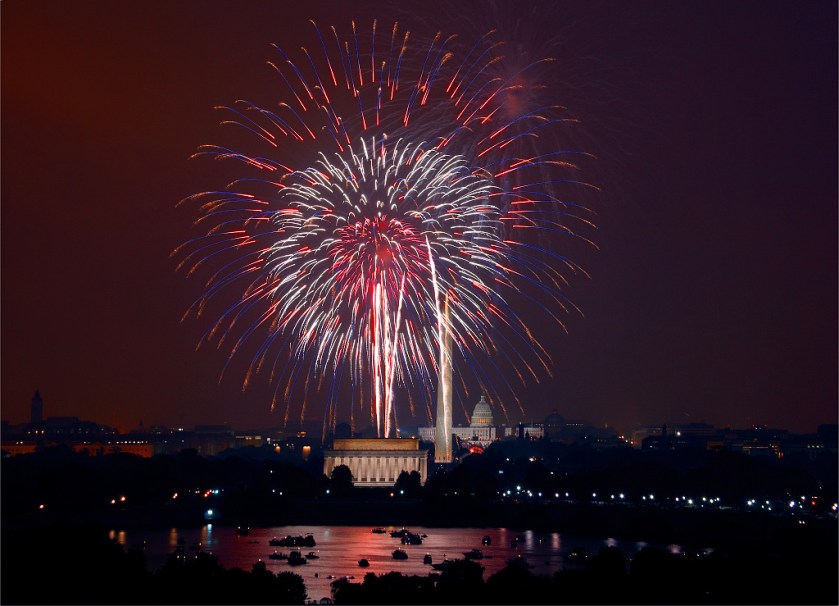
Photo of July 4th fireworks from the Carol M. Highsmith Collection, Library of Congress.

Remembering The Philadelphia Eleven

Today is the 50th Anniversary of the first ordination of women into the Episcopal Church, a move not without significant controversy at the time. In an act of civil disobedience, a group of eleven women and their supporters organized their ordination to become priests on July 29, 1974. The Church of the Advocate in Philadelphia welcomed them, but “the women were subsequently harassed, threatened and banned from stepping on church property.”

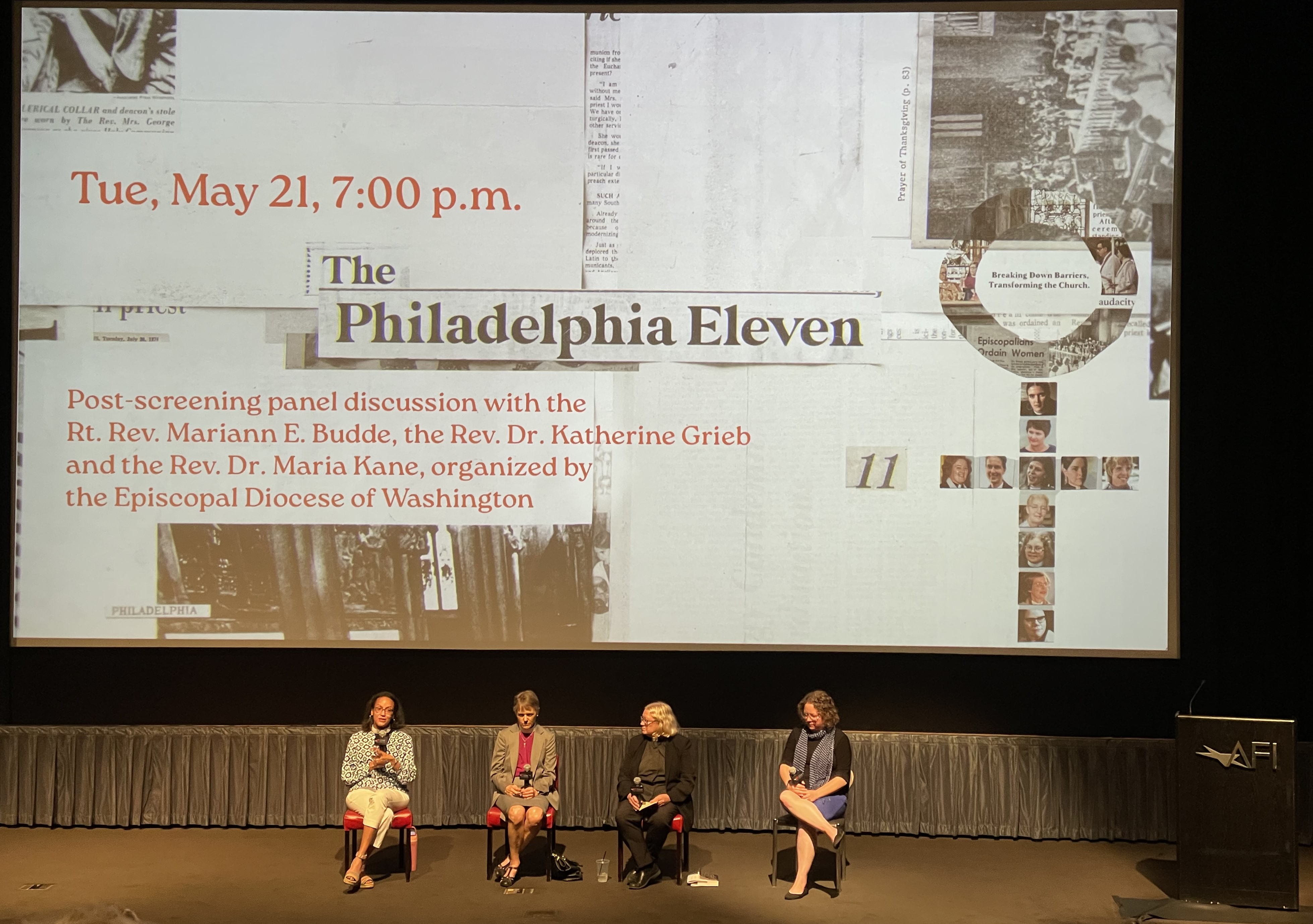
In May, Candice and I went to the AFI Silver Theatre to see an impressive and thoughtful feature-length documentary about this seismic event in challenging patriarchy in the church and to hear a post-screening discussion with, among others, the Rt. Rev. Mariann Budde, the Episcopal Bishop of Washington and an everyday reminder of the changes brought by the group that came to be known as the Philadelphia Eleven.

The Director’s statement about the film helps explain why it is important to tell this old story today.

I am not Episcopalian. I was raised in a Congregational Church, and to me this story is for everyone. It is about how to break down barriers with grace and be true to oneself in the process. And it is about standing up to institutions that do not allow all people to be who they are called to be.

The story of the first Episcopal women priests has been under the radar for decades. Perhaps this is because they disregarded certain institutional edicts, or maybe because their story is inconvenient. After all, they challenged the very core of patriarchal culture. These pioneers have taught me new ways to think about whose history is recorded and remembered, and who does the work of remembering. ​And they provide a vision for what a just and inclusive community looks like in practice. If we are serious about loving every human being as they are, then we must find new ways forward that disrupt the hierarchies we have inherited and replace them with the same kind of radical inclusivity demonstrated by these priests.” 

The official trailer of the movie provides another introduction as to the rancor these women endured in following their call to break down the superiority games of the church that focused on security, status, and control rather than God’s call toward generosity, humility, and cooperation.

It is important to recognize that the Church of the Advocate was undergoing its own transformation even before hosting this ordination service. Here’s how the Episcopal Church website describes that change.

Although the church was designed to seat more than a thousand worshipers, the congregation began to decline in the 1950s as many of its white members left the inner city. The parish was revitalized under the leadership of Paul Matthews Washington, an African American priest who served as rector from 1962 until 1989. On July 29, 1974, the church was the site of the first ordination of eleven women deacons to the priesthood. This irregular action preceded the approval of women’s ordination by General Convention. Today the Church of the Advocate is one of the premier African American parishes in the Episcopal Church.
I was not yet a member of the Episcopal Church when these women broke with church hierarchy, teaching, and a 2000-year history of patriarchy to remind us of the wide range of God’s love. But I remember watching the controversy at the time while I was grappling with my own doubts about my faith tradition and its complicity in playing those superiority games which, conveniently, always seem to support white males. It was another important step in my journey.

On this important anniversary, I give thanks for the courage of these eleven women and those who supported them.

More to come . . .

DJB

Committed to transformation

The writer Pico Iyer observed:

“A person susceptible to wanderlust is not so much addicted to movement as committed to transformation.”

It seems an appropriate thought to share as I head out on another voyage of discovery and, perhaps, transformation.

Iyer also wrote that we don’t travel “in order to move around—you’re traveling in order to be moved.  And really what you’re seeing is not just the Grand Canyon or the Great Wall but some moods or intimations or places inside yourself that you never ordinarily see . . .”

I like to observe the world at the speed of walking. Candice knows this, which is why she recently shared this quote from the Danish theologian, philosopher, poet, social critic, and religious author Søren Kierkegaard.
“Above all, do not lose your desire to walk. Everyday, I walk myself into a state of well-being and walk away from every illness. I have walked myself into my best thoughts, and I know of no thought so burdensome that one cannot walk away from it. But by sitting still, and the more one sits still, the closer one comes to feeling ill. Thus if one just keeps on walking, everything will be all right.”

Before heading out for distant explorations, I decided to follow the example of my friend Chuck Wolfe whose Resurgence: A Journey Substack newsletter illustrates “the transformation of spaces influenced by nature, culture, technology, and the beauty in decay, survival, and rebirth.” Chuck takes his camera and journal around his hometown and across the world to “explore natural resilience, historical heritage, and human adaptability across cycles of change and growth that shape our shared environments.” Chuck looks at the monumental and mundane and is astonished at both.
In yesterday’s walks in downtown Silver Spring, I pulled out my camera to capture the world in my hometown at this moment in time.


Artwork and architecture.

A clear contender to join the Sculpture Garden at the National Mall
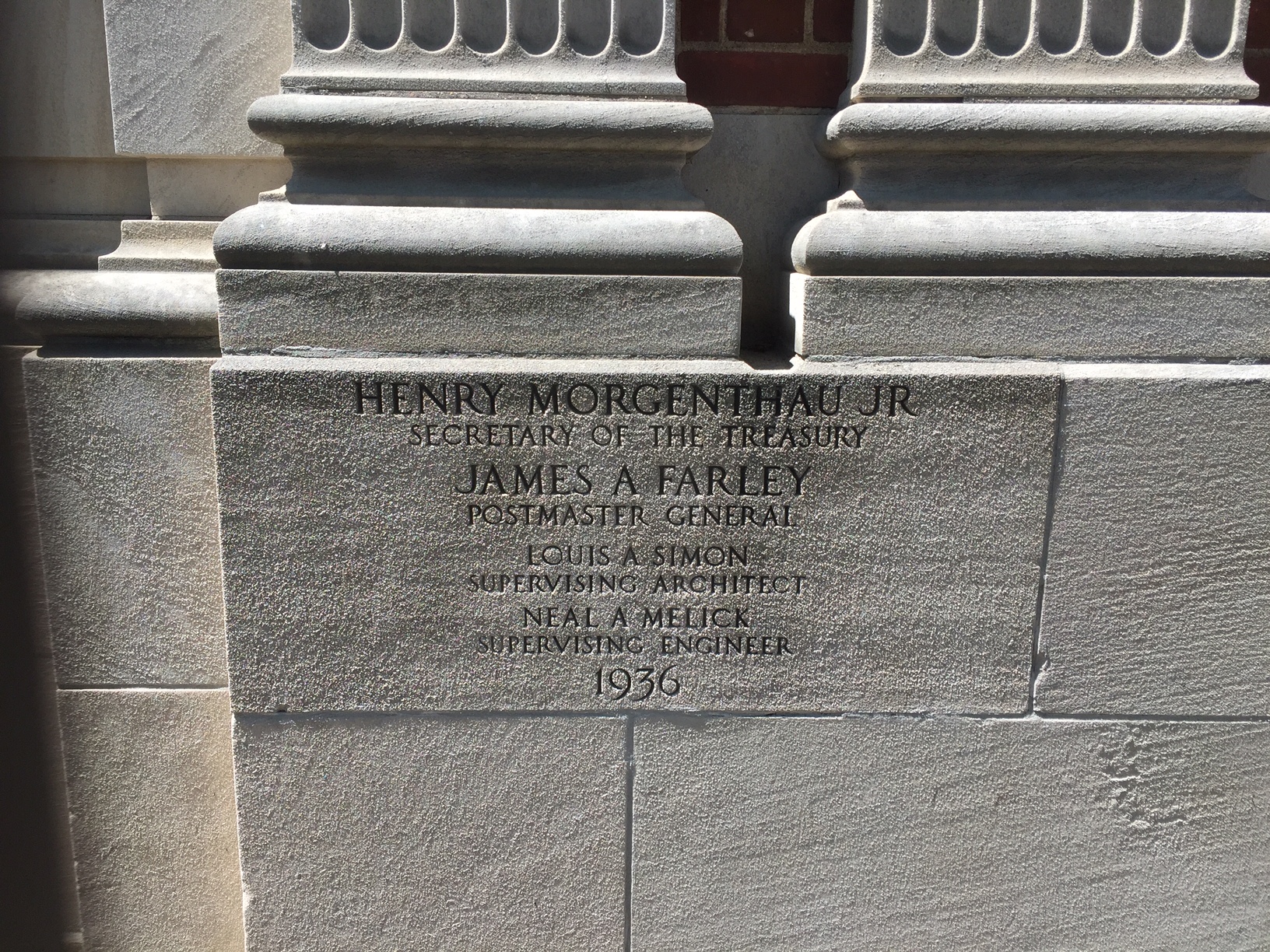
Cornerstone on our WPA-era post office building, a time when government worked for the people
A beautiful gift from a Silver Spring resident to the neighborhood

Remembering Rachel Carson

In the midst of our never-ending Purple Line construction project, I spent time in a quiet downtown oasis to remember the words of Silver Spring’s own Rachel Carson.

As the Historical Marker Data Base notes,

This sculpture, titled Two Roads, is a kind of open book that stands where two paths diverge, reflecting visitors and their world. The pages, with passages of caution, insight, beauty and hope, are quietly disintegrating dissolving into the air. Entire pages are missing, yet fragments of shining text are still legible.

The quote from Carson’s The Sense of Wonder, shown above, captures so much of her spirit.

It was a clear night without a moon. With a friend, I went out on a flat headland that is almost a tiny island, being all but surrounded by the waters of the bay. There the horizons are remote and distant rims on the edge of space. We lay and looked up at the sky and the millions of stars that blazed in darkness . . . I have never seen them more beautiful: the misty river of the Milky Way flowing across the sky, the patterns of the constellations standing out bright and clear, a blazing planet low on the horizon. Once or twice a meteor burned its way into the earth’s atmosphere . . . It occurred to me that if this were a sight that could be seen only once in a century or even once in a human generation, this little headland would be thronged with spectators.” 

Construction on the Transit Center Station for the Purple Line

There is nature in the urban world

Flowers, along with celebrations of both nature and the world around us, were everywhere.

Three flowers of many from the garden at the Koiner Urban Farm
A reminder to love the world

The spirit of gratitude is a powerful energizer

Signs of gratitude and reminders to laugh are plentiful amidst our amazingly diverse downtown.

Kefa Cafe entrance
Diversity on Georgia Avenue
Seen in a shop window
Our very own Mom & Pop Cannabis Shop!

Summer is bursting out all over at the market

The bounty of the earth was on full display as our area farmers prepared for the Saturday Silver Springs Farmers Market.

With this special Sunday edition of Monday Musings in mind, follow the advice of Iyer and Kierkegaard and walk yourself into a state of well-being. Walk away from every illness. Walk into your best thoughts.

Walk to be transformed.

More to come . . .

DJB

Photo of walker by Lacey Raper on Unsplash. All other photos by DJB: Mushrooms from Cory at Madison Mushrooms, tomatoes and peppers from George and Elda at Barajas Produce, and peaches from Winn at Quaker Valley Orchards.