NOTE: I don’t usually double post, but I’m frontloading a couple of essays in anticipation of being away from my computer over the coming days. Read them if you wish at your leisure.
“History does not repeat, but it does instruct.” So begins a slim yet vital book that I first read in 2021 and that I returned to in July to be refreshed for the months ahead. *
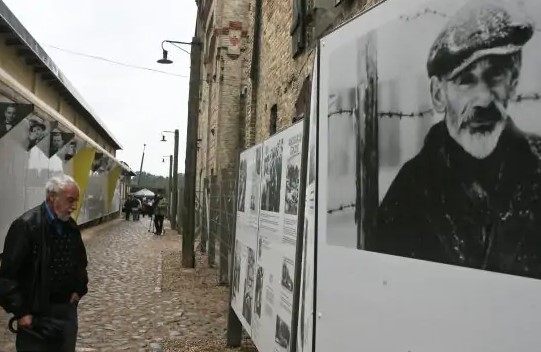
I also wanted to return to this book before my travels to see the Riga Ghetto in Latvia. This city quarter, once inhabited by Russian merchants and Jews, featured small wooden houses, paved winding streets and a unique aura. It has barely changed in the last sixty years.
The Ghetto Museum in Riga, Latvia
The Ghetto Museum’s exhibitions speak not only to the tragedy of Latvian Jews during World War II, but also about their lives in pre-war years, their religious traditions, their contribution to the fighting for Latvian independence, their role in education and culture.
Within several months of the Nazi occupation of the country, the Jewish population had been entirely exterminated in most Latvian towns. Between 1941 and 1945, around 70,000 Latvian Jews and around 25,000 Jews who had been deported into Latvia from various other countries across Europe were killed.
It is a chilling reminder of what can happen when authoritarianism and tyranny take hold in a country.
On Tyranny: Twenty Lessons from the Twentieth Century (2017) by Timothy Snyder, a historian of the Holocaust who teaches at Yale, is a guide to resisting authoritarianism. This small but powerful work provides present-day advice in the vein of that used by the Founding Fathers when they sought to build a governmental system of checks and balances that would be resistant to the tyranny that overcame ancient democracies.
To help instruct us in the 21st century, Snyder looks at recent history, such as that in Latvia in the 1930s and 1940s.
“Today our political order faces new threats, not unlike the totalitarianism of the twentieth century. We are no wiser than the Europeans who saw democracy yield to fascism, Nazism, or communism. Our one advantage is that we might learn from their experience.”
Snyder is no believer in American exceptionalism. Instead, he notes that while we “might be tempted to think that our democratic heritage automatically protects us from such threats . . . this would be a misguided reflex.”
After opening this 126-page book with thoughts on history and tyranny, he moves through twenty short lessons that resonate with the power that comes from long, serious study of the interwar years in Germany and the horrors that came after the rise of fascism, Nazism, and communism. Snyder’s lessons and writings are very accessible, but that doesn’t make them less compelling. His very first lesson is “Do not obey in advance,” followed by a few short pages that show how most power acquired by authoritarians is freely given by citizens of a country. In that act, they are teaching the authoritarians seeking power what they can do.
There are lessons dealing with the need to defend institutions, think for ourselves, and take responsibility for our actions in the civic sphere. As an example, Snyder writes that “you might one day be offered the opportunity to display symbols of loyalty. Make sure that such symbols include your fellow citizens rather than exclude them.” Other lessons and suggestions are focused more on the individual choices we make to stay active and alive in a civil society, such as joining and supporting causes; reading more books and spending less time on the internet; making eye contact and small talk.
Snyder’s book was published in 2017, and we know that authoritarian language and actions in the U.S. worsened over the next four years, culminating in the failed insurrection of January 6th. Lesson #6—“Be wary of paramilitaries”—discusses actions in the 20th century run-up to World War II that were repeated following the lies about a stolen election. Lesson #10—“Believe in truth”—ends with the chilling reminder that “post-truth is pre-fascism.”
Synder is especially aware of the misuse of language, and he has no problem in showing how the former president’s language only serves the leader.
Lesson #19—“Be a patriot”—begins with two pages of things that a patriot is not, each taken from recent examples. Patriotism, he notes at the end of this long list, “involves serving your own country.” Those who are nationalists are not patriots. A nationalist “encourages us to be our worst, and then tells us we are the best.”
“A patriot, by contrast, wants the nation to live up to its ideals, which means asking us to be our best selves.”
What makes Snyder’s work so important is that he shows a way forward. Each lesson is built on actionable steps we can take. And he returns to the critical need to study history in the epilogue “History and Liberty.” He notes that “the habit of dwelling on victimhood,” the province of the nationalist, “dulls the impulse of self-correction.” History, on the other hand, “gives us the company of those who have done and suffered more than we have.”
This is a work that can be read in a very short sitting. But if you are like me, many of the pages will be underlined and filled with margin notes, and its lessons will stay, hopefully, for a lifetime. For as Snyder notes at the end, “to make history, young Americans will have to know some. This is not the end, but a beginning.”
More to come . . .
DJB
*Much of what follows is from my earlier review.
Photo at the top of the post of the Jewish Ghetto Museum in Riga, Latvia.
These conglomerates prioritize the interests of their owners over those of the public they ostensibly serve, muddling or deceptively hiding the true message about the stakes of this election. Even an attempted assassination attempt (which historians note will probably not change the dynamics of the race) and the milquetoast coverage of the Republican convention (or groveling marathon) could not force the mainstream media to deviate from its relentless focus on President Joe Biden’s fitness to serve.
This battle between the wealthy owners and publishers of the media and the people is a long one in America. Pete Seeger sang about these conflicts in the 1940s in Newspaper Man, one of his many protest songs of the era.
Ting-a-ling-a-ling, circulation Ting-a-ling-a-ling, advertising Get those readers, get that payoff What a headache, what a mess Oh, publishers are such interesting people! Let’s give three cheers for freedom of the press
Normalization of the indefensible
Many in the press are working overtime to normalize the authoritarian while undermining champions of democracy. As Will Brunch wrote in the Philadelphia Inquirer: “Here in Milwaukee, the political pundits finally saw the thing they’ve been pleading for—unity—and what that really looks like. It looks a lot like Jonestown,” where a cult leader took the lives of his followers in 1978.
The CSS Lab at the University of Pennsylvania is a joint venture of the School of Engineering and Applied Science, the Annenberg School for Communication, and the Wharton School. The lab provided a detailed case study three months ago on our most egregious practitioner of failed journalism, the New York Times, and their inconsistent narrative selection and framing.
“On the weekend of March 2-3, 2024, the landing page of the New York Times was dominated by coverage of their poll showing voter concern over President Biden’s age. There was a lot of concern among Democrats about the methods of the poll, especially around the low response rate and leading questions. But as a team of researchers who study both survey methods and mainstream media, we are not surprised that people are telling pollsters they are worried about Biden’s age. Why wouldn’t they? The mainstream media has been telling them to be worried about precisely this issue for months.” (my emphasis)
The importance of NATO has been highlighted in July as the alliance celebrates its 75th anniversary and our allies praised the work of President Biden. Yet even in March, CSS Lab noted that
“. . . the choice of the Times to publish almost three times as many articles about Biden’s age as about Trump pulling the US out of NATO represents a clear example of biased coverage. In turn, this choice misinforms the NYTs millions of readers about the relative value of these topics and their underlying facts.”(my emphasis)
If the media is called out for egregious mistakes, they blithely move on, the most recent example of many being when the Timesflunked Journalism 101 and ran a story about a neurologist visiting the White House. The story insinuated that Biden has Parkinson’s. It was thoroughly debunked—not the least of reasons being the president wasn’t even in town many of the days when that doctor came to the White House. They never checked his calendar against the visitor logs and have never (to my knowledge) admitted their mistakes. The fact that the White House released the doctor’s thorough report at the time of the President’s annual physical saying Biden had no neurological problems is also—to be charitable—a journalistic rookie oversight.
Perhaps not surprisingly, most media outlets—including the Times—have been strangely compliant with the Trump campaign’s decision not to release any official medical information about the former president’s recent injury.
The Times finally ran an editorial saying Trump was unfit for office. But as Marcy Wheeler helpfully noted, after having scoldedthe President that he “should leave the race” that Democratic primary voters elected him to run and having orderedthe Democratic Party to “speak the [NYT’s] plain truth” to Biden—not to mention having ignored Trump’s own age and actions in the meantime—the Timesweighed in against Trump not by scolding or ordering but by “observing.”
The debate (on the Democratic side) is so intense because, the Times says, “a compelling Democratic alternative is the only thing that will prevent [Trump’s] return to power.”
“Which is to suggest that Joe Biden’s historic success—the policy stuff that, at NYT, always takes the backseat to Biden’s age—is not compelling at all.”
This inconsistent narrative selection and framing is killing our democracy.
Not every journalist is compliant
Fortunately, there was some room for Project 2025 to rise in the public’s consciousness as more and more people—alerted by independent journalists such as Joyce Vance—realized it as a dangerous and highly undemocratic blueprint for a future Trump regime. The Washington Post reported that the same people behind Project 2025have already declared the November election results illegitimate before the first vote. Their goal is to create a permission structure to refuse to certify the results as the GOP builds a massive voter suppression and election subversion war machine to undermine the November elections. But Marc Elias at Democracy Docket notes, “There were also amazing signs of hope in various court victories for voters around the country.”
“CNN and other broadcasts have reached a new low in RNC coverage, fawning over “unity” and “young Vance” — ignoring we are seeing a fascist party overflowing with criminals plot the downfall of America, a VP who is the single most radical and unqualified in history. No pushback on lack of information about Trump’s injury. It’s access journalism at its worst. It’s not the media we need to defend democracy.“
Dan Fromkin has long called out our national media for their inability to see reality. And in his column for the Philadelphia Inquirer, Will Bunch wrote accurately on Thursday that the convention’s central theme was “The deification of Donald J. Trump.” Note that the Inquirer was one of the few national newspapers to get the story right from the beginning about which candidate should drop out of the race.
Much of our current political struggle comes back to greed and power, core values to the former president. Capitalism is not democracy and working for the common good is not socialism but the rich are increasingly trying to tell us that those two things are true. They are using every tool at their disposal—dark money, control of the national media, a captured court system, racism, homophobia, political hypocrisy, Christian nationalism—to divide the country and take control. Eric Levitz lays out a pretty devastating attack on their falsehoods.
One of the early signs of the priorities—and ultimate legacy—of Chief Justice John Roberts came with the 2010 Citizens United decision. * The billionaires and their corporate judicial system headed by Roberts decided that corporations are people with political rights, opening the floodgates to billions in dark money. That one decision altered our history, changing the core—if often unrealized—values of our country from the democracy-supporting “we the people” to the rule-by-the-rich-and-connected focus of “I, me, mine.”
“Behind each threat is dark money; massive anonymous political spending by special interests who hide their identities from the public . . .
This whole filthy bestiary of influence is new (or refocused and expanded) since Citizens United. It didn’t used to be this way; it doesn’t have to be this way. . . voters hate dark money with a passion, Republicans, independents and Democrats alike. Polling is off the charts . . .
It’s a trifecta; dark money is behind climate denial, Court capture and corruption of Congress—one crew, one plan, one cancer in the body politic.”
Unfortunately, you won’t hear nearly as much about the plan of Project 2025 to end American democracy in the media as you do about Joe Biden’s age. That’s a deliberate choice.
Making a choice
Biden gave a barnburner of a speech in Detroit last Friday. It begins around the 6:40 mark of the video, and because he lays out his plans for the first 100 days, talks about our world-leading economic recovery from the pandemic, and attacks Donald Trump’s record in scathing terms it is worth your time.
Republicans who voted against every bill Biden has championed that has led to investment in our economy take credit for work they opposed . . . because this work is very popular with the American people. Tennessee’s Governor, Republican Bill Lee, boasted that the state had “secured historic funding to modernize Memphis infrastructure with the single-largest transportation investment in state history.” All the Republicans in the Tennessee delegation opposed the measure, and Senator Marsha Blackburn called the bill “socialism.” In Alabama, Senator Tommy Tuberville boasted about a bridge project funded by a $550 million Department of Transportation grant, writing: “Since I took office, I have been working to secure funding for the Mobile bridge and get this project underway.” But as Representative Terri Sewell, an Alabama Democrat, pointed out, Tuberville voted against the bill that provided the money.
These government policies are enormously popular and so Republicans take credit for them, even while voting against them. The hypocrisy and greed are unbelievable. The obliviousness—or more likely the duplicity—of the media in not pointing that fact out is unconscionable.
The notion of journalistic objectivity, often touted by these elite-run outlets, serves as a façade for balanced reporting. But in truth, unbiased news is a myth. These six corporations—the publishers and owners of our day—are focused on advancing their agenda and their greed. The public—and democracy—be damned.
The fight for democracy and against greed and authoritarians never ends. Which side are you on?
More to come . . .
DJB
*The other key aspects of Roberts’ legacy: destroying voting rights and destroying the rights of American women.
There are times when those who are paying attention feel that present and past have merged. Our current political and social unrest has echoes of the 1850s, when a simmering crisis boiled over in the last few months of 1860 and first few months of 1861 to tear apart a divided nation.
History, as we’ll hear often over the next few months, doesn’t repeat but it can instruct. One of our more successful popular writers has turned his attention to this earlier period of American strife, hoping that by immersing ourselves in that era, we can learn how best to turn away from the discord in today’s world.
The Demon of Unrest: A Saga of Hubris, Heartbreak, and Heroism at the Dawn of the Civil War (2024) by Erik Larson examines the motives and actions of a small minority of rich white men who decided that slavery—and the lavish lifestyle owning other human beings enabled for them and their families—was worth defending to the point of tearing the country apart. In his familiar storytelling style, compelling the reader to keep turning pages, Larson focuses on the chaotic months between Abraham Lincoln’s election to the presidency on November 6, 1860, and the Confederacy’s shelling of Fort Sumter on April 12, 1861. Much like other times of conflict, it is a period marked by “tragic errors and miscommunications, enflamed egos and craven ambitions, personal tragedies and betrayals.”
Lincoln, and his growth from politician to leader, is at the center of the saga as he grapples with the heartbreak of taking over a nation that is coming apart while trying to control his “duplicitous” secretary of state, William Seward, who fervently believes he should have been in the White House as opposed to this uncouth, small-town Illinois lawyer. The other key characters are Major Robert Anderson, Fort Sumter’s commander and a former slave owner sympathetic to the South but loyal to the Union; the Fire Eater Edmund Ruffin, a “vain and bloodthirsty radical who stirs secessionist ardor at every opportunity”; and Mary Boykin Chesnut, “wife of a prominent planter, conflicted over both marriage and slavery and seeing parallels between them.”
Anderson
Anderson is an honorable commander who moves with skill but also makes decisions that leave few good options for his troops. As one of his officers writes home, “We are to be left to ourselves as a sacrifice to turn public opinion against those who attack us.” He knew that the “first gun fired at the fort will call the country to arms.” Anderson’s decisions, in Larson’s telling, are often second-guessed by Capt. Abner Doubleday, an ardent abolitionist from New York who tired of negotiations with the rebels. Anderson is the public servant who, at key points in the saga, loses the forest for the trees, but nonetheless does his duty.
Ruffin
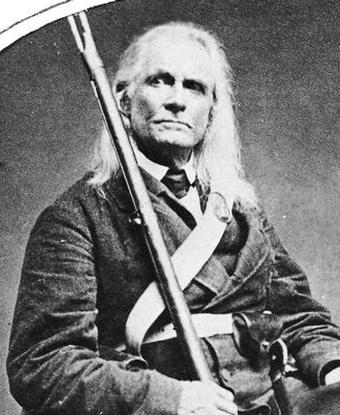
Ruffin and his fellow Fire Eaters are determined to tear apart the Union, plunging America into a devastating war they were never going to win. Traveling from state to state with his unruly white locks of hair and displaying a pike taken from John Brown as a warning to slave holders, Ruffin’s persona is designed to both shock and bring all attention to himself—a period Steve Bannon, one might suggest. His intellect is evident, but his personal demons and unquenchable need for affirmation drive him to push the country over the precipice, a leap he finally takes himself after the war ends.
Chestnut
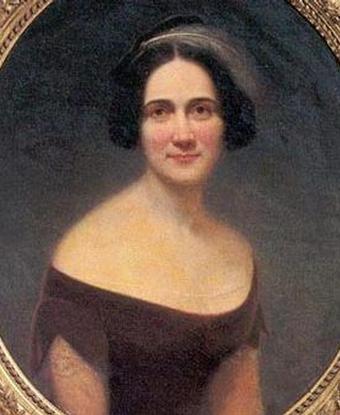
Chestnut, whose dairies are well-known to historians of the Civil War period, follows her planter husband to Montgomery during this period, where Larson details the whirlwind social activity of the Southern oligarchy. She does elicit some sympathy for recognizing the bonds which bind both women and slaves, but her observational powers—not to mention empathy—only go so far. She is the beneficiary of a system that robs workers of their liberty, dignity, and life so that a very small fraction of the people can live in unparalleled luxury, not unlike the billionaires and other one-percenters in today’s world.
Larson’s work is not without its problems. For a conflict that he rightly shows was all about slavery (not the “states rights” nonsense that apologists from the 1860s until today use as a smokescreen), there is a surprising lack of Black voices in his narrative. Like other observers, I felt it would have been enriched to inject the words and actions of activists such as Frederick Douglass into this story. And his account of Robert E. Lee’s emotional torment at giving up his U.S. Army commission to join the Confederacy, as well as his description of Lee’s attitudes toward slavery, is more Douglas Southall Freeman than Ty Seidule.
There is, however, also much to recommend Larson’s take on this period. He acknowledges in an author’s note that he hopes we will read of this time to help grasp the stakes of the abyss that we might stagger ourselves into here in 2024. And as another commentator has noted, Larson’s explanations of how “a closed-loop, delusional culture (ahem, right-wing news ecosystem) can break people’s brains,” is also highly instructive for our times.
The Civil War is endlessly fascinating for both writers and readers. Larson’s work, while not at the level of some of our greatest historians of the era, is nonetheless a worthwhile addition.
More to come . . .
DJB
Image of Fort Sumter under attack by Currier & Ives/Library of Congress
In Federalist No. 1, Alexander Hamilton warned us about the threat of an opportunistic demagogue “unleashing a violent mob and primitive impulses against the Constitution to override the political and constitutional infrastructure of representative democracy.”
“The demagogue panders to the negative emotions of the crowd, pretending to be the champion of the people, only to wage war against the Constitution, the legal order, and the democratic political process, all of which belong to the people. He starts as a ‘demagogue,’ who knows how to whip up the crowd into a mob frenzy, but ends as a ‘tyrant,’ a ruler who uses his power to oppose the people, Hamilton said.“
If you look at the historical text, Hamilton suggests that these opponents of democracy will let loose “a torrent of angry and malignant passions.” This Founding Father looks at the conduct of those who oppose the Constitution and concludes “that they will mutually hope to evince the justness of their opinions, and to increase the number of their converts by the loudness of their declamations and the bitterness of their invectives. An enlightened zeal for the energy and efficiency of government will be stigmatized as the offspring of a temper fond of despotic power and hostile to the principles of liberty.”
Hamilton literally tells us what unfolded on January 6, 2021, in the very first Federalist Paper.
Unthinkable: Trauma, Truth, and the Trials of American Democracy(2023) by Jamie Raskin can only be described as a searing memoir covering the first forty-five days of 2021 that saw Congressman Raskin lose his only son to suicide, endure a mob’s violent attack on the U.S. Capitol to try and upend the election of Joe Biden, and lead the second impeachment against the former president who planned the outlines of the assault and incited that mob. On the very first pages he reminds us that we had too long looked away from a very old threat, the one raised by Hamilton in the prescient Federalist No. 1.
Raskin begins Unthinkable with a grief-filled description of the beauty of a son who falls into a long and deep depression that is exacerbated by the isolation of the pandemic lockdowns. A very good writer, Raskin takes us through Tommy’s life and his son’s ultimate decision to end that life, always facing the unfolding crisis with brutal honesty and immense grief. He shares with us how he and his family work to make sense of the senseless. I cried on more than one page, reading of a father’s depths of despair at the loss of a child.
The second section is a lengthy and novel-like description of the insurrection, as Trump and House GOP leaders act on “the dictum of the right’s favorite philosopher, Carl Schmitt, who said, ‘Sovereign is he who decides on the exception.'” The day after burying his son, Raskin, his daughter, and his son-in-law are trapped in the Capitol and fearing for their lives at the hands of a violent mob. For six months, Congressman Raskin, Speaker Pelosi, and her leadership team had gamed out every scenario that they deemed imaginable for the GOP to try and steal the election. But they missed one option: Trump assembling a large group of thugs and self-styled militia to storm the Capitol. As Raskin came to realize, “American carnage was not actually what Trump was denouncing on his first day in the presidency; it was what he was promising. And he had delivered.”
Once order is restored late in the evening of January 6th and in the early morning hours of January 7th, Speaker Pelosi asks Raskin to head up the impeachment managers in the House, an offer Raskin sees as providing a purpose at a time when he was burdened with grief. The book’s last section provides an insider account of the work of impeachment, and the unprecedented Senate trial that produced the most bipartisan Presidential impeachment vote in American history. And he reminds us again of Rep. Liz Cheney’s epic statement read into the record the day the House votes for impeachment.
“The President of the United States summoned this mob, assembled the mob, and lit the flame of this attack. Everything that followed was his doing. None of this would have happened without the President. The President could have immediately and forcefully intervened to stop the violence. He did not. There has never been a greater betrayal by a President of the United States of his office and his oath to the Constitution.“
To which I can only say Amen.
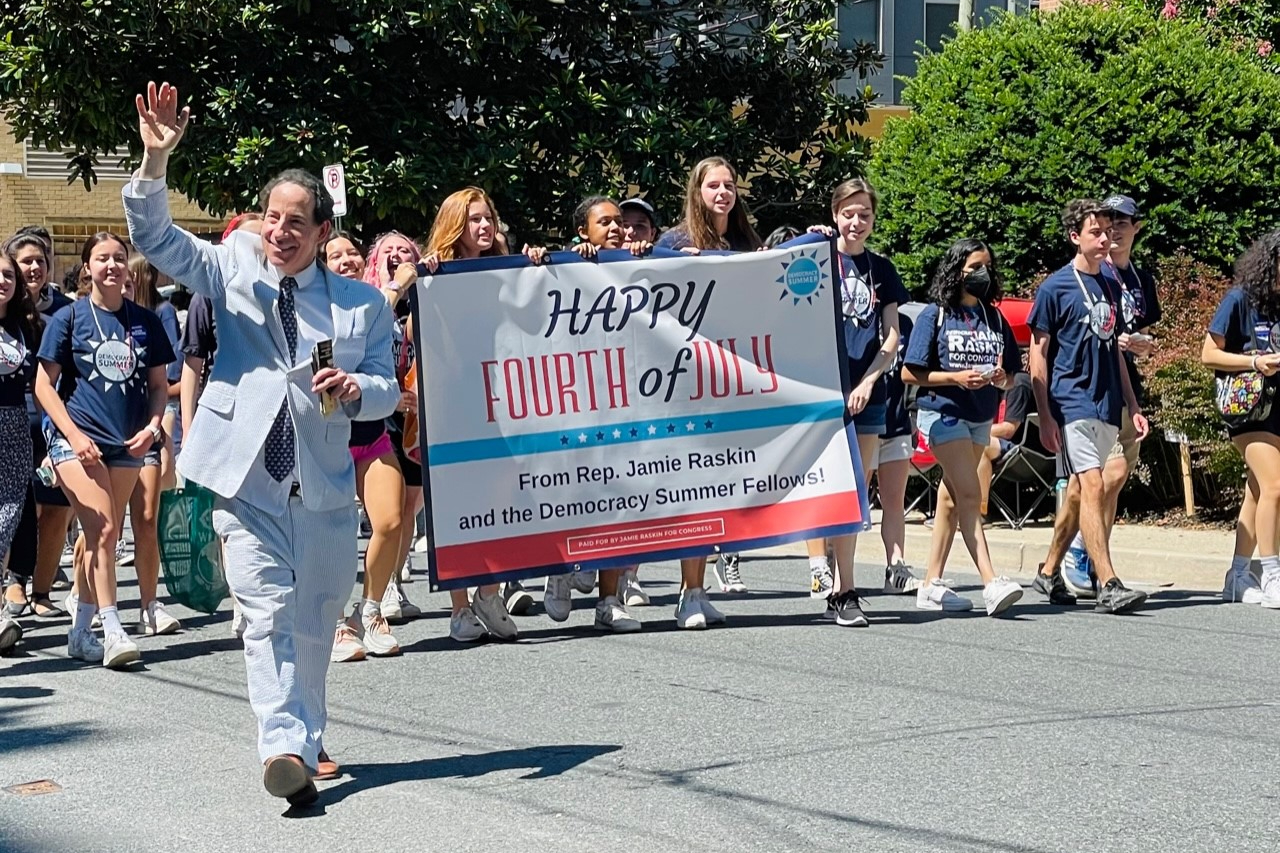
Congressman Jamie Raskin at the 2022 July 4th parade in his hometown of Takoma Park (photo by DJB)
However, as Raskin says near the end of the preface, “ultimately, this is not a book about Donald Trump. Quite the opposite. It is about the kind of people whose dreams and actions have allowed us to survive Donald Trump and his sinister incitement of racism and hatred among Americans who feel displaced and threatened by the uprooting of America’s racial caste system.”
As we enter another election season, facing threats from Trump and his many enablers who have been working on what journalist Anand Giridharadas describes as “a crock-pot coup, simmering low and slow, under cover, breaking down the fibers of our electoral system, until one day democracy itself is cooked,” Unthinkable is a “vital reminder of the ongoing struggle for the soul of American democracy and the perseverance that our Constitution demands from us all.”
Recent personal and societal events have me thinking about addiction. Alcohol and drug addiction are the most visible forms in our society, but it seems clear to me that we’re all addicts in one sense or another.
If you think I exaggerate, consider how many times each hour you reach for the phone in your pocket. Simon Sinek even has a short two-minute video on phone addiction, showing how easy it is to let this device run our lives.
Richard Rohr’s recent A Counterintuitive Wisdom was timely as well as expansive of my thinking around this question. While I have never personally worked through a twelve-step program, a number of friends have experienced this life-altering facing of reality. I appreciate how their commitment has changed the way they see themselves and the world. Rohr, a Franciscan friar and ecumenical teacher, suggests that the twelve-step program parallels the Christian gospel “but without as much danger of spiritualizing the message and pushing its effects into a future world.”
Human beings, suggests Rohr, are addictive by nature.
“Addiction is a modern name and honest description for what the biblical tradition called ‘sin’ and medieval Christians called ‘passions’ or ‘attachments.’ They both recognized that serious measures or practices were needed to break us out of these illusions and entrapments.”
We are all addicted to our own habitual ways of doing anything, our own defenses, and most especially, our patterned way of thinking and processing reality. Our institutions, societies, and nations are also addicted, as the events of this past weekend illustrate once again. Political violence is wrong, yet America is a country with an addiction to guns and violence as the way to solve problems that predates our founding. As Yale historian Timothy Snyder wrote, we should be careful about jumping too quickly to conclusions in this case. And beware the coming chorus of righteous pity and finger-pointing, as historian Ruth Ben-Ghiat has noted, given the authoritarian’s addiction to dwelling on victimhood.
In his meditation, Rohr also addresses these types of addictions.
“All societies are addicted to themselves and create deep codependency. There are shared and agreed-upon addictions in every culture and every institution. These are often the hardest to heal because they do not look like addictions. We have all agreed to be compulsive about the same things and unaware of the same problems.”
Verbal acknowledgement of the addiction is one of the twelve-step program’s breakthroughs. “While our attachments and addictions are at first hidden to us; by definition, we can never see or handle what we are addicted to, but we cannot heal what we do not first acknowledge,” Rohr writes.
Some form of “alternative consciousness is the only freedom from the addicted self and from cultural lies.” Simple acknowledgement may be the first step, but it cannot be the last. The damaged lives of those addicted to drugs or alcohol are only the most visible form of the powerlessness that overtakes us all when we succumb to personal and tribal addictions of thought and action.
And here again we find the reality that truth is paradox standing before us.
We suffer to get well. We surrender to win. We die to live. We give it away to keep it.
We have to let go.
That is so very hard for us personally and as a nation. We like to think of ourselves as exceptional and able to handle anything.
. . . about losing to find, giving away to gain, giving everything away only to find it given back in a new and more beautiful form . . . it is not about giving up for its own sake; it is about making room for something wonderful.
“The fundamental and paradoxical premise of Twelve Step recovery as I experience it is this: The more clearly you realize your lack of control, the more powerless you discover yourself to be… [and] the more natural it is for you to be surrendered to God. The more surrendered to God you become, the less you struggle against the natural flow of life. The less you struggle against the flow of life, the freer you become. Radical powerlessness is radical freedom, liberating you from the need to control the ocean of life and freeing you to learn how best to navigate it.“
We are all spiritually powerless, suggests Rohr, not just those who are physically addicted to a substance. “Alcoholics simply have their powerlessness visible for all to see. The rest of us disguise it in different ways and overcompensate for our more hidden and subtle addictions and attachments.”
Join me during this time of turmoil and trauma in thinking of what passions and attractions drive our personal addictions, and how we can begin to move past them.
“I was leaving the South to fling myself into the unknown . . . I was taking a part of the South to transplant in alien soil, to see if it could grow differently, if it could drink of new and cool rains, bend in strange winds, respond to the warmth of other suns and, perhaps, to bloom.”
Isabel Wilkerson’s The Warmth of Other Suns is a profound and vivid work that describes the exodus of some six million Black Americans who left the South to escape the horrors of Jim Crow from 1915 to 1970, resettling and beginning anew in Northern, Midwestern, and Western cities. Jacob Lawrence, an American painter and the first of his family to be born outside the South, understood this journey and captured it in his artistic offerings.
In 1940, he received a grant from the Rosenwald Foundation to create a 60-panel epic, The Migration of the Negro (now known as The Migration Series); when the series was exhibited at Edith Halpert’s Downtown Gallery the following year, the then 23-year-old artist catapulted to national acclaim.
Now owned jointly by New York’s Museum of Modern Artand The Phillips Collection in Washington, D.C, “this epic series dramatically depicts the post–World War I migration of African Americans from the rural South to the industrial North.”
These paintings are the inspiration for The Migration: Reflections on Jacob Lawrence, a work we experienced this week. We joined an enthusiastic and packed house at Washington’s Arena Stage to immerse ourselves in the “divine and daring” dancers of Step Afrika! The group had the audience clapping polyrhythms, participating in call-and-response choruses, and swaying in our seats and on our feet throughout. It was a treat for body and soul.
(Credit: Step Afrika!)
Weaving dance and music into six distinct yet connective stories, The Migration begins with Drum Call and continues through Chicago, each explained in the evening’s program. All were moving and evocative, but I was especially taken with Wade Suite.
Wade shows the continuity in African and African American percussive dance traditions by blending the South African Gumboot Dance, tap, and stepping with the African American spiritual.
Wade In the Water, rendered by a beautiful quartet during this segment, is among the most beloved of those spirituals. The troupe gave a soulful performance of the tune in both song and dance.
Because no video or audio exists of their performance, I’m highlighting three versions here, the first simple and straightforward, showcasing the song’s structure and lyrics. The second is by the incomparable Staple Singers. Finally, jazz master Ramsey Lewis, who passed on September 12, 2022 at the age of 87, has an instrumental version that showcases the harmonic and melodic possibilities of this timeless tune. The live version here is more of a stripped-down take than the studio original.
The Trane Suite, opening the second act, was another beautiful segment in The Migration. Here’s how the program describes this three-movement story:
Throughout the Great Migration, the train was an important means of transporting people to the North. The entire railroad industry recruited heavily in the South and thus, economically, became a primary means of African American’s “one-way ticket” to a new life. Named in reference to John Coltrane and paying homage to Duke Ellington’s “Take the A Train,” Trane is a journey in three parts, following the story of the Great Migration.
The soundtrack for this segment is entitled Trane and the original recording was by William E. Smith, the jazz artist and composer.
Step Afrika! will be performing this version of The Migration throughout the United States this summer and fall. Catch this show if you can. And take a look at the group’s promotional video to see more of their work.
Remembering Jacob Lawrence during The Migration curtain call
Each month my goal is to read a minimum of five books on a variety of topics from different genres. Here are the books I read in June 2024. If you click on the title, you’ll go to the longer post on MORE TO COME. Enjoy.
The Overstory: A Novel (2018) by Richard Powers is a work that—like all brilliant pieces of fiction—tells us more about reality than we often care to see. This majestic fable is actually an interlocking collection of nine human stories that, in the end, center trees as the main characters. It takes time to understand how these stories might be connected, but Powers begins to drop hints in the very first pages: we should be listening to the trees to truly understand connection. The Overstory changed the way I will see the world. One simply cannot ask more of a piece of literature.
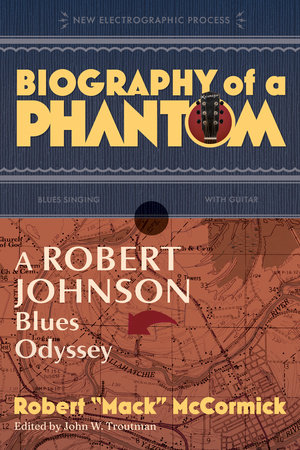
Biography of a Phantom: A Robert Johnson Blues Odyssey (2023) by Robert “Mack” McCormick (and edited by Smithsonian curator John W. Troutman) is the musicologist’s long-awaited biography of Johnson that isn’t, in fact, a biography. As Troutman details in an extensive preface and afterword, this work may not be the book one expects, but as a study of the biographer’s craft and a window into the Delta during Johnson’s brief lifetime, it is one well worth considering.
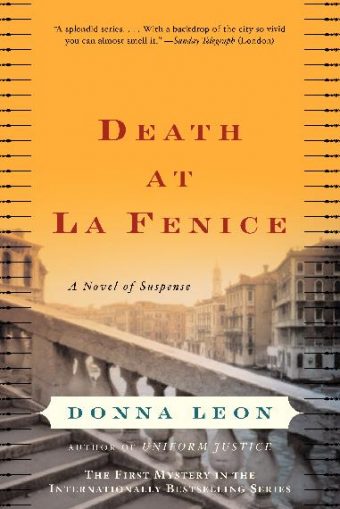
Death at La Fenice (1992) by Donna Leon, the first in the Commissario Guido Brunetti Mystery series, is set in the celebrated opera house La Fenice where the world-famous conductor, Maestro Helmut Wellauer, is poisoned between the second and third acts of a performance of La Traviata. In this tight and irresistible work Leon sets themes that will return in her series: the truth can be very hard to discover in this life and justice isn’t always simple and easy. In the end Brunetti finds himself having to balance what happens against the challenges of seeking a just outcome.
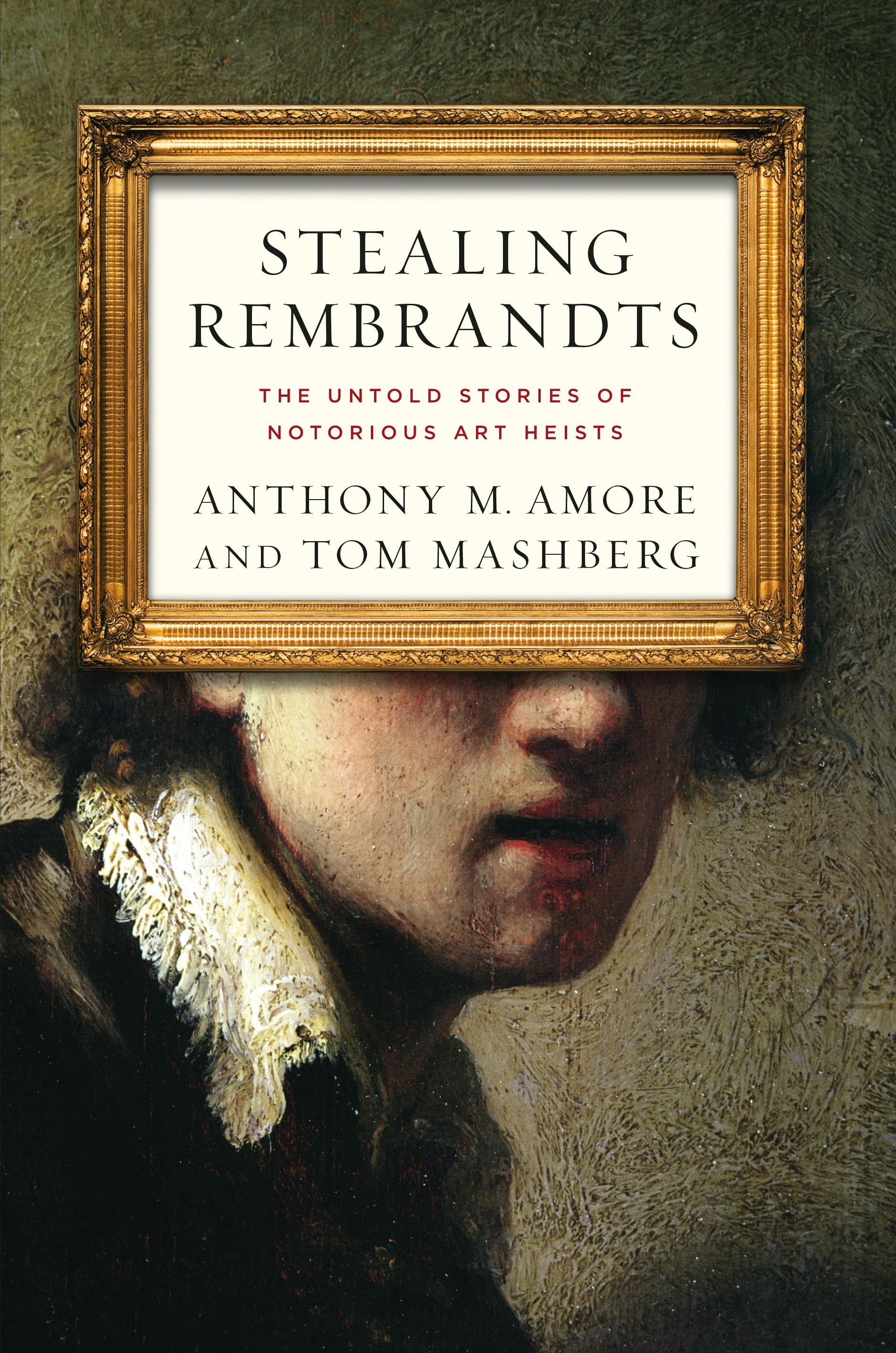
Stealing Rembrandts: The Untold Stories of Notorious Art Heists (2012) by Anthony M. Amore and Tom Mashberg is a detailed look at the high-stakes world of art theft. In a swift-moving narrative, Amore, an art security expert, and Mashberg, an investigative journalist, provide the history behind these high-profile crimes while puncturing some of our myths along the way. By and large major art theft is committed by common criminals associated with local crime rings, and in a number of case studies the reader learns how they run the gamut from comical bunglers to cunning and dangerous thieves who will stop at nothing in the commission of their crimes.
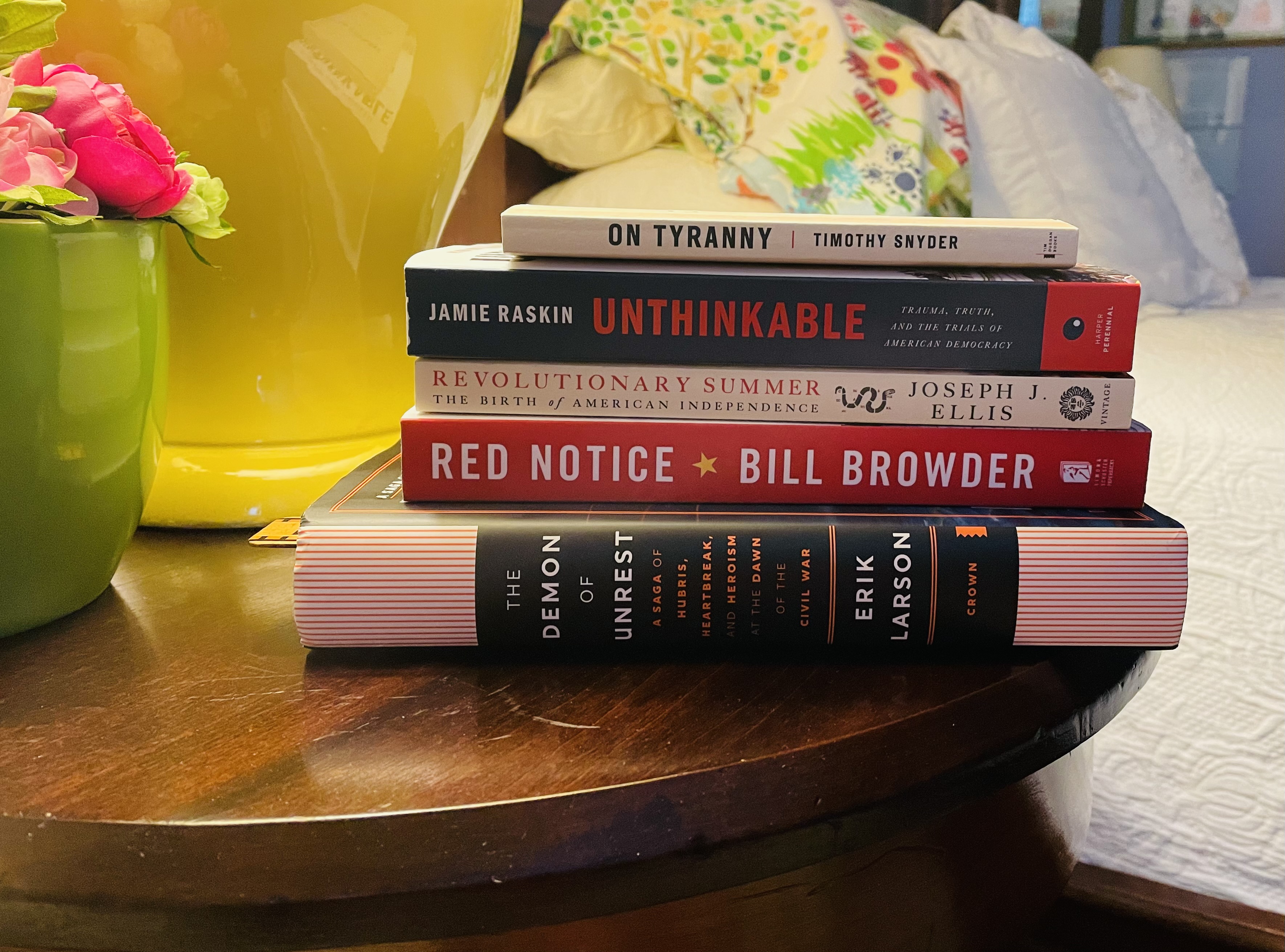
What’s on the nightstand for July (subject to change at the whims of the reader):
During July, I have decided to focus on five books considering issues facing us in these troubled times. Two writers explore previous points in our history—the months and years just before the American Revolution and the Civil War—that will help me place today’s events in context. I’m also reading about the murderous heart of Putin’s regime and an attempted insurrection in our country by one of Putin’s admirers. And finally, I’m returning to a book on lessons we can learn from the twentieth century about the fight against tyranny.
Myth has been on my mind recently. I’m not a long-time student of those traditional stories that people use either to explain their origins or to understand some inexplicable phenomenon. Likewise, it is only in the last few years that I’ve focused on myths as widely held but false beliefs or ideas. I have, however, gained an appreciation for the role of myth in our lives, one that helps me understand the places where I’m traveling and lecturing.
Myths have also shaped how we see something as baffling as thefts of masterworks of art.
Stealing Rembrandts: The Untold Stories of Notorious Art Heists (2012) by Anthony M. Amore and Tom Mashberg is a detailed look at the high-stakes world of art theft that was exceeding $6 billion in losses to galleries and art collectors annually when this book was published twelve years ago. In a swift-moving narrative, Amore, an art security expert, and Mashberg, an investigative journalist, provide the history behind these high-profile crimes while puncturing some of our myths along the way. And because some 80 different works by Rembrandt van Rijn have been stolen worldwide during the past 100 years, much of the book’s focus is on the paintings by the Dutch master and the creative ways thieves lift them from their owners.
Amore is the Director of Security and Chief Investigator at Boston’s Isabella Stewart Gardner Museum, where he is charged with the ongoing efforts to recover thirteen works of art—including three Rembrandts—stolen from the museum on March 18, 1990. Because this theft has never been solved and the artwork is still missing, Amore and Mashberg touch on it only in the epilogue
The authors deconstruct one myth in the first chapter, aptly named There is No “Dr. No” after the 1962 James Bond film of the same name. The Dr. No character is a larger-than-life criminal living in lavish hidden lairs with a taste for purloined masterpieces. The reality, note Amore and Mashberg, is far more grimy and far less romantic. By and large major art theft is committed by common criminals associated with local crime rings, part of what law enforcement calls “disorganized crime.” And in a number of case studies the reader learns how they run the gamut from comical bunglers to cunning and dangerous thieves who will stop at nothing in the commission of their crimes.
Readers also come to understand why Rembrandts are so prized by art thieves, even though most crimes do not result in big paydays for those making the heists. Not only does Rembrandt “stand alone as the most prolific portrait painter” among the greats, but he also owns a “far more mortifying distinction.”
“He is the only great master to have had one of his portraits, Jacob de Gheyn III (1632), stolen an outlandish four times, all between 1966 and 1983, and always from the same London museum. The ill-starred work is now known as ‘the Takeaway Rembrandt.'”
The story of the takeaway masterpiece is typical of Stealing Rembrandts, which I bought on a recent visit to the Gardner Museum. And I’m glad to learn more about what’s behind these crimes that rip beauty from the public sphere. As long-time museum director Anne Hawley phrased it, the theft of a masterpiece is like the loss of a symphony by Beethoven, a play by Shakespeare, or a jazz recording by Louis Armstrong. We all lose when art thefts—rising at an alarming rate the world over despite heightened awareness and security—keep these masterworks out of the public eye.
After having read the second and the eleventh installments of what is now a 33-book series, I decided I should return and read the origin story (of a sorts) of Venetian detective Guido Brunetti.
Death at La Fenice (1992) by Donna Leon, the first in the Commissario Guido Brunetti Mystery series, is set in the celebrated opera house La Fenice, where the world-famous conductor, Maestro Helmut Wellauer, is poisoned between the second and third acts of a performance of La Traviata. With a history dating back to 1792, the famed house—with its many hallways, dressing rooms, and backstage hideaways—is a perfect setting for Leon to introduce us to Commissario Brunetti, who she describes early in this tight and irresistible work with the following: “His clothing marked him as Italian. The cadence of his speech announced he was Venetian. His eyes were all policeman.”
For someone use to the legendary corruptions of Venice, Brunetti is nonetheless shocked as he uncovers the vast number of enemies the maestro has made on his way to the top. Of course Brunetti’s wife Paola Falier—a university lecturer in English Literature who is a delightful and loving foil for her husband—insists on choosing a suspect at the beginning of any investigation he is working on . . .
“. . . and she is generally wrong, for she always opted for the most obvious choice. Once, exasperated beyond bearing, he’d asked her why she insisted on doing it, and she’d explained that since she had written her dissertation on Henry James, she considered herself entitled to the release of finding the obvious in real life, since she’d never found it in his novels.”
Brunetti can only wish it were so simple.
In addition to Paola, Leon introduces us to a number of the cast of characters who make up Brunetti’s life: his vain and pompous superior, Giuseppe Patta who begins the series over the top and stays there; the quietly efficient medical examiner Ettore Rizzardi; Paola’s father and Brunetti’s father-in-law, the wealthy and connected Orazio Falier; and his children Raffaele and Chiara. There are others—such as his fellow policeman, Detective Inspector Lorenzo Vianello and the ever-resourceful secretary Elettra Zorzi, a woman of “endless and instinctive deceit”—who will join the story in later works. Leon once said that she wrote Brunetti’s character so that she would like him, and the reader quickly comes to the same conclusion in this first work.
Leon sets themes in Death at La Fenice that will return again and again. The truth can be very hard to discover in this life and justice isn’t always simple and easy. To find who poisoned Wellauer, Brunetti digs into the jealous and fickle world of opera, he explores past lives during World War II that some would prefer remain hidden, and he finds that the morality police often have the most to hide. In the end he uncovers what happens and finds himself having to balance those facts against the challenges of seeking a just outcome.
I can’t wait to dive into another Brunetti mystery so that I can return to Venice yet again. It is certainly, in Leon’s hands, a beautiful, beguiling, and troubled city that one doesn’t want to leave.
And for a special treat, here’s the beautiful prelude to La Traviata. As one online commentator put it so well, “This charming prelude, like a tuning fork, tunes the strings of the soul to the tonality of the entire opera.”
More to come . . .
DJB
This special holiday-week edition of the Weekly Reader links to the works of other writers I’ve enjoyed.
It is difficult to know where to turn in these times of media gaslighting and authoritarian propaganda. Hope can be difficult to find. But as Parker J. Palmer notes,
“Hope is holding a creative tension between what is and what could and should be, each day doing something to narrow the distance between the two.“
My father was a voracious and hopeful reader who maintained a wide circle of friends. On what would have been his 99th birthday, I’m reminded—in this time of concern and chaos—to “stop, pause and be intentional about how we frame our thoughts, opinions and actions, and to select carefully the media we read or consume.”
Here’s where I currently reside
I begin each morning with a meditation from the Center for Action and Contemplation, the July 4th edition being a good example. These are reminders that interior grounding is important as a prelude to external action.
With Candice’s encouragement, I have begun to follow Krista Tippett again at On Being. Just absorbing To Be a Healerwith the Surgeon General of the United States, Dr. Vivek Murthy, reminds me of the importance of her voice in our conversations today.
To stay up with legal issues, I follow Joyce Vance through Civil Discourse. When I get discouraged, I think of all she does as a progressive voice in Alabama. Plus, I like the pictures of her chickens. I also read Teri Kanefield for her sometimes contrarian views and her constant reminders not to listen too much to the television legal pundits.
Because we seem to be in a rather tragic era, I’m delighted to receive new posts from my friend, the writer Elizabeth Bobrick, whose newsletter is This Won’t End Well: On Loving Greek Tragedy. I know absolutely nothing about this subject, so that makes it especially interesting.
Finally, I always read Heather Cox Richardson’sLetters from an American. Her writing is so clear; her choices of topics so thoughtful; her historian’s perspective so vital for our times. The June 27th post about the debate was more even handed than much of what the mainstream media has offered. Her essay for July 3rd was a powerful reminder that democracy demands work.
“[J]ust as in the 1850s, we are now, once again, facing a rebellion against our founding principle, as a few people seek to reshape America into a nation in which certain people are better than others.
The men who signed the Declaration of Independence on July 4, 1776, pledged their “Lives, [their] Fortunes and [their] sacred Honor” to defend the idea of human equality. Ever since then, Americans have sacrificed their own fortunes, honor, and even their lives, for that principle. Lincoln reminded Civil War Americans of those sacrifices when he urged the people of his era to “take increased devotion to that cause for which they gave the last full measure of devotion—that we here highly resolve that these dead shall not have died in vain—that this nation, under God, shall have a new birth of freedom—and that government of the people, by the people, for the people, shall not perish from the earth.”
Words to live by in 2024.”
What’s on the nightstand
In July, I have decided to focus on five books pertinent to issues facing us today. These writers explore previous points in our history—especially the months and years just before the American Revolution and the Civil War—that will help me place today’s events in context. Two others address the murderous heart of Putin’s regime and an attempted insurrection in our country by one of Putin’s admirers. Finally, I’m returning to a book on lessons we can learn from the twentieth century about the fight against tyranny.
As for what I’ve set aside for the time being, I begin with The New York Times and the Washington Post.
The Times is saying that their perspective is more important than the millions of Americans who—like me—have already voted in our primaries to support Joe Biden’s reelection. The gaslighting from the nation’s “paper of record” is breathtaking in its audacity and yet sadly typical of the brokenness of our political journalism.
A lifelong public servant who has proven that he has what it takes to govern—stretching over four years of an astoundingly successful and consequential record of presidential achievement—is being battered by headlines about a “debate debacle.” On the other hand, an equally elderly career conman and convicted criminal with 34 felonies who has a four-year record of proving he cannot govern his emotions, libido, or mouth—much less the nation—gets a free pass. The Times runs full-page editorials calling for Joe Biden to step down. They have yet to run a single editorial calling for his opponent to exit the race. That alone is telling. It is a shameful record that needs to be in every response to the newspaper’s now four-year attempt to denigrate the accomplishments of this administration.
I will continue my policy of abstinence until they each take a strong stand against a return of a Trump presidency and for serious reforms for the Supreme Court. I’m not holding my breath.
I never watch much television news, but I’ve discontinued viewing what little MSNBC I used to consume. It is just too depressingly repetitive.
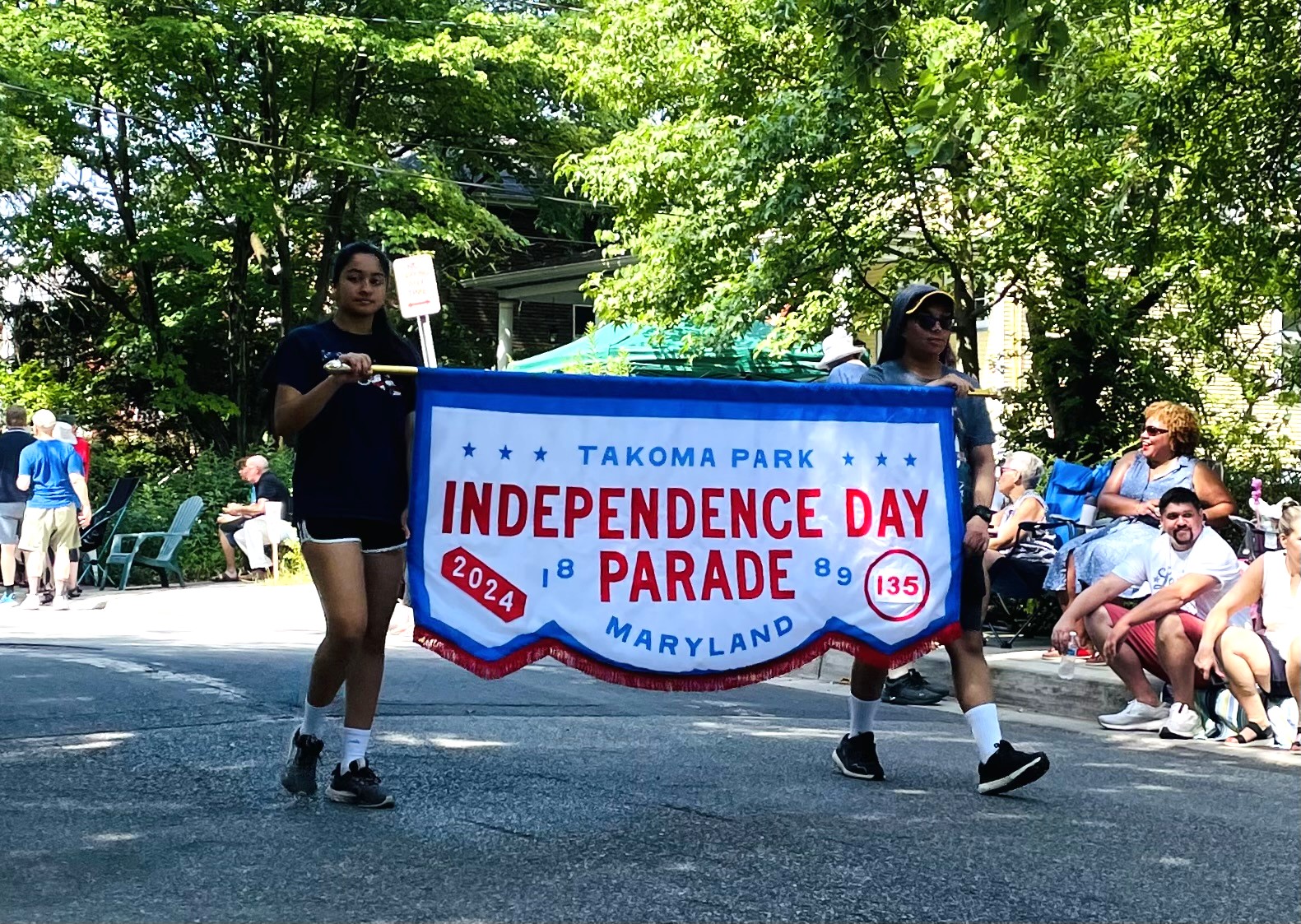
And finally, hopeful photos from yesterday’s Takoma Park parade
I love this parade and what it says about American values. There are strollers of all types.
The music tends to skew away from the traditional marching bands.
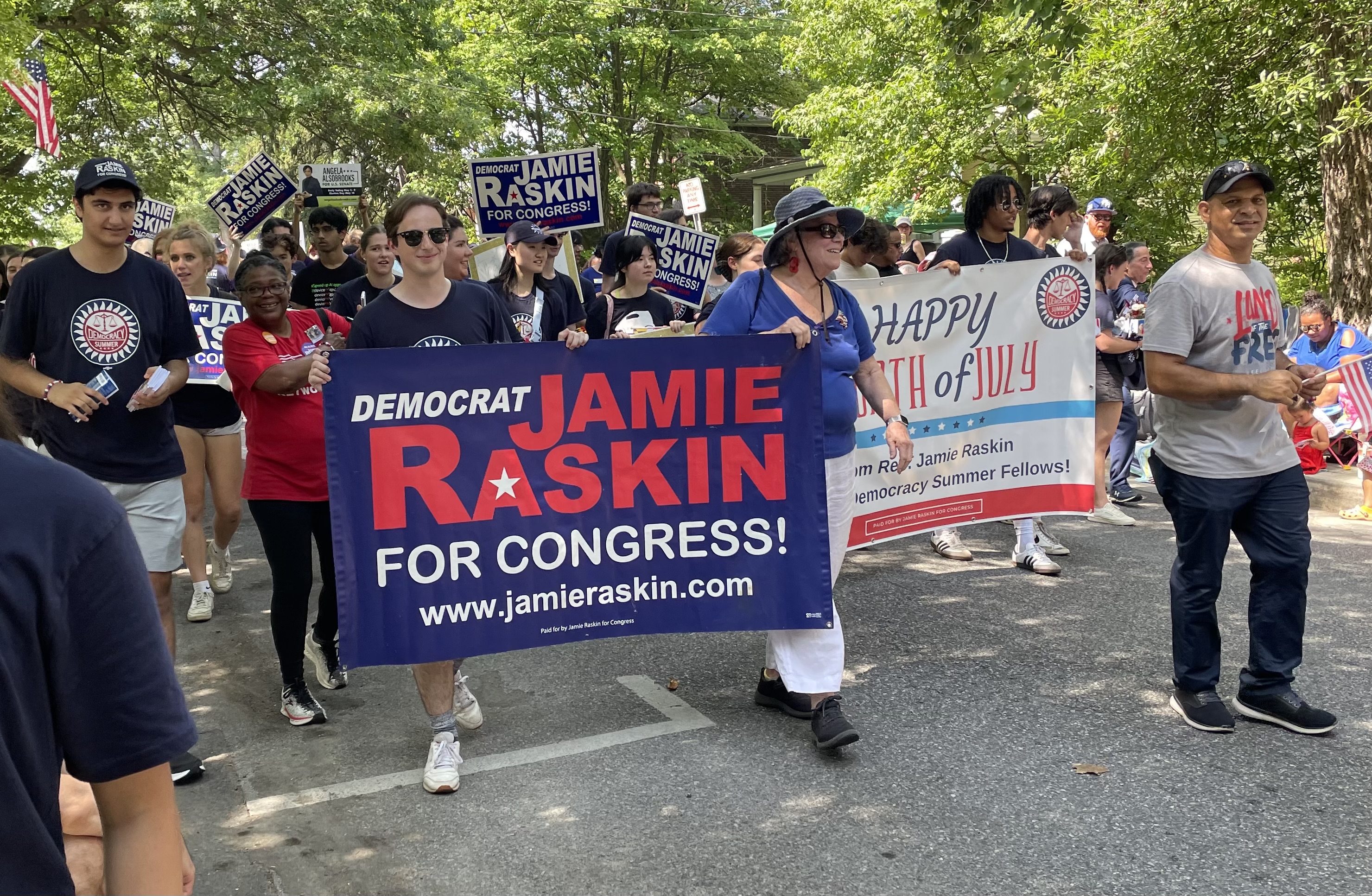
And my favorite congressman and his supporters were out in force.




















 MORE TO COME...