Latest Posts

Using government to help ordinary people

We are living in the midst of one of our all-too-common experiments to see if the idea of America as a nation “conceived in liberty, and dedicated to the proposition that all men are created equal”—in the famous words of Abraham Lincoln—can long endure.

Last Monday I wrote about the difficulty of living with the former guy. Today I want to talk about the current guy. *

However much it may surprise his detractors, President Joe Biden has worked hard to reclaim the promise of democracy.

“The American equation,” writes Lewis Lapham, “rests on the habit of holding our fellow citizens in thoughtful regard not because they are exceptional (or famous, or beautiful, or rich) but simply because they are our fellow citizens.” 

“If the American system of government at present seems so patently at odds with its constitutional hopes and purposes, it is not because the practice of democracy no longer serves the interests of the presiding oligarchy (which it never did), but because the promise of democracy no longer inspires or exalts the citizenry lucky enough to have been born under its star. It isn’t so much that liberty stands at bay but, rather, that it has fallen into disuse, regarded as insufficient by both its enemies and its nominal friends. What is the use of free expression to people so frightened of the future that they prefer the comforts of the authoritative lie?”

As Lapham suggests, large numbers of billionaires and other oligarchs are not looking for democracy. Based on where they direct their political donations, it seems clear that what is wanted is someone who will lower their already low tax rate, cut business regulations, and fight for the rights of owners over those of workers. Someone who will, like another rising authoritarian 90 years ago, promise to crush labor unions and protect the interest of his donors. 

They are seeking government by the few for the few.

President Biden’s work to reclaim our democracy is not recognized often enough by a media enthralled by horse-race reporting and performance politics. But that fact doesn’t make the president’s efforts to return to a government that works for ordinary people, instead of the nation’s wealthiest citizens, any less important and, yes, revolutionary.

Historian Heather Cox Richardson began a recent letter on the president’s efforts by noting the release of “another blockbuster jobs report.” The country added 272,000 jobs in May, far higher than the 180,000 jobs economists predicted. Wages are also up. Over the past year, average hourly earnings have grown 4.1%, higher than the rate of inflation, which was 3.4% over the same period. 

The 15.6 million jobs created during the three years of the Biden administration are eight times as many jobs as were created in the 16 years of the last 3 Republican Presidencies, combined. Since 1989 and the end of the Cold War, the US has seen 51 million new jobs created, 49 million of which have been created under Democratic Presidents. That’s 96%. Just 2 million jobs—or 4%—have been created under Republicans.

While the news media generally doesn’t cover this news, Richardson goes into detail to explain how Biden’s incredible streak of economic growth happened.

The Biden administration has quite deliberately overturned the supply-side economics that came into ascendancy in 1981 when President Ronald Reagan took office . . . Adherents of that ideology rejected the idea that the government should invest in the “demand side” of the economy—workers and other ordinary Americans—to develop the economy, as it had done since 1933. 

Instead, they maintained that the best way to nurture the economy was to support the “supply side”: those at the top. Cutting business regulations and slashing taxes would create prosperity, they said, by concentrating wealth in the hands of individuals who would invest in the economy more efficiently than they could if the government interfered in their choices.

But supply-side economics never worked. It did, however, “move money out of the hands of ordinary Americans into the hands of the very wealthy.” Between 1981 and 2021, more than $50 trillion dollars moved from the bottom 90% of Americans to the top 1%.


In the last few weeks we’ve seen repeated confirmation of the success of the Biden Presidency:

  • “Inflation is down;
  • food prices are down;
  • crime and murder rates are way down;
  • gas prices are down;
  • we’ve had the strongest economic recovery of any advanced economy in the world;
  • the best job market since the 1960s;
  • the deficit is trillions less;
  • the Dow has broken 40,000 and all three indices continue to hover in record territory;
  • domestic oil, gas and renewable production continue to be at all time highs leaving America more energy independent; and
  • consumer sentiment surged last month.”

The Wall Street Journal called the American economy the ‘envy of the world,’ and the Economist just wrote about the unprecedented start up boom America is experiencing right now. Biden’s big three investment bills have dramatically accelerated the energy transition necessary to combat climate change and will be creating opportunities and jobs for our workers for decades to come.

By being focused on helping ordinary people, the US now has the lowest uninsured rate in its history. Signups for the Affordable Care Act coverage this past year were at the highest levels ever. The Biden Administration also erased more than $130 billion in student debt that had piled up due to past policies that favored loan and finance corporations over everyday people.

Another under-reported item is about how Joe Biden broke OPEC. “Domestic oil production set records in 2023, and we are setting records with renewable energy production too.”

MSNBC host Chris Hayes noted that

The Organization of the Petroleum Exporting Countries, or OPEC, has had massive influence over American politics for six decades. President Biden’s ‘incredible’ oil market trading has broken this influence.


Some analysts believe that the current radicalization of the GOP is intimately linked to its repeated failure to handle the challenges of the post-Cold War era and its inability to govern in a time of rapid change. 

Richardson is a student of Republican Party history. In order to keep a system in place that works for the few, today’s Republicans have “worked to make it extraordinarily difficult for Congress to pass laws making the government do anything, even when the vast majority of Americans wanted it to.” That helped them shift law-making power to the courts. And since the Reagan administration, Republicans have been packing our courts with “appointees who adhered to their small-government principles” at the expense of the people. 

Joe Biden has been a good, even transformational president, who I believe has more than earned a second term. His administration has stood up against multiple challenges. Most important, under Joe Biden we are a government of the people, not of the wealthy few.

“’What joins the Americans one to another,’ Lapham writes, is ‘their complicity in a shared work of the imagination.  My love of country follows from my love of its freedoms, not from my pride in its fleets or its armies or its gross national product. Construed as a means and not an end, the Constitution stands as the premise for a narrative rather than a plan for an invasion or a monument. The narrative was always plural—not one story but many stories.”

More to come . . .

DJB


*See my disclaimer for politics-related posts.


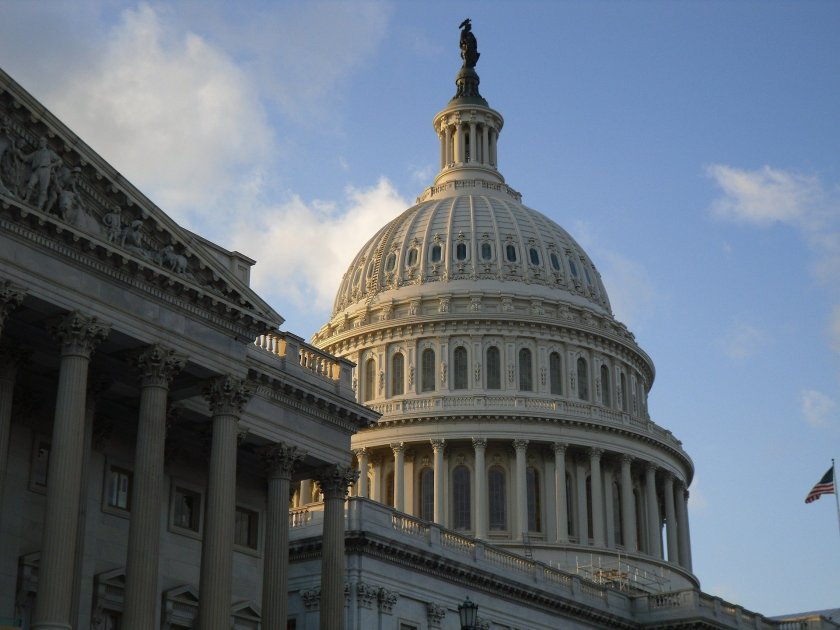
U.S. Capitol and steel workers photos from Pixabay.

From the bookshelf: May 2024

Each month my goal is to read a minimum of five books on a variety of topics from different genres. Here are the books I read in May 2024. If you click on the title, you’ll go to the longer post on MORE TO COME. Enjoy.


Supercommunicators: How to Unlock the Secret Language of Connection (2024) by Charles Duhigg is the best-selling author’s most recent deep dive into ways we can navigate the basics of life. Similar to his exploration of habits, Duhigg blends timely research and top-level storytelling chops to help us understand how to connect with others. Whenever we speak, Duhigg asserts, we’re actually participating in one of three conversations: practical, emotional, and social. In this insightful and very practical book, Duhigg makes the case that we have to understand what kind of conversation we’re having before we can connect.


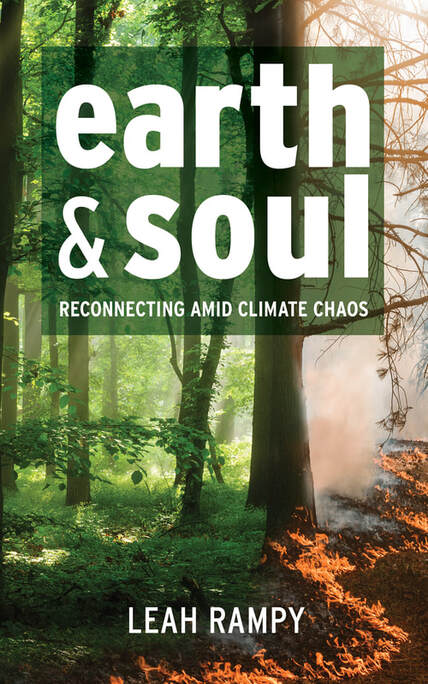
Earth & Soul: Reconnecting Amid Climate Chaos (2024) by Leah Rampy comes from an “intersection of spirituality, ecology and story.” In helping us understand why our souls ache for a deeper connection with the earth, Rampy invites us to think, contemplate, live, and act differently. She travels to edges—where sea, land, and sky meet—because these thin places are sacred. There “the division between heaven and earth, past and present, living and dead can blur, and a sense of oneness permeates time and place.” These liminal places are where we can choose our stories for the future, stories that will last long beyond our lifetimes. In this latest edition of my author interviews on MORE TO COME, Leah answers my questions about her work.


The Fellowship of Puzzlemakers (2024) by Samuel Burr is a delightful tale of a group of extraordinary minds gathered together by Miss Pippa Allsbrook: polymath, a professional enthusiast of crossword puzzles, creator of The Sunday Times puzzles using the pseudonym Squire to conceal her gender, and—most importantly—Chief Cruciverbalist, Founder and President of The Fellowship of Puzzlemakers. She is one of thirteen members of the Fellowship who live together in her historic family estate in the English countryside. In this uplifting debut novel, the cast of characters moves through the many puzzles put before them, ultimately addressing the puzzle each of us faces to belong, to find our own missing pieces, to discover who we really are. 


My Black Country: A Journey Through Country Music’s Black Past, Present, and Future (2024) by Alice Randall is memoir, history lesson, and manifesto by the first Black woman to cowrite a number one country hit. Like the author, this is a story that upsets the stereotypes about Country Music. Randall’s life goal is to make certain that everyone recognizes and remembers the First Family of Black Country Music: “DeFord Bailey, the father; Lil Hardin, the mother; Ray Charles, their genius child; Charley Pride, DeFord’s side child; and Herb Jeffries, Lil’s stepson.” This engaging and enriching book—along with a companion album featuring young Black female artists playing the Alice Randall songbook—is an important step along that path.


No Man is an Island (1955) by Thomas Merton reflects on the vital nature of community and the commandment to love our neighbor. In a series of sixteen essays with titles such as “Love Can Be Kept Only by Being Given Away,” “Sentences on Hope,” “Mercy,” and “The Inward Solitude,” the twentieth century American monastic and writer looks at the life of the spirit and makes the case that “by integrating us in the real order established by God,” this life puts us “in the fullest possible contact with reality—not as we imagine it, but as it really is.”


What’s on the nightstand for June (subject to change at the whims of the reader):

Keep reading!

More to come…

DJB


NOTE: Click to see the books I read in April of 2024 and to see the books I read in 2023. Also check out Ten tips for reading five books a month.


Photo by Syd Wachs on Unsplash

Draw from a well of common goodness

How do we make sense of senseless times?

In a lifetime of traveling across every state in this nation, I have seen both the fragility and the strength of America. Its perplexity and wonder. Its wretchedness and innate goodness. We are complex and contradictory humans, living in the midst of unbelievable natural splendor that we habitually despoil.

If one follows politics, it would also be easy to conclude that the land of the free has lost its mind to support a wannabe dictator.

Just eighty years after we joined our WWII Allies to strike a debilitating blow against fascism on June 6th, 1944, one of our political parties is preparing to nominate a man for president who has made disparaging remarks about those who died in war serving their country while speaking in glowing terms about authoritarian strongmen around the globe.

Last Thursday was the commemoration of D-Day. World leaders and more than two dozen U.S. veterans gathered above Omaha Beach at the Normandy American Cemetery, “where the remains of 9,388 Americans, many of whom were killed on D-Day, are buried.” In his speech, President Biden reminded us that “Hitler and those with him thought democracies were weak, that the future belonged to dictators.”

“’The men who fought here became heroes not because they were the strongest or toughest or were fiercest—although they were,’ Biden said, ‘but because they . . . knew, beyond any doubt, there are things that are worth fighting and dying for. 

Freedom is worth it. Democracy is worth it. America is worth it. The world is worth it—then, now, and always.’”

A few weeks after that successful invasion, U.S. troops were given a pamphlet that reminded them of the stakes.

Fascism, the U.S. government document explained, ‘is government by the few and for the few. The objective is seizure and control of the economic, political, social, and cultural life of the state. The people run democratic governments, but fascist governments run the people.’”

Sadly, one of our political parties appears ready to completely give up on government by the people.

A former president and the presumed 2024 nominee of the Republican Party—who has promised government by the few and for the few—is a convicted felon. Thirty-four times over. A jury of his peers found that he falsified records to cover up a hush money payment to a sex worker in order to change the results of the 2016 election. The news media, for the most part, refuses to say the obvious out loud.

He’s also surrounded himself with individuals who subvert the rule of law for personal gain. Trump’s campaign chairman, deputy campaign manager, personal lawyer, chief strategist, National Security Adviser, Trade Advisor, Foreign Policy Adviser, campaign fixer, and company CFO are also convicted felons.

Presidential historian Douglas Brinkley noted, “With Lincoln, they had a team of rivals. With Trump, you have a team of felons.”

In addition, his business was found guilty of fraud and a jury held him liable for sexual abuse—rape, in other words—in a civil trial. And perhaps the worst charges against him as a former president—inciting a riot to overturn the will of the people in a free and fair election and stealing state secrets—are bogged down as judges and justices forget their oath of office and follow his bidding while Congressional Republicans create fake scandals to divert our attention.

Former Washington Post cartoonist Tom Toles captured the essence of this latter playbook in 2013.

Five years ago, the Post described the “remarkable universe of criminality” surrounding the former president. It has become even worse. And yet some think his reelection is imminent. The Republicans seem intent on backing Donald Trump no matter what he says or does and no matter how much of the American public disagrees with its policies.

I subscribe to the “Do more, worry less and go win this election” mindset, but I can see how the prospect of a Trump return can lead to despair.

Heartbreak and rage have been “manipulated by unscrupulous persons in power . . . creating scapegoats, demonizing and pitting communities and families against one another, eroding our ability to see how we are still and truly deeply connected.”

Poet and songwriter Carrie Newcomer asks, “How do we live in these times?” She wrestles to find “the most effective and true to my soul ways to respond.”

I must continue to find courage, comfort and grounding in the things that make sense, things like love, beauty, wonder, daily gratitude and awe, the natural world, our default inclination to be decent and kind to those we encounter. I must continue to lean into joy, for the goodness of life for the gift it is—joy being different than happiness and at its heart is its own kind of resistance to despair and the politics of rage. All I know to do is to live as well as I can, with as much love as I know how to give, speak truth even when it’s uncomfortable but be as kind as possible.”

Those endeavors to divide us and make us feel powerless, she writes, are just “a kind of politics” and not the true shape of reality.

The truth is—we are great with love and we are so very powerful . . . Let us keep grounding ourselves in what makes sense in senseless times. Let us remember to lean into beauty and pull up the water from a well of common goodness, let us be brave and true, always reaching just a little further than we thought possible.”

Rebecca Solnit has written that joy is a way to support the work which hope demands.

Your opponents would love you to believe that it’s hopeless, that you have no power, that there’s no reason to act, that you can’t win. Hope is a gift you don’t have to surrender, a power you don’t have to throw away.”

There’s work to do. Leaning into joy supports the demands that hope makes of us. Drawing water from a well of common goodness provides the nourishment needed to press forward on this important task.

More to come . . .

DJB


See my disclaimer for politics-related posts.


Image by ddzphoto from Pixabay

Blackbird

In late March, American singer and songwriter Beyoncé released Cowboy Carter, the second in a planned trilogy of albums. Also known as Act II: Cowboy Carter, the album was conceived as a journey through a reinvention of Americana, spotlighting the overlooked contributions of Black pioneers to American musical and cultural history.

I recently reviewed Alice Randall’s Black Country, which is another piece in reclaiming the Black influence in country music. In a 2021 interview with Harper’s Bizarre, Beyoncé explained the important influence of country music and the Black cowboy on her life and music.

I grew up going to the Houston rodeo every year. It was this amazing diverse and multicultural experience where there was something for every member of the family, including great performances, Houston-style fried Snickers, and fried turkey legs. One of my inspirations came from the overlooked history of the American Black cowboy. Many of them were originally called cowhands, who experienced great discrimination and were often forced to work with the worst, most temperamental horses. They took their talents and formed the Soul Circuit. Through time, these Black rodeos showcased incredible performers and helped us reclaim our place in western history and culture.

The second song on Cowboy Carter is a cover of the Beatles’ tune Blackbird, which she renames Blackbiird in homage to Act II. Her cover features additional harmony and/or lead vocals from four Black country singers: Reyna Roberts, Tanner Adell, Brittney Spencer and Tiera Kennedy. She also “used the master recording of the original guitar-and-foot-tapping backing part McCartney recorded for the Beatles’ White Album as the backing track for her new version.” It is a fabulous interpretation of a wonderful song, bringing the tune and its backstory to a whole new audience.


Places are important in telling our stories as a people. One of the important places that the National Trust for Historic Preservation has worked to save through the years is Little Rock Central High School. The Little Rock Central High School first made headlines when it opened in 1927 as the largest high school in the country, and then again thirty years later as the focal point of America’s school desegregation controversy. In 2017, Trust’s President and CEO Stephanie Meeks spoke to that history when the organization celebrated the saving of what was once an endangered place.

In 1957, the school was the scene of forced school desegregation that gained international attention. Nine African American students—“the Little Rock Nine”— were denied entrance to the school by one thousand angry protestors in defiance of the 1954 U.S. Supreme Court ruling ordering integration of public schools. The first test of the federal government’s public school integration policy, the events at the Little Rock Central High School had lasting implications on civil rights and education in our country.

By 1996, however, the school was suffering severe deterioration—peeling paint, crumbling plaster, leaking plumbing, broken windows, termites, leaking roof and outer walls—requiring $6.5 million in repairs. The school district did not have the money for repairs and the Trust named the building to that year’s list of the 11 Most Endangered Historic Places.

The listing helped to generate support and funding for extensive internal and external renovations,” noted Meeks. “On November 6, 1998, Congress established the Little Rock Central High School National Historic Site. The National Historic Site is administered in partnership with the National Park Service, Little Rock Public Schools, the City of Little Rock, and others.

The place is important to the story because it was there that those nine young students stood up to bigotry and hate. And the repercussions were widespread, affecting life and people in so many different ways and places.

Paul McCartney wrote Blackbird to honor members of the Little Rock Nine. At a 2016 concert in Little Rock, McCartney introduced the song by telling the audience,

“Way back in the Sixties, there was a lot of trouble going on over civil rights, particularly in Little Rock. We would notice this on the news back in England, so it’s a really important place for us, because to me, this is where civil rights started. We would see what was going on and sympathize with the people going through those troubles, and it made me want to write a song that, if it ever got back to the people going through those troubles, it might just help them a little bit, and that’s this next one.”

Blackbird is a song that has had many famous (and not-so-famous) covers over the years. Beyond the recent Beyoncé offering, here are a few additional personal favorite versions of the classic.

Bob Weir and Rob Wasserman recorded the song in 1989 for The Long Island Sound—a 6 CD box set from the Jerry Garcia Band and Bob Weir & Rob Wasserman, released in 2013.

Joan Baez celebrated her 75th birthday in 2016 with a who’s who at the Beacon Theatre. “This delicate and heartwarming rendition of Blackbird was one of many classics Joan sang with friends,” this time in a duo with David Crosby.

Canadian singer-songwriter Sarah McLachlan sang a simple yet beautiful version in I Am Sam. The soundtrack to the 2001 film is made up entirely of cover versions of songs by the Beatles, although it was originally intended to consist of the group’s original recordings.

Jazz great Sarah Vaughan released her cover on 1981’s Songs of The Beatles, with “interesting” (he puts in quotes) ’80s jazz interludes interspersed throughout the verses.

And singing alone, with just her guitar, Joy Oladokun does—in my estimation—one of the most beautiful and heartfelt covers of the tune.

We’ll end with the man himself, singing his song live in concert—in spite of the bad rhythmic clapping of the crowd—as only he can.

“You were only waiting for this moment to arise | You were only waiting for this moment to be free” remains a message for our time.

More to come . . .

DJB

Image of Little Rock Central High School by National Park Service.

How we communicate and connect

It can be a humbling experience to catalog all the ways one screws up conversations. If you’re like me there are too many to easily recall. I’ve written about a few, as when I talked over a friend to “help her” explain something that I thought might be difficult to articulate. Or the times I haven’t responded well to feedback.

Most of us have had conversations that we found bewildering at best and terrifying at worst. Perhaps a performance review that didn’t go the way we envisioned. Or a discussion with a sibling or spouse that suddenly turned into a confrontation. I have had times after a conversation where I was sure we had agreed to one approach, only to find my conversation partner heading off in a totally different direction.

Conversation and connection are at the heart of living together as humans. “To communicate with someone, we must connect with them.” But we consistently make a mess of this basic task. “The single biggest problem with communication,” said the playwright George Bernard Shaw, “is the illusion it has taken place.”

Misunderstandings and miscommunication seem to be a way of life. Yet there are some people who appear to have a superpower. They really hear what others say, and they are the people others want to listen to.

Supercommunicators: How to Unlock the Secret Language of Connection (2024) by Charles Duhigg is the best-selling author’s most recent deep dive into ways we can navigate the basics of life. Similar to his exploration of habits, Duhigg blends timely research and top-level storytelling chops to help us understand how to connect with others. Whenever we speak, Duhigg asserts, we’re actually participating in one of three conversations: practical (What’s this really about?), emotional (How do we feel?), and social (Who are we?). In this insightful and very practical book, Duhigg makes the case that we have to understand what kind of conversation we’re having before we can connect.

The stories he uses to describe these various types of conversation are compelling and (for the most part) relatable. We go inside a jury room to learn how one juror “leads a starkly divided room to consensus.” Duhigg has us accompany a surgeon as he tries, and fails, “to convince yet another cancer patient to opt for the less risky course of treatment.” The story of a young CIA officer recruiting a reluctant foreign agent is instructive, if not quite relatable for the average reader.

Duhigg looks at some of today’s most difficult conversations—around race, vaccines, and polarized politics—to help us understand ways to make better connections. Early in the book he notes that during the most meaningful conversations, the best communicators focus on creating a learning conversation. They do this by paying attention to what kind of conversation is occurring, sharing goals to determine what others are seeking, asking about feelings, and exploring if identities are important in the discussion. He then suggests,

The most effective communicators pause before they speak and ask themselves: Why am I opening my mouth?

That’s when I realized I really needed to read this book.

Unsplash

Duhigg’s writing doesn’t just consist of insightful stories and deep research. For each section he begins with an overview and then ends with a guide to using these ideas. He’ll restate the rules (and puts them in easy-to-follow graphics) and suggest ways to implement them. Want others to go first? The easiest way is by asking open-ended questions, which are easy to find if you focus on:

  • Asking about someone’s beliefs or values (“How’d you decide to become a teacher?”)
  • Asking someone to make a judgment (“Are you glad you went to law school?”)
  • Asking about someone’s experiences (“What was it like to visit Europe?”)

Connecting with others is vitally important in a world where we are tempted to stick with our tribe, vilify those who don’t look or think like us, and spend way too much time in conversation with our screens as opposed to humans. Charles Duhigg has written an important and helpful book for those seeking to make better connections.

More to come . . .

DJB


The Weekly Reader links to the works of other writers I’ve enjoyed.


Photo by Etienne Boulanger on Unsplash

Discerning a path in a future beyond our knowing

In our time of converging crises it may seem that the end of the world is near. But that perspective misses one important element. “The end of the world as we know it is not the end of the world, full stop,” social thinker and writer Dougald Hine reminds us. “(W)e live within stories whose ending lies beyond the horizons of our lifetimes.”

Some of our most astute scientists, philosophers, storytellers, and mystics are seeking to reweave our connections between soul and earth in ways that look beyond our brief lifespans. They are encouraging conversations that are “far deeper and more profound than that of saving our lifestyle.”

Earth & Soul: Reconnecting Amid Climate Chaos (2024) by Leah Rampy comes from an “intersection of spirituality, ecology and story.” In helping us understand why our souls ache for a deeper connection with the earth, Rampy invites us to think, contemplate, live, and act differently. She travels to edges—where sea, land, and sky meet—because these thin places are sacred. There “the division between heaven and earth, past and present, living and dead can blur, and a sense of oneness permeates time and place.” These liminal places are where we can choose our stories for the future, stories that will last long beyond our lifetimes. They can be a place of “great turning, a return to our truest selves and a transformation of our relationship with the Earth.”

In this latest edition of my author interviews on More to Come, Leah graciously agreed to answer my questions about her work.


DJB: Leah, you moved from wanting to educate people about climate change to focusing on something far deeper. What did you discover about the real conversations we must have?

LR: Facts are important. We need to understand the twin threats of biodiversity loss and climate change. But facts alone do not move us from long-established habits and comfortable lifestyles, nor do they point the way to engaging heart and soul to collaborate in creating a world of mutual wellbeing. Having frayed connections to our relatives in the natural world, we are desperately lonely, and we don’t even understand why. The void we feel often drives us toward consumption and other addictions as we try to numb the pain.

We need practices to encompass both the inward journey to the essence of our true self and the outward journey toward ever-richer connections to the living world. Of course, these are not really two separate journeys; in understanding our soul purpose, we see more clearly how we are inextricably woven into the sacred web of Earth, the cosmos, the Holy. In weaving connections to all life, we deepen our soul’s capacity to bear witness, hold grief, discover beauty, delight in awe and wonder, and act with courage and compassion.

I wrote Earth and Soul to ignite a conversation about living fully alive and deeply connected in these edge times, discerning a path toward mutual thriving in a future beyond our knowing.

The writer Suzanne Simard said, “the forest is a single organism wired for wisdom.” How does that perspective change the way that we relate to nature?

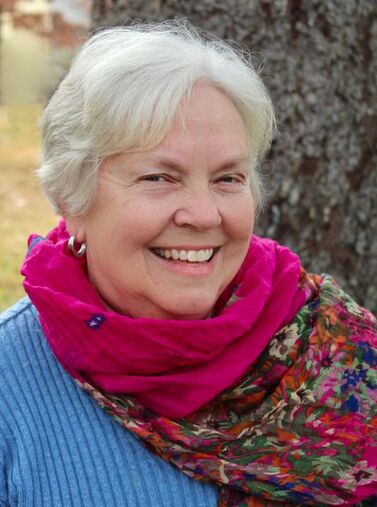
Leah Rampy

When teacher, author and long-time activist Joanna Macy spoke at a Bioneers Conference, she offered four simple and profound sentences that continue to resonate deeply within me: “It’s all alive. It’s all connected. It’s all intelligent. It’s all relatives.” If we could live into the truth of those statements, our relationship to the living world would change dramatically.

Suzanne Simard along with other scientists and writers like Merlin Sheldrake have brought to us a new understanding of the vast web of relationships and the breadth of interactions that are happening within and because of forests. I love the stories of trees because they illustrate so much wisdom. Robin Wall Kimmerer in her amazing book, Braiding Sweetgrass, called our attention to our role as the younger brothers and sisters of the wise beings who have been on Earth far longer than humans. Author Enrique Salmon speaks of Indigenous knowledge as kincentric ecology. In much of our dominant western culture, we have forgotten our relationship to the more-than-human ones, making it too easy to see anything non-human as “other.” And when we other the living world, it’s a short step to using kith and kin for our wants without regard for their life and liveliness. What an opportunity for us, to become kin-centric instead of ego-centric!

Throughout the book you reference “the dark night of the soul.” What is it about darkness and grief—individual and collective—that has the potential to provide a pathway forward?

If we are not grieving the loss of people, homeland, species, and ecosystems, we are not paying attention. Paying attention is a spiritual practice—open, present, and available to Spirit’s movement in, among, and around every being and within which all are held. When we face fully what is happening, we feel a deep and abiding grief. It’s not that we choose the path to grief, it’s that we choose not to look away or distract ourselves from its presence. We allow our hearts to break open to hold it and more—more grief, joy, sorrow, wonder. We embrace life in its entirety.

However, sometimes on our journey, we come to an impasse. We have no idea where to go, how to move from where we are. Anything we’ve done before no longer works. Solace cannot be found in friends, activities, or religion. We may feel abandoned by the Sacred. This is the dark night of the soul. In this space, our plans, efforts, and energies are of no use. There is nothing for it but to cease struggling and allow ourselves to be found. Then we may be given a direction, a bit of wisdom heretofore unknown to us, that frees us from the total darkness.

We tend to seek solutions to problems when what we really face are predicaments that have no solutions but demand responses. You suggest we not “overdrive our headlights.” How can that simple phrase help us navigate the journey we find ourselves on today?

Discerning what is ours to do in these edge times may not reveal our destination or even the purpose of the journey to which we are called. As we set forth, seeing just a bit of the road ahead, we might begin to anticipate what lies beyond. The reminder not to overdrive our headlights keeps our attention on ongoing discernment, holding an attentive and open receptivity to small nudges that invite us to cocreate with Earth and Spirit, perhaps in surprising ways.

What other books would you suggest to learn more about the connection between earth and soul?

So many good books. The Great Conversation by Belden Lane and Earth’s Wild Music by Kathleen Dean Moore speak to loss and finding beauty and comfort in the world around us. Joanna Macy is a seasoned guide to how we live in edge times. I like Active Hope but anything she writes is infused with deep elder wisdom. I think everyone needs to read Robin Wall Kimmerer’s Braiding Sweetgrass to explore more about kinship with plants and break some cultural paradigms through stories and gentle guidance.

Stephen Harrod Buhner’s Earth Grief and of course anything by Francis Weller are companions for eco-grief. For a look at how we moved so far from recognizing interwoven connections, I really appreciate The Nutmeg’s Curse by Amitav Ghosh. If you’re interested in the wisdom of Celtic spirituality, John Philip Newell’s Sacred Earth, Sacred Soul is excellent.

Thank you, Leah.

Thanks for the invitation.

More to come . . .

DJB

Photo by kazuend on Unsplash

Observations from . . . May 2024

A summary of the May posts from the MORE TO COME newsletter.

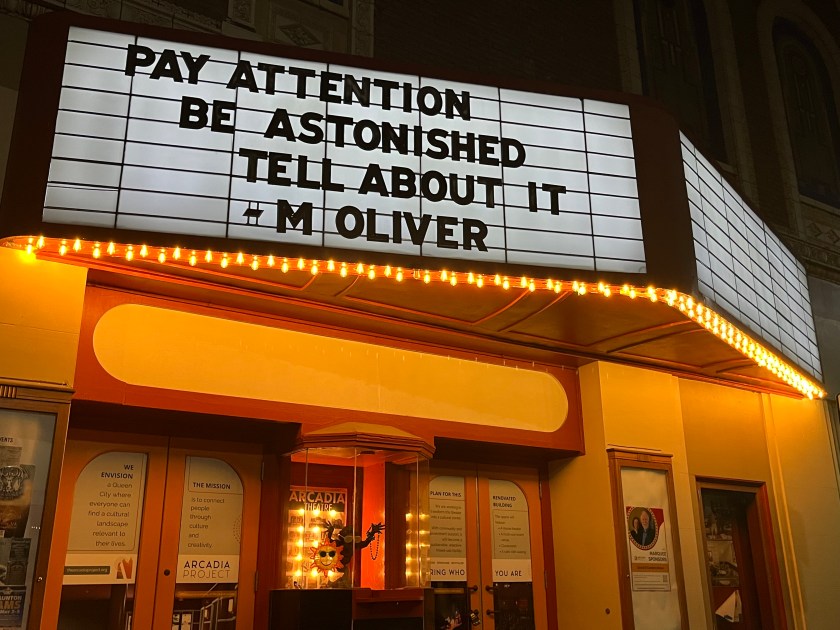
The poet Mary Oliver had rather straightforward instructions for life: “Pay attention. Be astonished. Tell about it.” Simple, but also difficult to follow.

I sleepwalk through much of life, caught up in my own head and little problems. The writer Kathryn Schulz knows there is both a wonder and fragility to life, but instead of feeling small and powerless she takes the side of amazement.

I cannot look closely for any length of time at even so simple a thing as a pond and do otherwise…what serves us best, in the face of inexorable loss, is not our grief or our acquiescence but our attention. For now, at least, the world is ours to notice and to change, and that seems sufficient.

The MORE TO COME newsletter pushes me to not only pay attention and be astonished but to tell others about it. So let’s see what caught my eye this past month.


TOP READER VIEWS

Our sponsorship poster for Arcadia’s “Sponsor a Quote” fundraiser (credit: Leah Rampy)

During May, Candice and I helped support the rehabilitation of Staunton, Virginia’s historic New Theater into a community cultural center by sponsoring a quote about creativity on the theatre marquee. We chose my favorite Mary Oliver quote. The story I wrote about this project—Celebrating the creators—was far-and-away this month’s top in reader views.


OTHER READER FAVORITES

Three other posts attracted special attention from MTC readers.

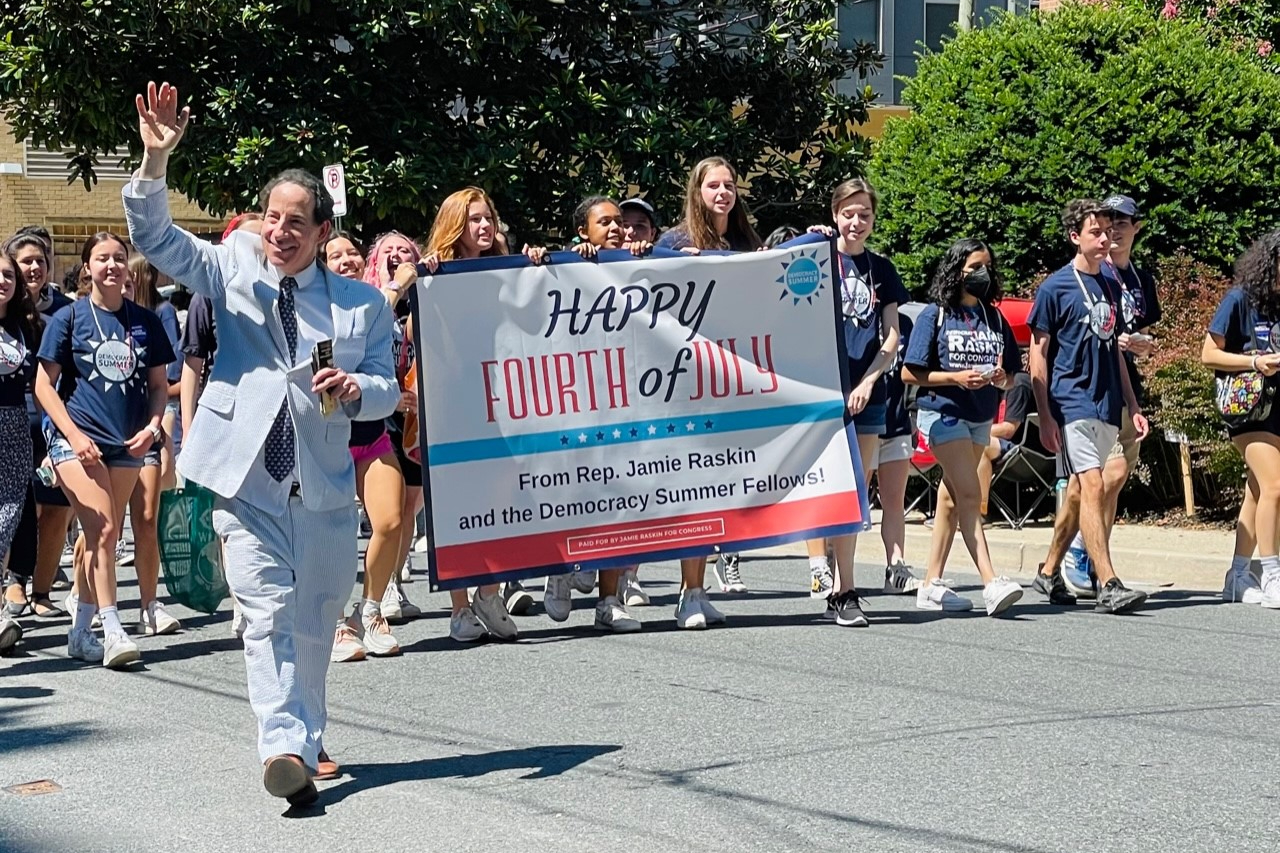
  • The May 20th print edition of The New York Times included a photograph of Congressman Jamie Raskin I took at Takoma Park’s 2022 July 4th parade. You can read When The New York Times came calling to discover how my image was chosen for what is often called our “newspaper of record.” It may not surprise you to find I have mixed feelings about the Times.
  • In Exploring places that matter, I highlighted six upcoming tours over the next eighteen months where I’ll be serving as the educational expert for National Trust Tours. Consider joining us on one or more of these fascinating explorations around the world.
  • Dreams interrupted; dreams denied introduced readers to a powerful exhibit at the United States Institute of Peace, reminding us of the price Ukrainians pay daily in their fight for freedom.

FROM THE BOOKSHELF

I found much to ponder in all the books I read this month.

  • Alice Randall, the first Black woman to cowrite a number one country hit, wants us to recognize and remember the Black roots of Country Music. Remembering the first family of Black Country Music is my look—complete with music videos—at her recent work My Black Country: A Journey Through Country Music’s Black Past, Present, and Future.
  • The hard, but necessary work of living together with others is a review of the “memoir-manifesto” To Free the Captives: A Plea for the American Soul by Tracy K. Smith, the former Poet Laureate of the United States. Her powerful, poetic language reminds us that America is, at its heart, a soul-making enterprise.
  • Solving life’s puzzles featured a lovely debut novel—The Fellowship of Puzzlemakers. Life isn’t always straightforward, but nothing worth solving ever is.

SATURDAY SOUNDTRACK

In addition to Randall’s exploration of Black Country Music, I had two other music-themed posts as part of my ongoing Soundtrack series.


OTHER OBSERVATIONS

Memorial Day, cataract surgery, and more were on my mind in May.

  • The third and final installment of “The Cataract Trilogy” can be found in Return to normalcy.
  • Pentecost thoughts from Pauli Murray on pain, suffering, and restoration made their way to MTC in Reconciliation.

FEATURED COMMENTS

I’m highlighting a few comments from readers this month in the hope that you’ll want to check out the stories that struck a chord with these commentators.

  • In response to the post on Black Country Music, a friend and author wrote on LinkedIn: “You have me reading and listening to so many new things! Thanks!” Of course, Alan did once encourage me to read about eels, so broadening perspective is part of our relationship.
  • John Swenson wins my kindness award with his comment on the month’s most-read post: “Mr. Brown: You have paid attention. You have been astonished. You have told about it. What more could Staunton ask of you? Thank you!” Wow!
  • After reading about the Unissued Diplomas exhibit, Nick, a friend and former colleague from Oak Park, was moved to write: “Very powerful stories David and stark reminders of the horrors of war.”

CONCLUSION

Thanks, as always, for reading. Your support and feedback mean more than I can ever express.

As you travel life’s highways be open to love, thirst for wonder, undertake some mindful walking every day, recognize the incredible privilege that most of us have, and think about how to put that privilege to use for good. Women, people of color, LGBTQ+ individuals, immigrants, and others can feel especially vulnerable . . . because they are. Work hard for justice and democracy as the fight never ends.

Bash into some joy along the way.

And finally, try to be nice. Always be kind.

More to come . . .

DJB


For the April 2024 summary, click here.


You can follow MORE TO COME by going to the small “Follow” box that is on the right-hand column of the site (on the desktop version) or at the bottom right on your mobile device. It is great to hear from readers, and if you like them feel free to share these posts on your own social media platforms.


Photo of Mary Oliver’s quote on the Arcadia marquee by Pam Wagner.

A fundamental law of human existence

Jesus was pretty clear when a lawyer tried to test him.

“‘Teacher, which commandment in the law is the greatest?’ He said to him, ‘You shall love the Lord your God with all your heart, and with all your soul, and with all your mind. This is the greatest and first commandment. And a second is like it: You shall love your neighbor as yourself. On these two commandments hang all the law and the prophets.’” (Matthew 22:36-40 NRSV)

Even for those outside a faith tradition, the second part resonates strongly. However, if you were raised in the Christian church, this is a piece of scripture you hear early and often. A well-known monastic suggests there’s a reason:

“This is not merely a helpful suggestion, it is the fundamental law of human existence.”

No Man is an Island (1955) by Thomas Merton reflects on the vital nature of community and the commandment to love our neighbor. In a series of sixteen essays with titles such as “Love Can Be Kept Only by Being Given Away,” “Sentences on Hope,” “Mercy,” and “The Inward Solitude,” the twentieth century American monastic and writer looks at the life of the spirit and makes the case that “by integrating us in the real order established by God,” this life puts us “in the fullest possible contact with reality—not as we imagine it, but as it really is.”

We live in an age where self is paramount. For many, self has been idolized. Merton makes the point that over-emphasizing the self conflicts with Christianity, an important reminder in an age of Christian nationalism that has elevated a narcissist as a leader.

A reworking of Merton’s earlier book Seeds of Contemplation, this collection addresses the spiritual life as a search for enduring values, fulfillment, and salvation, the latter being a complex tangle of paradoxes.

“We become ourselves by dying to ourselves. We gain only what we give up, and if we give up everything, we gain everything. We cannot find ourselves within ourselves, but only in others, yet at the same time before we can go out to others we must first find ourselves . . . The best way to love ourselves is to love others.”

I read a good bit of Merton back in my 20s and 30s, but had not taken up No Man is an Island before. This is a work selected by my Third Stage group, and I’ll admit that most of us didn’t find it the classic that is its usual descriptor. There’s much to take in, but as someone close to me once said, “I’ve often found that Merton uses a lot of words to get to the point.”

And yet, this work is full of wisdom and hope.

“Only the man who has had to face despair is really convinced that he needs mercy. Those who do not want mercy never seek it. It is better to find God on the threshold of despair than to risk our lives in a complacency that has never felt a need of forgiveness. A life that is without any problems may literally be more hopeless than one that always verges on despair.” 

Merton’s main point resonates with me more every day. “Nothing at all makes sense unless we admit, with John Donne, that: ‘No man is an island, entire of itself, every map is a piece of the continent, a part of the man.'”

Love your neighbor as yourself. It’s that simple, and that complex.

More to come . . .

DJB


The Weekly Reader links to the works of other writers I’ve enjoyed.


Photo by Mario Purisic on Unsplash

Exploring places that matter

The final weekend in May is the traditional start to the summer vacation season, an appropriate time to reflect on how travel has become one of the great joys of this stage in life. After stepping aside from a full-time career in 2019, I was honored to be asked to serve as an educational expert for National Trust Tours where I’ve had the opportunity to both lead and learn on visits to some of the world’s most picturesque and historic cities, towns, and landscapes. That work continues and over the next eighteen months I’ll serve as the educational expert on six exceptional tours.

I’ve also discovered through the years that travel—such as offered by National Trust Tours—has allowed me to build deep and lasting friendships with many interesting, knowledgeable, and infinitely curious individuals. I’m highlighting the upcoming tours today in the hope that you will consider joining us on one or more of these fascinating explorations of places that matter. Bashing into joy along the way is just an added bonus!

WHAT’S ON THE CALENDAR FOR THE REMAINDER OF 2024:

Cathedral Bell Tower in Stockholm, March 2014
Stockholm on a 2014 visit
  • In mid-July we’ll be exploring Scandinavia & the Baltic Sea in what promises to be a once-in-a-lifetime experience. Guest speaker Lech Walesa, Nobel Peace Prize Laureate and former President of Poland, will join us for what will certainly be a lecture to resonate for our times.
  • October will find me lecturing on the Island Life—Greek Isles & Ephesus tour. What can I say: the beautiful Aegean Sea, multiple UNESCO World Heritage Sites, and sailing to Greek Islands! A harbor mind is an apt metaphor for thinking more expansively about the world, so what could be better?!

AND 2025 PROMISES TO BE ANOTHER YEAR OF ADVENTURE:

Ruins in Northern Ireland (credit: Claire Brown)
  • Celebrate the beauty of Holland and Flanders in blissful springtime—the ideal season for visiting, when the tulip fields are in full bloom—on NTT’s April trip to Holland & Belgium Along the Dutch Waterways. This river cruise is aboard the deluxe Viva Enjoy.
  • If you cannot make Holland at tulip time, perhaps consider a late May and early June Great European Journey—By River and Rail. This seven-night cruise “reveals the timeless beauty of the Rhine and Moselle rivers,” as we explore unforgettable cities and take a “panoramic train ride and cable car journey that afford gorgeous views” of the Alps.
  • September will be a perfect time to take an Emerald Isle Cruise: Ireland & Northern Ireland. My first NTT tour representing the Trust was to Northern Ireland in 1998, and I am delighted to be returning there and to the Republic of Ireland on this special journey around the Emerald Isle.
  • Finally, the Christkindlmärkte along the Danube River has long been on our bucket list. If that’s true for you, consider joining us in early December to experience “Yuletide magic on an enchanting Danube River sojourn to visit some of Europe’s oldest and most iconic” Christmas markets from Vienna to Nuremberg.

Candice and I have been fortunate to travel with friends on several National Trust Tours—individuals we’ve known for a long-time, others we’ve met on previous NTT expeditions, and some who land in both categories. We’re looking forward to seeing these friends and former travelers again—and meeting new friends as well—as we explore the world over the next 18 months. To whet your appetite further, take a look at these posts which highlight National Trust tours I’ve enjoyed through the years.

Mount Denali, taken during our 2023 NTT visit
Fishing in Cambodia from our 2022 visit
Daisho-in Temple, Miyajima
A Buddhist monk prays amidst the beautiful Daisho-in Temple in Miyajima
Odessa is a port city on the Black Sea in southern Ukraine. It’s known for its beaches and 19th-century architecture, including the Odessa Opera and Ballet Theater, shown here during my 2006 visit.

If you know of others who may enjoy these opportunities, please forward this newsletter to them. Finally, feel free to reach out to me with any questions. I’d love to chat about these extraordinary tours.

Wherever you are traveling this summer, Bon voyage!

More to come . . .

DJB

Photo of sunrise over Angkor Wat in Cambodia and all other photos from NTT tours by DJB except where noted.

Remembrances for Memorial Day

In this day and age we glorify the individual and forget that it is the collective—the community—that holds us together. Sites I have visited on past Memorial Day weekends, such as the U.S.S. Arizona memorial and the Waikiki Natatorium War Memorial in Hawaii, are “places where moments in personal history become part of the flow of collective history.” History that transcends individual experiences and lifetimes.

We are judged not just by what we build, but by what we choose to save and remember from the past.

For this Memorial Day remembrance, I point to past essays and remembrances on MORE TO COME that speak to sacrifice and these community values.

Omaha Beach, Normandy
The American Cathedral in Paris on Memorial Day weekend in 2022, with the wreath from the 100th anniversary of Armistice Day
(Image by Luxstorm from Pixabay.)
U.S.S. Arizona Memorial at Pearl Harbor

With profound gratefulness on this Memorial Day for our men and women in service who made the supreme sacrifice.

More to come . . .

DJB

Photo of U.S. graves in Normandy by DJB.