All posts filed under: Monday Musings

Thoughts to start off the work week

Beach Reading

Think before you speak. Read before you think

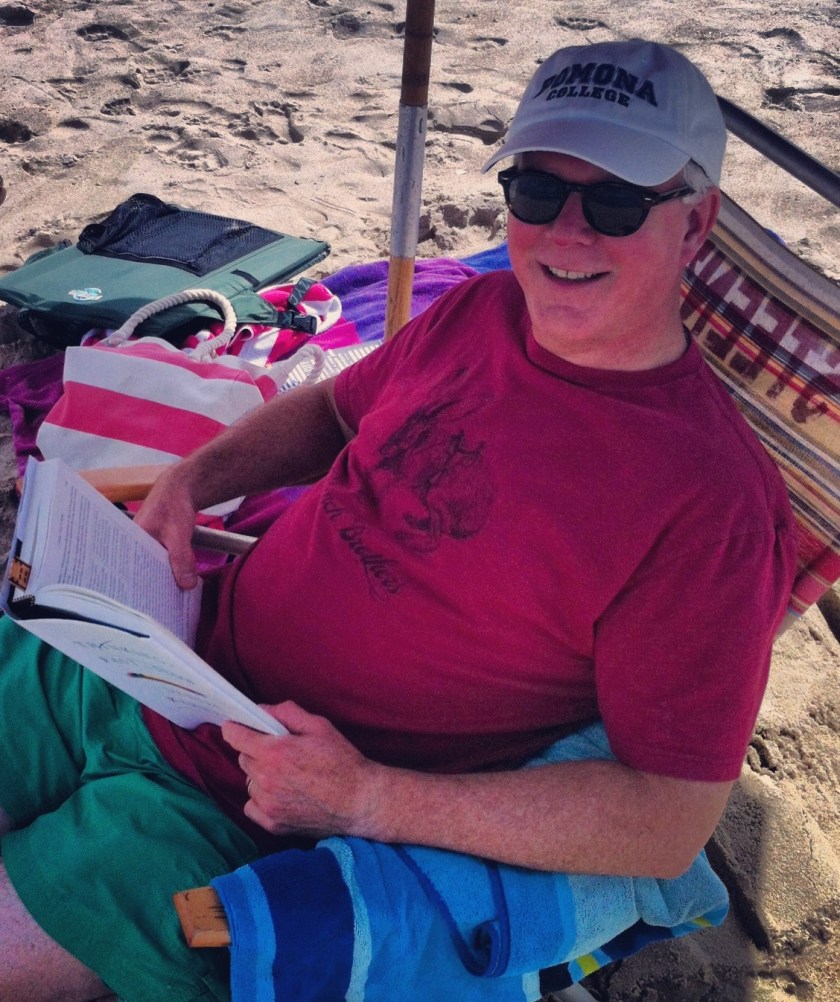
Author Fran Lebowitz once wrote, “Think before you speak.  Read before you think.” I’ve been thinking about reading recently, because I will be out of the office as I complete the final two weeks of my sabbatical and link that with some personal days off. I have the opinion that summer reading lists should be light, but that may simply be an excuse to read another baseball book.  Since this time is tied to my sabbatical, I’m going a bit more serious this August and I thought I’d share a few of the books which will be on night stand. (Regular readers can expect “mini reviews” in the coming weeks.) Bending the Future:  50 Ideas for the Next 50 Years of Historic Preservation in the United States (Edited by Max Page and Marla R. Miller) – This brand new work from the University of Massachusetts Press contains a wonderful introductory essay and then 50 short contributions from practitioners, academicians, journalists, community activists and more. I’m looking forward to digging into this work as one more …
Kefa Cafe

Gratitude turns what we have into enough

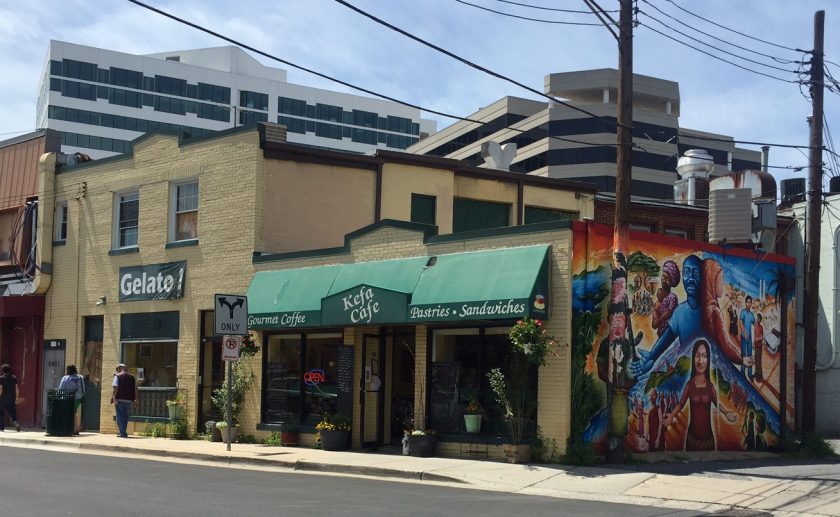
Among the institutions in our community of Silver Spring, few are beloved as much as a small coffee shop run by two sisters who left Ethiopia in the 1980s to escape violence and political upheaval.  Lene and Abeba Tsegaye – with the help of their brother – established Kefa Café in 1996.  In a recent Washington Post article celebrating the reopening of the shop after a fire, Lena said the two sisters, “…wanted their independent coffee shop to be a place where people talked to each other, not just another cafe where people buried their noses in laptops.” There is no WiFi at Kefa, named for the southwestern Ethiopia province where, the 9th-century legend goes, a goat herder named Kaldi saw his animals become so energized after eating coffee beans they couldn’t sleep.  “There is a history about coffee,” Abeba said. “It’s not just about getting caffeinated. People make big decisions around coffee.” The title comes from a sign they recently posted in their window, in celebration of their 20th anniversary in Silver Spring.  I …

The Age of Wonder

During high school graduation ceremonies for Andrew, one of the speakers built her remarks around a relatively new work at the time that captured the love of knowledge and learning. Five years later, I finally  picked up Richard Holmes’ The Age of Wonder (first published in 2008).  Sometimes it takes a while, but I try never to pass up a good book recommendation. And I’m so glad I did.  The Age of Wonder is a terrific work which looks at the growth of science in the Romantic Age.  Holmes tackles this broad topic with a blend of history, biography, art, science, and philosophy. In 500 pages that seem to fly by, the reader follows the intertwined stories of such historical luminaries as astronomer William Herschel and his sister Caroline, botanist Joseph Banks, chemist Humphry Davy, and writers such as Mary Shelley, Samuel Taylor Coleridge, and John Keats. The book rightly received stellar reviews from the start, which I cannot top.  “Flat-out fascinating,” “groundbreaking,” and “superlative” are just a few of the descriptions applied to this …

Cheerfulness revisited

I was thinking (again) about cheerfulness recently while putting together a long to-do list — which is how I feel prepared, if not always cheerful. Garrison Keillor — the soon-to-be-retired host of A Prairie Home Companion — has written that, “Cheerfulness is a choice, like choosing what color socks to wear, the black or the red. Happiness is something that occurs, or it doesn’t, and don’t hold your breath. Joy is a theological idea, pretty rare among us mortals and what many people refer to as “joy” is what I would call ‘bragging.’…Euphoria is a drug.”  Keillor suggests that cheerfulness is a…“habit you assume in the morning and hang on to as best you can for the rest of the day….that spiritual awareness that Buddhism holds up as enlightenment, in which one does not covet more than one’s small lot, one is free of animosity, and one lives in the immediate present, day by day, without dread of what might befall.” That sounds about right to me.  And while I’ve written this as a reminder …

A Good Measure of a Life

Last week I was fortunate to join the most remarkable retirement celebration I’ve ever attended.  Paul Herman, the Head of the Lower School at St. Albans here in Washington (where my son is an alum), was celebrated for 44 years of service.  There are many wonderful things I can share about Paul, but I’ll stick to one example.  Each day he stands outside the school and greets every student by name, gives them a firm handshake, looks them in the eye, and offers up an encouraging word (or a reminder to tuck in a shirt tail).  If he doesn’t remember a name after the first week, he pays the student a dollar.  Suffice it to say he rarely has to pay.  Candice and I hadn’t seen Mr. Herman in at least four years, but as we were next in the receiving line he looked up and said, “Great, here come the Browns” and gave us a warm greeting.  He has an amazing gift to make people feel included and welcome. The center nave of Washington …

Men Explain Things

Letting experience be larger than knowledge

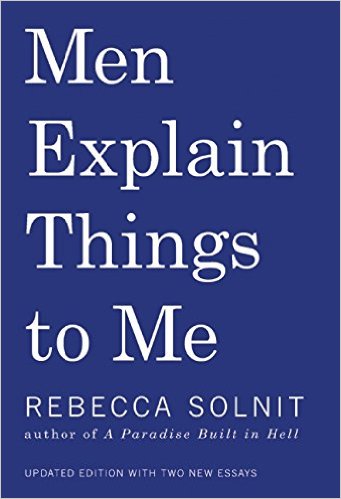
I just completed reading a thoughtful collection of essays by the writer Rebecca Solnit.  Titled after the first in the collection and her best-known essay – Men Explain Things to Me – these nine pieces written between 2008 and 2014 explore multiple topics including the gender wars and male privilege, the use of violence as a way of silencing speech, abuse of power, a new twist on marriage equality, and more.  Through them all, Solnit pushes the reader to consider perspectives that are likely to be outside their  comfort zone. A colleague forwarded the link to the Men Explain Things to Me essay several weeks ago after I referenced Solnit’s book Wanderlust: A History of Walking. (Also highly recommended.) The essay begins with the comic scene of a man explaining Solnit’s most recent book to her – even though he never read anything more than the New York Times book review of her work. But as noted on Solnit’s website, she ends this essay “on a serious note— because the ultimate problem is the silencing …

GW Flowers

Life is already too short to waste on speed

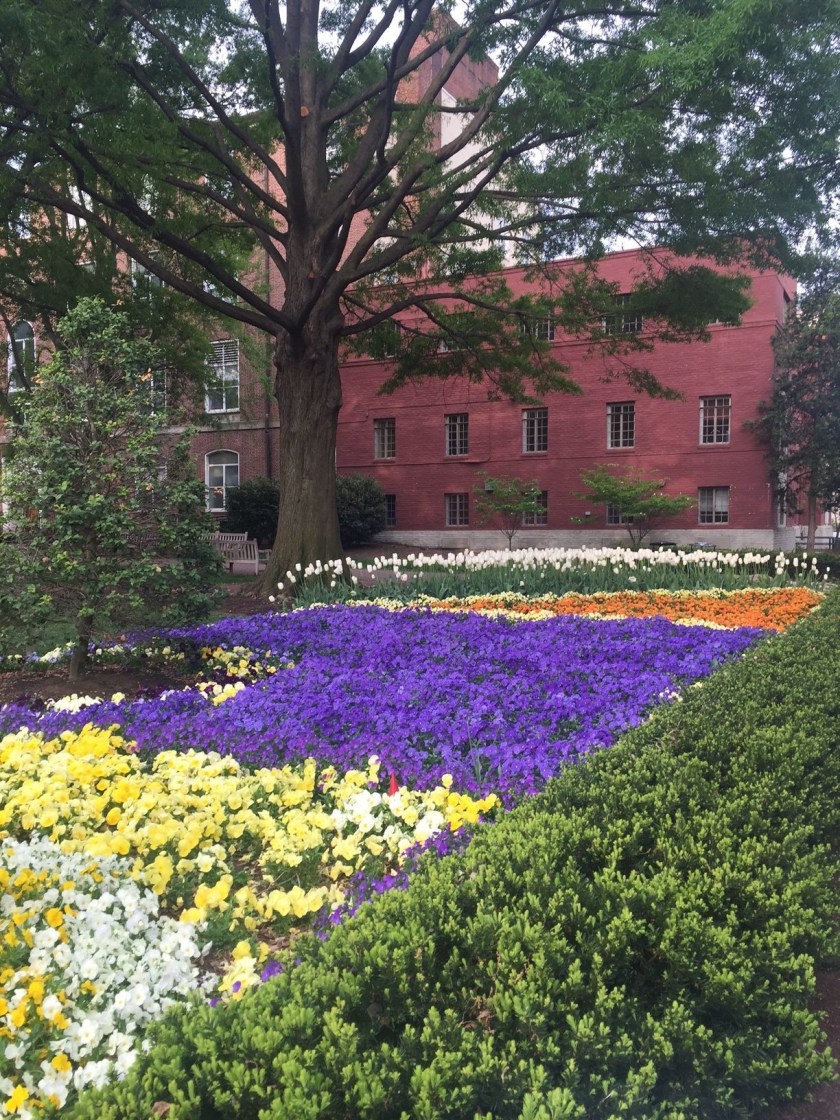
A sabbatical should be a time to reflect on the “why” and “how” of life.  In trying to extend that reflection into my re-entry into the world of everyday work, I have continued to read outside my usual scope of interest. In a book I was reading on the train this morning, Edward Abbey — who has been called the enfant terrible of American environmentalism — was quoted as having had some good things to say about walking. “Walking takes longer, for example, than any other form of locomotion except crawling.  Thus it stretches time and prolongs life.  Life is already too short to waste on speed….Walking makes the world much bigger and therefore more interesting.  You have time to observe the details.“ I love the line “Life is already too short to waste on speed.” On this morning’s walk to work, I passed the flower beds in the University Yard at GW.  It was a reminder to take the time to observe the details. More to come… DJB IMAGE: Flower beds at George Washington …

Time Off

Taking extended time away from work is a luxury for many Americans – not to mention for many citizens of the world. As the oligarchs have taken over large parts of our economy, the 90% are pressured to work ungodly hours and take time off at their peril. One of the most telling – and incredibly sad – segments of Michael Moore’s “act of guerrilla humanity” called Where to Invade Next is his reporting about how other countries provide their workers so much more time off than U.S. companies AND realize more productivity.  Imagine that. All of this is to say that I feel very fortunate to work for an organization that has a sabbatical policy to encourage creative, restful, and restorative time off.  Several of my colleagues have taken a sabbatical in recent years – some to travel, others to work for preservation groups in other countries, and still others to work on projects for their faith communities.  In each case they came back with refreshed perspectives and energy for their work. My last …

Connections

This past week has been full of conversations, study and work around successful networks. An African proverb cited in the book Connecting to Change the World: Harnessing the Power of Networks for Social Impact may best describe the impact of connecting to networks: If you want to go quickly, go alone. If you want to go far, go together. A good reminder.  Let’s go far, together. More to come… DJB