
The smells of place and time
Places are imbued with sounds, smells, noises, and feelings that bring memories and human connections.
Places are imbued with sounds, smells, noises, and feelings that bring memories and human connections.
Last week I referenced Dr. Mindy Fullilove’s book Root Shock with a story that spoke to how emotions flow through places. I wrote before the events in Charlottesville—and the reactions to that weekend—brought place, memory, and emotion to the forefront of our national conversation. Stephanie Meek’s statement on Confederate memorials and the confronting of difficult history speaks to how emotions that arise from place are not always built upon strong, positive memories. Of course, Dr. Fullilove understands this all too well. Root Shock is focused on the difficult history of urban renewal, something seen in Charlottesville’s destruction of the African-American community of Vinegar Hill in the 1960s. At the Trust, as Stephanie notes, “we believe that historic preservation requires taking our history seriously. We have an obligation to confront the complex and difficult chapters of our past, and to recognize the many ways that our understanding, and characterization, of our shared American story continues to shape our present and future.” That is especially true of our Civil War history, and the fact that many of …
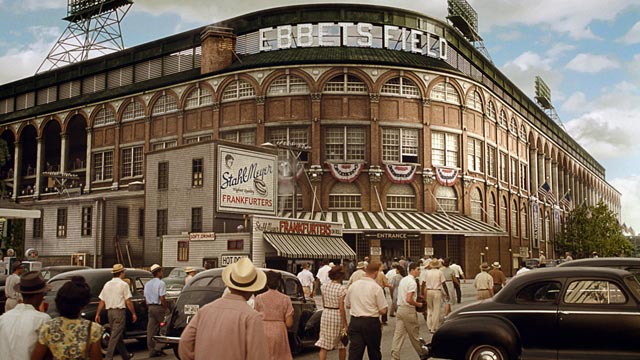
It will surprise no one that I read a couple of baseball books and watched several games while on vacation. But it may surprise you to know that the best piece of writing I read which included baseball as its subject came from the opening pages of psychiatrist Mindy Fullilove’s 2004 book Root Shock: How Tearing Up City Neighborhoods Hurts America, and What We Can Do About It. She begins chapter one with several powerful paragraphs. I’m going to quote extensively from those two pages. “Every once in a while, in a particular location and at a particular time, people spin the wheel of routine, and they make magic. One such location was Ebbets Field in the heart of Brooklyn, where, through World War I, the Roaring Twenties, the Great Depression, World War II, and the postwar struggles for equality in America, hard-working people enjoyed baseball. That small, unpredictable, and intimate ballpark was a gallery for characters to strut their stuff, and the characters in the stands took as much advantage of the opportunity as …
 MORE TO COME...