
Daydreaming in a focused, driven world
Being in the moment is important…except when it isn’t.
Being in the moment is important…except when it isn’t.

My father’s morning practice of centering, and then cheerfully making breakfast, was the example I needed all along.
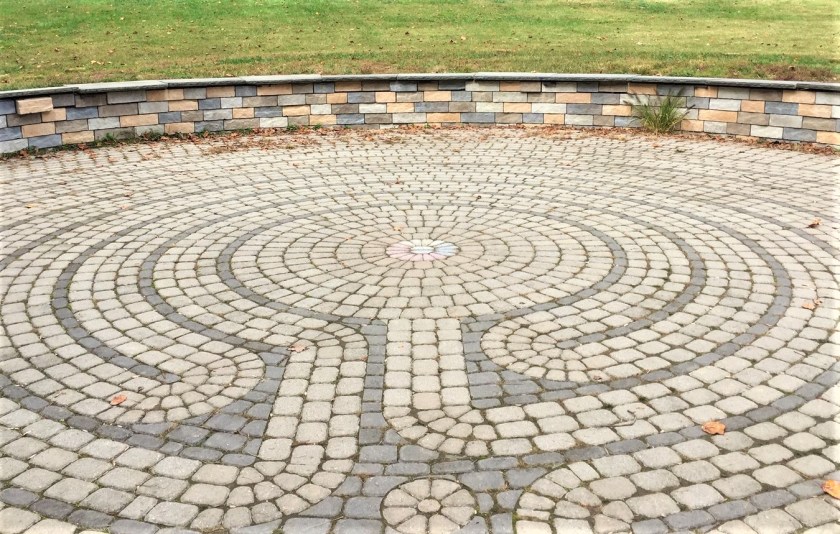
Yesterday we took a walk through Brookside Gardens. It was a beautiful fall day, the colors were vibrant, and the air was clean. Along the path were small signs of “Garden Mindfulness” with reminders to “feel the air moving across your skin” and to “bring awareness to those parts of the body where you could feel the wind.” After a while we came upon a labyrinth placed in a tranquil meadow setting. As I slowly walked the curving stone path, I recalled the rules and morals of the practice from my reading of Rebecca Solnit’s delightful book Wanderlust: A History of Walking. “…sometimes you have to turn your back on your goal to get there, sometimes you’re farthest away when you’re closest, sometimes the only way is the long one. After the careful walking and looking down, the stillness of arrival was deeply moving.” In these troubled times, we are all on a difficult journey. It is important to recall that sometimes the only way is the long one. Work that is meaningful takes time …

Where everything seems new, we learn and grow not only through considering our own experiences and what our senses are telling us, but by hearing from a wide variety of voices.

The February 10th newsletter of Chapter 16, a website celebrating Tennessee literature, was titled Paying Attention. Editor Maria Browning writes that, to her mind, February is “the most fickle month of the year in Tennessee,” with shifts between the stirrings of spring and days of snow (or, worse, ice). She continues, “Wardrobe challenges notwithstanding, this is a wonderful time to pay attention to the ever-dynamic natural world.” Her suggestion for some inspiration led me to read “Eleven Ways of Smelling a Tree” by Sewanee writer David George Haskell. As Browning notes, the piece at Emergence Magazine is a collaborative effort, with musician Katherine Lehman and art by Studio Airport. I’ve recommended Haskell’s The Forest Unseen in the past as a delightful book written by a scientist with the soul of a poet. “Eleven Ways of Smelling a Tree” has the same observational mix and magic. Haskell opens his piece with an ode to the American Basswood. “Harlem, New York CityVintage: 1908 We crack the windows on summer’s first warm days. I taste diesel smoke, acid and oily. The fumes rise …
I have only recently come to accept that I’ve spent my entire life as a worrywart. This is hard to admit, because I worry what people will think of me if they know that I’ve lived a life of constant concern about what can go wrong. Knowing I dwell unduly on difficulty or troubles, will family, friends, and colleagues think less of me? A quote attributed to Mark Twain (and recently repeated during a lecture I heard by a Zen Buddhist monk at Tenryu-ji Temple in Kyoto, Japan) gets at the heart of the issue: “I have been through some terrible things in my life, some which actually happened.” Until recently, I attributed my willingness to dwell on the worst case scenario to good planning. Having an advanced degree in planning led me to rationalize that I was simply trying to make sure things went well by gaming out all the things that could go wrong. But it was pointed out recently that perhaps I’ve taken that to extremes. I could tell I was driving …

Use something as simple as washing your hands to bring you back to the moment.
 MORE TO COME...