
Our year in photos – 2016
2016 was our year for time in Italy and my last visit with Daddy.
2016 was our year for time in Italy and my last visit with Daddy.
The Next City website had a recent post by a physicist, Laurie Winkless, entitled 7 Things I Learned While Trying to Figure Out How Cities Work. Number 3 jumped out at me, and I’ll quote it here: “We’ve all been caught up in phantom traffic jams, where for no discernible reason, traffic builds up and then eases. These traffic shockwaves are officially known as “jamitons,” and they can arise even if everyone is driving perfectly. But ants don’t have the same issue: Even when their highways are packed, they don’t get gridlocked. It seems that it’s because ants self-organize into lanes, and give each other a lot of headway, which buys them more time to react to any incidents up ahead … maybe a lesson in there for us all.” Maybe a lesson indeed! I looked up from my book on a recent commute on the Metro, when I felt several people rush by my seat. What was the hurry? It turns out that they had entered at Gallery Place and were all pushing to …
In February 1990, Václav Havel – the great Czech playwright, intellectual, and dissident – made an address to the United States Congress. Havel had been president of Czechoslovakia for only two months when he made his speech. However, he had a lifetime of experience in living through, and responding to, different political systems. Among his thoughts that day was the following: “…the salvation of this human world lies nowhere else than in the human heart, in the human power to reflect, in human meekness, and in human responsibility.” Havel’s words are as important today as ever. Have a good week. More to come… DJB
My father stayed in touch with people all over the world. But I was still surprised earlier this week when the Senior Minister of First Baptist Church in Savannah, Georgia – where I was speaking – quickly made the association between me and my hyper-connected father. Historic Savannah Foundation invited me to be the guest speaker at their annual meeting, which was being held in the historic sanctuary of First Baptist Church. In a bit of chit-chat before the meeting began with their senior minister, Dr. John Finley, I mentioned that I grew up attending First Baptist Church in Murfreesboro, Tennessee. That’s when Dr. Finley looked at me and asked, “Are you Tom’s son?” I must have looked pretty dumb-founded, because he quickly added, “My first job out of college at Vanderbilt was as a youth minister in First Baptist in Murfreesboro.” Dr. Finley was there in the mid-1970s for three months, and became friends with my mom and dad, as well as the staff and others. Daddy kept in touch and even visited Savannah …
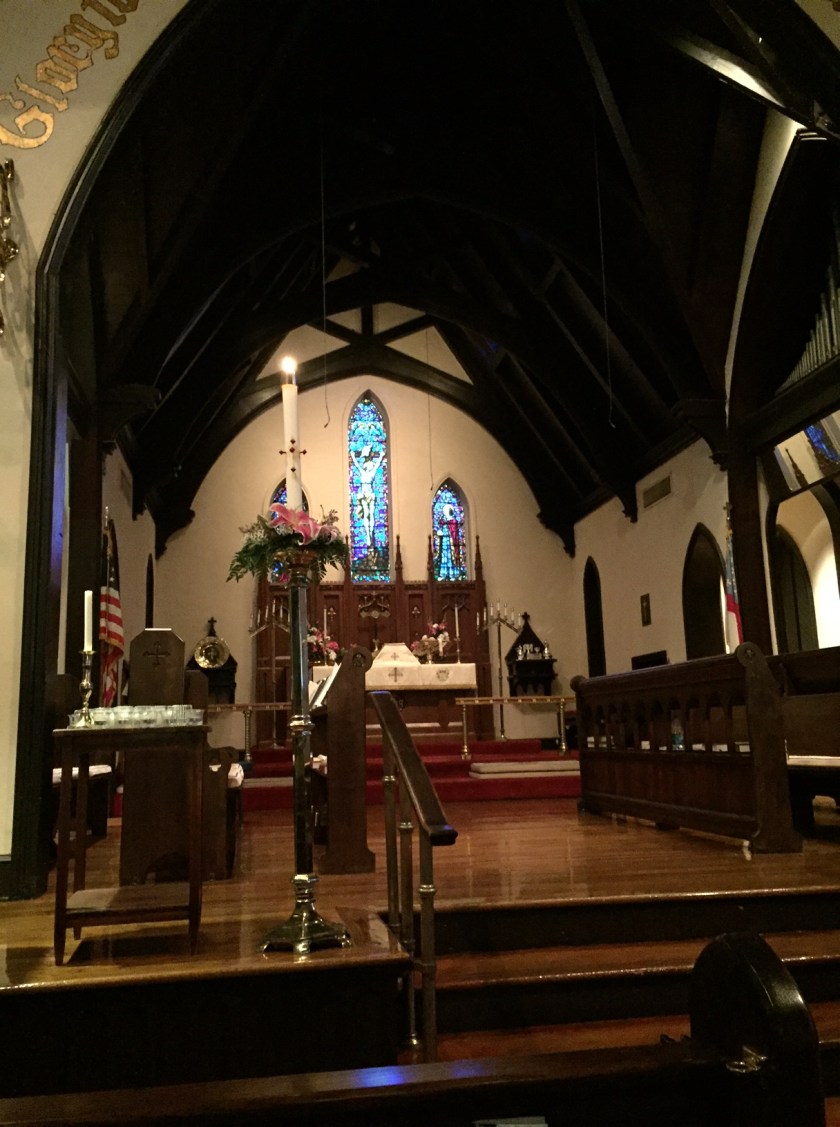
Last evening’s Commemoration of All Faithful Departed service at our church was beautiful and personally meaningful. I had it marked on my calendar for some time, as I wanted to attend to remember my father, who passed away earlier this year. The choir’s music was beautiful, with Mozart’s Requiem interspersed between the readings. The first of those readings is from the Book of Wisdom and begins, “The souls of the righteous are in the hand of God, and no torment shall ever touch them.” We put the names of loved ones departed into a basket, and during the prayers of the people each name was read while members of the congregation could come forward and light a candle. (As an aside, I loved hearing baseball legend Monte Irvin remembered among the departed.) Lovely. Thoughtful. Deeply moving. And when I saw that The Rev. Emily Griffin was the evening’s preacher, I knew all three of those feelings would continue. We have three very insightful and thoughtful priests who enlighten us each in their own way with …
We are made by what would break us. In every life, inexplicable things happen. It is difficult to respond to these challenges, but I’ve noted before that we learn to walk by falling down. The beginning of wisdom often results from “the dramatic and more ordinary moments where what has gone wrong becomes an opening to more of yourself and part of your gift to the world.” Those words were written by Krista Tippett, the Peabody Award-winning broadcaster of On Being and a 2014 recipient of the National Humanities Medal from President Obama. She has published a new work based in part on her years of conversation with poets, scientists, philosophers, theologians, and activists. Becoming Wise: An Inquiry into the Mystery and Art of Living, is a thoughtful book, full of insight. Tippett indicates she wrote about wisdom because “one of its qualities…is about joining inner life with our outer presence in the world. The litmus test of wisdom is the imprint it makes on the world around it…” In this new work, Tippett writes …
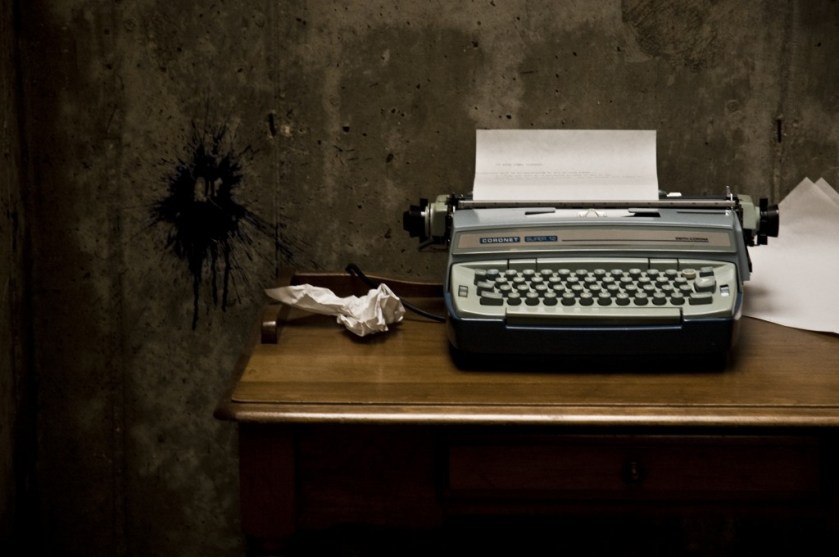
How we spend our days is how we spend our lives.

Writer Maria Popova speaks of our need “to connect countless dots, to cross-pollinate ideas from a wealth of disciplines, and to combine and recombine these pieces and build new ideas” if we seek to be creative and truly want to contribute to the world. To reach this level of creativity and understanding of our beliefs, it is important that we be open to change. After noting that we should allow ourselves the “uncomfortable luxury” of changing our minds, Popova writes: “We live in a culture where one of the greatest social disgraces is not having an opinion, so we often form our ‘opinions’ based on superficial impressions or the borrowed ideas of others, without investing the time and thought that cultivating true conviction necessitates. We then go around asserting these donned opinions and clinging to them as anchors to our own reality. It’s enormously disorienting to simply say, “I don’t know.” But it’s infinitely more rewarding to understand than to be right — even if that means changing your mind about a topic, an ideology, …

I’m not always a good listener. But I know how important it is to listen. So I felt a little better about my shortcomings when I heard David Isay, the founder of StoryCorps and the person who has said that “listening is an act of love,” confess that other than when interviewing people, he can be a really terrible listener. He’s impatient. (I can relate). Listening takes a lot of focus and energy, and all of us have our moments. In the interview, it was noted that listening is not something that we do all the time. It’s work. It’s a commitment. But we want to make room for listening. And as David Isay said, “It’s something you never regret.” He also told a story that I want to pass along, in honor of Mother Theresa, who was recently named a saint by Pope Francis. Isay said, “I don’t know if this is an apocryphal story or not, but there’s a story about Dan Rather interviewing Mother Theresa. And he asked her what she said …
I heard the line “We learn to walk by falling down” recently and was reminded that we can’t do anything unless we’re willing to fail. In our work, in our lives, in our relationships with others, in everything we do we have to be willing to try, fall down, get back up, learn, and try again. All of us want our work and lives to make a difference. Being willing to fall down and get up again is part and parcel of making a difference, and I believe that supporting others on this journey as we all “learn to walk” is at the heart of what we’re called to do. Let’s look for ways to learn together. More to come… DJB
 MORE TO COME...