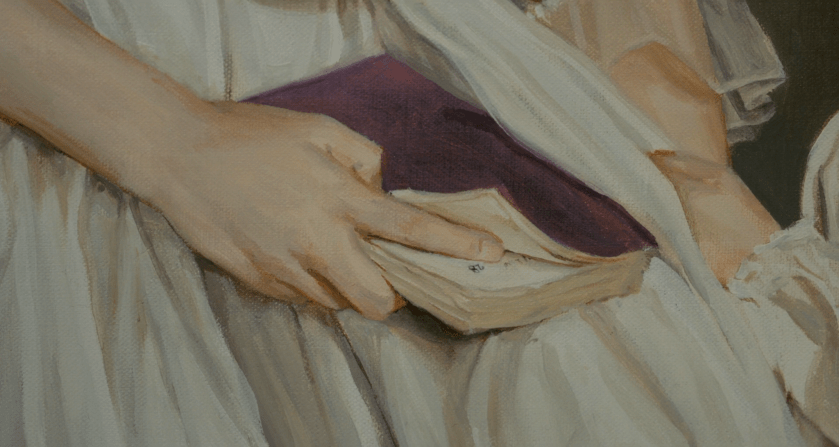
A stunning portrait
“Portrait of a Lady on Fire” is a stunning movie, created by artists who bring craft and vision to their work.
Books (along with a smattering of movies and plays) that I have found of interest and want to share
“Portrait of a Lady on Fire” is a stunning movie, created by artists who bring craft and vision to their work.

The February 10th newsletter of Chapter 16, a website celebrating Tennessee literature, was titled Paying Attention. Editor Maria Browning writes that, to her mind, February is “the most fickle month of the year in Tennessee,” with shifts between the stirrings of spring and days of snow (or, worse, ice). She continues, “Wardrobe challenges notwithstanding, this is a wonderful time to pay attention to the ever-dynamic natural world.” Her suggestion for some inspiration led me to read “Eleven Ways of Smelling a Tree” by Sewanee writer David George Haskell. As Browning notes, the piece at Emergence Magazine is a collaborative effort, with musician Katherine Lehman and art by Studio Airport. I’ve recommended Haskell’s The Forest Unseen in the past as a delightful book written by a scientist with the soul of a poet. “Eleven Ways of Smelling a Tree” has the same observational mix and magic. Haskell opens his piece with an ode to the American Basswood. “Harlem, New York CityVintage: 1908 We crack the windows on summer’s first warm days. I taste diesel smoke, acid and oily. The fumes rise …

So many today seem content to settle in the midst of their ignorance and not face life with astonishment, awe, and a sense of wonder. As Margaret Renkl writes, that approach is their loss.
Americans have a long history of living with an eye on the horizon, seeking something shiny and new. The first religious communities of New England, founded to escape the tyranny of the established churches in Europe, led to Roger Williams and others leaving those new settlements for Rhode Island to escape the tyranny of the Puritans. The Jeffersonian search for freedom in land led to grid-and-garden patterns of development across much of the Midwest and West and, eventually, the push out of the city into the “land” of the suburb. Communitarian journeys to places like New Harmony, the Shaker villages, and (a personal favorite) the 19th century English town of Rugby, Tennessee are part of the story. Henry Ford noted that, “We shall solve the problem of the city by leaving the city,” so Ford, George Pullman and other industrialists, up to and including today’s Silicon Valley elites, have constructed company towns and “E-topias” to build something new in the land of opportunity. All of these examples and many more are part of Alex Krieger’s …

My annual review of books I’ve read over the past 12 months.

A student asks, “Do you think I could be a writer?” The writer responds, “Well, do you like sentences?”
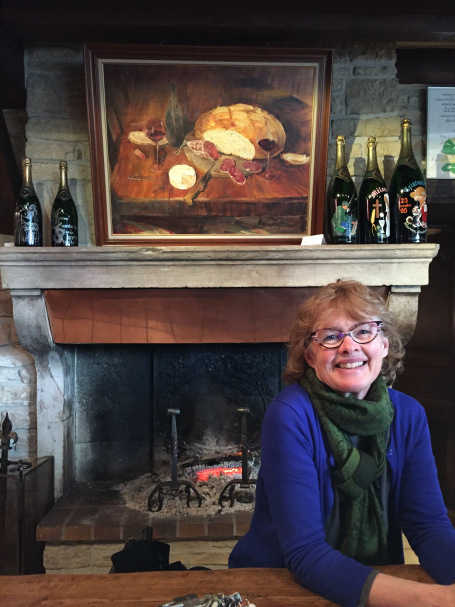
Writer, editor, writing coach, France aficionado, and family friend Janet Hulstrand produced a delightful little book earlier this year entitled Demystifying the French: How to Love Them and Make Them Love You. Having just finished this advice manual for travelers and others interested in living more successfully with the French, I found Janet’s take on how to understand these sometimes curious, somewhat frustrating, occasionally mystifying, but always interesting people to be delightful, informative, and useful all at once. I also found that Janet had—either on purpose or unwittingly, I’m not sure which—captured some wonderful life lessons from her observations about the country she’s now observed and come to love as a visitor and resident for some 40 years. The book is written as if you are sitting by the fireplace with a wonderful French wine and a good friend who is giving you a crash course before you venture out on your first trip to France. Janet’s writing is clear and, as one reviewer put it, “breezy and digestible.” She begins with five essential tips for “even …

Here in 2019 we’re already seeing a “100 Best Books of the 21st Century” list.

We all saw the same thing. Yet, what we saw differs sharply in our mind’s eye, and in our retelling of the story. Over the past two weeks, all Americans had access to the same impeachment inquiry hearings. We all saw the same witnesses testifying. We all heard the same Members of Congress asking the same questions (or making the same speeches). And yet, taken individually, what we saw and heard during those hearings differed widely. Why is there this contradiction if we all saw and heard the same testimony presented to the same Congressional committee? One answer to that conundrum may lie in the increasingly narrow ways in which we identify ourselves. It just so happened that I was reading Francis Fukuyama’s smart and insightful 2018 book Identity: The Demand for Dignity and the Politics of Resentment during the hearings. A Japanese-American political scientist, Fukuyama’s thoughtful take on how our nation, and how much of the world, came to a place where we are identifying ourselves with a series of smaller and smaller tribes while …

Doris Kearns Goodwin identifies boldness as a shared characteristic of great leaders in troubled times.
 MORE TO COME...