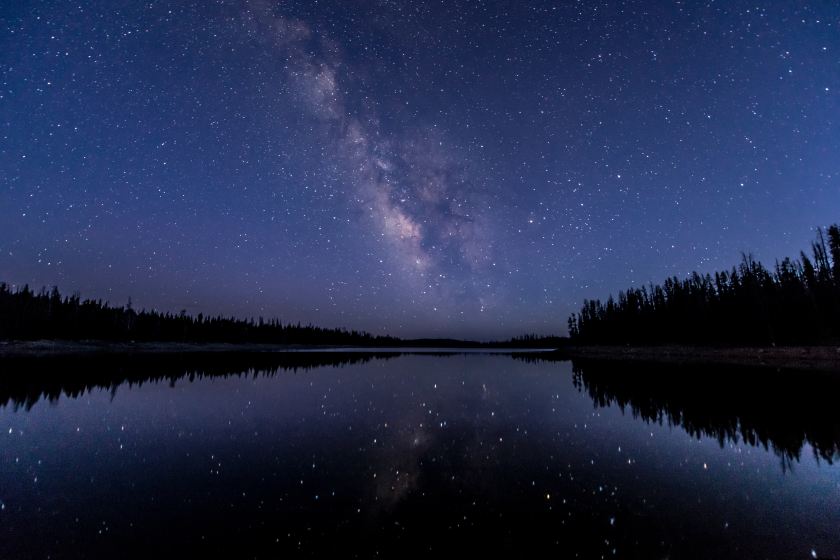
We were vacationing in Vermont with Andrew and Claire (and Lily, our Sussex Spaniel) in the late summer of 2001. The sky was clear and although Andrew fell asleep, we went outside our cabin where the Milky Way opened up before us. We were staring in awe at the grandeur of the heavens when eight-year-old Claire exclaimed, “Let’s wake up Andrew. He has to see this.”
The wonder of the world was right before us and part of the joy of discovery was in sharing it with others.
There is a remembered child in each of us. It recalls that wonder-filled period, as author Linda Lear writes, that “stirs in us that ancient longing for unity with the living world.” Unfortunately, we too often lose that delight of discovery as we grow older.
But there are ways we can reclaim and nurture a lifelong sense of wonder, as Lear writes in the introduction to a slim but vital meditation by one of our greatest nature writers. This work is a prescription on “how to maintain the freshness with which we saw the natural world for the first time, and how to preserve awe and wonder in lives lived so often in opposition to nature.”

The Sense of Wonder: A Celebration of Nature for Parents and Children (1965; Harper reprint 1968) by Rachel Carson may seem slight upon first examination but looks can deceive. In these few pages about the introduction of children to nature there is much that is inspiring, spiritual, and timeless. Carson’s story begins as she takes her twenty-month-old nephew Roger down to the beach on a rainy night. “Out there, just at the edge of where-we-couldn’t-see, big waves were thundering in, dimly seen white shapes that boomed and shouted and threw great handfuls of froth at us. Together we laughed for pure joy — he a baby meeting for the first time the wild tumult of Oceanus, I with the salt of half a lifetime of sea love in me.”
It was clearly, she notes, “a time and place where great and elemental things prevailed.” And she marveled at Roger’s “infant acceptance of a world of elemental things, fearing neither the song of the wind nor the darkness nor the roaring surf.”
It is in both their reactions that Carson draws the inspiration for her call to contemplate the awe and beauty of nature, bringing a “spiritual renewal, inner healing, and a new depth to the adventure of humanity.”
The friend who recommended this book wrote that it “reconnects the reader with some of our core (pre-adult and thus pre-worker bee) humanity — reminding one to do things like walk barefoot on grass, look up at the night sky in our own backyard . . . basically to stand in awe of the mystery and the beauty of it all.”
The Sense of Wonder began life as a magazine essay that grew out of the summertime visits that Carson’s grandnephew, Roger Christie, made to her cottage in Maine. Together they wandered the beaches, woods, and tide pools where she taught Roger the natural wonders around them. Carson wrote that the learning was based on “having fun together rather than teaching,” and in that act she began to see those wonders anew. The essay was her gift to others who might hope to introduce a child to the beauty of nature. “If a child is to keep alive his inborn sense of wonder,” writes Carson, “he needs the companionship of at least one adult who can share it, rediscovering with him the joy, excitement and mystery of the world we live in.”
We have let Roger share our enjoyment of things people ordinarily deny children because they are inconvenient, interfering with bedtime, or involving wet clothing that has to be changed or mud that has to be cleaned off the rug. We let him join us in the dark living room before the big picture window to watch the full moon riding lower and lower toward the far shore of the bay, setting all the water ablaze with silver flames and finding a thousand diamonds in the rocks on the shore as the light strikes the flakes of mica embedded in them. I think we have felt that the memory of such a scene, photographed year after year by his child’s mind, would mean more to him in manhood that the sleep he was losing.
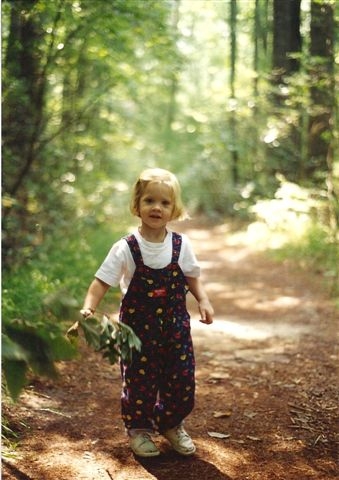

We had the same feeling about lifetime memories versus a night’s sleep in Vermont, or a few years later when Andrew returned the favor and led us to a 2 a.m. meteor shower over the Grand Canyon.
Not everyone has access to a rocky shore in Maine or the majesty of the Grand Canyon. But Carson has options, be they the whistling of the wind around the eaves, rain in our face, or a nearby park where we can observe migrating birds. The object in exploring nature with a child is to “become receptive to what lies all around you. It is learning again to use your eyes, ears, nostrils and finger tips, opening up the disused channels of sensory impression.” And ask yourself, “What if I had never seen this before?” or perhaps, “What if I knew I would never see it again?”
A child’s world is fresh and new, yet we often lose that clear-eyed instinct about “what is beautiful and awe-inspiring” before we reach adulthood. Many don’t attempt to know, and “because they can see many of these things almost any night perhaps they will never see it.”
Life is fascinating and remarkable. Rachel Carson’s sense of wonder led to “something much deeper, something lasting and significant” where we are “never alone or weary of life.”
There is something infinitely healing in the repeated refrains of nature — the assurance that dawn comes after night, and spring after the winter.
And even on our deathbed, what can sustain us is an “infinite curiosity of what is to follow.”
More to come…
DJB
The Weekly Reader links to the works of other writers I’ve enjoyed. I hope you find something that makes you laugh, think, or cry.
Photos: Jackson Hendry on Unsplash; Claire at Kanuga, NC and Andrew at a SC beach by Candice Brown.
 MORE TO COME...
I saw Linda Lear on the Sunday after I posted this. Linda wrote the intro to this short work, she’s a biographer of Rachel Carson, and she maintains the RachelCarson.org website. My wife and I have known Linda for a few years, and it was good to be able to tell her how much this book meant to me, and how others had responded to this blog post. She was genuinely touched. I love recommending good books, especially when other thoughtful readers – in this case my friend Ann Thornton – have suggested them to me.
Pingback: The tyranny of binary choice | MORE TO COME...
Pingback: Observations from . . . June 2023 | MORE TO COME...
Pingback: The books I read in June 2023 | MORE TO COME...
Pingback: The earth is our home | MORE TO COME...
Pingback: The 2023 year-end reading list | MORE TO COME...
Pingback: Committed to transformation | MORE TO COME...
Pingback: Seeking the beautiful and awe-inspiring | MORE TO COME...