The day before we celebrate America’s independence is a useful time to remember that as a country we have many birthdays. Imani Perry notes that even though we broke away from Great Britain, teachers and historians in the U.S. have inherited a British inclination to tell history in a linear, forward sequence. But that won’t work, she notes, for the story of the nation.
There are so many birth dates: 1492, 1520, 1619, 1776, 1804, 1865, 1954, 1964, 1965. After centuries, we are children of the colonized, colonizers, enslaved, marginal, poor, wealthy, exploitative, White, Black, shades of brown, citizens, and fugitives running from the law. People with jobs but no papers, people with papers but no door or mattress.
It is impossible to tell our story in a linear fashion.
As I prepare to leave for a trip to Alaska — a part of our country that could add a birth date to that list that is more than 11,000 years old — I wanted to make sure I was hearing Indigenous perspectives among those voices telling our history.

The Alaska Native Reader: History, Culture, Politics (2009) edited by Maria Sháa Tláa Williams is a good place to seek understanding of the Indigenous perspective in our 49th state. Home to more than 200 federally recognized tribes, the voices and history of these Native Alaskans are nonetheless often overlooked or silenced. Too often Alaska’s history is told through the stories of “Russian fur hunters and American gold miners, of salmon canneries and oil pipelines.” However, Native Alaskans have been here much longer and have stories, histories, landscapes, ways-of-living, and cultural perspectives worth knowing and preserving.
As seen at the National Historic Landmark Dry Creek, the claim of the Indigenous peoples in Alaska is much older than Russians or European Americans. When archaeologists first discovered the Dry Creek site in the early 1970s, its 11,000-year-old archaeological artifacts were the first pieces of evidence to confirm that people migrated across the Bering Land Bridge and hunted Pleistocene megafauna in Alaska.
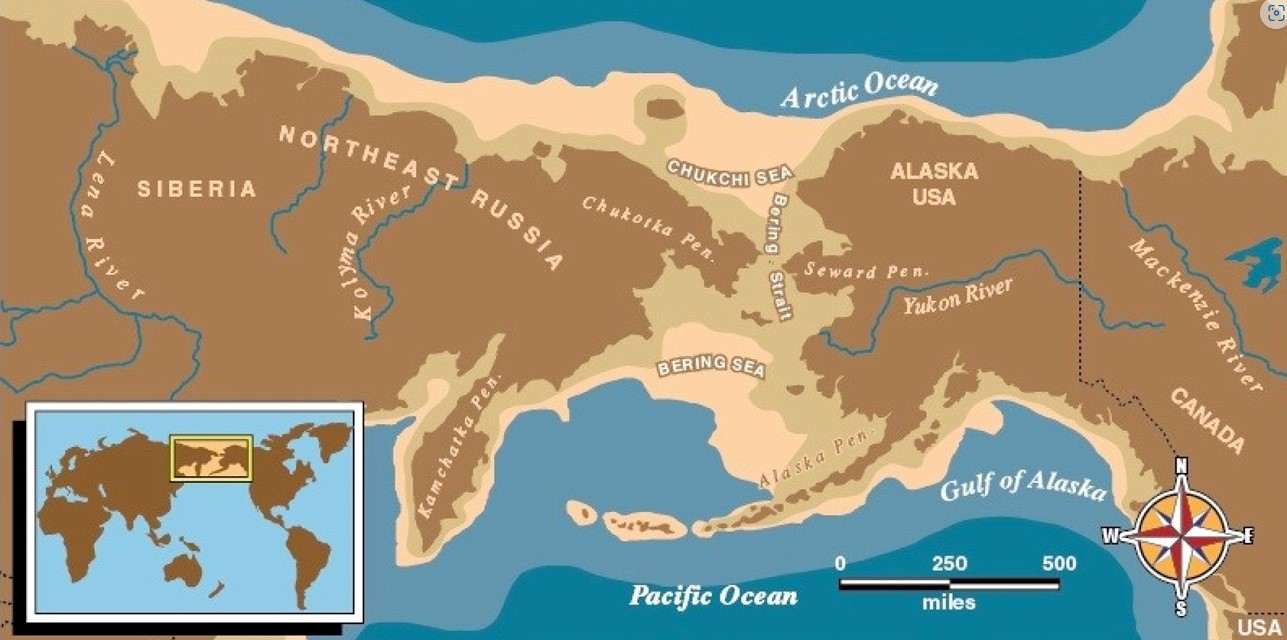
The site validates a long-standing cultural connection between Asia and Alaska, and informs us on the earliest trade, communication, and migrations between Alaska and the rest of the Americas. The Dry Creek site is significant to our understanding of the earliest Americans and our ties to Asia.
Williams notes that she uses the term “perspective” purposefully in speaking of the voice she provides Indigenous peoples. “Perspective is how something is portrayed from a particular point of view; in this case, it is an indigenous point of view.” The perspectives she has included are often “counter” stories or histories that “relay new ideas and concepts that have not been included in most history books on Alaska.”
Early in the work, she deftly displays this use of perspective with two stories about the Russian “discovery” of Alaska in the middle of the eighteenth century: one from the Russian perspective and the other from the point of view of the Native Alaskans who were being “discovered.” She also gives voice to the Dena’ina peoples, on whose land about 80 percent of the Alaskan population now reside. This alternative history of Anchorage, Alaska’s largest city, points to how the long and continuing Dena’ina presence is often obscured. The Dena’ina historian Alberta Stephan wrote, “It is important to the Athabascan Indian people that their history of a well organized life style be known by everyone.”
Ted Mayac, Sr. has a short but telling piece on How It Feels to Have Your History Stolen as he writes about the oratorio King Island Christmas. Yup’ik writer Harold Napoleon shares a heartrending description of the long shadow of The Great Death — the 1900 flu outbreak. It was a time-marker for the Yup’ik people and it was caused by a disease from non-Natives.
Cultural worldviews in Indigenous communities evolve over thousands and thousands of years and time is important in that development. Williams includes a work by Professor Greg Cajete of the Santa Clara Pueblo about the relationship of the Alaskan Native societies and the stars, how they are linked to origin stories, and their placement in the larger cosmos.
And Cajete explains that the reading of the land, sky, and waters over thousands of years has helped Yup’ik hunters and their families survive in some of the harshest environments on earth. They do so through a deep observational understanding of the relationship between the movements of the sun in a directional circuit of time and the space of the Arctic tundra landscape and the night time movement of the Big Dipper through the year. They use this knowledge to know — even during a winter night — what “time” it is and the direction of the home base on an almost featureless landscape.
Alaska Natives use a relational understanding which combines sky knowledge with knowledge of weather, land, and ocean. This relational understanding is embedded in mythical as well as real stories handed down through the oral tradition. In this way, stories of celestial cycles formed the basis for real integration of traditional environmental knowledge with mythical and historical traditions of Alaska Natives.
As Williams notes, too often what we read about Indigenous peoples in Alaska comes from non-Native voices, “and although there are some impressive contributions in this arena, by definition they lack the ideas, voice, or perspective of the indigenous experience.”
The selections in this fascinating work “shed light on who Alaska Native people are, what their history has been, and the impacts of colonialism, in part by including a new cadre of indigenous leadership that has emerged in the twenty-first century.” Worldviews from the Indigenous perspective “provide new models for viewing knowledge and the indigenous perspective on math, science, astronomy, and the cosmos.”
We are all the richer for hearing these voices and seeking to understand their perspective.
More to come…
DJB
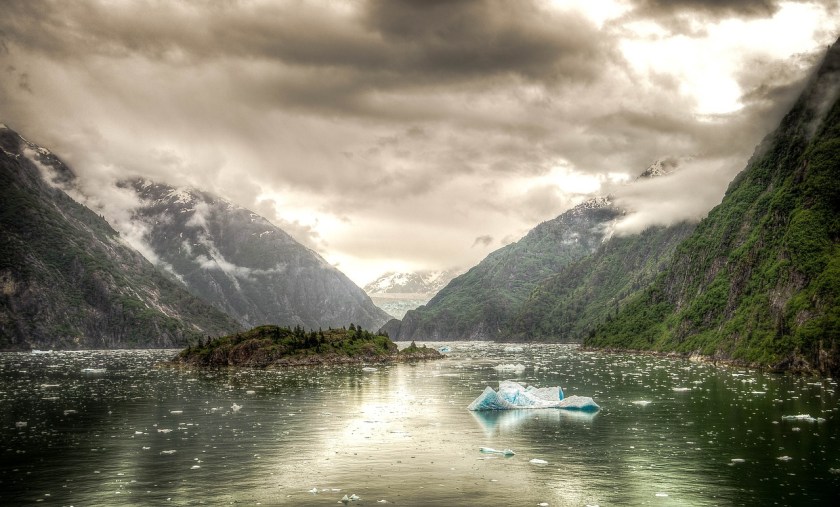
Image of Tracy Arm Fjord by Michelle Raponi from Pixabay
 MORE TO COME...
Pingback: Song of Alaska | MORE TO COME...
Pingback: Observations from . . . July 2023 | MORE TO COME...
Pingback: The books I read in July 2023 | MORE TO COME...
Pingback: The 2023 year-end reading list | MORE TO COME...