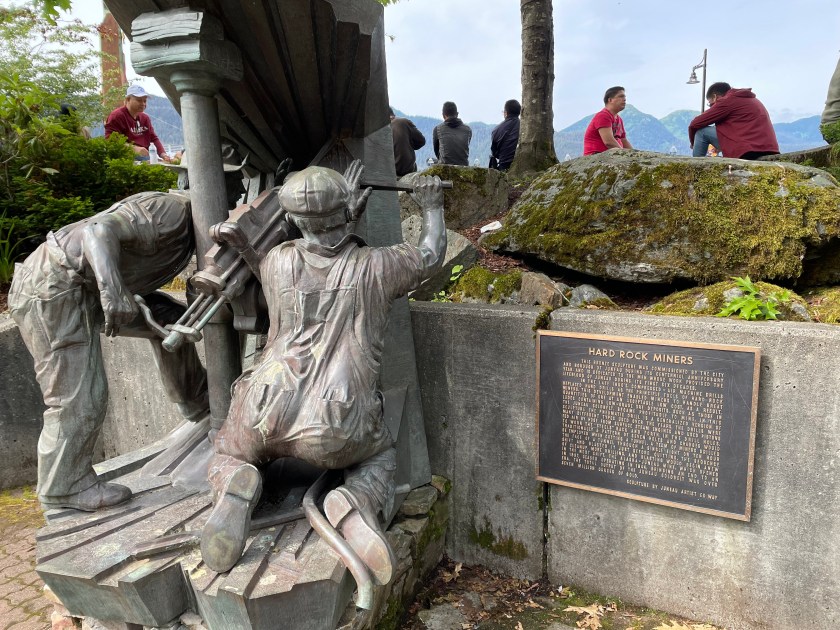
I have been traveling this month, and almost every day I am reminded of the advice given by Roman Mars that I quoted in a 2021 post: always read the plaque.
By following this suggestion, I have discovered that:
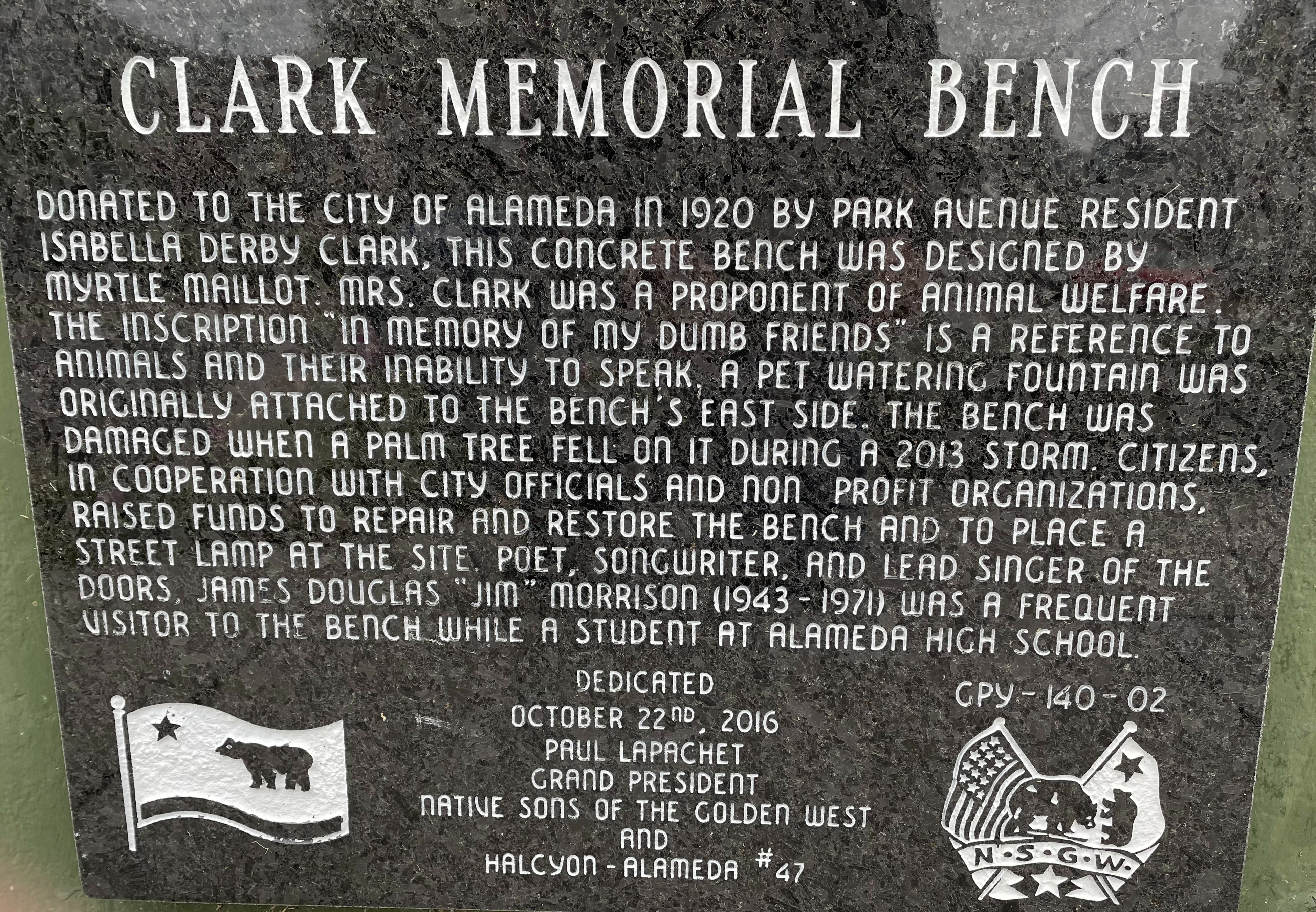
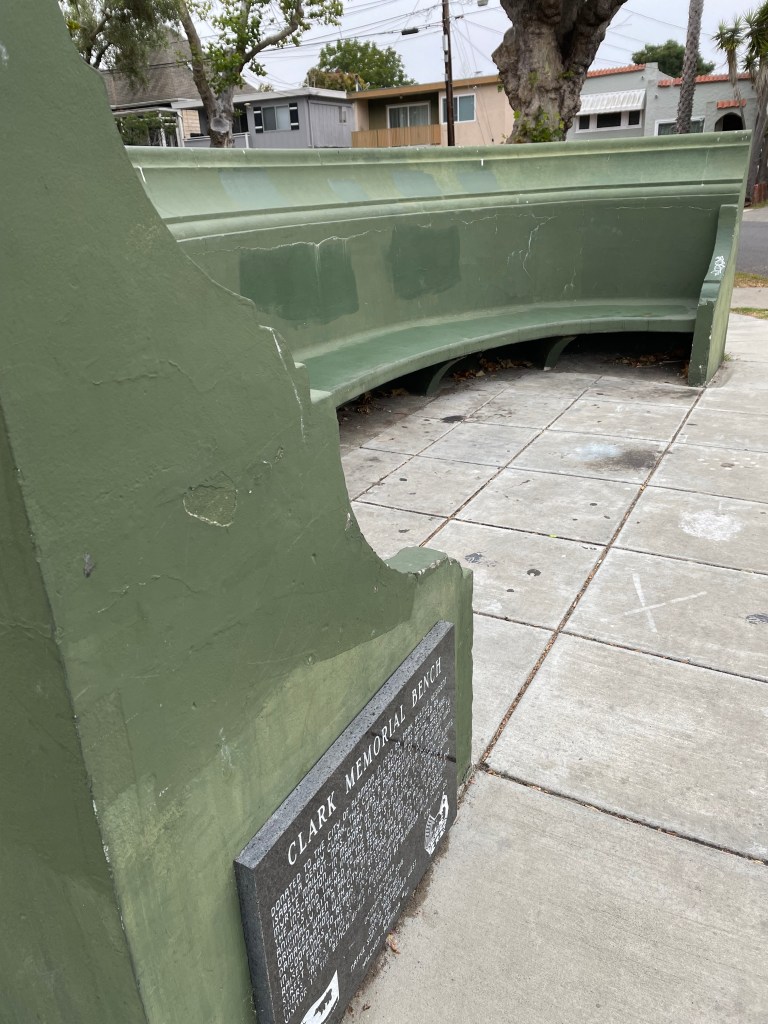
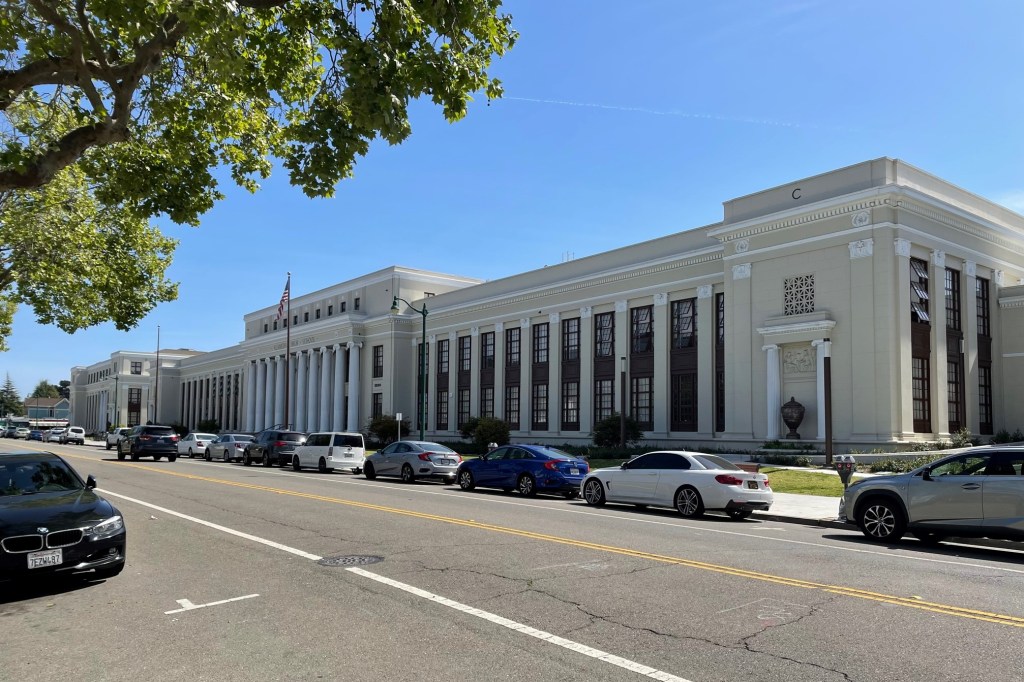
- Jim Morrison, the lead singer of the 60s rock band The Doors, was a frequent visitor to the Clark Memorial Bench while a student at Alameda High School in Alameda, California.
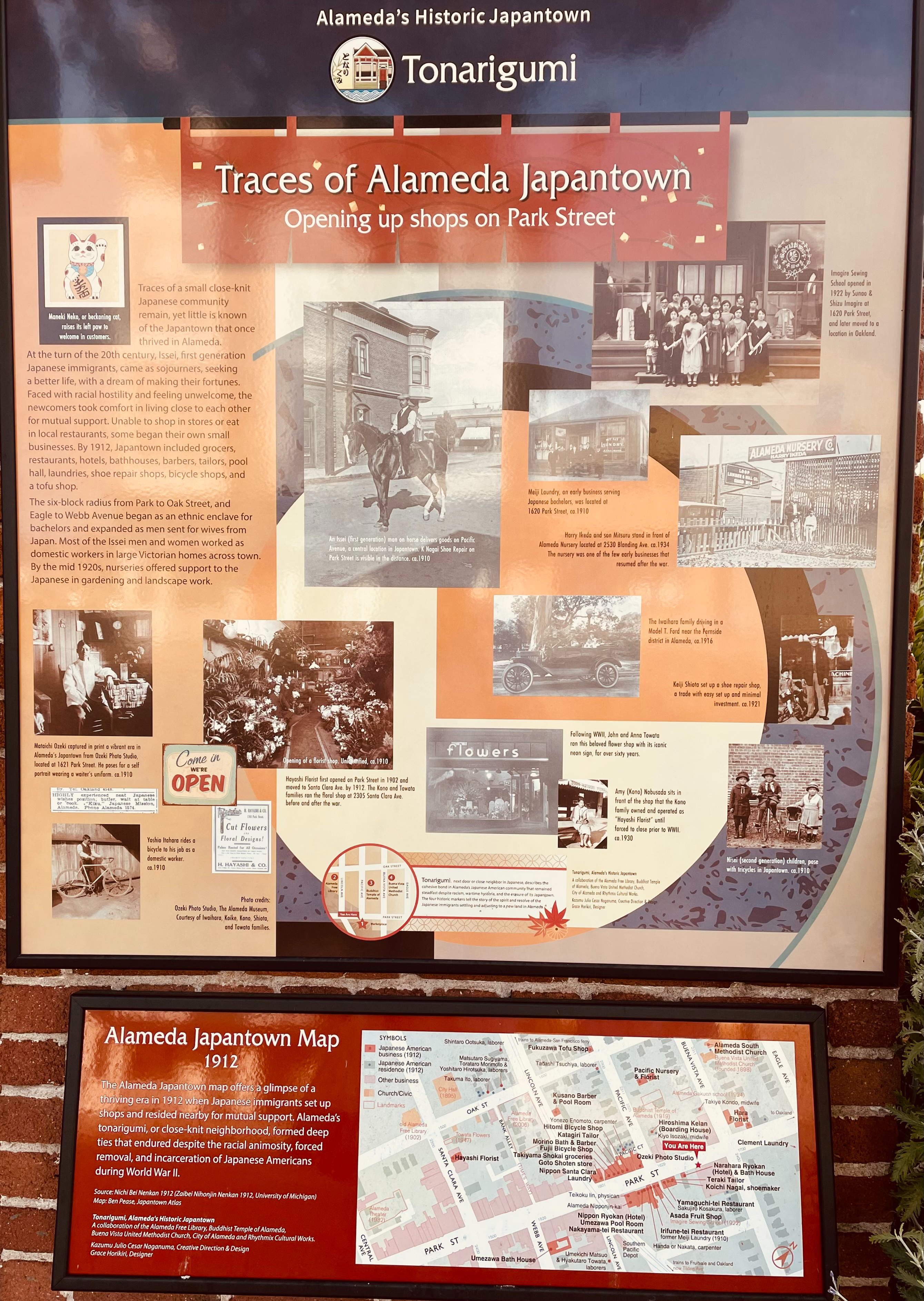
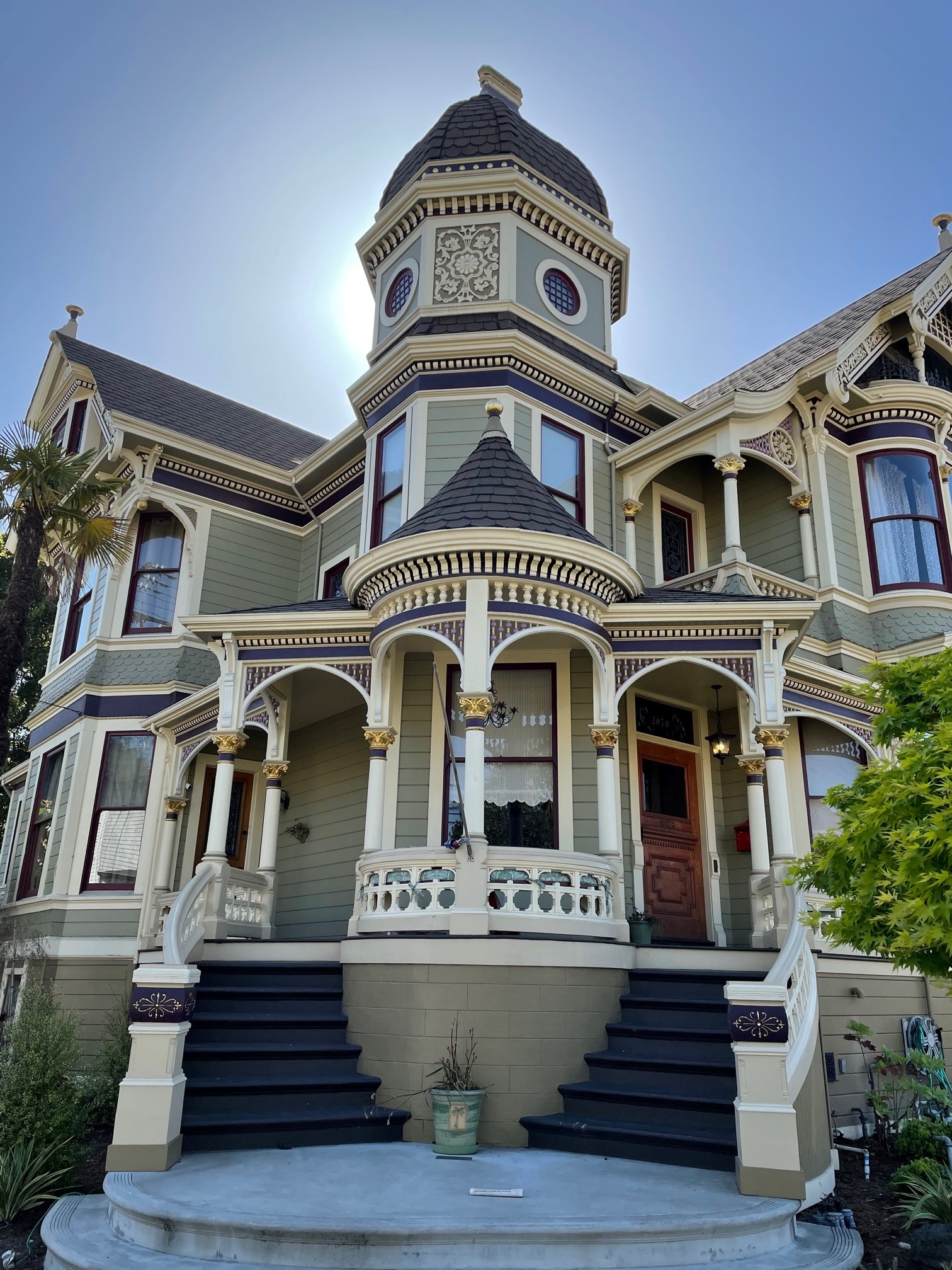
- The small ethnic enclave known as Tonarigumi or “Japantown” in Alameda was originally inhabited almost entirely by bachelors, but it expanded as men sent for wives from Japan. Most of the men and women were domestic workers in Alameda’s large Victorian homes, but by the mid-1920s, nurseries offered support to the Japanese in gardening and landscape work.
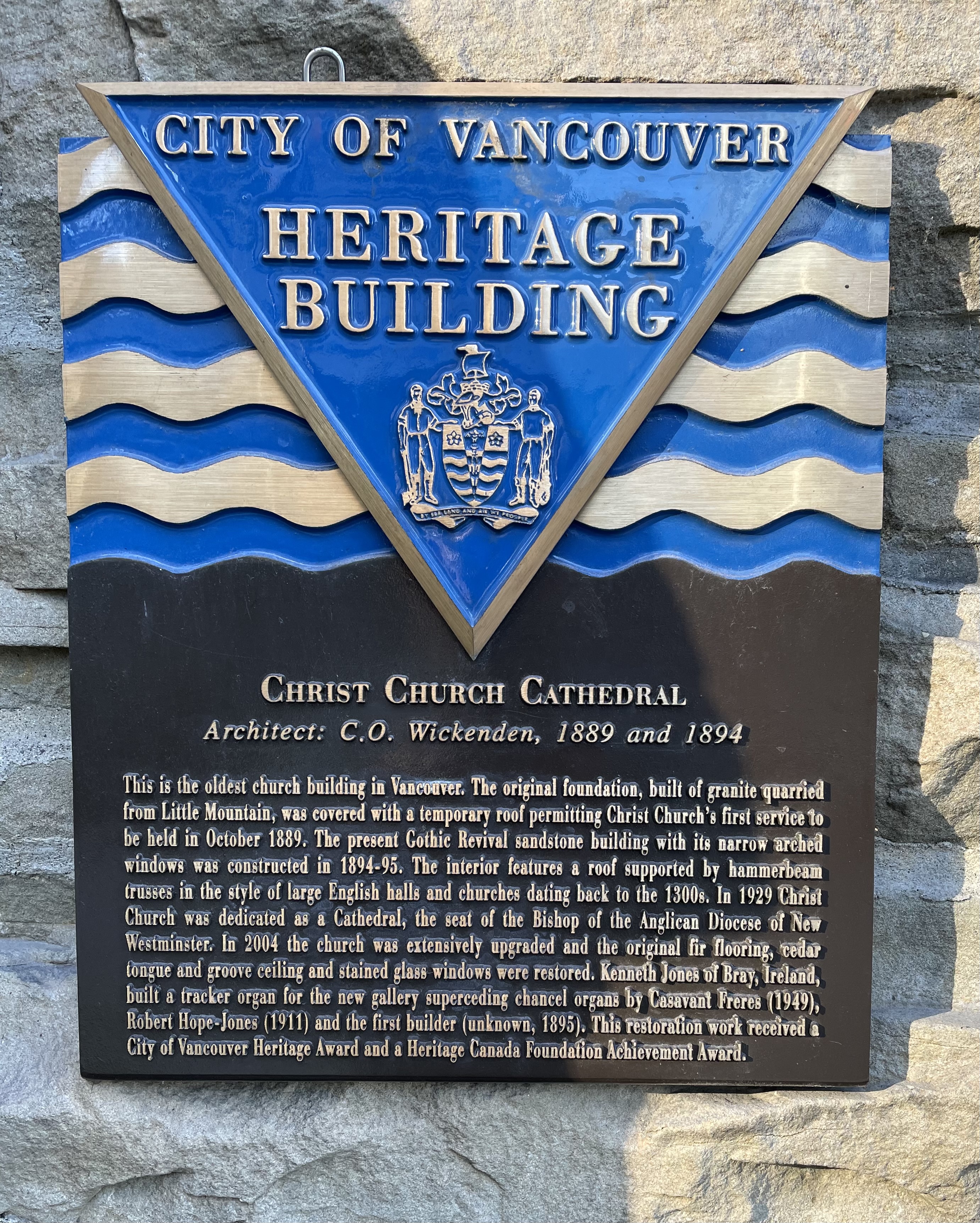
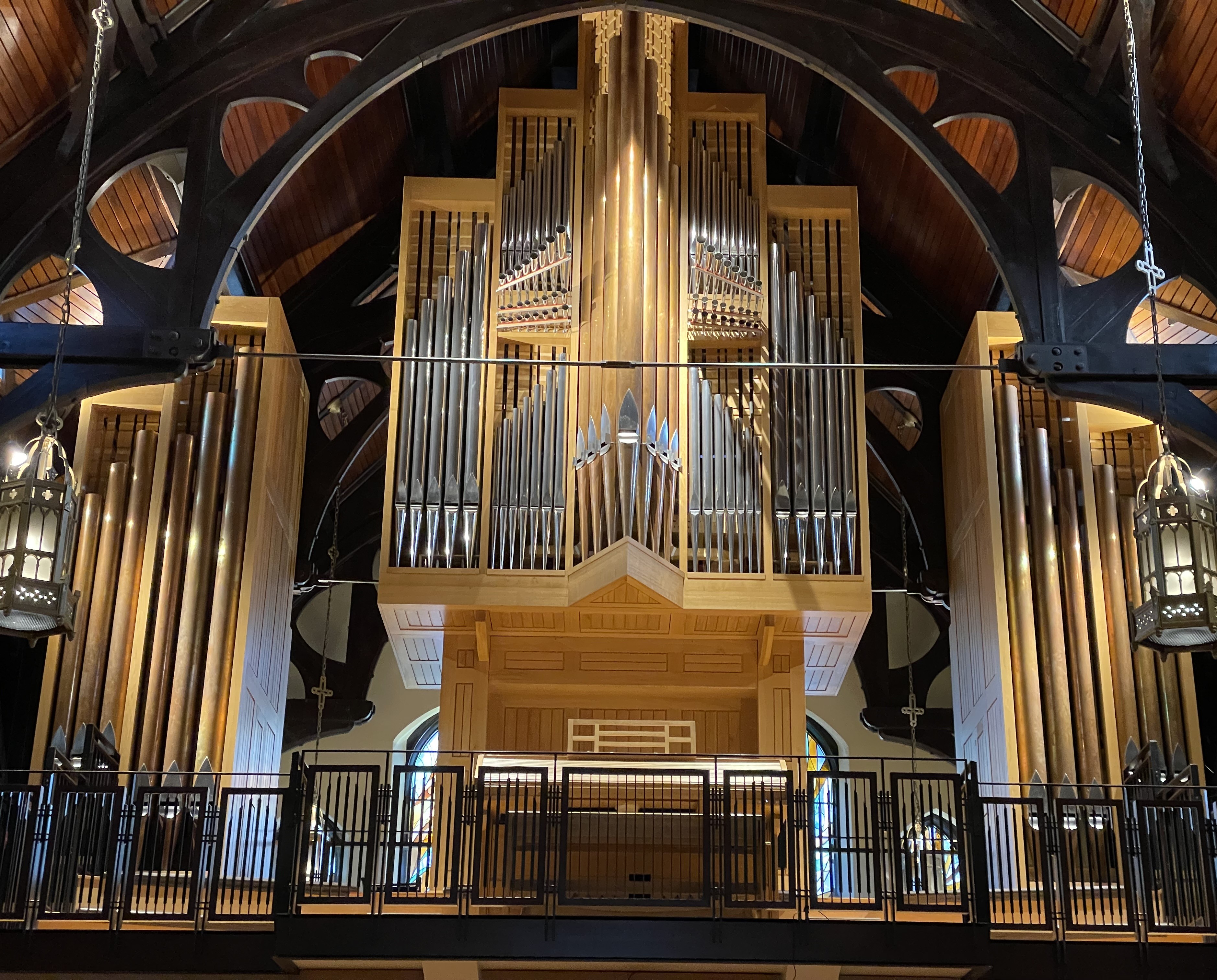
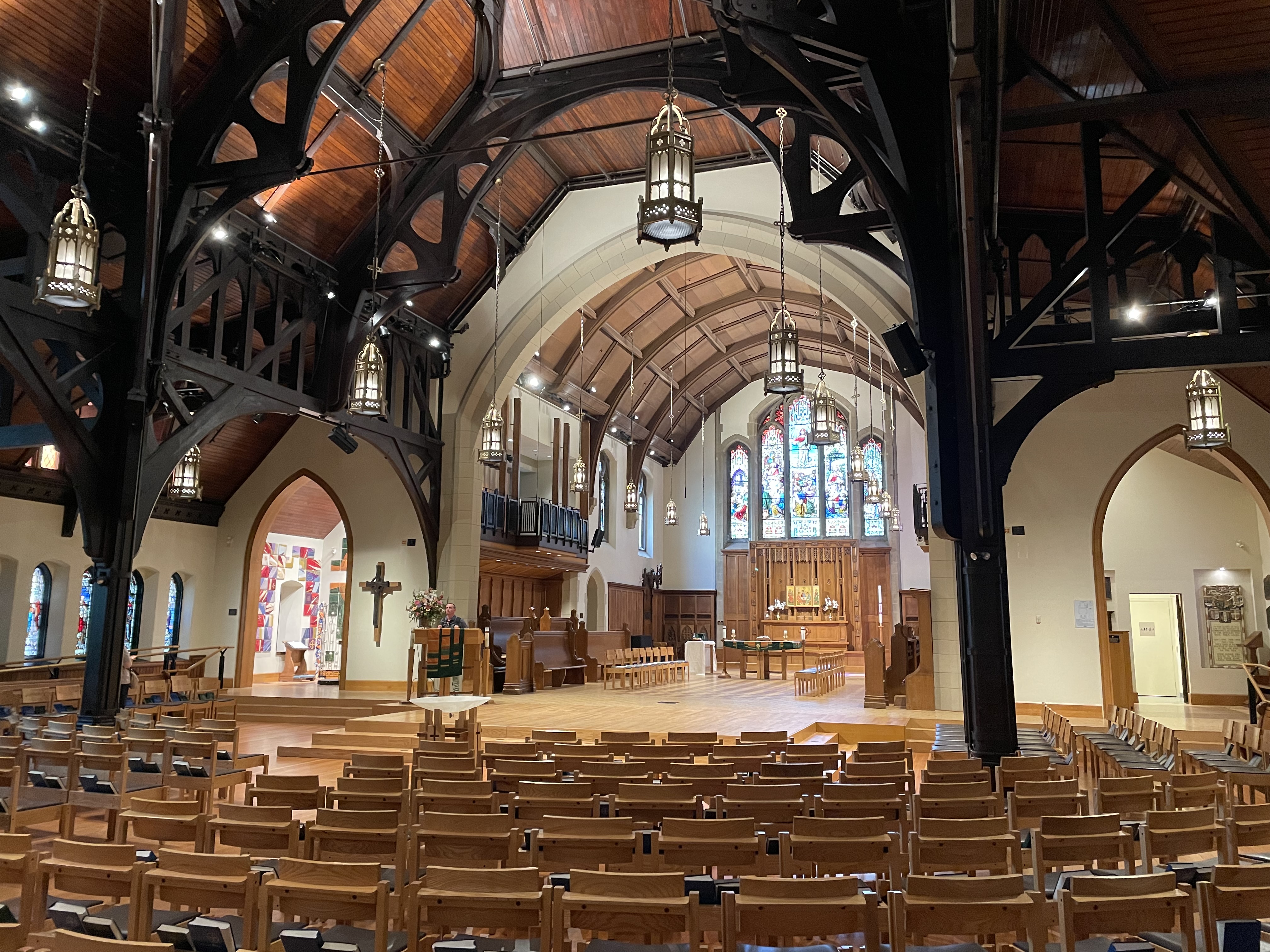
- Christ Church Cathedral, the oldest church building in Vancouver, has a mechanical-action tracker organ built by Kenneth Jones of Bray, Ireland, in 2004 as part of an extensive renovation and restoration of this beautiful building.
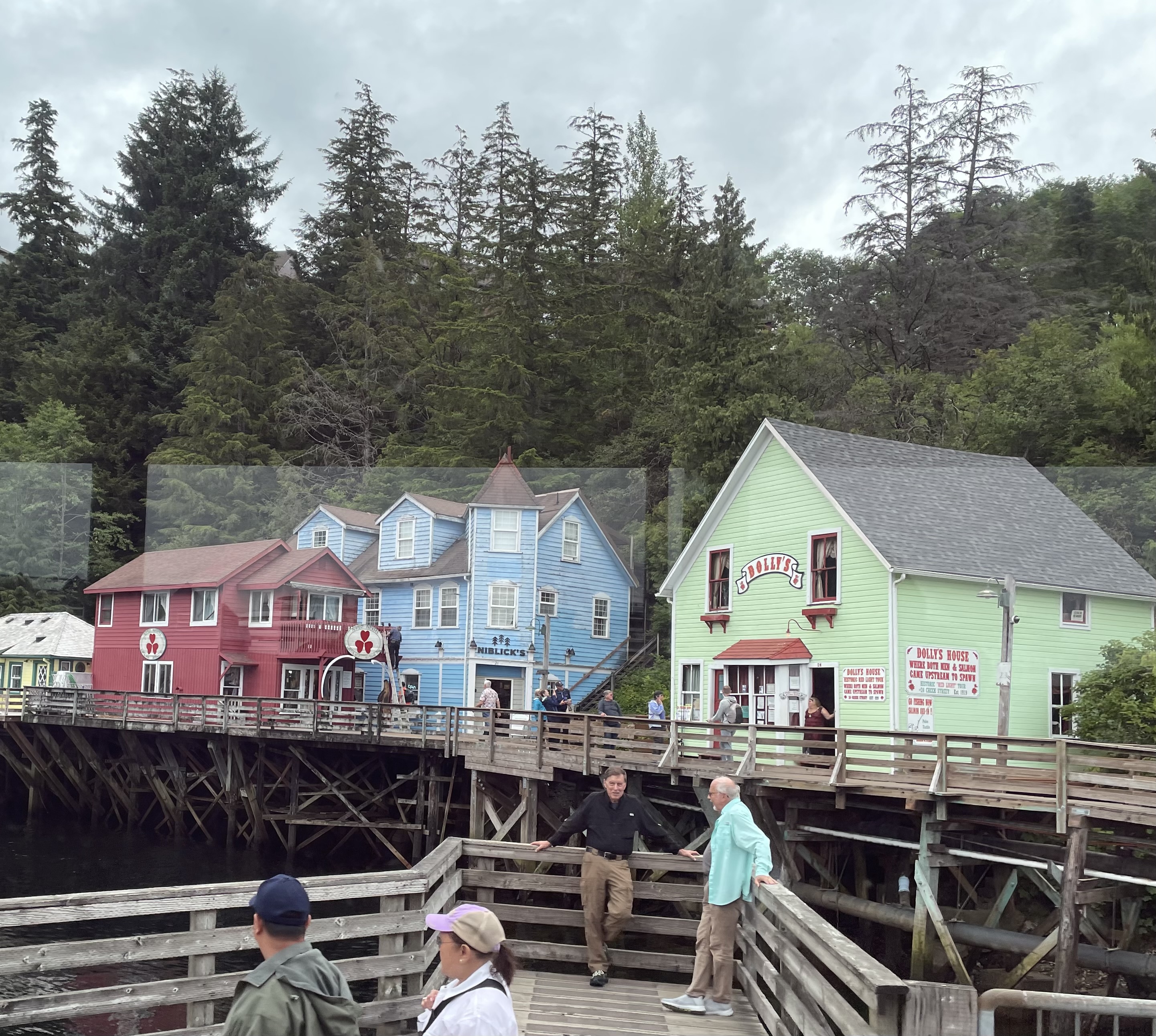
- Ketchikan makes a BIG deal out of its historic house of ill repute . . . Dolly’s House. As we’ve learned on every stop in Alaska, bordellos were just as important as church buildings in this frontier land. (But I already knew that bit of history, truth be told.)
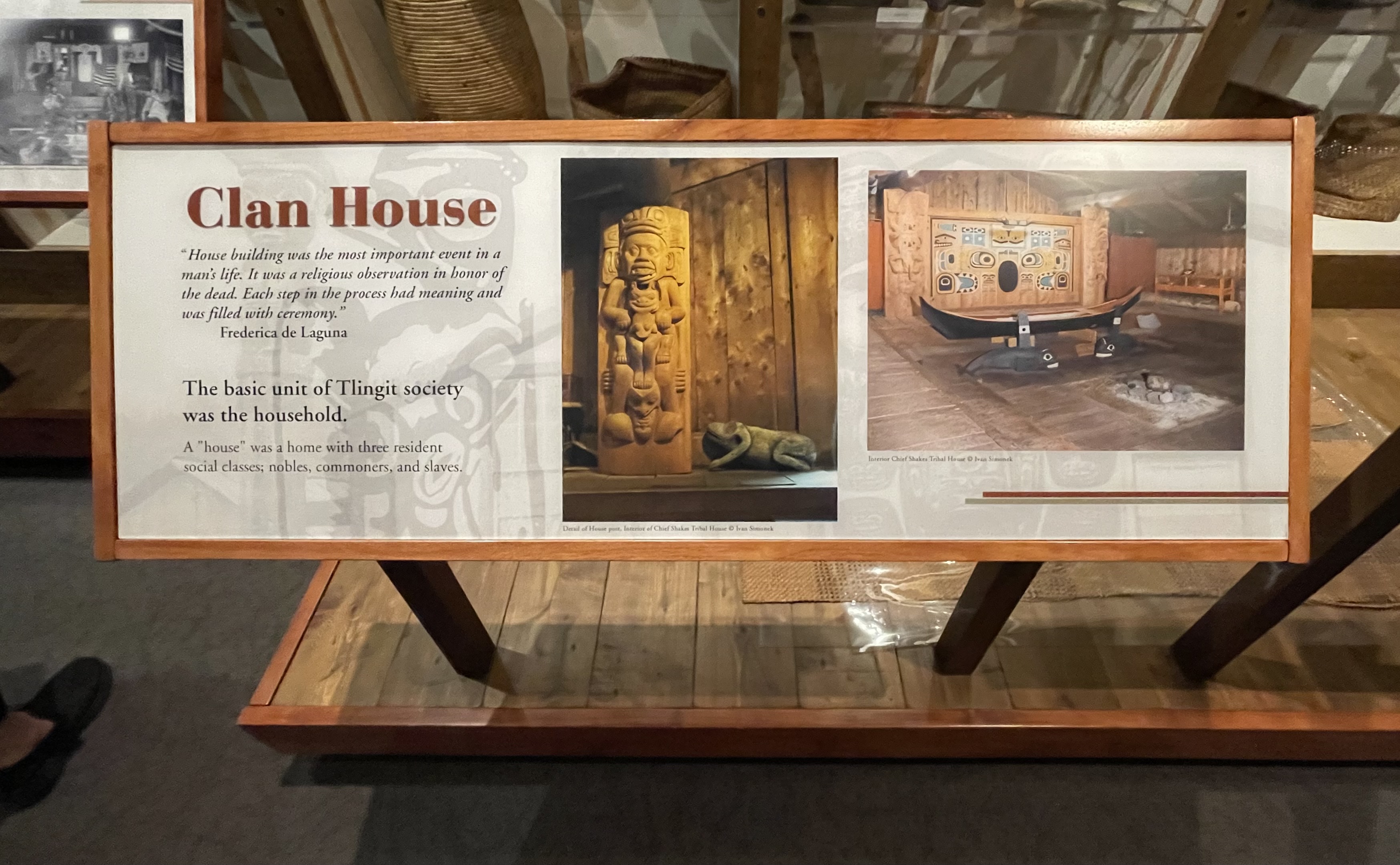
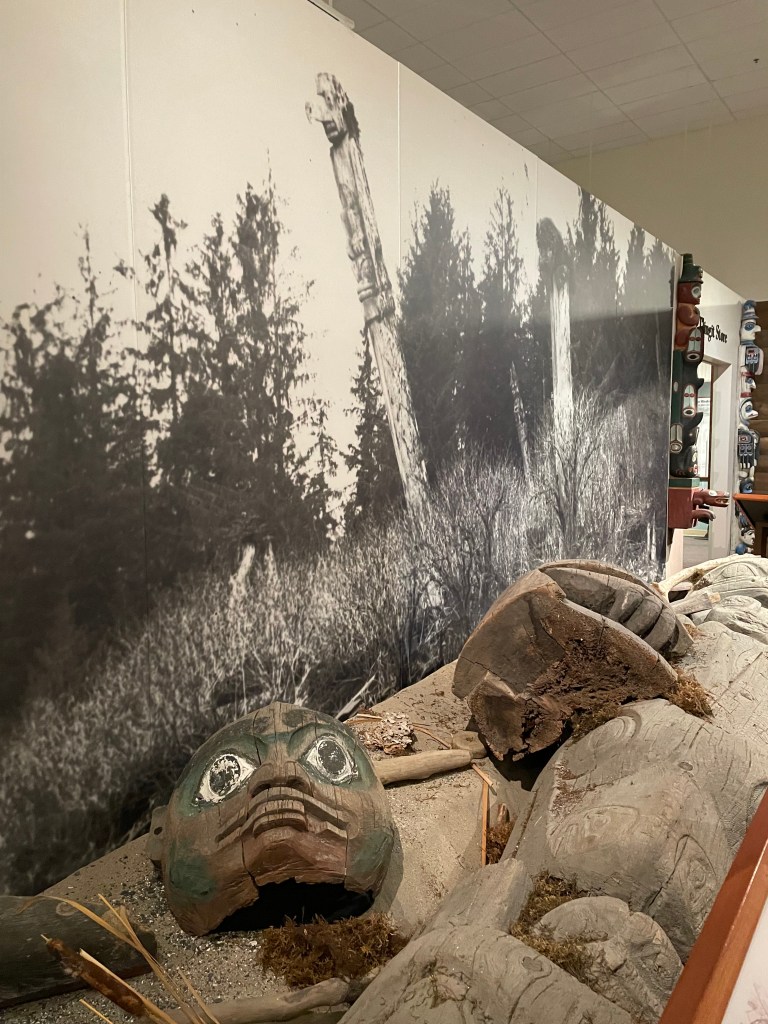
- The basic unit of the Tlingit society was the household, as seen in the clan house, which were built to be taken apart and moved as conditions and climate required.
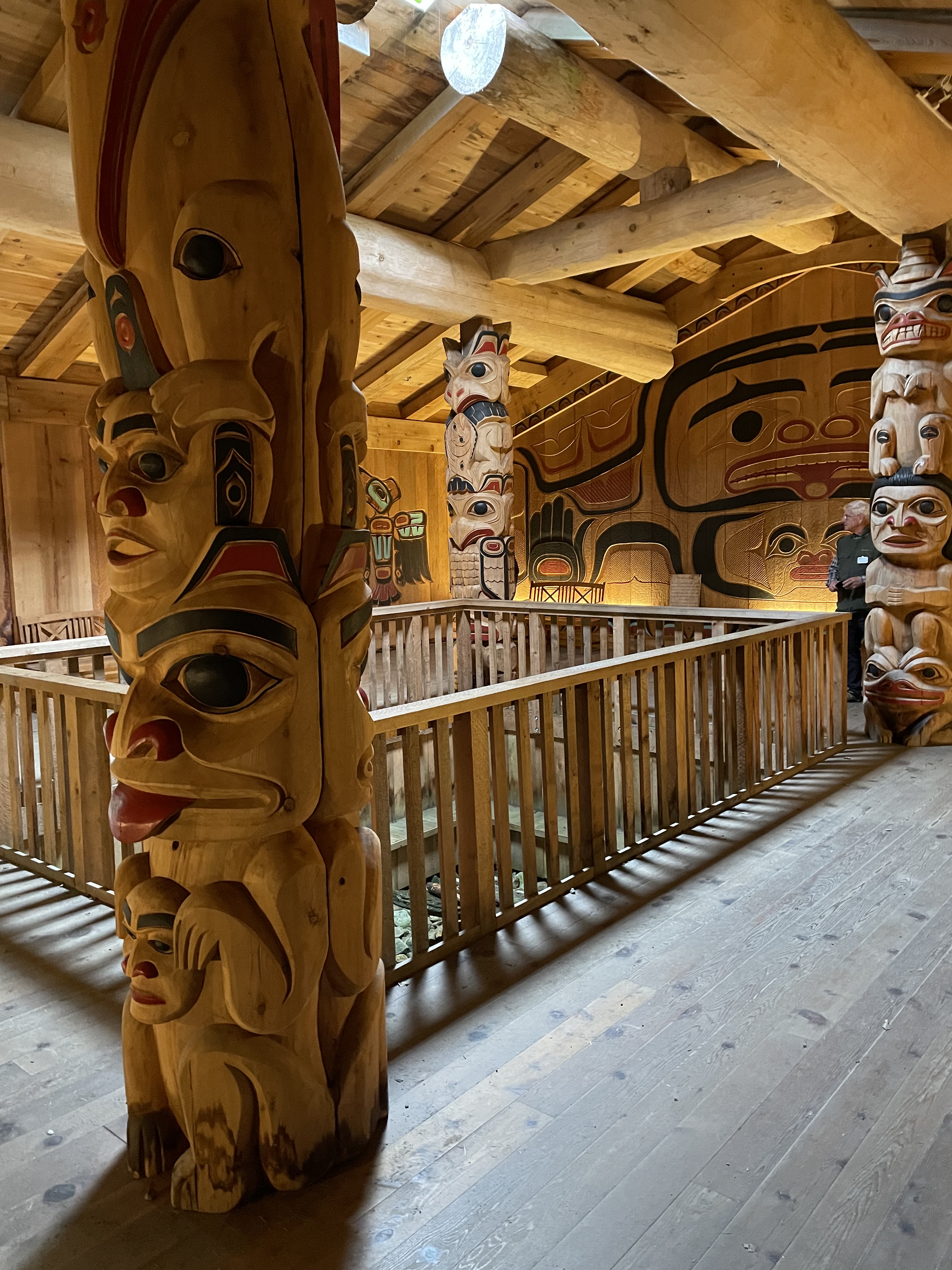
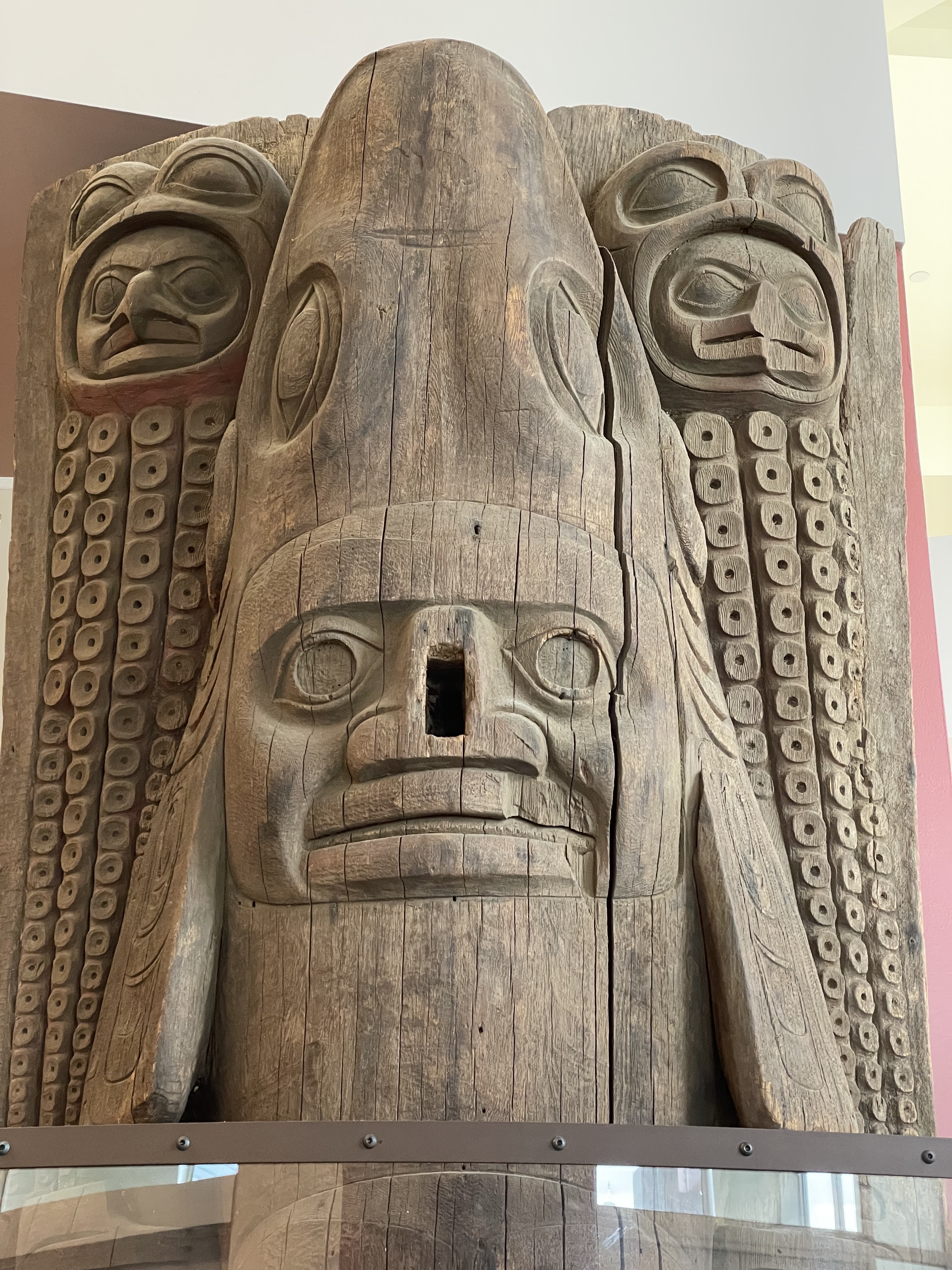
- Totem poles were originally built to decay into the ground from which they came, but recently — and especially with a decline in master carvers — Alaskans are opting to restore the poles they have. It takes a master carver about a year to carve a large size totem pole.
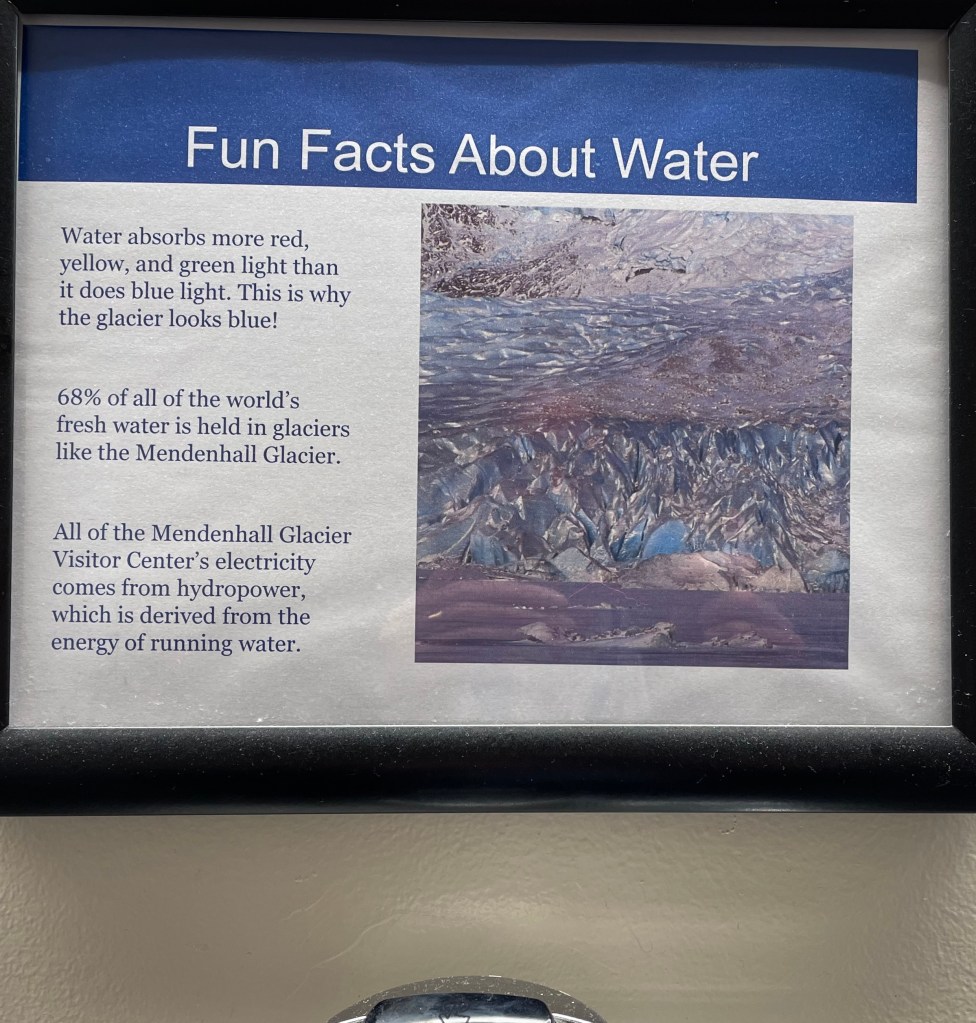
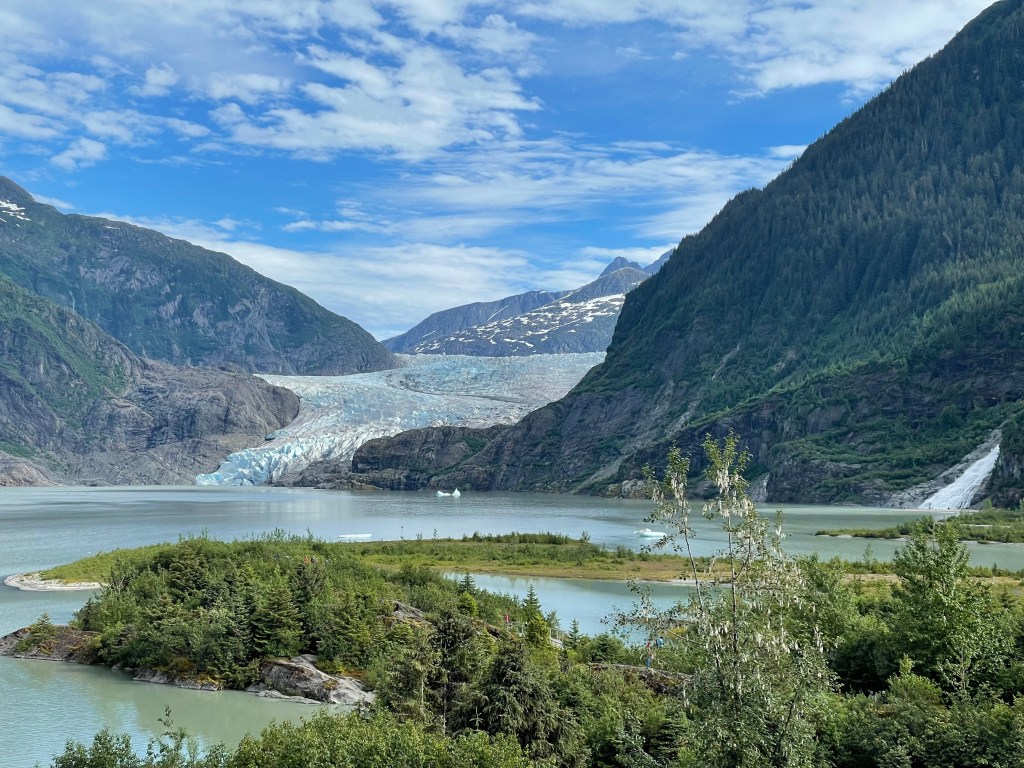
- Plaques about the water in glaciers can be effectively placed to ensure a large reading public . . . such as in restrooms in the visitor’s center!
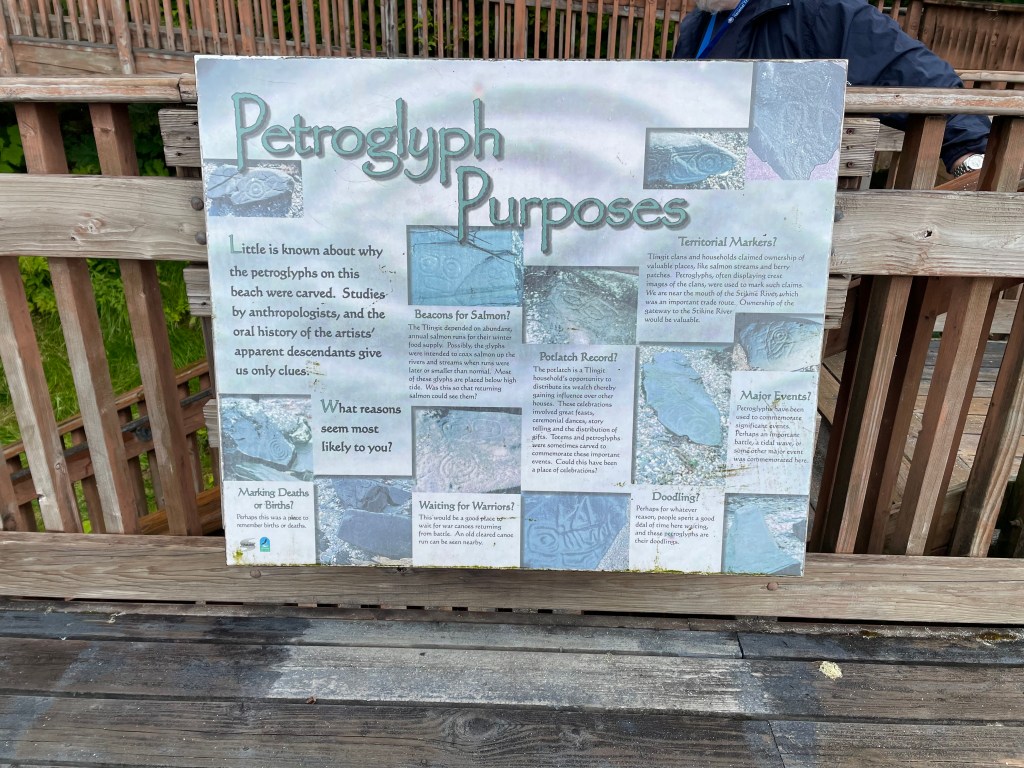
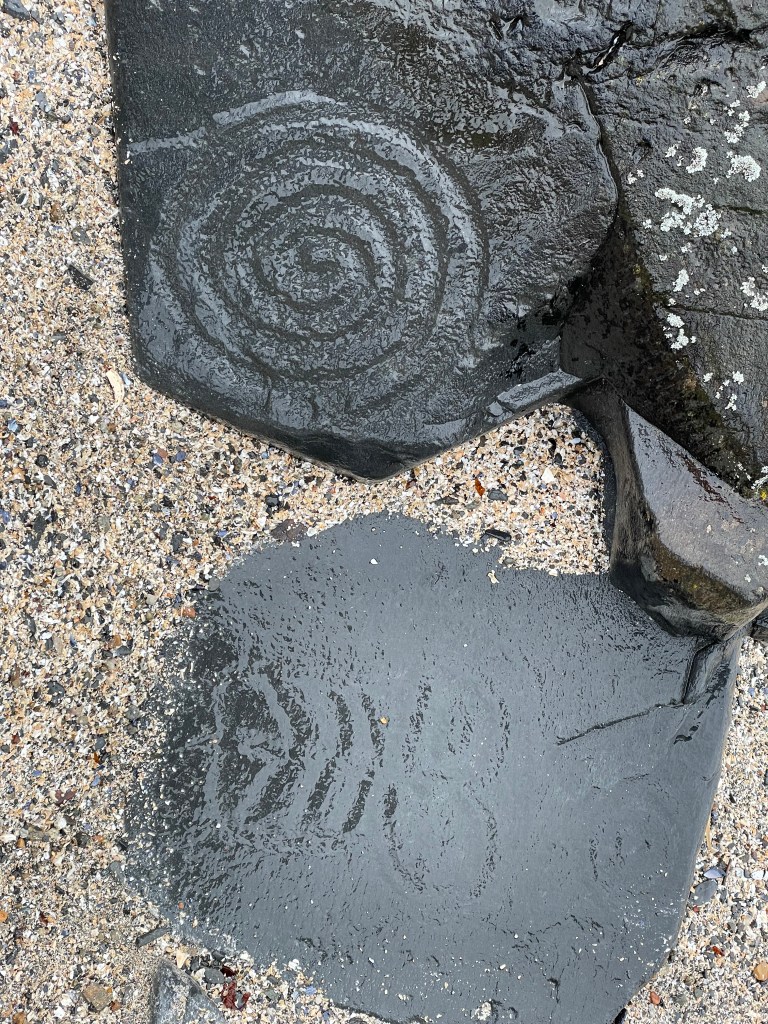
- Petroglyphs are largely mysteries . . . which is why they are so endlessly fascinating.
Grandmother Brown taught me not to believe everything you hear and only half of what you read. In my hometown, a plaque was entitled The Square During Occupation. The occupying force? The U.S. Army. Grandmother was wonderful, but her support of the Lost Cause of the Confederacy was not among her greatest attributes.
We need to read plaques with a grain of salt and a healthy understanding of basic history so that as we travel we can learn and gain new perspectives. National Trust Tours are wonderful ways to see the world. Come travel with us!
More to come…
DJB
The Weekly Reader links to the works of other writers (or plaques) I’ve enjoyed. I hope you find something that makes you laugh, think, or cry.
All photos by DJB.
 MORE TO COME...
Pingback: Song of Alaska | MORE TO COME...
Pingback: Observations from . . . July 2023 | MORE TO COME...