One of the major challenges of our time is finding a proper response to politics that aspire to make us fearful, alienated, and isolated. To help, we need historians, writers, and thinkers who “illuminate, rather than obfuscate the chaos of our current world.”
As a first step, Rebecca Solnit suggests a fine initial act of resistance to authoritarians is joy. Heather Cox Richardson takes a deeper dive through her daily newsletter that serves as “an antidote to toxic news feeds.”
We need joy and perspective in this moment. And we need the reminder that the true history of democracy is that it is never finished.

Democracy Awakening: Notes on the State of America (2023) by Heather Cox Richardson is an engaging and accessible work that tells the story of how we got to this moment in time. The writer of the Letters from an American newsletter and professor of history at Boston College, Richardson’s newest volume takes us back through our past to see precedents that led to our most recent authoritarian experiment in the ascendancy of Donald Trump. As she notes on the very first page, democracies die more often “through the ballot box than at gunpoint.” Her work is also a reminder, as one reviewer notes, that “far from being an outlier, Donald Trump was inevitable after 70 years of Republican pandering to big business, racism and Christian nationalism.”
The use of language and false history is the key to the rise of authoritarians. With our false sense of security and optimism, Americans believed it could not happen here. But as Richardson shows us time and again, there has always been a small group of wealthy people who have made war on American ideals.
In both her daily newsletter and Democracy Awakening, Richardson has a talent to “wrangle our giant, meandering, and confusing news feeds into a coherent story.” In easy-to-follow prose, she suggests what is important and helps prioritize our focus. The historical perspective helps make sense of life in 21st century America. And perhaps most importantly, Richardson has an optimism about democracy in our country that points to some unexpected pathways forward.
Richardson breaks her book into three sections. The first considers American conservatism and the fight against the liberal consensus. She discusses the anti-democratic views of elite enslavers and others in 18th and 19th century America, but her focus really zeroes in on those who — after nearly destroying the country in the financial meltdown of the Great Depression — quickly sought to fight the democratic and liberal ideas of the New Deal. The birth of modern conservatism in the 1930s through the 1950s leads directly to the chaos of the Freedom Caucus today.
It was William F. Buckley, Jr, the most famous conservative pundit of his era, who promoted the canard that liberals were basically communists. Among Buckley’s mortal enemies, Richardson writes, were everyone “who believed that the government should regulate business, protect social welfare, promote infrastructure and protect civil rights” — and who “believed in fact-based argument.”
The second section of Democracy Awakening is truly scary, as Richardson brings back memories from Trump’s first authoritarian experiment, from Charlottesville to the first impeachment, from destabilization of the government to the Big Lie.
Based on our foundational story, the third section focuses on a pathway forward.
The fundamental story of America is the constant struggle of all Americans, from all races, ethnicities, genders, and abilities, to make the belief that we are all created equal and have a right to have a say in our democracy come true. We are always in the process of creating “a more perfect union.”
It is often the marginalized, those looking from the outside in, who call us to our better natures. This is the hopeful section, as Richardson recounts progressive successes. The commitment to democracy of the marginalized — women, people of color, immigrants — has moved us forward, and it is their commitment that will once again help see us through our present turmoil.
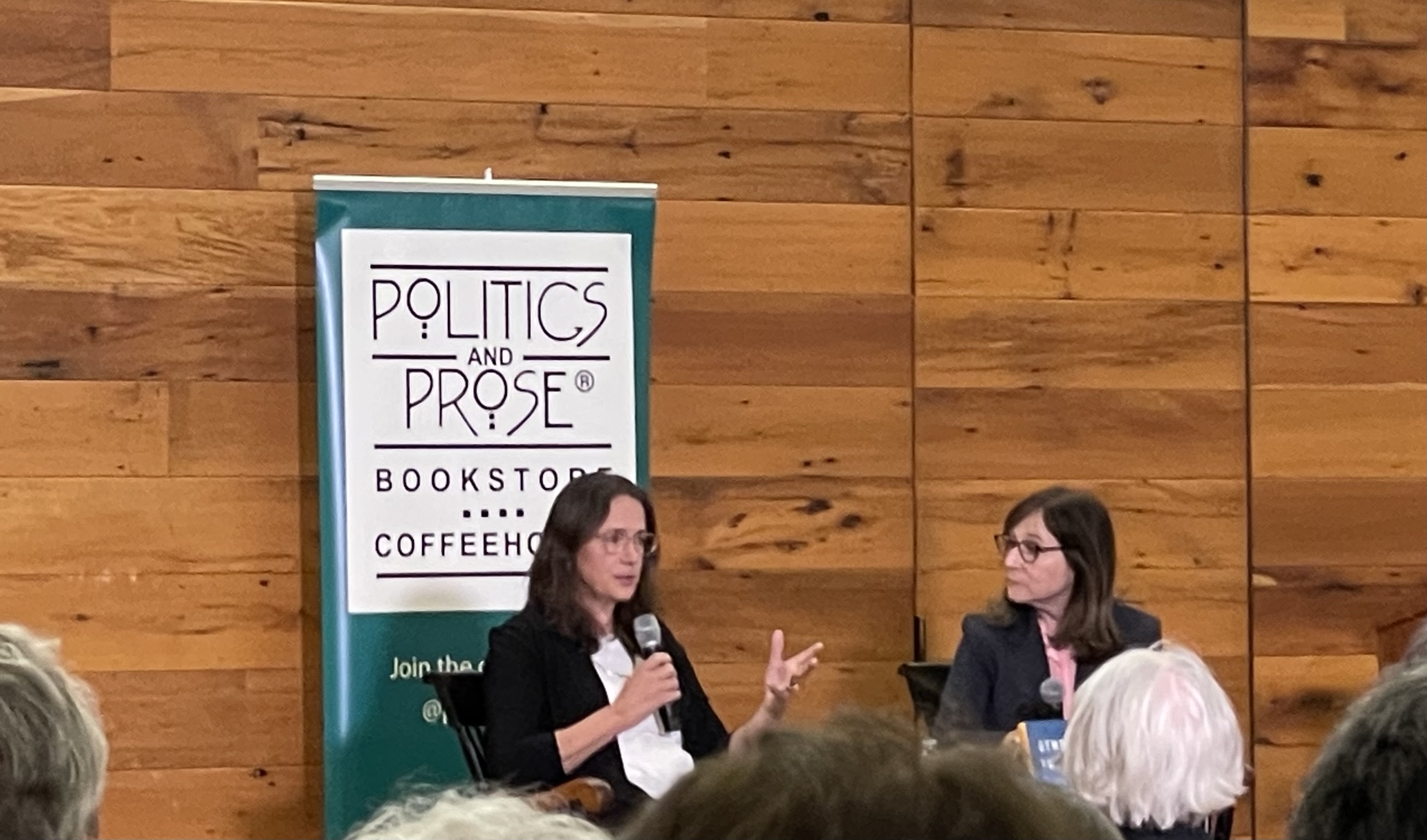
I recently heard Richardson speak at her sold-out book tour event sponsored by Politics and Prose in Washington. A similar conversation was sponsored by The Booksmith in Haight-Ashbury and posted online. There Richardson was in dialogue with Rebecca Solnit. While Solnit is a better writer than interviewer, this is nonetheless a delightful conversation in so many ways.
Both remind us that we’ve been here before. We’ve faced challenges with bleak prospects. At the 16:50 mark, Richardson shares this example:
In 1853, elite enslavers controlled the presidency, Supreme Court, and the Senate and were making inroads into the House. Those who believed that a few elite white men should rule over others looked to expand their vision. In 1854 they get Congress to pass a law that makes enslavement across the country possible. Abolitionists and those who sought democracy looked defeated. Yet by the mid-1850s, a new political party was formed that called for freedom and the right to rise of the lower and middle classes. By 1859 they had recruited a young lawyer to help articulate their vision. In 1860, that lawyer — Abraham Lincoln — was elected to the presidency. In 1862 he had drafted the Emancipation Proclamation and in November of 1863 he delivered the Gettysburg Address, dedicating the nation to a new birth of freedom based in the Declaration of Independence.
In ten short years, the entire course of history was changed.
Solnit replies that the beginnings of the anti-slavery movement were actually “puny.” Female abolitionists sold crafts at fairs to make enough money to bring men like Frederick Douglas to speak at events.
Who the hell thinks they are going to sell pin cushions to bring down a powerful institution? Except they did.
Richardson’s excited response is, “I love that.” People think they are only one person. What can they do?
Make a damn pin cushion.
Democracy Awakening, is a galvanizing reminder that we can do this. Others who love democracy have done it before. After reading this important new work, we may find our own pin cushion that we can make to take down the authoritarianism of MAGA and push towards our loftiest ideals.
More to come . . .
DJB
UPDATE: For a shorter interview than the one above, I encourage you to watch the 10-minute report by Judy Woodruff where she interviews Richardson for the PBS News Hour at President Lincoln’s Cottage, a National Trust Historic Site.
UPDATE #2: HCR was on a recent Why Now? podcast of historian Claire Potter. Their conversation included several points that I found of interest about the writing of the book.
The Weekly Reader links to the works of other writers I’ve enjoyed.
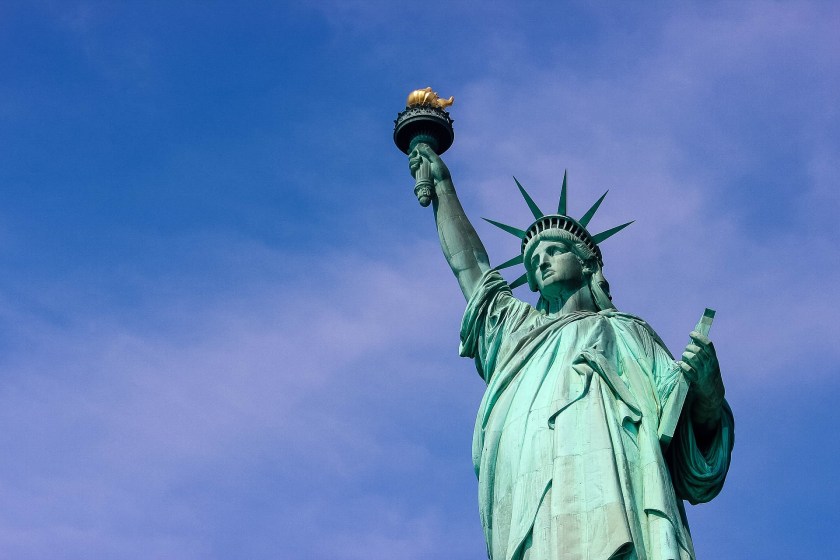
Image from Pixabay
 MORE TO COME...
Pingback: Observations from . . . November 2023 | MORE TO COME...
Pingback: From the bookshelf: November 2023 | MORE TO COME...
Pingback: The 2023 year-end reading list | MORE TO COME...
Pingback: Tyranny, like hell, is not easily conquered | MORE TO COME...
Pingback: “I answer, Google Sudetenland, 1938.” | MORE TO COME...
Pingback: Praise for the independent bookstore | MORE TO COME...