
NOTE: This post is long but is written to be skimmed. Scroll through and see what piques your interest.
With 2023 drawing to a close, I’m delighted to share the annual list of books I’ve (mostly) enjoyed over the past twelve months.* I’ve grouped these 65 books into broad categories, to help you find those of special interest.
- The top reads (I’ll revisit these over the years)
- Author interviews (talking with writers)
- History and biography (and all that entails)
- The places where we live (natural and man-made)
- The times we live in (politics and civic life)
- Memoir and story (tell me your story)
- Murder mysteries (my year of reading dangerously)
- Fiction (novels, short stories, poetry)
- Theology and more (thinking about purpose and mindfulness)
- Sports (really just baseball)
- Outbursts of radical common sense and whatever else tickled my fancy (otherwise known as the miscellaneous section)
I hope you enjoy learning about the treasures I pulled from my reading shelf this past year. Clicking on the link under the book title will take you to my original review. And please feel free to use the comments to tell me which books most touched you in 2023.
Now, let’s jump in and see what was on the list.
The top reads (I’ll revisit these over the years) . . . in alphabetical order by author


Four Thousand Weeks: Time Management for Mortals (2021) by Oliver Burkeman begins with the simple fact that we won’t live forever; 4,000 weeks, in fact, if we make it to 80. Burkeman, the self-described “recovering productivity geek,” reminds us of the truth behind the paradox of limitations: the more one confronts the facts of our limits — and works with them, rather than against them — the more productive, meaningful, and joyful life becomes.

The Sense of Wonder: A Celebration of Nature for Parents and Children (1965) by Rachel Carson begins as the famed naturalist takes her twenty-month-old nephew Roger down to the beach on a rainy night, where they laughed for pure joy. It was clearly, she notes, “a time and place where great and elemental things prevailed,” and it is in both their reactions that Carson draws the inspiration for her heartfelt call to contemplate the awe and beauty of nature.

Supreme Inequality: The Supreme Court’s Fifty-Year Battle for a More Unjust America (2020) by Adam Cohen is a devastating and damning argument against today’s extremist Supreme Court and the Republican party’s fifty-year plan to circumvent the constitution, overturn the gains of the New Deal and Civil Rights eras, and cement inequality into American law and life, all while pushing an agenda that most Americans don’t share.

The Cross and the Lynching Tree (2011) by James H. Cone invites us to see the world through the eyes of the marginalized and oppressed, taking us into this place through one of our most recognized religious symbols, the cross, and through one of America’s most terrible national sins, lynching. Both had the same purpose: to strike terror in the subject community. They both also reveal “a thirst for life that refuses to let the worst determine our final meaning and demonstrate that God can transform ugliness into beauty, into God’s liberating presence.”
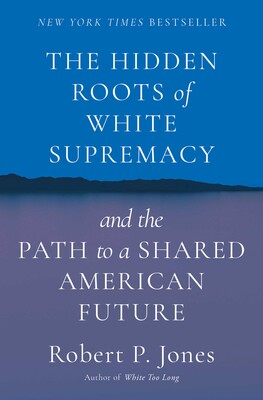
The Hidden Roots of White Supremacy and the Path to a Shared American Future (2023) by Robert P. Jones is a searing yet courageous look at contemporary issues around race set within the context of a 15th century church doctrine. “We remain torn by two mutually incompatible visions of the country. Are we a pluralistic democracy where all, regardless of race or religion, are equal citizens? Or are we a divinely ordained promised land for European Christians?”
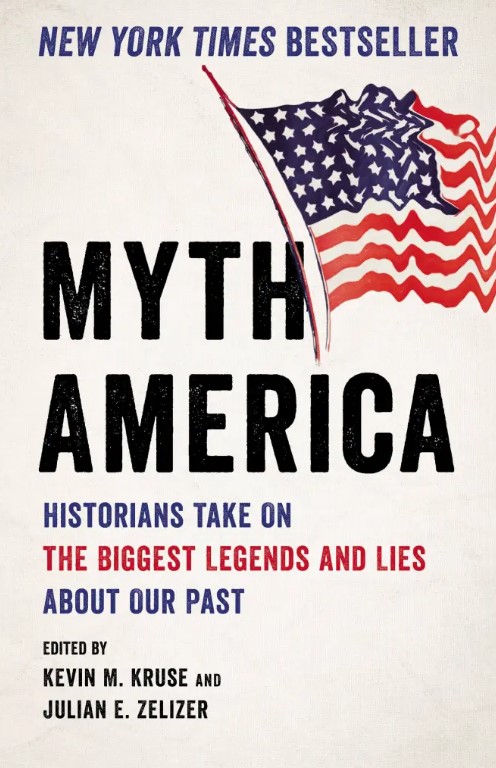
Myth America: Historians take on the biggest legends and lies about our past (2022) — edited by Kevin M. Kruse and Julian E. Zelizer — tackles many of the most dangerous myths about our nation’s past. There have always been “misleading and even malignant” lies in our public discourse but in the introduction the editors assert that “in the last few years the floodgates have opened wide.”

Upstream: Selected Essays (2016) by Mary Oliver is a beautiful and moving set of essays where the author describes how she discovered her life as a writer. Oliver writes in a way that suggests, but these are suggestions that compel the reader to go to the source of their own lives. Nature — and other writers — are both keys to Oliver’s self-discovery and she writes about them simply yet eloquently.
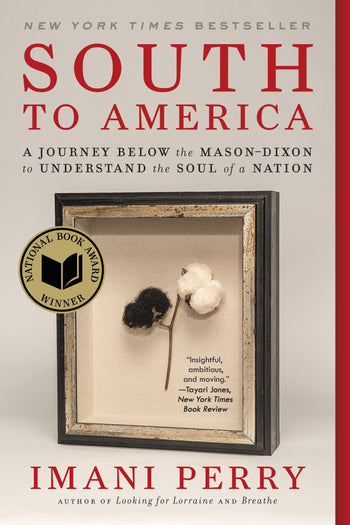
South to America: A Journey Below the Mason-Dixon to Understand the Soul of a Nation (2022) by Imani Perry is a revelatory journey by a Black daughter of the South that both recognizes and comes to grips with the complexity of the Southern experience, history, and culture. In South to America Perry is traveling home to “help the reader dig deep enough to discover the truth,” and to help us “gain a more honest rendering of the country.”

Why We Love Baseball: A History in 50 Moments (2023) by Joe Posnanski may not be the most important book you’ll read this year, but if you care at all about the game this will be the book you’ll cherish. This is a love letter of the best kind, bringing together the long history of the game with the uniqueness of the moment, all told with Posnanski’s “trademark wit, encyclopedic knowledge, and acute observations.”

Democracy Awakening: Notes on the State of America (2023) by Heather Cox Richardson is an accessible, engaging, and important work that tells how America got to this difficult moment in time. Richardson’s newest volume shows that there has always been a small group of wealthy people who have made war on American ideals, using language and false history as their tools of choice. But we also have a history of those on the margins — women, people of color, immigrants — who have fought equally hard to push America to live up to its ideals.
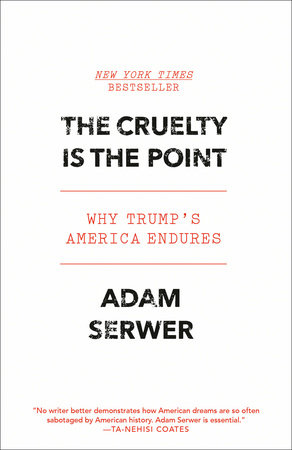
The Cruelty is the Point: Why Trump’s America Endures (2022) by journalist Adam Serwer takes the reader back through the unvarnished history that made Donald Trump and today’s cruelty possible. Serwer repeatedly shows how white Americans have professed a belief in racial equality while pointedly declining to put the necessary laws and policies in place to see it to fruition.
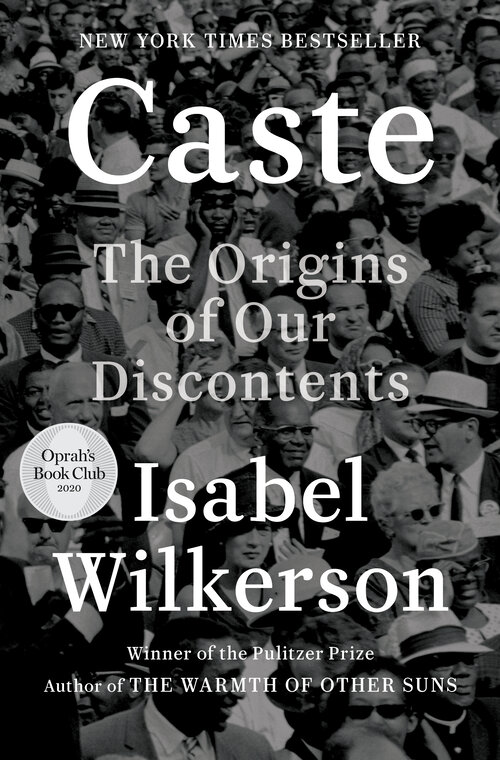
Caste: The Origins of our Discontent (2020) by Isabel Wilkerson is the latest work by a writer who takes stories we thought we knew and pushes us to look at them through a different lens. Wilkerson writes persuasively, clearly, and honestly about the American failure of character and our unwillingness to see that the hierarchy built only on skin color — the “infrastructure of our divisions” — has been in place since our founding as a nation.
Author interviews (talking with writers) . . . in alphabetical order by author

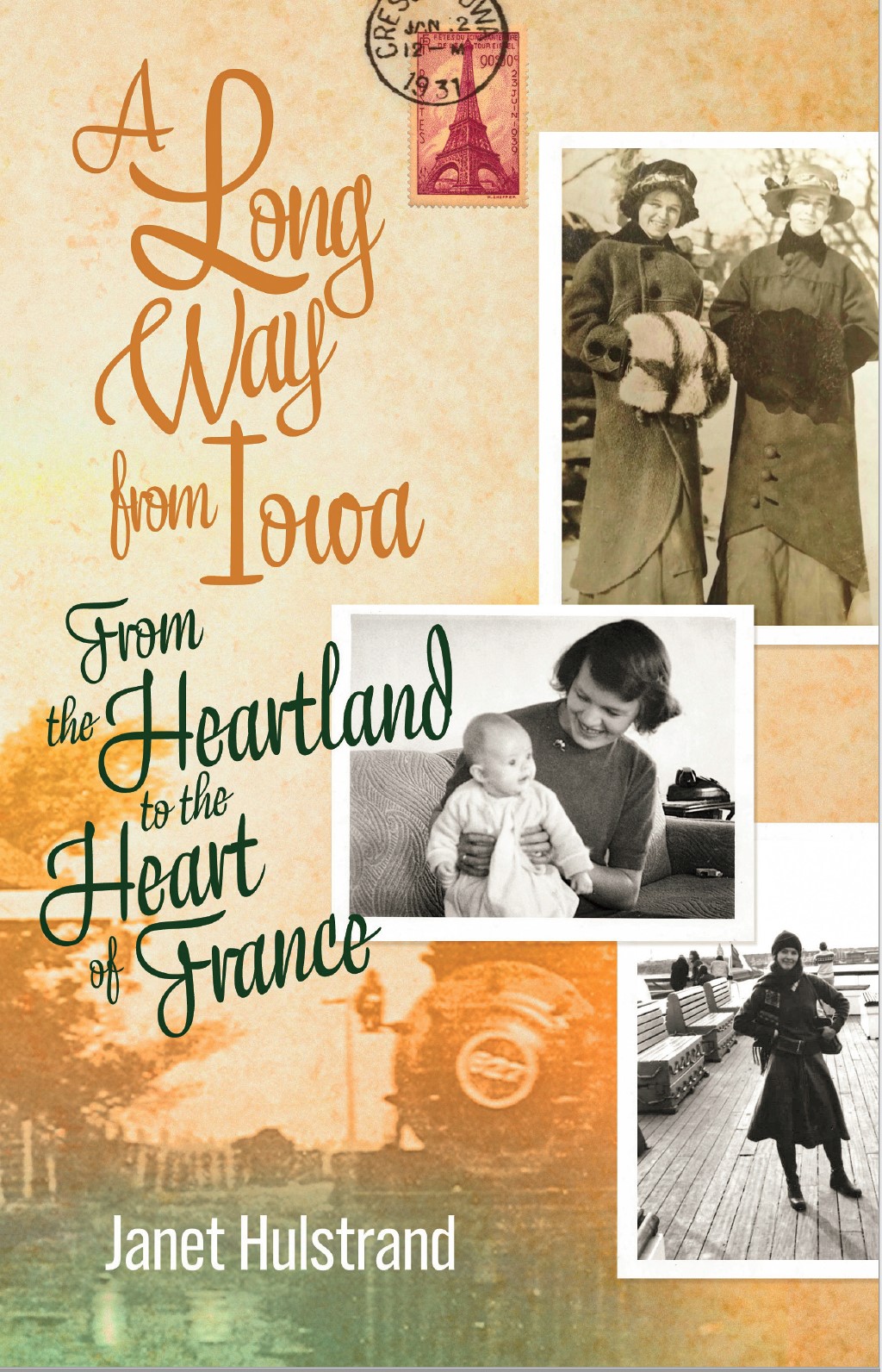
A Long Way from Iowa: From the Heartland to the Heart of France (2023) by Janet Hulstrand is a delightful memoir that takes the reader from a grandmother’s hometown in Iowa to the author’s home in the French countryside. Along the way we learn much about Janet’s journey, including the complicated relationship with the two women who fueled her love for learning, exploration, and writing.

Sleeping With the Ancestors: How I Followed the Footprints of Slavery (2023) by Joseph McGill, Jr. and Herb Frazier is a compelling work about a crusading effort to draw attention to the preservation of dwellings where enslaved people lived, worked, and raised their families. Joe — who founded and leads The Slave Dwelling Project — discusses his years working to “change the narrative, one slave dwelling at a time.”

Never Say Whatever: How Small Decisions Make a Big Difference (2023) by Dr. Richard A. Moran reveals how the W-word is a career — and life — killer. The choices we make, even the small ones, help us pivot toward the life and career we want. Rich shares insights he’s uncovered, including how it becomes much harder to find the life we want if we tend to rely on “whatever” as a substitute for decision-making.

Books and Our Town: The History of the Rutherford County Library System (2023) by Lisa R. Ramsay is a wonderful addition to the story of America’s love affair with public libraries. After a newspaper editorial encouraged the citizens of Murfreesboro, Tennessee, to create a public library, Henry T. Linebaugh answered the call. For its 75th anniversary, Ramsay has gathered a rich array of stories that tell how Linebaugh Library and its branches became essential parts of my hometown.

AMEN? Questions for a God I Hope Exists (2022) by Julia Rocchi is full of wisdom, vulnerability, and questions asked in an open and seeking spirit. Essays, quotations, poems, and prayers probe the mysteries that make up life in what one reviewer sees as, “a psalter for the post-modern, exhausted age.”
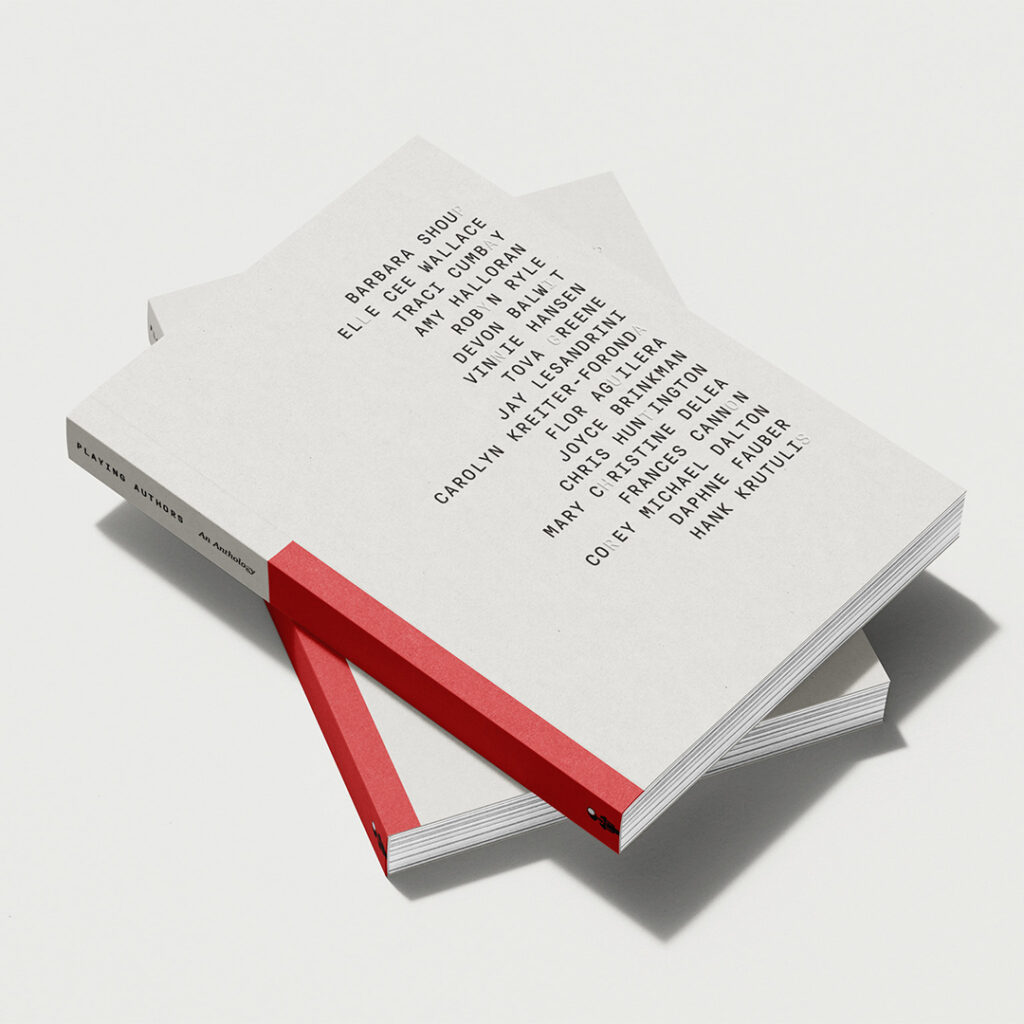
Playing Authors: An Anthology (2023) is a collection by 18 writers asked to consider the question of authorship. “Literary mashups, personal essays, alternative history, and other disobedient forms” are included in this work, beginning with the sad and insightful and laugh-out-loud funny “Hemingway Goes on Book Tour.” I chat with Robyn Ryle about inspiration, the challenges of modern publishing, and imagining other famous authors in the rat race of today’s book tour.

Your City is Sick (2023) by Jeff Siegler is a deep dive into how the various causes of community malaise have led to the dysfunction we see today. Like a blunt yet perceptive doctor, Jeff first helps us understand the disease and then — in straightforward, no-holds-barred language — he prescribes treatments to push his readers to transform their cities through relentless, incremental improvements.
History and biography (and all that entails)

A Fever in the Heartland: The Ku Klux Klan’s Plot to Take Over America, and the Woman Who Stopped Them (2023) by Timothy Egan is a page-turning true-life historical thriller of the rise and fall of the powerful Indiana chapter of Ku Klux Klan and D.C. Stephenson, the charismatic, ethically unmoored con man at its helm. “A man who didn’t care about shattering every convention, and then found new ways to vandalize the contract that allowed free people to govern themselves, could do unthinkable damage,” writes Egan. Sound familiar?
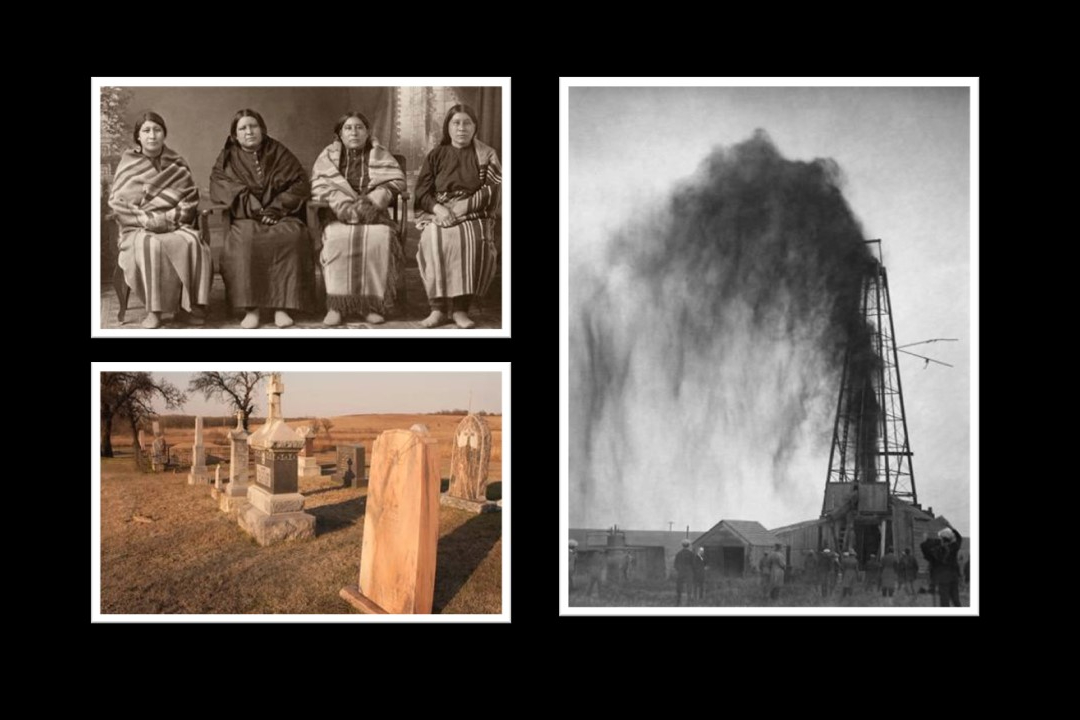
Killers of the Flower Moon: The Osage Murders and the Birth of the FBI (2017) by David Grann takes the reader through an evil crime spree arising from white settlers’ attempted dispossession of the Osage Indian’s Oklahoma lands and oil riches, exposing once again the dark and odious underbelly of race and greed in America.
The Alaska Native Reader: History, Culture, Politics (2009) edited by Maria Sháa Tláa Williams is a good place to seek understanding of the Indigenous history and perspective in our 49th state, as opposed to the Alaska history often told through the stories of “Russian fur hunters and American gold miners, of salmon canneries and oil pipelines.”
Empress of the Nile: The Daredevil Archaeologist Who Saved Egypt’s Ancient Temples from Destruction (2023) by Lynne Olson is the true-life story of Christiane Desroches-Noblecourt, the remarkable French archaeologist, WWII resistance fighter, and Louvre Egyptologist who played a key role in saving the temples at Abu Simbel.
Life on the Mississippi: An Epic American Adventure (2022) by Rinker Buck tells of the author’s 2016 quest to take a flatboat from Pittsburgh to New Orleans, recreating the approximate route traveled by millions of Americans in the early 19th century and an adventure undertaken to set the history straight.
Hiroshima (1946) by John Hersey grew out of the only single-content edition of The New Yorker, with reporting so powerful that it led the U.S. government to revise its narrative about why dropping the bomb was necessary.
The Card Catalog: Books, Cards, and Literary Treasures (2017) by The Library of Congress is a love letter to this artifact from an earlier time and features more than 200 images of original catalog cards, first edition book covers, and photographs from the LOC archives.
The places where we live (natural and man-made)


Beaverland: How One Weird Rodent Made America (2022) by Leila Philip is a fascinating look at the one animal, besides humans, that has an inordinate impact on their environment. A delightful storyteller, Philip came to her fascination with the weird rodent that scientists dub “ecosystem engineers” when she discovered a group of beavers in a pond near her home. When they disappeared, she was determined to find out more about these creatures.
The Songs of Trees: Stories from Nature’s Great Connectors (2017) by David George Haskell is an intriguing book of science, contemplative studies, philosophy, modern cultural studies, and history that involves repeated visits to twelve individual trees in different settings all around the world.
The Book of Eels: Our Enduring Fascination with the Most Mysterious Creature in the Natural World (2021) by Patrik Svensson is one man’s attempt to get to the bottom of what scientists and philosophers have for centuries dubbed as the eel question: the mystery which makes them utterly fascinating and a great subject for a writer who wants to explore what it means to live in a world full of questions we can’t always answer.
The Wake of the Unseen Object: Travels Through Alaska’s Native Landscapes (1991; classic reprint edition 2020) by Tom Kizzia is the author’s exploration of Alaska’s ancestral landscapes and contemporary life in bush country.
Biological Diversity: The Oldest Human Heritage (1999) by Edward O. Wilson, designed to introduce readers to the topic of biodiversity, concludes we don’t have much time to waste if we want to reverse the trends of loss.
Memoir and story (tell me your story)


Thinning Blood: A Memoir of Family, Myth, and Identity (2023) by Leah Myers is one young Native American’s fierce piece of personal history. Myers, who may be the last member of the Jamestown S’Klallam Tribe in her family line due to strict blood quantum laws, is searching for ways to ensure that her identity, her family’s story, and the tribe’s history in the Pacific Northwest’s Olympic Peninsula is not lost forever.
The Young Man (2022) by Annie Ernaux is an account by the 2022 winner of the Nobel Prize for Literature of her love affair with A., a man some 30 years younger, and Ernaux’s exploration of themes of the movement back and forth between youth and age, of memory and time, of misogyny and class, of life’s pitfalls and pleasures.
No Cure for Being Human (And Other Truths I Need to Hear) (2021) by Kate Bowler explores how to handle the life you’re given — instead of something from an unattainable dream — as she faces the knowledge that, “Nothing will exempt me from the pain of being human.”
Pappyland: A Story of Family, Fine Bourbon, and the Things That Last (2020) by Wright Thompson is a beautiful and warm reflection of how Julian Van Winkle III saved the business his grandfather had founded on the mission statement: “We make fine bourbon — at a profit if we can, at a loss if we must, but always fine bourbon.”
The Swedish Art of Aging Exuberantly (2022) by Margareta Magnusson surprises as a humorous look at how to live and age gracefully well into your final third of life.
The times we live in (politics and civic life)

Bad Blood: Secrets and Lies in a Silicon Valley Startup (2018 with a 2020 afterword) by John Carreyrou is the story of the building of the myth and the ultimate disgrace of Elizabeth Holmes. The Theranos founder claimed to have invented technology that could accurately test for a range of conditions using just a few drops of blood, ultimately raising $945 million from a well-known list of investors. Yet her story began to unravel in 2015 after a Wall Street Journal investigation written by Carreyrou.
Church State Corporation: Construing Religion in US Law (2020) by Winnifred Fallers Sullivan takes a deep dive into several Supreme Court decisions to argue that “American law has shown that it cannot think religion without the church,” even though the Constitution makes no mention of church or churches.
How to Resist Amazon and Why (2022) by Danny Caine makes the case for resisting what at times seems to be the takeover of the world by this corporate behemoth.
Murder mysteries (my year of reading dangerously)

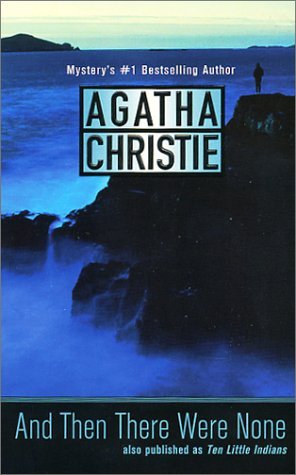
And Then There Were None (1939), the classic Agatha Christie mystery, is the book that made Christie the best-selling novelist of all time, and it is a fitting work to feature for my year of reading murder mysteries. The plot is a delicious puzzle as ten strangers arrive on an island only to be picked off one by one. Copies of an ominous nursery rhyme hanging in each room suggests the awful fates of those who are left. There is no one else on the island, so who, exactly, is the murderer?
The Murder on the Links (1923) by Agatha Christie begins with the famous Belgian detective Hercule Poirot finding his client stabbed to death, lying in a shallow grave on a golf course, wearing only an overcoat and his underwear. Poirot has a nagging suspicion that he’s seen this crime before.
Funerals are Fatal (1953) by Agatha Christie opens as the wealthy head of the family fortune dies suddenly in his Victorian mansion, followed quickly by the savage murder of his sister the next day in her home. Her remark at the funeral, suggesting her brother was murdered, suddenly takes on a chilling significance.
Dead Man’s Folly (1956) by Agatha Christie finds the famous crime writer, Ariadne Oliver organizing a mock murder for a party, and calling her old friend, the world-renowned detective Hercule Poirot, to join her because she feels something sinister is afoot.
Eight Perfect Murders (2020) by Peter Swanson begins as we learn that bookseller and mystery aficionado Malcolm Kershaw once wrote a blog post titled Eight Perfect Murders that listed the genre’s most unsolvable murders. An FBI agent has studied a number of unsolved crimes and has a hunch that someone is working their way through the list and leaving dead bodies in their wake.
Maigret and the Lazy Burglar (1961) by Georges Simenon finds detective chief inspector Jules Maigret investigating a woman and her son-in-law who were lovers, just as her husband and their daughter-in-law were lovers; a mother who doesn’t seem too concerned to be left without any means of support when her son is found dead; and a bar/brothel owner — the “lovely Rosalie” — who has an “obscenely picturesque way of expressing herself.”
The Fourth Man (2005) by K.O. Dahl is a smart, dark, complex, and ultimately very satisfying crime novel. Detective Inspector Frank Frølich of the Oslo Police falls in love with a woman who had inadvertently endangered both his police raid and her own life, only to discover that Elisabeth Faremo is the sister of a hardened and wanted member of a local crime gang.
Death in a Strange Country (1993) by Donna Leon is the second in what has become a 32-book series featuring the Venetian detective Guido Brunetti in a story where we fear that Brunetti’s great detective work will come to naught until a distraught and vengeful Sicilian mother provides some small sense of justice in this world of deceit and destruction of things beautiful and meaningful.
The Spy Who Came in From the Cold (1963) by John le Carré begins as Alec Leamas, the head of the West Berlin Station for British Intelligence, watches as his last undercover agent is shot down trying to cross the Berlin Wall by East German sentries. Leamas is recalled to London where he is given `a chance for revenge, but at the end of a number of twists and turns he has a choice to make, one where following his heart means certain death.
Whose Body? (1923) by Dorothy L. Sayers is a delightful period puzzle which opens as Lord Peter Wimsey receives a call from his mother asking for his assistance in helping clear her architect of suspicion of murder. It seems that overnight a body, clad only with a pair of fashionable pince-nez, has appeared in his bathtub.
The Thursday Murder Club (2020) by Richard Osman takes us to Coopers Chase, a high-end and peaceful British retirement village where four residents meet weekly to discuss unsolved crimes. When the developer and his lieutenant are murdered, the septuagenarian sleuths have real-life cases to solve in this light, witty, and big-hearted mystery novel.
Fiction (novels, short stories, poetry)

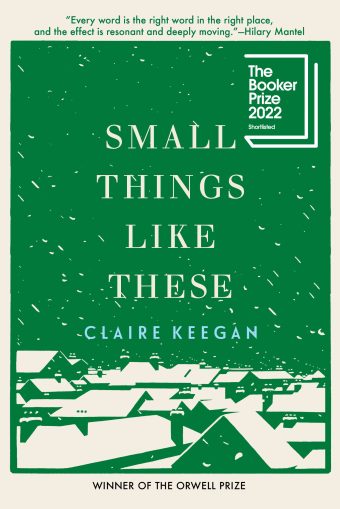
Small Things Like These (2021) by Claire Keegan is a short yet deeply moving novel set in small-town Ireland during the Christmas season of 1985. Bill Furlong is a coal and timber merchant who, while delivering a load to the local convent, makes a discovery that forces him to consider his past and the choices he must make. This little gem of a book brings us face-to-face, in a simple yet memorable story, with how we confront our past while also serving as a deeply moving story of “hope, quiet heroism, and empathy.”
Blue Iris: Poems and Essays (2004) by Mary Oliver is a collection of ten new poems at the time of publication, two dozen of her poems written over the prior two decades, and two previously unpublished essays on the beauty and wonder of plants.
Somebody Loves You, Mr. Hatch (1991) by Eileen Spinelli is — to put it simply — the best Valentine’s Day book ever. The lonely Mr. Hatch discovers that he has a secret admirer, and — as he learns who loves him — the answer is more wonderful than he ever imagined.
Theology and more (thinking about purpose and mindfulness)

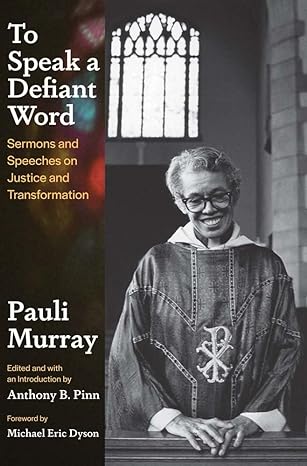
To Speak a Defiant Word: Sermons and Speeches on Justice and Transformation (2023) by Pauli Murray; edited by Anthony B. Pinn brings together the most important sermons, lectures, and speeches from 1960 through 1985 written by one of the most consequential and hopeful of 20th century Americans. Murray was a nonbinary African American member of the LGBTQ community, a civil rights and women’s rights activist, an author and poet, and a brilliant legal scholar who became the first female African American Episcopal priest in the United States and a saint in the Episcopal Church. Murray’s religious ideas and her sense of ministry evolved over a period that became one of the most tumultuous in American history.
The Hope of Glory: Reflections on the Last Words of Jesus from the Cross (2020) by Jon Meacham reminds us that “the work of discerning — or depending on your point of view, assigning — meaning to Good Friday and the story of the empty tomb is a historical as well as a theological process.”
The Half Known Life: In Search of Paradise (2023) by Pico Iyer leads us on an external odyssey and an internal journey to paradise where Iyer shows us unimaginably beautiful landscapes that, in many instances, have also seen incalculable suffering.
Awe: The New Science of Everyday Wonder and How It Can Transform Your Life (2023) by Dacher Keltner takes a scientific and personal look at awe, the feeling we get when we’re in the presence of something vast that transcends our current understanding of the world and that moves us, empowers us, stretches us, and can transform us.
The Difficult Words of Jesus: A Beginner’s Guide to His Most Perplexing Teachings (2021) by Amy-Jill Levine is full of challenging questions and problematic sayings; yet Levine suggests that “if we look at the Bible as a book that helps us ask the right questions rather than an answer sheet, we honor both the Bible and the traditions that hold it sacred.”
The Four Loves (1960) by C.S. Lewis takes the reader through a description of four different types of love: “affection, the most basic form; friendship, the rarest and perhaps most insightful; Eros, passionate love; charity, the greatest and least selfish.”
Sports (really just baseball)


The Church of Baseball: The Making of Bull Durham (2022) by Ron Shelton is a gem of a book on multiple levels. Full disclosure: I love Bull Durham. Shelton, a former minor league baseball player turned writer and director, has a passion for this multi-faceted story that still shines through 35 years after the film was released. And the tale of how Shelton — along with Kevin Costner and Susan Sarandon — pursued every angle to make this film — in spite of great odds and with challenges arising around every corner — is worth knowing as well.
The Tao of the Backup Catcher: Playing Baseball for the Love of the Game (2023) by Tim Brown and Erik Kratz is a story about Kratz, but more importantly, it is a story about the servant leadership of backup catchers who spend a career watching, listening, pondering, and ultimately setting aside their ego to make the team — and game — better.
Outbursts of radical common sense and whatever else tickled my fancy (otherwise known as the miscellaneous section)


Masters of Tonewood: The Hidden Art of Fine Stringed-Instrument Making (2022) by poet and author Jeffrey Greene is dedicated to exploring how the mysterious personalities of fine stringed instrument are acquired. Greene takes us on a delightful tour of the seven key European “musical forests” where the conditions are such that the Norway spruce — a key tonewood used in instrument making — can thrive. He visits with musicians, luthiers, millers, and foresters in this pleasing and illuminating deep dive into a fascinating world.
The Book of Charlie: Wisdom from the Remarkable American Life of a 109-year-old Man (2023) by David Von Drehle tells the story of Charlie White, a man born before radio who lived to use a smartphone and who, in his response to an early-in-life tragedy, learned persistence and durability, pointing the way toward a happy and useful life.
Rethink: The Surprising History of New Ideas (2016) by Steven Poole is an insightful work around the story of how many of our new and seemingly innovative ideas are actually based on old ideas that were mocked or ignored for decades if not centuries.
Enjoy!
More to come…
DJB
*To check out previous lists, click here for the posts from
See also: Seeing myself in the books I read.
The Weekly Reader links to the works of other writers I’ve enjoyed. I hope you find something that makes you laugh, think, or cry.
Image by congerdesign from Pixabay
 MORE TO COME...
Pingback: Observations from . . . December 2023 | MORE TO COME...
Pingback: From the bookshelf: December 2023 | MORE TO COME...
Pingback: From the bookshelf: January 2024 | MORE TO COME...
Pingback: From the bookshelf: February 2024 | MORE TO COME...
Pingback: From the bookshelf: March 2024 | MORE TO COME...
Pingback: From the bookshelf: April 2024 | MORE TO COME...
Pingback: From the bookshelf: May 2024 | MORE TO COME...
Pingback: Checking off the big 5-0 (state, that is) | MORE TO COME...
Pingback: From the bookshelf: June 2024 | MORE TO COME...
Pingback: From the bookshelf: July 2024 | MORE TO COME...
Pingback: From the bookshelf: August 2024 | MORE TO COME...
Pingback: From the bookshelf: September 2024 | MORE TO COME...
Pingback: From the bookshelf: October 2024 | MORE TO COME...
Pingback: From the bookshelf: November 2024 | MORE TO COME...
Pingback: The 2024 year-end reading list | MORE TO COME...