Thomas Paine’s American Crisis, first published in the winter of 1776, begins with these famous first lines:
THESE are the times that try men’s souls. The summer soldier and the sunshine patriot will, in this crisis, shrink from the service of their country; but he that stands by it now, deserves the love and thanks of man and woman. Tyranny, like hell, is not easily conquered; yet we have this consolation with us, that the harder the conflict, the more glorious the triumph.
We’ve been through difficult times before. But the actions of those who fought against tyranny — in the bleak winter of 1776, on the beaches at Normandy, on the streets of Birmingham, and in so many instances throughout our history — provide hope and a roadmap.

The day we celebrate the life, activism, and vision of Martin Luther King, Jr. is an appropriate time to understand our work ahead in this difficult election year.
Gratitude and joy as an act of resistance
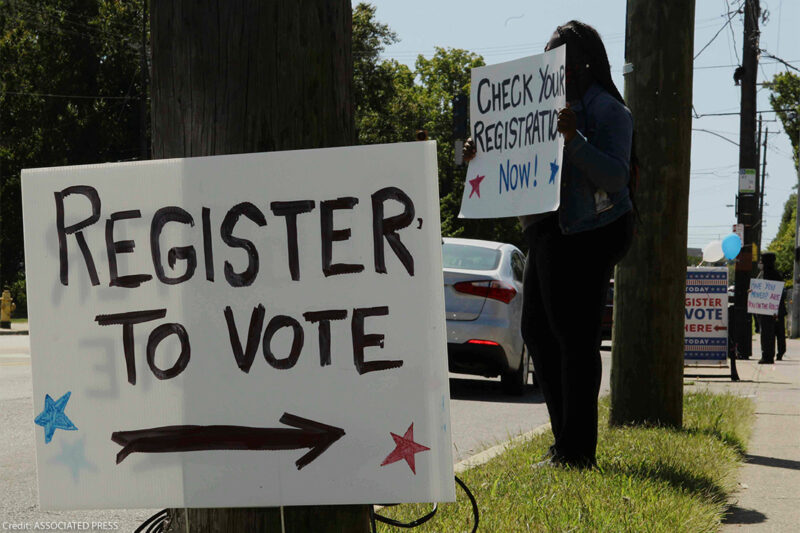
“Your opponents would love you to believe that it’s hopeless, that you have no power, that there’s no reason to act, that you can’t win,” writes historian and activist Rebecca Solnit. However, we should consider hope, gratitude and joy as an act of resistance. “Joy is a fine initial act of insurrection” against tyranny.
Vice President Kamala Harris pointed to the fear that opponents of democracy want us to feel and then noted that this is when we need to get to work.
“[A]t this moment in history, I say: Let us not throw up our hands when it’s time to roll up our sleeves. Because we were born for a time such as this.”
Dangers from the enemy within

The attack on the Capitol in the early days of 2021 shocked the nation. At first, it struck many as not only completely unprecedented, but also unrepresentative of American values. But as historians and others pointed out in the weeks and months that followed, the warning signs had been present, and parallels with past events abounded.
The history site Bunk has gathered articles on January 6th around first impressions, historical antecedents, language, and memory.
Ignorance bias helps give hate a foothold

One of the biggest problems in our divided country is not stupidity but a willful disregard of others in our community and the larger world. Brian Klaas writes that this ignorance is the biggest hidden bias in politics. Only 3% of us recognize the prime minister of India (the world’s largest democracy) and only 20% can correctly identify the president of China (the leader of America’s biggest geopolitical rival). But 67% can identify Justin Bieber and 85% (!) correctly recognize The Rock. The Columbia Journalism Review‘s Warped Front Pages also covers this issue.
These politicians denied democracy on January 6th. Now they want your vote.
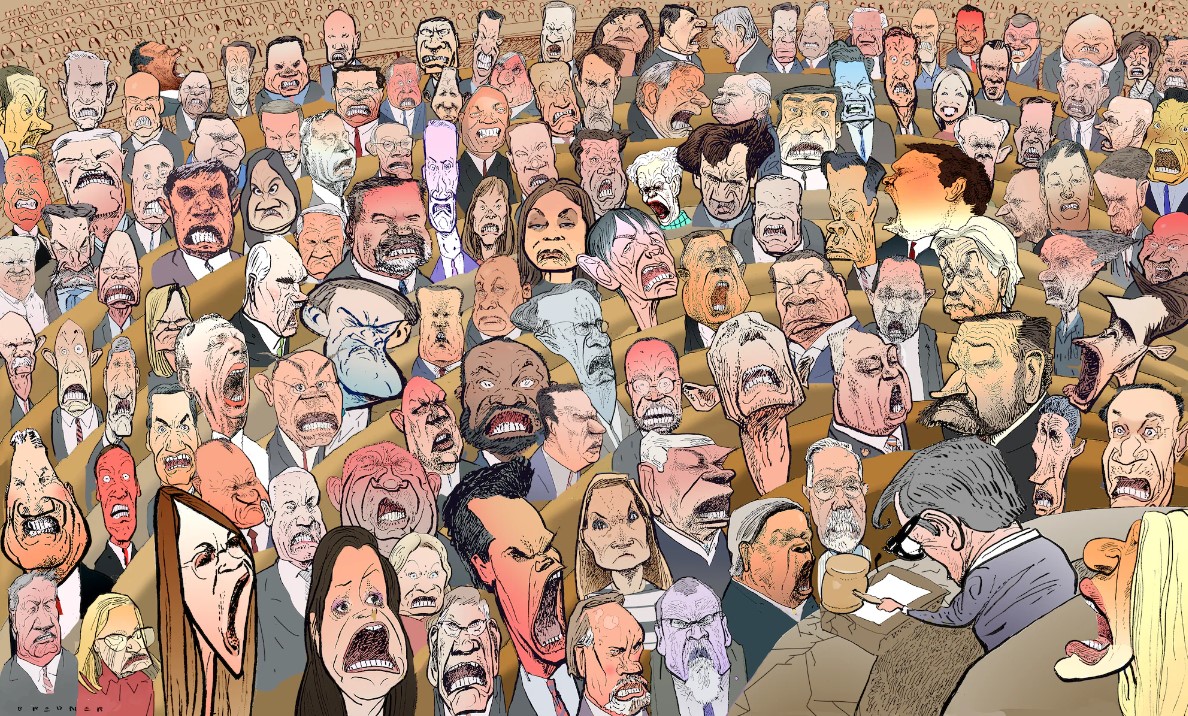
On January 6th, 147 Republicans formally supported objection to counting Joe Biden’s electoral votes. Satirical illustrator and commentator Steve Brodner has a scathing piece in the Washington Post showing this motley collection of insurrectionists “engaged in using democracy in order to attain the power to subvert it.”
Power doesn’t corrupt, it reveals

Robert Caro wrote that power doesn’t corrupt, it reveals. Unfortunately, we see the truth in his observation every day.
Former U.S. Attorney Joyce Vance noted “the hubris” in the opening lines of Trump’s request that the Supreme Court hear his appeal on the Colorado case removing him from the ballot. It is a “fundamental principle of our representative democracy embodied in the Constitution,” Trump’s lawyers write, “that the people should choose whom they please to govern them.”
Donald Trump, arguing the voters should be able to choose. Irony is dead.
The former president’s language matters. His incessant braying about Americans he deems vermin is just the latest in a lifelong pattern of Donald Trump telling us who he is.
Famously, he called for the death penalty in 1989 for five Black teens wrongly convicted of a brutal rape in Central Park, saying at the time, “Of course I hate these people . . .because maybe hate is what we need if we’re gonna get something done.” Trump refused to back down and has never apologized or admitted his mistake when DNA evidence exonerated the teens.
The cruelty is the point.
Vance also urges the courts to quit treating Trump as if he’s above the law. “How is it that our country has grown so accustomed to extending ‘favors’ no one else receives to this man who is so unworthy of special treatment?” she asks.
The death knell of the Republican Party

When asked to identify the cause of the United States Civil War, presidential candidate Nikki Haley answered with a word salad of gobbledygook. In response, Heather Cox Richardson delivered a master class about the creation, rise, ups-and-downs, and now fall of the once-great Republican Party.
The vice president of the Confederacy, Alexander Stephens of Georgia, was quite clear about the cause of the Civil War. . . . “Our new government is founded upon…the great truth, that the negro is not equal to the white man; that slavery — subordination to the superior race — is his natural and normal condition.”
Joe Biden put it succinctly: “It was about slavery.”
Richardson sets the record straight about what Haley’s refusal to say the word “slavery” means in the larger historical context.
. . . her answer was not simply bad history or an unwillingness to offend potential voters, as some have suggested. It was the death knell of the Republican Party.
Our neighbor’s house is on fire

Republicans’ refusal to fund Ukraine, writes Timothy Snyder, is like having our neighbor’s house on fire while we stand by and watch it burn.
Everything that the Ukrainians are doing for us can be undone this year. Russia can win, and be encouraged to start other wars, where our participation is likely to be much more direct. China can be encouraged, and we can find ourselves in a cataclysm over Taiwan. International order can break down, and we can confront confusing, difficult, and painful conflicts all over the world . . .
It doesn’t have to be that way. It’s easy to help a good neighbor . . . A bit of legislation to support Ukraine, and we all have a safer year, and safer lives.
What can we do?

In the years since the fall of the Soviet Union “we have torn ourselves apart as politicians adhering to an extreme ideology demonized their opponents.” Push back. It is past time to recognize the great work of Joe Biden in saving our country and our democracy. Point out that with Democrats, things get better.
Like victory gardens in WWII, all of us have a role to play in fighting against this torrent of negative sentiment that MAGA is pumping into our discourse every day.
Simon Rosenberg
Let’s get to work in whatever way we can to save democracy in 2024.
More to come . . .
DJB
For my disclaimer on political posts, click here.
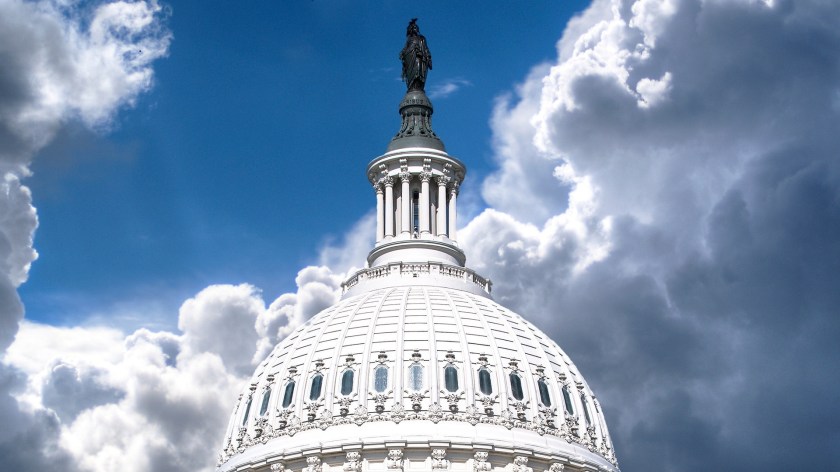
Image by Jorge Guillen from Pixabay
 MORE TO COME...
Pingback: Acknowledging the necessity of winter | MORE TO COME...
Pingback: Observations from . . . January 2024 | MORE TO COME...