As a country and as a planet we are facing difficult—some would say existential—challenges. Our democracy at home and democratic institutions around the globe are under attack. One of our political parties in the U.S. has decided to throw its lot in with a man who speaks “from his lofty platform making jokes about people who stutter, mimicking their struggle with a difficult speech challenge in a brutally ugly way.” They support a man whose life-long criminal activities, resulting financial penalties, and authoritarian tendencies to dismiss the rule of law have made him a walking national security threat. That alone is enough to cause high anxiety. But there’s more.
At the same time, Russia’s senseless war of aggression against Ukraine continues.
In its occupied zones, Russia continues to kidnap Ukrainian children for assimilation and continues to torture Ukrainians and place them in concentration camps. It continues to send glide bombs, drones, cruise missiles and rockets at Ukrainian towns and cities.
On the same day as the attack at Crocus City Hall, Russia carried out its single largest attack to date on the Ukrainian energy grid, leaving more than a million people without power. Among other things it fired eight cruise missiles at the largest Ukrainian dam. Russia attacked the city of Zaporizhzhia and other cities throughout Ukraine.
And we are also deep in a global climate emergency. This crisis, notes Mary Annaïse Heglar—a New Orleans-based writer on climate change, climate grief, and climate justice—is “the ultimate culmination of a centuries-long run of exploitation and extraction, including slavery and colonialism and all their offshoots.”
How does one not despair in the face of such threats? The late environmental scientist and author Donella Meadows wrote, “There is too much bad news to justify complacency. There is too much good news to justify despair.”
And there you have it. As folksinger, writer, and activist Carrie Newcomer says, we simply have to learn to hold “the both/and of human possibility.”

Not Too Late: Changing the Climate Story from Despair to Possibility (2023) edited by Rebecca Solnit and Thelma Young Lutunatabua is a project “to try and return hope and power” to our path forward in the climate crisis “through both facts and perspectives.” As Solnit, a writer I’ve long admired, writes in her first essay for this collection, “difficult is not the same as impossible.” Lutunatabua also reminds us that “nothing is inevitable.” Twenty-six essays are grouped into five sections beginning with “Join Us” all the way through to “Take This with You.” These essays are written by climate scientists who provide takes on hope, indigenous people who ask the reader to consider their long history of living with the land, activists who have spent decades fighting the fossil fuel industry, religious leaders, historians, and futurists.
And their message is altogether consistent, reassuring, and galvanizing. We have seen challenges before. “The world is both better and worse than we imagined twenty years ago,” and the editors compile “an extremely incomplete list of climate victories” since 1974 just to remind us. The list alone goes on for 11 pages.
The actions and words of those who believed it was worth trying to act on their beliefs and commitments “are connected to the way that new ideas about justice, equality, kindness, about interdependence as the first lesson nature teaches us, appeared on distant horizons like clouds and then soaked into the soil of the collective imagination like spring rain.”
Solnit, who writes brilliantly about hope in this and other contexts, reminds us that “to hope is to accept despair as an emotion but not as an analysis.” She turns to Václav Havel to underscore that point. “Hope is not the conviction that something will turn out well but the certainty that something is worth doing no matter how it turns out.”
The editors and writers are not naive. They understand that the work to reverse climate change is “a deep, uphill confrontation with entrenched powers that have had the luxury of domination for too long.” They beat down fallacies such as “the expectation that a single, neat behavioral change will be enough” and that “there’s a stop button somewhere” when the madness will end.
But they have seen change and believe that further change is possible, and that the more we change the more the earth will become sustainable. We are not going to reverse the damage that has been done, but as the lead author for the most recent Intergovernmental Panel on Climate Chage report notes, “there is no evidence to support the notion that we are currently facing runaway climate change or the inevitability of an unlivable future.” He adds, “once emissions start to stabilize, temperatures follow suit.”
Change, in so many areas of our lives, happens gradually, then suddenly. I recalled an example for a recent book group discussion on this title. In my younger days, smoking was pervasive and accepted. Until suddenly—after years of education, regulation, social pressure—the tipping point was reached and smoking was no longer cool.
Capitalistic values frame us as consumers. But we are citizens—both of our democracy and of this planet. When we take on the role of citizen, we fight for our rights. Organizer and writer Yotam Marom suggests:
. . . fighting is one of the ways we get to nurture our courage and generosity and hope and all those other fundamentally human traits that we treasure most—because our lives will be infinitely richer in the struggle than outside of it. We do it because it is how we get to truly live.
Movements rarely “win” in the complete sense, Solnit writes, but “naming and reviewing the movement’s progress helps build momentum for the next win and the win after that.”
Keep fighting. Keep a sense of hope.
More to come . . .
DJB
For other MTC posts on Rebecca Solnit’s work, see:
- Stop and smell the roses (2021)
- Listen in order to move out of your comfort zone (2020)
- Cynicism vs. hope (2019)
- Sometimes the only way is the long one (2018)
- Joy is a fine initial act of insurrection (2017)
- Hope demands things that despair does not (2017)
- Hope is grounded in memory (2016)
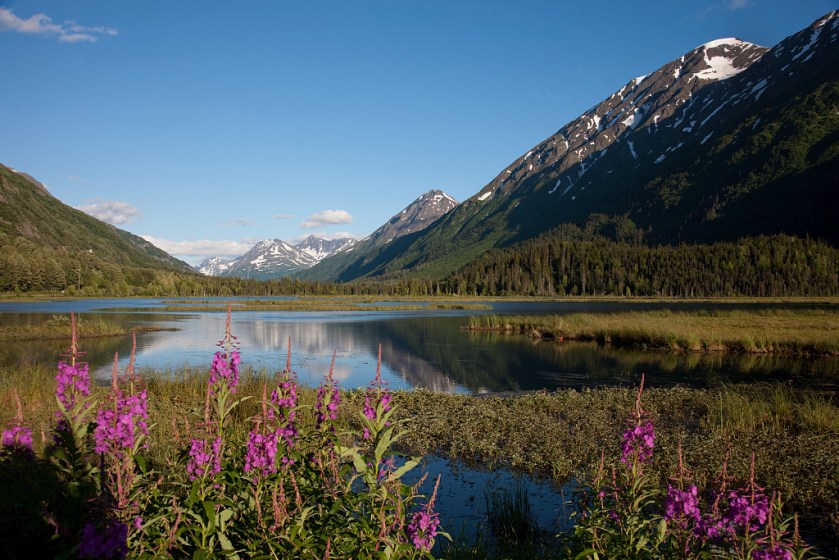
Photo by Carol M. Highsmith
 MORE TO COME...
Pingback: From the bookshelf: March 2024 | MORE TO COME...
Pingback: Observations from . . . April 2024 | MORE TO COME...
Pingback: The 2024 year-end reading list | MORE TO COME...