
Labor Day began on September 5, 1882, when between 10,000 – 20,000 workers in New York City celebrated the first holiday with a parade, speeches, beer, and picnics.
“Their goal was to emphasize the importance of workers in the industrializing economy and to warn politicians that they could not be ignored. Less than 20 years before, northern men had fought a war to defend a society based on free labor and had, they thought, put in place a government that would support the ability of all hardworking men to rise to prosperity.
By 1882, though, factories and the fortunes they created had swung the government toward men of capital, and workingmen worried they would lose their rights if they didn’t work together. A decade before, the Republican Party, which had formed to protect free labor, had thrown its weight behind Wall Street.”
In 1882 the New York Times “denied that workers were any special class in the United States.” The growing inequality in the country “was a function of the greater value of bosses than their workers, and the government could not possibly adjust that equation,” or so thought the Times.
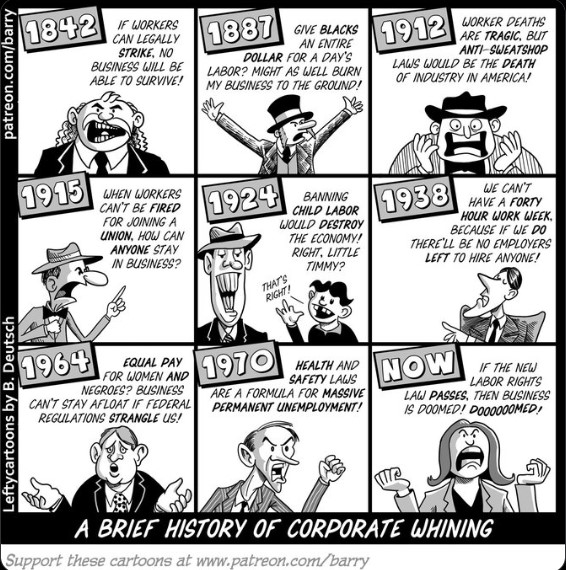
The wealthy—through corporate-owned media—haven’t changed their tune in almost 150 years. *
With promises to protect workers’ rights, Grover Cleveland was elected to the White House in a landslide in 1892. But the Republican party of the day joined forces with wealthy corporations and business owners to tank the economy just before he took office. To recover the country’s economic footing, Cleveland and the Democrats had to abandon their pro-worker platforms. Thanks to the willful destruction of the country’s economy by one of our political parties (sound familiar), creation of a national Labor Day holiday, building on that 1882 foundation, was about all that the country’s working class got for their support.
Capital continued to hold the upper hand nationally until the Great Depression and the election of Franklin Roosevelt in 1932—campaigning with the joyful theme of Happy Days Are Here Again. While corporations and the wealthy strongly opposed Roosevelt, this time the overwhelming support of the country—along with an indominable Secretary of Labor, Frances Perkins working with the strong support not only of FDR but also First Lady Eleanor Roosevelt—brought the modern Democratic Party solidly in the pro-worker camp.
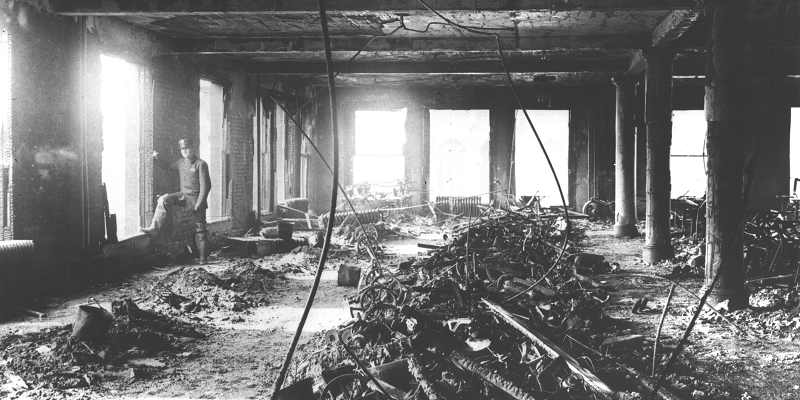
Perkins, a long-time advocate for workers and the poor, was shocked by the 1911 Triangle Shirtwaist Fire in New York City, where 147 young people—mostly young immigrant women—died after being caught locked in a burning factory. Their deaths came either from their fall from the factory windows or from smoke inhalation.
As the country’s longest-serving Secretary of Labor, Perkins was a driving force in urging the government to spend $3.3 billion on schools, roads, housing, and post offices, employing more than a million people in 1934.
“In 1935, FDR signed the Social Security Act, providing ordinary Americans with unemployment insurance; aid to homeless, dependent, and neglected children; funds to promote maternal and child welfare; and public health services.
In 1938, Congress passed the Fair Labor Standards Act, which established a minimum wage and maximum hours. It banned child labor.
Frances Perkins, and all those who worked with her, transformed the horror of the Triangle Shirtwaist Fire into the heart of our nation’s basic social safety net.
However, in the 1960s, 70s, and 80s, the Democratic Party lost its historic touch with the working people of this country. Republicans, who after their founding based on free labor never again cared for the working class, swooped in with culture war fears to gain a foothold among that critical block of voters and citizens. Donald Trump, the least likely champion for the working class ever, made the hypocrisy of the Republican position very real.
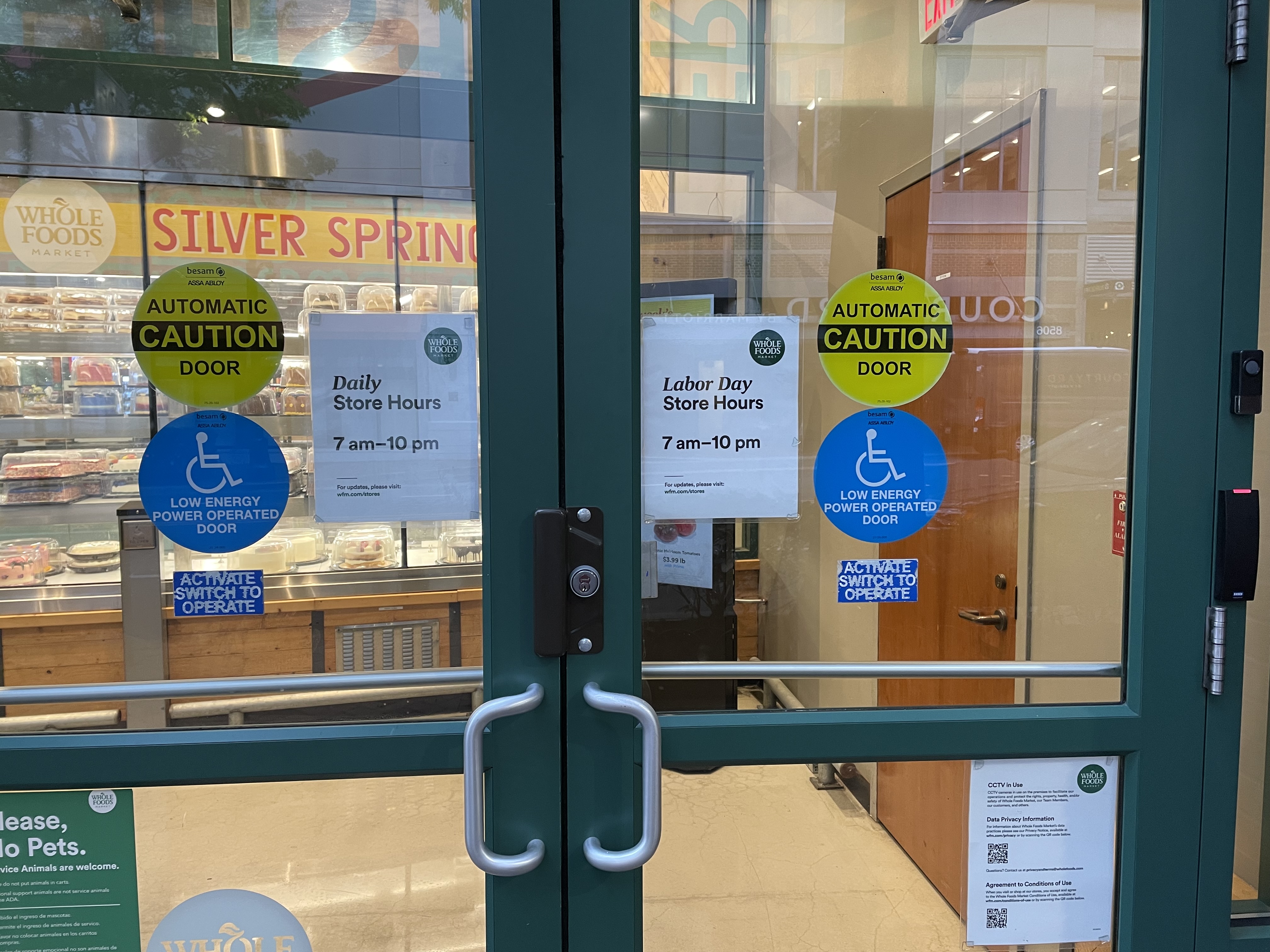
When oligarchs are in control, you see how they push back against the gains of workers. Jeff Bezos won’t be giving his Whole Foods workers any special time off for the holiday, because that would cut into his already obscenely high profits.
President Biden began to aggressively push the Democrats back to an embrace of this historic partnership, but it has been the Harris-Walz ticket that has articulated the links in ways new and historic, fresh and yet rooted in tradition. Democrats have returned to their modern roots.
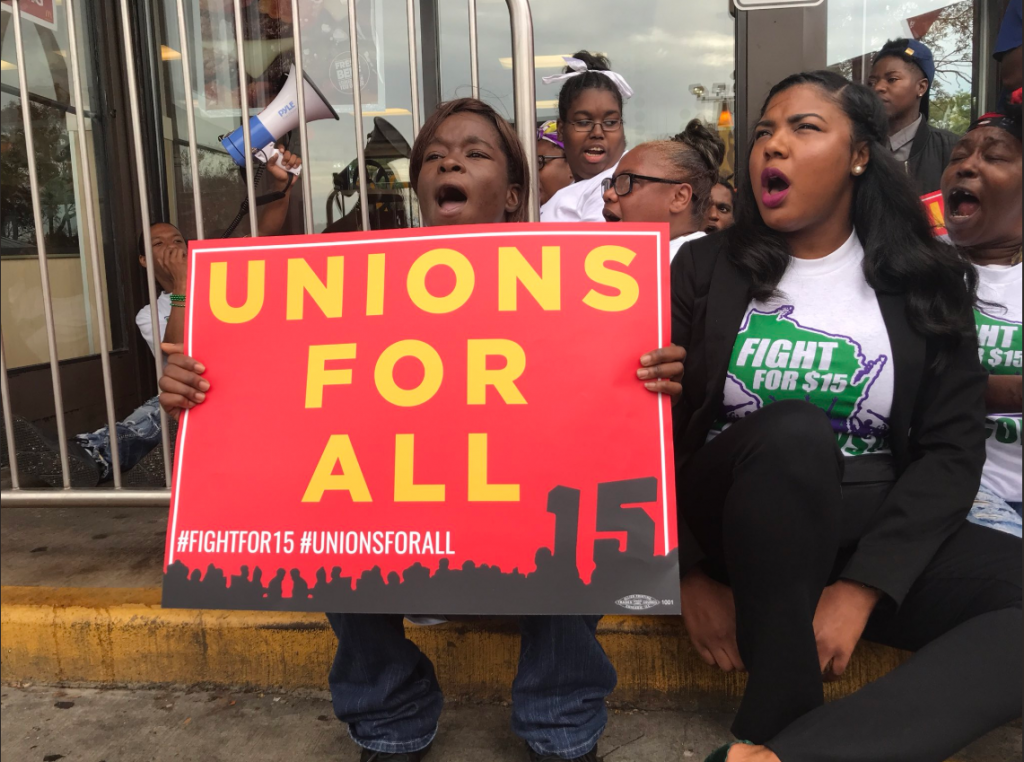
Nobody exemplifies this turn better than Governor Tim Walz, Midwestern populist and candidate for Vice President. Concern for the working class comes through everything he says. Unions have cheered the choice of Kamala Harris to add Tim Walz to the Democratic ticket.
Just last year Governor Walz signed one of the most sweeping pro-worker legislative packages seen in the U.S. in decades. It includes paid family leave that provides workers with 12 weeks partial pay to care for a newborn or sick family member plus another 12 weeks to recover from a serious illness (with time off capped at 20 weeks a year).

As Axios phrased it, the Walz pick excited advocates for the “care economy.” Harris has made policies like childcare support and paid family leave a pillar of her campaign.
As the country did before 1981, Harris and Walz are promising to continue Biden’s focus on supporting a strong middle class rather than those at the top of the economy. They are building on this economic base to recenter the United States government. Harris and Walz have tapped into a deep sense of community that speaks volumes about their support for labor and the working class. They see the country “not as a community defined by winners and losers, but as one in which everyone has value and should have the same opportunities for success.”
It is about helping and picking each other up rather than looking out only for yourself.
Happy Labor Day everyone.
More to come . . .
DJB
*UPDATE: For those who like their history in more easily digestible bites, try this:
For additional More to Come Labor Day posts, see:
- A Labor Day Quiz (2022)
- For those who labor (2021)
- Why Labor Day Matters (2019)
Photo from Unsplash
 MORE TO COME...
Pingback: Observations from . . . September 2024 | MORE TO COME...