
A twelfth-century Judaic scholar once wrote, “Make books your treasure and bookshelves your gardens of delight.”
September 22-28—Banned Books Week—is a good time to remember that advice. Deborah Caldwell-Stone, director of the American Library Association’s Office for Intellectual Freedom, notes that “This is a dangerous time for readers and the public servants who provide access to reading materials. Readers, particularly students, are losing access to critical information, and librarians and teachers are under attack for doing their jobs.”
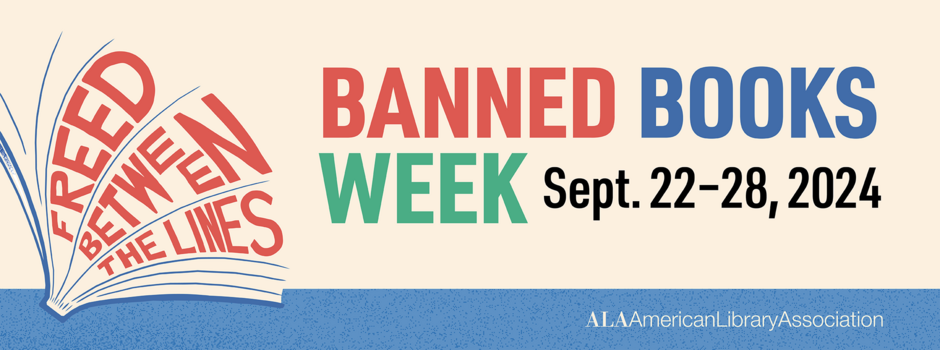
Censorship is on the rise across the United States. A decade ago, 183 unique titles were challenged over the course of the year, while last year that number skyrocketed to 4,240. This increase began with the radicalization of today’s Republican party and the growth of far-right pressure groups such as the discredited Moms for Liberty, the organization birthed by MAGA political operatives, bankrolled by far-right funders, and designed to coerce American families into the war on freedom and equality.


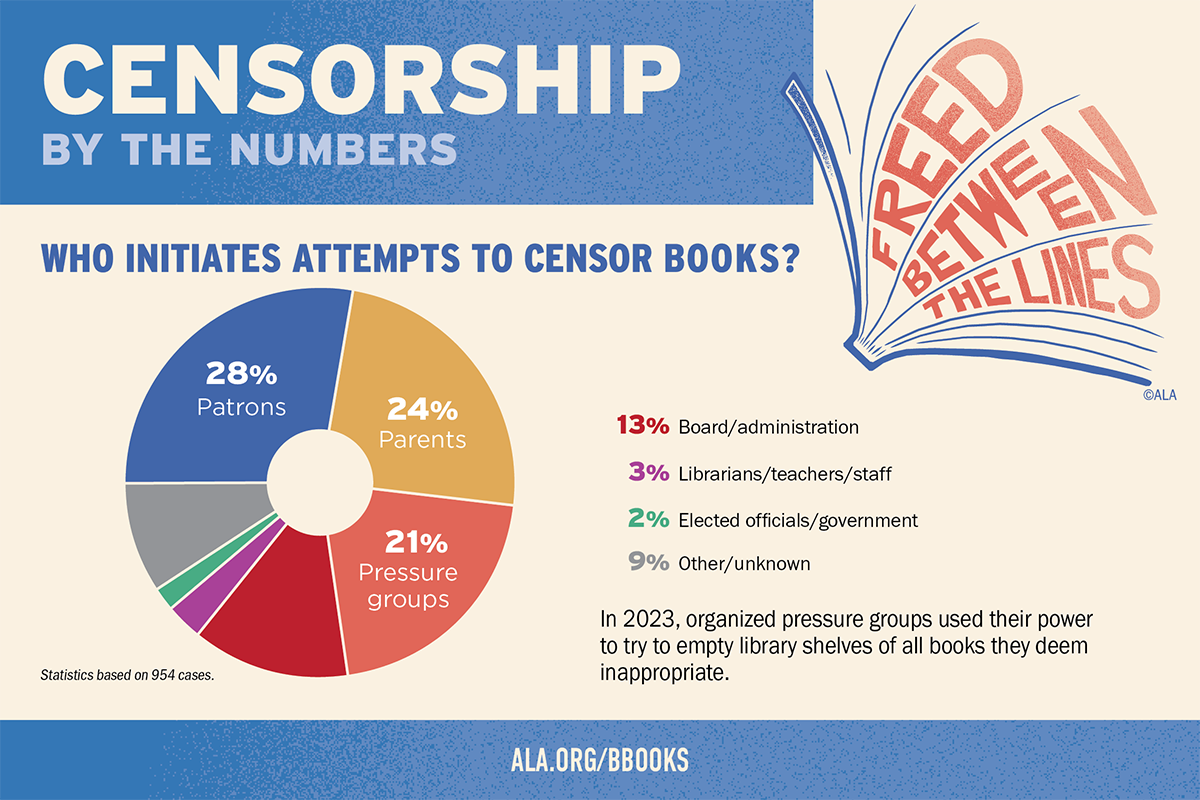
“Groups and individuals demanding the censorship of multiple titles, often dozens or hundreds at a time, drove this surge in 2023. Attempts to censor more than 100 titles occurred in 17 states: Colorado, Connecticut, Florida, Idaho, Illinois, Iowa, Kentucky, Maryland, Missouri, North Carolina, Ohio, Pennsylvania, Tennessee, Texas, Utah, Virginia, and Wisconsin.”

Universities and bookshops are also targets of book bans. In the case of universities, historian of authoritarianism Ruth Ben-Ghiat recently described how authoritarians target these institutions. Florida Governor Ron DeSantis’s quest to restructure higher education in line with his far-right views is only one of the most egregious examples.
“The sad sight of all those books discarded by far-right New College employees in a dumpster for being politically “unacceptable” will stay with me a long time, not least because it is similar to what happened to books from public and private libraries during the right-wing Chilean military dictatorship, the Chinese Communist “Cultural Revolution,” and many other regimes.
As the Tampa Bay Times reported, 13,000 books were thrown into a dumpster as though they were trash or toxic waste.”

After images of the dumpster circulated, causing a public outcry, New College went into damage control mode.
“They made a preliminary decision to fire the dean of the college library for not following proper procedures, including justifications for each book selected for elimination. But the New College was just fine with having hundreds of other books discarded as part of a purge of the Gender and Diversity Center!
As the GOP transforms into an autocratic entity allied with foreign far-right parties and governments, it’s worth understanding how authoritarians target institutions of higher learning. “They don’t only shut down intellectual freedom and change the content of learning to reinforce their ideological agendas, but also seek to remake higher education institutions into places that reward intolerance, conformism, and other values and behaviors authoritarians require.”
Bookshops—which are places where you could walk in off the street “and read yourself into an international consciousness”—also have a long history of fighting book bans.
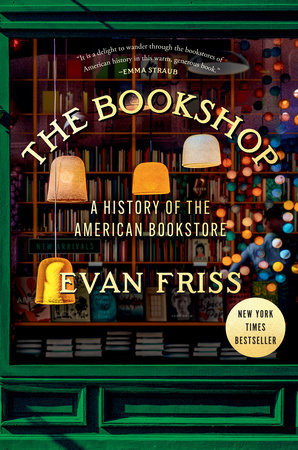
The Bookshop: A History of the American Bookstore (2024) by Evan Friss is an eye-opening and charming tour of bookshops through the years and across the country—places often owned by individuals who believe in the profound power of literature, creativity, and the freedom of expression. Benjamin Franklin was there at the founding of the country’s love affair with bookshops. Thomas Paine’s Common Sense *—encouraged by Franklin and the first best-seller in America—kickstarted the revolution as well as the growth of bookshops across the colonies. Friss moves on to highlight a variety of shops and booksellers, taking us all the way to Ann Patchett’s Parnassus bookshop in Nashville, the face of today’s renaissance of independent bookstores. This is a deeply researched yet highly personal consideration of the enduring power of places devoted to the buying and selling of books.
Banned books are often a major part of the story.

The reader visits The Gotham Book Mart and The Strand in New York City, precursors to the mega bookstore. The Aryan Book Store in Los Angeles—also headquarters for the American Nazi Party until it was shut down following Pearl Harbor—is a reminder that radical bookstores selling misinformation and hate have a history before Amazon. The rise of LGBTQ+ literature promoted by Craig Rodwell at his Oscar Wilde Memorial Bookshop is part of the story of the American bookshop, as is the rise of African American literature (sold at shops such as the Drum & Spear in D.C. and Oakland’s Marcus Books) and feminist works (as at the original Amazon bookstore—not the online behemoth—in Minneapolis). Barnes & Noble and the online Amazon (which couldn’t make it as a brick-and-mortar bookstore) are also considered by Friss, but his emphasis is clearly on the independent bookstore, often run by an owner who loves books more than making money. Throughout this delightful work, Friss introduces us to many individuals who select, buy, sell, print, read, and discuss books at the bookshops we love.
In the end, Friss notes that because they push us to think beyond ourselves, “bookshops can shape the world around them. They already have.”

America’s problem is not that we’re reading too many books. Free people read freely! And as Minnesota Governor and Democratic VP candidate Tim Walz phrases it:
“I’m surrounded by states who are spending their time figuring out how to ban Charlotte’s Web in their schools while we’re banishing hunger from ours with free breakfast and lunch.
We’re not banning books; we’re banishing hunger. It’s that simple.”

The snazzy reminder from People for the American Way is worth seeing twice, alongside my bookshelf that definitely was not created by a designer buying “books by the foot” to provide me with an attractive video background (“shelfies”)—another bit of information from The Bookshop.

Read!
More to come . . .
DJB
*Critic Lewis H. Lapham looks at Paine and meets a man
“’writing in what he knew to be the undisguised language of the historical truth.’ To read Tom Paine is to encounter the high-minded philosophy of the eighteenth-century Enlightenment rendered in words simple enough to be readily understood.”
For other MTC essays on libraries, bookstores, and banned books, see:
- Praise for the independent bookstore (2024)
- Fighting for a people-powered future (2023)
- America’s problem is not that we’re reading too many books (2022)
- In praise of public libraries (2020)
- The Revenge of Analog: Real Things and Why They Matter (2017)
Photo of DJB in his “Knowledge is Power: Read Banned Books” t-shirt by Andrew Brown
 MORE TO COME...
Love your Tshirt! This has totally gotten out of hand! We’ve all read so many of the now “banned” books and I don’t really think we are any worse for it! Hop on Pop really??
Debbie
Thanks, Debbie. I thought the t-shirt looked pretty cool myself and I think Daddy would certainly have liked it. Yes, Hop on Pop! That is just the perfect example of how quickly these things can go crazy. Love you, DJB
Pingback: Observations from . . . September 2024 | MORE TO COME...
Pingback: From the bookshelf: September 2024 | MORE TO COME...
Pingback: The 2024 year-end reading list | MORE TO COME...
Pingback: Let’s treasure books, not ban them | MORE TO COME...