
Books help us fight the “attention economy” where companies making billions of dollars work to keep us agitated and confused. Netflix’s CEO noted that the company “is competing for our customers’ time, so our competitors include Snapchat, YouTube, sleep, etc.” Let that last one sink in a bit.
We have to make a very conscious decision where we choose to place our attention and energy.
Each month my intention is to read a minimum of five books on a variety of topics from different genres. Here are the books I read in March 2025. If you click on the title, you’ll go to the longer post on MORE TO COME. Enjoy.
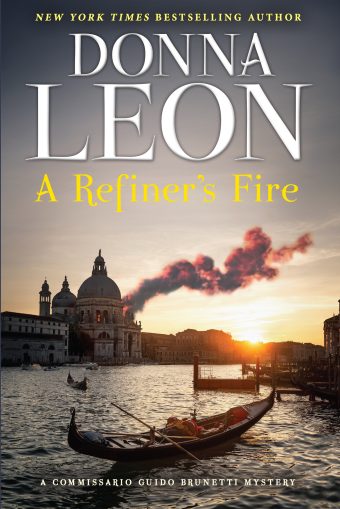
A Refiner’s Fire: A Commissario Guido Brunetti Mystery (2024) by Donna Leon, the most recent in the Commissario Brunetti series, begins early on a spring morning when two teenage gangs are arrested after a violent fight in one of Venice’s squares. As is her style, Leon brings together contemporary issues with past ghosts of deceit and acts of official wrongdoing. A final fiery and violent clash puts Brunetti in danger while offering others a chance for redemption. This book, just like the others I’ve read in the Commissario Brunetti series, rings true to life and continues to call us to strive for what is right, even in the midst of “the ambiguity between moral and legal justice.”

The Baseball 100 (2021) by Joe Posnanski—the self-described “writer of sports and other nonsense”—is characterized by the publisher as “a magnum opus…an audacious, singular, and masterly book that took a lifetime to write.” It is pure baseball bliss. The rankings are important—and instantly give the reader a chance to argue with Joe, which he encourages. But they serve the larger purpose of providing this talented writer and lifelong fan with a chance to explore baseball’s rich, deep, diverse, and at times challenging history.
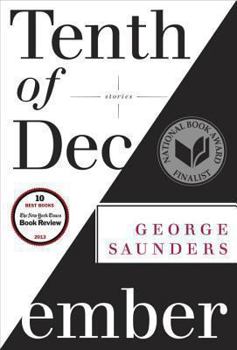
Tenth of December: Stories (2013) by George Saunders is a book of short stories by the widely honored writer and satirist. Readers of his other works will recognize many of the traits found here: “hesitant, disappointed” protagonists where the reader is in their heads; language that is “exhilarating” and full of slang; settings in “self-contained” suburbs or small towns. More than one reviewer notes that Saunders is at his best showing the way that daydreams and fantasies color our thoughts. While Saunders has the skill of a satirist, he also brings in a generosity of spirit for his characters that is appealing. While other reviewers have included this in book of the year/decade lists, I found it an uneven collection with a handful of riveting stories and more than one disappointment that had me impatient to get to the end.
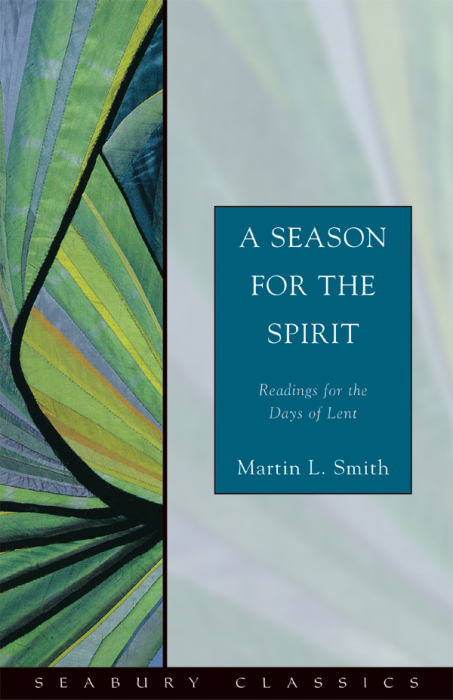
A Season for the Spirit (2004) by Martin L. Smith is a work of forty Lenten meditations which takes the reader on a journey of discovery of our humanity and humility. On Ash Wednesday as we are reminded that we came from dust and will return to dust, Smith suggests that what we are called to give up in Lent is control itself. To humble ourselves. Letting go and handing ourselves over to the divine—the Spirit—brings us much closer to the life we are called to live. Many have been trained “to invoke the word ‘discipline’ at the beginning of Lent.” Yet deliberate efforts at discipline too often fail. The paradox is that by relinquishing our efforts to control our lives we can begin to find the freedom “that is gained only through exposure to the truth.”

Erasing History: How Fascists Rewrite the Past to Control the Future (2024) by Jason Stanley is a powerful and timely work. Stanley literally wrote the book on understanding fascism, and here he uses his family’s experience in 1930s Germany as a touchstone for a deeper dive into the tools of totalitarianism. Stanley explains in urgent and crisp writing how critical examination of a nation’s history and traditions is discouraged in authoritarian countries. This has happened across the world for centuries and is now a feature of the new regime in Washington. That authoritarian regimes “often find history profoundly threatening” is a key lesson of the past century. By providing multiple perspectives on the past, a robust study of history undercuts one of autocracy’s key tools: the unquestioned voice of the leader. We lose those perspectives at our peril.
What’s on the nightstand for April (subject to change at the whims of the reader)

- The Memory Palace: True Short Stories of the Past by Nate Dimeo
- Question 7 by Richard Flanagan
- Their Eyes Were Watching God by Zora Neale Hurston
- Steering the Craft: A Twenty-First-Century Guide to Sailing the Sea of Story by Ursula K. Le Guin
- New Building in Old Cities: Writings by Gustavo Giovannoni on Architectural and Urban Conservation edited by Steven W. Semes, Francesco Siravo, and Jeff Cody.
Keep reading!
More to come…
DJB
NOTE: Click to see the books I read in February of 2025 and to see the books I read in 2024. Also check out Ten tips for reading five books a month.
Reading by Blaz Photos on Unsplash
 MORE TO COME...
You will never think about mules in quite the same way after you’ve read Their Eyes Were Watching God!
This is one of those books I should have read a long ago, Meredith.
That makes two of us!
David,
I assume you know that Jason Stanley has decided to leave Yale and emigrate to Canada, where he will be teaching at the University of Toronto. The interview with him on the PBS NewsHour left me profoundly sad (and not a little anxious).
Sandy
Sandy, I had heard the news but have not seen the interview. Very sad indeed that he was made to feel this way. DJB
He said in the interview that he didn’t want his children to grow up in the kind of situation in which we find ourselves, but he did not rule out returning at some later point if things changed since he considers the US “his country.”
Pingback: Observations from . . . April 2025 | MORE TO COME...
Pingback: From the bookshelf: April 2025 | MORE TO COME...