
Author Fran Lebowitz famously said, “Think before you speak. Read before you think.” My goodness. What a concept! Wouldn’t our life be so much easier to navigate if more people in leadership positions (if not actually leaders) followed this bit of advice?
I don’t always think before I blurt something out, but it does help that I have a monthly intention to read a minimum of five books on a variety of topics from different genres. Here are the books I read in April 2025. If you click on the title, you’ll go to the longer post on MORE TO COME. Enjoy.
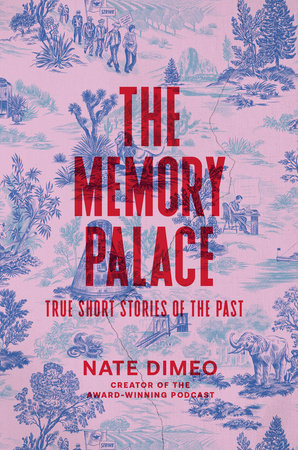
The Memory Palace: True Short Stories of the Past (2024) by Nate DiMeo is a wonder-filled collection of stories from our past. These “true short stories” are looks into the lives of people, some of them famous but many forgotten by time, whose stories deserve to be known. DiMeo looks at these places “between and beyond concrete facts and the well-worn language of familiar stories” to remind us that “life, in the present as in the past, is more complicated and more interesting and more beautiful and more improbable and more alive than we’d realized.” This is a work that surprises and informs and delights all while making us think.

Question 7 (2023) by Richard Flanagan is a genre-defying memoir that examines the choices we make and the resulting chain reactions that explode halfway around the world and decades into the future. The choices Flannagan considers begin with the love affair of H.G. Wells and Rebecca West. He then take the reader through the work of nuclear physicists in the 1930s, the horrors of Japanese slave labor camps near Hiroshima, the world-changing 1945 atomic bomb attack on that city, and the fear of a young man trapped in rapids on a wild river, unsure if he is to live or die. But to lay them out in this sequential order does a disservice to Flanagan’s extraordinary ability to meld dream, history, science, and memory in this masterpiece. Flanagan, as a friend of mine noted, “writes like a god.”

Their Eyes Were Watching God (1937) by Zora Neale Hurston is the story of Janie Crawford, a proud independent black woman who finds herself while navigating three marriages and a fair share of sorrow. Janie begins as a young girl, goes through a myriad of experiences in the Jim Crow South, and comes out a much wiser woman of 40. She learns that others—family, friends, lovers, busy-bodies—want to tell her how to live. Her Grandma reminds her that the black woman “is de mule of the world” and both white folks and black men will expect her to tote the heaviest load. But in the end Janie proclaims that she has done “two things everbody’s got tuh do fuh theyselves. They got tuh go tuh God, and they got tuh find out about livin’ fuh theyselves.” Hurston’s vivid writing and empathetic outlook towards Janie’s quest brings this story alive.
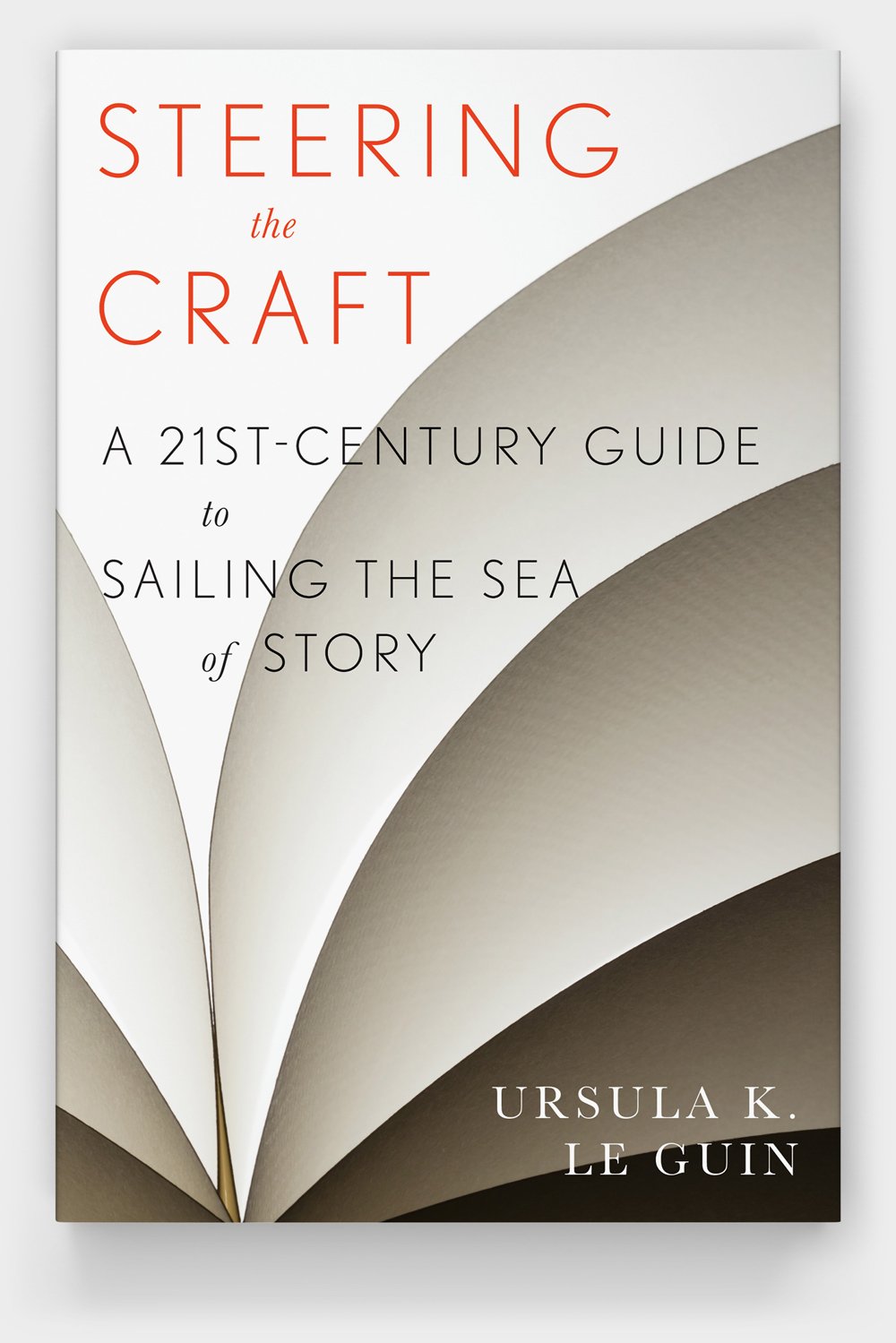
Steering the Craft: A 21st Century Guide to Sailing the Sea of Story (1998) by Ursula K. Le Guin is a handbook on writing well. This master practitioner examines the fundamental components of narrative in this useful, thoughtful, and—most importantly—readable work. Because story is about change, Le Guin wants writers to focus on movement. She examines the sound of language, the tools of punctuation, sentence construction, and more. This is a “deceptively simple” handbook that those wishing to communicate more effectively and skillfully through writing could return to again and again.

New Building in Old Cities: Writings by Gustavo Giovannoni on Architectural and Urban Conservation (2024) edited by Steven W. Semes, Francesco Siravo, and Jeff Cody is a highly relevant and richly illustrated book of the largely forgotten architectural work of an important early advocate for the conservation of historic cities. Because Giovannoni’s works had not been translated into English, his approach to architectural restoration and rehabilitation based on the “simultaneous consideration of the historical, technical, environmental, social, and aesthetic dimensions of ‘monuments’ and ordinary buildings” was not widely known internationally. From his base in Rome, Giovannoni urged the education of the “complete architect” who would be “multidisciplinary, practical designers capable of advancing an integrated vision of the city in all its spatial and temporal dimensions.” In this most recent installment of my Author Q&A series, I speak with the editors about this new work.
What’s on the nightstand for May (subject to change at the whims of the reader)
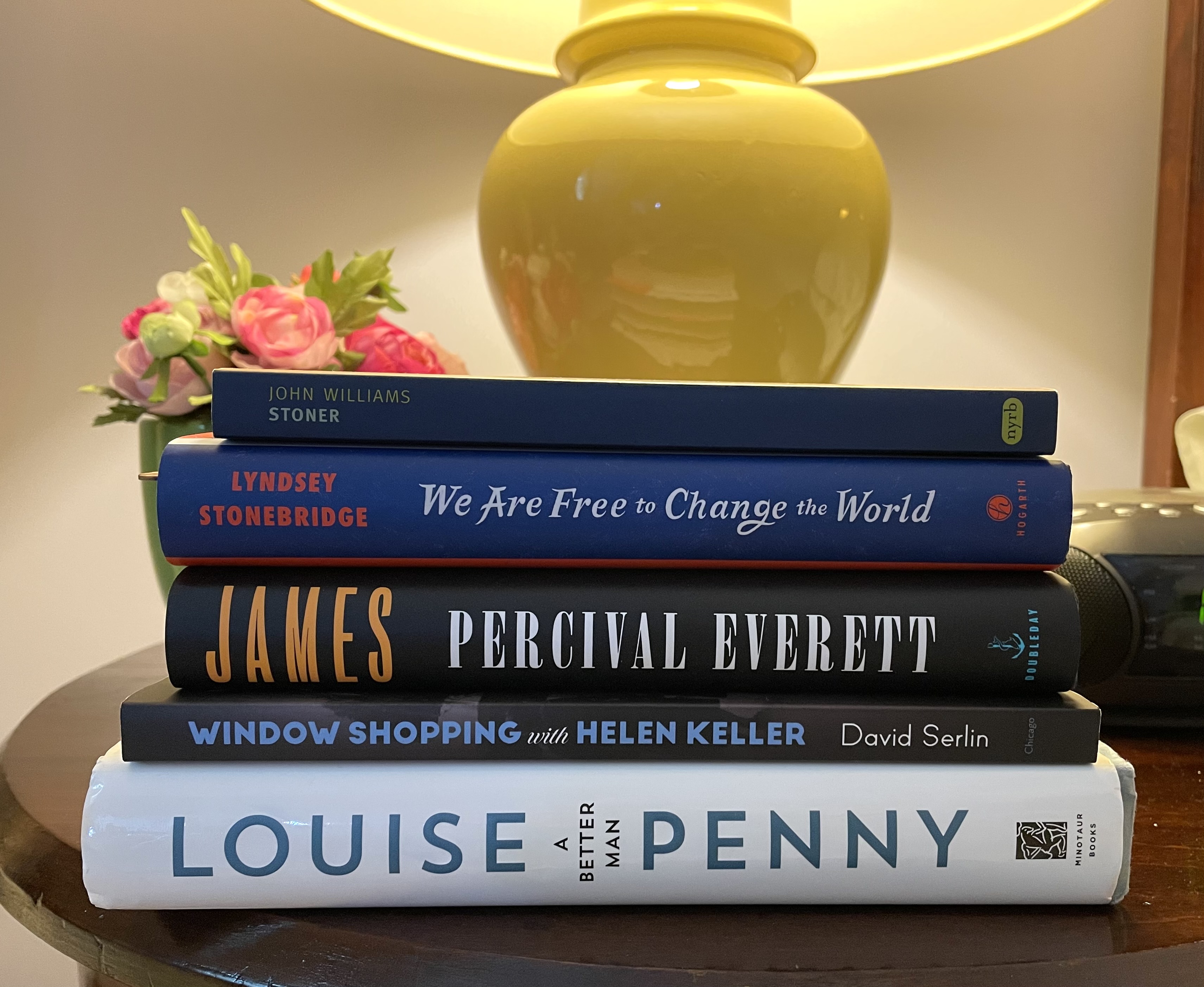
- James: A Novel by Percival Everett
- A Better Man by Louise Penny
- Window Shopping with Helen Keller: Architecture and Disability in Modern Culture by David Serlin
- We Are Free to Change the World: Hannah Arendt’s Lessons in Love and Disobedience by Lyndsey Stonebridge
- Stoner by John Williams
Keep reading!
More to come…
DJB
NOTE: Click to see the books I read in March of 2025 and to see the books I read in 2024. Also check out Ten tips for reading five books a month.
Photo from Pixabay.
 MORE TO COME...
Added a couple of those titles to my “read in the future” list.
Kathy La Plante (she/her)
Thanks, Kathy. There were some good ones on that monthly list!
Pingback: Observations from . . . May 2025 | MORE TO COME...
Pingback: From the bookshelf: May 2025 | MORE TO COME...