
When dealing with moral cynicism and the uneven terrain of life, we often hope for a manual that will tell us how to respond or a map that points toward the path which leads forward. But the manuals and maps of our modern world too often prioritize transactions over reciprocal relationships, individual success over community wellbeing, and linear thought as opposed to whole systems planning, where everything is connected and every action has consequences.
The Lakota professional who made these observations in a recent LinkedIn post noted that in place of a manual for climbing the corporate ladder, he was using his indigenous knowledge as a compass.
A writer whose worldview, knowledge, and wisdom has long served as a compass for me has just released a new work of essays “in praise of the indirect, the unpredictable, the immeasurable, the slow, and the subtle.” Action, she notes, is shaped by vision—the frameworks through which we understand the world. In this important new work, she provides a compass for our times.

No Straight Road Takes You There: Essays for Uneven Terrain (2025) by Rebecca Solnit is a celebration of indirection. Focused on history, power, change, and possibility, Solnit writes in beautiful prose poetry to inspire hope in dark times. She builds this work on two terms she suggests we all adopt: One is “longsighted,” which she writes is “the capacity to see patterns unfold over time.” The other, as alternative to “inevitable,” is the rarely used adjective “evitable.” As she notes in the introduction, the “misremembering of the past (or not remembering the past at all) ill equips us to face the future.” In a series of essays grouped into sections on Visions, Revisions, and More Visions, Solnit uses her formidable storytelling skills to seek out examples of slowness, patience, endurance, and long-term vision. “I’ve come to recognize,” she writes, “that changing the story, dismantling the stories that trap us, finding stories adequate to our realities, are foundational to finding our powers and possibilities.”
Solnit begins with a meditation on an antique violin as a symbol of sustainability and the connectivity of everything. It is a reminder that the past tells many stories and always points to one story—that change is constant. For the better. For the worst. In the essays that follow she writes that radical ideas move from the fringes to the mainstream, a journey we can see if we take the time to follow the crooked path. “The present only looks incomprehensible to those who ignore the past.”
Calling on her readers to let go of certainty in how things will unfold, Solnit writes that destiny hangs on a thread and turns on a dime.
“Martin Luther King, Jr.’s ‘I Have a Dream’ speech was not scripted; it came about because Mahalia Jackson called out to him as he was partway through a more pedestrian, scripted speech, ‘Tell them about the dream, Martin! Tell them about the dream!’, and he pushed the paper aside and shifted into the more prophetic voice of that greatest of American speeches. It almost didn’t happen—she was bold enough to call out in a historic moment; he could’ve ignored her, but somehow he dared to listen and was nimble enough to improvise in front of that vast crowd in the nation’s capital.”
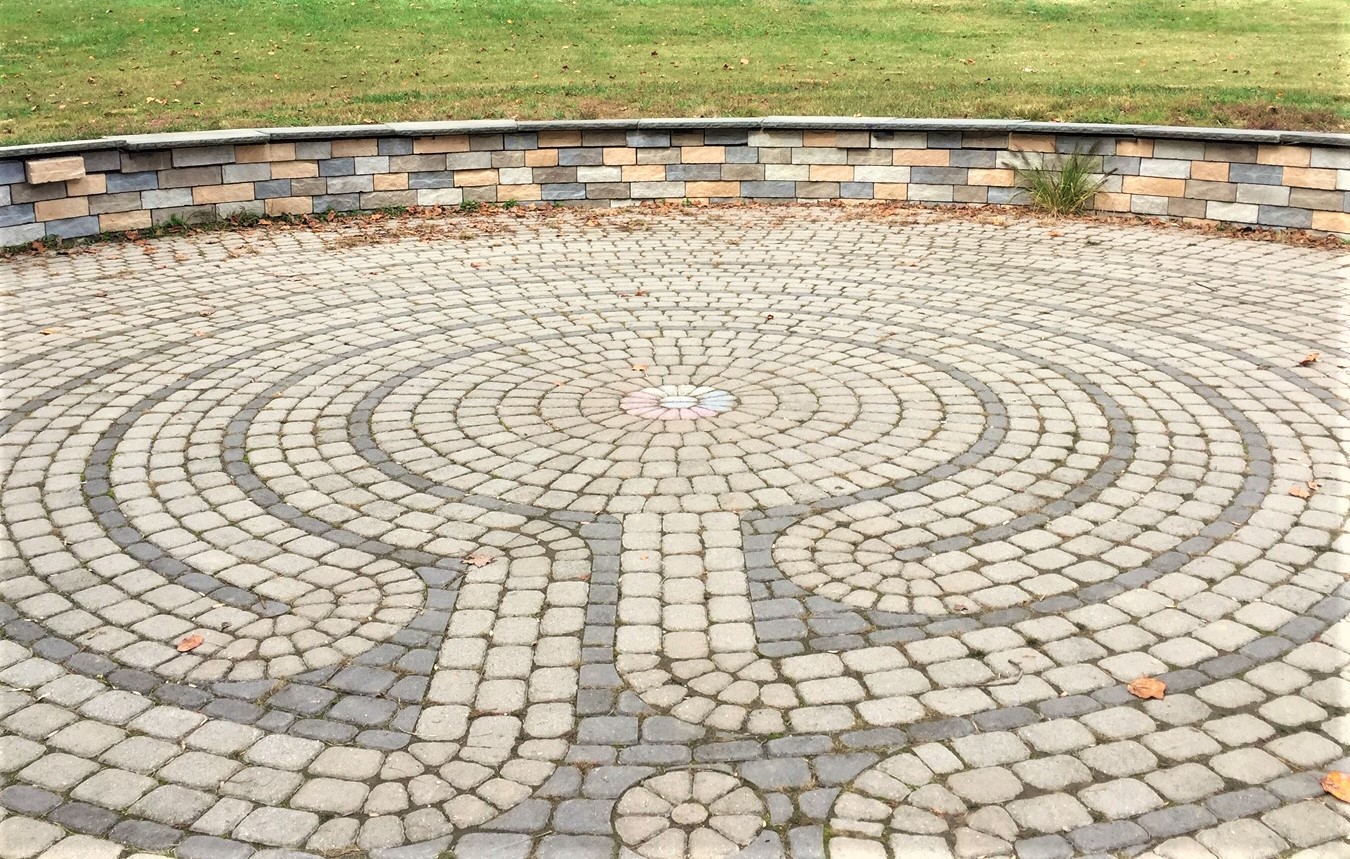
Her chapter “In Praise of the Meander” builds on Solnit’s love of labyrinths, where to get to the center “you turn away from it again and again as you follow the windings that will, in the end, take you to the center.” That leads her to note that there are subjects better understood “through analogy, context, parallels, the view from the distance, rather than via direct and dogged pursuit.”
I have marked this book with underlining and marginal notes to the point that it looks as if there are fewer words without highlights than those that I’ve called out for remembrance. Because you’ll see these again and again in my writings, I want to highlight just a few, to provide a context for why I love this book and this writer.
- “I’ve cherished unpredictability as the other face of possibility—if you already know what’s going to happen, there’s nothing more or nothing else possible, a view that often leads to disengagement and passivity.”
- “To refuse to participate in the shaping of our future is to give it up.”
- “There is a tendency to think that what we see in the present moment will continue. We forget how often we have been astonished by the sudden crumbling of institutions, by extraordinary changes in people’s thoughts, by unexpected eruptions of rebellion against tyranny, by the quick collapse of systems of power that seemed invincible.”
- “We are always in one way or another in the middle of the story.”
- “Categories too often become where thought goes to die.”
- “Memory produces hope in the same way that amnesia produces despair.”
- “We are shaping the future we long for and have not yet experienced. I believe that we are in an imagination battle.”
- “What if we imagined wealth as consisting of joy, beauty, friendship, community, closeness to flourishing nature, to clean air and water, to good food produced without abuse of labor or nature?”
And one of my favorites:
- “The past equips us to face the future; continuity of memory tells us we are both descendants and ancestors.”
Both descendants and ancestors. What a critical reminder of our place in the world and the interconnectivity of everything.
We can make a better world, Solnit asserts, but it takes participation, defense, and expansion. And belief. But the changes are only possible “with intangible changes in our sense of what we means, what we care about most, who we think we can be, what we believe is possible.”
Two key thoughts run through the whole of this stirring work: the importance of hope, and the power of storytelling. And she ends with the following in a Credo written at 11 p.m. on November 5, 2024:
“There is no alternative to persevering, and that does not require you to feel good . . . Take care of yourself and remember that taking care of something else is an important part of taking care of yourself, because you are interwoven with the ten trillion things in this single garment of destiny that has been stained and torn, but is still being woven and mended and washed.”
Amen.

More to come . . .
DJB
Compass image from Pixabay.
 MORE TO COME...
Pingback: Observations from . . . June 2025 | MORE TO COME...
Pingback: From the bookshelf: June 2025 | MORE TO COME...
Pingback: The capacity for change | MORE TO COME...
Pingback: The year in books: 2025 | MORE TO COME...
Pingback: What our books reveal about us | MORE TO COME...