
The importance of memory, identity, and continuity in defining who we are has been on my mind in recent weeks. Memory helps tell our stories, producing hope in the same way amnesia produces despair. Identity is critical to an understanding that our lives are not insignificant—that what we do will have an impact on the future. And continuity is important in giving us a chance to feel a connection to the broad community of human experience that exists across time.
Memory, identity, and continuity provide a sense of orientation as well as inspiration, telling us that we are both descendants and ancestors.
Music has all three components for me. Musical memories bring comfort. Music is a key part of my identity as a person, and it has been for as long as I can remember. And I love it when I hear our son Andrew sing a piece of music that premiered in 1813, connecting past, present, and future.
Music as medicine
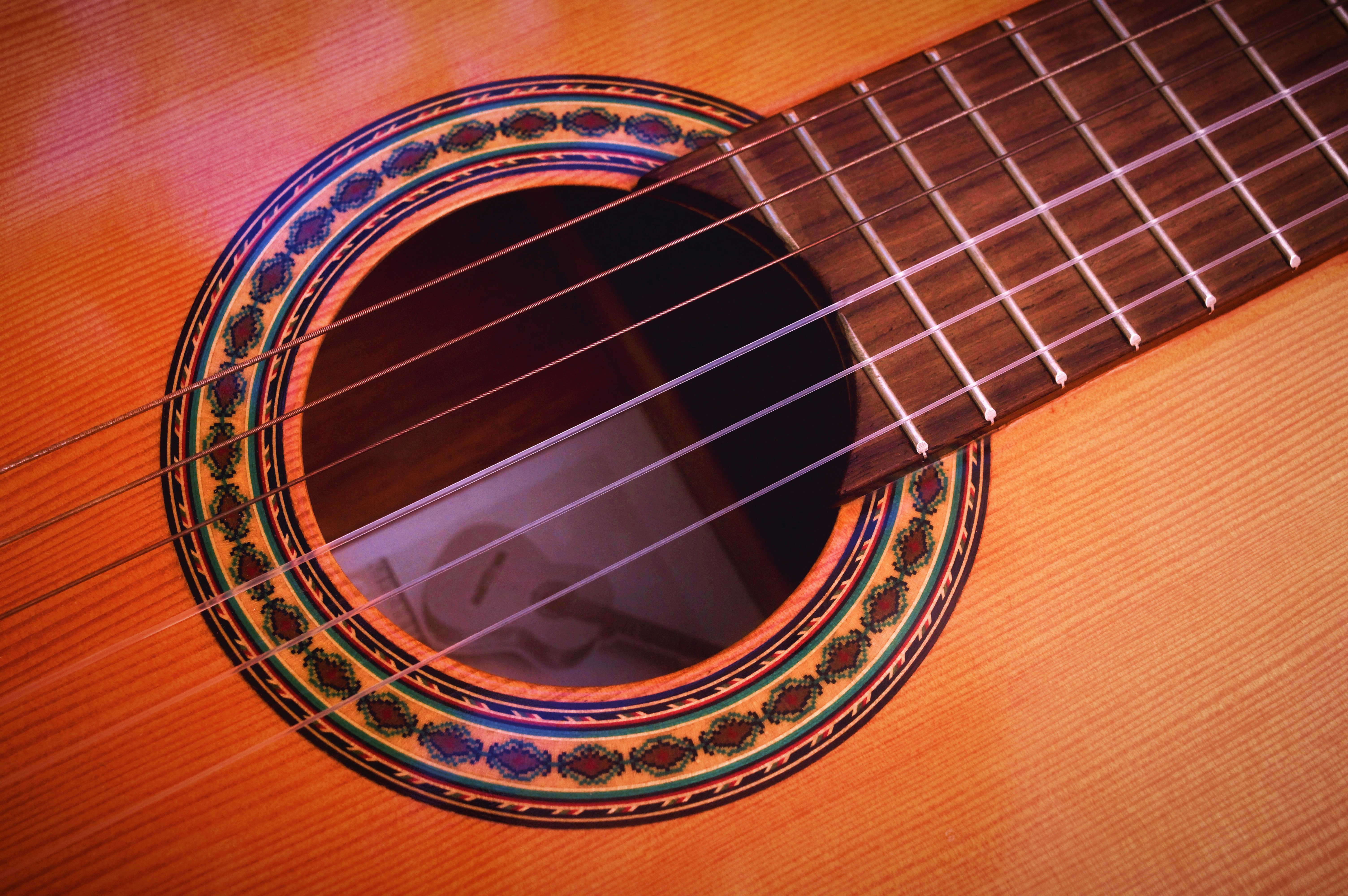
Music is also one of humanity’s oldest medicines, dating back to the Upper Paleolithic era, around 20,000-years ago. There are certainly times when music brought me back from feelings of despair or even illness. These reflections all came together for me over the past week as I read a scholarly yet celebratory new work on music’s profound benefits for those both young and old while listening to some of the best young singers in the world.

I Heard There Was a Secret Chord: Music as Medicine (2024) by Daniel J. Levitin explores the curative powers of music. A neuroscientist and award-winning musician, Levitin makes a fun and accessible case for the therapeutic force of music, describing ways in which it can be a beneficial part of recovery for patients. After an opening chapter on the neuroanatomy of music where he shows that music has the ability to calm our brains, hearts, and nerves, Levitin moves into a fascinating chapter on musical memory. And here’s the song he used to open this discussion.
Music and memory
On Saturday, February 13, 1960, Ella Fitzgerald—then at the height of her career as one of the best jazz singers in the world—stepped on a stage in Berlin in front of 12,000 people. After several opening numbers the band begins to play Mack the Knife . . . a song made popular five years earlier by Louis Armstrong. The crowd knew it well and broke into applause when Ella first sang, “Oh the shark has . . . pearly teeth, dear . . .”
But then, as Levitin writes, something extraordinary happened. Ella forgot the words.
After the third chorus . . . without losing a beat or her composure . . . she continues to sing perfectly in time: “Ah, what’s the next chorus, to this song now? This is the one now, I don’t know . . .”
Ella continues to improvise lyrics, occasionally inserting a remembered word of two from the song. The next time through she riffs about the song’s history, referencing Bobby Darin’s and Louis Armstrong’s versions, before she sings . . . again completely in time . . . that she’s “making a wreck of ‘Mack the Knife.’”
Having now made up words to two choruses on the spot while never losing the rhyme scheme, she begins to scat . . . a perfect homage to Louis Armstrong, her sometime collaborator.
The audience goes wild.
It is an amazing work in the history of live performance, and Ella’s stunning ad hoc performance earned her a Grammy award. It is also an excellent example of the benefits and challenges of memory.
Without memory there can be no flow. But memory is not an all-or-nothing entity. It flows in bits and pieces; it stops and starts and sputters and spurts.
Memory and forgetting are forever entwined. Ella Fitzgerald “retained an exquisite memory for the compositional structure, rhyme schemes, melody, underlying harmony, accent structure and phrasing.” But she couldn’t remember the words.
After this strong beginning Levitin brings together the results of numerous studies on music and the brain. In doing so he demonstrates time and time again “how music can contribute to the treatment of a host of ailments, from neurodegenerative diseases such as Parkinson’s and Alzheimer’s, to cognitive injury, depression, and pain.” As he notes,
“. . .the multifeatured and multifaceted aspect of music, and the different ways it can be accessed, are what allows it to be so powerful with Alzheimer’s depression, PTSD. When nothing else gets through, a little snippet can shoehorn its way into consciousness, mood, and memory itself.”
The continuity of music
I’ll jump over identity for the moment to talk about my recent experience with the continuity of music.
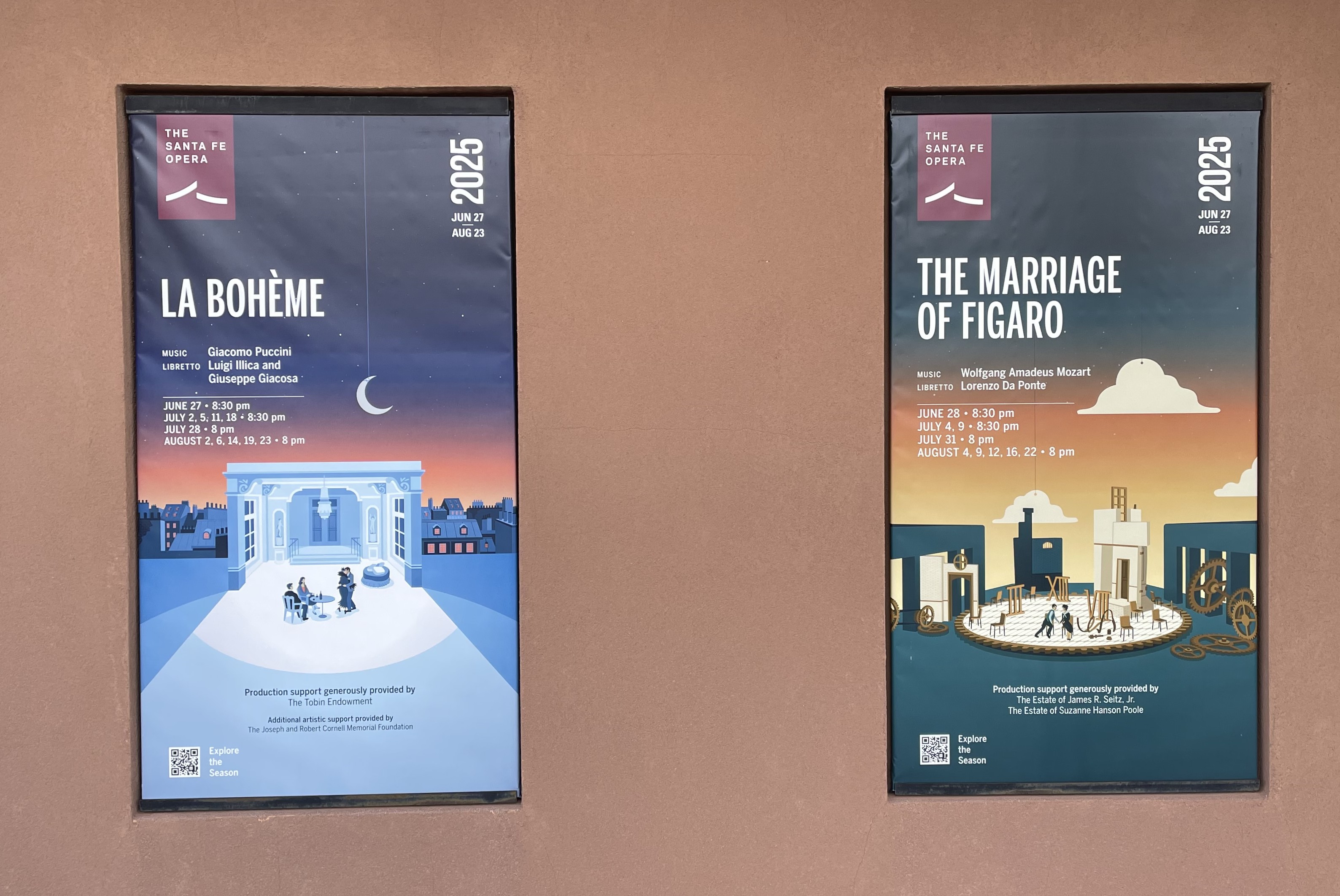
Andrew has had an extraordinary summer as an Apprentice Singer with the world renown Santa Fe Opera. We were in Santa Fe last week to hear two operas: La bohème, Puccini’s timeless tale of love, longing and sacrifice set in “the vibrant playground of 1920s Paris” (where Andrew was a member of the chorus); and Mozart’s always delightful tale of love, loyalty and lies—The Marriage of Figaro—with Andrew in the role of Don Curzio.
We stayed on to take in Sunday evening’s Apprentice Concert featuring the Santa Fe Opera Orchestra. Andrew—in the role of Lindoro—joined six of his fellow singers to close out the first half with a riotous performance of the Act 1 Finale of Rossini’s L’Italiana in Algeri. While the Apprentice concert version is not available online, here’s a snippet from the opera to give you a sense of the confusion and chaos that ensues. As one online commentator phrased it, “Rossini sure did know how to wrap up his first acts!”
My heart was full of gratitude as these young singers—early in their professional careers—were bringing music that premiered in 1813 to life once again, continuing that connection to the broad community of human and musical experience that exists across time.

Musical identity
Although technically I have sung in one opera—a one-night performance in the 1960s as a young treble in the role of Amahl in Gian Carlo Menotti’s Amahl and the Night Visitors—and I was a member of the Baroque and Renaissance vocal ensemble Canticum Novum while we lived in Staunton, I am a folkie at heart. That’s my musical identity. When I need musical healing, or just to reconnect with a key part of who I am, I’ll turn to folk music.
So just to throw in something completely different, here’s my folkie side . . . as exhibited by Jesse Welles . . . in the the delightful The Star Spangled Banner is Hard to Sing. In poking the bear and making fun of convention, this is a great example for me of what folk music does best.
Why music heals
“For decades,” Levitin writes, “it was believed that music therapy was effective simply because it was pleasurable, or distracting, taking our minds off our pain, both bodily and psychic. We now understand that music is one of the few things that is present across all these different modes of attention (even sleep—many people hear music in their dreams). Music can help to serve as a unifying source, a glue that connects our different moods of awareness with our internal narrative, our sense of self, where we’ve been, and perhaps more important, where we want to go.”
In other words, it is a glue that connects memory, identity, and continuity.
More to come . . .
DJB
Photo by Yucel Moran on Unsplash
 MORE TO COME...
Pingback: Observations from . . . August 2025 | MORE TO COME...
Pingback: From the bookshelf: August 2025 | MORE TO COME...