
A summary of the October posts from the MORE TO COME newsletter.
History often plays a prominent role on MORE TO COME. Beginning with a conversation with an eminent European historian about his new book on the American Civil War and continuing through a number of other posts, I spent time in October being reminded of the ways history looks back at the actions of both leaders and everyday citizens in times of crisis. As historian Ed Ayers once wrote, “the inconvenient conclusion [is] that we need to see history with bifocals—up close and as part of a pattern. Just as all history is local, so is all history regional, national, and international.”
When historians look back on this month, they will find that the chaos and destruction inflicted on democratic governance and institutions found a physical manifestation that was an all-too-apt representation for this regime: the demolition of the East Wing—a building that housed more than a century of history, most of it centered on the work of women in the White House—without warning and without following laws and procedures that are in place to ensure full review of plans to restore, renovate, or demolish historic places of this level of importance.
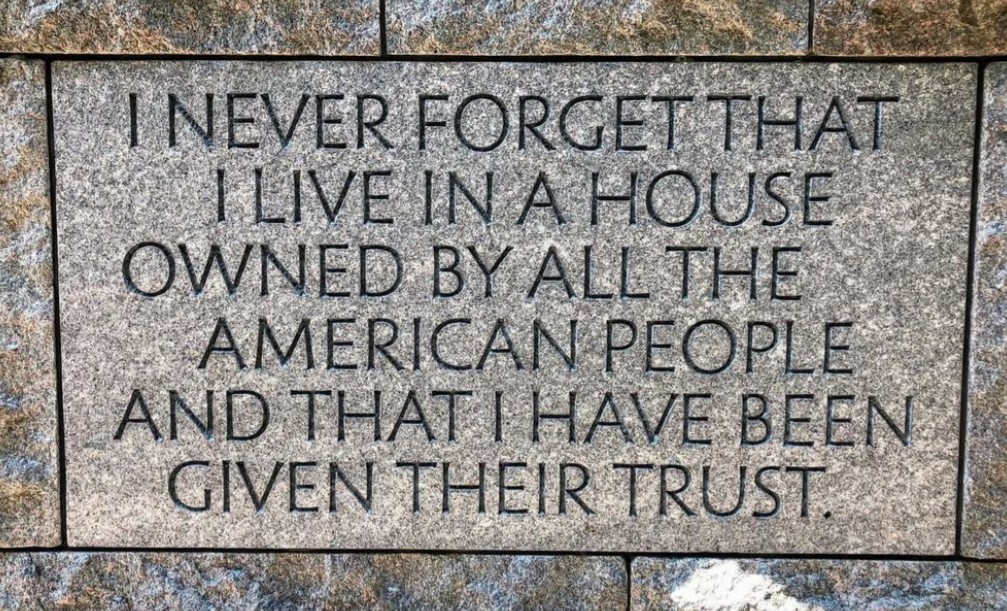
As one of our greatest presidents reminds us, this is our house. What happened there in October, at the behest of one individual supported by a spineless political party, has impacts across the nation and around the world.
A few days before that act of desecration, however, more than 7 million Americans and their allies turned out in at least 2700 rallies around the globe to peacefully demonstrate their commitment to American democracy. These were local actions, with people confronting challenges in real time and real places, with impacts in cities, towns, states, and nations. As Ayers suggests, the local very much matters and the local is also a part of patterns bigger than itself.

Many writers wrote insightful essays about these events to provide information, context, and lessons from our past.* Historian and activist Rebecca Solnit points out that each of us, as members of civil society, has power that tyrants always fear: to live out our principles and commitments, to prioritize joy, and to stand up for and with each other. Quaker activist Parker J. Palmer wrote that after attending his local No Kings rally, he continues to believe—perhaps more than ever—that common sense will eventually see us through.
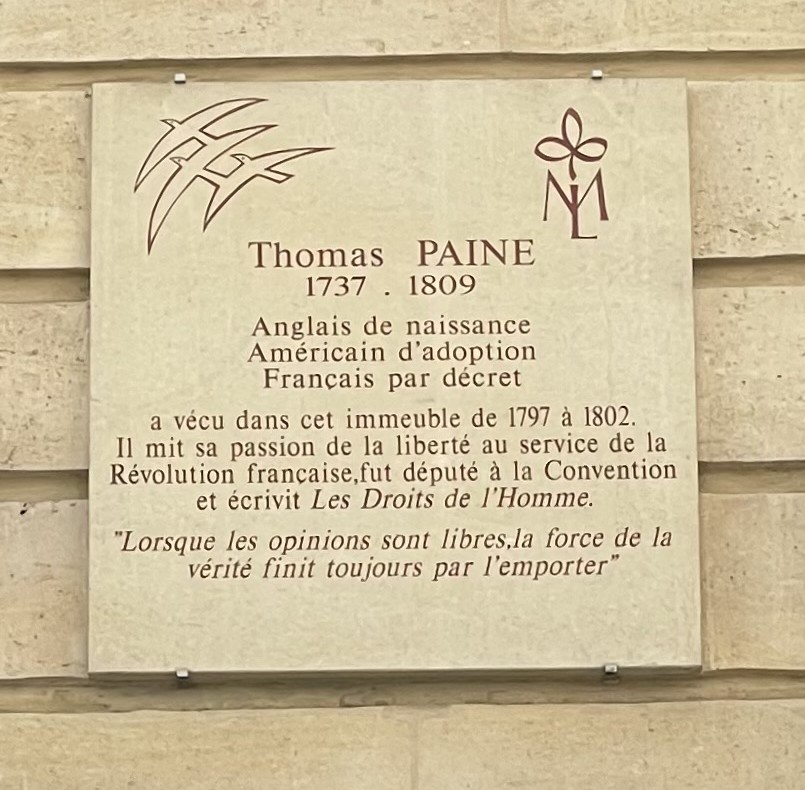
While in Paris this month we chanced upon the building that Thomas Paine, the great American patriot, had called home during his years in the city. Paine’s Common Sense has long been recognized as a key work in changing the hearts and minds of the people of the United Colonies into citizens of what Paine was the first to characterize as the United States. Similarly, his Rights of Man helped shape the French Revolution and—although it would take more than a century—inspire constitutional reform in Great Britain and foreshadow Franklin Roosevelt’s New Deal.
Palmer was also thinking of Thomas Paine and everyday common sense when he attended a No Kings rally in Middleton, Wisconsin—known as “The Good Neighbor City”—and wrote about the experience.
“To put it simply, there are a lot of Evelyns [the organizer of the Middleton rally] in this country. I’m talking about people with personal struggles who still care about others; people free of guile and paranoia who can spot con artists a mile away; people who can laugh at themselves and at unclothed Kings; people who love their country with a simplicity that touches my heart. These folks don’t hate anyone. But in the immortal words of Lyndon Baines Johnson, they ‘know the difference between chicken salad and chicken s _ _ t.’”
So with that rather lengthy introduction . . . let’s jump in as we celebrate Hallowe’en and see if I can spot the difference in this month’s MTC posts.
READER FAVORITES

Once again my latest entry in the Author Q&A series topped the list of reader favorites on MTC.
- Observing history through a wider lens is my conversation with European military historian Jeremy Black, MBE about his new book, The Civil War. Jeremy and I discuss the international context for the war, among other topics.
- Robyn Ryle, the author who was the subject of last month’s reader favorite, was recently interviewed by Scott Simon about her book Sex of the Midwest on NPR’s Weekend Edition (in addition to being included in a number of other favorable reviews and interviews). Simon’s interview with Robyn was almost as good as mine (insert laughing emoji). Seriously, it is great and Robyn “was smart and funny and thoughtful.”
I have another conversation coming up in November, which will be the 20th in the series that began three years ago. I am so grateful that these writers take the time to chat with me about their works, and that I then get to share those thoughts with each of you.
TRAVEL TO EXPAND THE HEART AND TOUCH THE SOUL
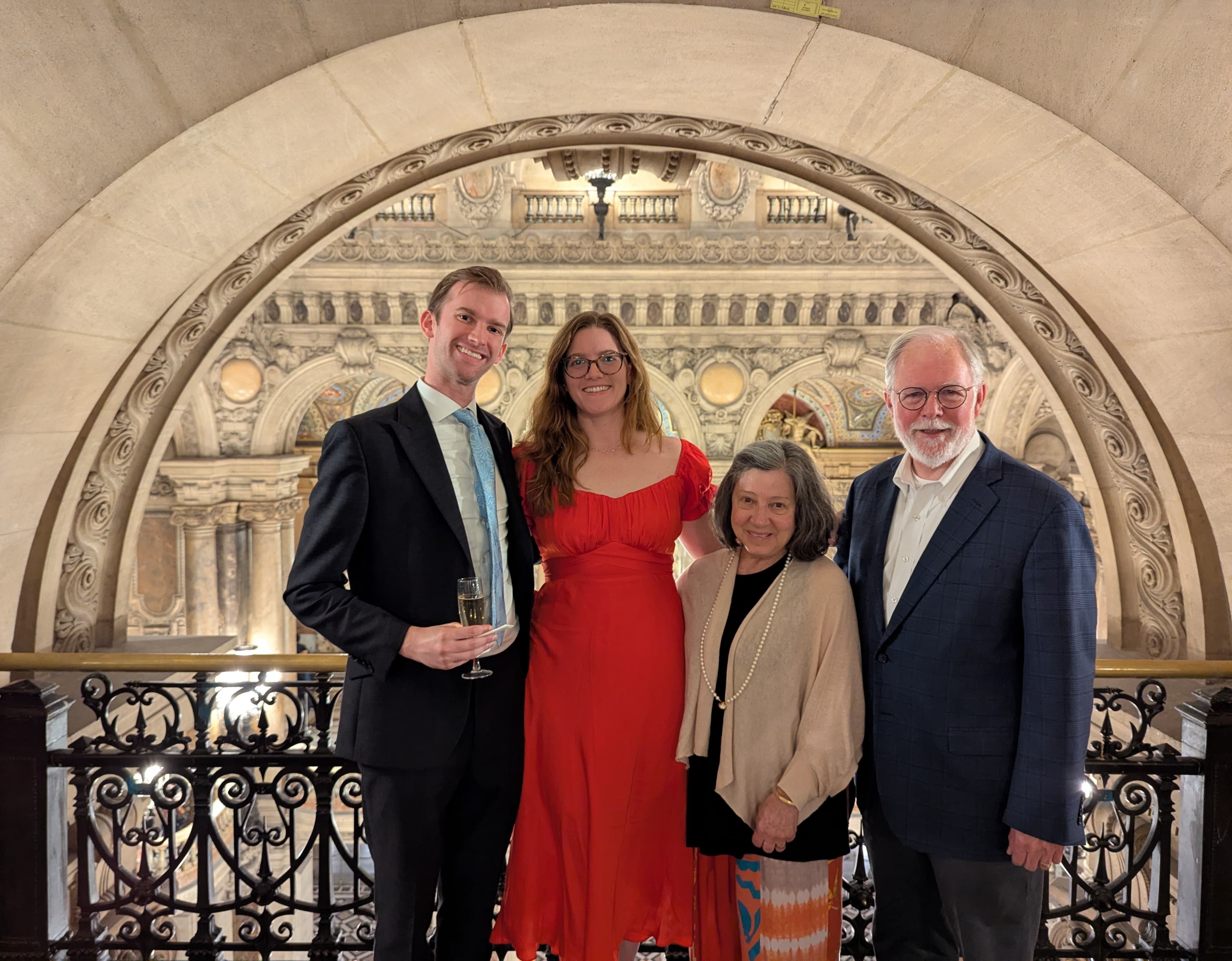
The first part of October was spent abroad as we wrapped up a wonderful month in Europe. I posted five different essays about what we saw and learned on our tour of Ireland and France, and I hope you enjoy them (posted here in the order that we traveled):
- May the wind always be at your back . . . but not too much wind — an overview of our tour in Ireland
- Châteaux, cathedrals, cuisine, and charm — historical notes and photographs from our time in the Loire Valley
- Life in song — an evening at the opera in Paris
- I love Paris in the fall — the title says it all
- Healing begins within . . . — thoughts on a few things that moved me in new and important ways as we traveled
BOOKS AND MORE

My post From accumulation to abundance consists of thoughts triggered by the question: “What if scarcity is just a cultural construct, a fiction that fences us off from a better way of life?” It is a question worth considering.
As is my usual custom, I read and reviewed five books in October. You’ve already been introduced to Jeremy Black’s new work. Here are the others:
- Daniel Mendelsohn has written a brave and accessible memoir about journeys and relationships, centered around The Odyssey, which I explore in Expect the unexpected.
- Nobel laureate Han Kang’s Greek Lessons is a novel of hope for connection even when we find ourselves in a place of intense loneliness and isolation. A love letter to human intimacy and connection is my look at this short but intense work.
- Retired Chicago policeman Cal Hooper finds a small Irish village isn’t as bucolic as he imagined in Tana French’s novel The Searcher, which I review in Paradise is not always what it seems.
- I thought a book about how Inspector Maigret cannot escape murder and intrigue even while on holiday was appropriate for our month of travel. You can read my take on Georges Simenon’s Maigret’s Holiday in No holiday for the inspector.
Let’s treasure books, not ban them is my post for the 2025 observance of Banned Books Week. Make books your treasure and bookshelves your gardens of delight. From the bookshelf: September 2025 captures short blurbs on the books I read last month.

Earlier this month we were fortunate to join an enthusiastic audience in spending time with a bluegrass legend for an afternoon of conversation, memories, and music. I chronicle that experience in Backstage with Tom Gray.
And I was going to hold off until after the World Series to say anything about the baseball postseason, but a classic (pun intended) Joe Posnanski column led me to write Baseball and the River Styx between games two and three.
ROOTS MUSIC FOR HALLOWEEN

In case you’ve forgotten, today is Halloween! Here are four posts and two videos from prior years where you can celebrate musically to your heart’s delight.
- Roots music for ghosts, goblins, and other things that go bump in the night (2020)
- More roots music for ghosts, goblins, and other things that go bump in the night (2021)
- Celebrating ghosts, goblins, and other things that go bump in the night (2022)
- Ghosts, goblins . . . and roots music (2023)
Of course the blues and jazz cats have a great number of songs for the season. Nina Simone does her usual masterful job with the Screamin’ Jay Hawkins hit I Put a Spell on You. That’s followed by Elise LeGrow breaking the Bo Diddley classic Who Do You Love “down to a new set of bare bones.”
COMMENTS I LOVED

Brilliant reader Judy—my dear friend, former colleague, and confirmed Francophile—was one of the many who gave advice on things to see and do in France. Of course, that apparently comes with a price, as I realized when she wrote the following on my post I love Paris in the fall:
David! You’re killing me with this piece!
My apologies, Judy.
DON’T POSTPONE JOY
Thanks, as always, for reading. Your friendship, support and feedback mean more than I can ever express.
As you travel life’s highways be open to love; thirst for wonder; undertake some mindful, transformative walking every day. Recognize the incredible privilege that most of us have and think about how to put that privilege to use for good. Women, people of color, LGBTQ+ individuals, immigrants, public servants, and others can feel especially vulnerable . . . because they are. Work hard for justice and democracy as the fight never ends.
But also keep some room in your heart for the unimaginable. Take time to dawdle and dream. Leave enough empty space to feel and experience life. Those gaps are where the magic begins. When times get rough, let your memories wander back to some wonderful place with remembrances of family and friends. But don’t be too hard on yourself if a few of the facts slip. Just get the poetry right.
Remember that “we are here to keep watch, not to keep.” Pay attention. Be astonished. Tell about it. And bash into some joy along the way.
Life is finite . . . love is not.
Try to be nice. Always be kind.
More to come . . .
DJB
*A few of many pieces of astute writing and reporting on the events of October:


- 100 Years of Women’s Work, Reduced to Rubble (Jessica Yellin and Rohan Montgomery)
- It’s Not His House (Heather Cox Richardson)
- This Wreckage Courtesy of the Enshittification Administration: Notes On Late-State Trumpism (Rebecca Solnit)
- Statement on the destruction of the East Wing (Adrian Scott Fine)
- When We Are All Enemies: Antigone in America (Elizabeth Bobrick)

- Letters from an American: October 19, 2025 (Heather Cox Richardson)
- This Is What Democracy Looks Like (Parker J. Palmer)
For the September 2025 summary, click here.
You can subscribe to MORE TO COME by going to the small “Follow” box that is on the right-hand column of the site (on the desktop version) or at the bottom right on your mobile device. It is great to hear from readers, and if you like them feel free to share these posts on your own social media platforms.
Image of werewolf from Pixabay. Image of ghost from Stefan Keller on Pixabay.
 MORE TO COME...
Pingback: Observations from . . . November 2025 | MORE TO COME...