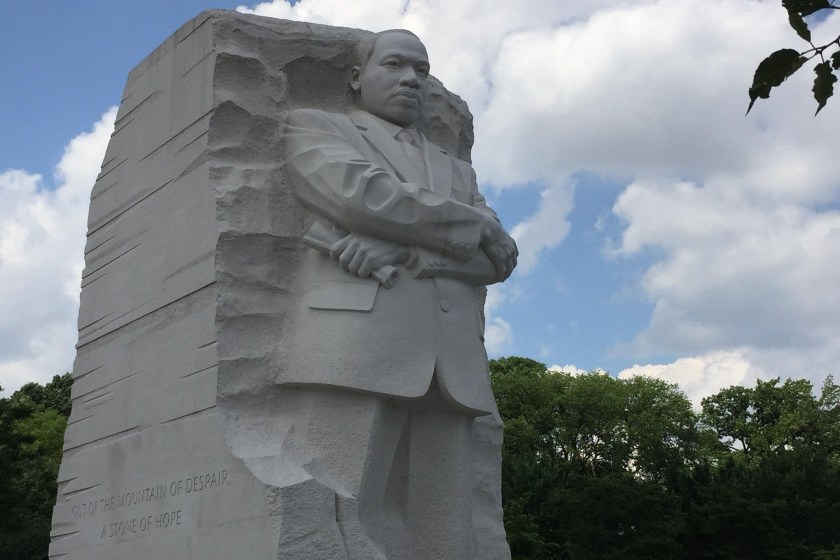
America is an idea founded on ideals of freedom and equality. We each need to do our part to continue this work-in-progress, recognizing that what we do—no matter how small—is meaningful, significant and worth doing.
On the national holiday to remember heroes of past resistance movements in America, many of us struggle to be worthy of our moment in history. At the very least we look, as one writer suggests, for “permission to keep believing—to stay awake to justice without burning out or turning away.” Martin Luther King’s clear and compelling language reminds us of the ideal . . . and the work required to get closer to that dream.
These are difficult times. There is no denying it. But Rebecca Solnit answers the doomsayers who loudly proclaim that our problems are too big, our times too unique, our enemies too powerful, with a quote from her book Hope in the Dark.
“The analogy that has helped me most is this: in Hurricane Katrina, hundreds of boat-owners rescued people—single moms, toddlers, grand- fathers—stranded in attics, on roofs, in flooded housing projects, hospitals, and school buildings. None of them said, I can’t rescue everyone, therefore it’s futile; therefore my efforts are flawed and worthless, though that’s often what people say about more abstract issues in which, nevertheless, lives, places, cultures, species, rights are at stake. They went out there in fishing boats and rowboats and pirogues and all kinds of small craft, some driving from as far as Texas and eluding the authorities to get in, others refugees themselves working within the city. There was bumper-to-bumper boat-trailer traffic—the celebrated Cajun Navy—going toward the city the day after the levees broke. None of those people said, I can’t rescue them all. All of them said, I can rescue someone, and that’s work so meaningful and important I will risk my life and defy the authorities to do it. And they did.”
Solnit knows it’s not necessarily a perfect example of how change works at its best. But it is “an example that illustrates one point: that what we do is worth doing even if we can’t do everything and save everyone.”
Ordinary American citizens are at work every day to protect their neighbors from the cruelty that wants to divide us. Whatever the threat, whatever the tactic, these citizens are showing that what we do is worth doing.
Those who threaten democracy are striving to throw us off balance and make us think our actions are insignificant, they must be obeyed, their success is inevitable. It isn’t. What ordinary Americans do in opposition to authoritarianism, large or small, counts.
TENDING TO BODY AND SOUL

In the time of year when nature provides an example of resting before a period of new life and growth—a period of wintering—we can follow a similar path, taking care of ourselves when necessary and finding ways to maintain our equilibrium for the long fight ahead. Tending is the operative word. As writer John Sarvay notes, tending goes two ways. Yes, we need to tend to others—our families, those we love, those we encounter in our communities, and those in peril. But we also need to be open to letting others tend to our hurts and pains. Tending also involves “the hard practice of opening the door,” and learning to invite others inside perhaps—maybe especially—before we’re ready.
This is important for all ages but the need may be greater as we move into our later years.
Those of us in the last third of life are susceptible to cognitive and physical decline in the best of times. When surrounded by stress and manufactured chaos we can feel even more adrift. In a recent story on ways to tend to your mental health the New York Times provided a number of recommendations. Take a walk every day. Get plenty of rest. Disengage from your misery machine (aka phones). Connect more with people.
That last one is especially important in today’s world.
PEOPLE ARE GOOD FOR YOU
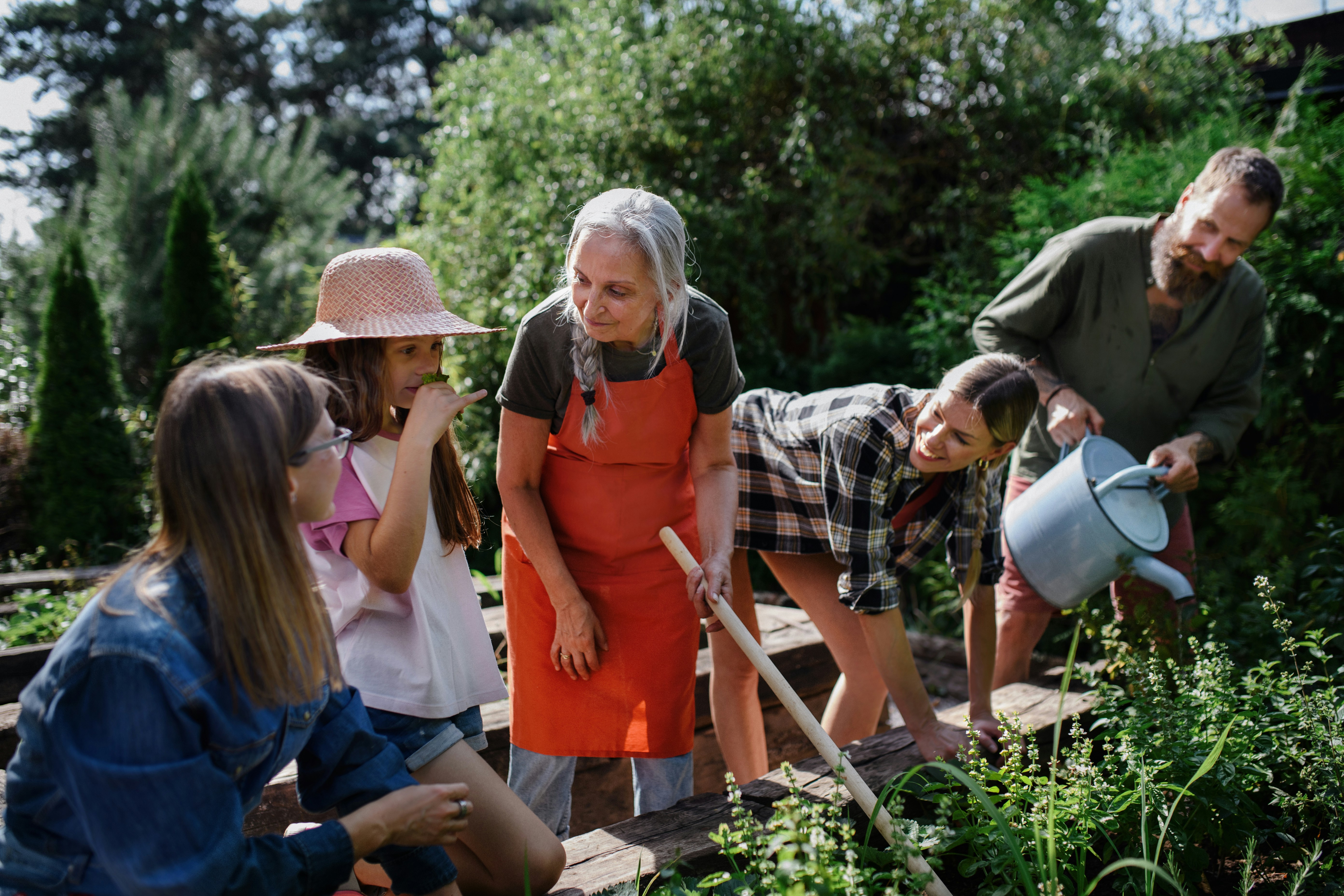
Extended isolation and loneliness are not good at any age. As the writers of the Times piece noted, people 80 and up who have the memory ability of someone 20 to 30 years younger “don’t share a magic diet, exercise regimen or medication. The one thing that does unite them is how they view the importance of social relationships.”
Those who seek to destroy democracy try and isolate us from our friends, neighbors, and fellow citizens. They want to prioritize the individual over the community. That myth of the rugged American cowboy who can handle all his business on his own is powerful . . . but it is just a myth.
We need each other.
Meaning survives at the human scale. In a world of social media and AI, Sarvay suggests we find ways to build and protect the smaller narratives, local and human-scaled, that might still hold meaning across political divides. “In rooms you can stand in, voices you can hear, systems you can touch.”
REMEMBER, WE’VE BEEN HERE BEFORE

There is a growing temptation to believe that our moment is unique and unlike anything we have seen before. Mike Madrid offers some much-needed perspective.
“Every generation of Americans has been summoned to defend the promise of democracy. Some have stood in snow-covered camps with no shoes and no certainty of survival. Others have crossed oceans into fire, fighting for freedom not only for themselves but for the world. Some marched in the Deep South against the racist laws that have scarred us since our founding. And some have stood their ground at home, marching, organizing, speaking up, so that our institutions might endure and our ideals might live.
Now, it is our turn.”
Remember that when our government kills its own citizens, we have been here before. “The machinery of authoritarianism depends on our exhaustion,” Madrid writes. “But our history tells a different story—not one of inevitable progress, but one of deliberate resilience forged in moments far bleaker than this.”
In the book A Power Governments Cannot Suppress, historian Howard Zinn spoke of how important hope is in difficult times.
“If we remember those times and places—and there are so many—where people have behaved magnificently, this gives us the energy to act, and at least the possibility of sending this spinning top of a world in a different direction. And if we do act, in however small a way, we don’t have to wait for some grand utopian future. The future is an infinite succession of presents, and to live now as we think human beings should live, in defiance of all that is bad around us, is itself a marvelous victory.”
Hope is a start. How else can we be worthy of the moment?
CHOP WOOD, CARRY WATER
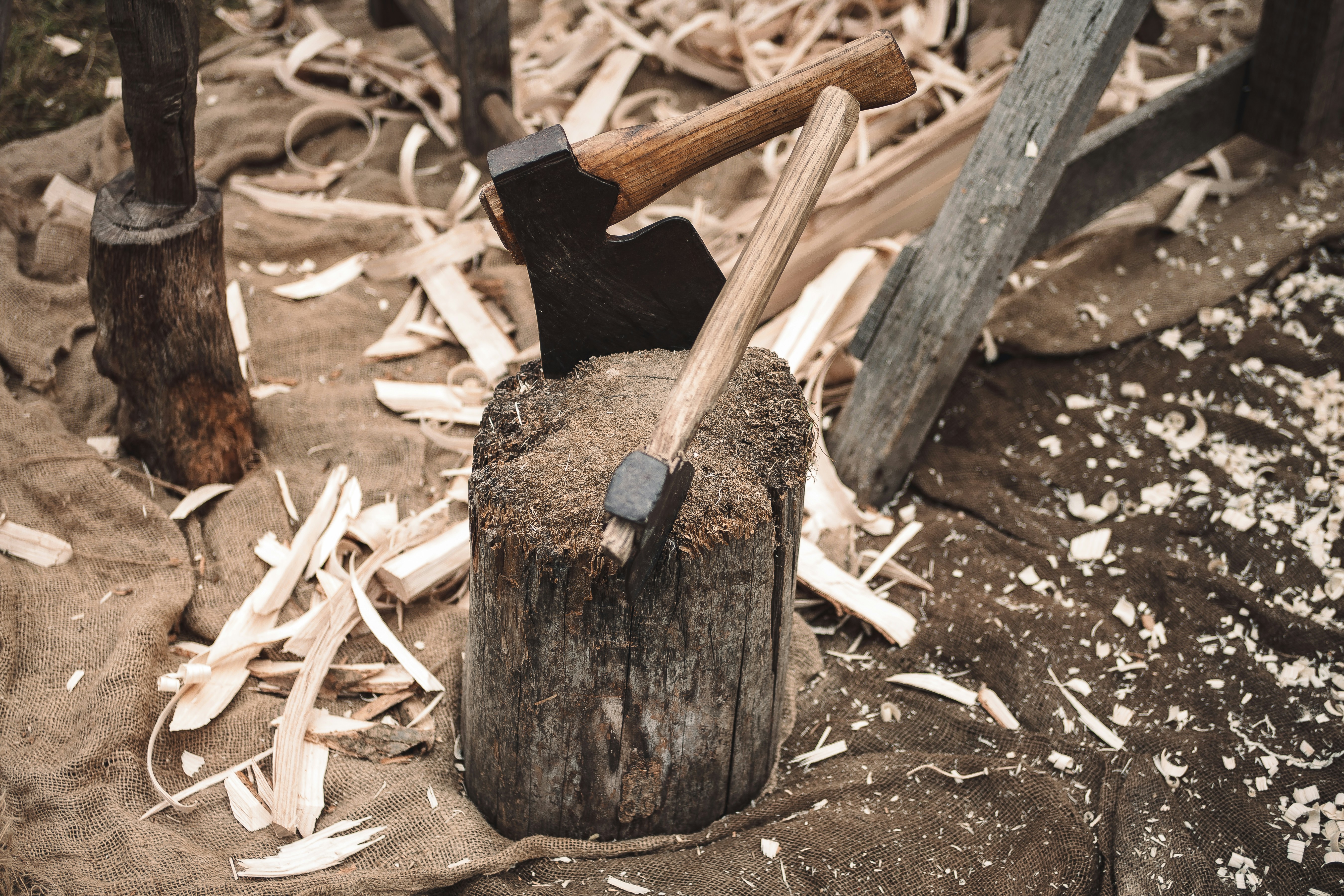
We each need to choose the path that works for us.
First, consider changing your media diet. Go from doomscrolling to hopescrolling. And keep in mind that bad stories make the news. Good endings do not.
Embracing the simple, daily process of the work at hand (chopping wood, carrying water) rather than focusing on the outcome proves helpful to many Americans. Activists provide lists of possible tasks to choose from, if that’s easier.
I met a woman earlier this year who had a gift for one-on-one conversation that engaged thoughtful responses from those across the political spectrum. If this is your gift, use it.
However, remember that people are good for you. Bill McKibben, the indefatigable climate activist has been asked “what’s the best thing I can do for the climate as an individual?” He usually replies, “Stop being an individual,” by which he means join something. For most of us, our power to change the world comes as collective power, when we’re members of movements, organizations, uprisings.
Whatever you do, don’t give up. Look to the poets and writers who not only serve as the recorders of history but as pillars to keep us upright and strong, as William Faulkner suggested in his Nobel Prize speech.
“I believe that man will not merely endure: he will prevail. He is immortal, not because he alone among creatures has an inexhaustible voice, but because he has a soul, a spirit capable of compassion and sacrifice and endurance. The poet’s, the writer’s, duty is to write about these things. It is his privilege to help man endure by lifting his heart, by reminding him of the courage and honor and hope and pride and compassion and pity and sacrifice which have been the glory of his past. The poet’s voice need not merely be the record of man, it can be one of the props, the pillars to help him endure and prevail.”
WHAT IS YOUR DREAM?
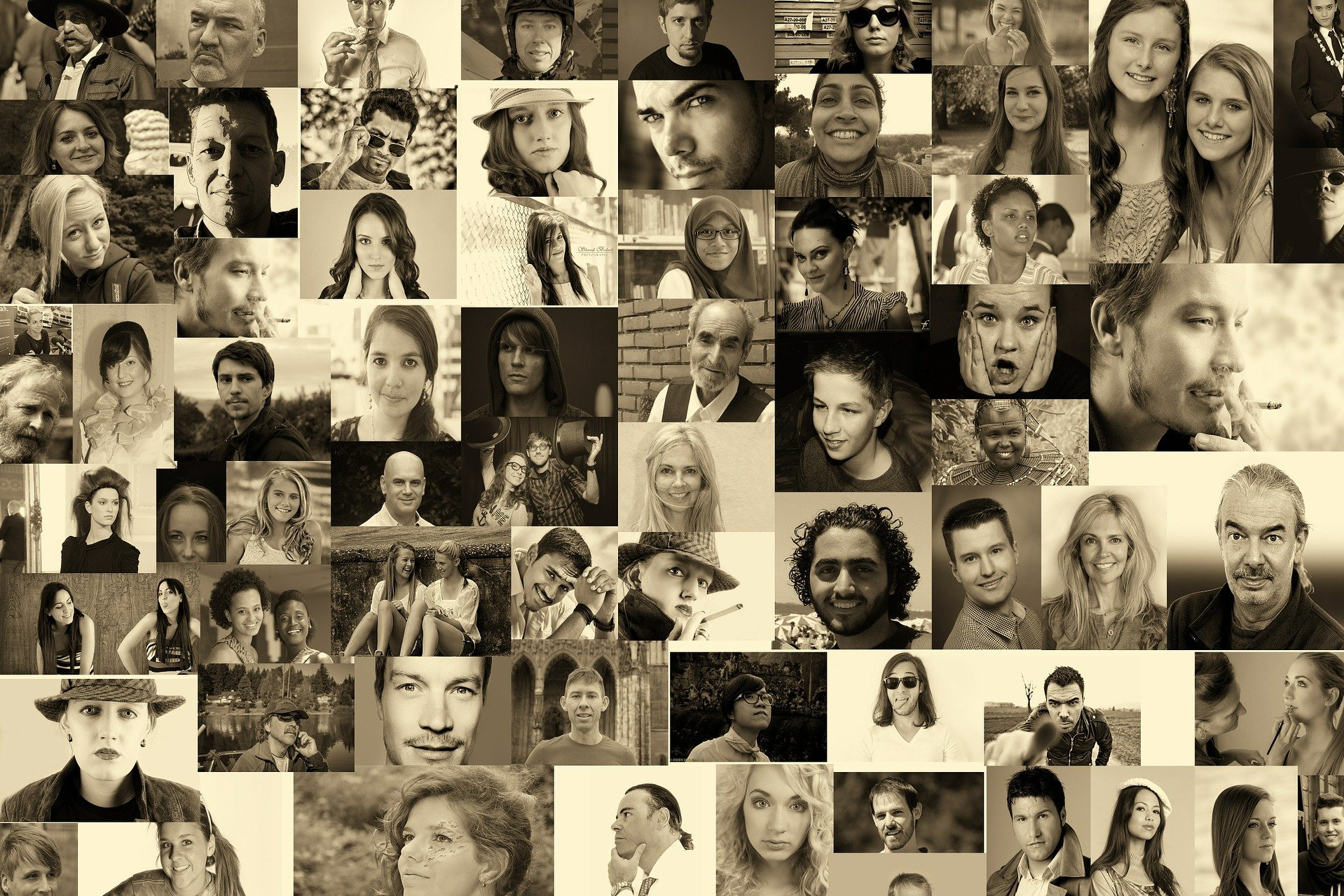
As we remember the life and legacy of the Rev. Dr. Martin Luther King, Jr., it may be helpful to stop and think about what we believe about our country and its future.
What is the personal dream that you hold dear? For me, I believe that the idea of America is a beautiful thing. That we are a nation founded on ideals and not on a common ethnicity, language, religion, or culture. The idea of the United States is that anybody—anybody—can be an American if you agree to respect the principles of representative democracy. Our ideals say we don’t care about your skin color, your religion, your accent, your beliefs, or where you’re from.
But I know that the truth of how our past has played out into our present is much different than my idea of America or our common ideals. So yes, my dream is about values that I hold dear, but it also recognizes that America is a project, a work-in-progress. My dream is based on a vision and values, but the simple fact that I believe that vision to be true doesn’t make it so.
We have to take increased devotion to the idea of America and to democracy, as historian Heather Cox Richardson recently reminded us in the worlds of a hero from another era.
“In 1863, when our system of government was unraveling under pressure from those who wanted to base society on a system of enslavement that enriched an elite, Republican president Abraham Lincoln asked Americans to remember those who had died to protect a nation ‘conceived in liberty, and dedicated to the proposition that all men are created equal.’
Lincoln asked Americans to ‘take increased devotion to that cause for which they here, gave the last full measure of devotion,’ and to resolve that ‘these dead shall not have died in vain; that the nation, shall have a new birth of freedom, and that government of the people, by the people, for the people, shall not perish from the earth.’”
Abraham Lincoln called to the better angels of our nature from one of the darkest periods in our history. Dr. King showed us what that can look like in Selma, Birmingham, Atlanta, and Memphis. Let us now remember that the fight for democracy never ends. And our legacy—what we do in this moment—lives on past our time on this earth.
More to come . . .
DJB
Image by Debbie Bryan from Pixabay
 MORE TO COME...
Pingback: Observations from . . . January 2026 | MORE TO COME...