
A short book on coffee where it feels the author may have had a cup too many. But hey, it does give us a chance to hear some great coffee-themed songs.
Would you be surprised if someone who has worked in the coffee industry for almost two decades—who trains baristas, has served as a “coffee and espresso consultant” and is certified to grade quality coffees—told you that when you ask people who drink coffee every day, sometimes multiple cups a day, about coffee absolutely nobody ever talks about the taste?
Unbelievable, huh?
Yet Teresa von Fuchs swears that’s true. And a recent book on the subject backs her up. When asked about the best cup of coffee they ever had, people talk about a place—the city or town where memory takes them—or they talk about an activity. Or the maker or the mugs. Perhaps it will be the view they remember or the color of the sky. Time of day is a big part of the answer we give when asked this question. But von Fuchs and the author of a short, new work on coffee, say we never talk about the taste.
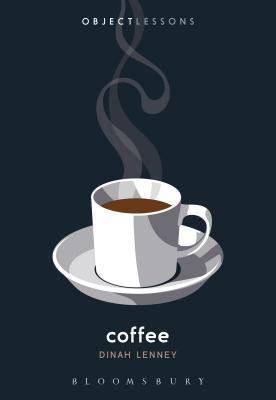
Coffee (2020) by Dinah Lenney is part of Bloomsbury’s Object Lessons—a series of short books about the hidden lives of ordinary things. And what could be more ordinary, perhaps even ubiquitous, than a cup of coffee? We turn to coffee to get us through our waking hour, the morning, the meeting, the day. We have coffee breaks and coffee shops and some of us, with our grinders and slow-drip brewers in our home kitchens, have coffee rituals. Coffee can be used to slow ourselves down or speed ourselves up. There is so much that could be said about coffee’s place in our lives and in our culture. And if you aren’t careful, one can try and explore all those possible avenues and come off appearing if you wrote this extended essay while being overcaffeinated. Lenney, unfortunately, falls in that category. She needed to skip a cup (or pot) each day and decide what this book wants to be when it grows up.
For a while Lenney’s approach comes across as charming. There are so many things to say about coffee. It can be “the excuse to pause; the reason to meet; the charge we who drink it allow ourselves in lieu of something stronger or scarier.” There are personal memories about good coffee (see von Fuchs’ assertion above), but one can also talk about lifestyle. Whole books have been written about coffee’s history and its impacts on workers and countries that are part of that past and that are still reflected in life today. One could divert and talk about the proper way to brew it. Whether cold coffee is great or an abomination. Black, or with milk or sugar.
Lenney actually goes into all those things.
One reviewer said that the author is writing as if she can’t find her keys. “Haven’t we all felt skittish after our fifth cup of coffee?”
Well yes, but we usually don’t sit down and write at that point.
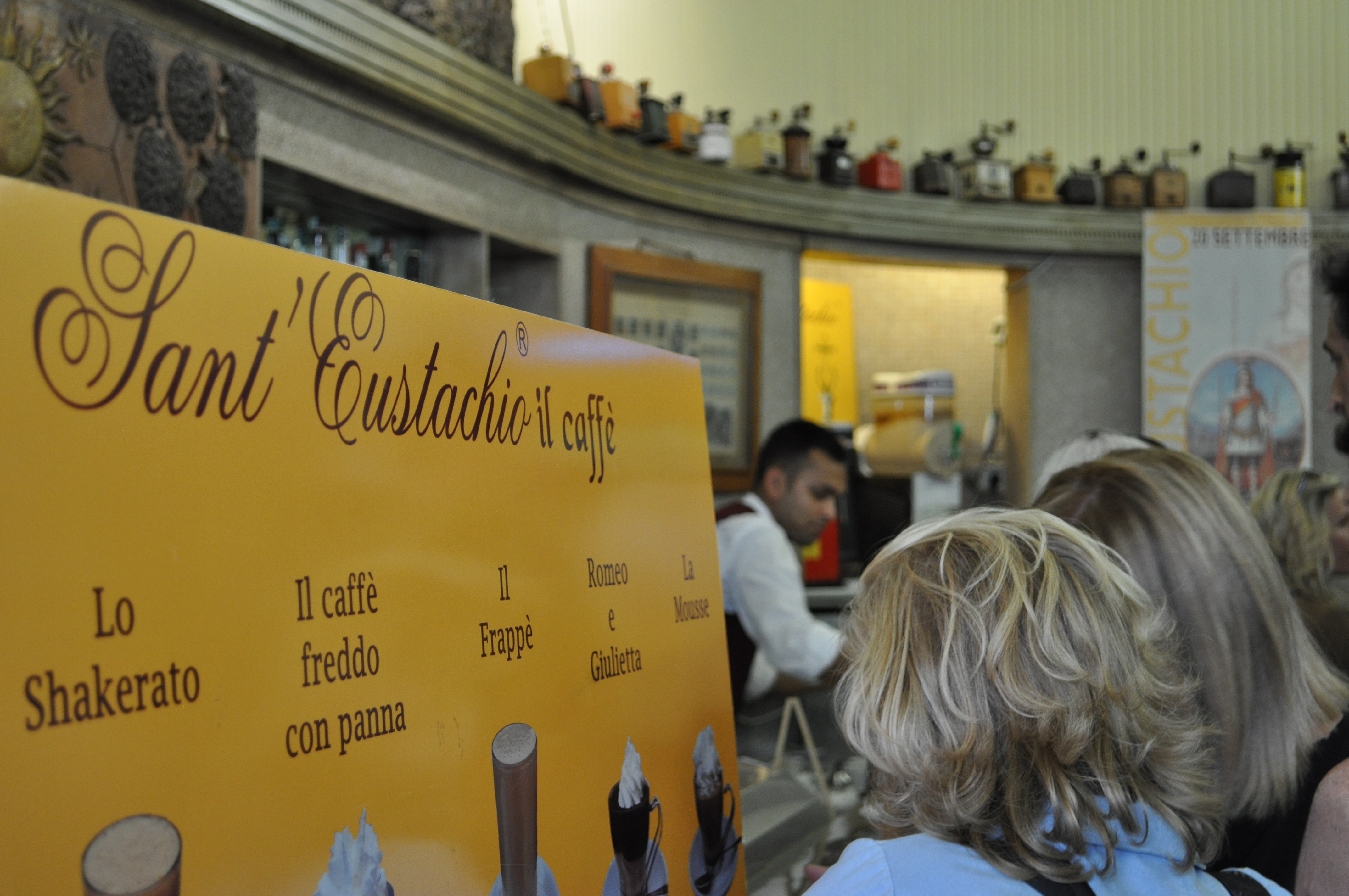
There are things to like in this book. I agree with Lenney that what I crave first thing in the morning “is the heat, the jolt.” It is “the grounding, not the grind.” I appreciated being reminded of the places where coffee has been present and played a role in bigger memories. Places like Sant’ Eustacio il Caffè during a six week sabbatical in Rome.
And yet, I kept waiting for Lenney to calm down and get organized. For her to do something of value with the coffee questionnaire she sent to friends. To at least take her personal anecdotes and spin a better story.
If you are wild about coffee, its rich history, and all the connections with culture both here and abroad, you could very well find this a book worth reading.
But for me this book was like a pot of day-old coffee. There was once promise in the pot and as I drink it there is still some effect on me, but truth be told it really isn’t very good.
Something that is good is Lenney’s Spotify list for the book. Let’s enjoy a few of her suggestions (and you might also want to check out some coffee-themed songs I posted a couple of years ago.)
Think I’ll have a cup.
More to come . . .
DJB
Photo of coffee by Mike Kenneally on Unsplash
 MORE TO COME...
David,
Your column about coffee made me think of an experience early on in our camino tour – actually the first morning we woke up in Spain. We had all landed in Madrid from Miami/DC area and other places, had a three hour rehearsal that afternoon followed by a pilgrim’s service we sang to get our feet wet, and then a celebratory welcoming dinner that lasted at least a couple of hours and did not start until 10pm. We were all living on fumes by that point.
We all stayed in the same hotel, and the next morning we went down for the desayuno, only to find out that the one espresso/capuccino/Americano coffee machine did not work. No coffee for anyone that morning. We had some tour that day in the morning, and the first open bar we found everyone swarmed in and overwhelmed the poor bartender with about 25 requests for coffee/espressos……
Perhaps your story reminded me as Thursday evening we went out after choir practice for drinks with one of our Miami camino choir friends who was in town for a conference. It was a really nice evening, and I am always so struck at what a close group this is. Matthew started a WhatsApp chat in Spain to keep us apprised of changes to schedules and such; that chat is still active and is used by all of us to share stories, upcoming concerts, etc.
And where/how do you find all that music? The MTransfer was a true blast from the past for me.
Anyway, I love for the most part reading your columns. We should try and have coffee before the end of May/early June when I will head out to MT again for the summer. Put it on your radar screen 🙂
Margit
Margit,
What a wonderful story about coffee . . . even if it probably didn’t feel wonderful in the moment. Those shared experiences can really bond a group, and what fun that this coffee story is now part of your life on the Camino. I’m glad you liked the music. While the author was a bit scattershot in her writing, I thought her Spotify list of coffee music was terrific. That’s where I found the Manhattan Transfer piece, as well as the others.
We’ll definitely get together for coffee before you head out west. I’ve put a tickler on my calendar. All the best – DJB
Pingback: Observations from . . . February 2026 | MORE TO COME...
Pingback: From the bookshelf: February 2026 | MORE TO COME...